The remote province of Qinghai in northwest China is emerging as a crucial hub in the country's ambitious drive to develop high-tech green energy and achieve carbon neutrality. Amid the windswept Gobi Desert, a massive solar farm is not only generating vast amounts of power but also fostering unexpected ecological benefits.
China, which has announced plans to reach peak emissions by 2030 and become carbon neutral by 2060, is increasingly relying on green energy initiatives. The challenging conditions of the Gobi Desert have paradoxically created an ideal environment for harnessing solar power.
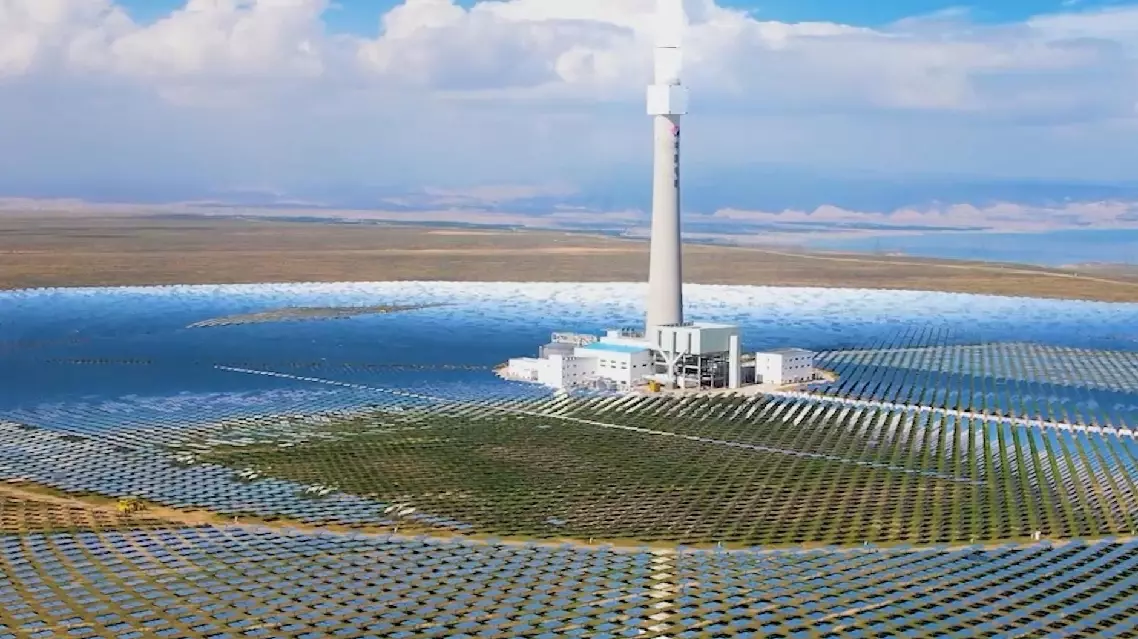
At the heart of this effort is the Talatan Solar Park, a sprawling facility home to millions of solar panels.
"Qinghai has a great deal of desert area, land resources and abundant sunshine. This offers unique resources for development of clean energy," said An Fengjun, an official with the management committee of Talatan Solar Park.
The park integrates hydro-power, wind-power, and geothermal energy, with solar panels being the primary energy source.
The sheer scale of the Talatan Solar Park is remarkable, covering an area nearly as large as Singapore and seven times the size of Manhattan. Further expansion is planned, indicating its growing importance. Qinghai's high elevation, flat landscape, sparse population, and thinner air contribute to the efficiency of the solar panels, making them even more powerful.
The energy generated at the park is transmitted over hundreds of kilometers through China's network of ultra-high voltage power lines to major cities where demand is high. This advanced transmission system ensures minimal power loss over long distances.
Beyond the large-scale solar farms, renewable energy solutions are also appearing in more localized, innovative forms across Qinghai. One state-operated service station along a busy highway stands out as a model of true carbon neutrality, generating all the energy it needs to operate.
"Since our zero-carbon service area was put into operation last year, many people from other industries have come to visit," said Lian Wei, vice general manager of a green industry company in Qinghai.
This pilot program, featuring solar panels, heated exterior walls for energy efficiency, and lots of EV chargers, is being studied for replication. The prevalence of electric vehicles in this rural region, with nearly 60 percent running on electricity, underscores the local commitment to green transportation.
Intriguingly, the vast array of solar panels at Talatan has had an unforeseen positive impact on the desert environment.
"Once the panels were cleaned, it allowed water from precipitation to trickle off -- irrigation in the desert. Slowly the vegetation was restored. The wind decreases cut down on sand storms, and the vegetation naturally recovered," said An.
This led to an unexpected transformation: the desert began to turn into grasslands, with vegetation growing over a meter in height. However, this new growth presented a challenge: increased risk of grassland fires, particularly at the end of winter. To address this, a low-tech, yet highly effective solution was devised.
"Once the grass grew, the biggest hidden danger came at the end of winter -- grassland fire prevention. So we allowed grazing in this large field of solar panels, helping the local economy and reducing the risk of grass fires," said An.
This initiative has seen sheep herders, a traditional part of the landscape for generations, now guiding their flocks through the solar fields. This win-win approach allows the sheep to graze freely among the panels. It keeps the vegetation at a manageable level and reduces fire hazards while simultaneously supporting the local pastoral economy.
As the sheep meander through this high-tech landscape, they help ensure that the sun's powerful rays continue to flow efficiently through the nation's power lines, bridging the gap between ancient traditions and a carbon-neutral future.
Solar Park in Qinghai's Gobi Desert generates ample clean energy, transforms desert into lush ecosystem