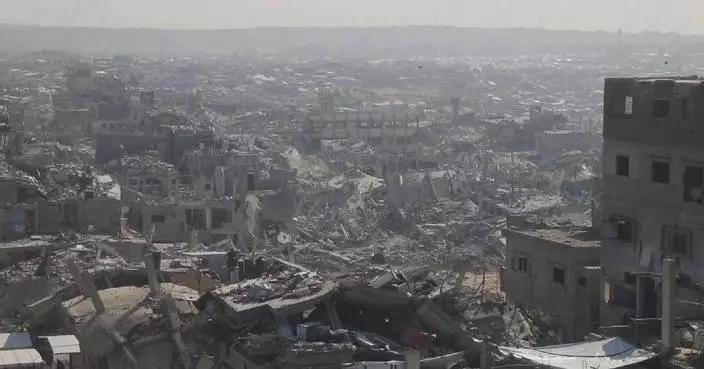
Scars and cruel memories marked by the brutality of World War II (WWII) occupiers run deep in people of Serbia, which was then a part of Yugoslavia and lost around half a million people during the war years.
On October 21, 1941, in the Serbian town of Kragujevac, the German troops killed more than 2,800 civilians, including 300 children, as retribution for the rebellion.
A poem called "Bloody Fairtale", written by Desanka Maksimovic just days after the Kragujevac massacre, was one of the famous pieces in Serbian literature.
Massacre witness Leon Lukman was just 10 years and six days old when the horror unfolded before his eyes.
"We, then children, played close by, and we heard gunshots. I looked up, and I saw people falling. They weren't falling theatrically, but like cards. It happened in a sudden, all of them fell down. I thought it was an exercise. But they brought a second group, and then I realized it was a killing. Particularly when some of them tried to escape, and Germans killed them with pistol shots. I still have dreams about that till today," Lukman recalled.
"As written in German documents -- for every killed German soldier, 100 Serbians were to be shot, and for every wounded, 50. In that time, according to German data, at least 40,000 people were executed. It shows how brutal the German soldiers were to the unarmed civilians who didn't participate in any military operations," said Nenad Dordevic, a staff member of the memorial park "October in Kragujevac."
In Kragujevac, there is a monument for the executed children, represented by a bird with broken wings.
At a museum nearby, the last notes scribbled before captives were marched to the killing field lie under glass.
Three years after the massacre, Kragujevac was liberated by the Soviet Red Army and Serbian partisans. Around the same date, the capital, Belgrade, saw the end of occupation as well.
The military museum in Belgrade stands inside Kalemegdan Fortress, where the Danube meets the Sava, and it displays artefacts spanning centuries, including the 1944 battle to liberate Belgrade.
"German strongholds in Kalemegdan resisted most persistently and fiercely, so on Oct 20, 1944, a general assault was carried out on German battle positions, that is, the strongholds of positions in Kalemegdan. After that, the German resistance at the Sava Bridge and at Cukarica was broken," said Marijana Jovelic, a staff member of the military museum in Belgrade.
"I remember one soldier with blonde hair was pulling his hair out in frustration, because it was only possible for him to hit a bunker there with his cannon, but he was prohibited to do so," said Vlasta Velisavljevic, a Serbian actor, who is also a witness of Belgrade's liberation.
Witnesses say the liberators defended the city's heritage with their lives, and Belgrade still flourishes because of them.
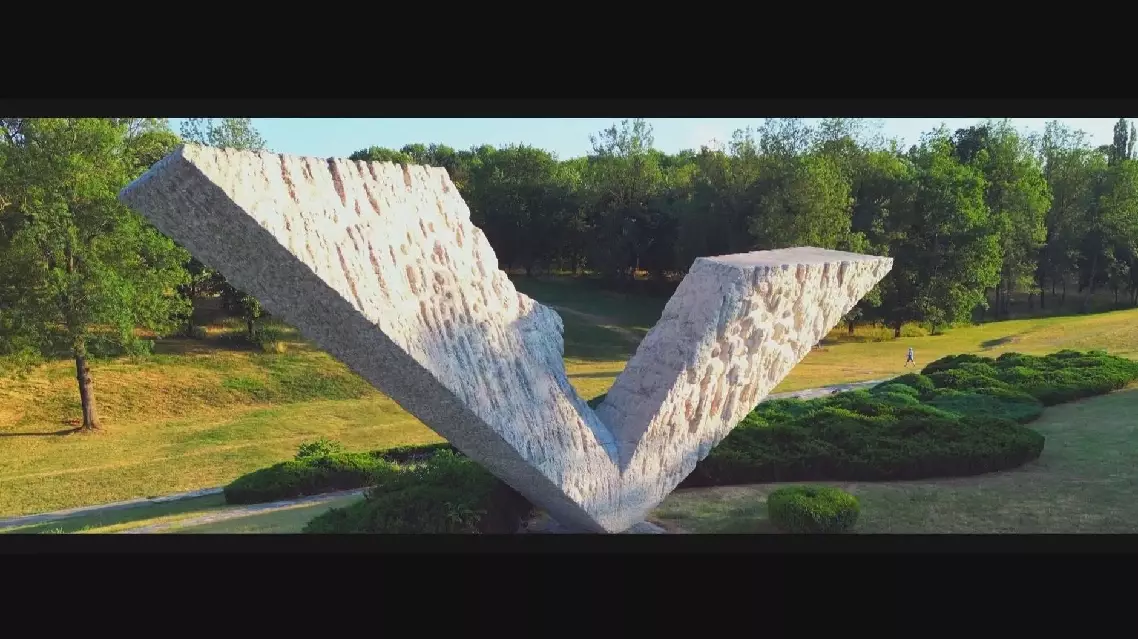
Serbia remembers sacrifices made as cities still bear scars of WWII
The three astronauts of China's recently-returned Shenzhou-20 mission on Friday shared the experiences of their dramatic 204-day space mission, including detailing the emergency procedures which were implemented to bring them safely home after their return capsule was struck by space debris.
The trio -- Chen Dong, Chen Zhongrui, and Wang Jie -- met with the press in Beijing on Friday afternoon, marking their first public appearance since returning to Earth in November.
When detailing the emergency response mechanisms which were enacted prior to their scheduled return, the astronauts explained that upon discovering a triangular crack on the spacecraft's viewport window, they immediately took photos for documentation and transmitted them to the ground team, who swiftly activated an emergency plan to get the trio home safely.
Experienced mission commander Chen Dong explained how the crew had complete faith in their colleagues on the ground to find a solution to these unforeseen circumstances which led to their return being delayed.
"First, we must trust the ground team, who would anticipate everything and develop the safest return plan for us. Second, we must believe in ourselves; as well-trained astronauts, we have the ability to manage various unexpected failures. I believe that with the collaboration of astronauts and researchers on the ground, our space home will surely go farther, more steadily, and for a longer time," he said.
Following their extended stay in space as a result of the debris incident, the Shenzhou-20 crew spent a total 204 days in orbit, setting a new record for the longest duration by a single group of Chinese astronauts.
During their mission, they completed multiple payload operations, conducted extensive scientific experiments, and carried out four extravehicular activities.
"Our crew worked together with the ground team in unity and coordination, completing four extravehicular activities, several payload entry and exit tasks, and a large number of scientific experiments. It was a fulfilling yet challenging mission. The path to exploring the heavens is long and arduous, but I firmly believe that China's space missions will succeed," said Chen Zhongrui, a former air force pilot who was making his first spaceflight during the mission.
"From the ground to space, from learning to application, I have deeply felt the solid progress of Chinese space endeavors and the quiet dedication of countless personnel behind the scenes. In the future, I will accomplish each mission with full commitment, living up to the trust of the motherland and the people," said fellow astronaut Wang Jie, who was also making his debut spaceflight.
After returning to Earth on Nov 14, the trio successfully completed their isolation recovery and rehabilitation and will now resume normal training following health assessments.
The crew's return, originally scheduled for Nov 5, was postponed due to safety concerns, with the astronauts later using the return capsule belonging to their successor crew of the Shenzhou-21 mission to get back to Earth. China later launched the unmanned Shenzhou-22 spacecraft which will serve the future return of the crew now aboard the Tiangong Space Station.
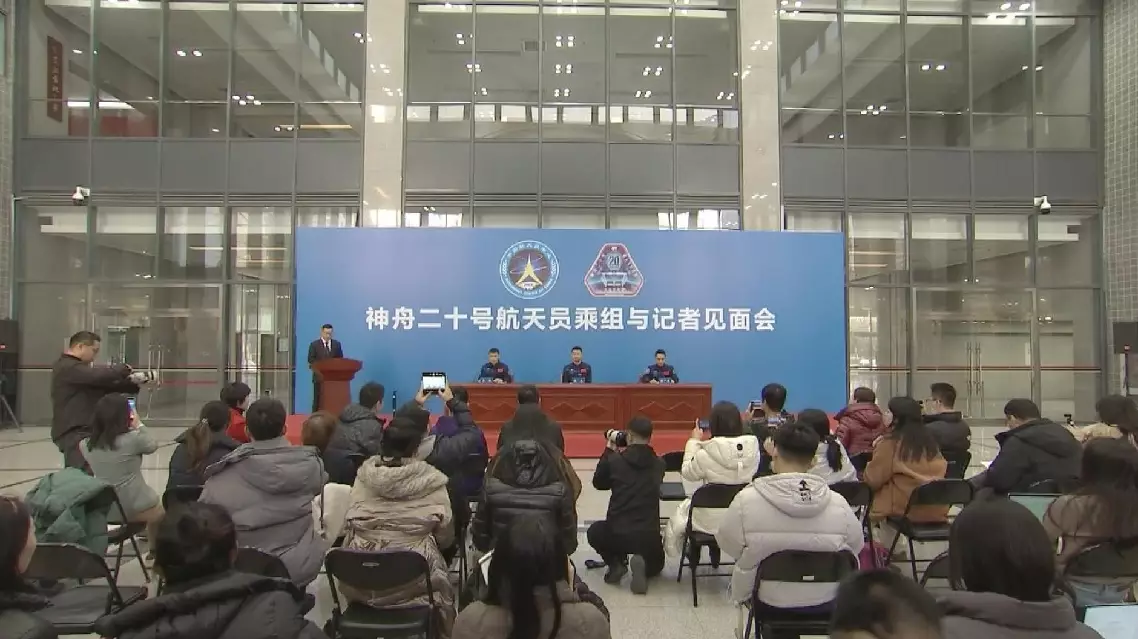
Shenzhou-20 astronauts share experiences after safely returning from debris incident