China will strengthen management on the recycling and comprehensive utilization of used new energy vehicle (NEV) power batteries, according to the interim measures jointly issued by the Ministry of Industry and Information Technology (MIIT) and five other departments on Friday.
Each power battery of NEVs will be assigned a digital identity under the interim measures, which will take effect on April 1, 2026.
The move comes as China's NEV industry has expanded rapidly. In 2025, NEV production and sales both exceeded 16 million units, accounting for over half of domestic new vehicle sales.
With power batteries from earlier NEVs reaching the end of their service life due to capacity degradation, the volume of retired batteries is growing significantly, according to the MIIT.
Industry experts note that the regulation is timely, given that China is entering a phase of large-scale battery retirement, with projected used battery generation exceeding 1 million tonnes by 2030.
Highlighting a "full-channel, full-chain, and full-lifecycle" management framework, the MIIT said that the interim measures include establishing a national NEV power battery traceability information platform and a digital ID management system.
"Specifically, the digital ID utilizes power battery coding as the information carrier, linking data across key stages including production, vehicle installation and sales, battery swapping, maintenance and replacement, vehicle scrapping, battery recycling, and comprehensive utilization. This enables monitoring of the power battery's entire lifecycle flow and facilitates traceability through information systems. It is fair to say that applying digital technology to the full-process traceability management of power batteries represents a significant institutional innovation under the interim measures," said Wang Peng, director of the Energy Conservation and Comprehensive Utilization Department under the MIIT.
Gong Jinfeng, deputy general manager of the China Automotive Technology and Research Center, said the measures will ensure the secure and efficient recycling of used power batteries.
"The interim measures, as China's first departmental regulation governing the recycling and utilization of NEW power batteries, clearly define the primary responsibilities of entities across the industrial chain. They further elevate the level of management, intensify regulatory oversight, and establish clear boundaries for relevant activities. This will effectively standardize the conduct of all participants and focus on building a standardized, safe, and efficient recycling and utilization system," said Gong.
China initiated a three-year special campaign targeting illegal dumping and the disposal of solid waste in June last year, including scrapped motor vehicles, waste electronic products, retired new energy equipment, and used power batteries.
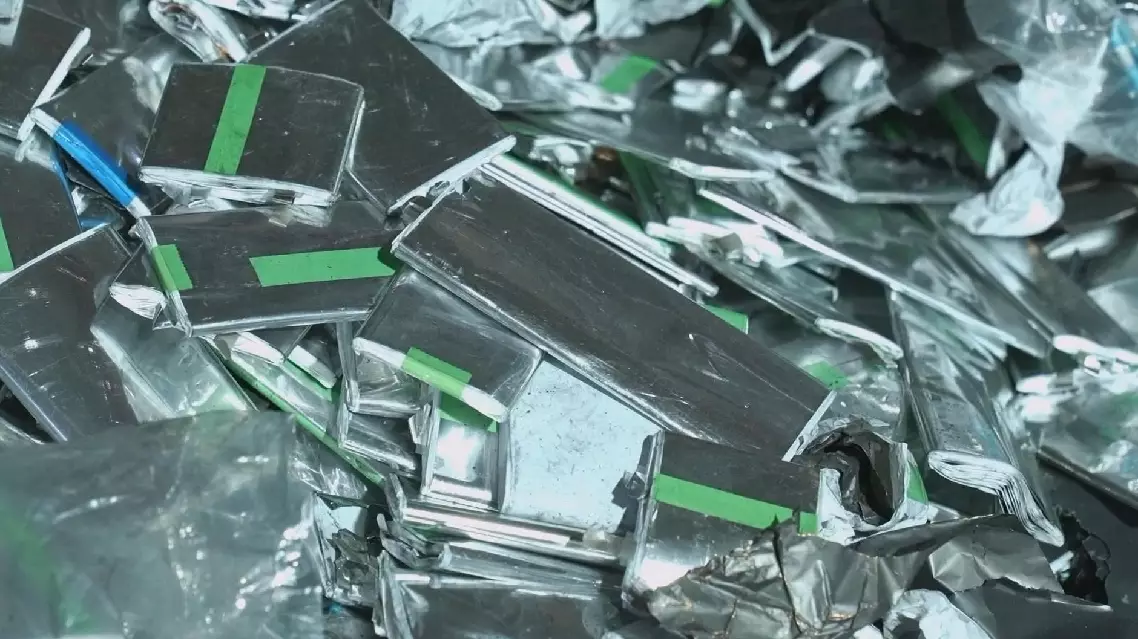
China to strengthen recycling management of used power batteries from NEVs
As the tension between the United States and Israel with Iran lingers on, global focus has shifted away from the Gaza Strip, where residents fear that economic collapse and humanitarian strain continue to worsen.
An Israeli strike on the northern Gaza town of Beit Lahia killed five Palestinians, including three children, on Wednesday evening, Palestinian security and medical officials said.
The health authorities in Gaza said that since the latest round of large-scale conflict between Hamas and Israel began on Oct. 7, 2023, Israeli attacks on the Gaza Strip have killed 72,562 people and injured 172,320 others. And since the announcement of a ceasefire on Oct. 10, 2025, 786 Palestinians have been killed and 2,217 others injured by Israeli attacks.
"The Iran war has led to series of repercussions for Palestine and for the Gaza Strip in particular. First, it has disrupted the transition to the second phrase of the ceasefire and hostage agreement -- which involves the Israeli withdrawal from 56 percent of the Gaza Strip, the entry of aid, and the empowerment of the administrative committee established by the UN Security Council resolution to manage Gaza's affairs. Consequently, politically, everything the residents of the Gaza Strip expect has been dashed, and economy and living conditions deteriorate further," said Thabet Laamour, a political analyst, on Thursday.
"Secondly, Israel has exploited the world's preoccupation with the Iran war and acts unilaterally in the Gaza Strip through what can only be described as retaliatory killings or assassinations, to the point that these practices became a recurring phenomenon," Laamour continued.
Fears are growing in the Gaza Strip that the continued ignorance of the deteriorating situation in Gaza could lead to a new explosion, as the increasing suffering of the population and the blockage of the horizon could create a fertile environment for escalation.
"The residents of the Gaza Strip are experiencing a growing sense of frustration, feeling that the world is preoccupied with other matters and indifferent to their suffering. This frustration is exacerbated by the continued closure of border crossings, restrictions on aid entry, the stalled reconstruction process, and the paralysis of the technocratic committee. All these are intensifying the already simmering resentment, which could erupt into violence at any moment," said Laamour.
At the same time, warnings are mounting that Israeli Prime Minister Benjamin Netanyahu will resort to escalating the situation in Gaza as a political option to compensate for what he sees as failures to achieve decisive results in Iran and Lebanon.
"Netanyahu has failed on the Iranian front, not achieving his objectives -- which seems likely -- and has likewise fallen short on the Lebanese front, where he has been unable to defeat Hezbollah or impose a new reality. This has negatively impacted his popularity within Israel. Therefore, with elections approaching, he is seeking to bolster his public standing. He knows that a renewed escalation in the Gaza Strip, and the complete destruction of what remains of it, could be used as a means to achieve this goal and appease a segment of Israeli society that does not want to see Gaza outside of control or without complete subjugation," said Ezz El-Din Al-Masri, a journalist specializing in Israeli affairs.
With regional tensions rising, urgent international action is needed to put Gaza's humanitarian crisis back on the agenda and open paths to de-escalation.
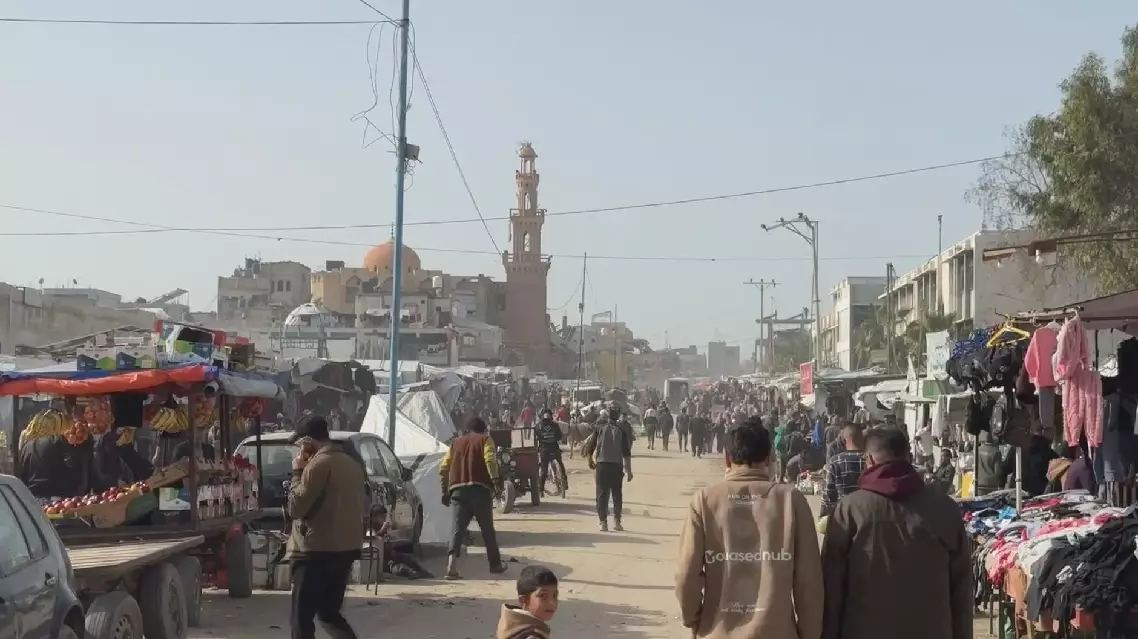
Iran war overshadows Gaza, fueling fears of renewed Israeli strikes