SAN FRANCISCO (AP) — Leading Democrats and advocates for homeless people are criticizing an executive order President Donald Trump signed this week aimed at removing people from the streets, possibly by committing them for mental health or drug treatment without their consent.
Trump directed some of his Cabinet heads to prioritize funding to cities that crack down on open drug use and street camping, with the goal of making people feel safer. It's not compassionate to do nothing, the order states.
“Shifting these individuals into long-term institutional settings for humane treatment is the most proven way to restore public order,” the order reads.
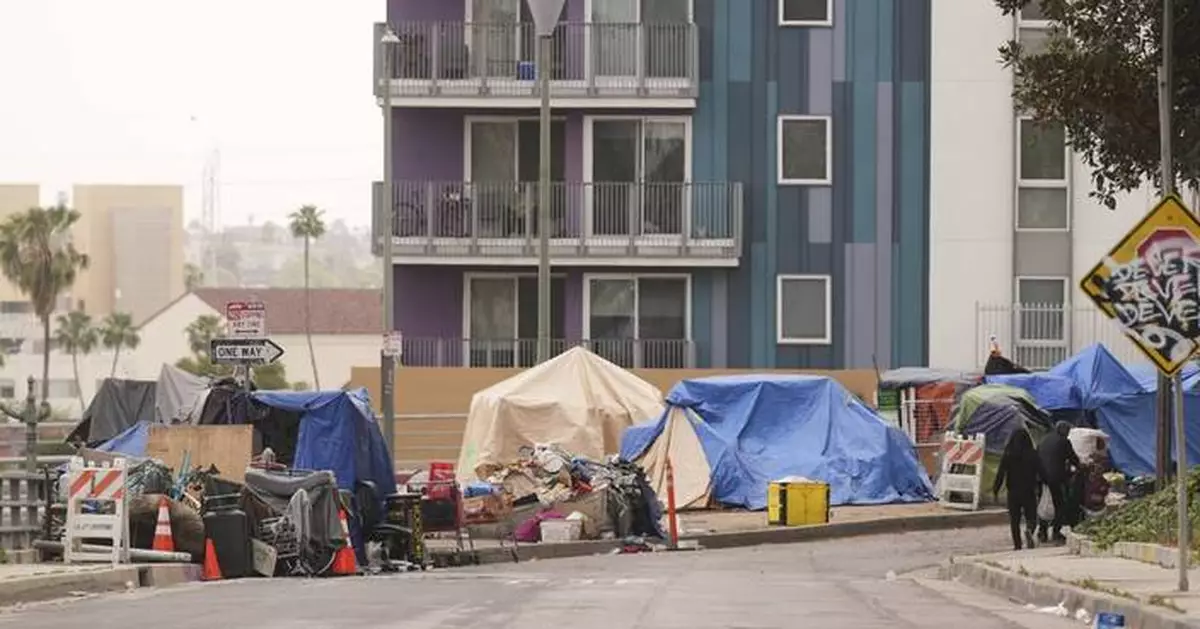
Homelessness has become a bigger problem in recent years as the cost of housing increased, especially in states such as California where there aren't enough homes to meet demand. At the same time, drug addiction and overdoses have soared with the availability of cheap and potent fentanyl.
The president's order might be aimed at liberal cities such as San Francisco, Los Angeles and New York, which Trump views as too lax about conditions on their streets. But many of the concepts have already been proposed or tested in California, where Gov. Gavin Newsom and Democratic mayors have worked for years to get people off the streets and into treatment.
Last year, the U.S. Supreme Court made it easier for cities to clear encampments even if the people living in them have nowhere else to go.
Still, advocates say Trump's new order is vague, punitive and won't effectively end homelessness.
Newsom has directed cities to clean up homeless encampments and he’s funneled more money into programs to treat addiction and mental health disorders.
His office said Friday that Trump's order relies on harmful stereotypes and focuses more on "creating distracting headlines and settling old scores."
"But, his imitation (even poorly executed) is the highest form of flattery,” spokesperson Tara Gallegos said in a statement, referring to the president calling for strategies already in use in California.
San Francisco Mayor Daniel Lurie has also emphasized the importance of clean and orderly streets in banning homeless people from living in RVs and urging people to accept the city’s offers of shelter. In Silicon Valley, San Jose Mayor Matt Mahan recently pushed a policy change that makes a person eligible for jail if they reject three offers of shelter.
Trump's executive order tasks Attorney General Pam Bondi and the secretaries for health, housing and transportation to prioritize grants to states and local governments that enforce bans on open drug use and street camping.
Devon Kurtz, the public safety policy director at the Cicero Institute, a conservative policy group that has advocated for several of the provisions of the executive order, said the organization is “delighted” by the order.
He acknowledged that California has already been moving to ban encampments since the Supreme Court's decision. But he said Trump's order adds teeth to that shift, Kurtz said.
“It's a clear message to these communities that were still sort of uncomfortable because it was such a big change in policy,” Kurtz said.
But Steve Berg, chief policy officer at the National Alliance to End Homelessness, called parts of the order vague. He said the U.S. abandoned forced institutionalization decades ago because it was too expensive and raised moral and legal concerns.
“What is problematic about this executive order is not so much that law enforcement is involved — it’s what it calls on law enforcement to do, which is to forcibly lock people up,” Berg said. “That’s not the right approach to dealing with homelessness.”
The mayor of California's most populous city, Los Angeles, is at odds with the Newsom and Trump administrations on homelessness. Mayor Karen Bass, a Democrat, opposes punishing sweeps and says the city has reduced street homelessness by working with homeless people to get them into shelter or housing.
“Moving people from one street to the next or from the street to jail and back again will not solve this problem," she said in a statement.
Kramon reported from Atlanta. She is a corps member for The Associated Press/Report for America Statehouse News Initiative. Report for America is a nonprofit national service program that places journalists in local newsrooms to report on undercovered issues.
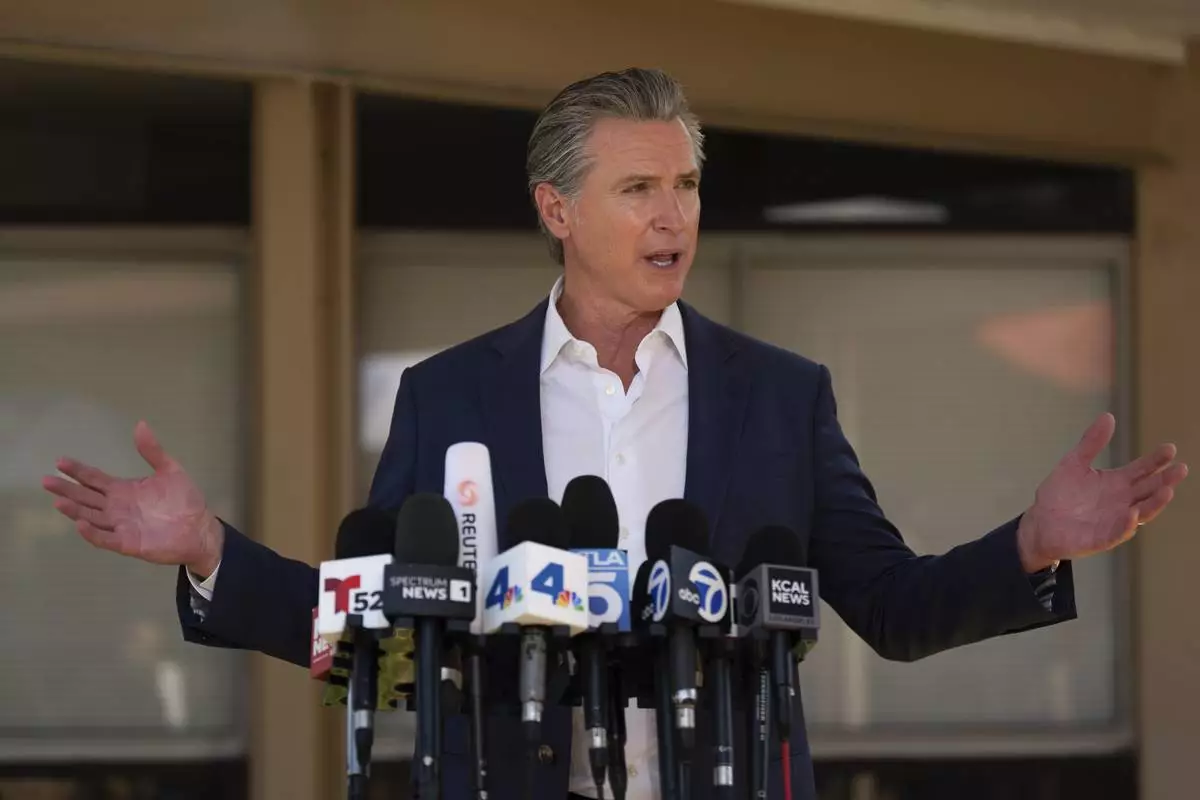
California Gov. Gavin Newsom speaks during a news conference in Downey, Calif., Wednesday, July 16, 2025. (AP Photo/Jae C. Hong)
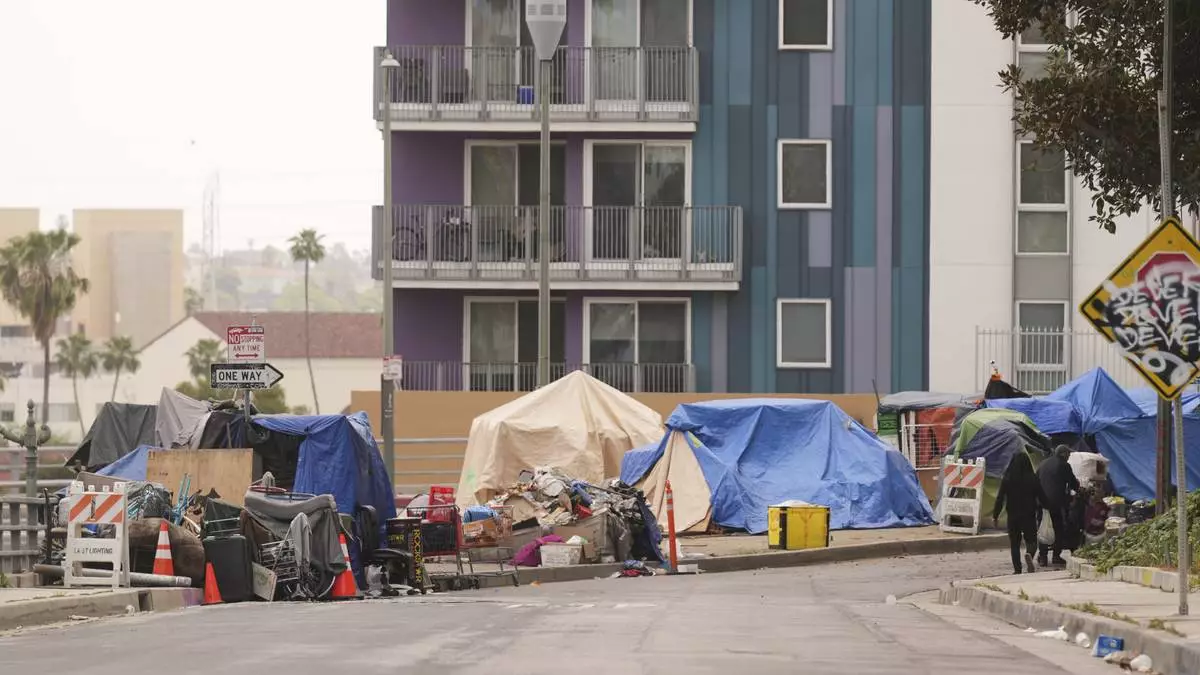
FILE - Tents are set up along a freeway in a homeless encampment, May 12, 2025, in Los Angeles. (AP Photo/Damian Dovarganes, File)
MINNEAPOLIS (AP) — President Donald Trump on Thursday threatened to invoke an 1807 law and deploy troops to quell persistent protests against the federal officers sent to Minneapolis to enforce his administration's massive immigration crackdown.
The threat comes a day after a man was shot and wounded by an immigration officer who had been attacked with a shovel and broom handle. That shooting further heightened the fear and anger that has radiated across the city since an Immigration and Customs Enforcement agent fatally shot Renee Good in the head.
Trump has repeatedly threatened to invoke the Insurrection Act, a rarely used federal law, to deploy the U.S. military or federalize the National Guard for domestic law enforcement, over the objections of state governors.
“If the corrupt politicians of Minnesota don’t obey the law and stop the professional agitators and insurrectionists from attacking the Patriots of I.C.E., who are only trying to do their job, I will institute the INSURRECTION ACT, which many Presidents have done before me, and quickly put an end to the travesty that is taking place in that once great State,” Trump said in social media post.
Presidents have invoked the law more than two dozen times, most recently in 1992 by President George H.W. Bush to end unrest in Los Angeles. In that instance, local authorities had asked for the assistance.
“I’m making a direct appeal to the President: Let’s turn the temperature down. Stop this campaign of retribution. This is not who we are,” Gov. Tim Walz, a Democrat, said on X.
Minnesota Attorney General Keith Ellison said he would challenge any such action in court. He's already suing to try to stop the surge by the Department of Homeland Security, which says officers have arrested more than 2,500 people since Nov. 29 as part of an immigration operation in the Twin Cities called Metro Surge.
The operation grew when ICE sent 2,000 officers and agents to the area early in January. ICE is a DHS agency.
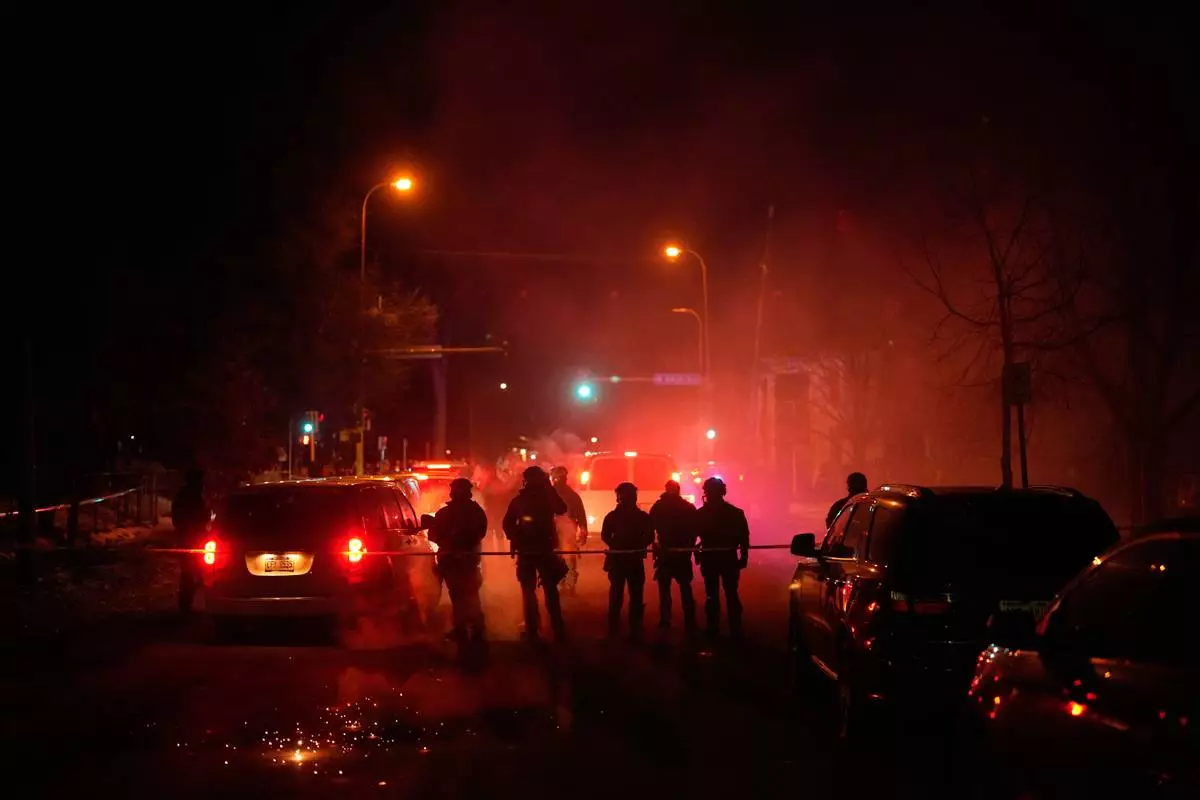
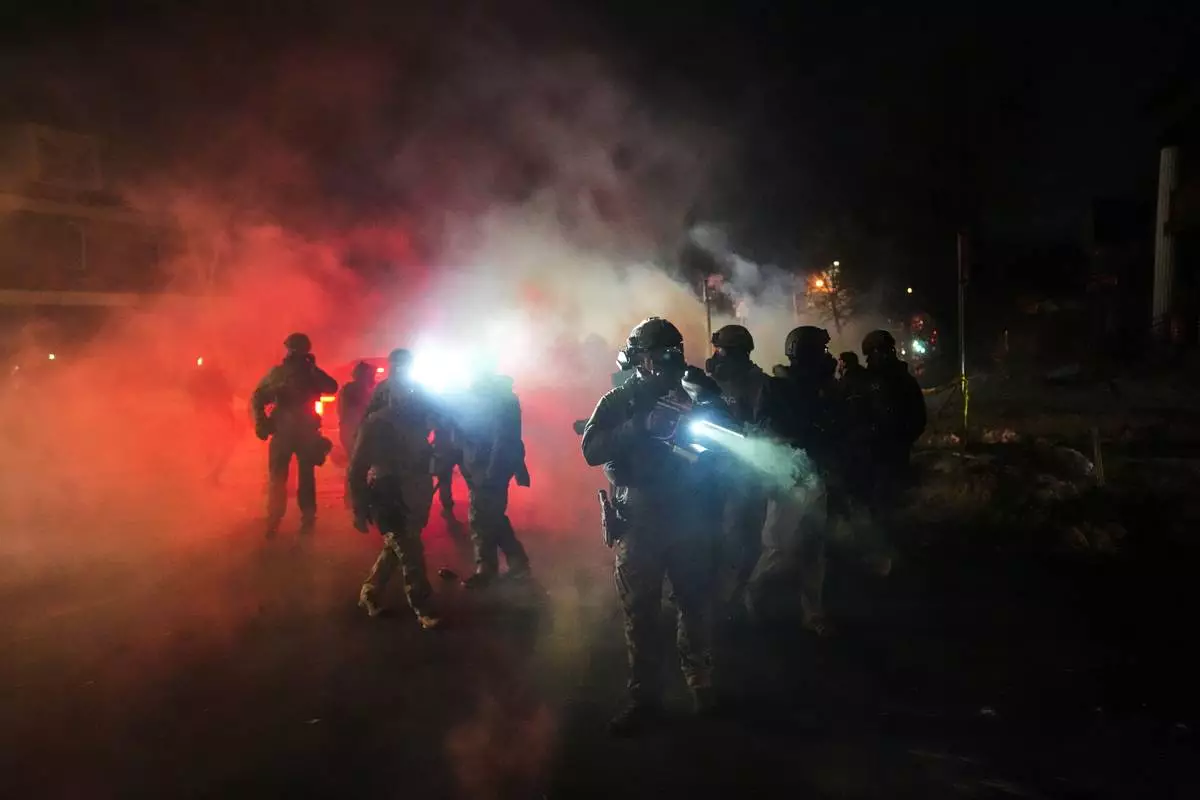
In Minneapolis, smoke filled the streets Wednesday night near the site of the latest shooting as federal officers wearing gas masks and helmets fired tear gas into a small crowd. Protesters responded by throwing rocks and shooting fireworks.
Demonstrations have become common in Minneapolis since Good was fatally shot on Jan. 7. Agents who have yanked people from their cars and homes have been confronted by angry bystanders demanding they leave.
“This is an impossible situation that our city is presently being put in and at the same time we are trying to find a way forward to keep people safe, to protect our neighbors, to maintain order,” Minneapolis Mayor Jacob Frey said.
The American Civil Liberties Union of Minnesota filed a class-action lawsuit on behalf of three people who said they were questioned or detained in recent days. The lawsuit says two are Somali and one is Hispanic; all three are U.S. citizens. The lawsuit seeks an end to what the ACLU describes as a practice of racial profiling and warrantless arrests. The government did not immediately comment.
Homeland Security said in a statement that federal law enforcement officers on Wednesday stopped a driver from Venezuela who is in the U.S. illegally. The person drove off then crashed into a parked car before fleeing on foot, DHS said.
Officers caught up, then two other people arrived and the three started attacking the officer, according to DHS.
“Fearing for his life and safety as he was being ambushed by three individuals, the officer fired a defensive shot to defend his life,” DHS said. The confrontation took place about 4.5 miles (7.2 kilometers) from where Good was killed.
Police chief Brian O’Hara said the man who was shot did not have a life-threatening injury. O’Hara's account of what happened largely echoed that of Homeland Security, which later said the other two men were also in the U.S. illegally from Venezuela.
The FBI said several government vehicles were damaged and property inside was stolen when agents responded to the shooting. Photos show broken windows and insults made with paint. A reward of up to $100,000 is being offered for information. The FBI’s Minneapolis office did not immediately reply to messages seeking more details.
St. Paul Public Schools, with more than 30,000 students, said it would begin offering an online learning option for students who do not feel comfortable coming to school. Schools will be closed next week until Thursday to prepare for those accommodations.
Minneapolis Public Schools, which has a similar enrollment, is also offering temporary remote learning. The University of Minnesota will start a new term next week with different options depending on the class.
Madhani reported from Washington, D.C. Associated Press reporters Sophia Tareen in Chicago; Bill Barrow in Atlanta; Rebecca Santana in Washington; and Ed White in Detroit contributed.
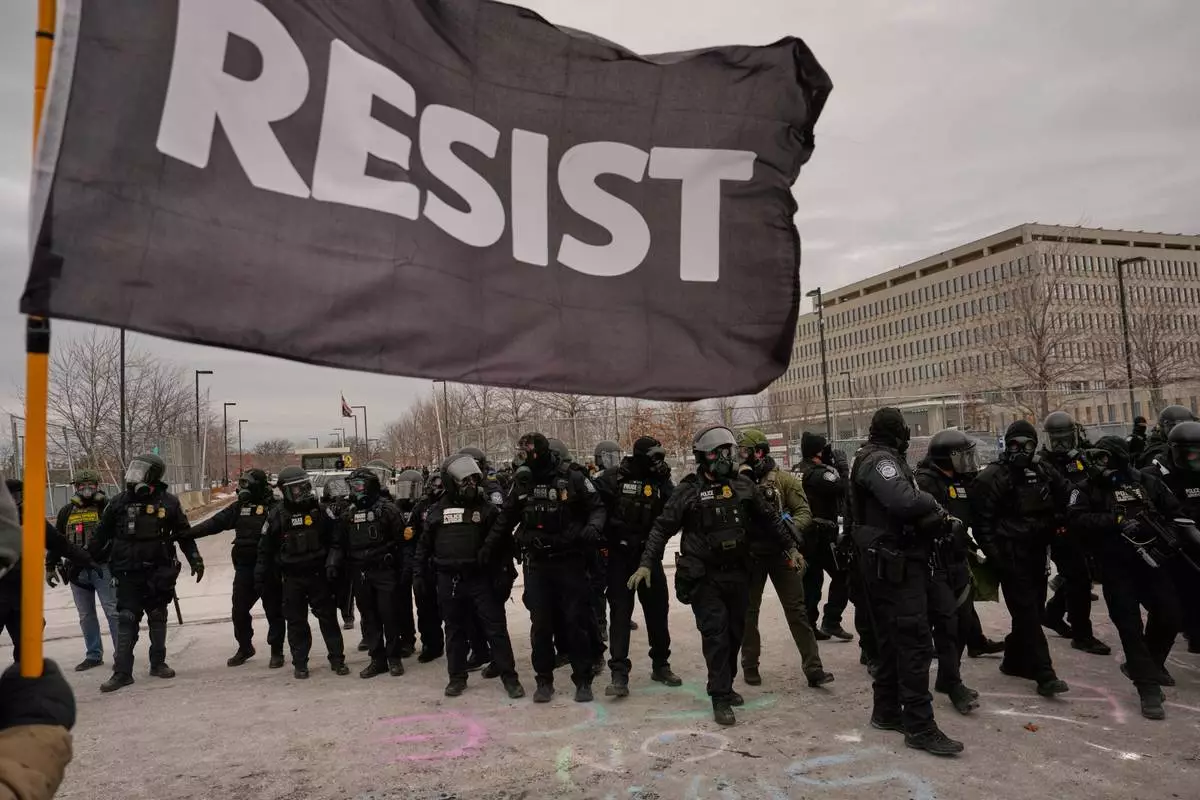
Federal immigration officers confront protesters outside Bishop Henry Whipple Federal Building, Thursday, Jan. 15, 2026, in Minneapolis. (AP Photo/John Locher)
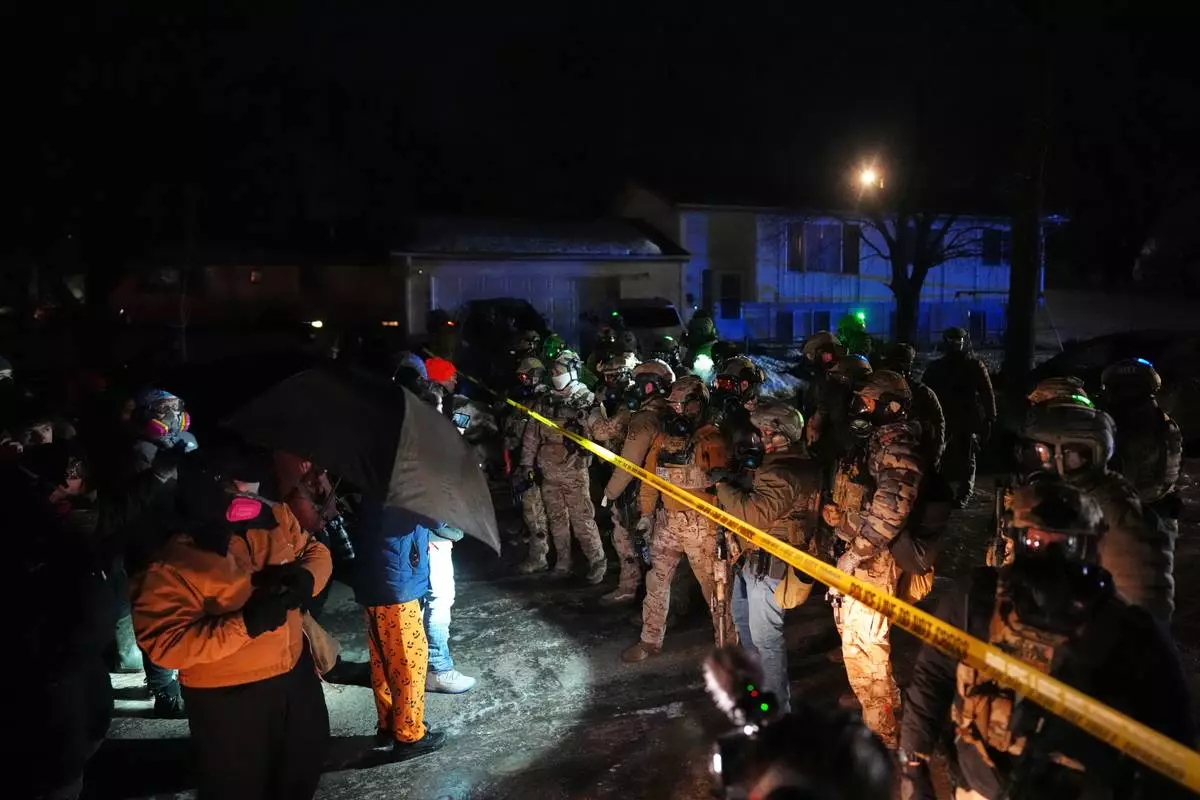
Law enforcement officers at the scene of a reported shooting Wednesday, Jan. 14, 2026, in Minneapolis. (AP Photo/Adam Gray)
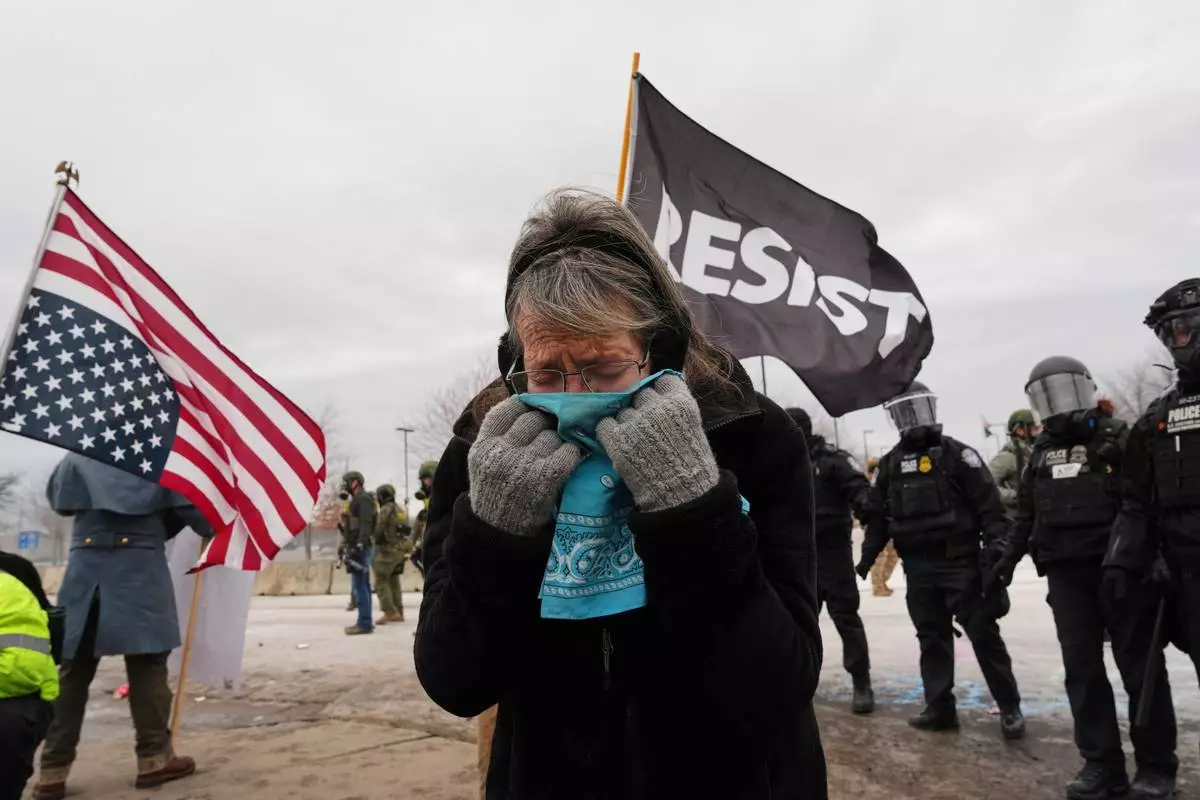
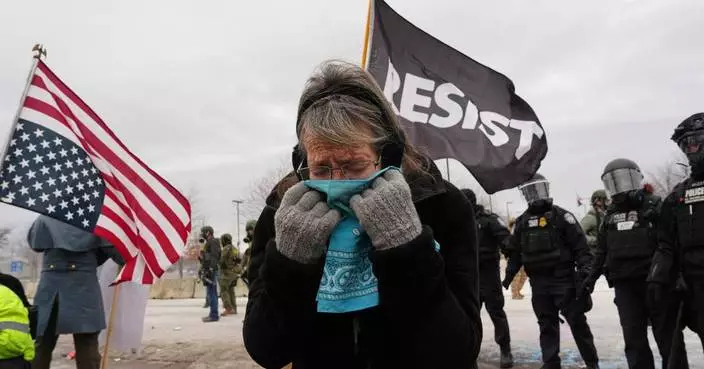
A woman covers her face from tear gas as federal immigration officers confront protesters outside Bishop Henry Whipple Federal Building, Thursday, Jan. 15, 2026, in Minneapolis. (AP Photo/Adam Gray)
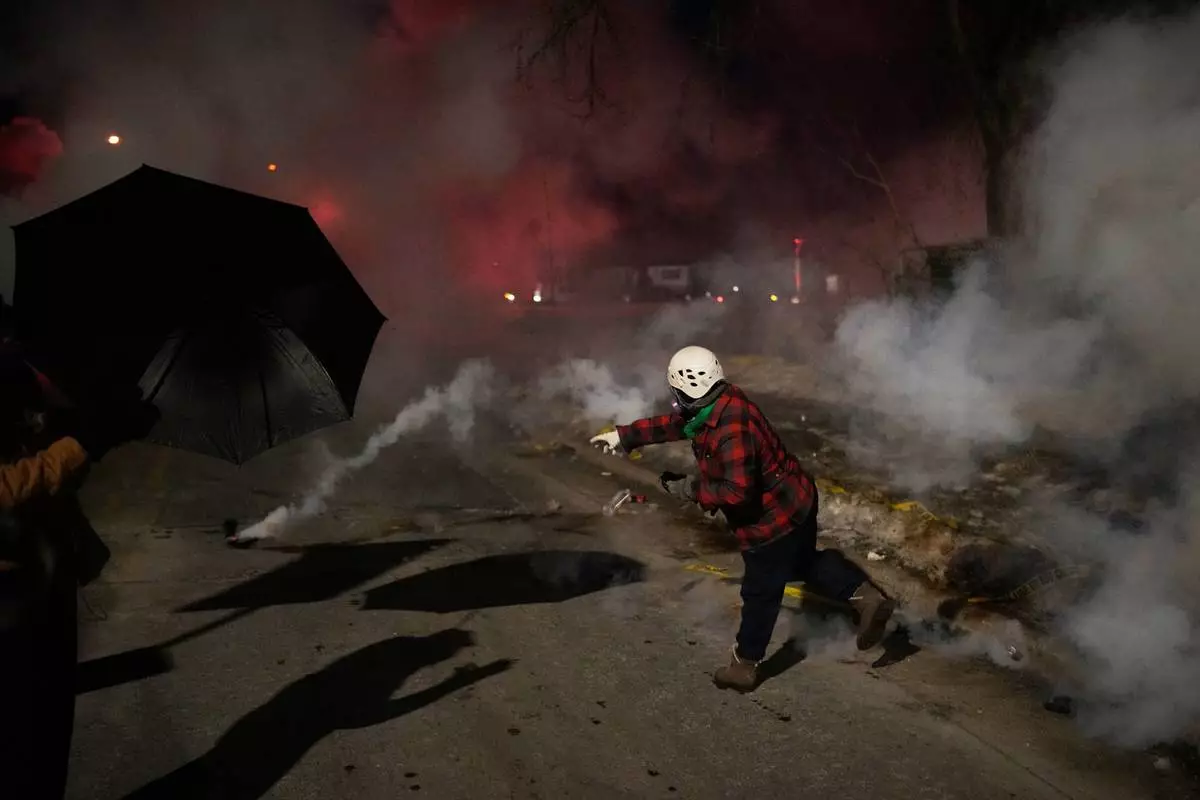
A protester throws back a tear gas canister during a protest after a shooting on Wednesday, Jan. 14, 2026, in Minneapolis. (AP Photo/John Locher)
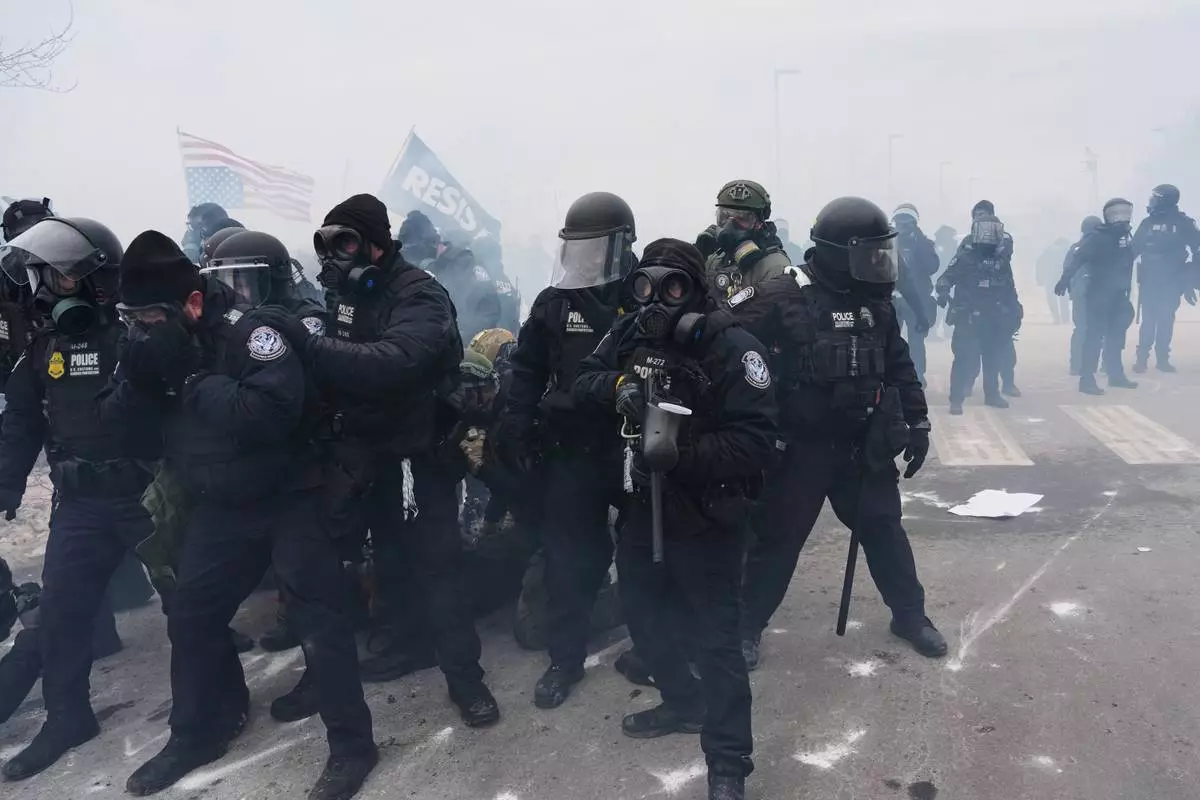
Federal immigration officers confront protesters outside Bishop Henry Whipple Federal Building, Thursday, Jan. 15, 2026, in Minneapolis. (AP Photo/Adam Gray)
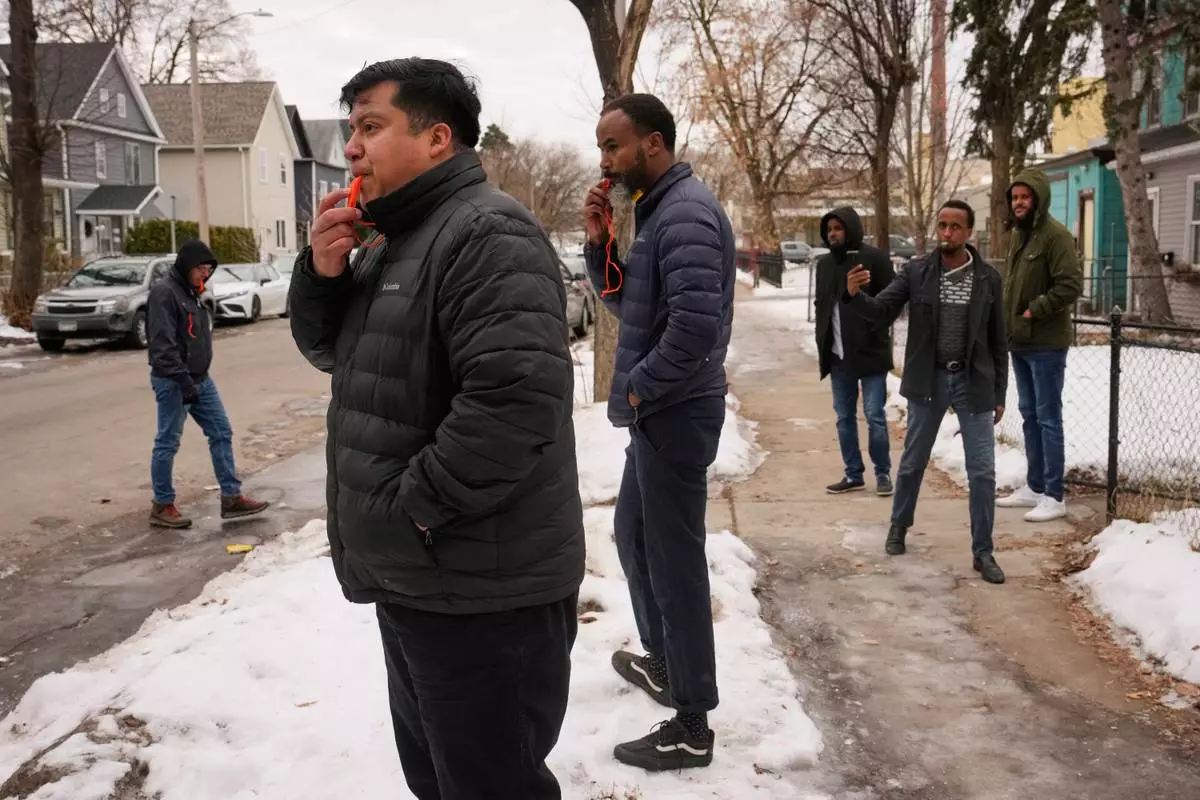
Minneapolis City Council Member Jason Chavez, second from left, blows a whistle with other activists to warn people of federal immigration officers Thursday, Jan. 15, 2026, in Minneapolis. (AP Photo/John Locher)
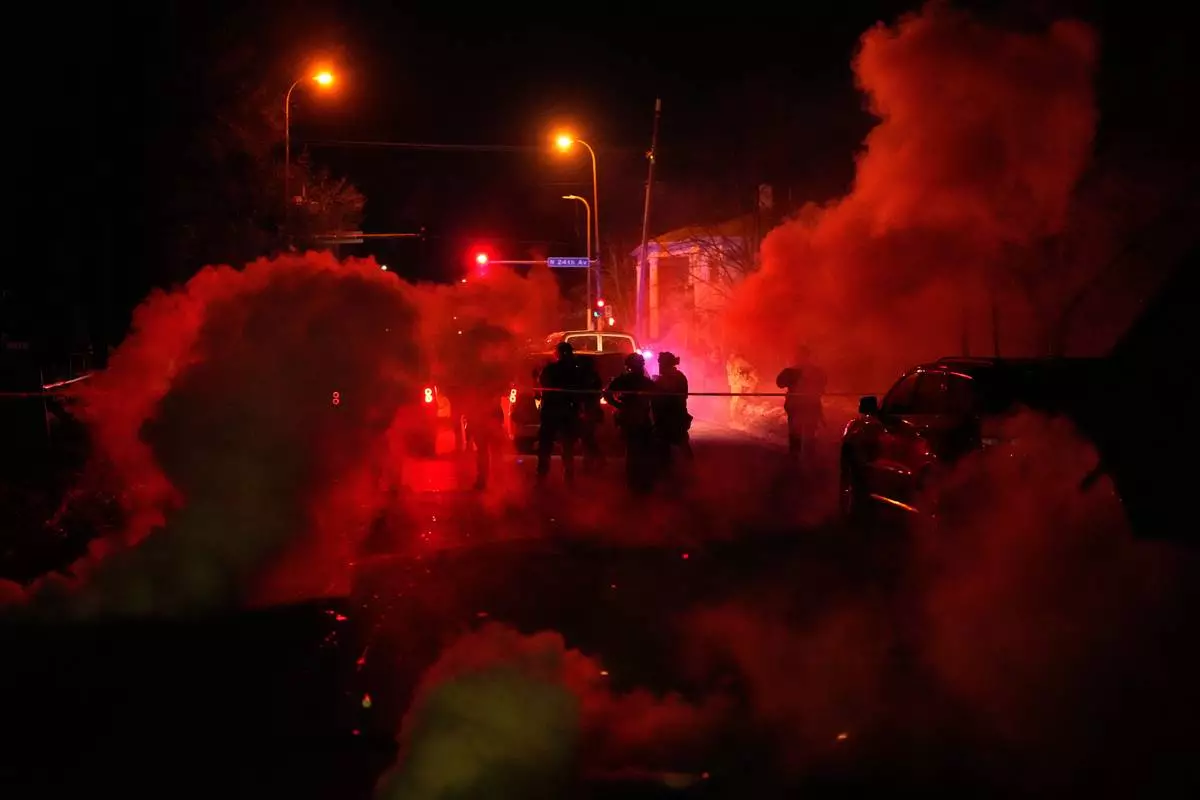
Tear gas surrounds federal law enforcement officers as they leave a scene after a shooting on Wednesday, Jan. 14, 2026, in Minneapolis. (AP Photo/John Locher)
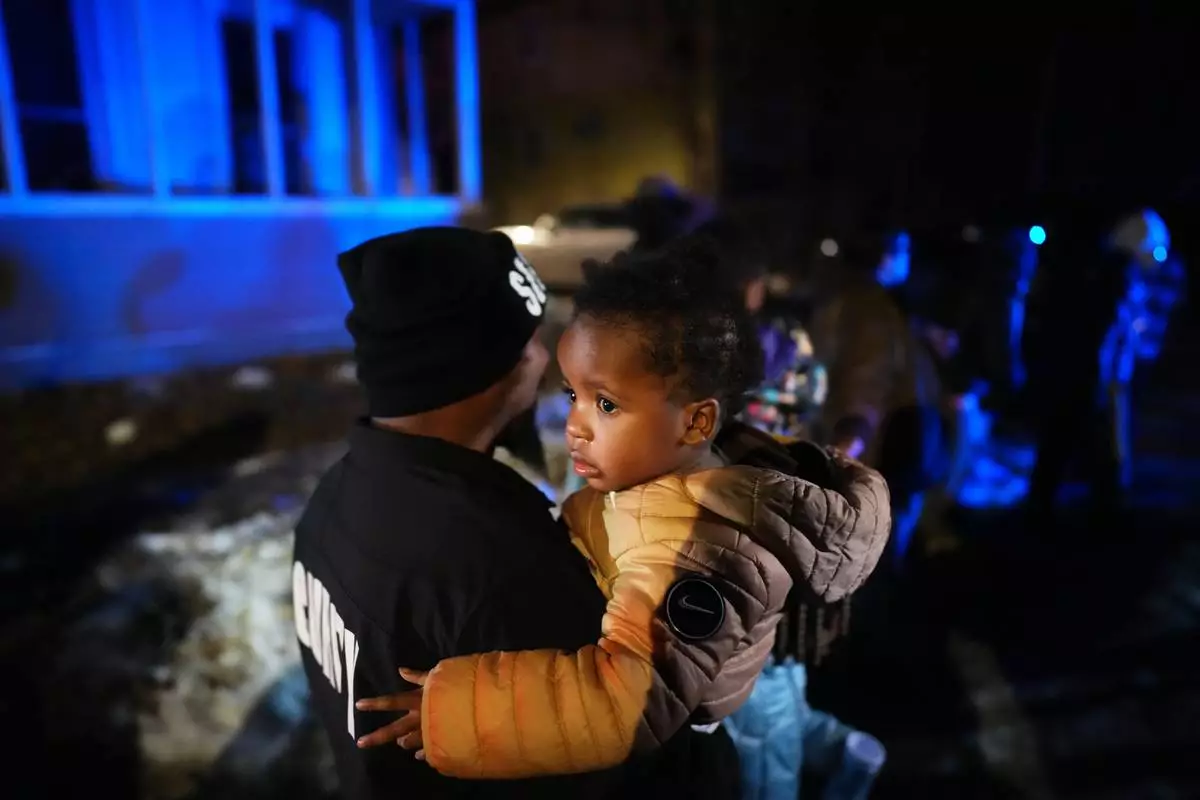
A child and family are escorted away after federal law enforcement deployed tear gas in a neighborhood during protests on Wednesday, Jan. 14, 2026, in Minneapolis. (AP Photo/Adam Gray)
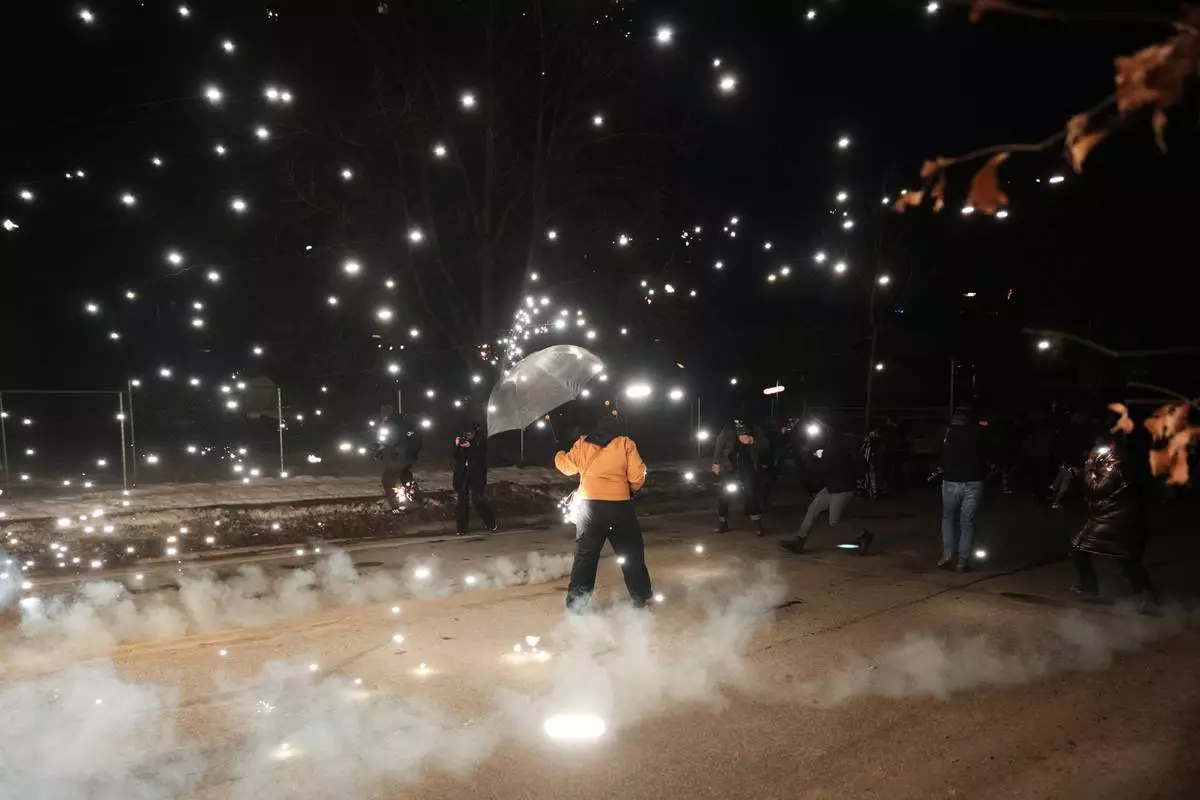
A protester holds an umbrella as sparks fly from a flash bang deployed by law enforcement on Wednesday, Jan. 14, 2026, in Minneapolis. (AP Photo/Adam Gray)
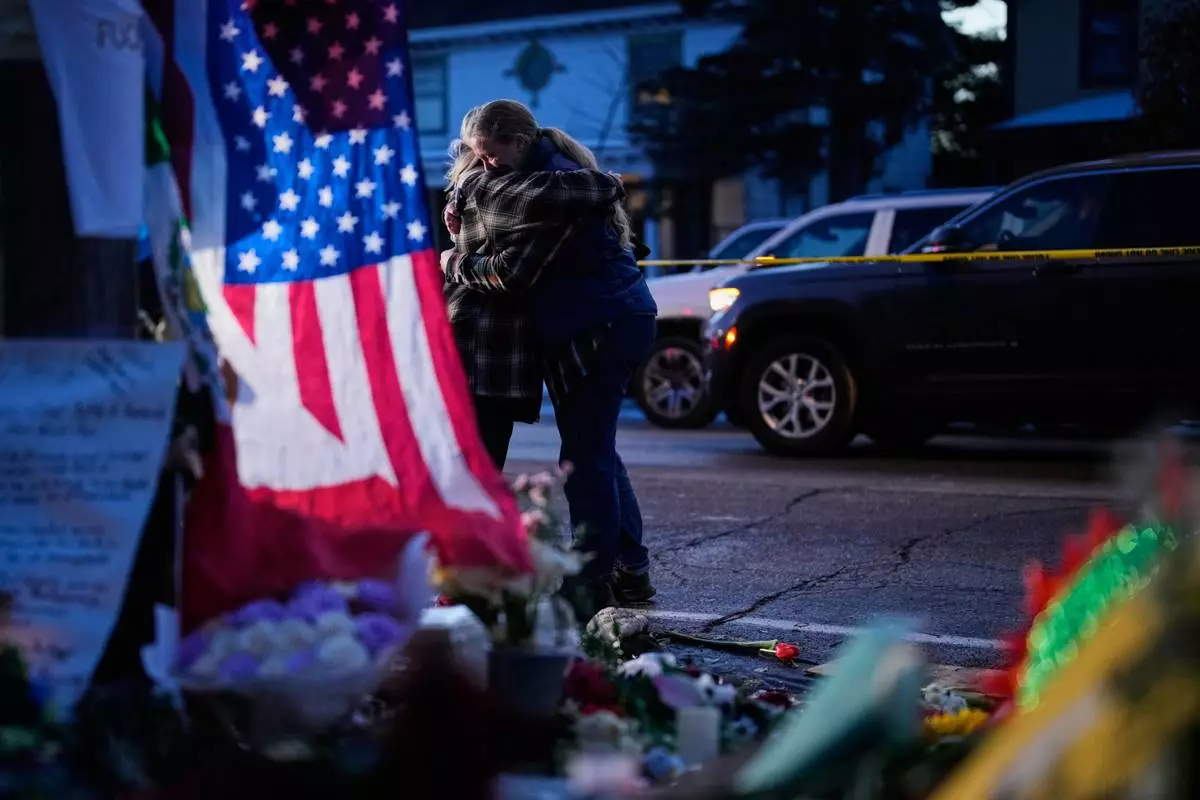
Monica Travis shares an embrace while visiting a makeshift memorial for Renee Good, who was fatally shot by an ICE officer last week, Monday, Jan. 12, 2026, in Minneapolis. (AP Photo/John Locher)
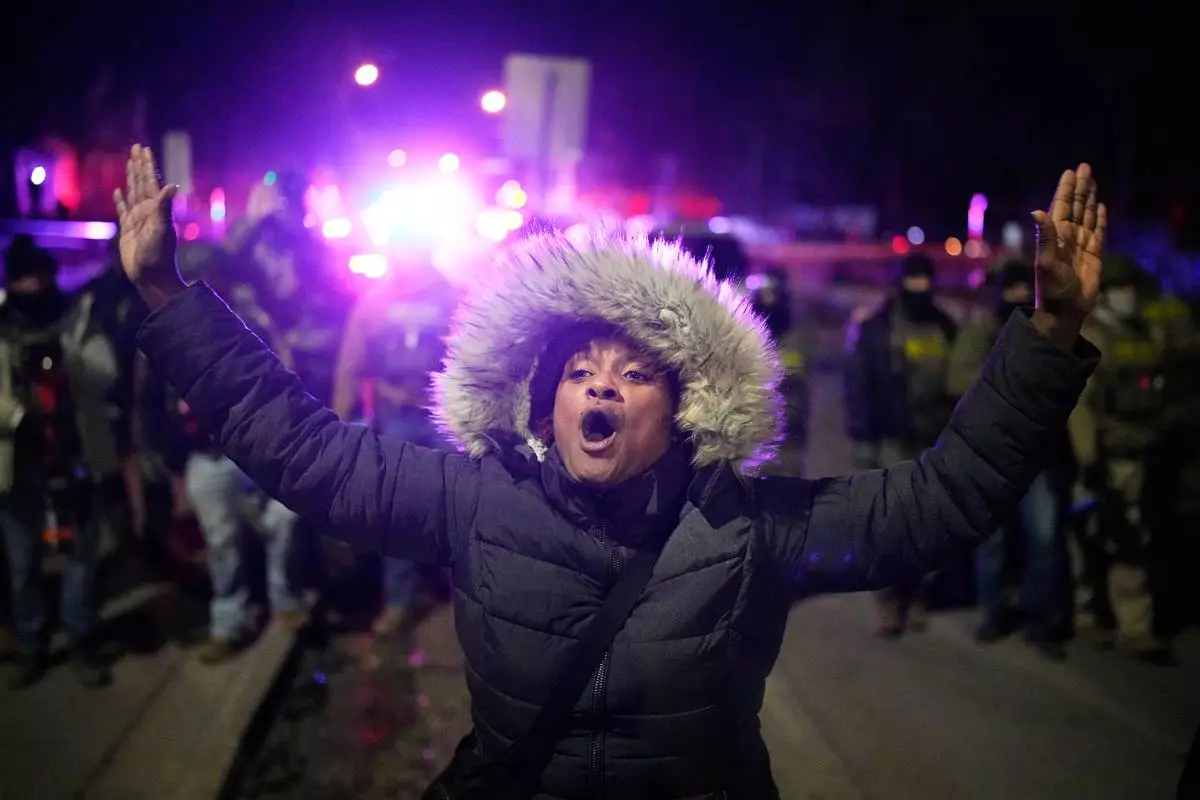
A protester yells in front of law enforcement after a shooting on Wednesday, Jan. 14, 2026, in Minneapolis. (AP Photo/John Locher)
Tear gas surrounds federal law enforcement officers as they leave a scene after a shooting on Wednesday, Jan. 14, 2026, in Minneapolis. (AP Photo/John Locher)
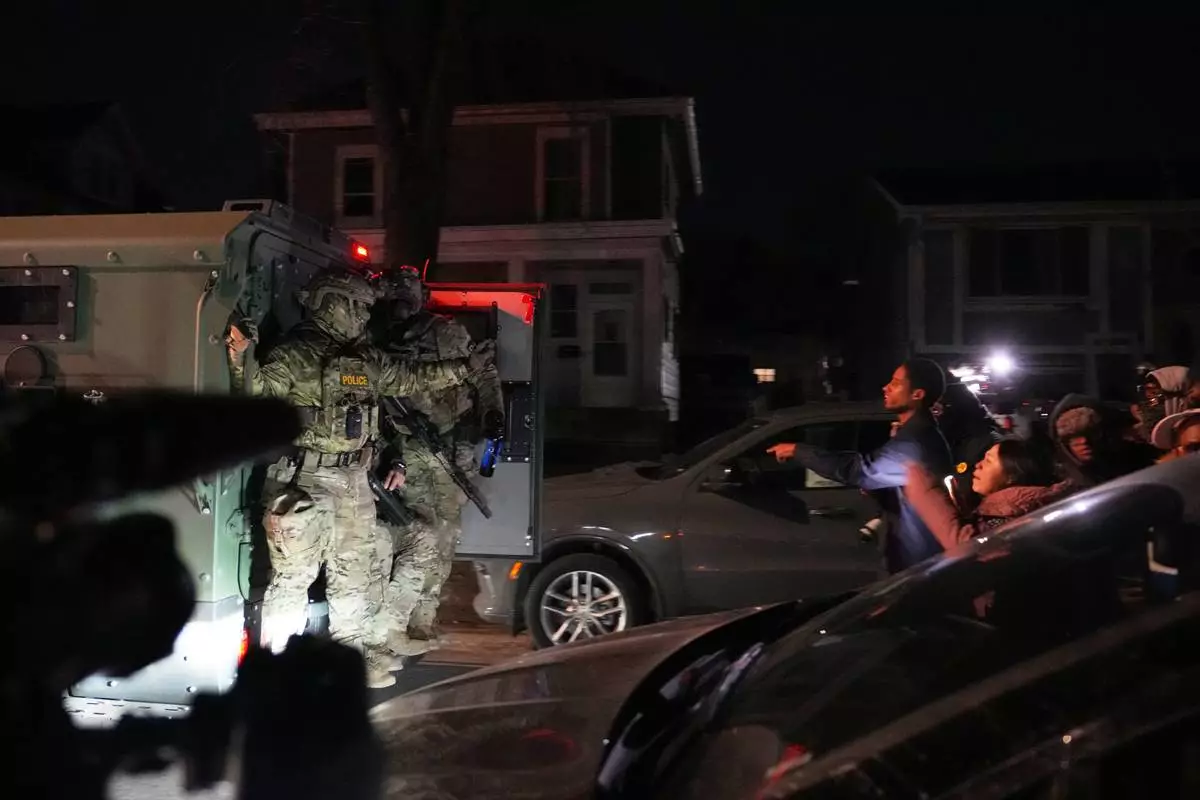
Protesters shout at law enforcement officers after a shooting on Wednesday, Jan. 14, 2026, in Minneapolis. (AP Photo/Abbie Parr)
Law enforcement officers stand amid tear gas at the scene of a reported shooting Wednesday, Jan. 14, 2026, in Minneapolis. (AP Photo/Adam Gray)