TOPEKA, Kan. (AP) — Nancy Jensen believes she’d still be living in an abusive group home if it wasn’t shut down in 2004 with the help of the Disability Rights Center of Kansas, which for decades has received federal money to look out for Americans with disabilities.
But the flow of funding under the Trump administration is now in question, disability rights groups nationwide say, dampening their mood as Saturday marks the 35th anniversary of the landmark Americans with Disabilities Act. Federal dollars pay for much of their work, including helping people who seek government-funded services and lawsuits now pushing Iowa and Texas toward better community services.
Click to Gallery

Four-year-old Rustin 'Rusty' Haugh who suffers from Combined Oxidative Phosphorylation Deficiency 11, or COXPD11, walks in a hospital lobby after a doctor's appointment in Dallas, Wednesday, July 23, 2025. (AP Photo/LM Otero)
Attorney Chris McGreal, right, poses for a photo with Jessica Haugh, center right, and her sons Ryder Ponder, 14, center left, and Rustin 'Rusty' Haugh, 4, after a doctor's appointment for Rusty in Dallas, Wednesday, July 23, 2025. (AP Photo/LM Otero)

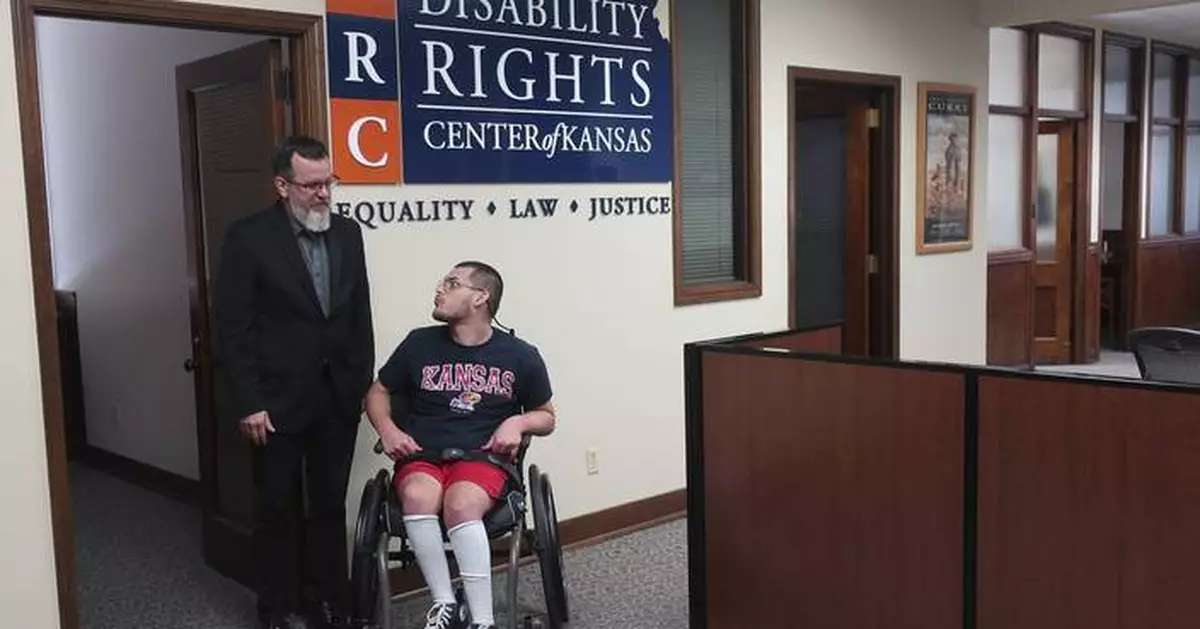
Matthew Hull, a Kansas resident who has cerebral palsy, is interviewed by The Associated Press at the Disability Rights Center in Topeka, Kans., June 18, 2025. (AP Photo/John Hanna)

Rocky Nichols, left, executive director of the Disability Rights Center of Kansas, and Matthew Hull, right, a Kansas resident who has cerebral palsy, speak at the center in Topeka, Kans., June 18, 2025. (AP Photo/John Hanna)
Documents outlining President Donald Trump's budget proposals show they would zero out funds earmarked for three grants to disability rights centers and slash funding for a fourth. Congress' first discussion of them, by the Senate Appropriations Committee, is set for Thursday, but the centers fear losing more than 60% of their federal dollars.
The threat of cuts comes as the groups expect more demand for help after Republicans’ tax and budget law complicated Medicaid health coverage with a new work-reporting requirement.
There’s also the sting of the timing: this year is the 50th anniversary of another federal law that created the network of state groups to protect people with disabilities, and Trump's proposals represent the largest potential cuts in that half-century, advocates said. The groups are authorized to make unannounced visits to group homes and interview residents alone.
“You’re going to have lots of people with disabilities lost,” said Jensen, now president of Colorado’s advisory council for federal funding of efforts to protect people with mental illnesses. She worries people with disabilities will have “no backstop” for fighting housing discrimination or seeking services at school or accommodations at work.
The potential budget savings are a shaving of copper from each federal tax penny. The groups receive not quite $180 million a year — versus $1.8 trillion in discretionary spending.
The president's Office of Management and Budget didn't respond to an email seeking a response to the disability rights groups' criticism. But in budget documents, the administration argued its proposals would give states needed flexibility.
The U.S. Department of Education said earmarking funds for disability rights centers created an unnecessary administrative burden for states. Trump's top budget adviser, Russell Vought, told senators in a letter that a review of 2025 spending showed too much went to “niche” groups outside government.
“We also considered, for each program, whether the governmental service provided could be provided better by State or local governments (if provided at all),” Vought wrote.
Disability rights advocates doubt that state protection and advocacy groups — known as P&As — would see any dollar not specifically earmarked for them.
They sue states, so the advocates don’t want states deciding whether their work gets funded. The 1975 federal law setting up P&As declared them independent of the states, and newer laws reinforced that.
“We do need an independent system that can hold them and other wrongdoers accountable,” said Rocky Nichols, the Kansas center's executive director.
Nichols' center has helped Matthew Hull for years with getting the state to cover services, and Hull hopes to find a job. He uses a wheelchair; a Medicaid-provided nurse helps him run errands.
“I need to be able to do that so I can keep my strength up,” he said, adding that activity preserves his health.
Medicaid applicants often had a difficult time working through its rules even before the tax and budget law's recent changes, said Sean Jackson, Disability Rights Texas’ executive director.
With fewer dollars, he said, “As cases are coming into us, we’re going to have to take less cases.”
The Texas group receives money from a legal aid foundation and other sources, but federal funds still are 68% of its dollars. The Kansas center and Disability Rights Iowa rely entirely on federal funds.
“For the majority it would probably be 85% or higher,” said Marlene Sallo, executive director of the National Disability Rights Network, which represents P&As.
The Trump administration's proposals suggest it wants to shut down P&As, said Steven Schwartz, who founded the Center for Public Representation, a Massachusetts-based organization that works with them on lawsuits.
Federal funding meant a call in 2009 to Disability Rights Iowa launched an immediate investigation of a program employing men with developmental disabilities in a turkey processing plant. Authorities said they lived in a dangerous, bug-infested bunkhouse and were financially exploited.
Without the dollars, executive director Catherine Johnson said, “That’s maybe not something we could have done.”
The Kansas center's private interview in 2004 with one of Jensen's fellow residents eventually led to long federal prison sentences for the couple operating the Kaufman House, a home for people with mental illnesses about 25 miles (40 kilometers) north of Wichita.
And it wasn't until Disability Rights Iowa filed a federal lawsuit in 2023 that the state agreed to draft a plan to provide community services for children with severe mental and behavioral needs.
For 15 years, Schwartz's group and Disability Rights Texas have pursued a federal lawsuit alleging Texas warehouses several thousand people with intellectual and developmental disabilities in nursing homes without adequate services. Texas put at least three men in homes after they'd worked in the Iowa turkey plant.
Last month, a federal judge ordered work to start on a plan to end the “severe and ongoing” problems. Schwartz said Disability Rights Texas did interviews and gathered documents crucial to the case.
“There are no better eyes or ears,” he said.
Hunter reported from Atlanta.

Four-year-old Rustin 'Rusty' Haugh who suffers from Combined Oxidative Phosphorylation Deficiency 11, or COXPD11, walks in a hospital lobby after a doctor's appointment in Dallas, Wednesday, July 23, 2025. (AP Photo/LM Otero)
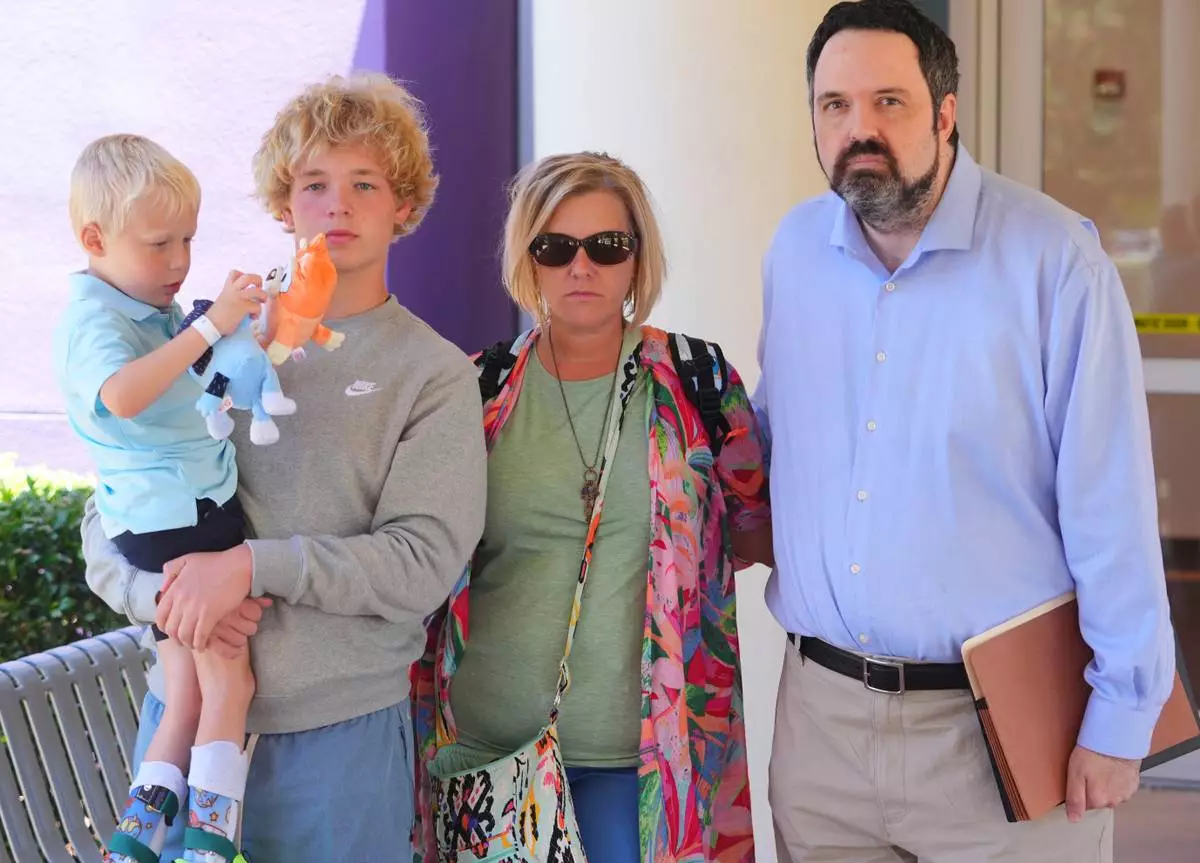
Attorney Chris McGreal, right, poses for a photo with Jessica Haugh, center right, and her sons Ryder Ponder, 14, center left, and Rustin 'Rusty' Haugh, 4, after a doctor's appointment for Rusty in Dallas, Wednesday, July 23, 2025. (AP Photo/LM Otero)

Matthew Hull, a Kansas resident who has cerebral palsy, is interviewed by The Associated Press at the Disability Rights Center in Topeka, Kans., June 18, 2025. (AP Photo/John Hanna)
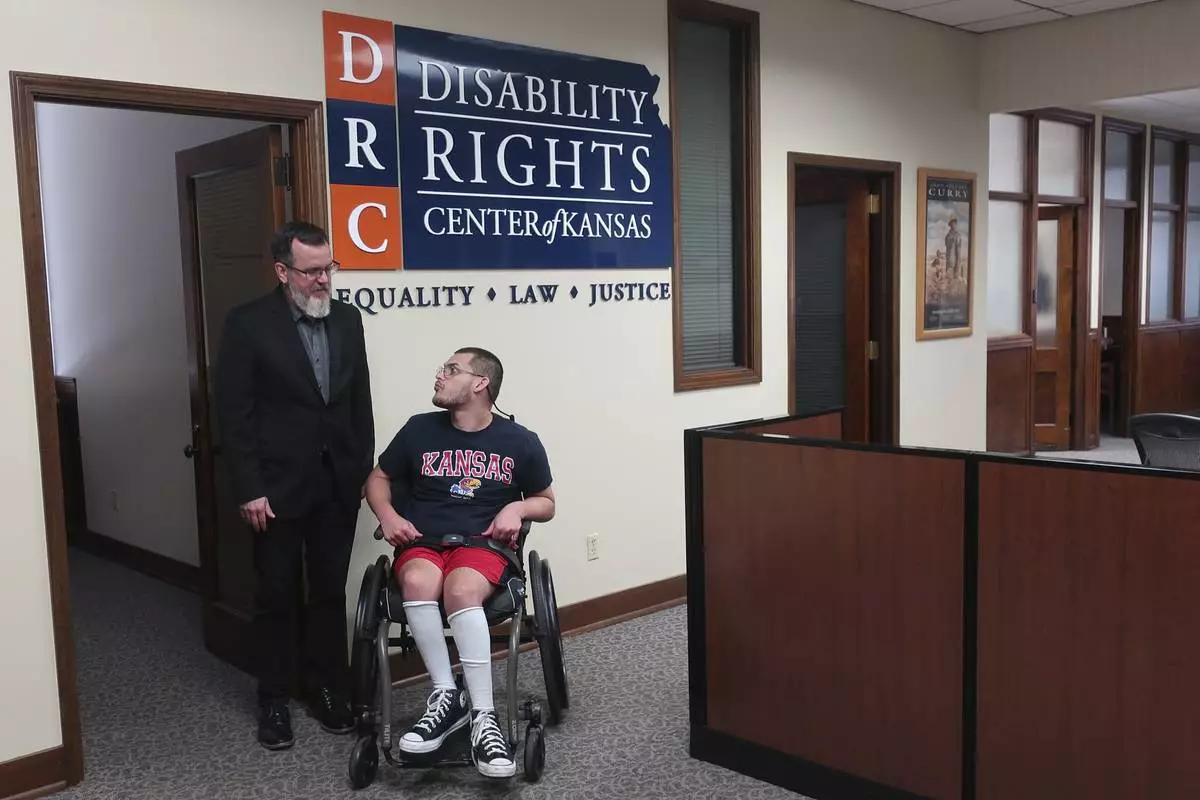
Rocky Nichols, left, executive director of the Disability Rights Center of Kansas, and Matthew Hull, right, a Kansas resident who has cerebral palsy, speak at the center in Topeka, Kans., June 18, 2025. (AP Photo/John Hanna)