BIDDU, West Bank (AP) — When Sayfollah Musallet of Tampa, Florida, was beaten to death by Israeli settlers in the West Bank two weeks ago, he became the fourth Palestinian-American killed in the occupied territory since the war in Gaza began.
No one has been arrested or charged in Musallet’s slaying – and if Israel’s track record on the other three deaths is any guide, it seems unlikely to happen. Yet Musallet’s father and a growing number of U.S. politicians want to flip the script.
Click to Gallery
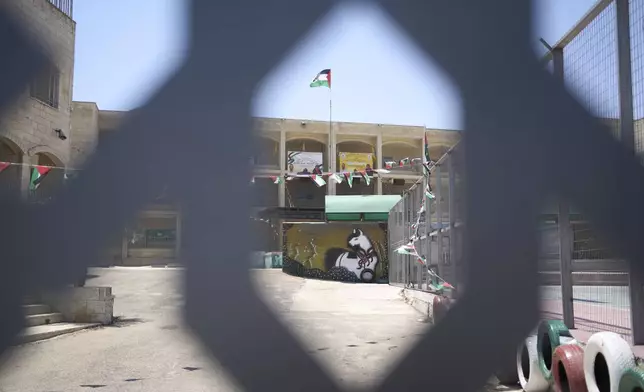
Memorial banners for Palestinian-American Sayfollah Musallet and Mohammed al-Shalabi, both killed by Israeli settlers, are displayed at a school in the West Bank town of Al Mazra as-Sharqiya, Monday, July 21, 2025. (AP Photo/Maya Alleruzzo)

On Monday, July 21, 2025, a man tidies the graves of Palestinian-American Sayfollah Musallet, left, and Mohammed al-Shalabi, both of whom were killed by Israeli settlers in the West Bank town of Al Mazra as-Sharqiya. (AP Photo/Maya Alleruzzo)
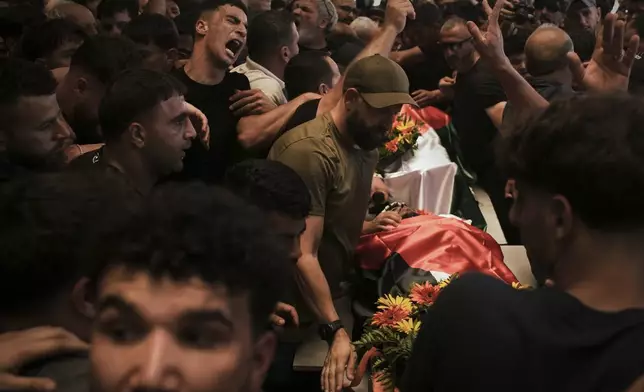
FILE - Mourners carry the bodies of Palestinian-American Sayfollah Musallet and Mohammed al-Shalabi during their funeral in the West Bank village of Al-Mazraa a-Sharqiya on Sunday, July 13, 2025. (AP Photo/Leo Correa, File)
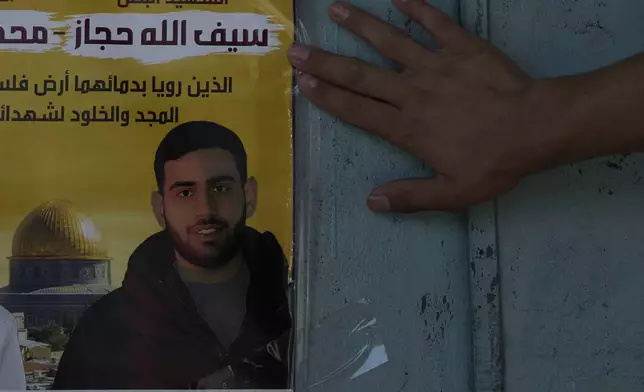
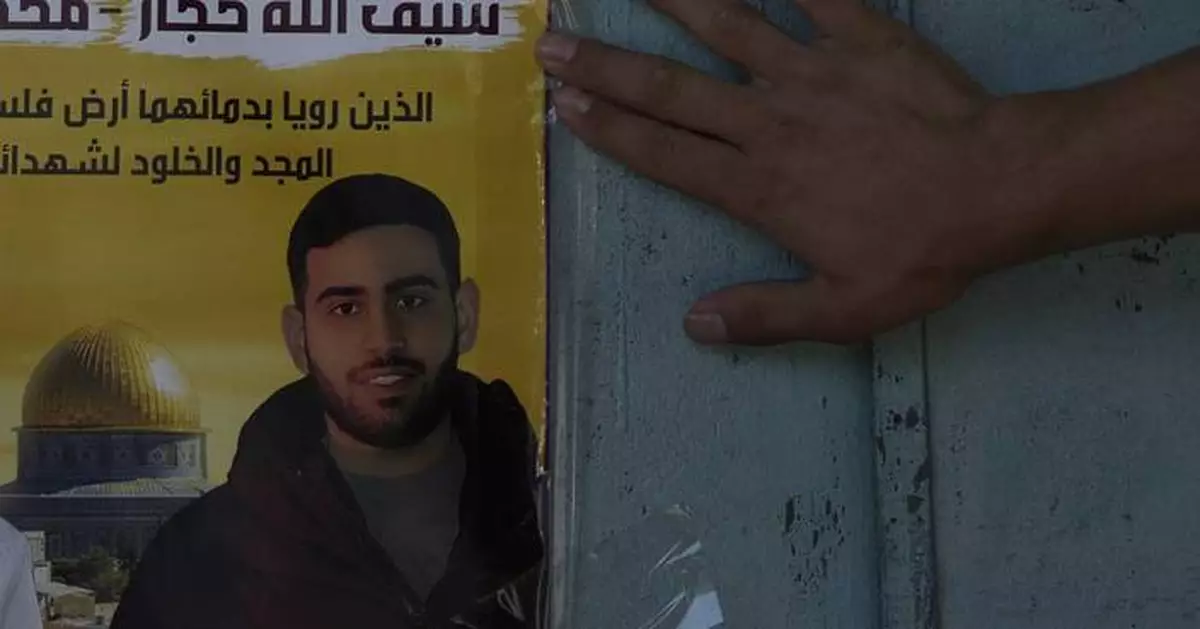
A memorial poster showing Palestinian-American Sayfollah Musallet, who was beaten to death by Israeli settlers, is displayed outside of a bakery in the West Bank town of Al Mazra as-Sharqiya, Monday, July 21, 2025. (AP Photo/Maya Alleruzzo)
“We demand justice,” Kamel Musallet said at his 20-year-old son’s funeral earlier this week. “We demand the U.S. government do something about it.”
Still, Musallet and relatives of the other Palestinian-Americans say they doubt anyone will be held accountable, either by Israel or the U.S. They believe the first word in their hyphenated identity undercuts the power of the second. And they say Israel and its law enforcement have made them feel like culprits — by imposing travel bans and, in some cases, detaining and interrogating them.
Although the Trump administration has stopped short of promising investigations of its own, the U.S. Embassy in Jerusalem has urged Israel to investigate the circumstances of each American’s death.
Writing on X on July 15, U.S. Ambassador to Israel Mike Huckabee said he'd asked Israel to “aggressively investigate the murder" of Musallet and that "there must be accountability for this criminal and terrorist act."
Senator Chris Van Hollen of Maryland and 28 other Democratic senators have also called for an investigation. In a letter this week to Secretary of State Marco Rubio and Attorney General Pam Bondi, they pointed to the “repeated lack of accountability" after the deaths of Musallet and other Americans killed in the West Bank.
Israel’s military, police and Shin Bet domestic security agency did not respond to requests for comment about the Palestinian-Americans’ deaths.
American-born teenagers Tawfic Abdel Jabbar and Mohammad Khdour were killed in early 2024 by Israeli fire while driving in the West Bank. In April 2025, 14-year-old Amer Rabee, a New Jersey native, was shot in the head at least nine times by Israeli forces, according to his father, as he stood among a grove of green almond trees in his family’s village.
In the immediate aftermath of both cases, Israeli authorities said that forces had fired on rock throwers, allegations disputed by the families and by testimony obtained by the AP. Israel pledged to investigate the cases further, but has released no new findings.
The teens' families told the AP they sought independent investigations by American authorities, expressing doubts that Israel would investigate in good faith. According to the Israeli watchdog group Yesh Din, killings of Palestinians in the West Bank rarely result in investigations — and when they do, indictments are uncommon.
The U.S. Justice Department has jurisdiction to investigate the deaths of its own citizens abroad, but does so after it gets permission from the host government and usually works with the host country’s law enforcement. The U.S. Embassy in Jerusalem declined to say whether the U.S. has launched independent probes into the killings.
A spokesperson for the embassy said in a statement that investigations are “underway” in Israel over the deaths of the four Americans and that its staff is pressing the Israeli authorities to move quickly and transparently.
Sen. Van Hollen said that when the U.S deals with Israel it “either doesn’t pursue these cases with the vigor necessary, or we don’t get any serious cooperation.”
“And then instead of demanding cooperation and accountability, we sort of stop — and that’s unacceptable. It’s unacceptable to allow American citizens to be killed with impunity," the Maryland Democrat said.
Israel says it holds soldiers and settlers to account under the bounds of the law, and that the lack of indictments does not mean a lack of effort.
A prominent recent case was the death of Shireen Abu Akleh, a Palestinian-American journalist for broadcaster Al Jazeera killed in the West Bank in 2022. An independent U.S. analysis of the circumstances of her death found that fire from an Israeli soldier was “likely responsible” for her killing but said it appeared to be an accident.
Despite an Israeli military investigation with similar conclusions, no one was ever disciplined.
Violence by Israeli forces and settlers has flared in the West Bank since the Hamas attack on Oct. 7, 2023. More than 950 Palestinians have been killed since the beginning of the war in Gaza, according to the United Nations. Some have been militants killed in fighting with Israel, though the dead have also included stone-throwers and bystanders uninvolved in violence.
Rather than a path toward justice, the families of Khdour, Rabee, and Abdel Jabbar say they’ve faced only challenges since the deaths.
Khdour, born in Miami, Florida, was shot and killed in April 2024 while driving in Biddu, a West Bank town near Jerusalem where he lived since age 2. U.S. investigators visited his family after the killing, his family said. Abdel Jabbar was killed while driving down a dirt road close to Al Mazra as-Sharqiya, his village in the northern West Bank.
Khdour's cousin, Malek Mansour, the sole witness, told the AP he was questioned by both Israeli and American investigators and repeated his testimony that shots came from a white pickup on Israeli territory.
He believes the investigators did not push hard enough to figure out who killed his cousin.
“The matter ended like many of those who were martyred (killed),” said Hanan Khdour, Khdour's mother.
Two months after the death, Israeli forces raided the family’s home and detained Mohammad’s brother, Omar Khdour, 23, also an American citizen.
Videos taken by family and shared with the AP show Omar Khdour blindfolded and handcuffed as Israeli soldiers in riot gear lead him out of the building and into a military jeep.
He said he was threatened during questioning, held from 4 a.m. to 3 p.m., and warned not to pursue the case.
Omar Khdour said Israeli soldiers at checkpoints have prevented him from leaving the West Bank to visit Israel or Jerusalem. Two other American fathers of Palestinian-Americans killed since Oct. 7, 2023 reported similar restrictions.
Hafeth Abdel Jabbar, Tawfic Abdel Jabbar's father, said he and his wife were blocked from leaving the West Bank for seven months. His son, Amir Abdel Jabbar, 22, remains restricted.
The father of Amer Rabee says he and his wife have also been stuck in the West Bank since their son’s killing. He showed AP emails from the U.S. Embassy in Jerusalem in which a consular official told him that Israel had imposed a travel ban on him, though it was unclear why.
Israeli authorities did not respond to comment on the detentions or travel restrictions.
Rabee said that in a land where violence against Palestinians goes unchecked, his family's American passports amounted to nothing more than a blue book.
“We are all American citizens,” Rabee said. “But here, for us, being American means nothing."
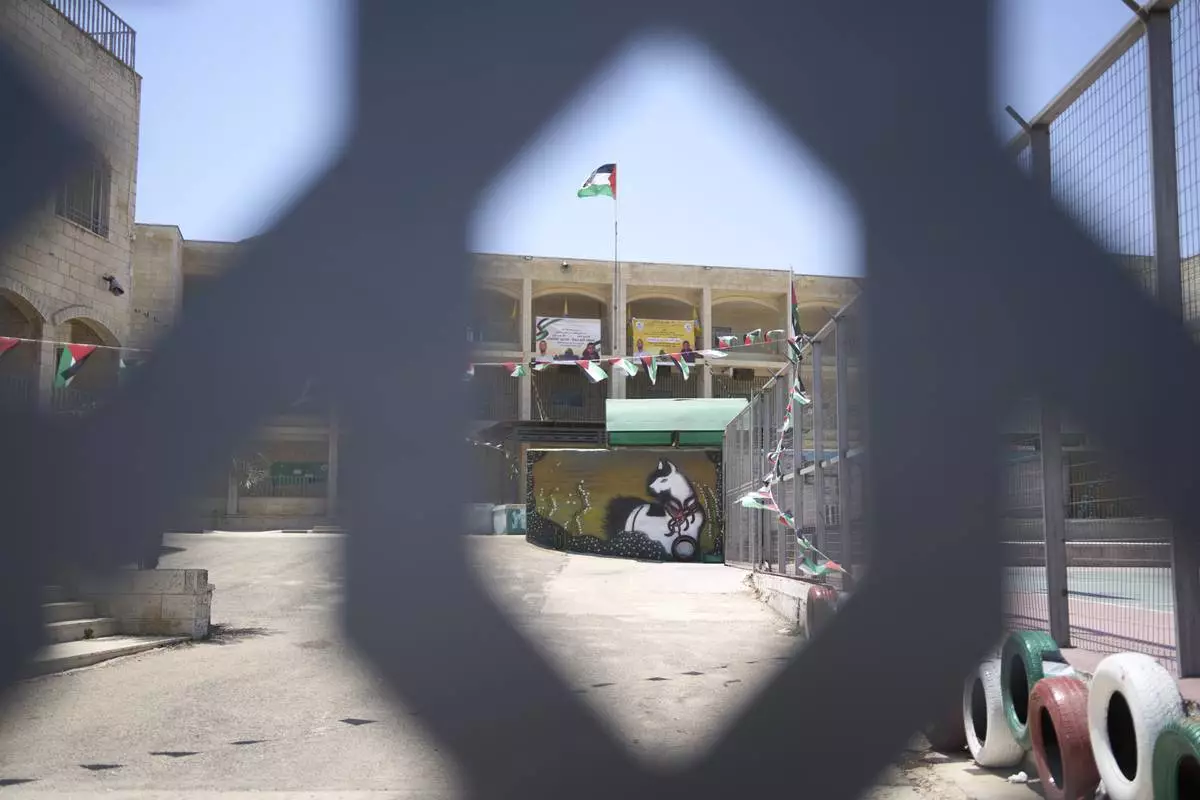
Memorial banners for Palestinian-American Sayfollah Musallet and Mohammed al-Shalabi, both killed by Israeli settlers, are displayed at a school in the West Bank town of Al Mazra as-Sharqiya, Monday, July 21, 2025. (AP Photo/Maya Alleruzzo)
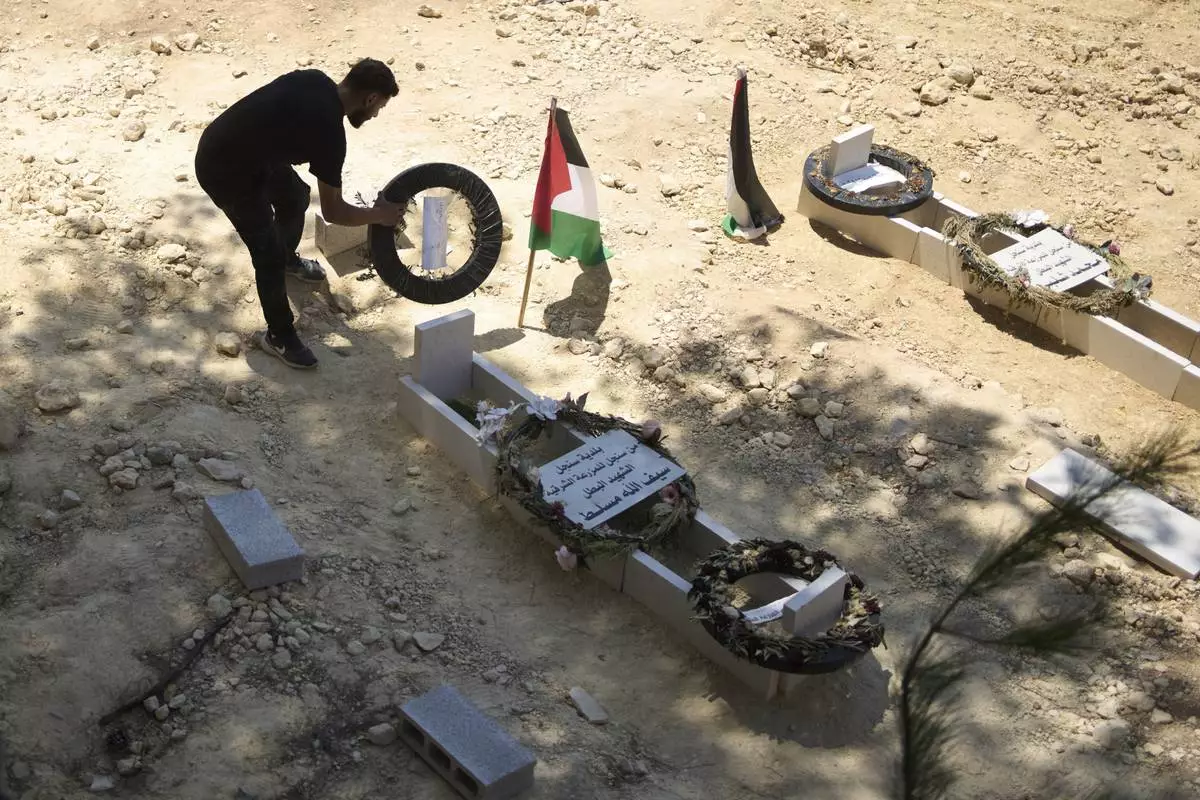
On Monday, July 21, 2025, a man tidies the graves of Palestinian-American Sayfollah Musallet, left, and Mohammed al-Shalabi, both of whom were killed by Israeli settlers in the West Bank town of Al Mazra as-Sharqiya. (AP Photo/Maya Alleruzzo)

FILE - Mourners carry the bodies of Palestinian-American Sayfollah Musallet and Mohammed al-Shalabi during their funeral in the West Bank village of Al-Mazraa a-Sharqiya on Sunday, July 13, 2025. (AP Photo/Leo Correa, File)
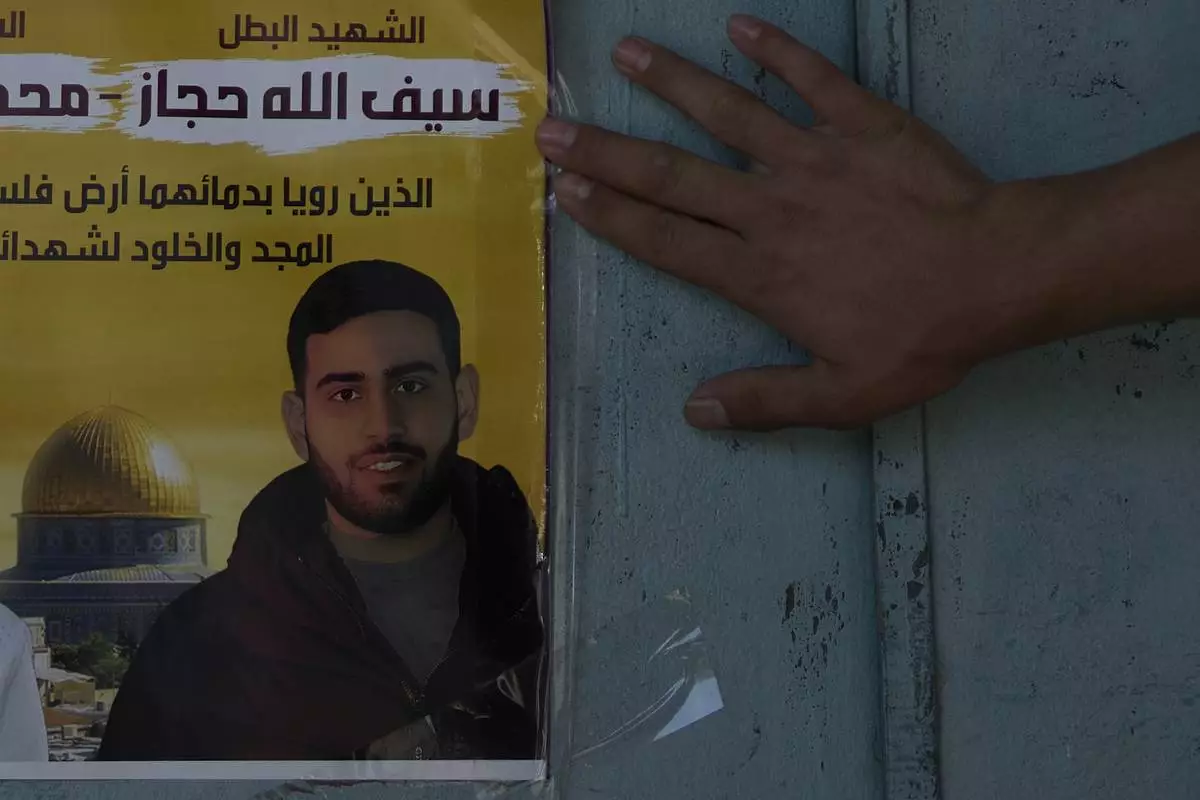
A memorial poster showing Palestinian-American Sayfollah Musallet, who was beaten to death by Israeli settlers, is displayed outside of a bakery in the West Bank town of Al Mazra as-Sharqiya, Monday, July 21, 2025. (AP Photo/Maya Alleruzzo)