Experts from China and countries in Latin America and the Caribbean (LAC) exchanged their views on human rights development cooperation and the China-Latin America contribution to global governance at a meeting held in Sao Paulo, Brazil on Friday.
The second China-Latin America and Caribbean States Roundtable on Human Rights, themed "China-Latin American and Caribbean States Community with a Shared Future and the Development of Human Rights', brought together over 130 officials, experts, and representatives from social organizations, think tanks and media in the field of human rights.
The event seeks to promote the exchange of experiences and foster the perspectives on how different models and cultures address the universality of human rights.
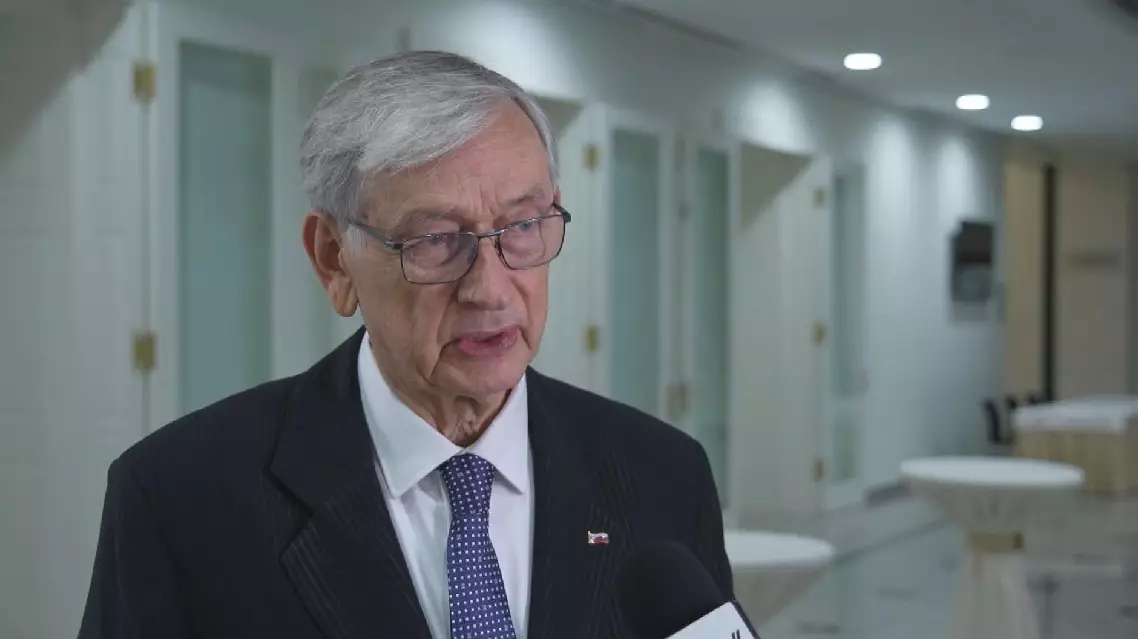
"It is very important for us that China is the one convening us, because it is a country that has incorporated human rights into its Constitution, in all its constitutional reforms. Not only that, but it also ensures the security of people's rights. Therefore, holding this event in Latin America, in Brazil, in such an important country for our continent, is very, very important," said Juan Carlos Moraga, president of Human Rights Without Frontiers, a non-governmental organization.
The first edition of the event was held in Rio de Janeiro last September, laying the groundwork for this meeting in Sao Paulo, which is now presented as an opportunity to strengthen ties and advance more specialized discussions.
"I think it's very important. First, it allows us to share different realities, from the Caribbean, Latin America, and China. It enables us to provide observations and suggest fields in which we should take actions. I think it has been very important that China, its government, its universities, and its research institutions, along with some universities in the region, are providing those facilities," said Jones Cooper Seferlis, a professor at the University of Panama.
"This is a lesson for the future, and we hope that new instances of dialogue and meeting will emerge from here," said Moraga.
The roundtable was co-organized by the China Society for Human Rights Studies, Renmin University of China, and Sao Paulo State University, with the collaboration of the Chongyang Institute for Financial Studies at Renmin University of China and the Institute of Public Policy and International Relations at Sao Paulo State University.
The forum published the Sao Paulo Consensus on China-Latin American and the Caribbean States Human Rights Communication and Cooperation, and launched the China-Latin American and Caribbean States Human Rights Research and Cooperation Network.
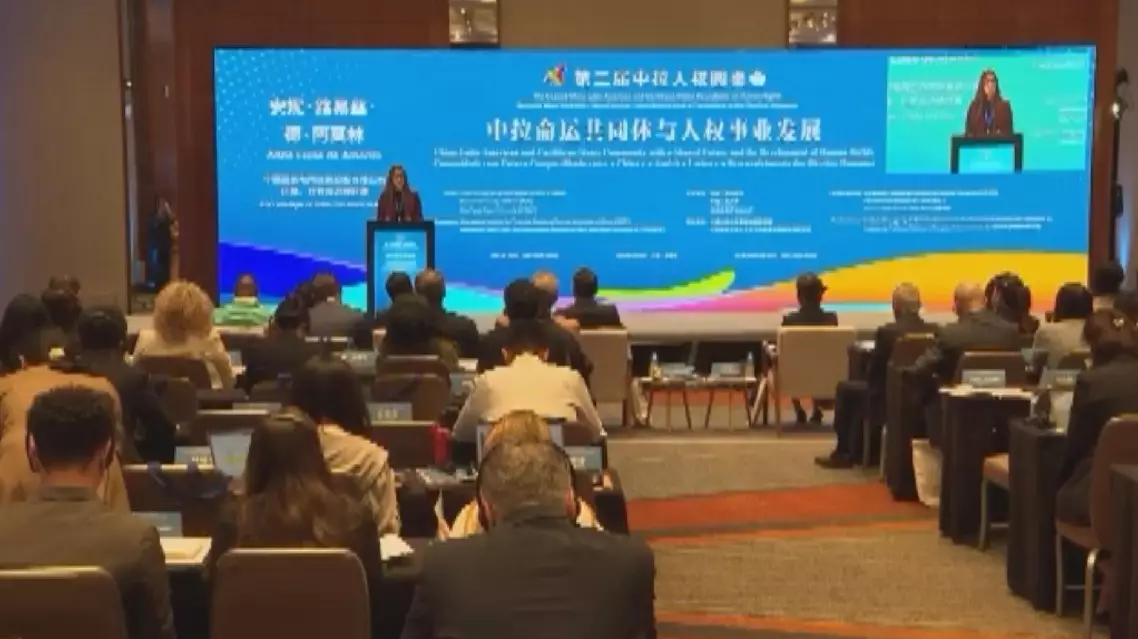
2nd China-Latin America human rights roundtable highlights cooperation for global governance
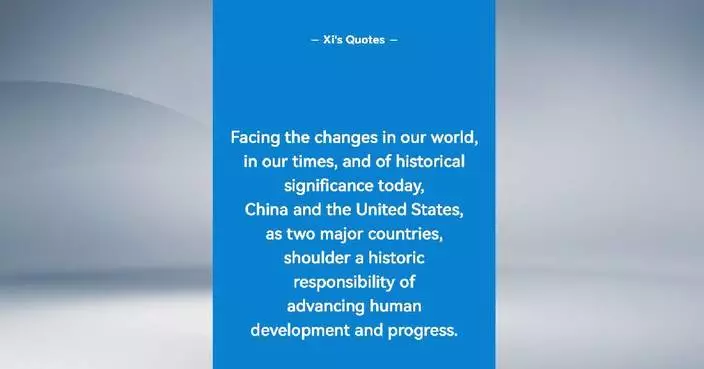
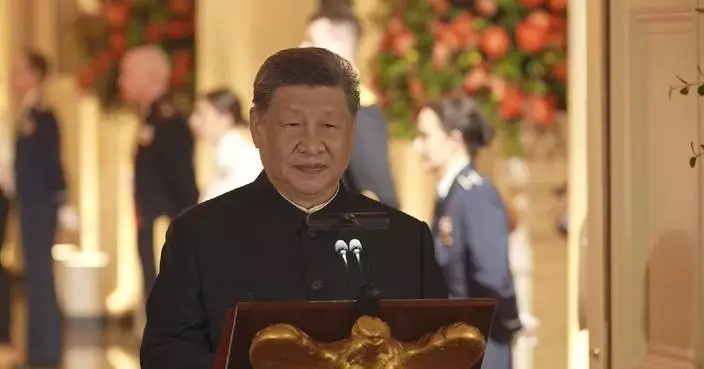
Political figures from several countries have highlighted the global significance of Chinese President Xi Jinping's visit to the United States, hoping it will bring more stability to a turbulent world.
Xi arrived in the United States on Wednesday to begin a three-day state visit at the invitation of U.S. President Donald Trump. It comes after Trump paid a state visit to China in May, which marked the first by a U.S. president in nearly nine years.
Former President of Slovenia Danilo Turk said this visit will bring both political and economic stability to the world.
"I was very pleased when I learned about the plan of President Xi to visit the United States precisely at this moment, because this visit at this very moment can have an important stabilizing effect for the world not only in the economic sense, but also in the political sense. China is an example of a responsible great power," he said.
Andrey Sidorov, an associate professor at the Lomonosov Moscow State University, noted the high frequency of interactions between Xi and Trump, saying the high-level engagement is crucial for addressing bilateral issues.
"The two leaders have met many times. Last October, they met in Busan, South Korea. In May of this year, President Trump paid a state visit to China. Now, President Xi is visiting Washington. The whole world is paying attention to their frequent meetings. In my opinion, this is of great importance. Frequent communication and collaboration between the two leaders will help identify and resolve issues in international relations and their bilateral ties," Sidorov said.
Former Prime Minister of France Laurent Fabius hoped that this visit would generate more consensus on bilateral and global issues between the two major countries.
"I hope that China and the United States could reach as much consensus as possible. China and the United States are major countries of great importance to the world. There are too many problems that need to be solved in this world. Therefore, the two countries need to work together. As a French proverb goes, as well as similar sayings in other countries, 'it takes two to tango,'" Fabius said.
Jean-Luc Melenchon, de facto leader of the French political party La France Insoumise, expected the Xi-Trump summit to help restore order to international trade and global relations.
"We hope this meeting will benefit all of humanity. The world today is facing great turbulence and disorder. We must change this situation. China's stance is very rational and very well-organized. There has already been too much chaos in international trade and international relations. That is why this meeting is so important," he said.
Fernand Kartheiser, a member of the European Parliament for Luxembourg, also hoped that this visit would help ease tensions in international relations.
"In the time that we are living today are very difficult. The world is not very stable, and there are a lot of tensions. So, I really welcome the visit by President Xi Jinping to the United States, because it gives us hope for better international relations," Kartheiser said.
Int'l figures, obervers expect Xi's US visit to add more stability to turbulent world