New data reveals that China now leads the world in large-scale AI model development, with domestic companies creating 1,509 of the 3,755 total models released globally to date - representing over 40 percent of the world's total.
The figures were announced at the 2025 World Artificial Intelligence Conference (WAIC) and High-Level Meeting on Global AI Governance held in Shanghai from Saturday to Monday, where China's rapid advances in artificial intelligence took center stage.
The conference exhibition floor featured more than 40 competing domestic models, including a newly upgraded general-purpose system scalable from three billion to 750 billion parameters.
"This is a multimodal large-scale model that employs dynamic hierarchical distillation and data zone governance, enabling the model to achieve both comprehensiveness and scale. It reduces training costs by 70 percent while improving inference efficiency by 30 percent," said Xiang Xin, an exhibitor.
China's advanced role in AI development extends beyond quantity to technological breakthroughs, including the world's first large model with "native memory" capabilities.
"It enables continuous personalization of each model - the more personalized it becomes, the more tailored and precisely attuned the service will be to every individual's unique needs," said Liu Fanping, another exhibitor.
Since the beginning of this year, China has accelerated the iteration speed of its foundational large-scale models. These models are being rapidly implemented across industries such as electronics, raw materials, and consumer goods, with applications spanning R and D design, pilot verification, production manufacturing, and operational management. The large-scale model industry has established a complete architecture encompassing the foundational layer, model layer, and application layer, creating an integrated cycle that connects basic research, technological innovation, and commercial implementation.
"Since 2024, China's large-scale models have made remarkable progress - whether in core capabilities of large language models, reasoning skills, or multimodal models' comprehension and generation abilities. The advancements have been significant, and the iteration pace has been exceptionally rapid," said Yu Xiaohui, president of China Academy of Information and Communications Technology.
Supporting this model development boom, China now hosts over 5,100 AI companies among 35,000 worldwide, including 71 domestic unicorns.
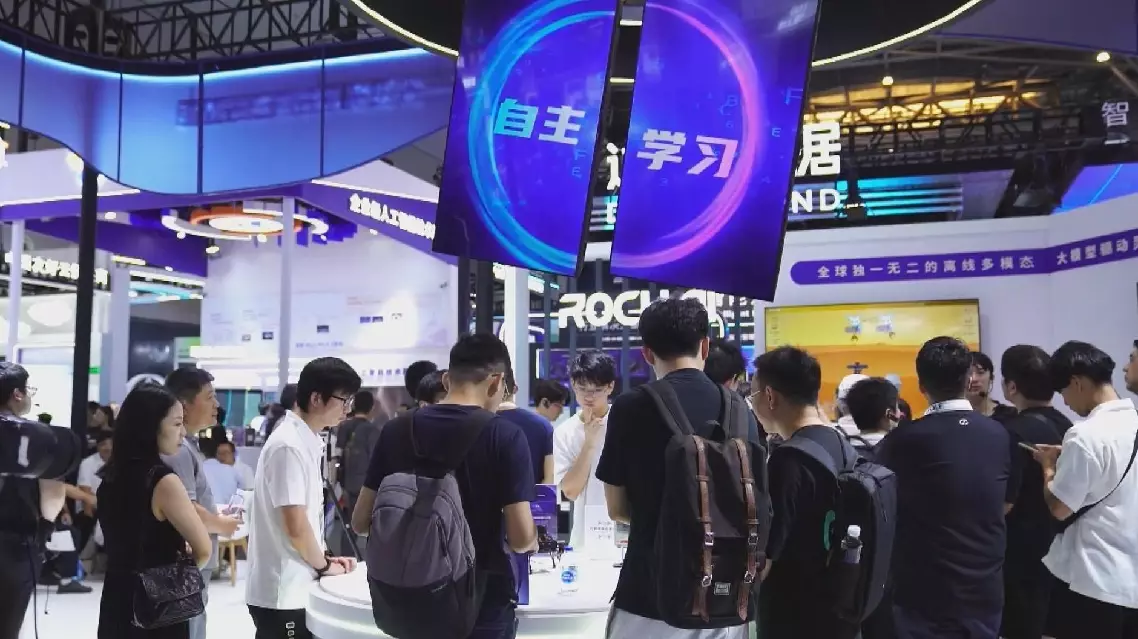
China tops global AI model count with 1,509 homegrown systems
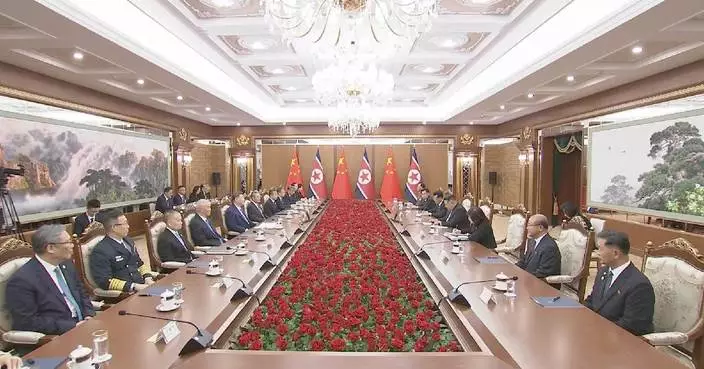
Xi Jinping, general secretary of the Communist Party of China (CPC) Central Committee and Chinese president, said on Monday that the relationship between China and the Democratic People's Republic of Korea (DPRK) stands at a new historical starting point.
Xi arrived in the DPRK capital of Pyongyang earlier on Monday to begin a two-day state visit at the invitation of Kim Jong Un, general secretary of the Workers' Party of Korea and president of the State Affairs of the DPRK, marking his first trip to the country in seven years.
Delivering a speech at a welcome banquet hosted by Kim, Xi pointed out that China and the DPRK, linked by mountains and rivers and sharing a common future, have seen their traditional friendship passed down across generations and grow ever stronger over time through the test of the evolving international landscape.
This year marks the 65th anniversary of the China-DPRK Treaty of Friendship, Cooperation and Mutual Assistance, and the China-DPRK relationship stands at a new historical starting point, Xi said, noting that he has reached important consensus with Kim during his visit.
From the strategic perspective of the future and destiny of socialism, both leaders have agreed to seize the general trend of the times, respond to the shared aspirations of the two peoples, strengthen high-level exchanges, deepen strategic communication, expand practical cooperation, enhance people-to-people bonds, promote the high-level development of China-DPRK relations, jointly open up brighter prospects for the socialist cause of both countries, and contribute to the continuous progress of human society, Xi said.
The successful convening of the Ninth Congress of the WPK this year has made strategic plans and major arrangements for the long-term development of the Party and the country's cause, ushering in a new period of comprehensive development of the DPRK's socialist cause, Xi said.
As good neighbors, good friends and good comrades, the Chinese side sincerely wishes that, under the strong leadership of the Central Committee of the WPK headed by General Secretary Kim, the DPRK people will successfully accomplish the goals and tasks set by the Ninth Congress of the WPK and make constant new achievements in the socialist cause of the DPRK, Xi said.
On behalf of the WPK, the government and the people of the DPRK, Kim extended the warmest welcome to Xi on his visit. Kim said that Pyongyang was filled with an atmosphere of friendship on this special day as the DPRK's Party, government and people warmly welcomed their most distinguished guest.
Noting that Xi's first overseas trip of the year had brought him to the DPRK, Kim said this fully demonstrated the great importance Xi attached to developing relations between the two parties and the two countries, and constituted the most valuable support for the DPRK's socialist cause.
Noting the meeting with Xi came nine months after their previous meeting, Kim said that during this meeting, they reached important consensus on further advancing DPRK-China relations with new contemporary connotations in light of new changing circumstances, and exchanged views on international and regional issues of mutual concern, which will surely accelerate the development of the DPRK-China friendship with profound historical traditions, and contribute to peace and stability in the region and the world.
The DPRK people take heartfelt joy in the remarkable achievements made by the brotherly Chinese people, Kim said, expressing belief that under the leadership of the CPC with Xi at its core, the great Chinese people will surely create greater achievements in building a great modern socialist country in all respects, realizing the Second Centenary Goal, and completing the new journey toward the great rejuvenation of the Chinese nation.
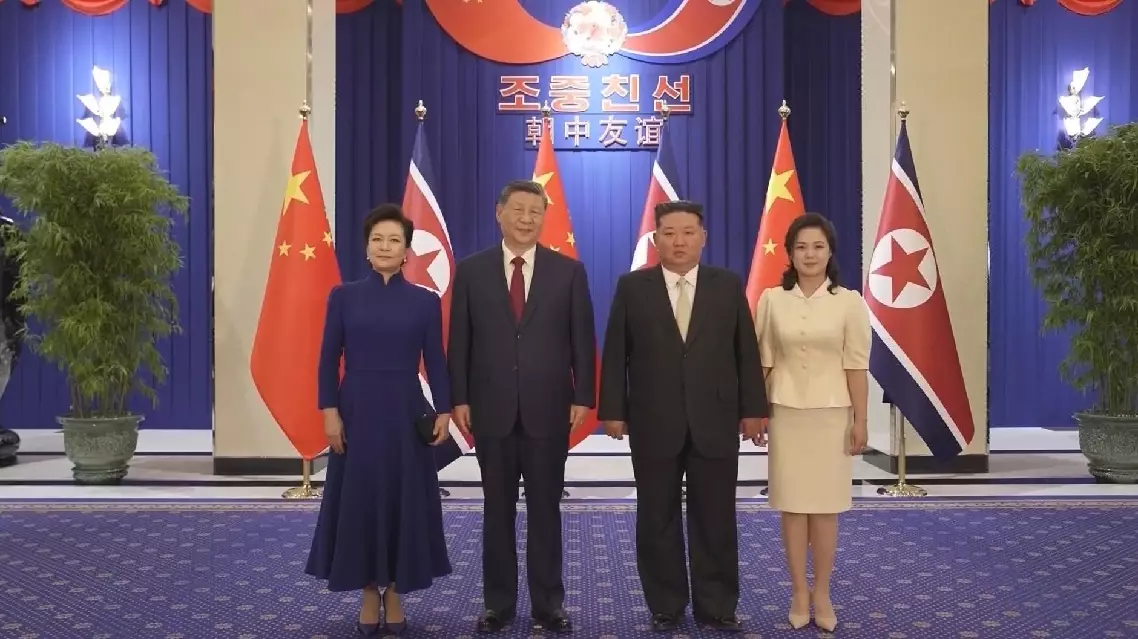
Xi says China-DPRK ties stand at new historical starting point