Skip to Content Facebook Feature Image

Faith leaders hope bill will stop the loss of thousands of clergy from abroad serving US communities

News

Faith leaders hope bill will stop the loss of thousands of clergy from abroad serving US communities
News

News

Faith leaders hope bill will stop the loss of thousands of clergy from abroad serving US communities

2025-07-27 19:25 Last Updated At:19:31

Faith leaders across the U.S. are hoping a bipartisan bill, recently introduced in the U.S. Senate and House, might finally bring resolution to an immigration issue that has been hindering their service to their communities for more than two years.

In March 2023, the Biden administration made a sudden change in how the government processes green cards in the category that includes both abused minors and religious workers. It created new backlogs that threaten the ability of thousands of pastors, nuns, imams, cantors and others to remain in the United States.

The bill only tackles one small part of the issue, which sponsoring lawmakers hope will increase its chances of passing even as immigration remains one of the most polarizing issues in the country.

Faith leaders say even a narrow fix will be enough to prevent damaging losses to congregations and to start planning for the future again.

“Unless there is a change to current practice, our community is slowly being strangled,” said the Rev. Aaron Wessman, vicar general and director of formation for the Glenmary Home Missioners, a small Catholic order ministering in rural America.

“I will weep with joy if this legislation passes," he said. "It means the world for our members who are living in the middle of uncertainty and for the people they’ll be able to help.”

Two thirds of Glenmary’s priests and brothers under 50 years old are foreign-born — mostly from Kenya, Mexico, Nigeria and Uganda — and they are affected by the current immigration snag, Wessman added.

So are thousands of others who serve the variety of faiths present in the United States, from Islam to Hinduism to evangelical Christianity, providing both pastoral care and social services.

No exact numbers exist, but it is estimated that there are thousands of religious workers who are now backlogged in the green card system and/or haven’t been able to apply yet.

Congregations bring to the United States religious workers under temporary visas called R-1, which allow them to work for up to five years. That used to be enough time for the congregations to petition for green cards under a special category called EB-4, which would allow the clergy to become permanent residents.

Congress sets a quota of green cards available per year divided in categories, almost all based on types of employment or family relationships to U.S. citizens. In most categories, the demand exceeds the annual quota.

Citizens of countries with especially high demand get put in separate, often longer “lines” — for several years, the most backlogged category has been that of married Mexican children of U.S. citizens, where only applications filed more than 24 years ago are being processed.

Also in a separate line were migrant children with “Special Immigrant Juvenile Status” — neglected or abused minors — from Guatemala, Honduras and El Salvador. Hundreds of thousands sought humanitarian green cards or asylum after illegally crossing into the U.S. since the mid-2010s, though the Trump administration recently cracked down on the program.

In March 2023, the State Department suddenly started adding the minors to the general green card queue with the clergy. That has created such a bottleneck that in April, only halfway through the current fiscal year, those green cards became unavailable.

And when they will become available in the new fiscal year starting in October, they are likely to be stuck in the six-year backlog they faced earlier this year — meaning religious workers with a pending application won’t get their green cards before their five-year visas expire and they must leave the country.

In a report released Thursday, U.S. Citizenship and Immigration Services blamed the EB-4 backlogs on the surge in applications by minors from Central America, and said the agency found widespread fraud in that program.

The Senate and House bills would allow the Department of Homeland Security to extend religious workers’ visas as long as their green card application is pending. They would also prevent small job changes — such as moving up from associate to senior pastor, or being assigned to another parish in the same diocese — from invalidating the pending application.

“Even as immigration issues are controversial and sometimes they run afoul of partisan politics, we think this fix is narrow enough, and the stakeholder group we have is significant enough, that we’re hoping we can get this done,” said Democratic Sen. Tim Kaine of Virginia, who introduced the Senate bill in April after hearing about the issue in his Richmond parish.

Two of the last three priests there were foreign-born, he said, and earlier this month he was approached by a sister with the Comboni missionaries worried about her expiring visa. Kaine’s two Republican cosponsors, Sens. Susan Collins of Maine and Jim Risch of Idaho, heard from voters worried about losing many faith leaders.

“It adds to their quality of life. And there’s no reason they shouldn’t have the ability to have this,” Risch said. “Religious beliefs spread way beyond borders, and it is helpful to have these people who … want to come here and want to associate with Americans of the same faith. And so anything we can do to make that easier, is what we want to do.”

Republican Rep. Mike Carey of Ohio, with Republican and Democratic colleagues, introduced an identical bill in the House. Both bills are still in the respective judiciary committees.

“To be frank, I don’t know what objections people could have,” said Lance Conklin, adding that the bill doesn’t require more green cards, just a time extension on existing visas. Conklin co-chairs the religious workers group of the American Immigration Lawyers Association and often represents evangelical pastors.

Faith denominations from Buddhism to Judaism recruit foreign-born clergy who can minister to growing non-English-speaking congregations and often were educated at foreign institutions steeped in a religion’s history. For many, it is also a necessity because of clergy shortages.

The number of Catholic priests in the U.S. has declined by more than 40% since 1970, according to the Center for Applied Research in the Apostolate, a research center affiliated with Georgetown University. Some dioceses, however, are experiencing an uptick in vocations, and some expect more will be inspired by the recent election of Leo XIV, the first U.S.-born pope.

Last summer, the Diocese of Paterson — serving 400,000 Catholics and 107 parishes in three New Jersey counties — and five of its affected priests sued the Department of State, Department of Homeland Security and the U.S. Citizenship and Immigration Services.

The lawsuit argues that the 2023 change “will cause severe and substantial disruption to the lives and religious freedoms” of the priests and the faithful they serve. The government’s initial response was that the Department of State was correct in making that change, according to court documents.

Expecting some action on the legislative front, the parties agreed to stay the lawsuit, said Raymond Lahoud, the diocese’s attorney.

But because the bills weren’t included in the nearly-900-page sprawling legislation that Congress passed and President Donald Trump signed into law earlier this month, the lawsuit is moving forward, Lahoud said.

“We just can’t wait anymore,” he said.

Associated Press religion coverage receives support through the AP’s collaboration with The Conversation US, with funding from Lilly Endowment Inc. The AP is solely responsible for this content.
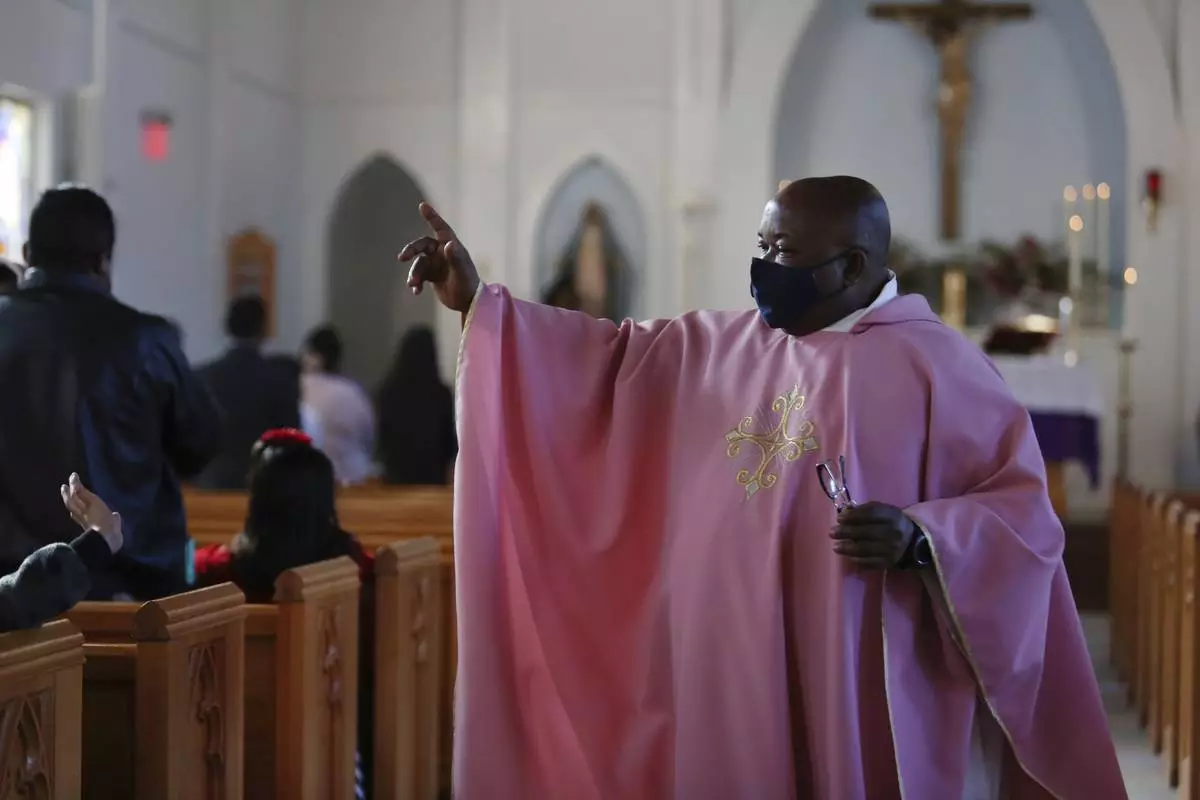
FILE - The Rev. Athanasius Abanulo waves to his parishioners after Mass on Dec. 12, 2021, at Immaculate Conception Catholic Church in Wedowee, Ala. (AP Photo/Jessie Wardarski, File)

FILE - The Rev. Athanasius Abanulo waves to his parishioners after Mass on Dec. 12, 2021, at Immaculate Conception Catholic Church in Wedowee, Ala. (AP Photo/Jessie Wardarski, File)
SEOUL, South Korea (AP) — A South Korean court sentenced former President Yoon Suk Yeol to five years in prison Friday in the first verdict from eight criminal trials over the martial law debacle that forced him out of office and other allegations.

Yoon was impeached, arrested and dismissed as president after his short-lived imposition of martial law in December 2024 triggered huge public protests calling for his ouster.

The most significant criminal charge against him alleges that his martial law enforcement amounted to a rebellion, and the independent counsel has requested the death sentence in the case that is to be decided in a ruling next month.

Yoon has maintained he didn’t intend to place the country under military rule for an extended period, saying his decree was only meant to inform the people about the danger of the liberal-controlled parliament obstructing his agenda. But investigators have viewed Yoon’s decree as an attempt to bolster and prolong his rule, charging him with rebellion, abuse of power and other criminal offenses.

In Friday’s case, the Seoul Central District Court sentenced Yoon for defying attempts to detain him, fabricating the martial law proclamation, and sidestepping a legally mandated full Cabinet meeting and thus depriving some Cabinet members who were not convened of their due rights to deliberate on his decree.

Judge Baek Dae-hyun said in the televised ruling that imposing “a grave punishment” was necessary because Yoon hasn’t shown remorse and has only repeated “hard-to-comprehend excuses.” The judge also restoring legal systems damaged by Yoon’s action was necessary.

Yoon’s defense team said they will appeal the ruling, which they believe was “politicized” and reflected “the unliberal arguments by the independent counsel.” Yoon’s defense team argued the ruling “oversimplified the boundary between the exercise of the president’s constitutional powers and criminal liability.”

Prison sentences in the multiple, smaller trials Yoon faces would matter if he is spared the death penalty or life imprisonment at the rebellion trial.

Park SungBae, a lawyer who specializes in criminal law, said there is little chance the court would decide Yoon should face the death penalty in the rebellion case. He said the court will likely issue a life sentence or a sentence of 30 years or more in prison.

South Korea has maintained a de facto moratorium on executions since 1997 and courts rarely hand down death sentences. Park said the court would take into account that Yoon’s decree didn’t cause casualties and didn’t last long, although Yoon hasn’t shown genuine remorse for his action.

South Korea has a history of pardoning former presidents who were jailed over diverse crimes in the name of promoting national unity. Those pardoned include strongman Chun Doo-hwan, who received the death penalty at a district court over his 1979 coup, the bloody 1980 crackdowns of pro-democracy protests that killed about 200 people, and other crimes.

Some observers say Yoon will likely retain a defiant attitude in the ongoing trials to maintain his support base in the belief that he cannot avoid a lengthy sentence but could be pardoned in the future.

On the night of Dec. 3, 2024, Yoon abruptly declared martial law in a televised speech, saying he would eliminate “anti-state forces” and protect “the constitutional democratic order.” Yoon sent troops and police officers to encircle the National Assembly, but many apparently didn’t aggressively cordon off the area, allowing enough lawmakers to get into an assembly hall to vote down Yoon’s decree.

No major violence occurred, but Yoon's stunt caused the biggest political crisis in South Korea and rattled its diplomacy and financial markets. For many, his decree, the first of its kind in more than four decades in South Korea, brought back harrowing memories of past dictatorships in the 1970s and 1980s, when military-backed leaders used martial law and emergency measures to deploy soldiers and tanks on the streets to suppress demonstrations.

After Yoon's ouster, his liberal rival Lee Jae Myung became president via a snap election last June. After taking office, Lee appointed three independent counsels to look into allegations involving Yoon, his wife and associates.

Yoon's other trials deal with charges like ordering drone flights over North Korea to deliberately inflame animosities to look for a pretext to declare martial law. Other charges accuse Yoon of manipulating the investigation into a marine’s drowning in 2023 and receiving free opinion surveys from an election broker in return for a political favor.

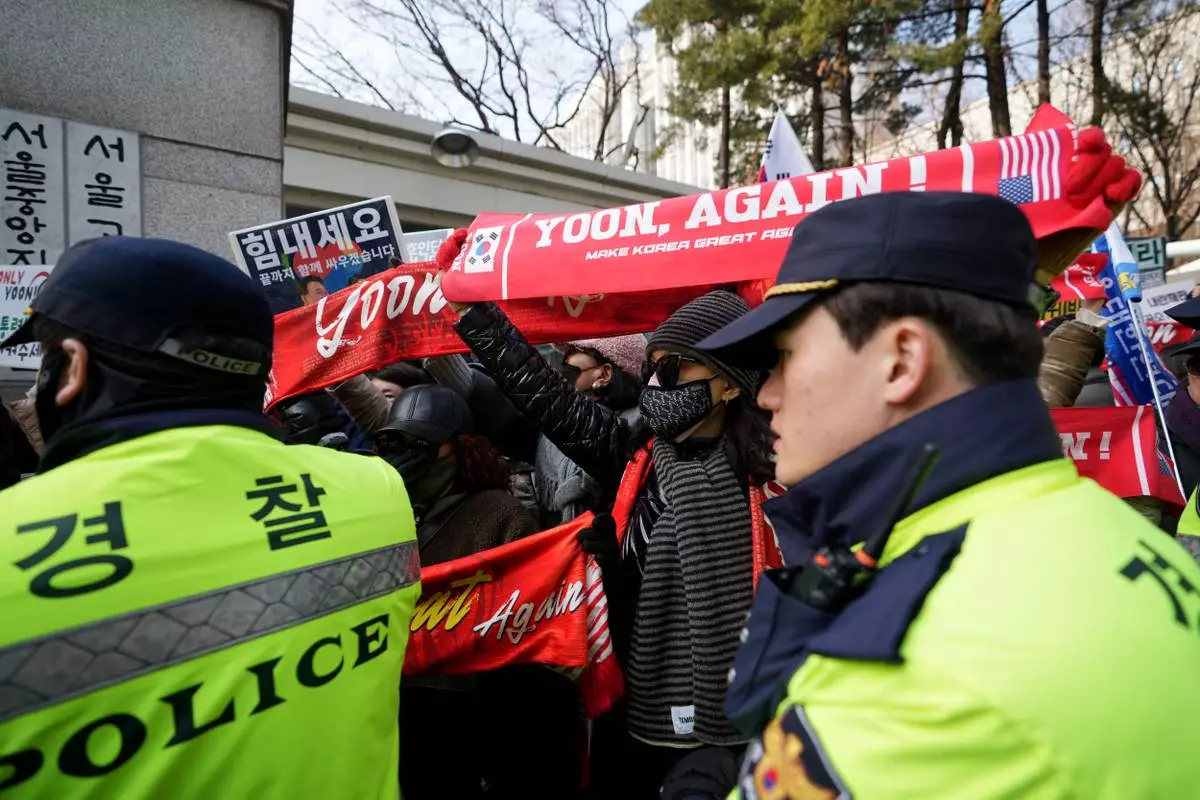
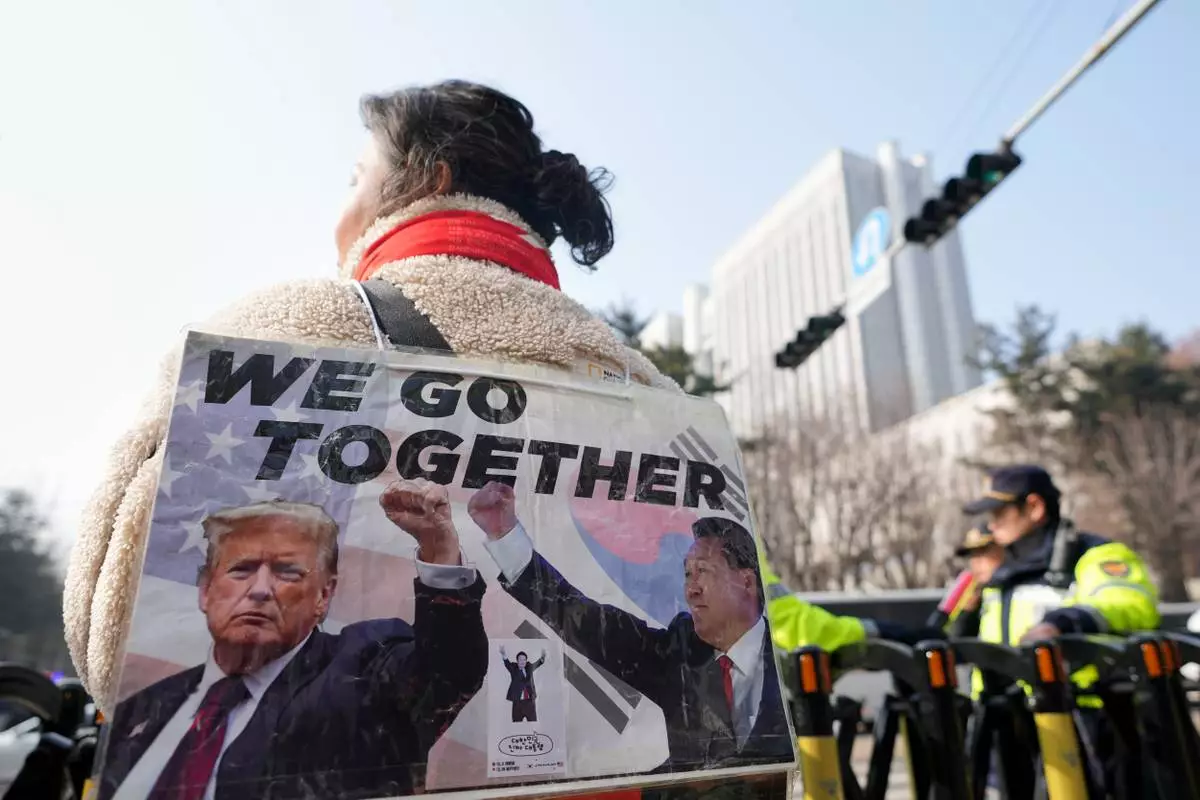
A supporter of former South Korean President Yoon Suk Yeol shouts slogans outside Seoul Central District Court, in Seoul, South Korea, Friday, Jan. 16, 2026. (AP Photo/Lee Jin-man)

A supporter of former South Korean President Yoon Suk Yeol shouts slogans outside Seoul Central District Court, in Seoul, South Korea, Friday, Jan. 16, 2026. (AP Photo/Lee Jin-man)

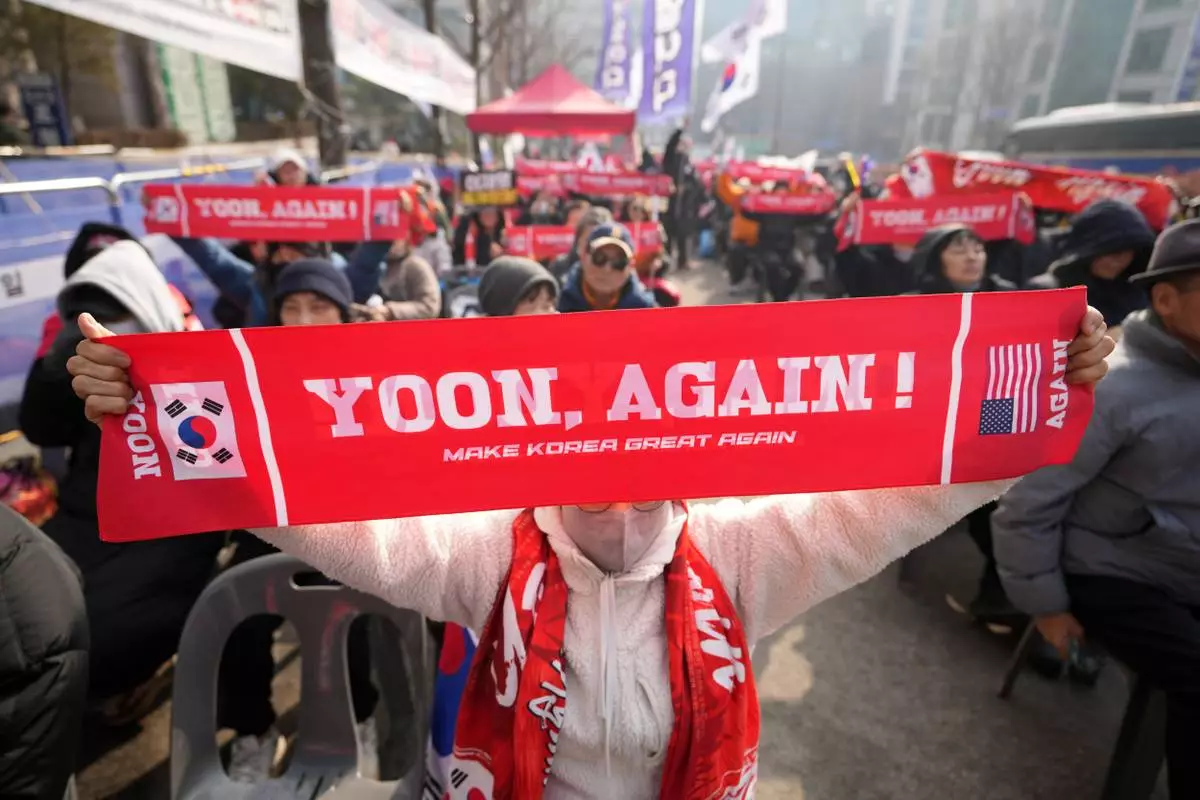
Supporters of former South Korean President Yoon Suk Yeol hold signs and flags outside Seoul Central District Court, in Seoul, South Korea, Friday, Jan. 16, 2026. (AP Photo/Lee Jin-man)

Supporters of former South Korean President Yoon Suk Yeol hold signs and flags outside Seoul Central District Court, in Seoul, South Korea, Friday, Jan. 16, 2026. (AP Photo/Lee Jin-man)

A supporter of former South Korean President Yoon Suk Yeol waits for a bus carrying former South Korean President Yoon Suk Yeol outside Seoul Central District Court, in Seoul, South Korea, Friday, Jan. 16, 2026. (AP Photo/Lee Jin-man)

A supporter of former South Korean President Yoon Suk Yeol waits for a bus carrying former South Korean President Yoon Suk Yeol outside Seoul Central District Court, in Seoul, South Korea, Friday, Jan. 16, 2026. (AP Photo/Lee Jin-man)

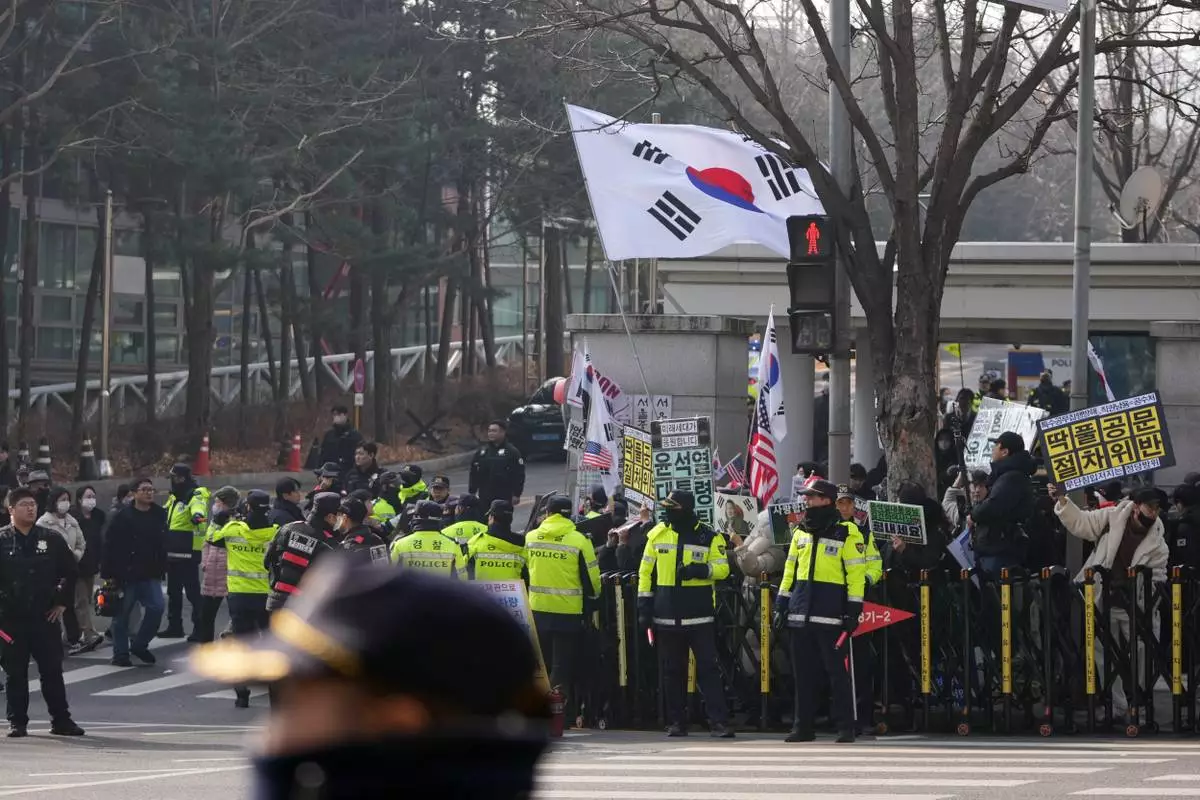
Supporters of former South Korean President Yoon Suk Yeol hold signs as police officers stand guard outside Seoul Central District Court, in Seoul, South Korea, Friday, Jan. 16, 2026. (AP Photo/Lee Jin-man)

Supporters of former South Korean President Yoon Suk Yeol hold signs as police officers stand guard outside Seoul Central District Court, in Seoul, South Korea, Friday, Jan. 16, 2026. (AP Photo/Lee Jin-man)

Supporters of former South Korean President Yoon Suk Yeol hold signs and flags outside Seoul Central District Court, in Seoul, South Korea, Friday, Jan. 16, 2026. (AP Photo/Lee Jin-man)

Supporters of former South Korean President Yoon Suk Yeol hold signs and flags outside Seoul Central District Court, in Seoul, South Korea, Friday, Jan. 16, 2026. (AP Photo/Lee Jin-man)

Supporters of former South Korean President Yoon Suk Yeol hold signs outside Seoul Central District Court, in Seoul, South Korea, Friday, Jan. 16, 2026. (AP Photo/Lee Jin-man)

Supporters of former South Korean President Yoon Suk Yeol hold signs outside Seoul Central District Court, in Seoul, South Korea, Friday, Jan. 16, 2026. (AP Photo/Lee Jin-man)

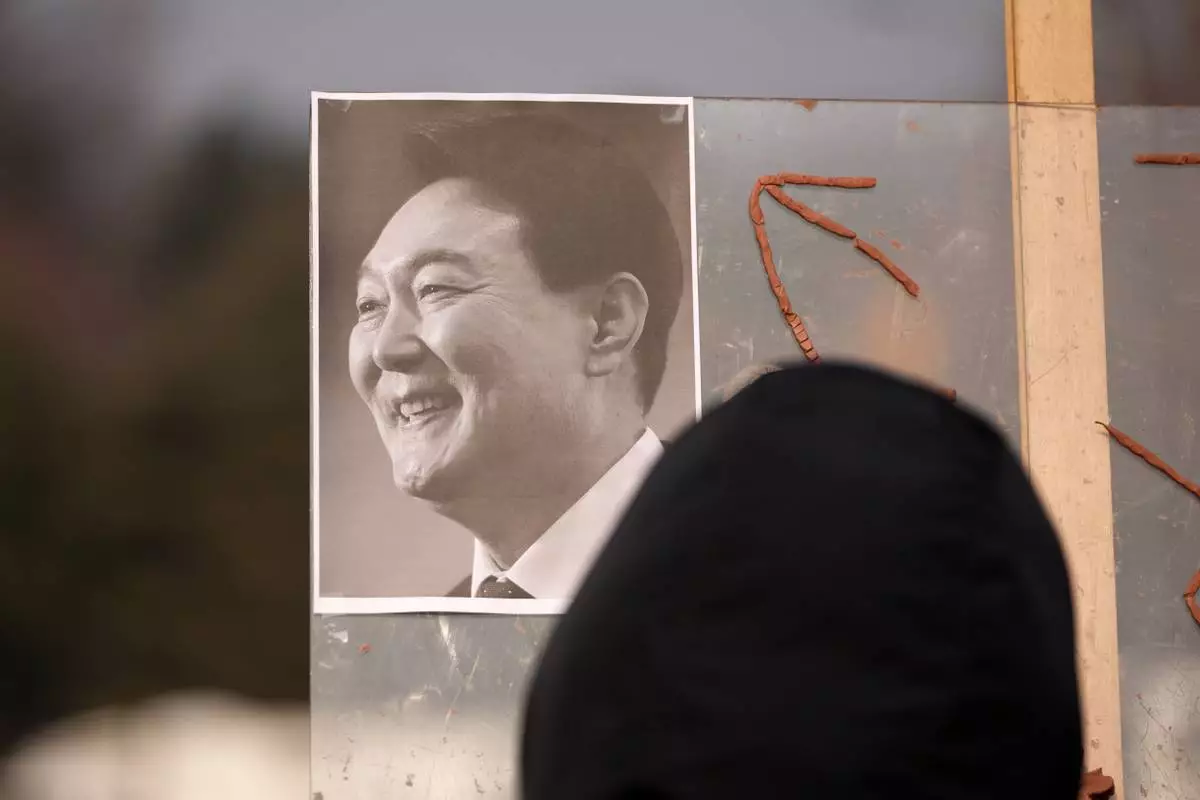
A picture of former South Korean President Yoon Suk Yeol is placed on a board as supporters gather outside Seoul Central District Court, in Seoul, South Korea, Friday, Jan. 16, 2026. (AP Photo/Lee Jin-man)

A picture of former South Korean President Yoon Suk Yeol is placed on a board as supporters gather outside Seoul Central District Court, in Seoul, South Korea, Friday, Jan. 16, 2026. (AP Photo/Lee Jin-man)

Recommended Articles