Carol Seeger finally escaped her debilitating depression with an experimental treatment that placed electrodes in her brain and a pacemaker-like device in her chest. But when its batteries stopped working, insurance wouldn’t pay to fix the problem and she sank back into a dangerous darkness.
She worried for her life, asking herself: “Why am I putting myself through this?”
Click to Gallery

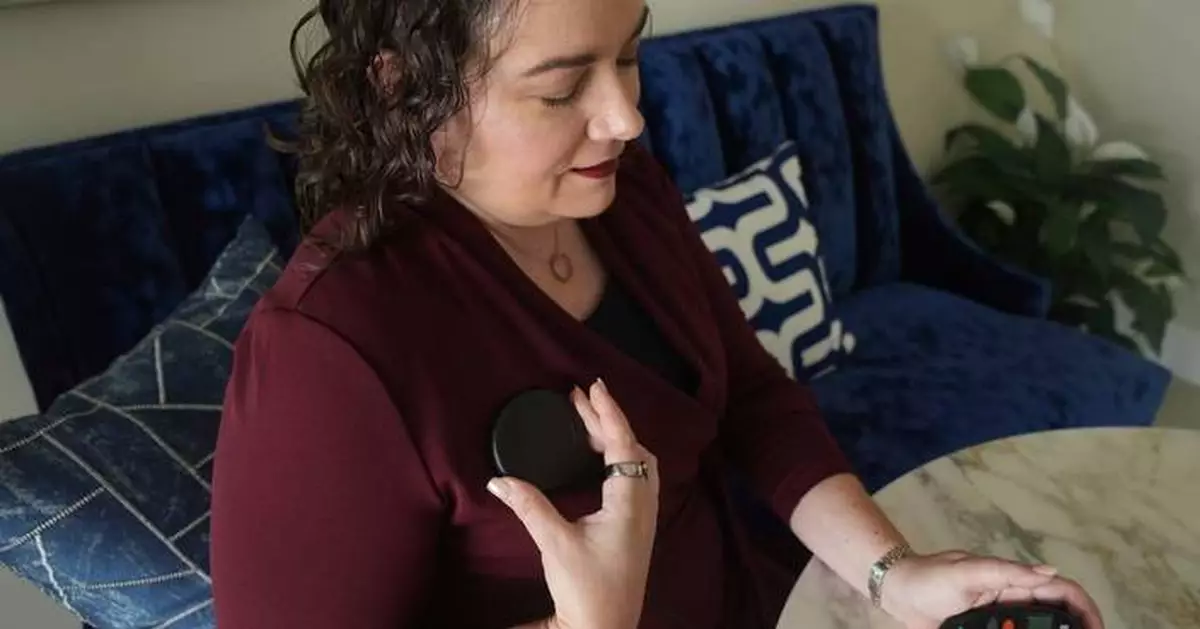
Carol Seegar shows where her deep brain stimulator, powered by an Abbott Brio IPG, was implanted in her body, Thursday, July 24, 2025, in Atlanta. (AP Photo/Mike Stewart)
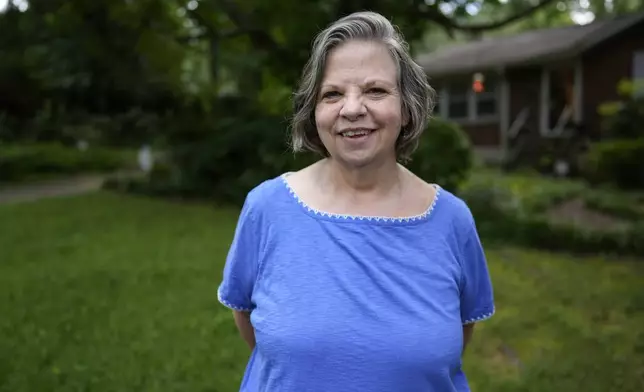
Carol Seegar, who has a deep brain stimulator, powered by an Abbott Brio IPG, implanted in her body, poses for a photo on Thursday, July 24, 2025, in Atlanta. (AP Photo/Mike Stewart)
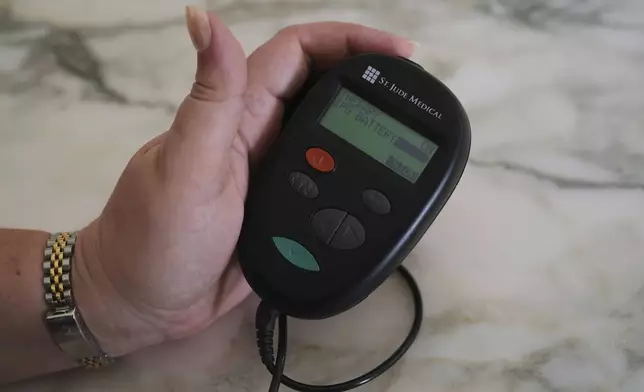
Brandy Ellis checks the battery levels of a pacemaker-like device that was installed in her chest as part of an experimental treatment for depression, on Thursday, July 24, 2025, in Delray Beach, Fla. (AP Photo/Marta Lavandier)
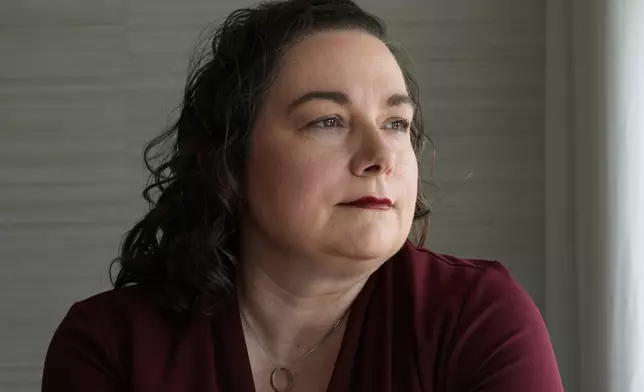
Brandy Ellis, who had electrodes installed in her brain and pacemaker-like device installed in her chest as part of an experimental treatment for depression, sits at her home Thursday, July 24, 2025, in Delray Beach, Fla. (AP Photo/Marta Lavandier)
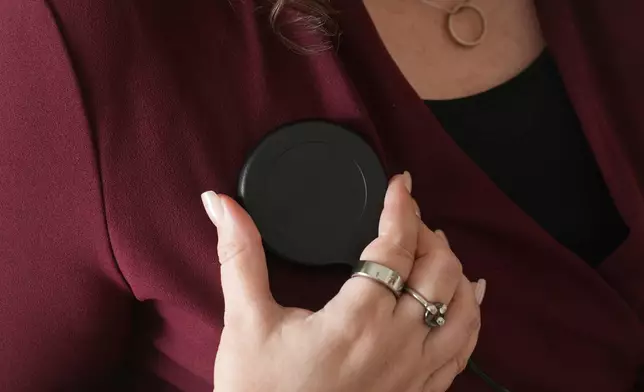
Brandy Ellis charges a pacemaker-like device that was installed in her chest as part of an experimental treatment for depression, on Thursday, July 24, 2025, in Delray Beach, Fla. (AP Photo/Marta Lavandier)
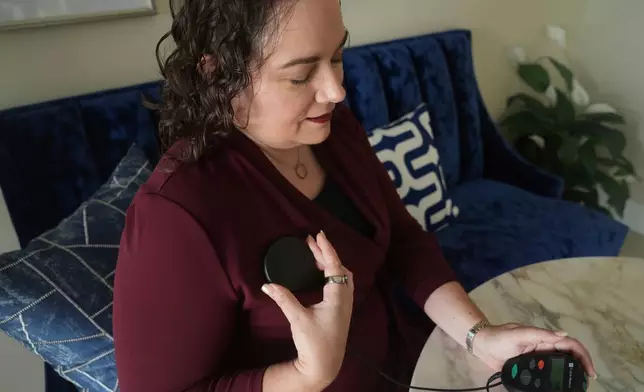
Brandy Ellis charges a pacemaker-like device that was installed in her chest as part of an experimental treatment for depression, on Thursday, July 24, 2025, in Delray Beach, Fla. (AP Photo/Marta Lavandier)
Seeger’s predicament highlights a growing problem for hundreds of people with experimental neural implants, including those for depression, quadriplegia and other conditions. Although these patients take big risks to advance science, there's no guarantee that their devices will be maintained — particularly after they finish participating in clinical trials — and no mechanism requiring companies or insurers to do so.
A research project led by Gabriel Lázaro-Muñoz, a Harvard University scientist, aimed to change that by creating partnerships between players in the burgeoning implant field to overcome barriers to device access and follow-up care.
But the cancellation of hundreds of National Institutes of Health grants by the Trump administration this year left the project in limbo, dimming hope for Seeger and others like her who wonder what will happen to their health and progress.
Unlike medications, implanted devices often require parts, maintenance, batteries and surgeries when changes are needed. Insurance typically covers such expenses for federally approved devices considered medically necessary, but not experimental ones.
A procedure to replace a battery alone can cost more than $15,000 without insurance, Lázaro-Muñoz said.
While companies stand to profit from research, “there’s really nothing that helps ensure that device manufacturers have to provide any of these parts or cover any kind of maintenance,” said Lázaro-Muñoz.
Some companies also move on to newer versions of devices or abandon the research altogether, which can leave patients in an uncertain place.
Medtronic, the company that made the deep brain stimulation, or DBS, technology Seeger used, said in a statement that every study is different and that the company puts patient safety first when considering care after studies end.
People consider various possibilities when they join a clinical trial.
The Food and Drug Administration requires the informed consent process to include a description of “reasonably foreseeable risks and discomforts to the participant,” a spokesperson said. However, the FDA doesn’t require trial plans to include procedures for long-term device follow-up and maintenance, although the spokesperson stated that the agency has requested those in the past.
While some informed consent forms say devices will be removed at a study’s end, Lázaro-Muñoz said removal is ethically problematic when a device is helping a patient. Plus, he said, some trial participants told him and his colleagues that they didn’t remember everything discussed during the consent process, partly because they were so focused on getting better.
Brandy Ellis, a 49-year-old in Boynton Beach, Florida, said she was desperate for healing when she joined a trial testing the same treatment Seeger got, which delivers an electrical current into the brain to treat severe depression. She was willing to sign whatever forms were necessary to get help after nothing else had worked.
“I was facing death,” she said. “So it was most definitely consent at the barrel of a gun, which is true for a lot of people who are in a terminal condition.”
Ellis and Seeger, 64, both turned to DBS as a last resort after trying many approved medications and treatments.
“I got in the trial fully expecting it not to work because nothing else had. So I was kind of surprised when it did,” said Ellis, whose device was implanted in 2011 at Emory University in Atlanta. “I am celebrating every single milestone because I’m like: This is all bonus life for me.”
She’s now on her third battery. She needed surgery to replace two single-use ones, and the one she has now is rechargeable. She’s lucky her insurance has covered the procedures, she said, but she worries it may not in the future.
“I can’t count on any coverage because there’s nothing that says even though I’ve had this and it works, that it has to be covered under my commercial or any other insurance,” said Ellis, who advocates for other former trial participants.
Even if companies still make replacement parts for older devices, she added, “availability and accessibility are entirely different things,” given most people can’t afford continued care without insurance coverage.
Seeger, whose device was implanted in 2012 at Emory, said she went without a working device for around four months when the insurance coverage her wife’s job at Emory provided wouldn’t pay for battery replacement surgery. Neither would Medicare, which generally only covers DBS for FDA-approved uses.
With her research team at Emory advocating for her, Seeger ultimately got financial help from the hospital's indigent care program and paid a few thousand dollars out of pocket.
She now has a rechargeable battery, and the device has been working well. But at any point, she said, that could change.
Lázaro-Muñoz hoped his work would protect people like Seeger and Ellis.
“We should do whatever we can as a society to be able to help them maintain their health,” he said.
Lázaro-Muñoz's project received about $987,800 from the National Institute of Mental Health in the 2023 and 2024 fiscal years and was already underway when he was notified of the NIH funding cut in May. He declined to answer questions about it.
Ellis said any delay in addressing the thorny issues around experimental brain devices hurts patients.
Planning at the beginning of a clinical trial about how to continue treatment and maintain devices, she said, would be much better than depending on the kindness of researchers and the whims of insurers.
“If this turns off, I get sick again. Like, I’m not cured,” she said. “This is a treatment that absolutely works, but only as long as I’ve got a working device.”
The Associated Press Health and Science Department receives support from the Howard Hughes Medical Institute’s Department of Science Education and the Robert Wood Johnson Foundation. The AP is solely responsible for all content.
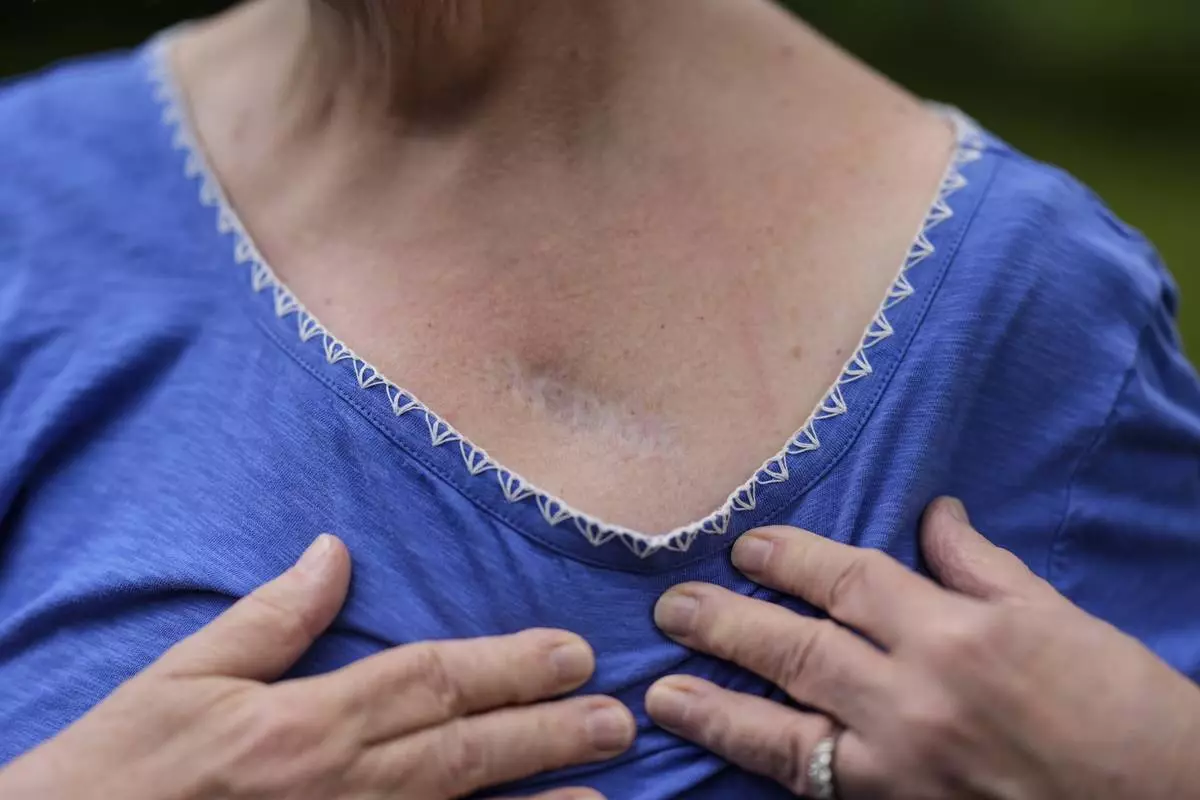
Carol Seegar shows where her deep brain stimulator, powered by an Abbott Brio IPG, was implanted in her body, Thursday, July 24, 2025, in Atlanta. (AP Photo/Mike Stewart)
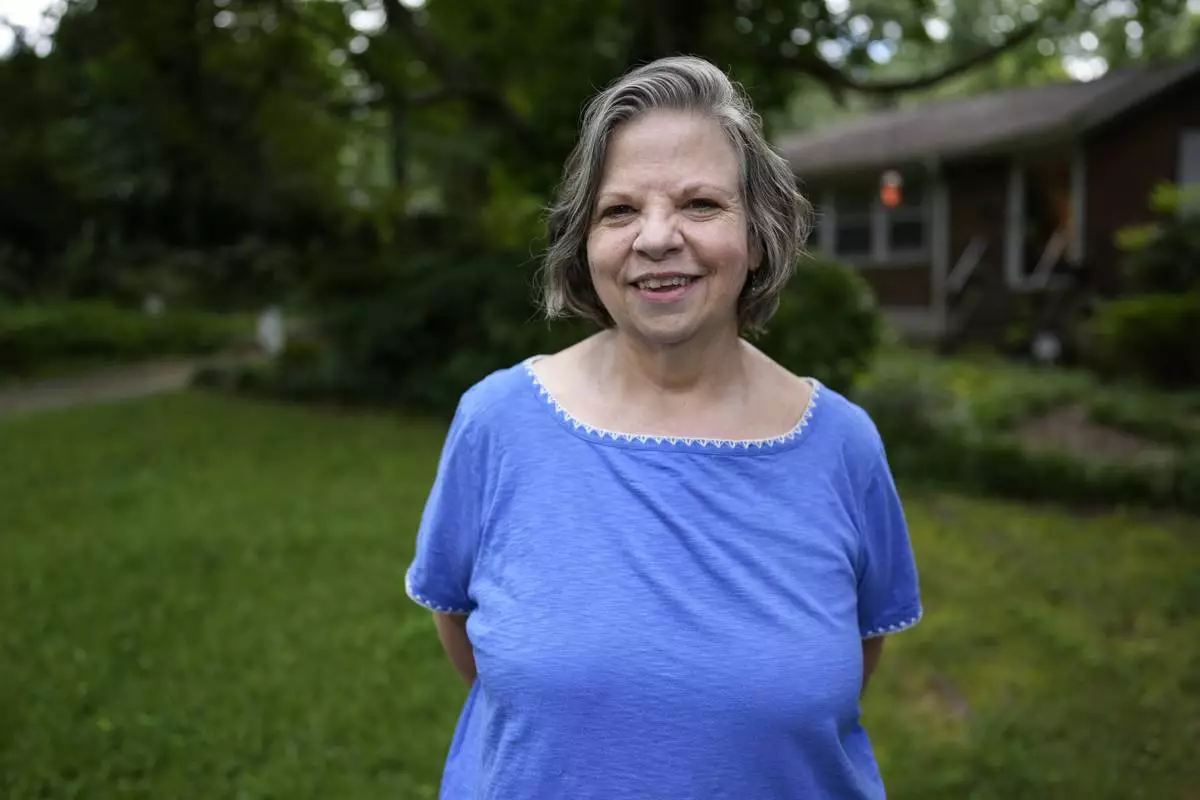
Carol Seegar, who has a deep brain stimulator, powered by an Abbott Brio IPG, implanted in her body, poses for a photo on Thursday, July 24, 2025, in Atlanta. (AP Photo/Mike Stewart)

Brandy Ellis checks the battery levels of a pacemaker-like device that was installed in her chest as part of an experimental treatment for depression, on Thursday, July 24, 2025, in Delray Beach, Fla. (AP Photo/Marta Lavandier)
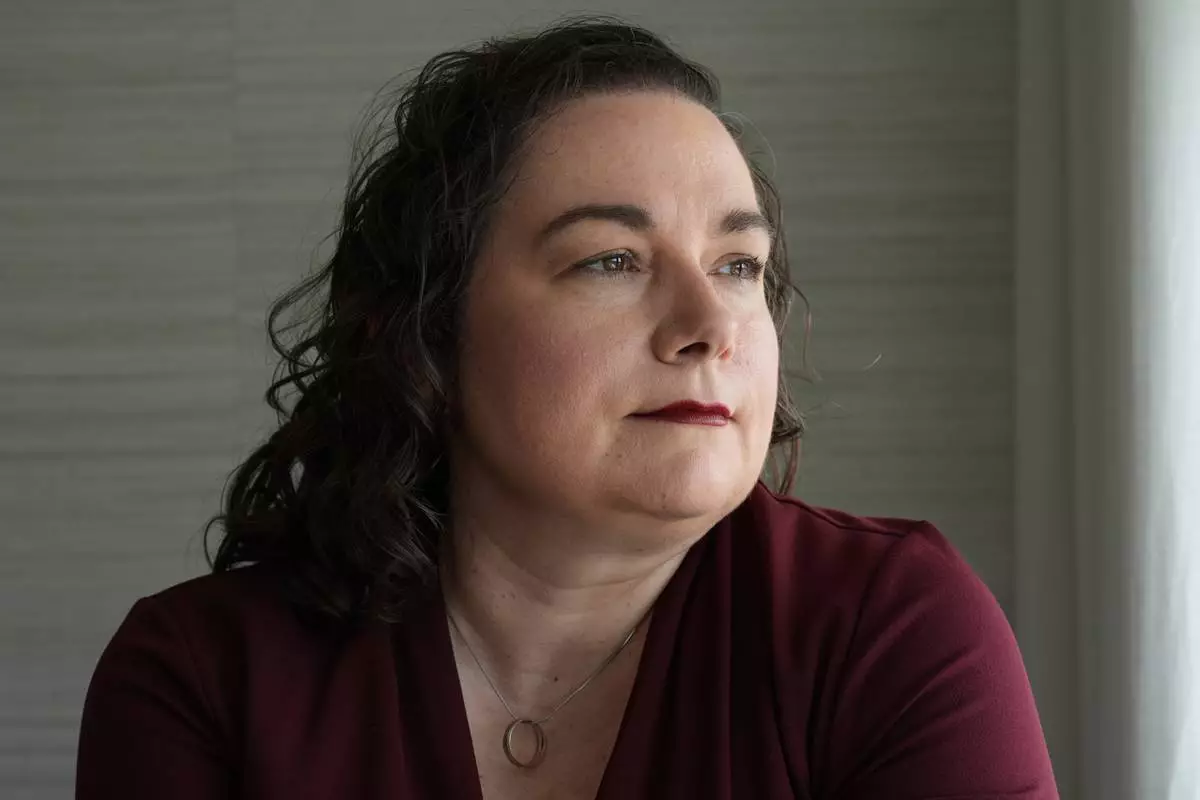
Brandy Ellis, who had electrodes installed in her brain and pacemaker-like device installed in her chest as part of an experimental treatment for depression, sits at her home Thursday, July 24, 2025, in Delray Beach, Fla. (AP Photo/Marta Lavandier)
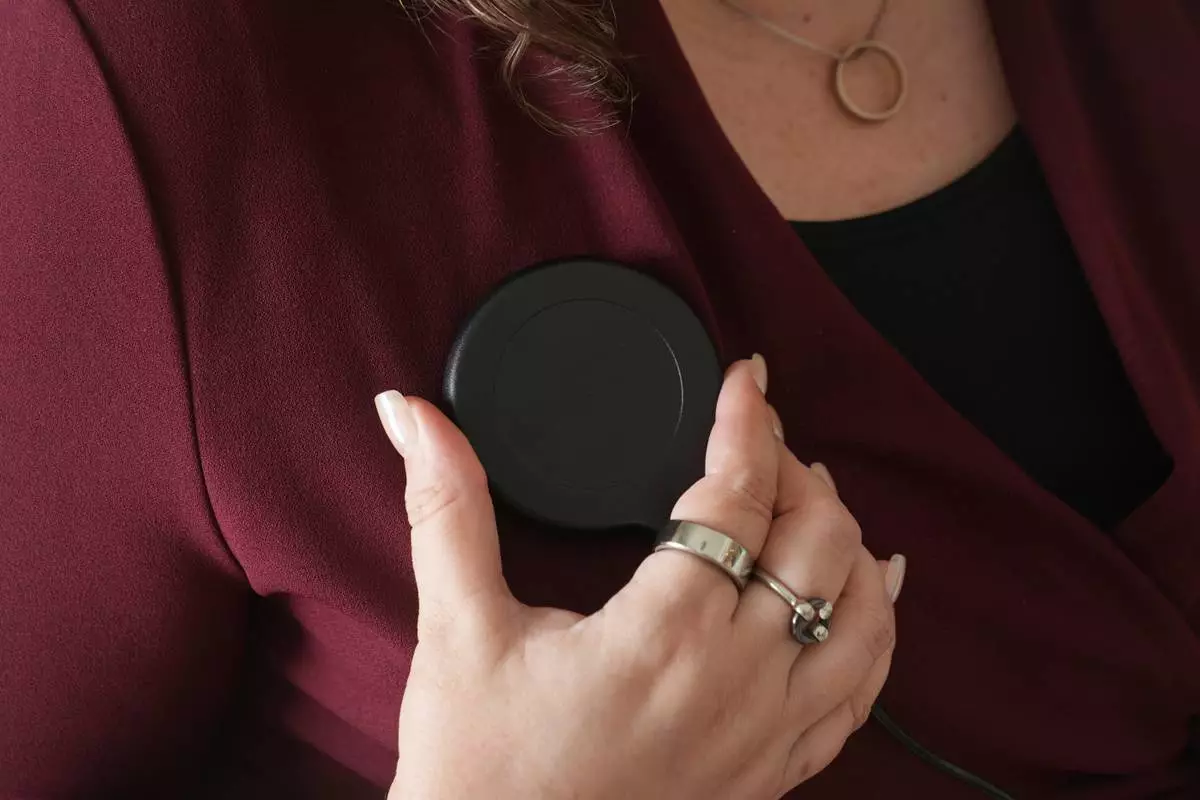
Brandy Ellis charges a pacemaker-like device that was installed in her chest as part of an experimental treatment for depression, on Thursday, July 24, 2025, in Delray Beach, Fla. (AP Photo/Marta Lavandier)

Brandy Ellis charges a pacemaker-like device that was installed in her chest as part of an experimental treatment for depression, on Thursday, July 24, 2025, in Delray Beach, Fla. (AP Photo/Marta Lavandier)