Exhibitors at the ongoing 2025 World AI Conference (WAIC) in Shanghai are showcasing a diverse array of intelligent agents to visitors from around the globe, highlighting the widespread integration of artificial intelligence (AI) into everyday life.
The 2025 World AI Conference and High-Level Meeting on Global AI Governance is being held from July 26 to 28, featuring over 800 exhibitors and more than 3,000 cutting-edge products.
Among the eye-catching exhibits are adorable AI-powered plush toys designed to offer emotional support, much like real pets.
"Although what we see is a simple toy, it actually harnesses large language model technology, sensors, and voiceprint recognition technology, which enable it to know you. It can remember your preferences and respond accordingly," said exhibitor Xu Fang.
While some AI exhibits focus on companionship and emotional support, others are built to assist with medical inquiries and offer practical assistance.
"Our product has been trained on trillions of medical data points and is linked to more than 1,000 professional teams across the country. It also has the capacity for evidence-based medicine, meaning that during consultations it can make detailed inquiries like a doctor," explained Liu Yan, another exhibitor.
AI is also playing a role in breaking down language barriers. One standout exhibit is a transparent screen designed to facilitate cross-cultural communication. Powered by a simultaneous translation large language model, it enables seamless interaction between foreign visitors and Chinese exhibitors by displaying real-time translations in each participant's language.
"I think it's a wonderful idea. We work with the same technologies in video conferencing, but this is a new idea presented. And I think the use cases -- things like hotels, immigration, any face-to-face communication, banking, anything like that -- has tremendous opportunities," said Dion Wiggins, a tech professional attending the event.
Beyond intelligent devices, coding is also becoming increasingly accessible to the general public, thanks to innovative AI technologies.
"This large language model is specialized in programming. Common people can use it to code small games or daily tools. It excels not only at programming but also aesthetics, offering beautiful fonts, color schemes, and typesetting so that the outcomes are both operable and beautiful," said exhibitor Jin Xinyi.
An AI-powered educational robot is making its global debut at the event. Designed for young learners aged 4 to 12, it features on-demand voice questions and answers and vision-based human-computer interaction to help children learn about artificial intelligence.
"Beginner-level programming education can improve children's logical thinking, coding skills, and creativity. It also sparks their curiosity and enables them to better perceive the world, and gain more knowledge with the help of an AI model," said Zhang Jindi, an exhibitor showcasing the product.
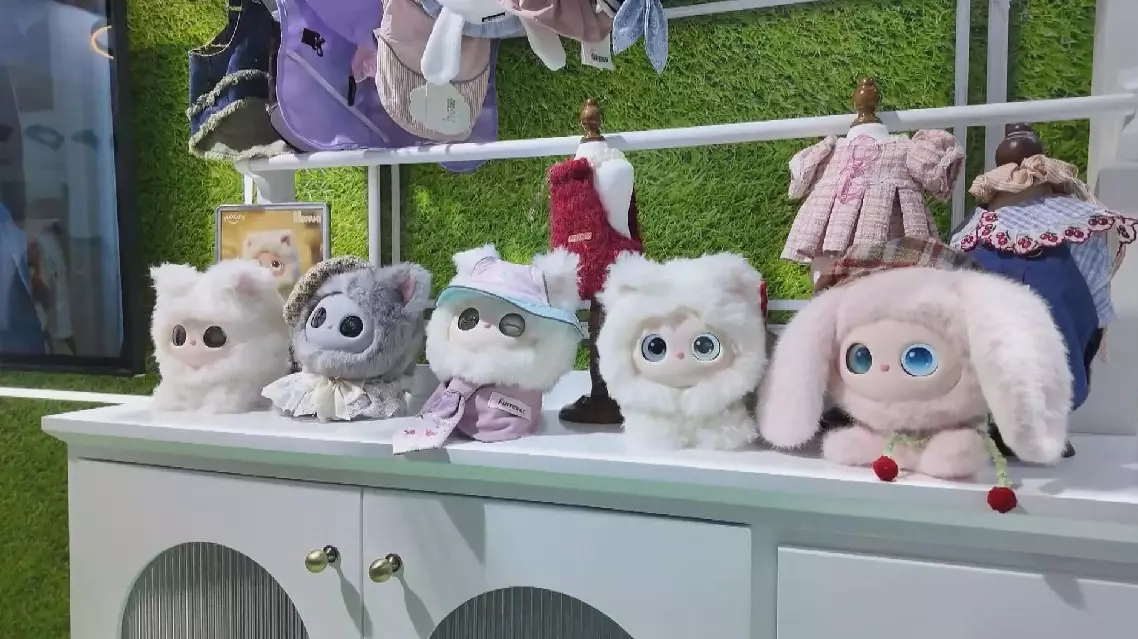
AI for everyday life on display at 2025 World AI Conference, from smart pets to medical assistants
The three astronauts of China's recently-returned Shenzhou-20 mission on Friday shared the experiences of their dramatic 204-day space mission, including detailing the emergency procedures which were implemented to bring them safely home after their return capsule was struck by space debris.
The trio -- Chen Dong, Chen Zhongrui, and Wang Jie -- met with the press in Beijing on Friday afternoon, marking their first public appearance since returning to Earth in November.
When detailing the emergency response mechanisms which were enacted prior to their scheduled return, the astronauts explained that upon discovering a triangular crack on the spacecraft's viewport window, they immediately took photos for documentation and transmitted them to the ground team, who swiftly activated an emergency plan to get the trio home safely.
Experienced mission commander Chen Dong explained how the crew had complete faith in their colleagues on the ground to find a solution to these unforeseen circumstances which led to their return being delayed.
"First, we must trust the ground team, who would anticipate everything and develop the safest return plan for us. Second, we must believe in ourselves; as well-trained astronauts, we have the ability to manage various unexpected failures. I believe that with the collaboration of astronauts and researchers on the ground, our space home will surely go farther, more steadily, and for a longer time," he said.
Following their extended stay in space as a result of the debris incident, the Shenzhou-20 crew spent a total 204 days in orbit, setting a new record for the longest duration by a single group of Chinese astronauts.
During their mission, they completed multiple payload operations, conducted extensive scientific experiments, and carried out four extravehicular activities.
"Our crew worked together with the ground team in unity and coordination, completing four extravehicular activities, several payload entry and exit tasks, and a large number of scientific experiments. It was a fulfilling yet challenging mission. The path to exploring the heavens is long and arduous, but I firmly believe that China's space missions will succeed," said Chen Zhongrui, a former air force pilot who was making his first spaceflight during the mission.
"From the ground to space, from learning to application, I have deeply felt the solid progress of Chinese space endeavors and the quiet dedication of countless personnel behind the scenes. In the future, I will accomplish each mission with full commitment, living up to the trust of the motherland and the people," said fellow astronaut Wang Jie, who was also making his debut spaceflight.
After returning to Earth on Nov 14, the trio successfully completed their isolation recovery and rehabilitation and will now resume normal training following health assessments.
The crew's return, originally scheduled for Nov 5, was postponed due to safety concerns, with the astronauts later using the return capsule belonging to their successor crew of the Shenzhou-21 mission to get back to Earth. China later launched the unmanned Shenzhou-22 spacecraft which will serve the future return of the crew now aboard the Tiangong Space Station.
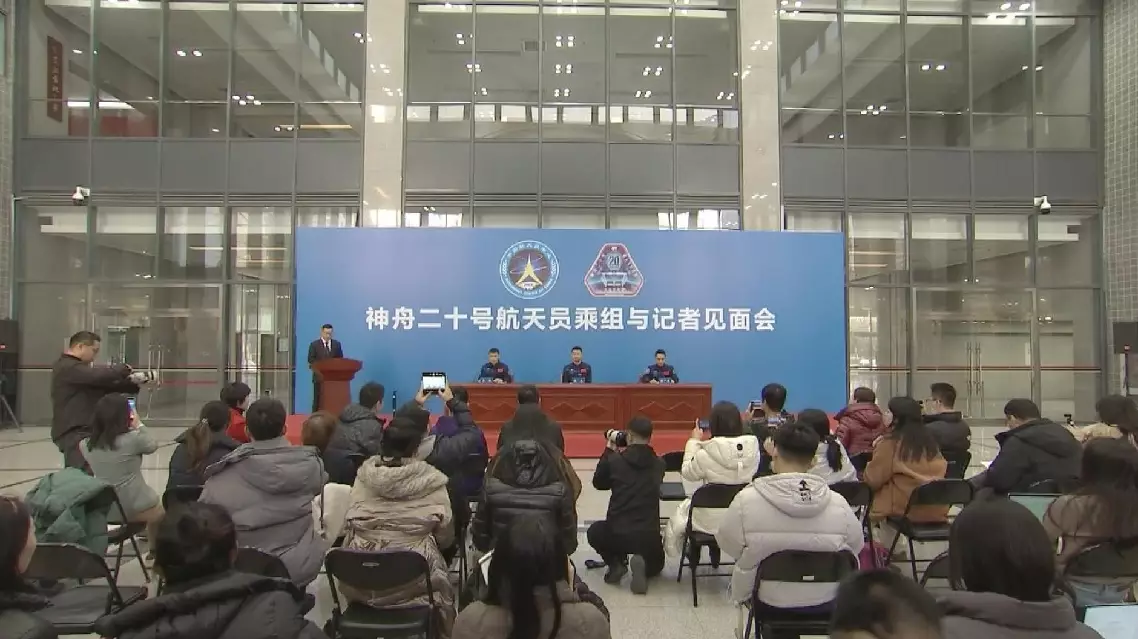
Shenzhou-20 astronauts share experiences after safely returning from debris incident