Over the past two decades, China's eastern coastal province of Zhejiang has fully leveraged its rich cultural heritage to empower high-quality development and accelerate the goal of building itself into a culturally strong province with high standards, under the strategic guidance of President Xi Jinping, also general secretary of the Communist Party of China (CPC) Central Committee.
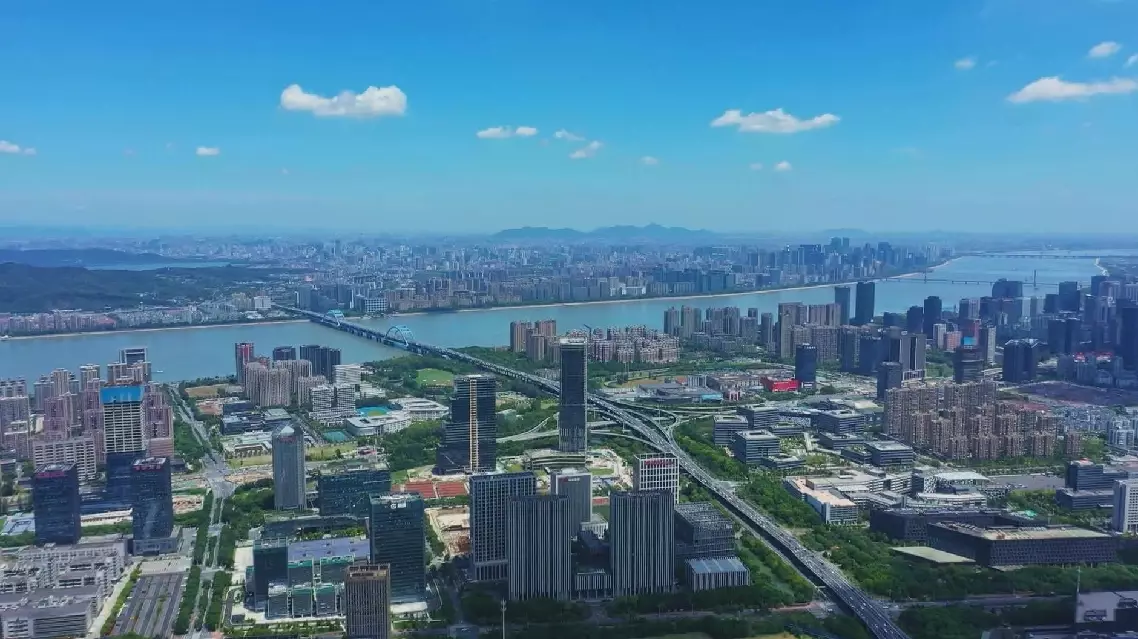
Xi served as the Party chief of Zhejiang from 2002 to 2007. During his time in Zhejiang more than 20 years ago, Xi conducted extensive research on various aspects of the province, and made detailed development strategies. In November 2002, he visited the West Lake on his first inspection tour of Hangzhou. Earlier that year, work had begun on a preservation project to protect the lake.
When explaining how the natural elements of the West Lake and adjacent construction projects could interface in harmony, Xi emphasized that the elegance of the lake should always rest with its natural characteristics.
He laid out major strategic decisions that leveraged eight key strengths of the province and implemented the "Eight Projects" of cultural construction. These became known as the "Double-Eight Strategy".
Xi regarded cultural prosperity and development as an important part of the "Double-Eight Strategy" and tailored a strategic framework system for Zhejiang to build it into a culturally strong province.
Thanks to Xi's support and instructions, more than 180 cultural sites were renovated, and the western section of the lake was restored to what it looked like in the Ming Dynasty (1368-1644). In 2011, the West Lake was included on UNESCO's World Heritage list.
"Back then Comrade Xi said that signs of history and culture were everywhere around the West Lake. He called for preserving and respecting the 'old' and the 'ancient' things with distinctive charms. Under his guidance, we tore down the walls surrounding the lake for the public to admire its beauty. We renovated more than 180 cultural sites near the lake, so that more people can enjoy the lake and feel its culture," said Pan Cangsang, director of the West Lake Museum.
One of the "Eight Projects" for cultural construction in Zhejiang is about cultural research. Under Xi's instructions and support, the province launched "The Series of Ancient Chinese Paintings" project in 2005.
Within five years, experts in Zhejiang successfully collected more than 1,000 pieces of paintings from the Song Dynasty (960-1279) which were previously scattered around the world, and digitized all the valuable works for preservation. In December 2010, the book "The Complete Collection of Song Dynasty Paintings" was published.
"Paintings from the Song Dynasty represent the zenith in the history of Chinese painting because of their high artistic sophistication. However, after over a millennium, many of the ancient paintings had been worn down by the years. So, collecting, organizing and photographing these fine Song Dynasty paintings become quite an urgent project for us," recalled Jin Xiaoming, a member of the compilation committee for 'The Series of Ancient Chinese Paintings' project.
The following years saw more achievements made in the preservation of ancient Chinese paintings, with more than 12,400 pieces of works between the third century BC and the year 1911 being collected and compiled.
Over the years, Zhejiang has persisted in completing Xi's blueprint for cultural construction, with efforts made by one provincial leadership term after another. All the hard work has seen the soft power of culture being translated into the hard power of economic and social development in the province.
Statistics show that the value-added of Zhejiang's cultural industry accounted for some 7.1 percent of its total GDP. The proportion is expected to rise to over 8 percent by 2030.
Today, many iconic cultural landmarks across Zhejiang, such as the West Lake and the Archaeological Ruins of Liangzhu City, receive hundreds of thousands of million tourists every day; more than 1,000 cultural performances of all types draw packed venues daily; nearly 14,000 cultural communities ensure their residents easy access to various high-quality cultural services; and tech startups like artificial intelligence (AI) firm DeepSeek, Unitree Robotics, and Game Science - the firm behind the internationally popular video game Black Myth: Wukong – are driving the deepening integration of culture and technology.
From urban centers to rural areas, Zhejiang has been making progress in establishing a standardized public culture service system, providing high-quality services and products to all the residents.
"In a small county like ours, we have a chance to see precious cultural relics from all over the country in our local museum. There are libraries and large theaters in the urban areas and cultural halls in the villages. I think our current cultural life is not only rich and colorful, but also of high quality," said Zhang Binbin, a local of Xinchang County in Zhejiang's Shaoxing City.
Xi's strategy guides Zhejiang's cultural reform, development