SEOUL, South Korea (AP) — The powerful sister of North Korean leader Kim Jong Un dismissed the U.S.'s intent to resume diplomacy on North Korea’s denuclearization, as she urged Washington to accept her country as a nuclear weapons state and find a new approach to restart talks.
Kim Yo Jong's statement suggested North Korea would only return to talks if the U.S. rewards it for a partial surrender of its nuclear capability. Some experts say U.S. President Donald Trump could still pursue talks with North Korea to make a diplomatic achievement.
Click to Gallery
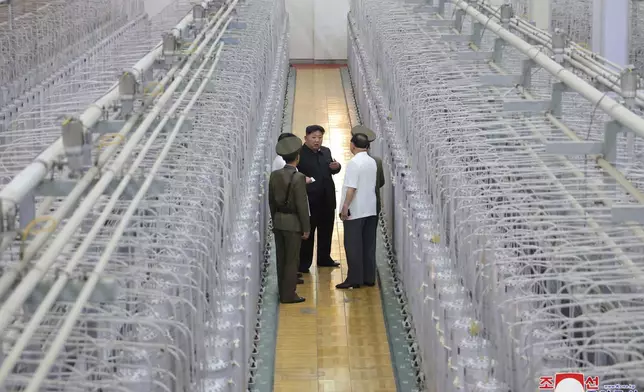
FILE - This undated photo provided on Sept. 13, 2024, by the North Korean government shows its leader Kim Jong Un, center, on an inspecting visit at what they say is an institute of nuclear weapons and a facility for nuclear materials at an undisclosed location in North Korea. Independent journalists were not given access to cover the event depicted in this image distributed by the North Korean government. The content of this image is as provided and cannot be independently verified. Korean language watermark on image as provided by source reads: "KCNA" which is the abbreviation for Korean Central News Agency. (Korean Central News Agency/Korea News Service via AP, File)
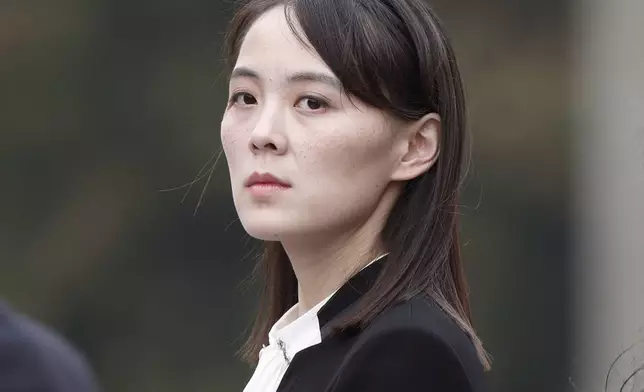
FILE - Kim Yo Jong, the powerful sister of North Korean leader Kim Jong Un, attends a wreath-laying ceremony at Ho Chi Minh Mausoleum in Hanoi, Vietnam, March 2, 2019. (Jorge Silva/Pool Photo via AP, File)
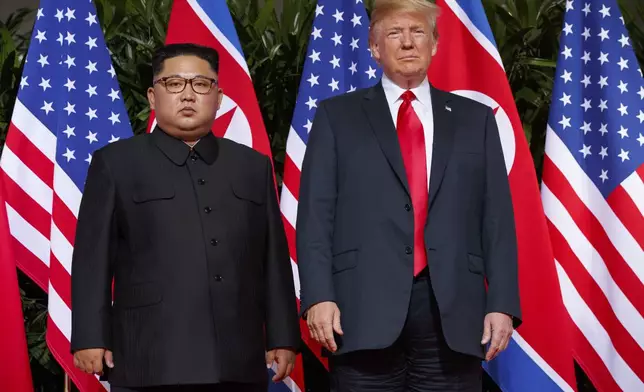
FILE - U.S. President Donald Trump, right, meets with North Korean leader Kim Jong Un on Sentosa Island, in Singapore, June 12, 2018. (AP Photo/Evan Vucci, File)
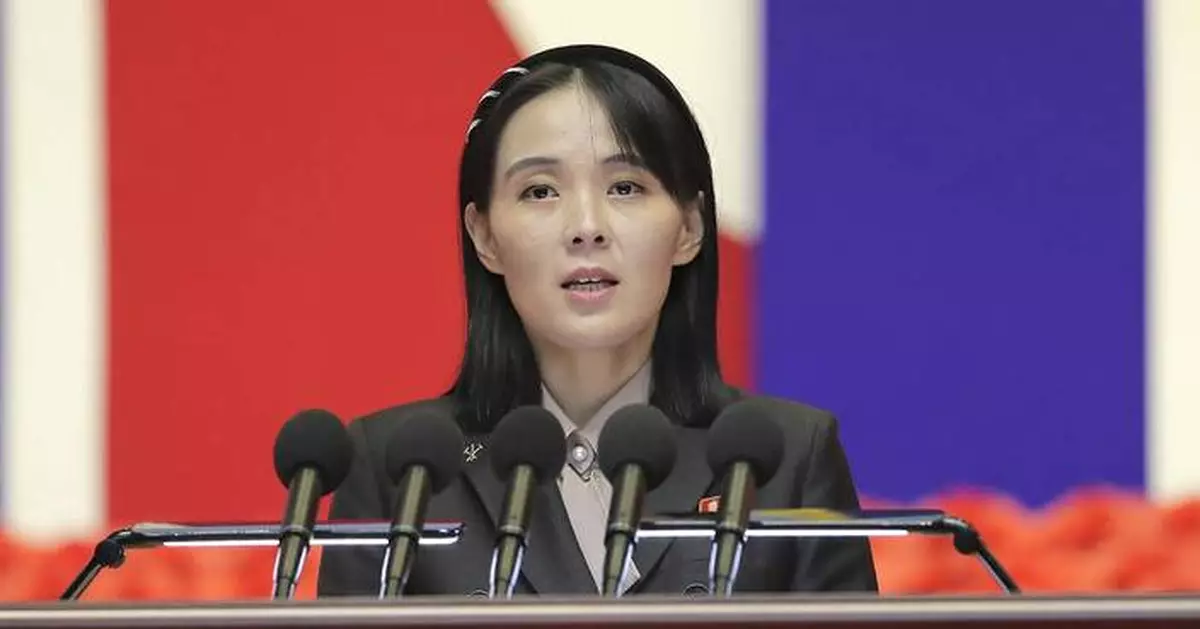
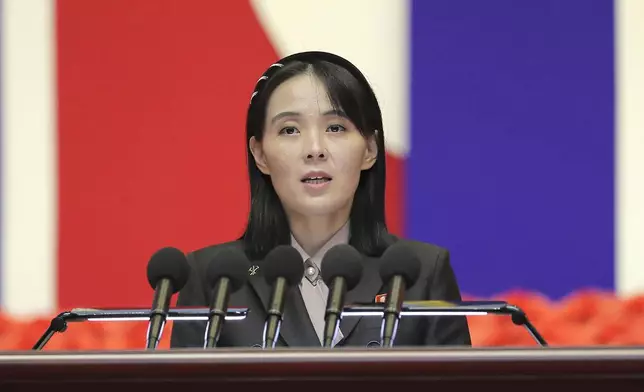
FILE - This photo provided by the North Korean government, Kim Yo Jong, sister of North Korean leader Kim Jong Un, delivers a speech during a national meeting against the coronavirus, in Pyongyang, North Korea, on Aug. 10, 2022. Independent journalists were not given access to cover the event depicted in this image distributed by the North Korean government. The content of this image is as provided and cannot be independently verified. (Korean Central News Agency/Korea News Service via AP, File)
Trump has recently bragged of his personal ties with Kim Jong Un and expressed hopes of restarting nuclear diplomacy between them. Their high-stakes diplomacy in 2018-19 that occurred during Trump's first term unraveled after Trump rejected Kim’s calls for extensive sanctions relief in return for dismantling his main nuclear complex, a limited denuclearization step. Kim has since executed weapons tests to modernize and expand his nuclear arsenal.
In a statement carried by state media, Kim Yo Jong said she doesn’t deny the personal relationship between her brother and Trump “is not bad.” But she said if their personal relations are to serve the purpose of North Korea’s denuclearization, North Korea would view it as “nothing but a mockery.”
She said North Korea's nuclear capability has sharply increased since the first round of the Kim-Trump diplomacy and that any attempt to deny North Korea as a nuclear weapons state would be rejected.
“If the U.S. fails to accept the changed reality and persists in the failed past, the DPRK- U.S. meeting will remain as a ‘hope’ of the U.S. side,” Kim Yo Jong said, referring to her country by its official name, the Democratic People’s Republic of Korea.
She said it would be “advisable to seek another way of contact."
Kim Yo Jong is a key official on the Central Committee of the North’s ruling Workers’ Party. She handles the country’s relations with South Korea and the United States, and South Korean officials and experts believe she is the North’s second-most powerful person after her brother.
Kim Yo Jong said she was responding to reported comments by a U.S. official that Trump is open to talks on denuclearization. She likely was referring to a Saturday article by Yonhap news agency that cited an unidentified White House official as saying Trump “remains open to engaging with Leader Kim to achieve a fully denuclearized North Korea.”
“North Korea wants to say it's not interested in talks on denuclearization and the U.S. must determine what benefits it can give to the North first,” said Nam Sung-wook, a former head of the Institute for National Security Strategy, a think tank run by South Korea’s spy agency.
Nam said Trump's likely desire to win a Nobel Peace Prize would prompt him to seek talks with Kim Jong Un and give him corresponding benefits for taking phased denuclearization steps. Nam said North Korea would want broad sanctions relief, a suspension of U.S.-South Korea military drills that it regards as invasion rehearsals and other economic incentives.
Kim Yeol Soo, an analyst at South Korea’s Korea Institute for Military Affairs, said U.S. and North Korean officials could meet if they narrow some differences on terms for restoring talks. But he said Trump's unpredictability would make it extremely difficult to predict what concessions the Americans would offer.
Other experts have earlier said that North Korea — now preoccupied with its expanding cooperation with Russia — sees no urgent need to resume diplomacy with the U.S. and South Korea. On Monday, Kim Yo Jong rebuffed overtures by South Korea’s new liberal government, saying its “blind trust” in the country’s alliance with the U.S. and hostility toward North Korea make it no different from its conservative predecessor.
Nam said prospects for an early resumption of U.S.-North Korea diplomacy would depend on whether the Russia-Ukraine war ends soon and U.S. tariff negotiations with other countries are proceeded in a direction that Trump wants.
Kim, the analyst, said Trump may use his likely attendance of the Asia-Pacific Economic Cooperation summit in South Korea this autumn as a chance to travel on to North Korea or a Korean border village to meet Kim Jong Un. Kim Yo Jong on Monday described as “a daydream” a reported South Korean idea of inviting her brother to the regional summit.
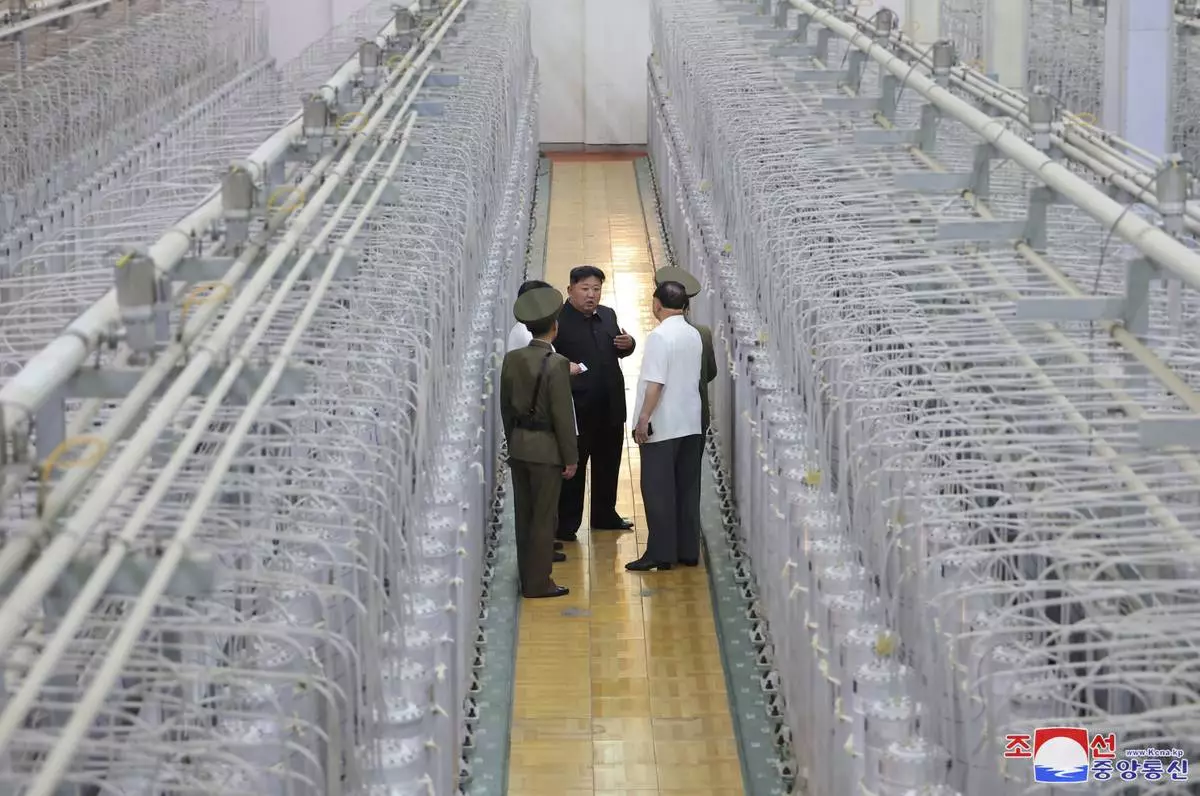
FILE - This undated photo provided on Sept. 13, 2024, by the North Korean government shows its leader Kim Jong Un, center, on an inspecting visit at what they say is an institute of nuclear weapons and a facility for nuclear materials at an undisclosed location in North Korea. Independent journalists were not given access to cover the event depicted in this image distributed by the North Korean government. The content of this image is as provided and cannot be independently verified. Korean language watermark on image as provided by source reads: "KCNA" which is the abbreviation for Korean Central News Agency. (Korean Central News Agency/Korea News Service via AP, File)
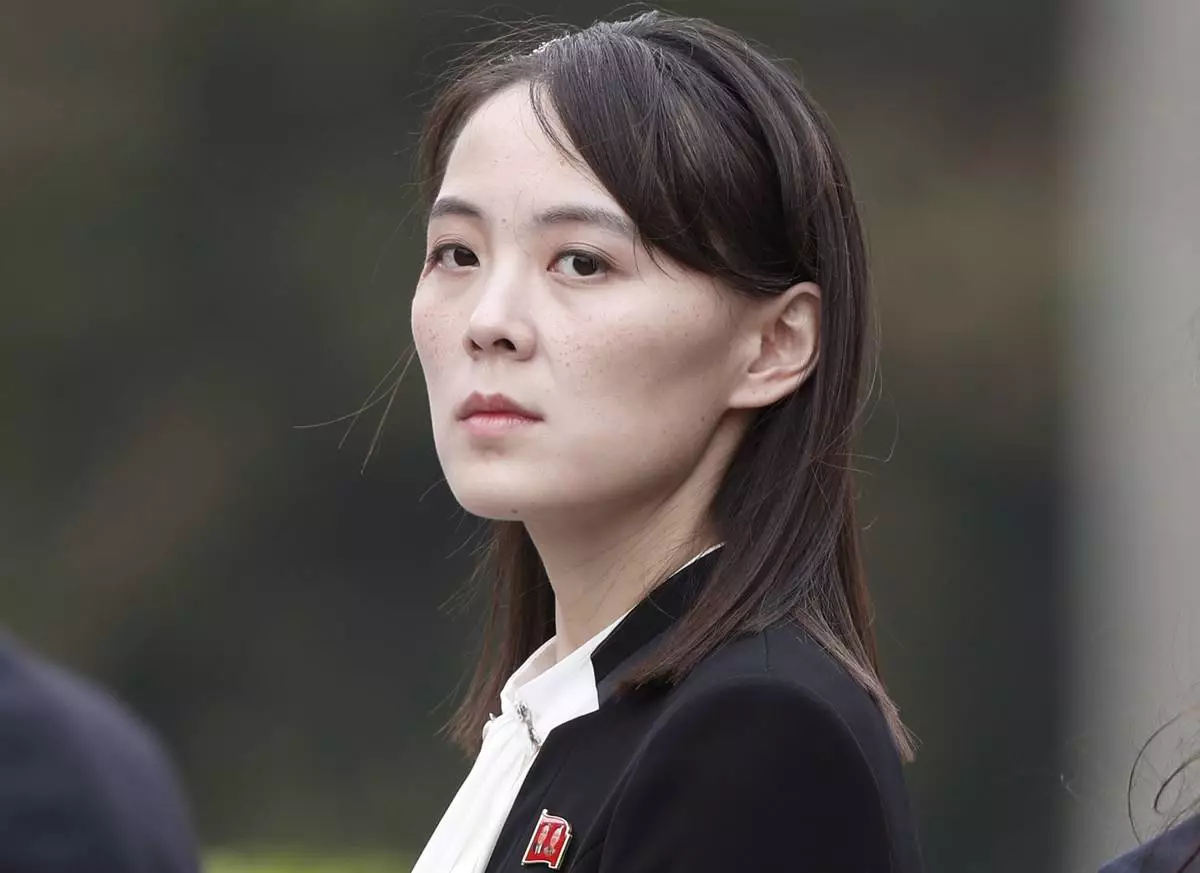
FILE - Kim Yo Jong, the powerful sister of North Korean leader Kim Jong Un, attends a wreath-laying ceremony at Ho Chi Minh Mausoleum in Hanoi, Vietnam, March 2, 2019. (Jorge Silva/Pool Photo via AP, File)
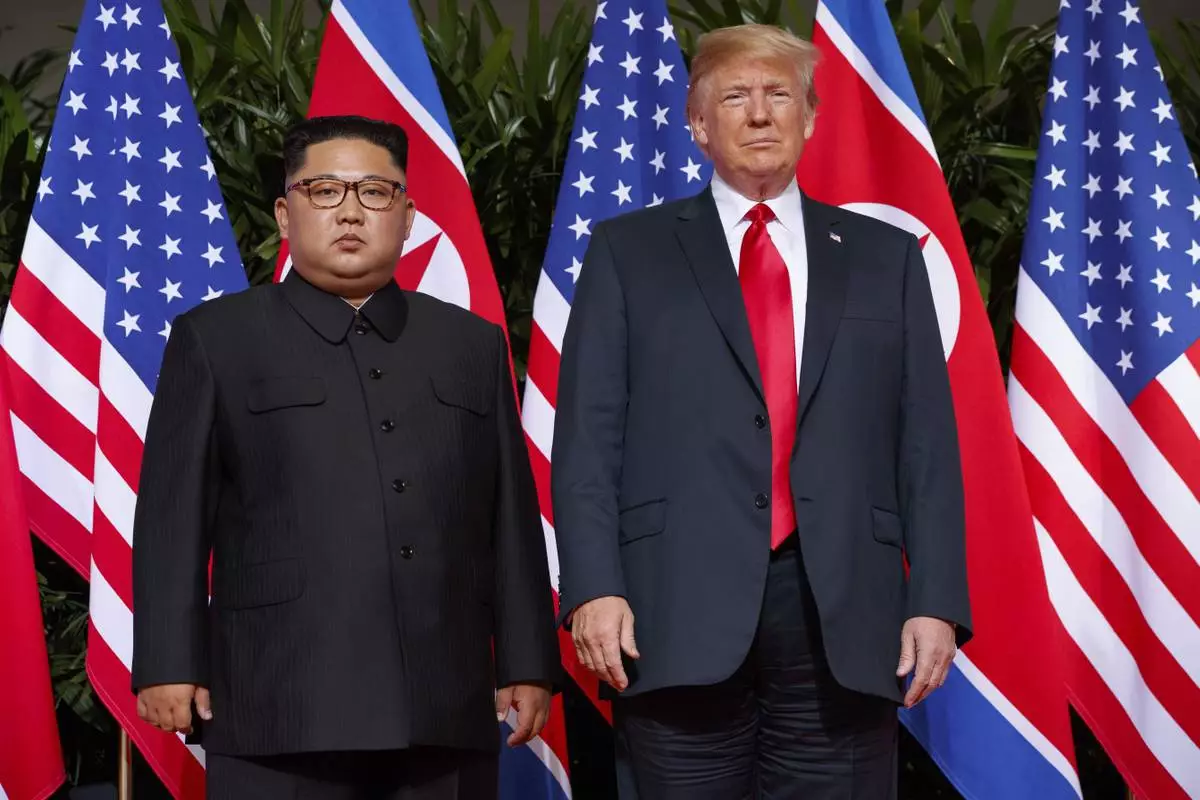
FILE - U.S. President Donald Trump, right, meets with North Korean leader Kim Jong Un on Sentosa Island, in Singapore, June 12, 2018. (AP Photo/Evan Vucci, File)
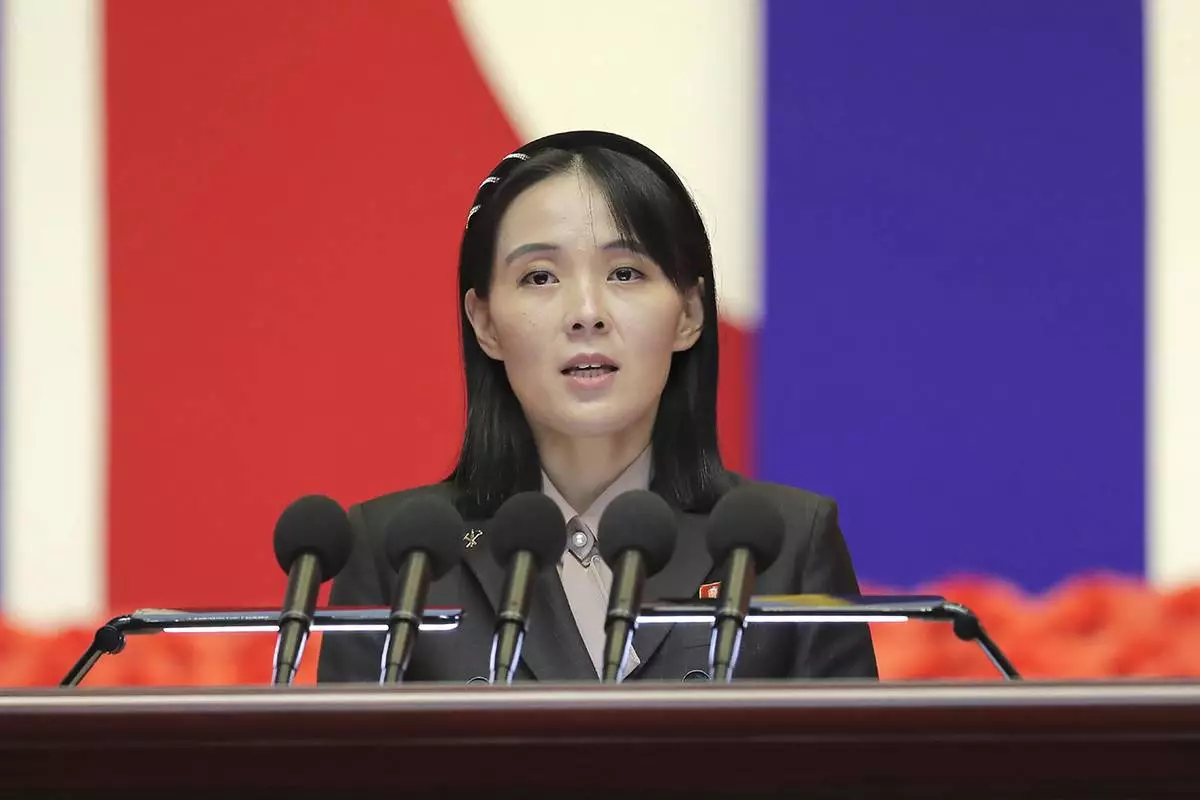
FILE - This photo provided by the North Korean government, Kim Yo Jong, sister of North Korean leader Kim Jong Un, delivers a speech during a national meeting against the coronavirus, in Pyongyang, North Korea, on Aug. 10, 2022. Independent journalists were not given access to cover the event depicted in this image distributed by the North Korean government. The content of this image is as provided and cannot be independently verified. (Korean Central News Agency/Korea News Service via AP, File)
The U.N. Security Council scheduled an emergency meeting Thursday to discuss Iran's deadly protests at the request of the United States, even as President Donald Trump left unclear what actions he would take against the Islamic state.
Tehran appeared to make conciliatory statements in an effort to defuse the situation after Trump threatened to take action to stop further killing of protesters, including the execution of anyone detained in Tehran’s bloody crackdown on nationwide protests.
Iran’s crackdown on the demonstrations has killed at least 2,615, the U.S.-based Human Rights Activists News Agency reported. The death toll exceeds any other round of protest or unrest in Iran in decades and recalls the chaos surrounding the country’s 1979 Islamic Revolution.
The sound of gunfire faded Thursday in the capital, Tehran. The country closed its airspace to commercial flights for hours without explanation early Thursday and some personnel at a key U.S. military base in Qatar were advised to evacuate. The U.S. Embassy in Kuwait also ordered its personnel to “temporary halt” travel to the multiple military bases in the small Gulf Arab country.
Here is the latest:
Abdul Malik al-Houthi, leader of the Iran-backed Yemeni rebel group, said on Thursday that “criminal gangs” were responsible for the situation in Iran, accusing them of carrying out an “American-Israeli” scheme.
“Criminal gangs in Iran killed Iranian citizens, security forces and burned mosques,” he said without providing evidence. “What’s being committed by criminal gangs in Iran is horrific, bearing an American stamp as it includes slaughter and burning some people alive.”
He also said that the U.S. imposed economic sanctions on Iran to create a crisis leading to the current issues in the country with the end goal of controlling Iran.
Yet he said the U.S. has “failed in Iran” and that Iranians “will not yield to America.”
The president of the European Union’s executive arm says the 27-member bloc is looking to strengthen sanctions against Iran as ordinary Iranians continue their protests against Iran’s theocratic government.
Commission President Ursula von der Leyen said Thursday following a meeting of the EU’s commissioners in Limassol, Cyprus that current sanctions against Iran are “weakening the regime.”
Von der Leyen said that the EU is looking to sanction individual Iranians —apart from those who belong to Iran’s Islamic Revolutionary Guard — who “are responsible for the atrocities.”
She added that the people of Iran who are “bravely fighting for a change” have the EU’s “full political support.”
Canada’s foreign minister says a Canadian citizen has died in Iran “at the hands of the Iranian authorities.”
“Peaceful protests by the Iranian people — asking that their voices be heard in the face of the Iranian regime’s repression and ongoing human rights violations — has led the regime to flagrantly disregard human life,” Canadian Foreign Affairs Minister Anita Anand posted on social media Thursday.
“This violence must end. Canada condemns and calls for an immediate end to the Iranian regime’s violence,” she added.
Anand said consular officials are in contact with the victim’s family in Canada. She did not provide details.
The International Federation of Red Cross and Red Crescent Societies announced Thursday that a local staff member was killed and several others were wounded during the deadly protests in Iran over the weekend.
Amir Ali Latifi, an Iranian Red Crescent Society worker, was working in the country’s Gillan province on Jan. 10 when he was killed “in the line of duty,” the organization said in a statement.
“The IFRC is deeply concerned about the consequences of the ongoing unrest on the people of Iran and is closely monitoring the situation in coordination with the Iranian Red Crescent Society,” the statement continued.
U.S. President Donald Trump has hailed as “good news” reports that the death sentence has been lifted for an Iranian shopkeeper arrested in a violent crackdown on protests.
Relatives of 26-year-old Erfan Soltani had said he faced imminent execution.
Trump posed Thursday on his Truth Social site: “FoxNews: ‘Iranian protester will no longer be sentenced to death after President Trump’s warnings. Likewise others.’ This is good news. Hopefully, it will continue!”
Iranian state media denied Soltani had been condemned to death. Iranian judicial authorities said Soltani was being held in a detention facility outside of the capital. Alongside other protesters, he has been accused of “propaganda activities against the regime,” state media said.
Trump sent tensions soaring this week by pledging that “help is on its way” to Iranian protesters and urging them to continue demonstrating against authorities in the Islamic Republic.
On Wednesday Trump signaled a possible de-escalation, saying he had been told that “the killing in Iran is stopping.”
In a joint statement, the foreign ministers of Canada, France, Germany, Italy, Japan, the United Kingdom, the United States and the European Union’s main foreign policy chief said the G7 members were “gravely concerned” by the developments surrounding the protests, and that they “strongly oppose the intensification of the Iranian authorities’ brutal repression of the Iranian people.”
The statement, published on the EU’s website Thursday, said the G7 were “deeply alarmed at the high level of reported deaths and injuries” and condemned “the deliberate use of violence” by Iranian security forces against protesters.
The G7 members “remain prepared to impose additional restrictive measures if Iran continues to crack down on protests and dissent in violation of international human rights obligations,” the statement said.
China’s Foreign Minister Wang Yi has spoken with his counterpart in Iran, who said the situation was “now stable,” China’s Ministry of Foreign Affairs said.
Abbas Araghchi said “he hoped China will play a greater role in regional peace and stability” during the talks, according to the statement from the ministry.
“China opposes imposing its will on other countries, and opposes a return to the ‘law of the jungle’,” Wang said.
“China believes that the Iranian government and people will unite, overcome difficulties, maintain national stability, and safeguard their legitimate rights and interests,” he added. “China hopes all parties will cherish peace, exercise restraint, and resolve differences through dialogue. China is willing to play a constructive role in this regard.”
“We are against military intervention in Iran,” Turkish Foreign Minister Hakan Fidan told journalists in Istanbul on Thursday. “Iran must address its own internal problems… They must address their problems with the region and in global terms through diplomacy so that certain structural problems that cause economic problems can be addressed.”
Ankara and Tehran enjoy warm relations despite often holding divergent interests in the region.
Fidan said the unrest in Iran was rooted in economic conditions caused by sanctions, rather than ideological opposition to the government.
Iranians have been largely absent from an annual pilgrimage to Baghdad, Iraq, to commemorate the death of Imam Musa al-Kadhim, one of the twelve Shiite imams.
Many Iranian pilgrims typically make the journey every year for the annual religious rituals.
Streets across Baghdad were crowded with pilgrims Thursday. Most had arrived on foot from central and southern provinces of Iraq, heading toward the shrine of Imam al-Kadhim in the Kadhimiya district in northern Baghdad,
Adel Zaidan, who owns a hotel near the shrine, said the number of Iranian visitors this year compared to previous years was very small. Other residents agreed.
“This visit is different from previous ones. It lacks the large numbers of Iranian pilgrims, especially in terms of providing food and accommodation,” said Haider Al-Obaidi.
Europe’s largest airline group said Thursday it would halt night flights to and from Tel Aviv and Jordan's capital Amman for five days, citing security concerns as fears grow that unrest in Iran could spiral into wider regional violence.
Lufthansa — which operates Swiss, Austrian Airlines, Brussels Airlines and Eurowings — said flights would run only during daytime hours from Thursday through Monday “due to the current situation in the Middle East.” It said the change would ensure its staff — which includes unionized cabin crews and pilots -- would not be required to stay overnight in the region.
The airline group also said its planes would bypass Iranian and Iraqi airspace, key corridors for air travel between the Middle East and Asia.
Iran closed its airspace to commercial flights for several hours early Thursday without explanation.
A spokesperson for Israel’s Airport Authority, which oversees Tel Aviv’s Ben Gurion Airport, said the airport was operating as usual.
Iranian state media has denied claims that a young man arrested during Iran’s recent protests was condemned to death. The statement from Iran’s judicial authorities on Thursday contradicted what it said were “opposition media abroad” which claimed the young man had been quickly sentenced to death during a violent crackdown on anti-government protests in the country.
State television didn’t immediately give any details beyond his name, Erfan Soltani. Iranian judicial authorities said Soltani was being held in a detention facility outside of the capital. Alongside other protesters, he has been accused of “propaganda activities against the regime,” state media said.
New Zealand’s Foreign Minister Winston Peters said Thursday that his government was “appalled by the escalation of violence and repression” in Iran.
“We condemn the brutal crackdown being carried out by Iran’s security forces, including the killing of protesters,” Peters posted on X.
“Iranians have the right to peaceful protest, freedom of expression, and access to information – and that right is currently being brutally repressed,” he said.
Peters said his government had expressed serious concerns to the Iranian Embassy in Wellington.
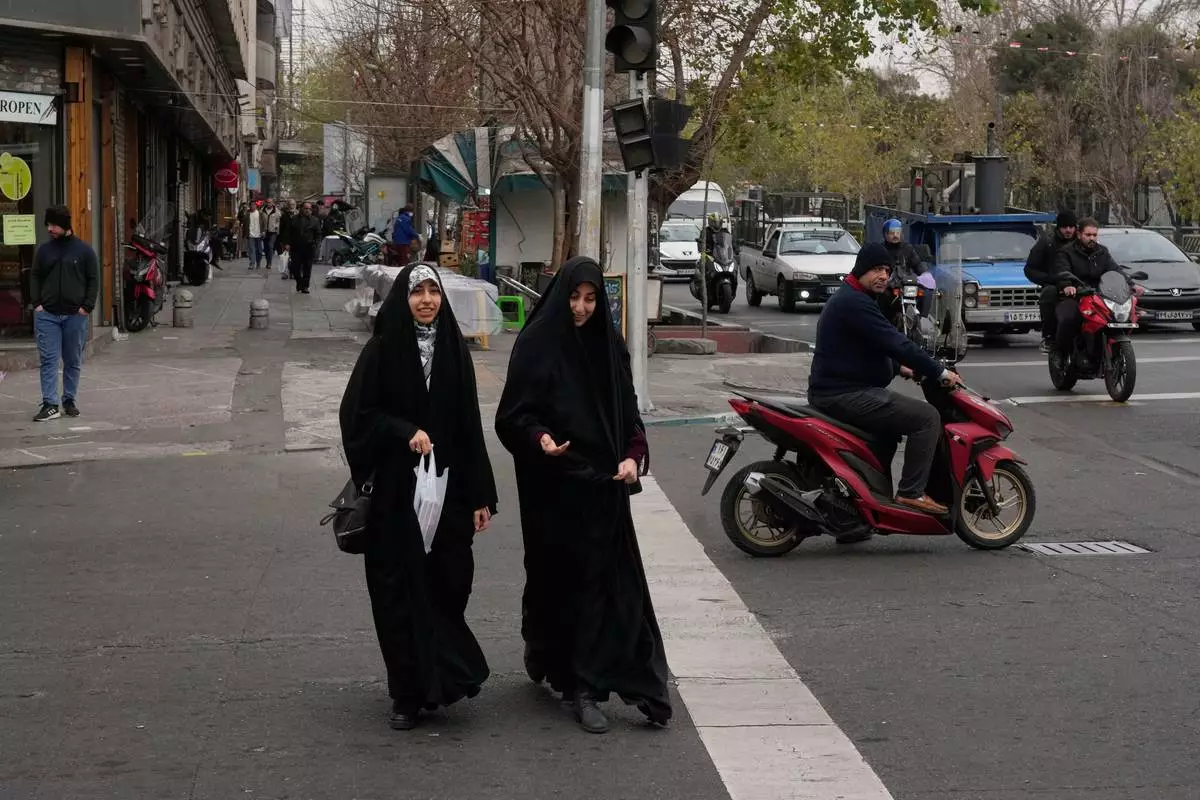
Women cross an intersection in downtown Tehran, Iran, Thursday, Jan. 15, 2026. (AP Photo/Vahid Salemi)
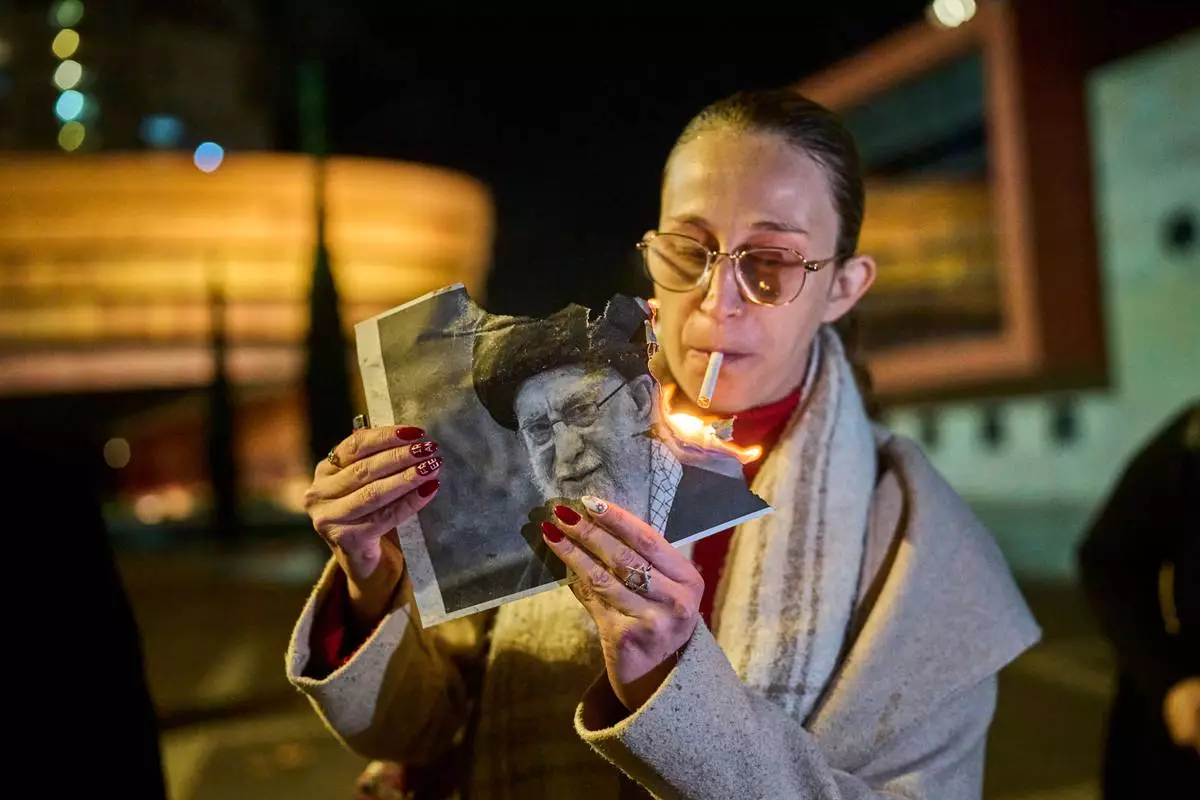
A demonstrator lights a cigarette with a burning poster depicting Supreme Leader Ayatollah Ali Khamenei during a rally in support of Iran's anti-government protests, in Holon, Israel, Wednesday, Jan. 14, 2026. (AP Photo/Ohad Zwigenberg)
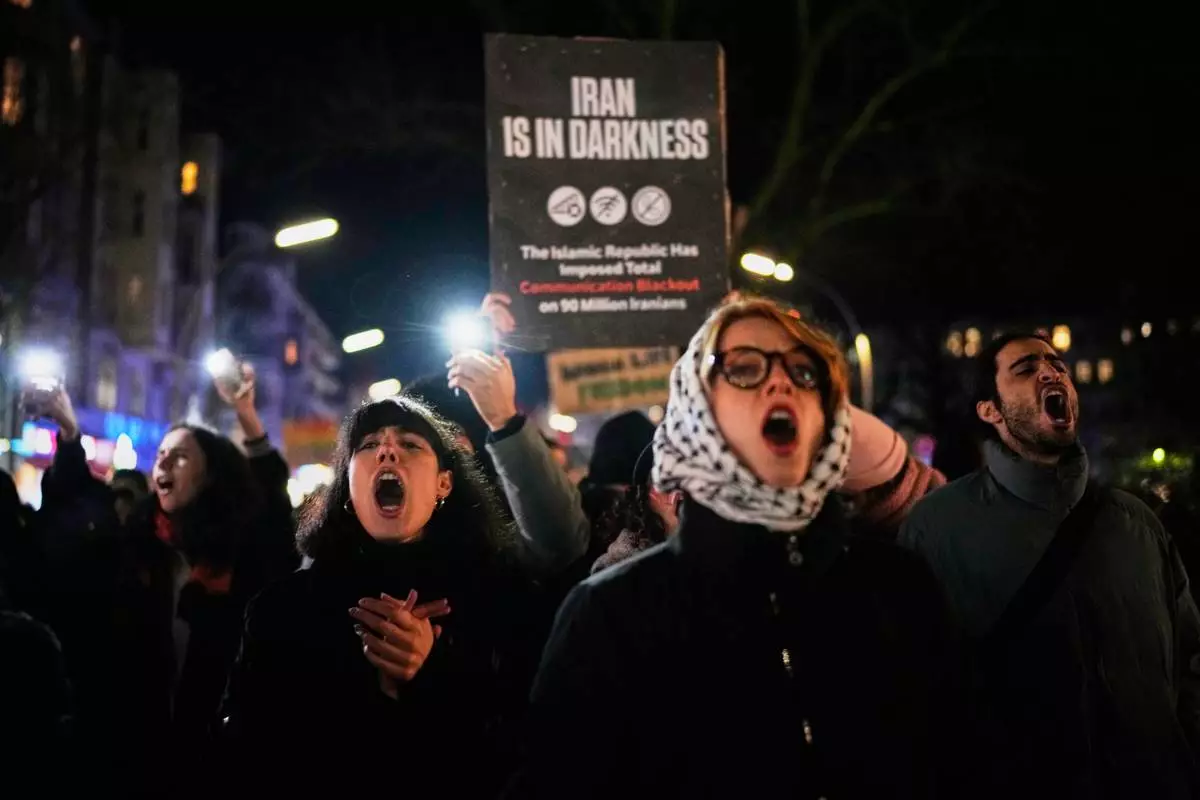
Protesters participate in a demonstration in support of the nationwide mass protests in Iran against the government, in Berlin, Germany, Wednesday, Jan. 14, 2026. (AP Photo/Ebrahim Noroozi)
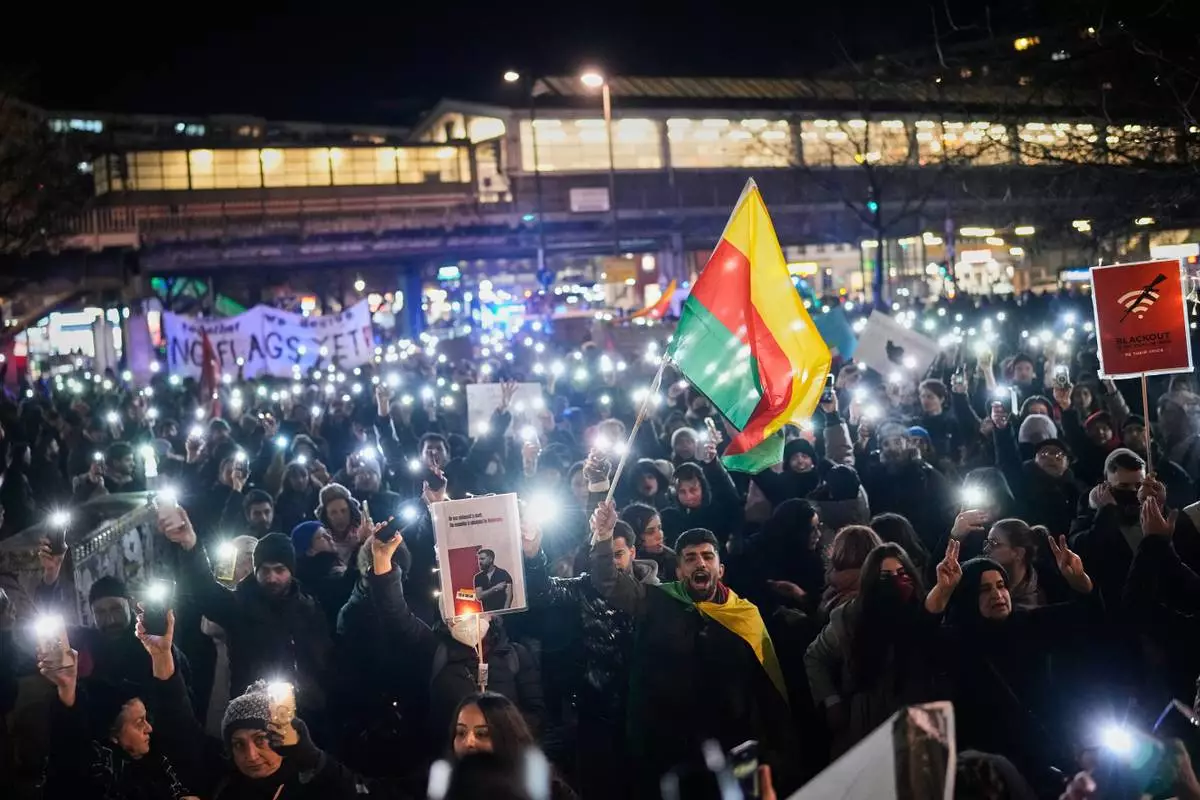
Protesters participate in a demonstration in support of the nationwide mass protests in Iran against the government, in Berlin, Germany, Wednesday, Jan. 14, 2026. (AP Photo/Ebrahim Noroozi)