Skip to Content Facebook Feature Image

World's first robot 6S store opens in south China's Shenzhen

China

China

China

World's first robot 6S store opens in south China's Shenzhen

2025-07-29 15:48 Last Updated At:19:57

A robot 6S store, claimed to be the world's first of its kind, opened to the public on Monday in Longgang District of Shenzhen, south China's Guangdong Province, according to local authorities.

Building on the traditional auto 4S store model of "sale, spare part, service and survey," the robot 6S store has added two new services: on-demand leasing and fully customized products, said its operator, Shenzhen Future Times Robotics Co., Ltd.

It redefines the service standards and supply-demand connection model of the robot industry, providing an efficient bridge that facilitates the transition of robots from the lab to the market while transforming technical concepts into real-life applications, according to the operator.

The leasing services offered by the 6S store cover a variety of scenarios, including exhibition reception, event performance and emergency inspection. This flexible leasing model not only lowers the barrier for companies and individuals to use robots but also quickly validates the application potential of robots in different scenarios in the short term, providing data support for future market expansion, the operator said.

"By creating this 6S store scenario, we can facilitate the entry of more robots into ordinary households and usher in a new era of robot consumption," said Zhao Bingbing, Director of Shenzhen Longgang District Artificial Intelligence (Robotics) Administration.

Currently, more than 200 companies from across the industry chain have expressed interest in joining the store's services, including nearly 50 humanoid and service robot firms. These companies cover the entire industry chain, from core component research and development to complete machine manufacturing, software algorithms and application scenarios.

In the 6S store, research and development companies and application developers can communicate directly, enabling them to swiftly address technical challenges.

This clustered industrial layout significantly reduces communication, logistics and collaboration costs for businesses, thus accelerating the robotics industry's growth.

"This approach tackles the existing problems of limited sales, restricted applications and a lack of data regarding robots. By expanding applications and sales and accumulating more data and feedback, we can ensure the continuous advancement of robot technology iteration," said Zhao.

A total of 26 robot companies signed cooperation agreements with the store on the same day.
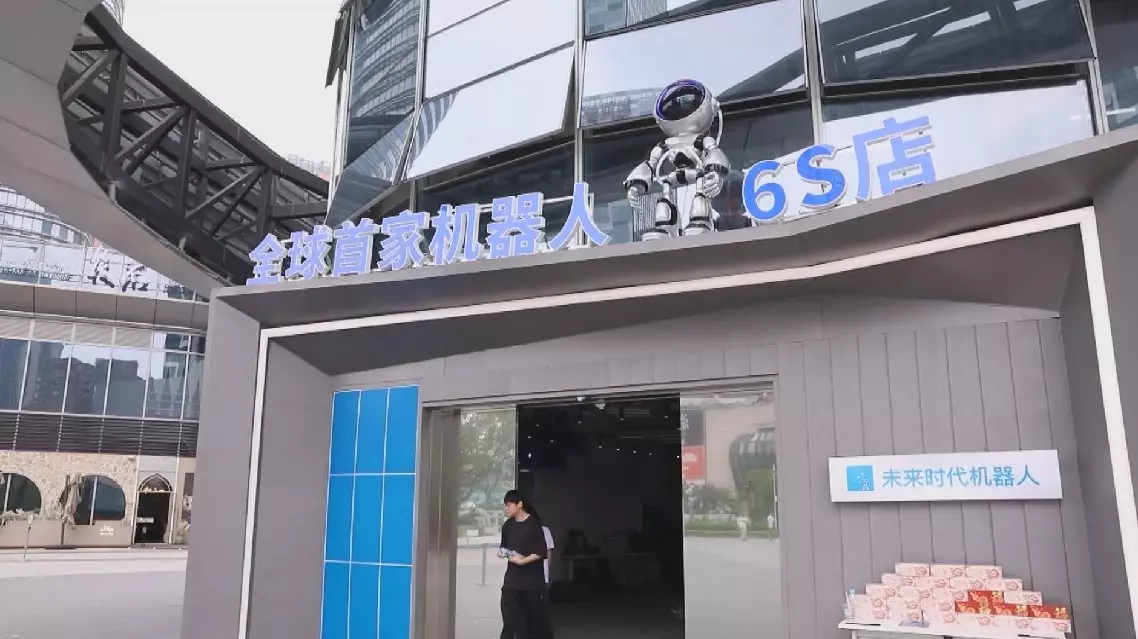
World's first robot 6S store opens in south China's Shenzhen
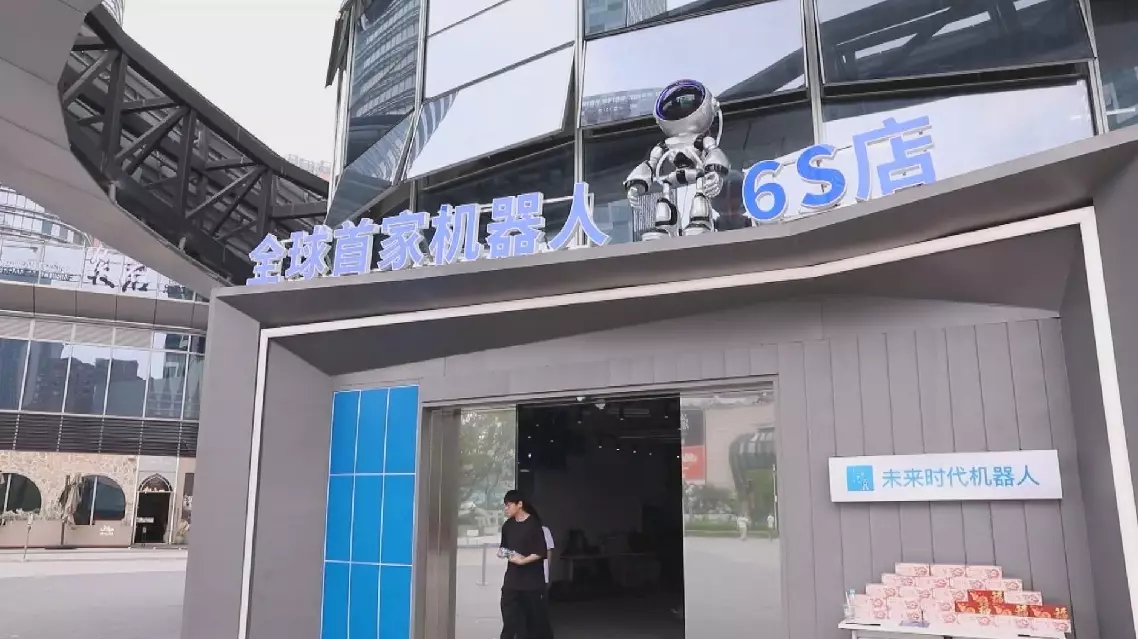
World's first robot 6S store opens in south China's Shenzhen

World's first robot 6S store opens in south China's Shenzhen

World's first robot 6S store opens in south China's Shenzhen

China's newly approved Inner Mongolia Pilot Free Trade Zone (FTZ) is expected to help turn the northern border areas into a new frontier of opening-up.

China on Thursday released a plan for the establishment of the China (Inner Mongolia) Pilot Free Trade Zone, bringing the total number of pilot free trade zones nationwide to 23. Leveraging its unique location linking Russia, Mongolia and wider Eurasia, the zone is designed to advance the country's high-level opening-up through policy support, industrial upgrading and improved connectivity.

The pilot FTZ covers 119.74 square kilometers and comprises three subzones in Hohhot, capital of the autonomous region, Manzhouli, a northern border city, and Erenhot, a land port on the China-Mongolia border, each tasked with differentiated functions and the development of industries tailored to local conditions.

Specifically, the Hohhot subzone will serve as a central hub, focusing on developing specialty industries and innovation clusters. The Manzhouli subzone will build on China-Russia-Mongolia cooperation to become an important gateway to Northeast Asia and Europe. The Erenhot subzone will tap into the China-Mongolia-Russia Economic Corridor and serve as a model for cooperation with neighboring countries.

At the Hohhot Comprehensive Bonded Zone, a gold and silver refining project due to start operations will have an annual processing capacity of 100 tonnes of gold and 1,000 tonnes of silver.

The Manzhouli subzone will prioritize industries including the processing of imported resources, cross-border tourism, cross-border financial services and port services.

"Following the approval of the free trade zone, companies like ours are more confident in expanding our cross-border business further and broadening its scope. Specifically, we aim to achieve full coverage across the entire industrial chain," said Cui Rongzheng, head of Manzhouli Xincheng Supply Chain Limited Company.

Notably, in the first quarter of this year, the Erenhot Railway Port, a key hub on the "middle corridor" of the China-Europe Railway Express, handled a record-high 1,145 freight train trips, a 22.3 percent increase from last year, underscoring its role in stabilizing global supply chains and supporting foreign trade growth.

"The establishment of the Inner Mongolia Pilot Free Trade Zone will strengthen links between border provinces and China's inland regions, and enhance cooperation between land ports, coastal ports and inland ports. It is expected to play a key role in improving the wellbeing of ethnic minority populations in the border areas and turning China's northern border areas into a new frontier of opening-up," said Wang Xuekun, head of the Chinese Academy of International Trade and Economic Cooperation under the Ministry of Commerce.

Inner Mongolia FTZ subzones to drive coordinated opening-up

Inner Mongolia FTZ subzones to drive coordinated opening-up

Recommended Articles