TORONTO--(BUSINESS WIRE)--Jul 29, 2025--
The Norwegian Space Agency (NOSA) has awarded a contract to SFL Missions Inc. to develop the AISSat-4 maritime ship tracking microsatellite for launch in less than one year. AISSat-4 is needed to expand operational capacity in Norway’s maritime situational awareness network.
This press release features multimedia. View the full release here: https://www.businesswire.com/news/home/20250729714294/en/
AISSat-4 is being developed on SFL’s SPARTAN 6U nanosatellite platform and will carry a single payload – a miniaturized Automatic Identification System (AIS) receiver built by Kongsberg Seatex of Trondheim, Norway. The SPARTAN bus is space proven with 18 commercial communications satellites previously deployed using this platform.
SFL Missions is uniquely prepared to develop AISSat-4 on an accelerated schedule. Additionally, the SPARTAN platform relies on heritage hardware and software and is easily tailored to accommodate the AIS receiver and antennas.
“We have extensive experience in implementing AIS missions, and therefore we have the expertise and design heritage needed to implement the AISSat-4 mission on a short schedule,” said Dr. Robert E. Zee, SFL Missions Director and CEO.
More broadly, he added, SFL Missions Inc. has the capacity to work on many satellite missions concurrently, and since the team is vertically integrated, it maintains full control over the subsystem and spacecraft level assembly, integration, and testing schedules.
Under the leadership of NOSA and the Norwegian Coastal Administration, Norway operates the world’s most extensive and sophisticated space-based marine monitoring system to protect the safety of vessels and sustainability of resources in its vast territorial waters.
“The societal benefits we gain from collecting AIS information from satellites is significant. It is therefore important that we ensure the maintenance of this capability,” said Coastal Administration Director Einar Vik Arset. “AISSat-4 will be a valuable addition at a time when several of our operational satellites are nearing the end of their expected lifespan.”
Norway launched the first ship-tracking satellite of its operational AISSat series in 2010 and then funded a parallel series of larger NorSat microsatellites. While the smaller AISSat nanosatellites each carry a single payload focused solely on collection of AIS signals, the NorSats each operate a ship-tracking device along with one or more technology demonstration payloads. NorSat-1 and -2 are both eight years old and have operated beyond their five-year design lives.
Norway’s leadership in space-based maritime monitoring includes eight spacecraft spanning more than 15 years, all of which were developed with SFL:
AISSat-4, now under development, will have the capacity to capture 1.5 million unique AIS signals every day even in crowded shipping lanes. Additionally, Norwegian AIS data collected from space will continue to serve as the mainstay of the Blue Justice Ocean Surveillance Program initiated by Norway in September 2023 to fight international fisheries crimes. Participants in this program share coastal data to uncover illegal fishing activities worldwide.
About SFL Missions Inc. ( https://sflmissions.com )
SFL Missions Inc. generates bigger returns from smaller, lower cost satellites. SFL Missions pushes the performance envelope and disrupts the traditional cost paradigm. We build quality small satellites at low cost that work the first time and enable NewSpace companies to mass produce through our Flex Production program. Satellites are built with advanced power systems, stringent attitude control and high-volume data capacity that are striking relative to the budget. We arrange launches globally and maintain a mission control center accessing ground stations worldwide. The pioneering and barrier-breaking work of SFL Missions is a key enabler to tomorrow’s cost-aggressive satellites and constellations.
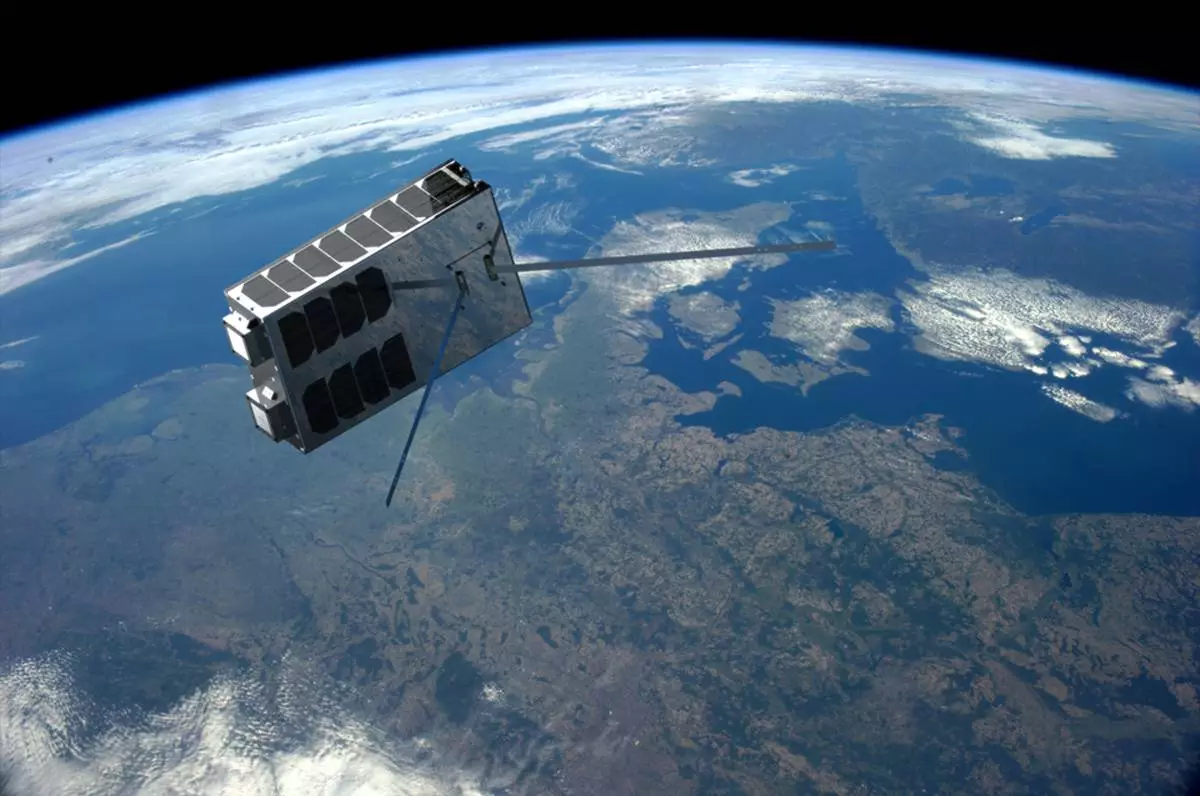
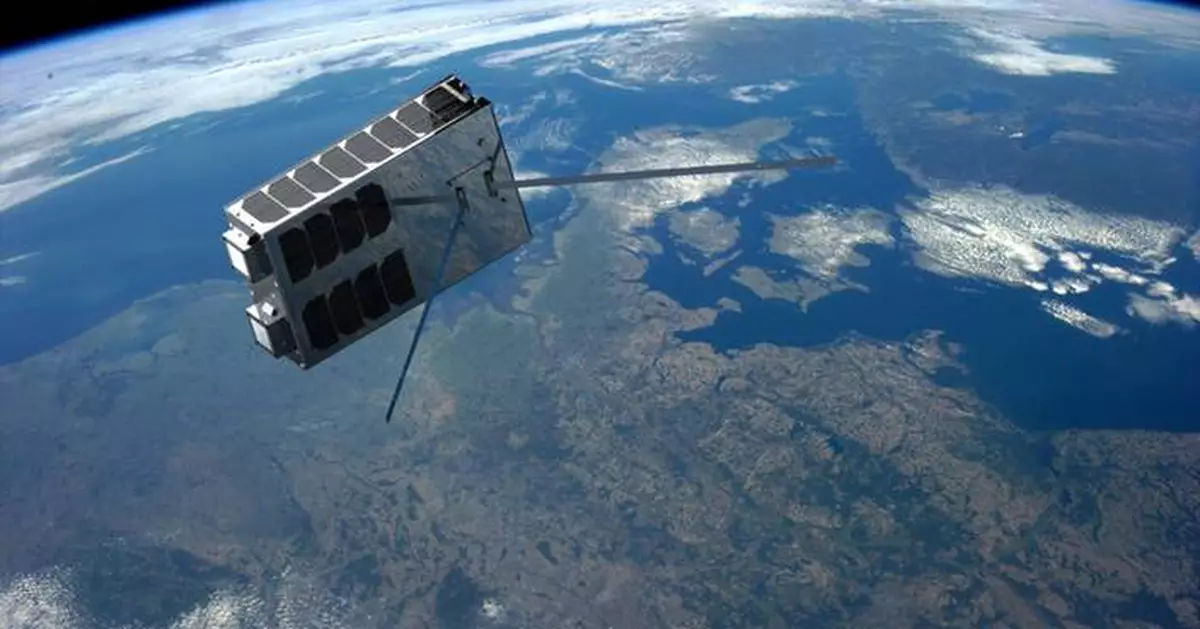
Artist's rendering of AISSat-4 in orbit.
CARACAS, Venezuela (AP) — Venezuelan opposition leader María Corina Machado comes to the White House on Thursday to discuss her country's future with President Donald Trump even after he publicly dismissed her credibility to take over after an audacious U.S. military raid captured then-President Nicolás Maduro.
Trump has raised doubts about his stated commitment to backing democratic rule in Venezuela. His administration has signaled its willingness to work with acting President Delcy Rodríguez, who was Maduro’s vice president and, along with others in the deposed leader’s inner circle, remains in charge of day-to-day governmental operations.
In endorsing Rodríguez so far, Trump has sidelined Machado, who has long been a face of resistance in Venezuela and sought to cultivate relationships with Trump and key administration voices like Secretary of State Marco Rubio among the American right wing in a gamble to ally herself with the U.S. government.
The White House says Machado sought the face-to-face meeting with Trump without setting expectations for what would occur. Her party is widely believed to have won 2024 elections rejected by Maduro. Machado previously offered to share with Trump the Nobel Peace Prize she won last year, an honor he has coveted.
Machado plans to have a meeting at the Senate following her lunch with Trump, who has called her “a nice woman” while indicating they might not touch on major issues in their talks Thursday.
Her Washington swing began after U.S. forces in the Caribbean Sea seized another sanctioned oil tanker that the Trump administration says had ties to Venezuela. It is part of a broader U.S. effort to take control of the South American country’s oil after U.S. forces seized Maduro and his wife at a heavily guarded compound in the Venezuelan capital of Caracas and brought them to New York to stand trial on drug trafficking charges.
The White House says Venezuela has been fully cooperating with the Trump administration since Maduro’s ouster.
Rodríguez, the acting president, herself has adopted a less strident position toward Trump and his “America First” policies toward the Western Hemisphere, saying she plans to continue releasing prisoners detained under Maduro — a move thought to have been made at the behest of the Trump administration. Venezuela released several Americans this week.
Trump, a Republican, said Wednesday that he had a “great conversation” with Rodríguez, their first since Maduro was ousted.
“We had a call, a long call. We discussed a lot of things,” Trump said during an Oval Office bill signing. “And I think we’re getting along very well with Venezuela.”
Even before indicating the willingness to work with Venezuela's interim government, Trump was quick to snub Machado. Just hours after Maduro's capture, Trump said of Machado that “it would be very tough for her to be the leader. She doesn’t have the support within or the respect within the country.”
Machado has steered a careful course to avoid offending Trump, notably after winning last year’s Nobel Peace Prize, which Trump wanted to win himself. She has since thanked Trump. Her offer to share the peace prize with him was rejected by the Nobel Institute.
Machado’s whereabouts have been largely unknown since she went into hiding early last year after being briefly detained in Caracas. She briefly reappeared in Oslo, Norway, in December after her daughter received the Nobel Peace Prize on her behalf.
The industrial engineer and daughter of a steel magnate began challenging the ruling party in 2004, when the nongovernmental organization she co-founded, Súmate, promoted a referendum to recall then-President Hugo Chávez. The initiative failed, and Machado and other Súmate executives were charged with conspiracy.
A year later, she drew the anger of Chávez and his allies again for traveling to Washington to meet President George W. Bush. A photo showing her shaking hands with Bush in the Oval Office lives in the collective memory. Chávez considered Bush an adversary.
Almost two decades later, she marshaled millions of Venezuelans to reject Chávez’s successor, Maduro, for another term in the 2024 election. But ruling party-loyal electoral authorities declared him the winner despite ample credible evidence to the contrary. Ensuing anti-government protests ended in a brutal crackdown by state security forces.
Garcia Cano reported from Caracas, Venezuela, and Janetsky from Mexico City. AP Diplomatic Writer Matthew Lee in Washington contributed to this report.
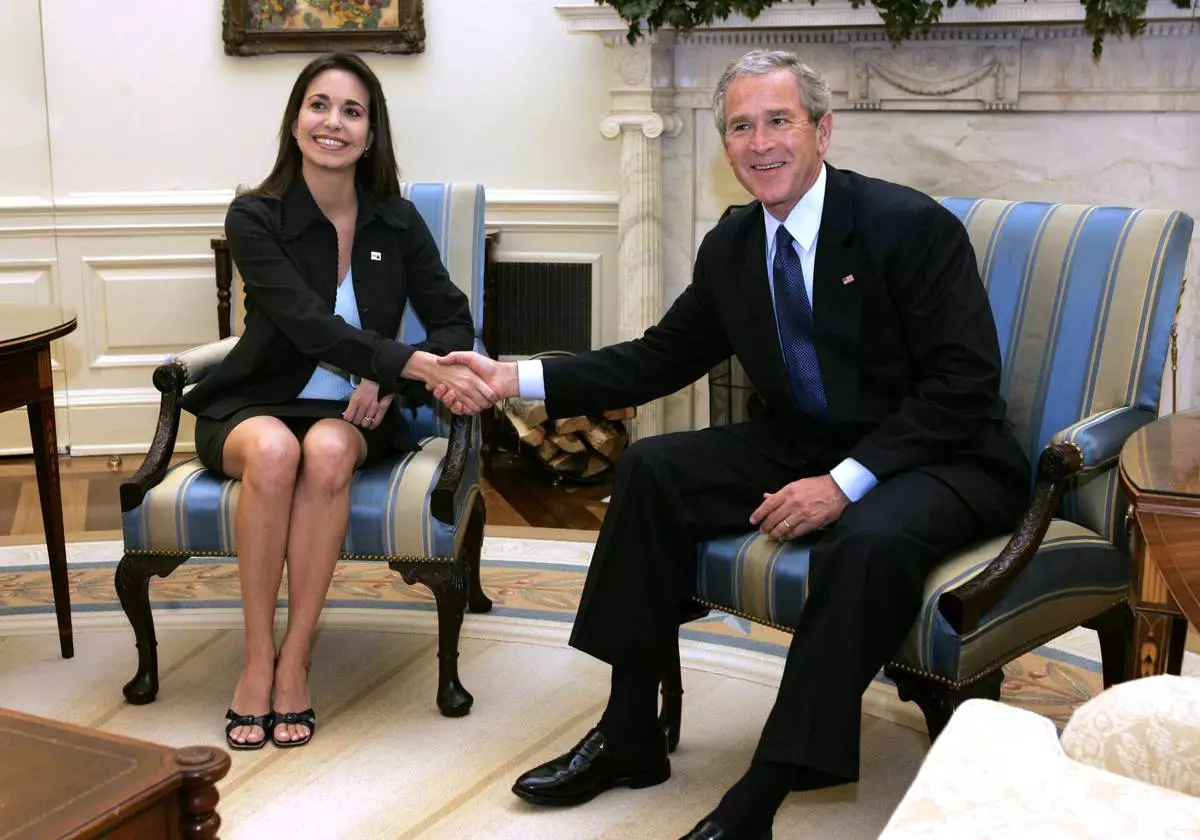
FILE - U.S. President George Bush, right, meets with Maria Corina Machado, executive director of Sumate, a non-governmental organization that defends Venezuelan citizens' political rights, in the Oval Office of the White House, Washington, May 31, 2005. (AP Photo/Charles Dharapak, File)
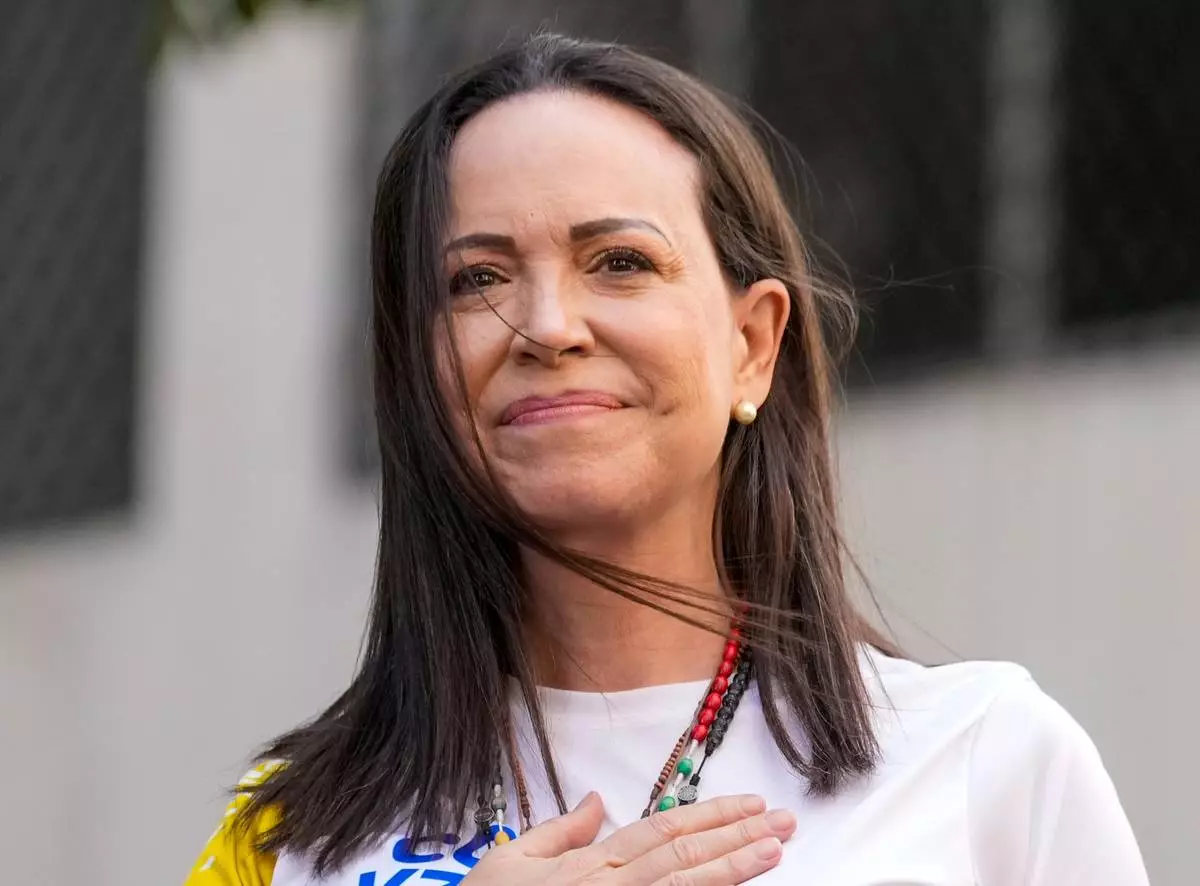
FILE - Opposition leader Maria Corina Machado gestures to supporters during a protest against President Nicolas Maduro the day before his inauguration for a third term, in Caracas, Venezuela, Thursday, Jan. 9, 2025. (AP Photo/Ariana Cubillos, file)