ANCHORAGE, Alaska (AP) — Authorities are warning hikers to steer clear of streams and rivers where salmon are running and to take precautions after bears mauled hikers on two different occasions within a week in Anchorage.
Both unidentified hikers survived the attacks in separate parts of the municipality of Anchorage, a sprawling urban-wildlife interface that spreads across 1,961 square miles (5,079 square kilometers), an area slightly larger than the state of Rhode Island.
Anchorage is home to about 290,000 people, or about 40% of the state’s population, and all kinds of wildlife, including an estimated 350 black bears, 65 brown bears and 1,600 moose.
One Facebook group captures stunning videos and photographs of bears, moose, wolves and other wildlife living and traveling within a half mile of a populated neighborhood in east Anchorage, in the shadows of the Chugach Mountains.
“Every year we recommend that folks avoid salmon-bearing streams because that concentrates both species of bears," said Cory Stantorf, the Anchorage area biologist for the Alaska Department of Fish and Game. "That’s a major food source for these animals as they get ready for that hibernation season coming up.”
Both bear maulings in the last week occurred near populated areas, including the second attack Saturday near the suburb of Eagle River.
A man was walking on a trail that runs parallel to the south fork of the Eagle River, where salmon are running, when his unleashed dog happened upon a brown bear with a cub, said Timothy Gurnett, a Chugach State Park ranger.
The bear mauled the hiker, who unloaded his entire can of spray deterrent to ward off the bear, first to stop the attack and then a second time when the bear returned. The sow and her cub disappeared into the woods.
Armed officials searched for the bear on foot and with a drone, but the bear had left the area.
Officials believe the sow was protecting her cub, and don't intend to kill it.
“That’s not something we go after bears for because any sow in that position would have likely done the same," Stantorf said.
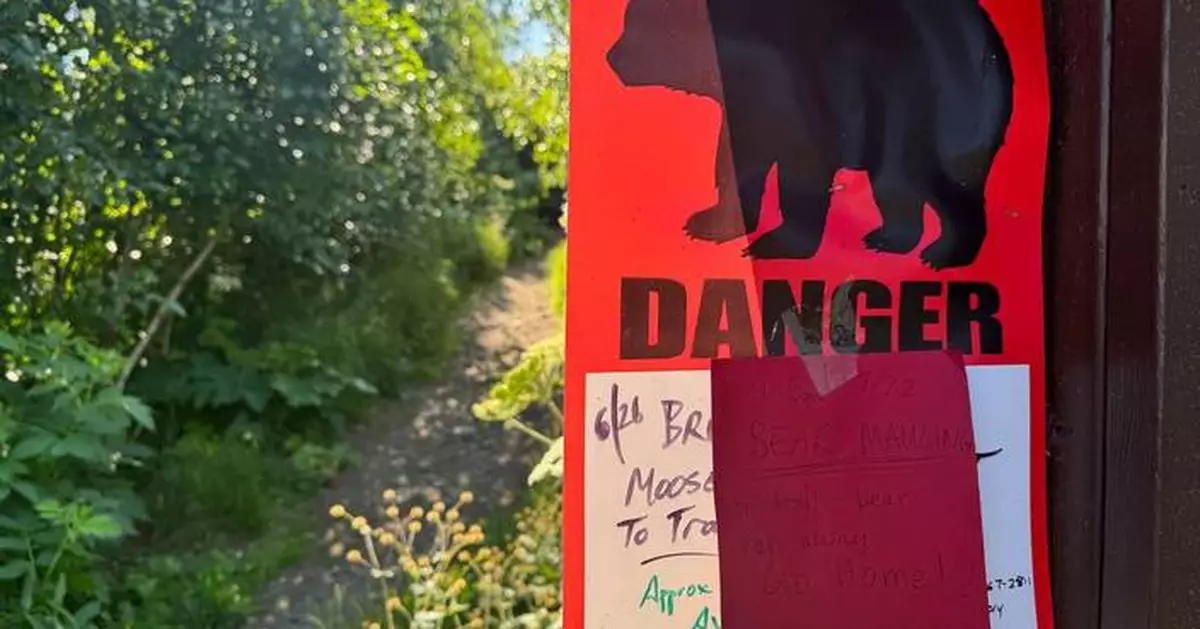
The first attack occurred July 22 when a bear attacked a woman on a popular trail in a hillside neighborhood overlooking Anchorage and Cook Inlet.
The woman called police and said she had been attacked by what she thought was a brown bear about 2 miles (3.2 kilometers) into the trail near the Stuckagain Heights neighborhood.
Cyndi Wardlow, a regional supervisor for the state Department of Fish and Game, said shortly after the attack that it has not been determined if the bear was a brown bear or a cinnamon black bear, which could look like a brown bear.
Visibility on the trail was very low, with tall grass and heavy brush. Wardlow said staff was able to collect hair and scat samples for submission for analysis, but it could take two weeks to get results. Stantorf said they are still waiting for results.
Officials were hoping the samples could shed light on the type of bear and if it was male or female. Since they didn’t know what they were working with, she said they weren’t actively searching for an animal after that.
At this time of the year, people should avoid the salmon-bearing waterways.
“There’s so many other places to hike,” Gurnett said. Those areas include over 300 miles (483 kilometers) of trails within Chugach State Park, 95% of which lies within the Municipality of Anchorage.
Hikers should be extra vigilant when they are next to a river since the water masks sounds, and bears don’t hear people coming. Hikers could carry and sound air horns to let bears know they are nearby.
“Bears don’t want to be around us. They want to be somewhere else,” he said.
Regardless of where people may hike, whether it is in the backcountry or near waterways, there is always a chance they could have a bear encounter or come across a moose, wolf or wolverine, Stantorf said.
Stantorf recommends people travel in groups, make noise, have bear spray ready, don't run or hike with earbuds in, keep pets leashed and be aware of your surroundings.
Associated Press writer Becky Bohrer in Juneau, Alaska, contributed.
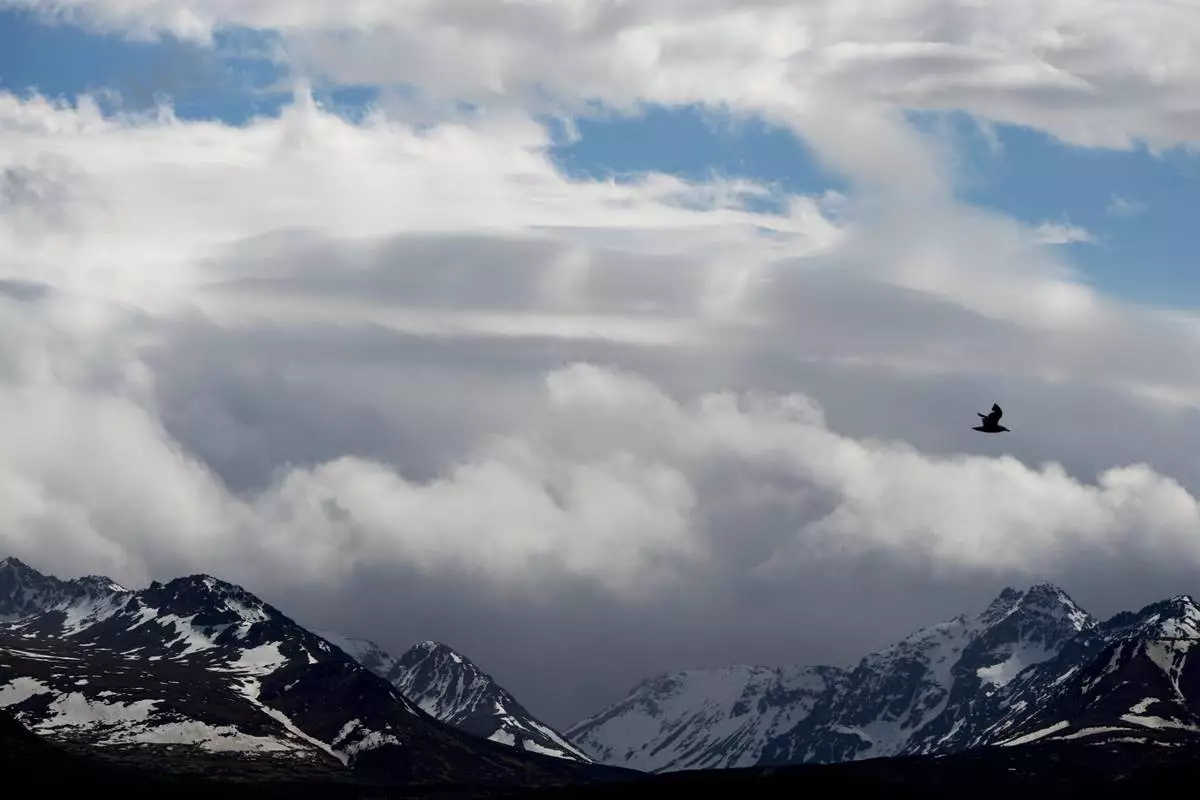
FILE - A bird flies near the Chugach Mountains in Anchorage, Alaska, June 3, 2025. (AP Photo/Jenny Kane, File)
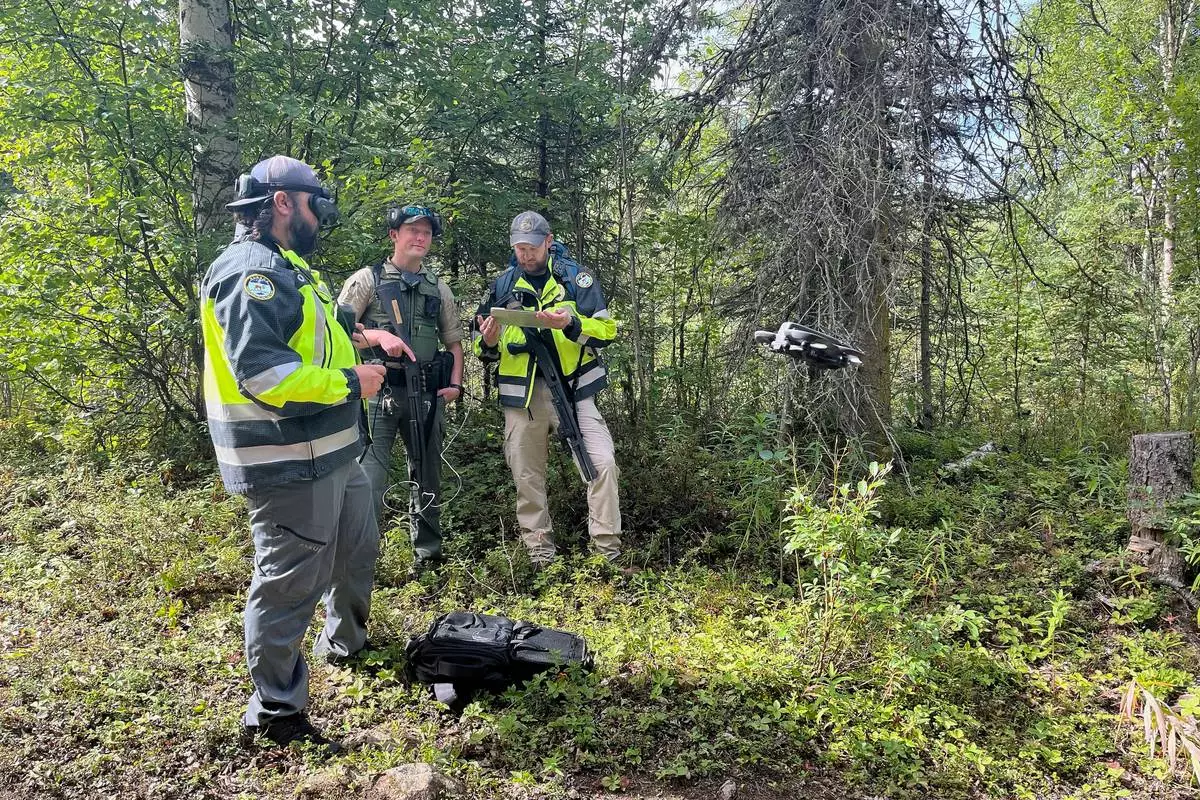
Wildlife officials prepare to fly a drone to look for a brown bear that had mauled a man on Saturday, July 26, 2025, near Eagle River, Alaska. (Timothy Burnett, Chugach State Park via AP)
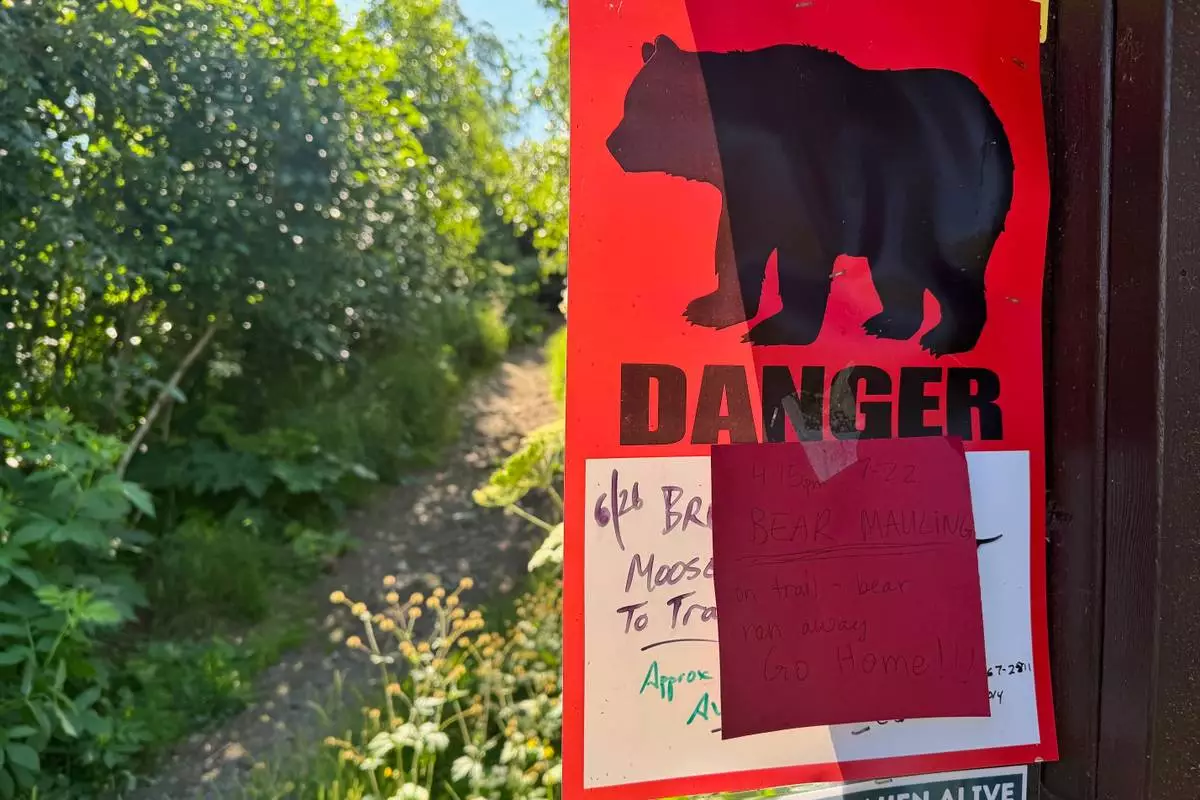
A bear warning sign is posted at the Basher trailhead in Anchorage, Alaska, on Wednesday, July 23, 2025, a day after a hiker was injured by a brown bear about two miles into the trail. (AP Photo/Mark Thiessen)