HONOLULU (AP) — One of the most powerful earthquakes ever recorded sent a tsunami crashing into a Russian port and smaller waves barreling across the Pacific to the Americas and south to New Zealand.
The danger had largely passed more than a day after the 8.8 magnitude quake, which was centered off the coast of the Kamchatka Peninsula in Russia’s Far East. No major damage was reported and tsunami warnings were canceled in most areas. Chile, however, raised its warning to the highest level early Wednesday for most of its lengthy Pacific coast and started evacuating hundreds of people.
Here's what to know:
Tsunamis are waves triggered by earthquakes, underwater volcanic eruptions and submarine landslides. After an underwater earthquake, the shaking of the seafloor moves water. The energy from this transfers to waves.
Many people think of tsunamis as one wave. But they are typically multiple waves that rush ashore like a fast-rising tide.
“Tsunamis cross the ocean at hundreds of miles an hour — as fast as a jet airplane — in deep water," said Dave Snider, tsunami warning coordinator with the National Tsunami Warning Center in Alaska. "But when they get close to the shore, they slow down and start to pile up.”
It could take minutes for waves to hit land next to the site of a major quake. It could take hours for tsunamis to cross the Pacific Ocean. The speed of tsunami waves also depends on ocean depth. They travel faster over deep water and slow down in shallow water.
People were urged to stay away from coastlines until any wave surges passed in places as far away as Fiji, Samoa, Tonga, Federated States of Micronesia and Solomon Islands.
Some tsunamis are small and don't cause damage. Others can cause massive destruction. In 2004, a 9.1 magnitude earthquake off Indonesia caused waves that leveled remote villages, ports and tourist resorts along the Indian Ocean across Southeast and South Asia. Some 230,000 people died. A 9.1 magnitude quake and tsunami ravaged parts of Japan’s northeastern coast on March 11, 2011, killing about 20,000 people and triggering a nuclear meltdown.
The 8.8-magnitude quake, which struck early Wednesday local time, was among the four strongest earthquakes this century, according to the USGS.
It was also the sixth-biggest quake ever recorded, said Simon Boxall, a principal teaching fellow at the University of Southampton’s Physical Oceanography Research Center.
The earthquake, which was followed by multiple aftershocks as strong as 6.9 magnitude, occurred along the Pacific Ring of Fire, the ring of seismic faults around the Pacific Ocean where more than 80% of the world’s largest quakes occur. Several tectonic plates meet there. The ring gets its name from the volcanoes that surround it.
While not all earthquakes lead to tsunamis, this one generated a series of them spreading outward from the epicenter off the coast of Russia’s Kamchatka Peninsula.
“It’s a bit like throwing a very, very large rock into the sea and then watching the waves propagate away from that rock, that splash,’’ Boxall said. “And so that’s what’s happened in this case. And that’s why this particular one has generated a tsunami. It’s not huge. It’s not one that’s going to cause mass devastation. But it will cause coastal flooding and it will cause damage, and it does put lives at risk if people don’t move to high ground.’’
A tsunami height of 3 to 4 meters (10 to 13 feet) was recorded in Kamchatka, while tsunami waves about 2 to 5 feet (0.61 to 1.52 meters) high reached San Francisco early Wednesday, officials said. Other areas have seen smaller waves.
The International Atomic Energy Agency said initial reports showed there had been no safety impact on nuclear power plants along Japan’s Pacific coast. Damage and evacuations were reported in the Russian regions nearest the quake’s epicenter, and officials declared a state of emergency in several areas. Several people were injured, but none gravely, and no major damage has been reported.
Additional aftershocks are possible. A tsunami advisory remained in effect for parts of the northern California coast.
In Hawaii, emergency authorities blast alerts to people's cellphones, on TV and radio and sound a network of sirens. In Alaska, some communities have sirens, and information is available on weather radio or public radio broadcasts.
In the U.S., the National Weather Service has different levels of alerts:
— A warning means a tsunami that may cause widespread flooding is expected or occurring. Evacuation is recommended and people should move to high ground or inland.
— An advisory means a tsunami with potential for strong currents or dangerous waves is expected or occurring and people should stay out of the water and away from beaches and waterways.
— A watch means that a tsunami is possible and to be prepared.
This story has been corrected to show that the magnitude of the 2011 earthquake in Japan was 9.1, not 9.0.
Kirka reported from London.
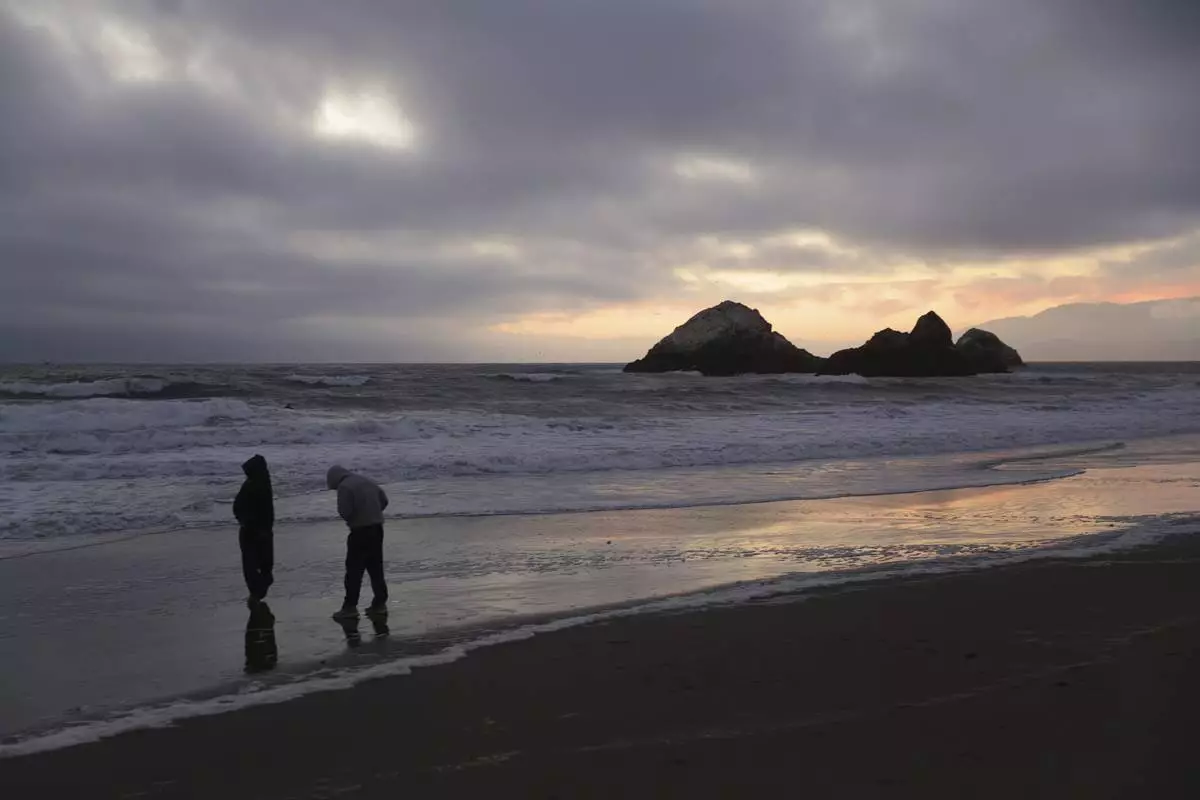
During a tsunami advisory triggered by an underwater earthquake off the coast of Russia, Gaby Lazlo and Daniel Ramirez visit Ocean Beach in San Francisco on Tuesday, July 29, 2025. (Scott Strazzante/San Francisco Chronicle via AP)
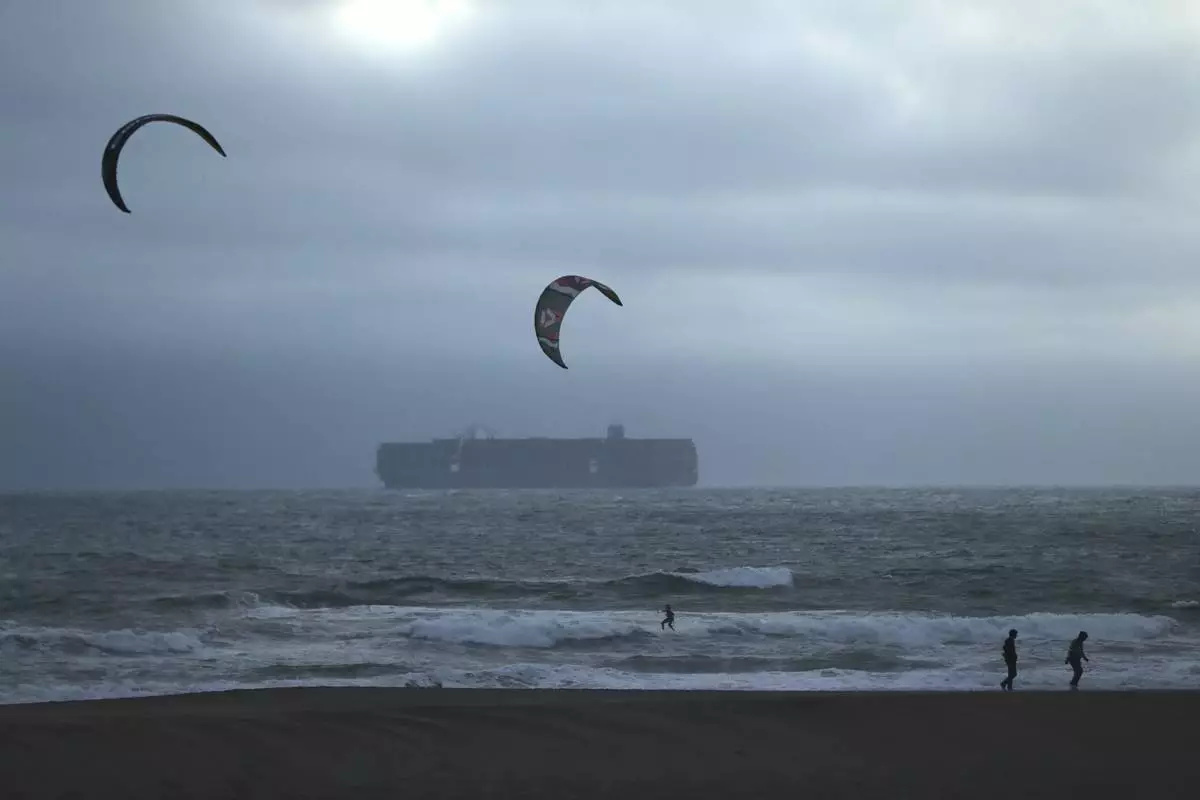
During a tsunami advisory triggered by an underwater earthquake off the coast of Russia, a pair of kite surfers recreate near two beach walkers at Ocean Beach in San Francisco on Tuesday, July 29, 2025. (Scott Strazzante/San Francisco Chronicle via AP)
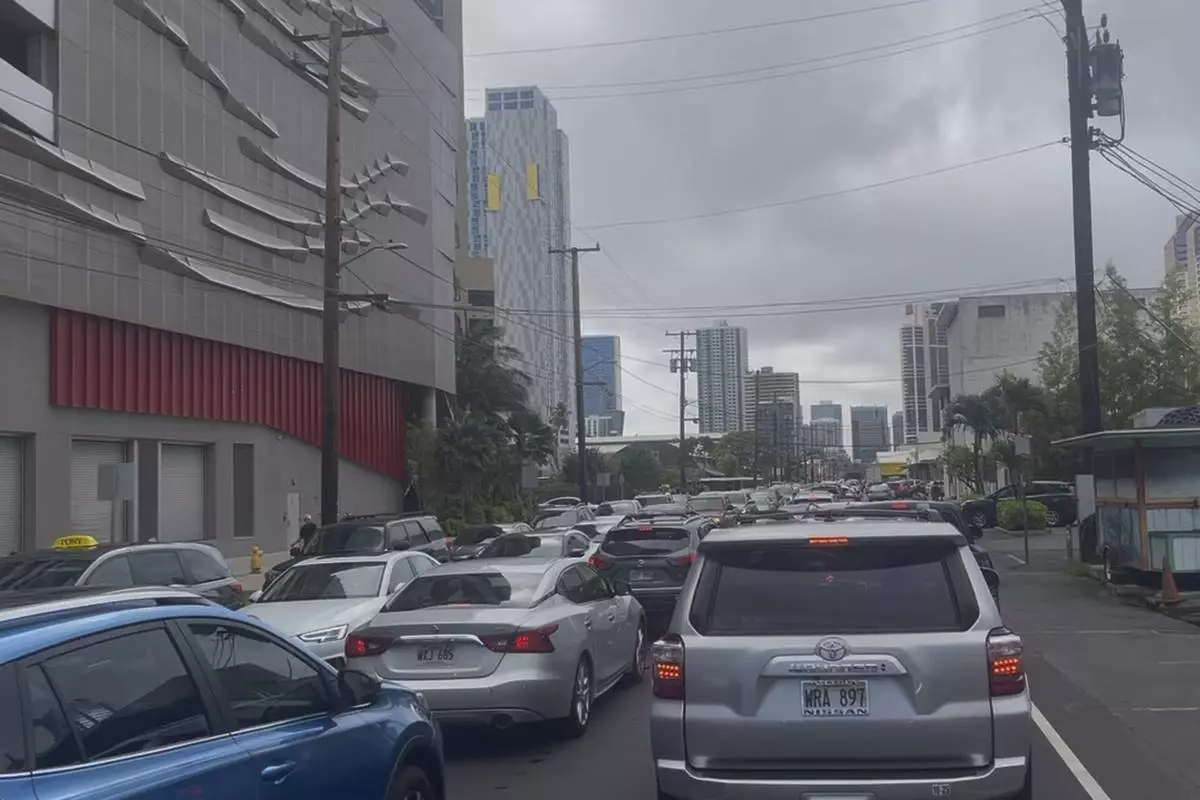
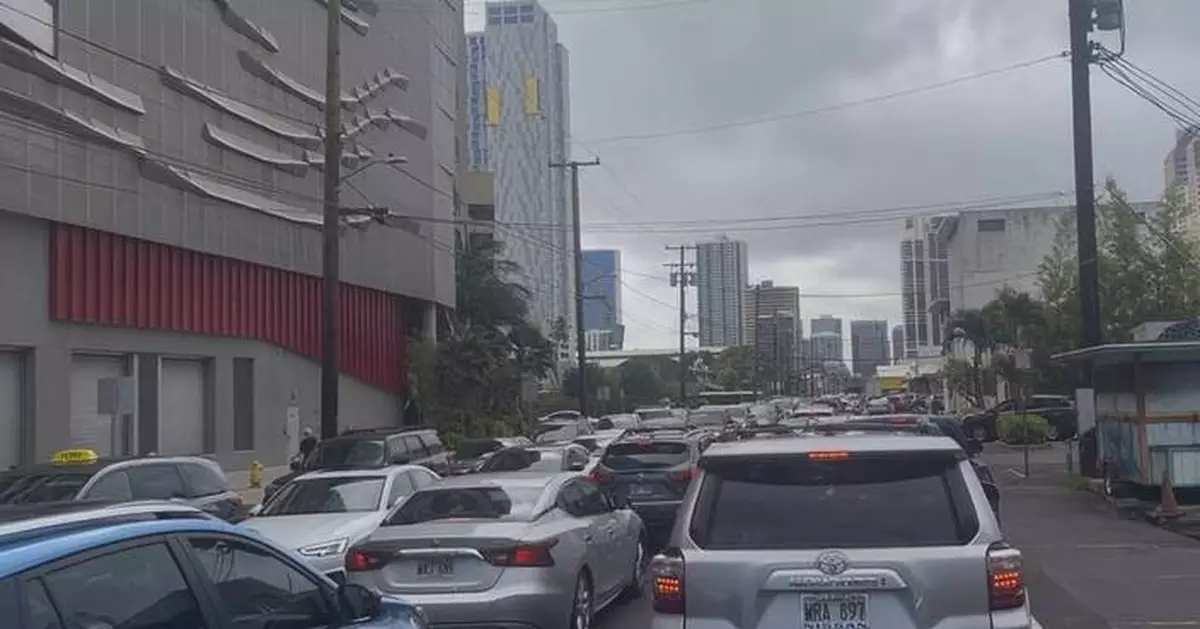
A traffic jam forms in Honolulu Tuesday, July 29, 2025 as people heed a tsunami evacuation warning that coincided with rush hour following a powerful earthquakes in Russia's Far East early Wednesday. (AP Photo)
MINNEAPOLIS (AP) — President Donald Trump on Thursday threatened to invoke the Insurrection Act and deploy troops to quell persistent protests against the federal officers sent to Minneapolis to enforce his administration's massive immigration crackdown.
The president's threat comes a day after a federal immigration officer shot and wounded a Minneapolis man who had attacked the officer with a shovel and broom handle. That shooting further heightened the fear and anger radiating across the Minnesota city since an Immigration and Customs Enforcement agent fatally shot a Renee Good in the head.
Trump has repeatedly threatened to invoke the rarely used federal law to deploy the U.S. military or federalize the National Guard for domestic law enforcement, over the objections of state governors.
“If the corrupt politicians of Minnesota don’t obey the law and stop the professional agitators and insurrectionists from attacking the Patriots of I.C.E., who are only trying to do their job, I will institute the INSURRECTION ACT, which many Presidents have done before me, and quickly put an end to the travesty that is taking place in that once great State,” Trump said in social media post.
The Associated Press has reached out to the offices of Gov. Tim Walz and Minneapolis Mayor Jacob Frey for comment.
The Department of Homeland Security says it has made more than 2,000 arrests in the state since early December and is vowing to not back down. ICE is a DHS agency.
In Minneapolis, smoke filled the streets Wednesday night near the site of the latest shooting as federal officers wearing gas masks and helmets fired tear gas into a small crowd. Protesters responded by throwing rocks and shooting fireworks.
Police Chief Brian O’Hara said during a news conference that the gathering was an unlawful assembly and “people need to leave.”
Things later quietened down and by early Thursday only a few demonstrators and law enforcement officers remained at the scene.
Demonstrations have become common on the streets of Minneapolis since the ICE agent fatally shot 37-year-old Good on Jan. 7. Agents have yanked people from their cars and homes, and have been confronted by angry bystanders demanding that the officers pack up and leave.
Minneapolis Mayor Jacob Frey described the situation as not “sustainable.”
“This is an impossible situation that our city is presently being put in and at the same time we are trying to find a way forward to keep people safe, to protect our neighbors, to maintain order,” he said.
Frey said the federal force — five times the size of the city’s 600-officer police force — has “invaded” Minneapolis, scaring and angering residents.
In a statement describing the events that led to Wednesday's shooting, Homeland Security said federal law enforcement officers stopped a driver from Venezuela who is in the U.S. illegally. The person drove away and crashed into a parked car before taking off on foot, DHS said.
After officers reached the person, two other people arrived from a nearby apartment and all three started attacking the officer, according to DHS.
“Fearing for his life and safety as he was being ambushed by three individuals, the officer fired a defensive shot to defend his life,” DHS said.
The two people who came out of the apartment are in custody, it said.
O’Hara said the man shot was in the hospital with a non-life-threatening injury.
The shooting took place about 4.5 miles (7.2 kilometers) north of where Good was killed. O’Hara's account of what happened largely echoed that of Homeland Security.
During a speech before the latest shooting, Walz described Minnesota as being in chaos, saying what's happening in the state “defies belief.”
“Let’s be very, very clear, this long ago stopped being a matter of immigration enforcement,” he said. “Instead, it’s a campaign of organized brutality against the people of Minnesota by our own federal government.”
Jonathan Ross, the Immigration and Customs Enforcement officer who killed Good, suffered internal bleeding to his torso during the encounter, a Homeland Security official told The Associated Press.
The official spoke to AP on condition of anonymity in order to discuss Ross’ medical condition. The official did not provide details about the severity of the injuries, and the agency did not respond to questions about the extent of the bleeding, exactly how he suffered the injury, when it was diagnosed or his medical treatment.
Good was killed after three ICE officers surrounded her SUV on a snowy street a few blocks from her home.
Bystander video shows one officer ordering Good to open the door and grabbing the handle. As the vehicle begins to move forward, Ross, standing in front, raises his weapon and fires at least three shots at close range. He steps back as the SUV advances and turns.
Homeland Security Secretary Kristi Noem has said Ross was struck by the vehicle and that Good was using her SUV as a weapon — a self-defense claim that has been criticized by Minnesota officials.
Chris Madel, an attorney for Ross, declined to comment.
Good’s family has hired the same law firm that represented George Floyd’s family in a $27 million settlement with Minneapolis. Floyd, who was Black, died after a white police officer pinned his neck to the ground in the street in May 2020.
Madhani reported from Washington, D.C. Associated Press reporters Julie Watson in San Diego; Rebecca Santana in Washington; Ed White in Detroit and Giovanna Dell’Orto in Minneapolis contributed.
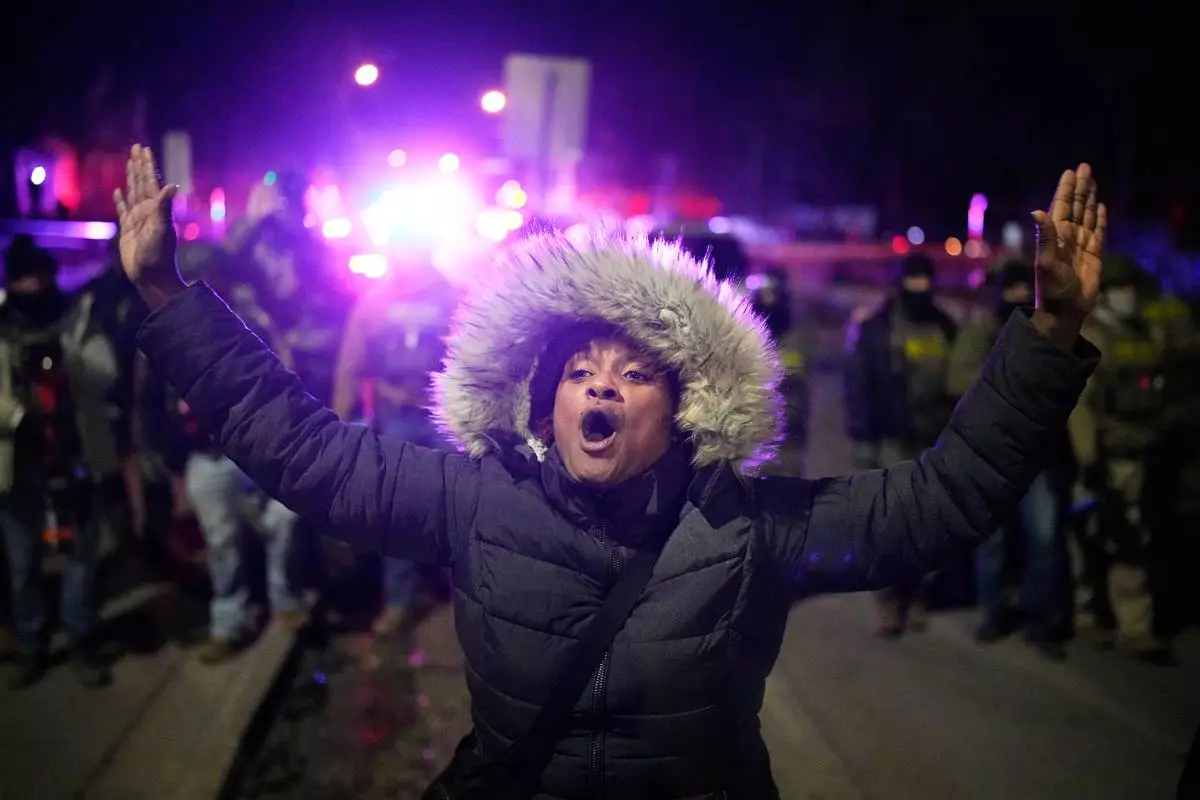
A protester yells in front of law enforcement after a shooting on Wednesday, Jan. 14, 2026, in Minneapolis. (AP Photo/John Locher)
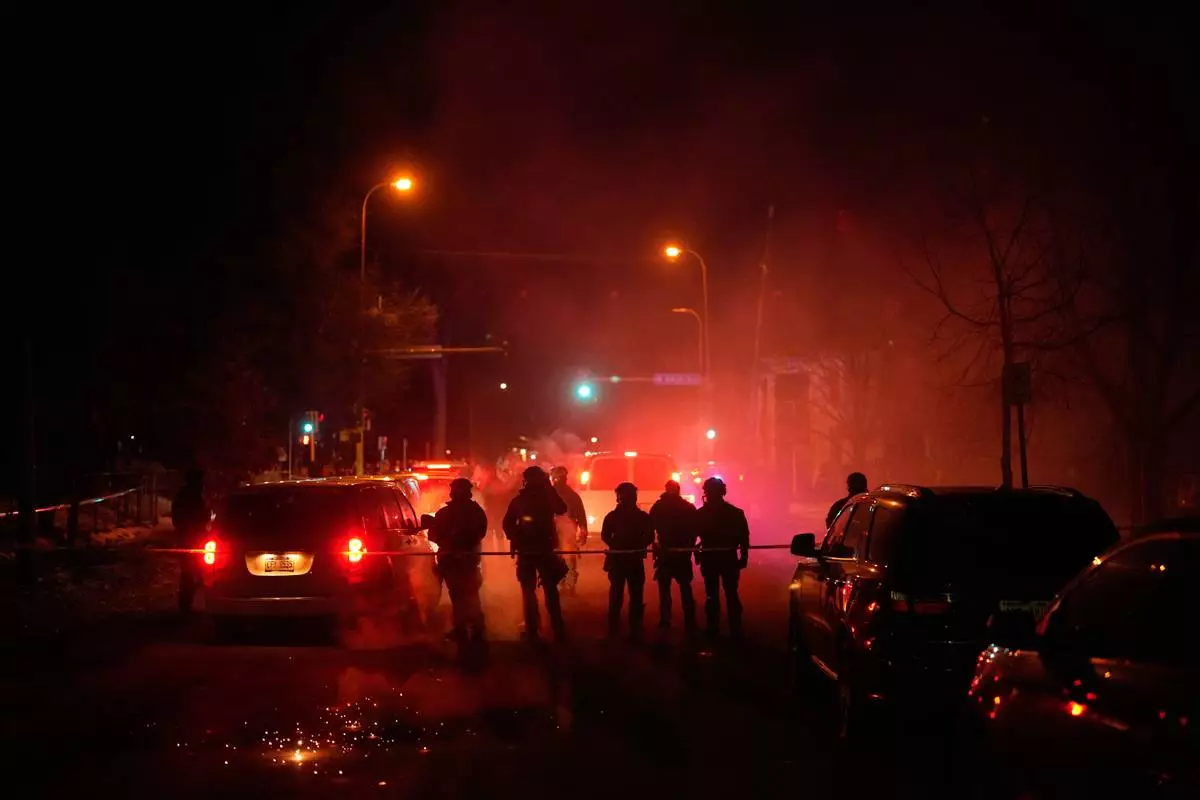
Tear gas surrounds federal law enforcement officers as they leave a scene after a shooting on Wednesday, Jan. 14, 2026, in Minneapolis. (AP Photo/John Locher)
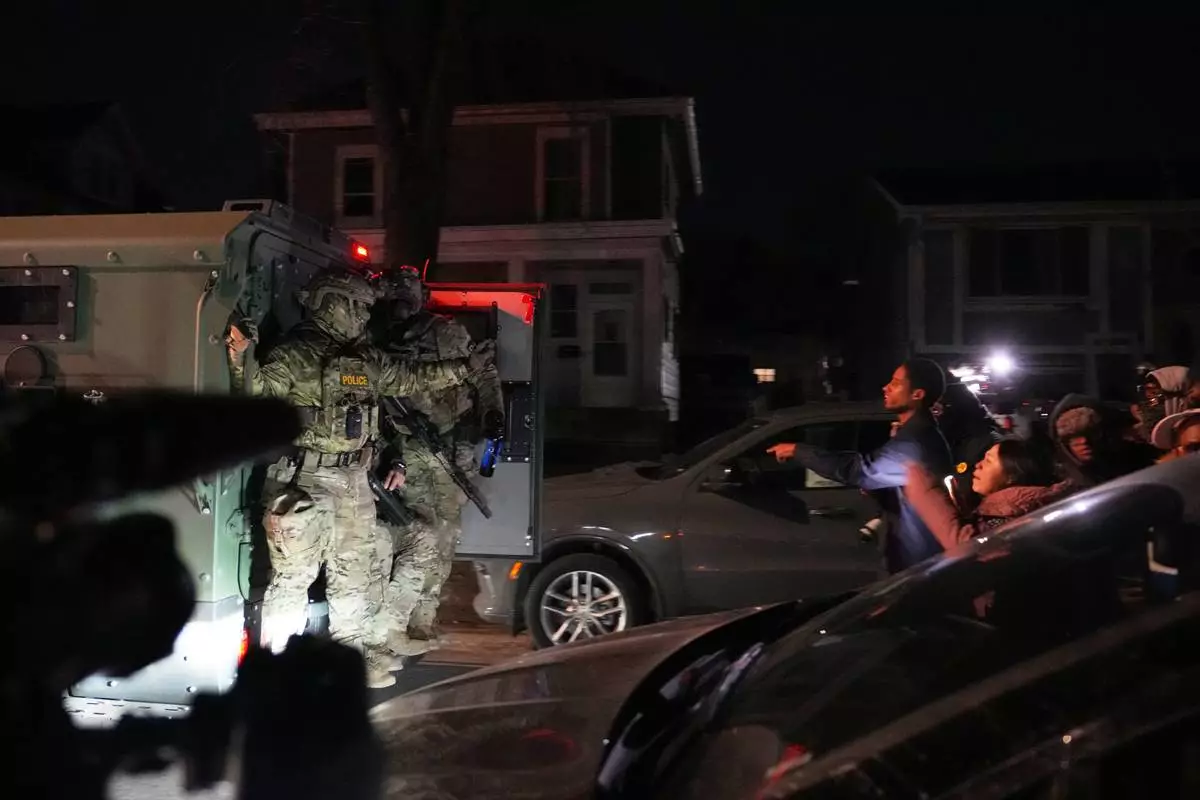
Protesters shout at law enforcement officers after a shooting on Wednesday, Jan. 14, 2026, in Minneapolis. (AP Photo/Abbie Parr)
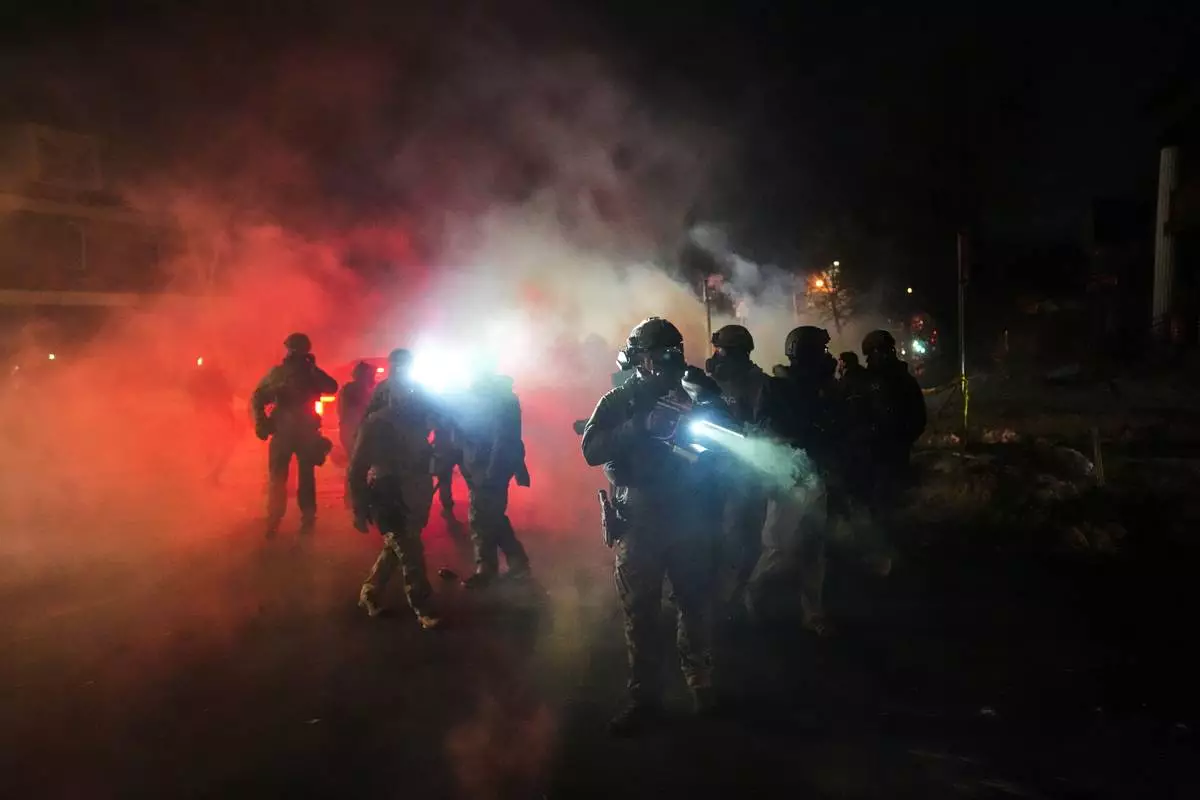
Law enforcement officers stand amid tear gas at the scene of a reported shooting Wednesday, Jan. 14, 2026, in Minneapolis. (AP Photo/Adam Gray)