LOS ANGELES--(BUSINESS WIRE)--Jul 29, 2025--
Faraday Future Intelligent Electric Inc. (NASDAQ: FFAI) (“Faraday Future”, “FF” or “Company”), a California-based global shared intelligent electric mobility ecosystem company, announced today that its Global President, Jerry Wang, will participate in the upcoming J.P. Morgan Auto Conference, taking place Tuesday, August 12 through Wednesday, August 13, 2025, in New York City.
This press release features multimedia. View the full release here: https://www.businesswire.com/news/home/20250729446480/en/
Jerry Wang is scheduled to present on Tuesday, August 12, 2025, at 4:50 PM ET, and will provide an update on the Company’s strategic roadmap, including progress across its AI-driven mobility initiatives, key product developments such as the recently launched FX Super One, and priorities for the remainder of 2025. The presentation will be followed by a Q&A session with investors.
A live webcast of the presentation will be available; access details will be shared on the Company’s investor relations website closer to the event. A replay of the webcast will also be posted to the website following the conclusion of the conference.
Participation in the J.P. Morgan Auto Conference reflects Faraday Future’s ongoing engagement with the investment community and underscores its commitment to transparency, innovation, and long-term value creation.
“We look forward to participating in the J.P. Morgan Auto Conference and introducing the FF and FX brands to a highly engaged audience of investors and industry leaders,” said Jerry Wang, Global President of Faraday Future. “This conference provides an important platform to deepen our investor dialogue, reinforce our 'Stockholders First' philosophy, and showcase the innovation and execution behind our recent milestones. As we continue building momentum, we remain focused on delivering sustainable growth, creating long-term value for our stockholders, and advancing the strategic priorities that lie ahead.”
ABOUT FARADAY FUTURE
Faraday Future is a California-based global shared intelligent electric mobility ecosystem company. Founded in 2014, the Company’s mission is to disrupt the automotive industry by creating a user-centric, technology-first, and smart driving experience. Faraday Future’s flagship model, the FF 91, exemplifies its vision for luxury, innovation, and performance. The FX strategy aims to introduce mass production models equipped with state-of-the-art luxury technology similar to the FF 91, targeting a broader market with middle-to-low price range offerings. FF is committed to redefining mobility through AI innovation. Join us in shaping the future of intelligent transportation. For more information, please visit https://www.ff.com/us/.
FORWARD LOOKING STATEMENTS
This press release includes “forward looking statements” within the meaning of the safe harbor provisions of the United States Private Securities Litigation Reform Act of 1995. When used in this press release, the words “plans,” “desire,” “believes,” “seeks,” “may,” “will,” “should,” and “future,” variations of these words or similar expressions (or the negative versions of such words or expressions) are intended to identify forward-looking statements. These forward-looking statements, which include statements regarding production capacity expansion, the FX brand, the Super One MPV, future FX models, future FX reservations, expansion into new states and markets, and production and sales goals, are not guarantees of future performance, conditions or results, and involve a number of known and unknown risks, uncertainties, assumptions and other important factors, many of which are outside the Company’s control, that could cause actual results or outcomes to differ materially from those discussed in the forward-looking statements.

Jerry Wang, Global President of Faraday Future, to deliver main stage presentation and investor Q&A at the J.P. Morgan Auto Investor Conference in New York City on August 12, 2025.
WASHINGTON (AP) — Before President Donald Trump's administration started dismantling the Education Department, the agency served as a powerful enforcer in cases of sexual violence at schools and universities. It brought the weight of the government against schools that mishandled sexual assault complaints involving students.
That work is quickly fading away.
The department’s Office for Civil Rights was gutted in Trump’s mass layoffs last year, leaving half as many lawyers to investigate complaints of discrimination based on race, sex or disability in schools. Those who remain face a backlog of more than 25,000 cases.
Investigations have dwindled. Before the layoffs last March, the office opened dozens of sexual violence investigations a year. Since then, it's opened fewer than 10 nationwide, according to internal data obtained by The Associated Press.
Yet Trump's Republican administration has doubled down on sexual discrimination cases of another kind. Trump officials have used Title IX, a 1972 gender equality law, against schools that make accommodations for transgender students and athletes. The Office for Civil Rights has opened nearly 50 such investigations since Trump took office a year ago.
Even before the layoffs, critics said the office was understaffed and moved too slowly. Now, many firms that handle Title IX cases have stopped filing complaints, calling it a dead end.
“It almost feels like you’re up against the void,” said Katie McKay, a lawyer at the New York firm C.A. Goldberg.
“It feels like a big question mark right now,” she said. “How are we supposed to hold a school accountable once it has messed up?”
An Education Department spokesperson said the office is working through its caseload, blaming President Joe Biden's Democratic administration for leaving a backlog and rewriting Title IX rules to protect LGBTQ+ students. Trump officials rolled back those rules.
“The Trump Administration has restored commonsense safeguards against sexual violence by returning sex-based separation in intimate facilities,” spokesperson Julie Hartman said. “OCR is and will continue to safeguard the dignity and safety of our nation’s students.”
The layoffs have slowed work at the Office for Civil Rights across the board, but it has an outsize impact on cases of sexual violence. Students who are mistreated by their schools — including victims and accused students alike — have few other venues to pursue justice.
Many are now left with two options: File a lawsuit or walk away.
One woman said she’s losing hope for a complaint she filed in 2024. She alleges her graduate school failed to follow its own policies when it suspended but didn't expel another student found by the school to have sexually assaulted her. No one has contacted her about the complaint since 2024.
The woman recently sued her school as a last resort. She said it feels like a David and Goliath mismatch.
“They have all the power, because there is no large organization holding them accountable. It’s just me, just this one individual who’s filing this simple suit," the woman said. The AP does not typically identify people who say they are victims of sexual assault unless they grant permission.
The civil rights office is supposed to provide a free alternative to litigation. Anyone can file a complaint, which can trigger an investigation and sanctions for schools that violate federal law.
In 2024, the agency received more than 1,000 complaints involving sexual violence or sexual harassment, according to an annual report.
It’s unclear how many complaints have been filed more recently. Trump's administration has not reported newer figures. In conversations with the AP, some staffers said cases are piling up so quickly they can’t track how many involve sexual violence.
In December, the department acknowledged the civil rights backlog and announced dozens of downsized workers would be brought back to the office amid a legal challenge to their layoffs. The workers' return offers some hope to those with pending civil rights complaints. Department officials have vowed to keep pushing for the layoffs.
Before Trump was elected to his second term, the office had more than 300 pending investigations involving sexual assault, according to a public database. Most of those cases are believed to be sitting idle as investigators prioritize easier complaints, according to staffers who spoke on the condition of anonymity for fear of retribution.
The details of past cases underscore the urgency of the work.
In 2024, the office took action against a Pennsylvania school system after a girl with a disability told staff she had been sexually touched by a bus driver. She was put back on that driver’s bus later that afternoon, plus the next two days. The district was required to designate a Title IX coordinator for its schools, review previous complaints and consider compensation for the girl's family.
That year, the office demanded changes at a Montana school where a boy was pinned down by other students and assaulted after a wrestling practice. The students had been suspended for three days after school officials treated it as a case of hazing instead of sexual assault.
In another case, the office sided with a University of Notre Dame student who had been expelled over accusations of sexual misconduct. The student said the college never told him precisely what he was accused of and refused to interview witnesses he put forward.
Cases that get attention from the federal office are being handled under federal rules created during Trump’s first term. Those rules were designed to bolster the rights of students accused of sexual misconduct.
Lawyers who work with accused students see little improvement.
Justin Dillon, a Washington lawyer, said some of his recent complaints have been opened for investigation. He tells clients not to hold their breath. Even before the layoffs, cases could drag on for years, he said.
Others gave up on the office years ago. The LLF National Law Firm said it stopped filing complaints in 2021 in favor of suing schools directly. Lawyers at the firm said the office had become incapable of delivering timely outcomes, which was only worsened by the layoffs.
Complaints can be resolved several ways. They can be dismissed if they don't pass legal muster. Many go to mediation, akin to a settlement. Some end in voluntary agreements from schools, with plans to rectify past wrongs and prevent future ones.
In 2024, under Biden, the office secured 23 voluntary agreements from schools and colleges in cases involving sexual violence, according to a public database. In 2018, during Trump’s first term, there were 58. Since Trump took office again last year, there have been none.
The dismantling of the Office for Civil Rights comes as a blow to Laura Dunn, a civil rights lawyer who was influential in getting President Barack Obama's Democratic administration to make campus sexual assault a priority. As the issue gained public attention, the office started fielding hundreds of complaints a year.
“All the progress survivors have made by sharing their story is being lost,” said Dunn, who's now a Democratic candidate for Congress in New York. “We are literally losing civil rights progress in the United States, and it’s pushing us back more than 50 years.”
The Associated Press’ education coverage receives financial support from multiple private foundations. The AP is solely responsible for all content. Find the AP's standards for working with philanthropies, a list of supporters and funded coverage areas at AP.org.
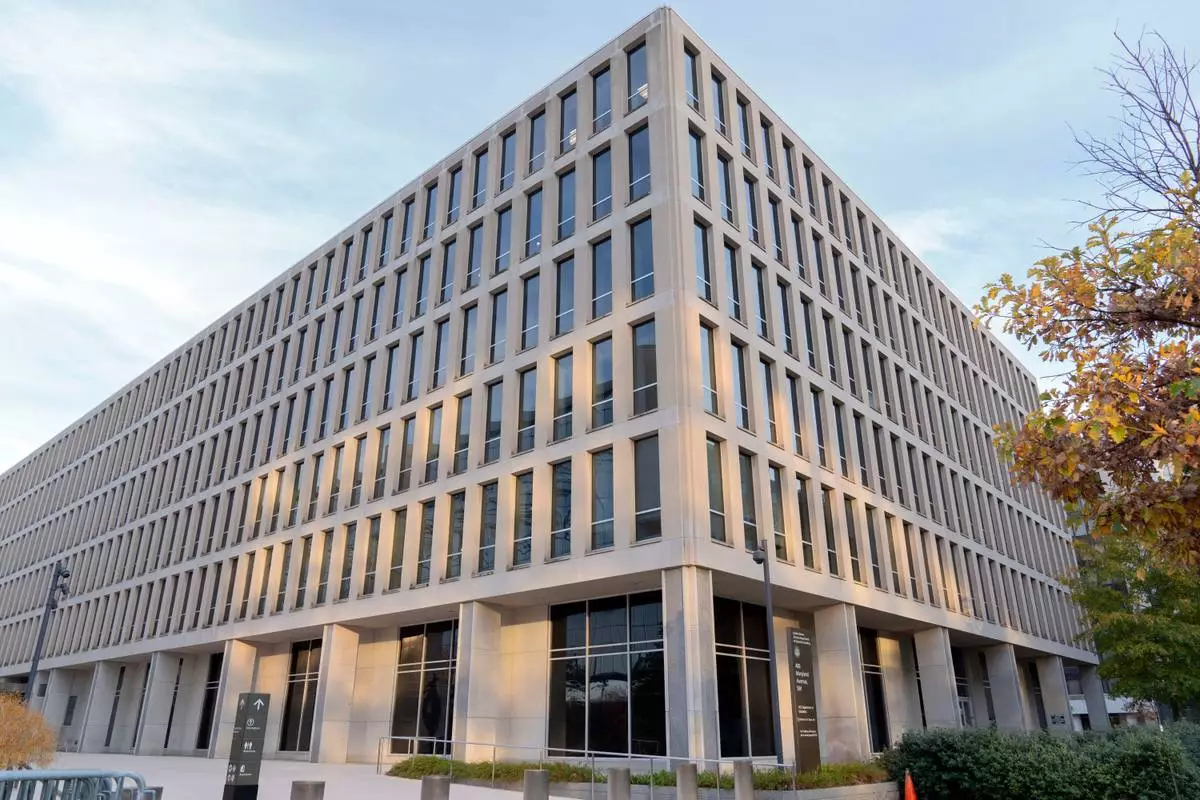
FILE - The U.S. Department of Education building is seen in Washington, on Nov. 18, 2024. (AP Photo/Jose Luis Magana, File)