MINNEAPOLIS (AP) — The Justice Department is investigating whether Minnesota Gov. Tim Walz and Minneapolis Mayor Jacob Frey have impeded federal immigration enforcement through public statements they have made, two people familiar with the matter said Friday.
The investigation, which both Walz and Frey said was a bullying tactic meant to threaten political opposition, focused on potential violation of a conspiracy statute, the people said.
Click to Gallery
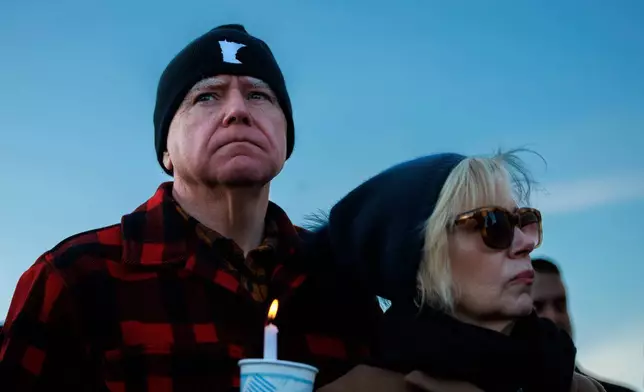
Minnesota Gov. Tim Walz and his wife, Gwen Walz, attend a vigil honoring Renee Good on Friday, Jan. 9, 2026, in St. Paul, Minn., outside the Minnesota State Capitol. (Kerem Yücel/Minnesota Public Radio via AP)
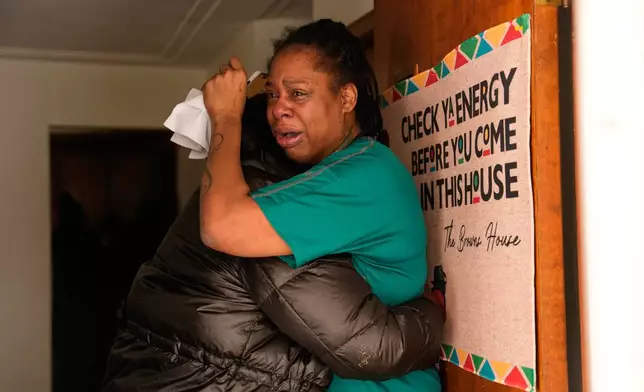
ADDS IDENTIFICATION: Teyana Gibson Brown, right, wife of Garrison Gibson, reacts after federal immigration officers arrested Garrison Gibson, Sunday, Jan. 11, 2026, in Minneapolis. (AP Photo/John Locher)
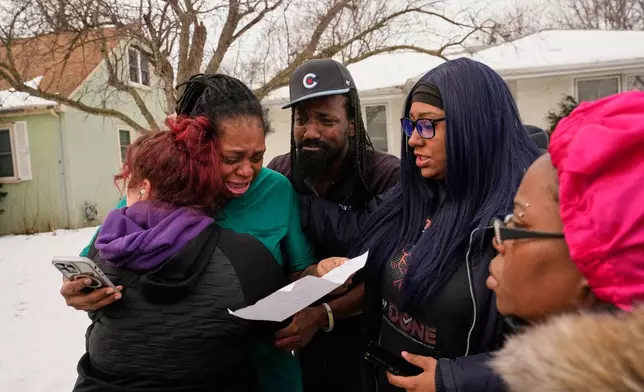
ADDS IDENTIFICATION: Teyana Gibson Brown, second from left, wife of Garrison Gibson, reacts after federal immigration officers arrested Garrison Gibson, Sunday, Jan. 11, 2026, in Minneapolis. (AP Photo/John Locher)
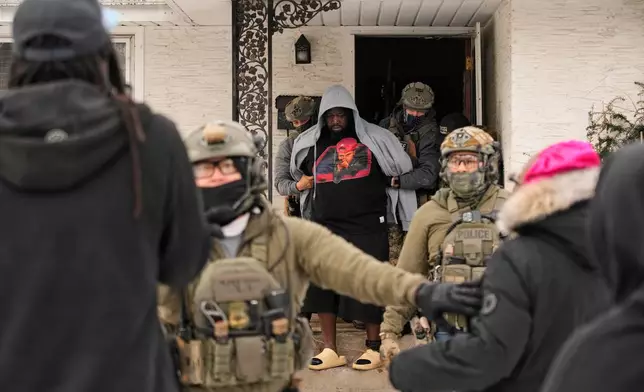
ADDS IDENTIFICATION: Garrison Gibson is arrested by federal immigration officers Sunday, Jan. 11, 2026, in Minneapolis. (AP Photo/John Locher)
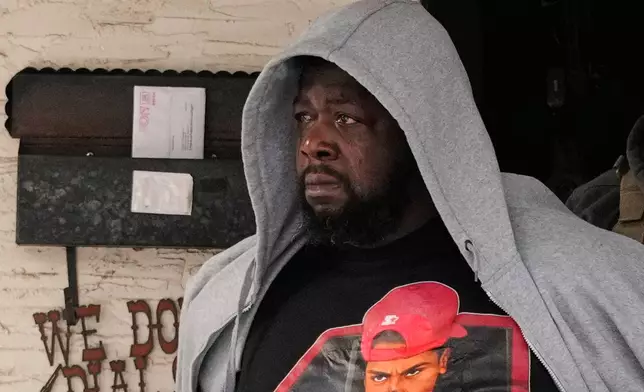
ADDS IDENTIFICATION: Garrison Gibson becomes emotional as he is arrested by federal immigration officers Sunday, Jan. 11, 2026, in Minneapolis. (AP Photo/John Locher)
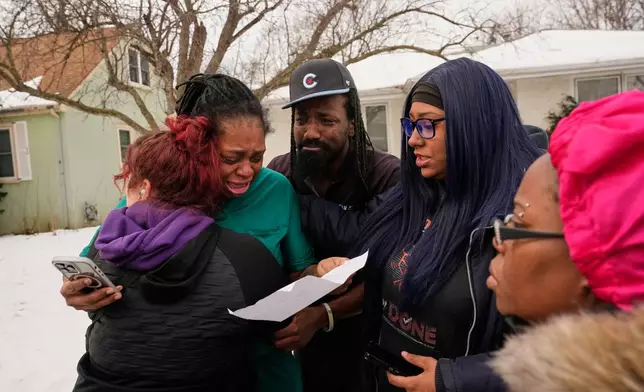
A family member reacts after federal immigration officers make an arrest Sunday, Jan. 11, 2026, in Minneapolis. (AP Photo/John Locher)
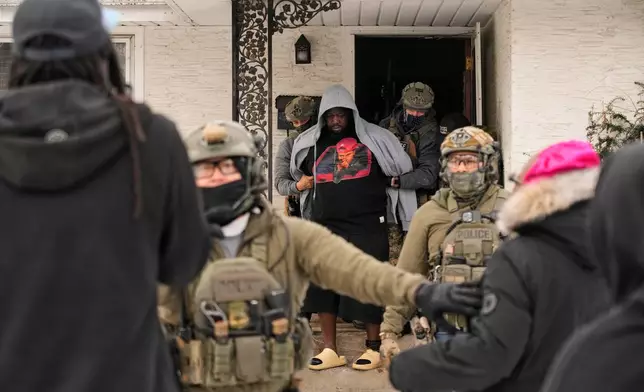
A man is arrested by federal immigration officers Sunday, Jan. 11, 2026, in Minneapolis. (AP Photo/John Locher)
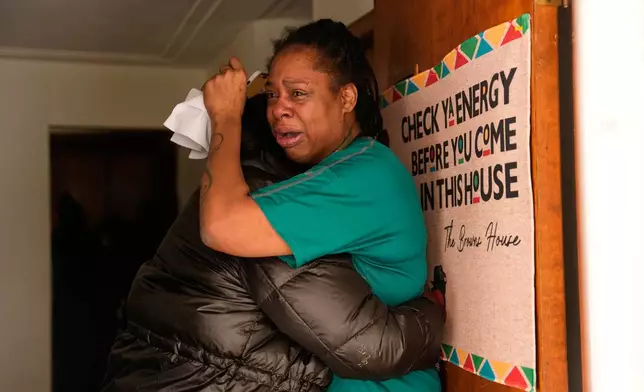
A family member reacts after federal immigration officers make an arrest Sunday, Jan. 11, 2026, in Minneapolis. (AP Photo/John Locher)
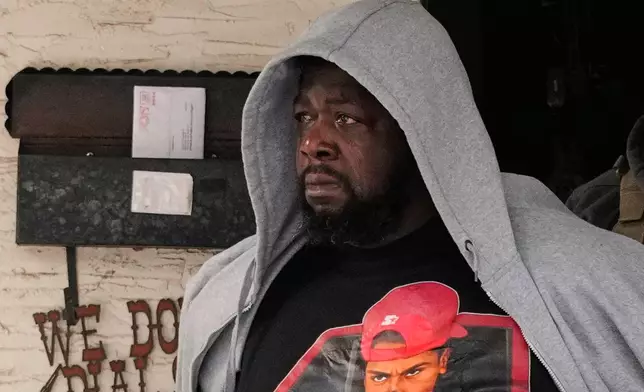
A man becomes emotional as he is arrested by federal immigration officers Sunday, Jan. 11, 2026, in Minneapolis. (AP Photo/John Locher)
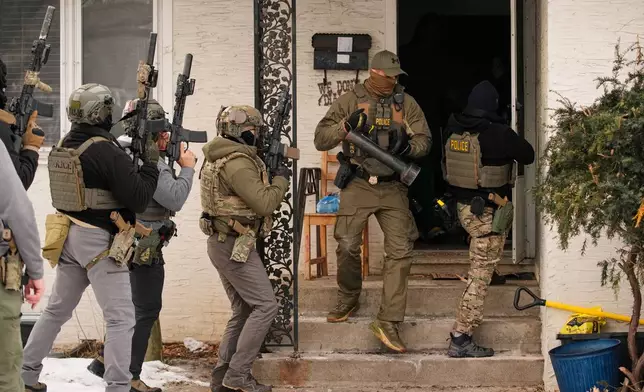
Federal immigration officers prepare to enter a home to make an arrest after an officer used a battering ram to break down a door Sunday, Jan. 11, 2026, in Minneapolis. (AP Photo/John Locher)
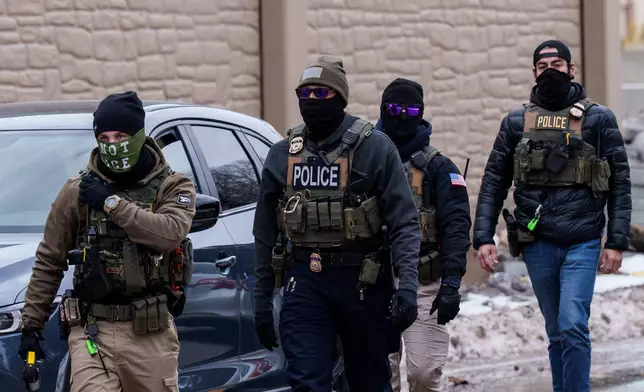
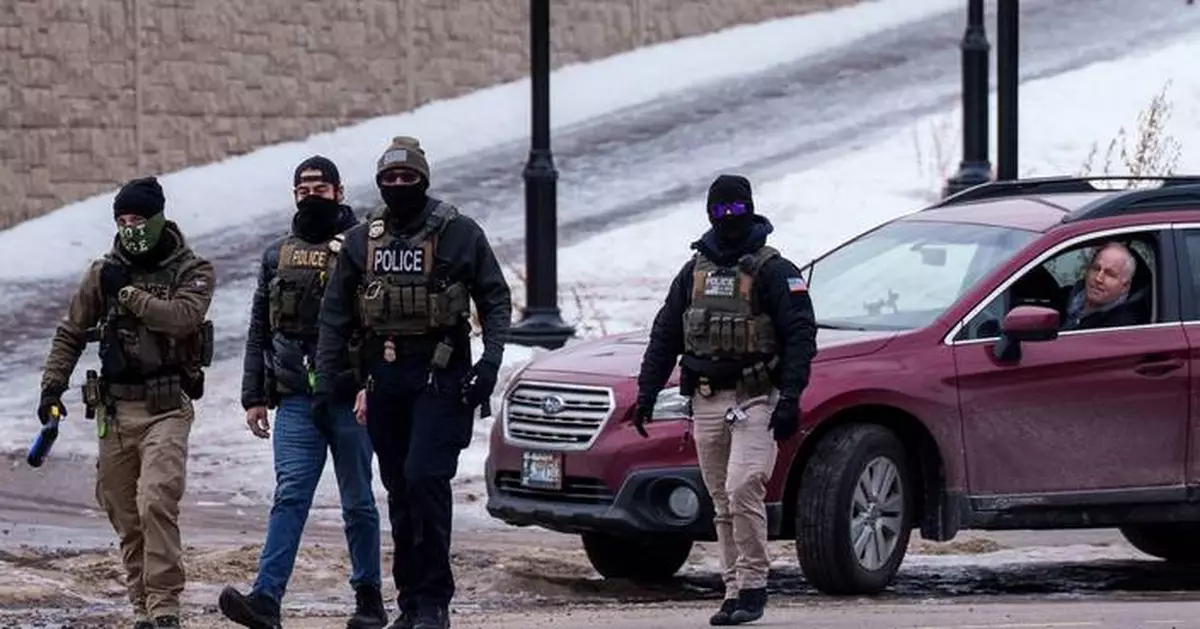
Immigration and Customs Enforcement (ICE) agents, including one wearing a 'NOT ICE' face covering, walk near their vehicles, Thursday, Jan. 15, 2026, in Richfield, Minn. (AP Photo/Adam Gray)
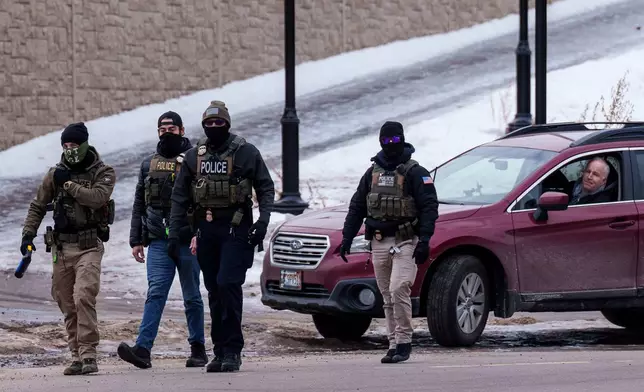
A person looks out of their vehicle as Immigration and Customs Enforcement (ICE) agents walk away, Thursday, Jan. 15, 2026, in Richfield, Minn. (AP Photo/Adam Gray)
The people spoke to The Associated Press on condition of anonymity because they were not authorized to discuss a pending investigation by name.
CBS News first reported the investigation.
The investigation comes during a weekslong immigration crackdown in Minneapolis and St. Paul that the Department of Homeland Security has called its largest recent immigration enforcement operation, resulting in more than 2,500 arrests.
The operation has become more confrontational since the fatal shooting of Renee Good on Jan. 7, with agents pulling people from cars and homes and frequently being confronted by angry bystanders demanding they leave. State and local officials have repeatedly told protesters to remain peaceful.
In response to reports of the investigation, Walz said in a statement: “Two days ago it was Elissa Slotkin. Last week it was Jerome Powell. Before that, Mark Kelly. Weaponizing the justice system and threatening political opponents is a dangerous, authoritarian tactic.”
U.S. senators Kelly, from Arizona, and Slotkin, from Michigan, are under investigation from the President Donald Trump administration after appearing with other Democratic lawmakers in a video urging members of the military to resist “illegal orders." The administration has also launched a criminal investigation of Powell, a first for a sitting federal reserve chair.
Walz’s office said it has not received any notice of an investigation.
Frey described the investigation as an attempt to intimidate him for “standing up for Minneapolis, our local law enforcement, and our residents against the chaos and danger this Administration has brought to our streets.”
The U.S. attorney’s office in Minneapolis did not immediately comment.
In a post on the social media platform X following reports of the investigation, Attorney General Pam Bondi said: “A reminder to all those in Minnesota: No one is above the law.” She did not specifically mention the investigation.
With more protests expected in the Twin Cities this weekend, state authorities urged demonstrators to avoid confrontation.
“While peaceful expression is protected, any actions that harm people, destroy property or jeopardize public safety will not be tolerated,” said Commissioner Bob Jacobson of the Minnesota Department of Public Safety.
His comments came after Trump backed off a bit from his threat a day earlier to invoke an 1807 law, the Insurrection Act, to send troops to suppress demonstrations.
“I don’t think there’s any reason right now to use it, but if I needed it, I’d use it,” Trump told reporters outside the White House.
A U.S. judge in Minnesota ruled on Friday that the federal officers working in the Minneapolis-area enforcement operation can’t detain or tear gas peaceful protesters who aren’t obstructing authorities, including when they're observing agents.
The case was filed before Good's shooting on behalf of six Minnesota activists represented by the American Civil Liberties Union of Minnesota.
Government attorneys had argued that the officers have been acting within their legal authority to enforce immigration laws and protect themselves. But the ACLU has said government officers are violating the constitutional rights of Twin Cities residents.
A Liberian man who has been shuttled in and out of custody since immigration agents broke down his door with a battering ram was released again Friday, hours after a routine check-in with authorities led to his second arrest.
The dramatic initial arrest of Garrison Gibson last weekend was captured on video. U.S. District Judge Jeffrey Bryan ruled the arrest unlawful Thursday and freed him, but Gibson was detained again Friday when he appeared at an immigration office.
A few hours later, Gibson was free again, attorney Marc Prokosch said.
Gibson, 38, who fled the civil war in his West African home country as a child, had been ordered removed from the U.S., apparently because of a 2008 drug conviction that was later dismissed. He has remained in the country legally under what’s known as an order of supervision, Prokosch said, and complied with the requirement that he meet regularly with immigration authorities.
In his Thursday order, the judge agreed that officials violated regulations by not giving Gibson enough notice that his supervision status had been revoked. Prokosch said he was told by ICE that they are “now going through their proper channels" to revoke the order.
Minneapolis authorities released police and fire dispatch logs and transcripts of 911 calls related to the fatal shooting of Good. Firefighters found what appeared to be two gunshot wounds in her right chest, one in her left forearm and a possible gunshot wound on the left side of her head, records show.
“They shot her, like, cause she wouldn’t open her car door,” a caller said. “Point blank range in her car.”
Good, 37, was at the wheel of her Honda Pilot, which was partially blocking a street. Video showed an officer approached the SUV, demanded that she open the door and grabbed the handle.
Good began to pull forward and turned the vehicle's wheel to the right. Another ICE officer, Jonathan Ross, pulled his gun and fired at close range, jumping back as the SUV moved past him. DHS claims the agent shot Good in self-defense.
This story was first published on Jan. 16, 2026. It was updated on Jan. 18, 2026 to correct the age of Garrison Gibson to 38.
Richer and Tucker reported from Washington. Associated Press reporters Steve Karnowski in Minneapolis; Ed White and Corey Williams in Detroit; Graham Lee Brewer in Oklahoma City; Jesse Bedayn in Denver; Audrey McAvoy in Honolulu; Hallie Golden in Seattle; and Ben Finley in Washington contributed.

Minnesota Gov. Tim Walz and his wife, Gwen Walz, attend a vigil honoring Renee Good on Friday, Jan. 9, 2026, in St. Paul, Minn., outside the Minnesota State Capitol. (Kerem Yücel/Minnesota Public Radio via AP)
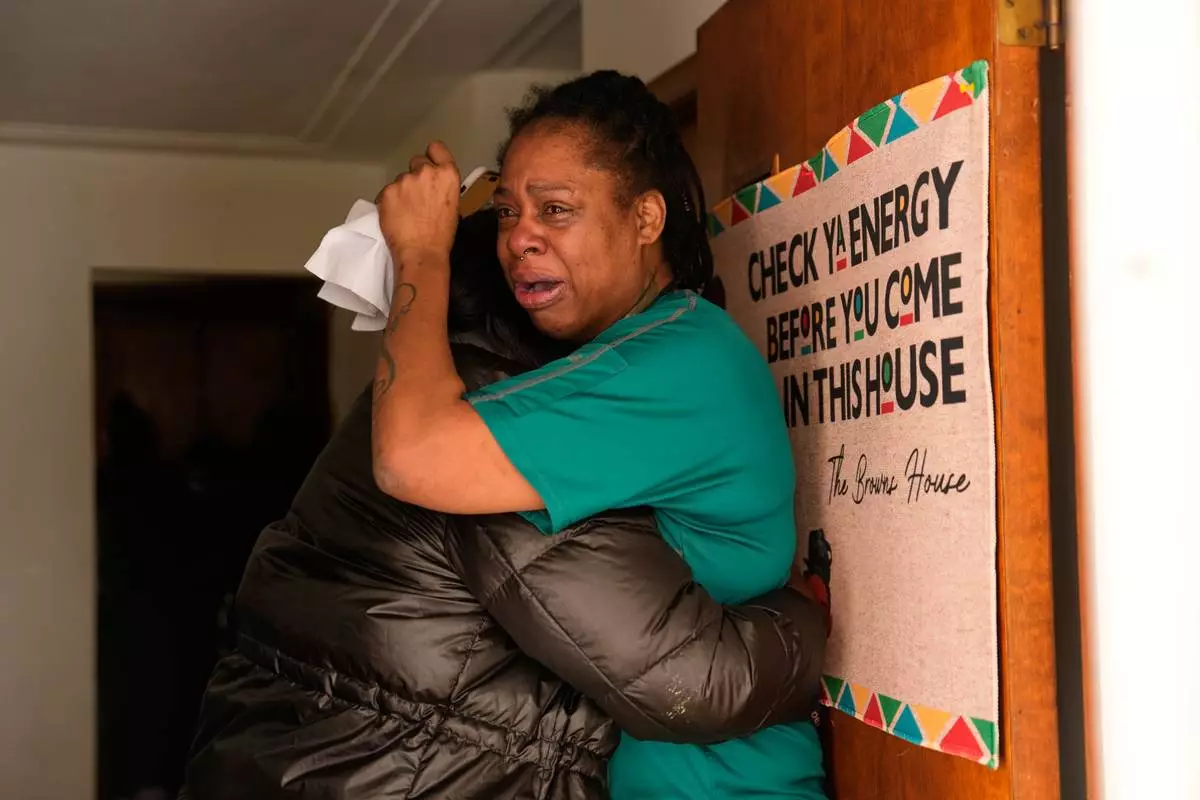
ADDS IDENTIFICATION: Teyana Gibson Brown, right, wife of Garrison Gibson, reacts after federal immigration officers arrested Garrison Gibson, Sunday, Jan. 11, 2026, in Minneapolis. (AP Photo/John Locher)
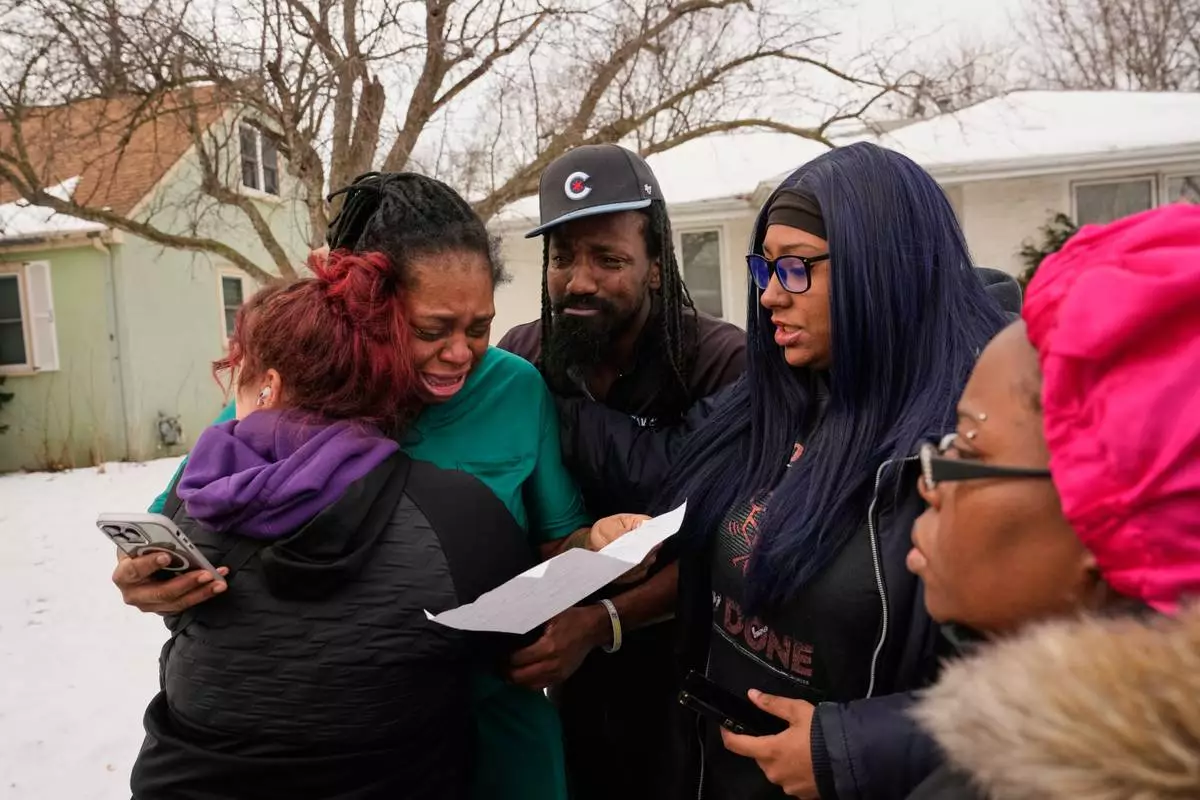
ADDS IDENTIFICATION: Teyana Gibson Brown, second from left, wife of Garrison Gibson, reacts after federal immigration officers arrested Garrison Gibson, Sunday, Jan. 11, 2026, in Minneapolis. (AP Photo/John Locher)
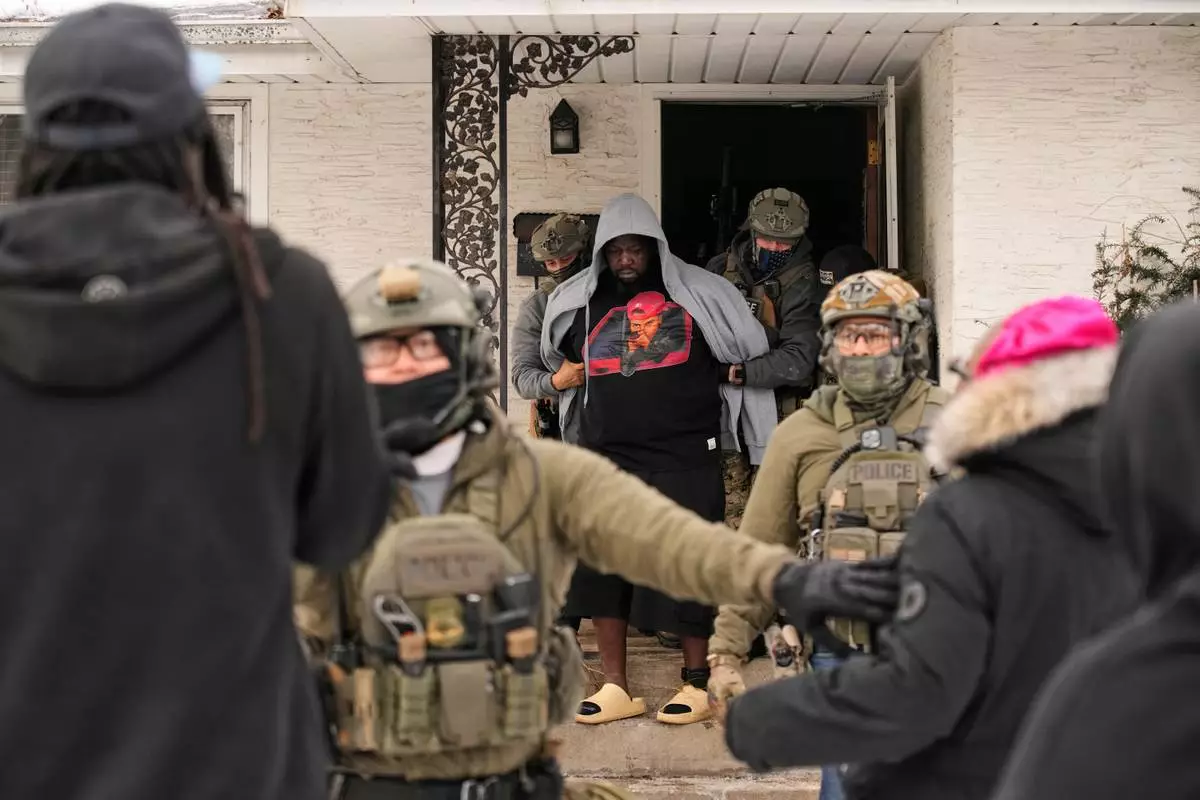
ADDS IDENTIFICATION: Garrison Gibson is arrested by federal immigration officers Sunday, Jan. 11, 2026, in Minneapolis. (AP Photo/John Locher)
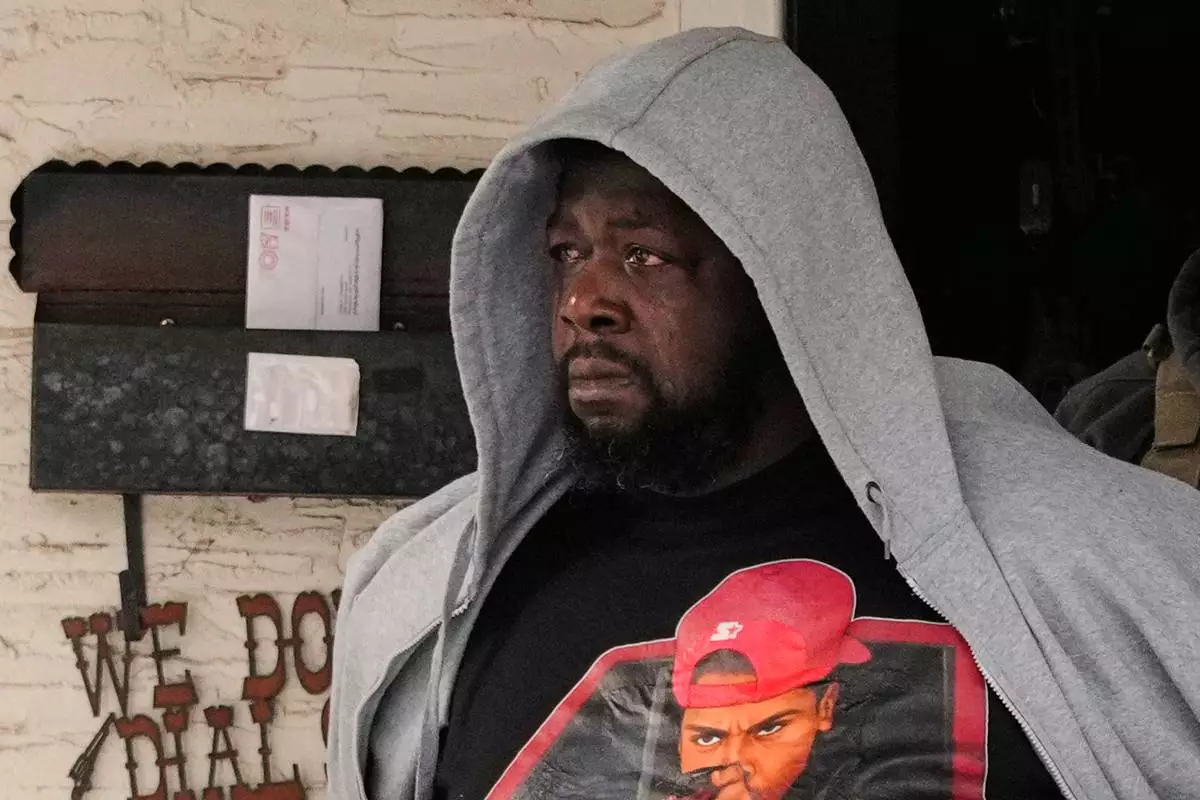
ADDS IDENTIFICATION: Garrison Gibson becomes emotional as he is arrested by federal immigration officers Sunday, Jan. 11, 2026, in Minneapolis. (AP Photo/John Locher)
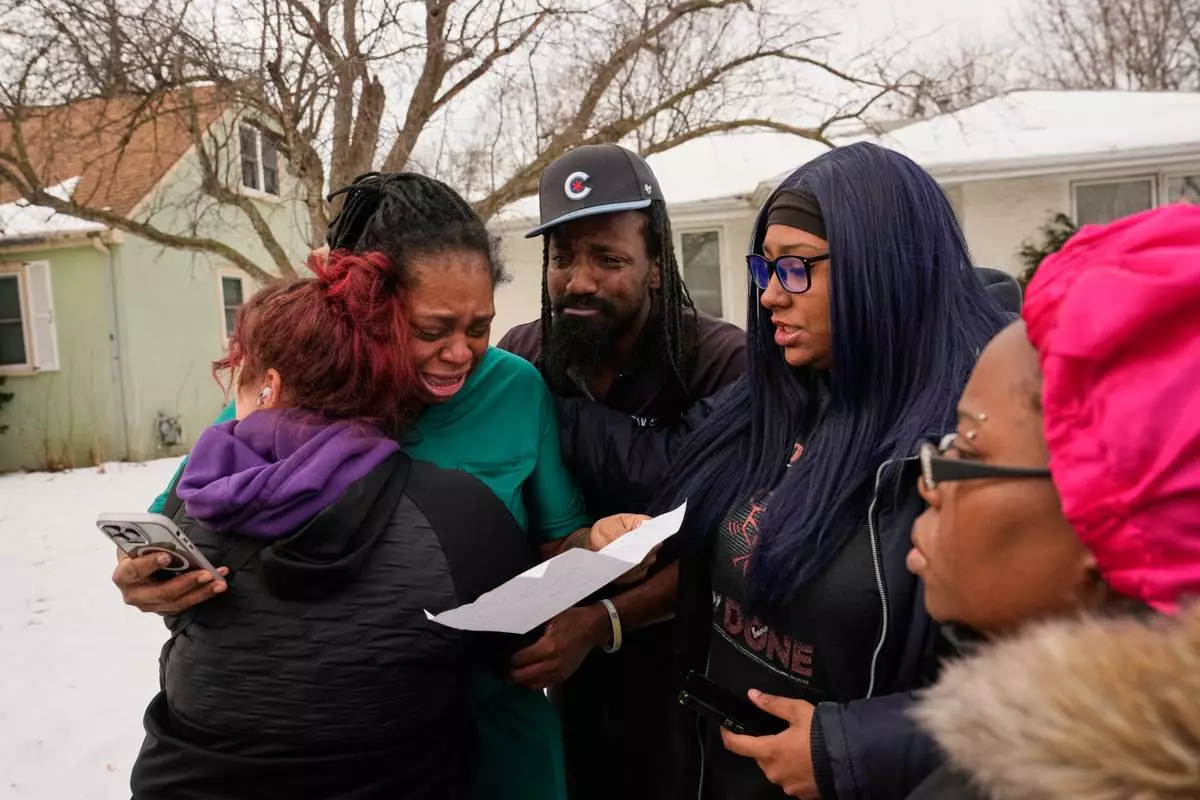
A family member reacts after federal immigration officers make an arrest Sunday, Jan. 11, 2026, in Minneapolis. (AP Photo/John Locher)
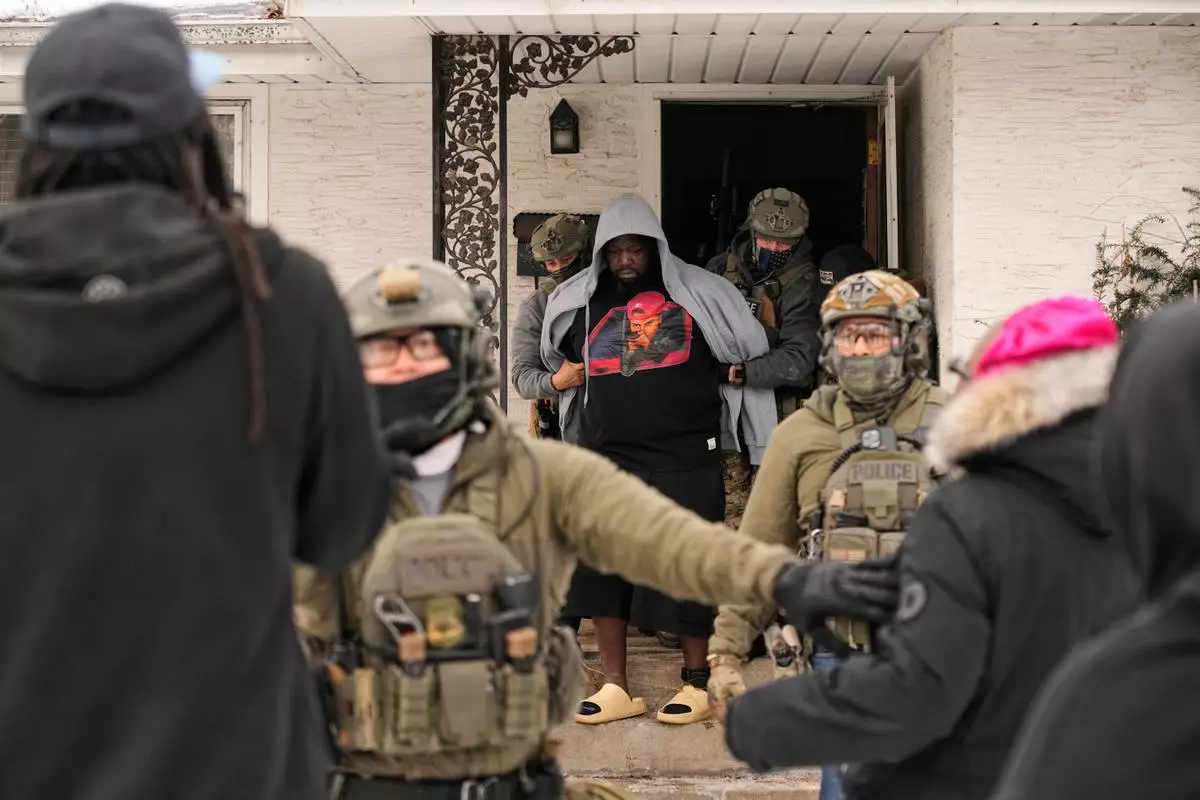
A man is arrested by federal immigration officers Sunday, Jan. 11, 2026, in Minneapolis. (AP Photo/John Locher)
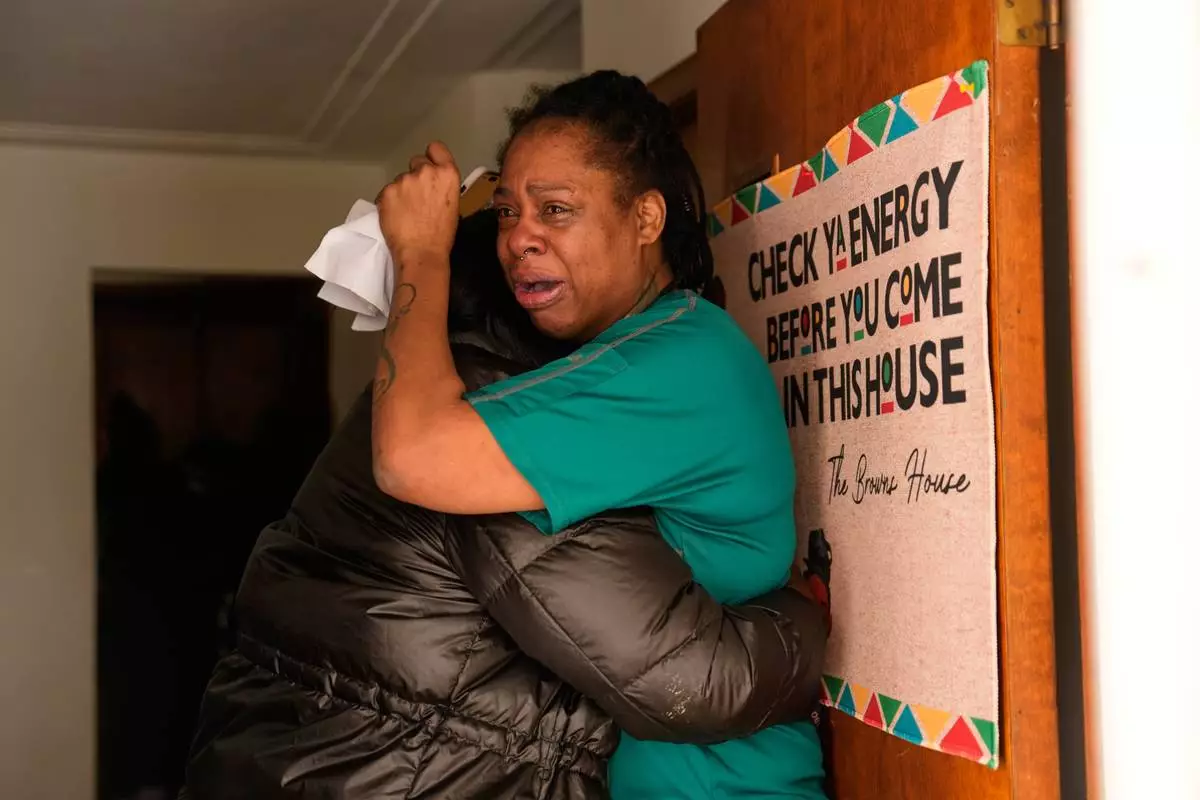
A family member reacts after federal immigration officers make an arrest Sunday, Jan. 11, 2026, in Minneapolis. (AP Photo/John Locher)

A man becomes emotional as he is arrested by federal immigration officers Sunday, Jan. 11, 2026, in Minneapolis. (AP Photo/John Locher)
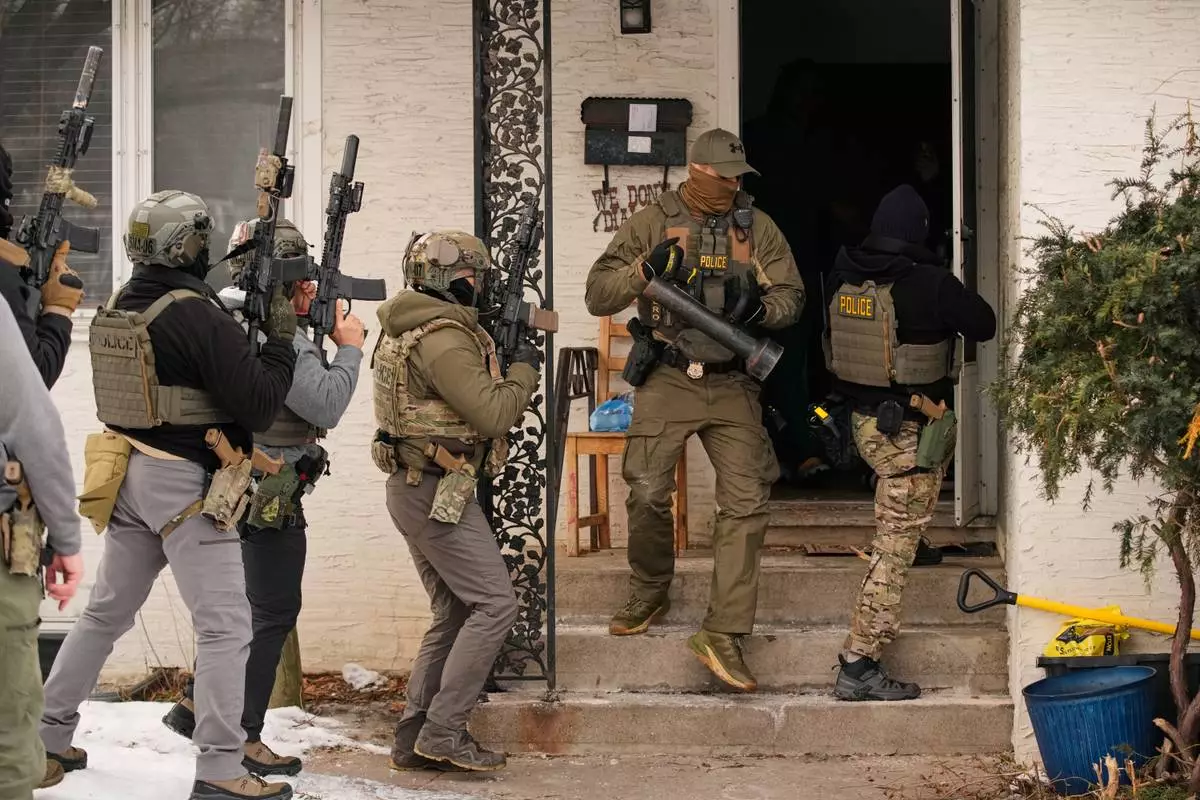
Federal immigration officers prepare to enter a home to make an arrest after an officer used a battering ram to break down a door Sunday, Jan. 11, 2026, in Minneapolis. (AP Photo/John Locher)
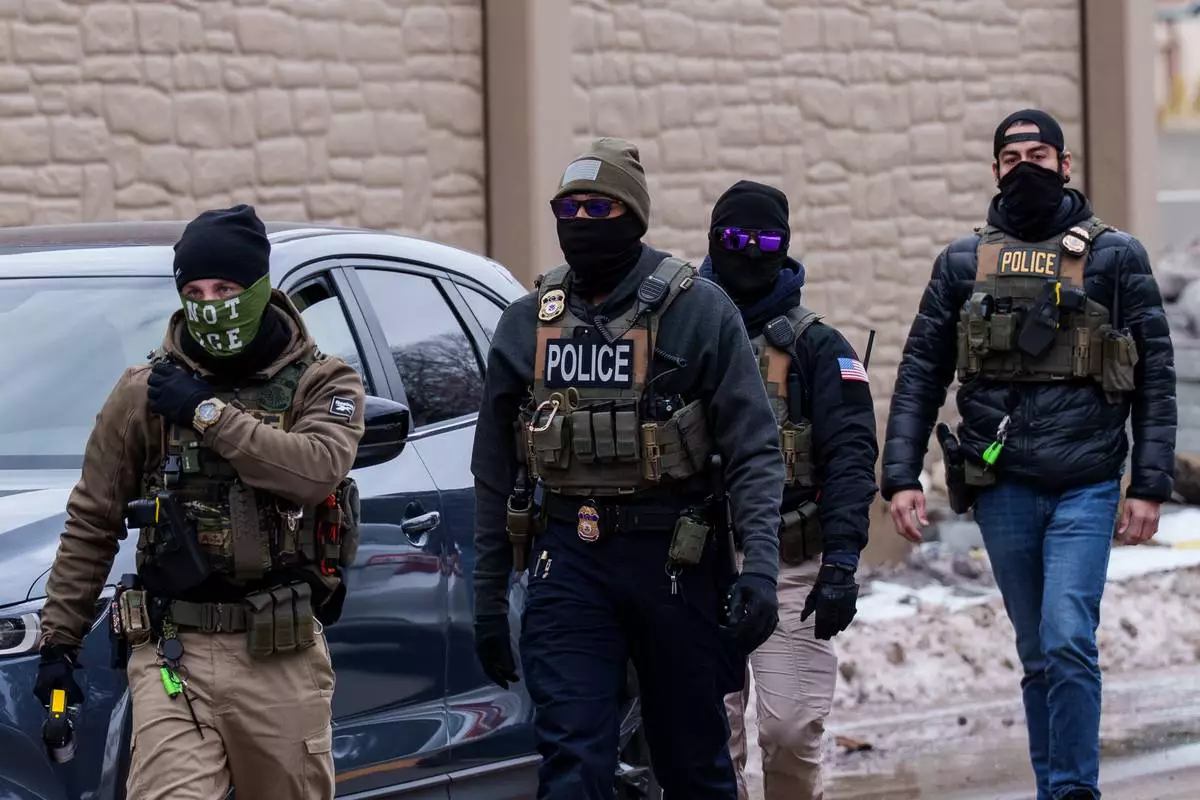
Immigration and Customs Enforcement (ICE) agents, including one wearing a 'NOT ICE' face covering, walk near their vehicles, Thursday, Jan. 15, 2026, in Richfield, Minn. (AP Photo/Adam Gray)
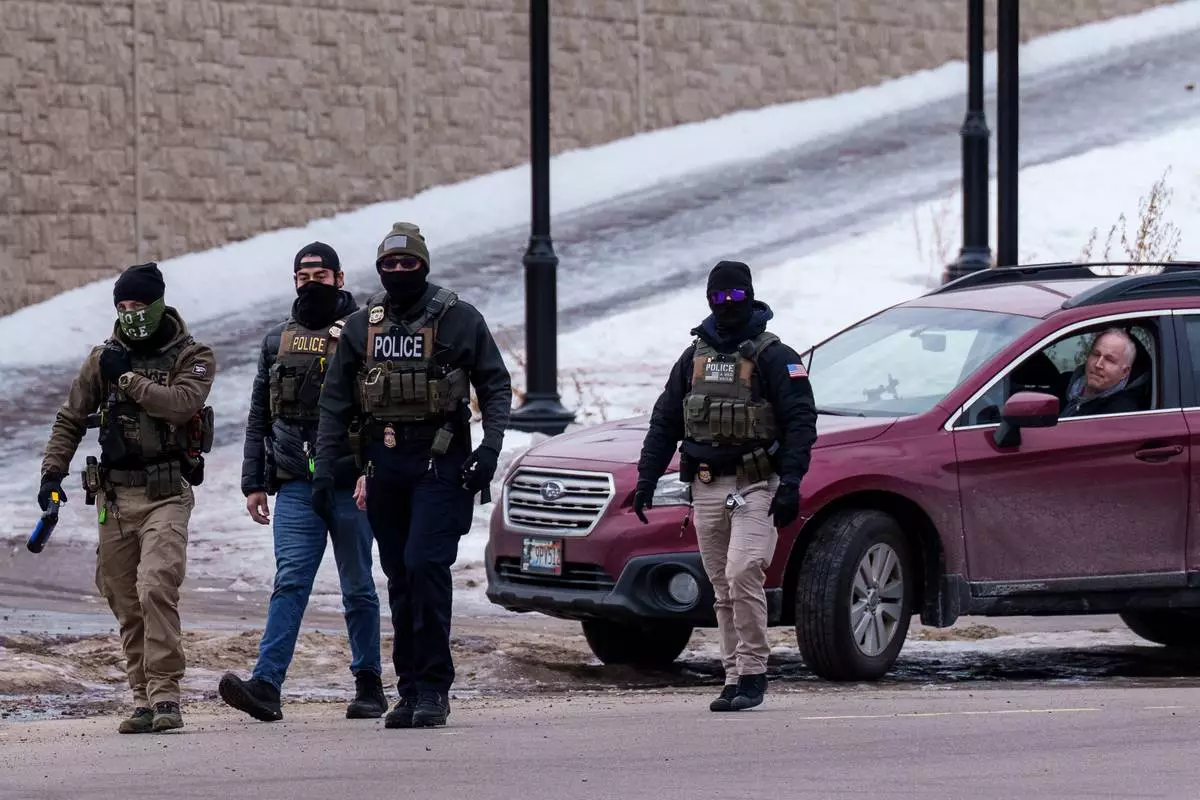
A person looks out of their vehicle as Immigration and Customs Enforcement (ICE) agents walk away, Thursday, Jan. 15, 2026, in Richfield, Minn. (AP Photo/Adam Gray)