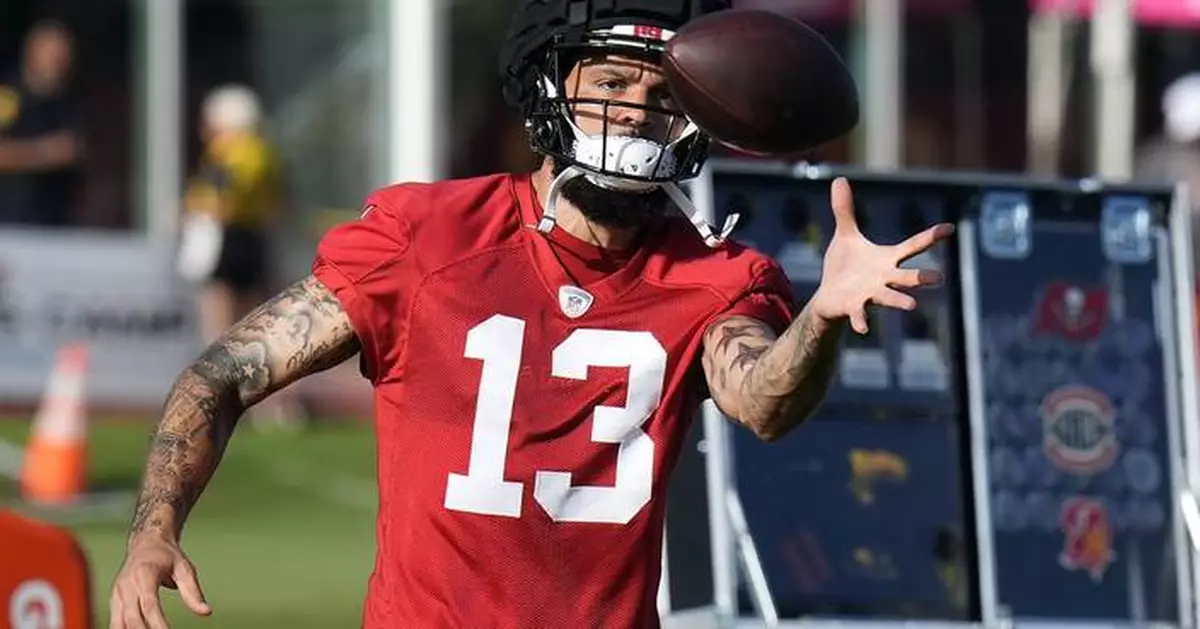
TAMPA, Fla. (AP) — Mike Evans streaked into the secondary, cut outside and leaped to catch a perfect post-corner toss from Baker Mayfield.
Fans at the Tampa Bay Buccaneers’ indoor practice facility roared.
They’re used to Evans making all the plays but No. 13 still manages to impress everyone watching.
The six-time Pro Bowl wide receiver makes it look so effortless the way he glides after the ball. His routes are smooth and precise, his hands soft. At 6-foot-5, 231 pounds, he has a powerful frame so he can outmuscle defenders or outfinesse them when he needs to.
Evans is the only player in NFL history to start his career with 11 consecutive 1,000-yard receiving seasons. Only Jerry Rice had that many at any point. Evans is aiming for 12 in a row in a year when the Buccaneers celebrate the franchise’s 50th season. There are no signs the 31-year-old is slowing down and his team goals are bigger than his personal ones.
“I’m just happy that we have a really great team and we’re using this training camp to put everything together to have one of the best seasons for the 50th,” Evans said Tuesday. “I’m excited to put on a great show for y’all.”
At a position known for players with look-at-me personalities — Tyreek Hill, Michael Irvin, Terrell Owens, Chad Johnson — Evans lets his performance do most of the talking. He’s quiet, humble and community-oriented. Evans is a four-time NFL Walter Payton Man of The Year nominee for the work he does along with his wife, Ashli, through their foundation, which empowers youth, encourages education and stands against domestic violence.
Evans joined the Buccaneers in 2014 as the seventh overall pick and has become one of the greatest players in franchise history. Evans and Chris Godwin were a big reason why Tom Brady chose Tampa Bay in 2020 and the Buccaneers ended up winning a Super Bowl that season.
From catching passes from Josh McCown and Mike Glennon as a rookie to Jameis Winston to Brady to Baker Mayfield, Evans continues to produce. He has 836 career catches for 12,684 yards and 105 touchdowns.
Evans missed three games last season due to injury and didn’t reach 1,000 yards until he caught a 9-yard pass on the final play of a 27-19 victory over the Saints that the Buccaneers needed to secure their fourth straight NFC South title.
The reaction from Evans’ teammates and the fans after that catch showed how much he’s loved.
“He always has (put the team first),” Mayfield said afterward. “That’s why you love him. That’s why we appreciate having him. We’re lucky to have him and he’s underappreciated throughout the media, the league and he’s one of one. He deserves that. Obviously, you saw the stadium erupt, the sideline erupt. You can tell how much people care about him and what that means for everybody around him.”
Some veteran players are careful about mentoring young guys who will eventually replace them. Not Evans. Or Godwin for that matter.
The Buccaneers drafted wideout Emeka Egbuka in the first round out of Ohio State. They selected Tez Johnson from Oregon in the seventh round.
“It’s constant. They’re just so fortunate from Tez to ‘Mek’ (Egbuka) to Garrett (Greene) to be able to learn from them,” Buccaneers offensive coordinator Josh Grizzard said. “We just had a walk through this morning and we can coach it up, but Chris and Mike were coaching up the concept just as much as myself and (wide receivers coach) ‘B-Mac’ (Bryan McClendon) were. And that’s just on the field — I can’t imagine what they talk about off the field on how to be a pro and how to conduct themselves. They couldn’t have come into a better environment for people to learn from.”
AP NFL: https://apnews.com/hub/nfl
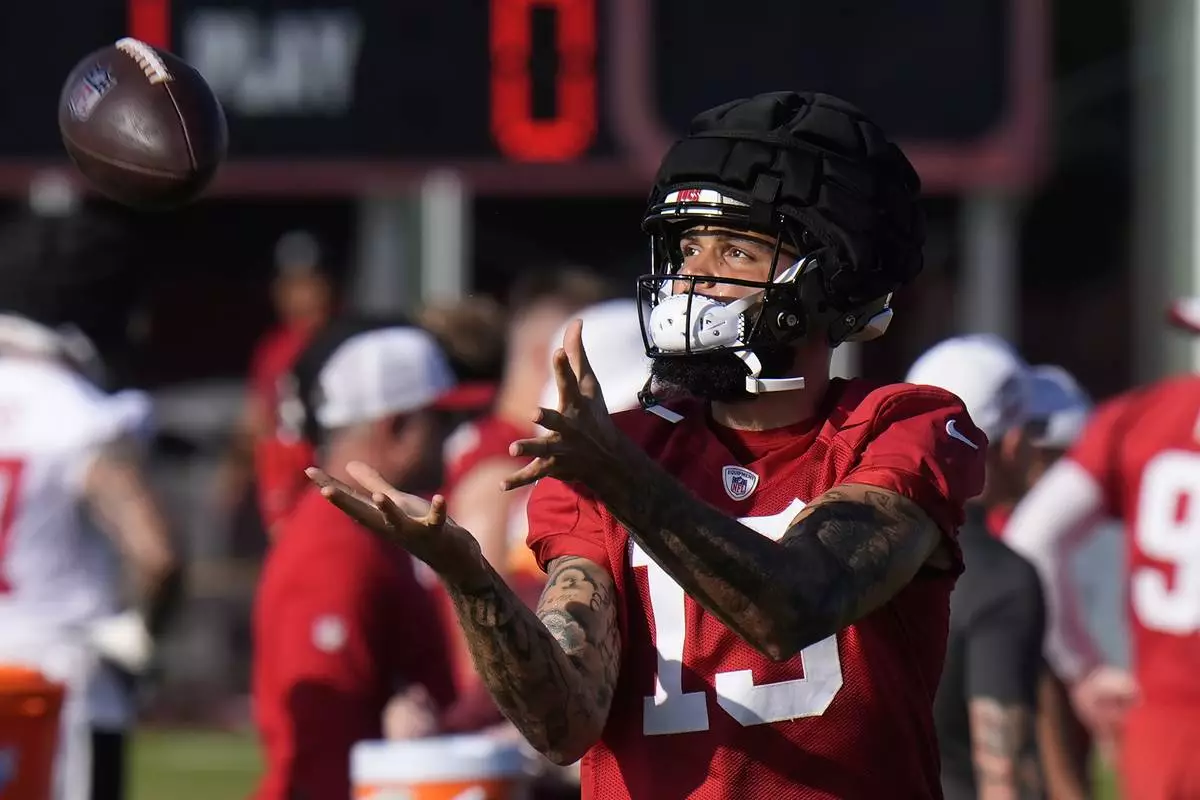
Tampa Bay Buccaneers wide receiver Mike Evans catches a pass during Back Together Weekend at an NFL football training camp practice Sunday, July 27, 2025, in Tampa, Fla. (AP Photo/Chris O'Meara)
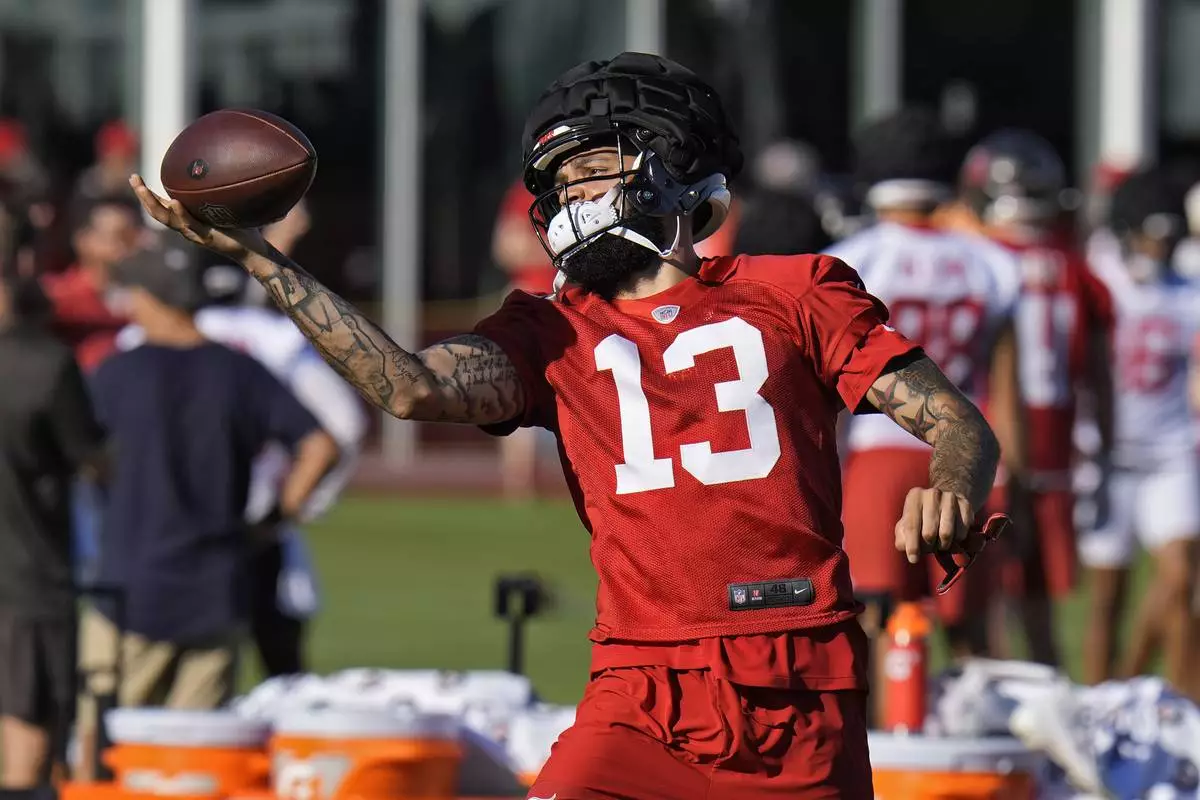
Tampa Bay Buccaneers wide receiver Mike Evans (13) makes a one-handed catch during practice at the team’s NFL football training camp, Thursday, July 24, 2025, in Tampa, Fla. (AP Photo/Chris O'Meara)
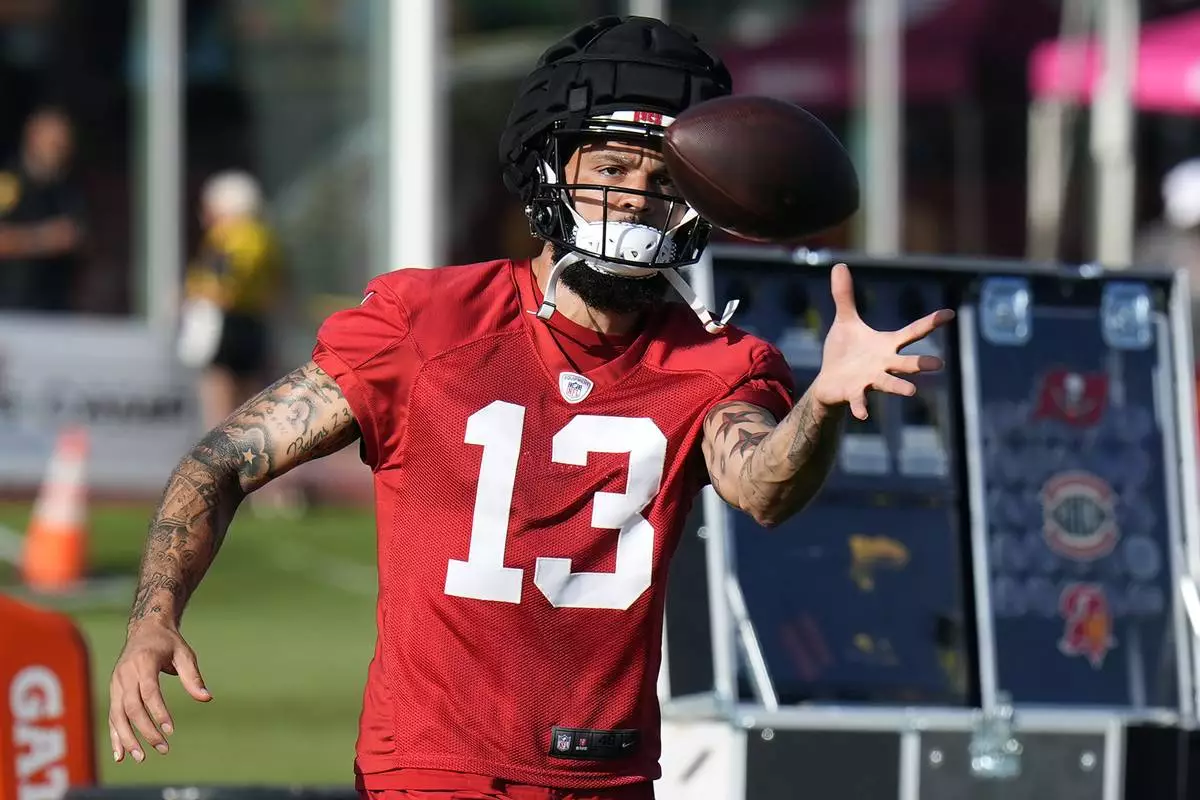
Tampa Bay Buccaneers wide receiver Mike Evans (13) makes a catch during practice at the team’s NFL football training camp, Friday, July 25, 2025, in Tampa, Fla. (AP Photo/Chris O'Meara)
WASHINGTON (AP) — Senate Democratic leaders believe they have a path to winning the majority in November, though it's one with very little wiggle room.
The party got a new burst of confidence when former Rep. Mary Peltola announced Monday she'll run for the Senate in Alaska. Her bid gives Democrats a critical fourth candidate with statewide recognition in states where Republican senators are seeking reelection this year. Nationally, Democrats must net four seats to edge Republicans out of the majority.
That possibility looked all but impossible at the start of last year. And while the outlook has somewhat improved as 2026 begins, Democrats still almost certainly must sweep those four seats. First they must settle some contentious primaries, the mark of a party still struggling with its way forward after Republicans took full control of Washington in 2024. Importantly, they must also beat back challenges to incumbents in some of the most competitive states on the map.
And though some of Senate Minority Leader Chuck Schumer's top Democratic Senate recruits were lauded for their statewide success in pivotal states, some are nearly 70 or older, hardly the key to a lasting Democratic transformation.
Republicans doubt the chances Democrats can pull off such a task, considering most of the 2026 contests are in states that Donald Trump easily won in 2024.
Still, independent voters have drifted in Democrats' direction over the past year, according to a new Gallup poll, a slight breeze at Democrats' back they didn't expect a year ago when there was little path at all.
“I say it’s a much wider path than the skeptics think, and a much wider path than it was three months ago and certainly a year ago,” Schumer told The Associated Press Tuesday.
Republicans currently hold 53 seats, while the Democratic caucus has 47 members, including two independents.
Schumer argues that Peltola, elected twice statewide to Alaska's at-large House seat, puts the typically Republican-leaning state in play as a potential pickup for Democrats.
It's a development similar to other states where Schumer believes Democrats have recruited strong candidates: former three-term Sen. Sherrod Brown in Ohio, former two-term Gov. Roy Cooper in North Carolina and two-term Gov. Janet Mills in Maine.
But they hardly represent a quartet of guarantees. Brown, a longtime pro-labor progressive in increasingly GOP-leaning Ohio, and Peltola, who was elected during a special election in 2022, both lost reelection in 2024. Mills, finishing her second term as governor, faces a competitive primary challenge from progressive veteran and oyster farmer Graham Platner.
None of the four had runaway popularity with voters in their states in 2024. Right around half of voters had somewhat or very favorable views of all of them, with Cooper slightly higher and Brown slightly lower, according to AP VoteCast, a survey of the electorate.
Age remains another issue. After President Joe Biden, in his early 80s, withdrew from the 2024 race amid concerns he was too old to serve, Democratic Senate leadership hasn't changed course. Schumer, 75, has recruited candidates who are older, with several top recruits – including Mills and Brown – well into their 70s.
“Voters sent a very clear message in 2024 that they’re sick of the gerontocracy. They’re sick of Democrats putting up old candidates and that they want some new blood,” said Lis Smith, a national Democratic strategist. “And some of the recruits, like in Maine, seem to completely ignore the message that voters sent in 2024.”
Schumer said winning back the Senate is paramount over all else.
“It's not young versus old. It's not left versus center. It's who can best win in the states,” he said. “So, these are all really good candidates, and I don't think you look at them through one narrow prism. You look at who can win.”
Before Democrats can test their general-election appeal, they must navigate some primaries that highlight lingering divisions within the party.
Platner, who has been endorsed by independent Sen. Bernie Sanders of Vermont, has demonstrated formidable fundraising for his Maine contest, despite controversies surrounding past social media posts and a tattoo linked to Nazi imagery. Some Democrats worry his insurgent appeal could be a liability in November if he is the nominee.
In Michigan, Democratic Sen. Gary Peters' retirement has opened a seat in a state Trump carried narrowly. Republicans have unified behind former Rep. Mike Rogers, while Democrats face a crowded August primary after failing to recruit Gov. Gretchen Whitmer.
Crowded or contentious primaries are also playing out in Minnesota, Texas and Iowa, forcing Democrats to devote resources even in states not central to their path to a majority.
Sen. Chris Van Hollen is part of an informal group of Democratic senators known as Fight Club that has been openly critical of party leadership’s approach to the midterms. Van Hollen said the group has objected to what it sees as the Senate Democrats’ campaign arm — controlled by Schumer — “wading into certain Democratic primaries.”
“So, yes, we’re taking a look at all of them,” Van Hollen said of endorsing more progressive candidates.
Betsy Ankney, political director for the National Republican Senatorial Committee in 2020, acknowledged Democrats’ desire to make the case for competitiveness but characterized Trump’s presidential victories in Alaska and Ohio in 2024 — by 13 and 11 percentage point margins, respectively — as enormous hurdles.
She said Republicans are “rightly focused, on real tangible targets in Georgia, in Michigan," calling them “very real pickup opportunities.”
Democrats’ shot at the majority almost certainly depends on Sen. Jon Ossoff winning reelection in Georgia, where Trump won in 2024 by 2.2 percentage points, and holding Michigan, where Peters' retirement creates an open seat in a state Trump carried by 1.4 percentage points.
"It’s not just about where the Democrats can play. It’s about where we can play, too,” Ankney said.
Despite the challenges, Democrats see reasons for optimism in the broader political climate.
A new Gallup survey found 47% of U.S. adults now identify with or lean toward the Democrats, while 42% are Republicans or lean Republican. That gives Democrats the advantage in party affiliation for the first time since Trump’s first term.
But the data strongly suggests that independents are moving toward Democrats because of their souring attitude toward Trump, rather than greater goodwill toward Democrats. The Democratic Party’s favorability is still low, and Gallup’s analysis found that, as more Americans identify as independents, they tend to gravitate toward the party that is out of political power — whether it’s the Democrats or the Republicans.
Still, that appears to be a dynamic in Democrats' favor, as economic unease creeps into the election year with little time before the feelings lock into voters' political thinking, veteran Republican pollster Ed Goeas said.
“That creates an environment that will affect these Senate races,” Goeas said, predicting House Republicans could lose their majority. He said Republicans are assuming the economy and the political environment are going to be better.
“I think they are going to end up getting frustrated going into the summer because, first of all, the economy is not on all levels improving. It’s going to be a target-rich environment for Democrats," he said.
“It’s going to be close.”
Beaumont reported from Des Moines, Iowa. Associated Press writer Amelia Thomson DeVeaux in Washington contributed to this report.
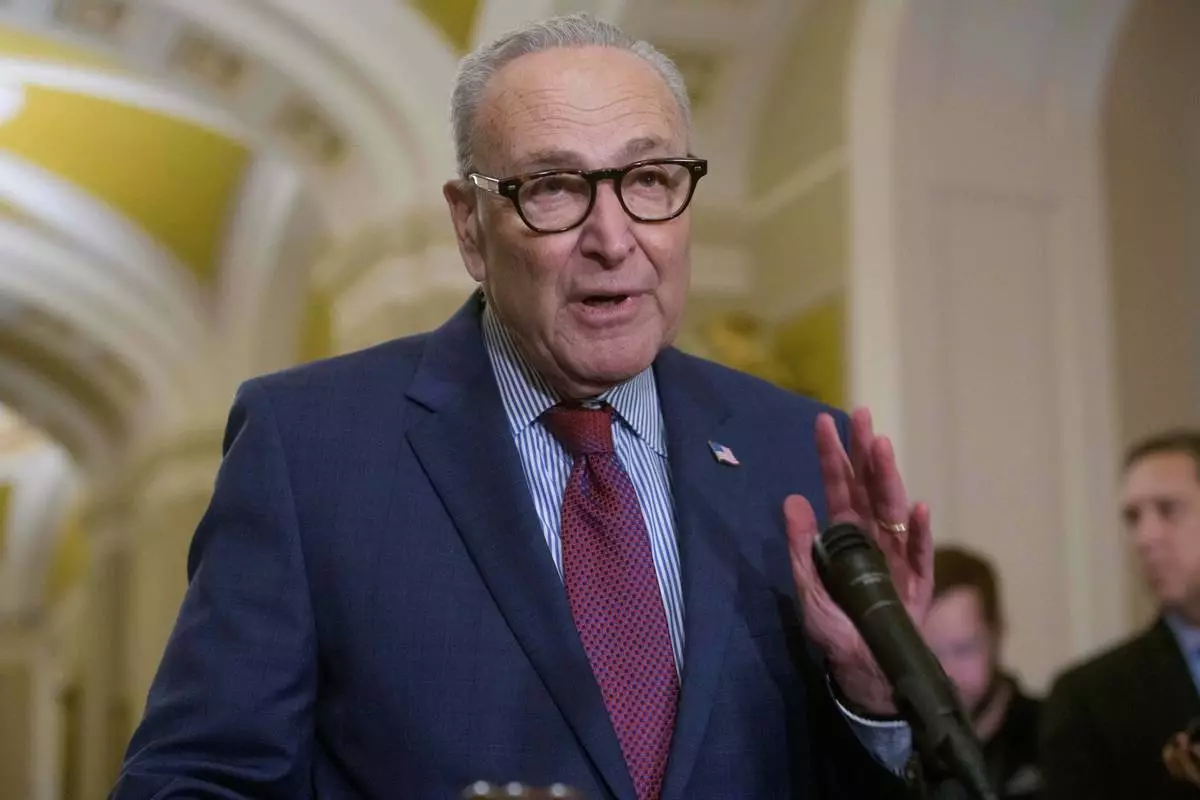
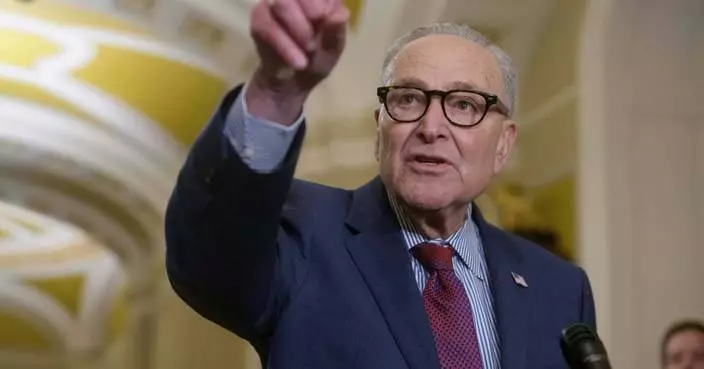
Senate Minority Leader Chuck Schumer, D-N.Y., speaks during the Senate Democrat policy luncheon news conference at the Capitol, Tuesday, Jan. 13, 2026, in Washington. (AP Photo/Rod Lamkey, Jr.)
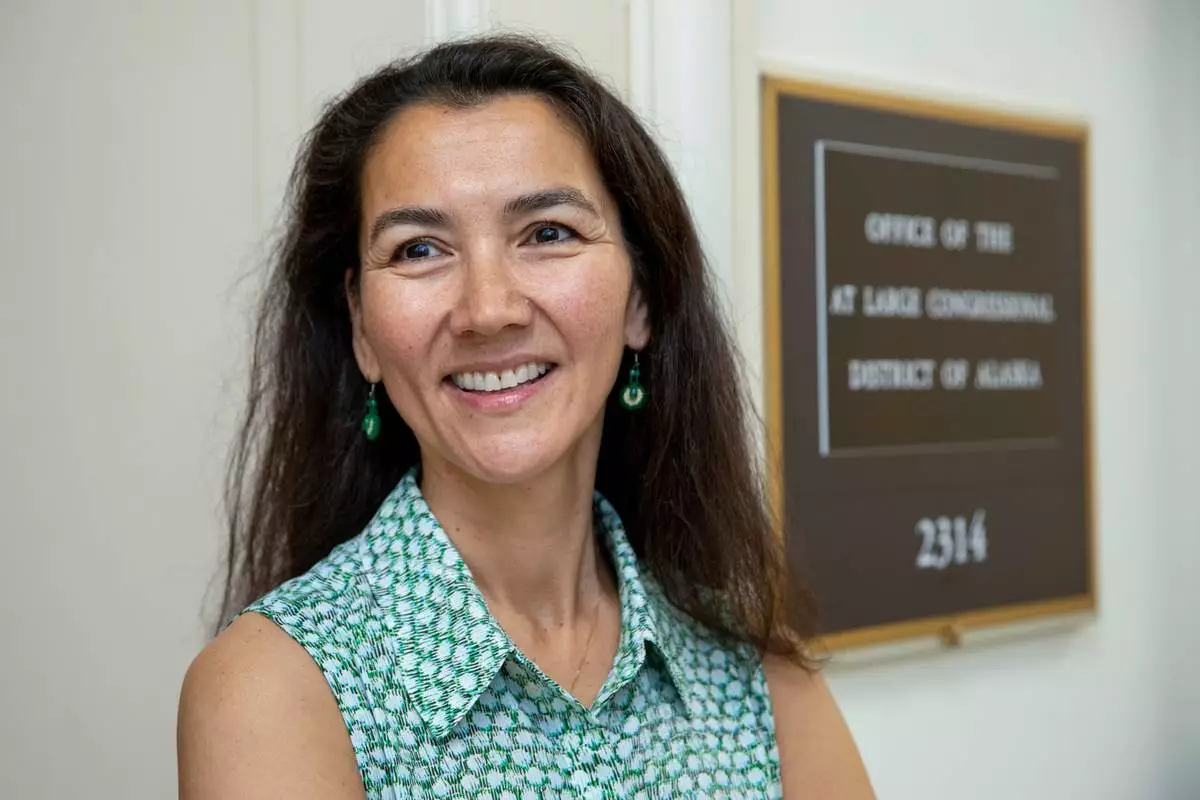
FILE - Rep.-elect Mary Peltola, D-Alaska, is interviewed on Capitol Hill in Washington, Sept. 12, 2022. (AP Photo/Amanda Andrade-Rhoades, File)