WASHINGTON (AP) — The United States will impose a 25% tariff on goods from India, plus an additional import tax because of India’s purchasing of Russian oil, President Donald Trump said Wednesday.
The new tariffs were part of a flurry of trade activity that included a series of executive actions regarding Brazil, copper and shipments of goods worth less than $800, as well as a reduced 15% tax on imports from South Korea, including its autos. It was all a prelude to Friday when Trump's new tariff regime is scheduled to start, an event the White House has portrayed as a testament to Trump's negotiating skills even as concerns persist about the taxes hurting growth and increasing inflationary pressures.
India “is our friend,” Trump said on his Truth Social platform announcing the taxes, but its tariffs on U.S. products “are far too high.”
The Republican president added India buys military equipment and oil from Russia, enabling Moscow's war in Ukraine. As a result, he intends to charge an additional “penalty” starting on Friday as part of the launch of his administration’s revised tariffs on multiple countries.
Trump told reporters on Wednesday the two countries were still in the middle of negotiations on trade despite the tariffs slated to begin in a few days.
“We’re talking to India now," the president said. "We’ll see what happens.”
The Indian government said Wednesday it's studying the implications of Trump's tariffs announcement.
India and the U.S. have been engaged in negotiations on concluding a “fair, balanced and mutually beneficial” bilateral trade agreement over the last few months, and New Delhi remains committed to that objective, India's Trade Ministry said in a statement.
Trump on Wednesday also signed separate orders to tax imports of copper at 50% and justify his 50% tariffs on Brazil due to their criminal prosecution of former President Jair Bolsonaro and treatment of U.S. social media companies. Trump also signed an order saying that government now had the systems in place to close the tariff loophole on “de minimis” shipments, which had enabled goods priced under $800 to enter America duty-free, largely from China.
The South Korea agreement will impose a 15% tariff, instead of the 25% Trump had threatened. South Korea would also buy $100 billion in energy resources from the U.S. and provide $350 billion for “investments owned and controlled by the United States, and selected by myself, as president,” Trump said.
There is also an agreement with Pakistan that includes the development of its oil reserves. Meanwhile, Treasury Secretary Scott Bessent briefed Trump on trade talks with China.
Trump's announcement comes after a slew of negotiated trade frameworks with the European Union, Japan, the Philippines and Indonesia — all of which he said would open markets for American goods while enabling the U.S. to raise tax rates on imports. The president views tariff revenues as a way to help offset the budget deficit increases tied to his recent income tax cuts and generate more domestic factory jobs.
While Trump has effectively wielded tariffs as a cudgel to reset the terms of trade, the economic impact is uncertain as most economists expect a slowdown in U.S. growth and greater inflationary pressures as some of the costs of the taxes are passed along to domestic businesses and consumers.
There's also the possibility of more tariffs coming on trade partners with Russia as well as on pharmaceutical drugs and computer chips.
Kevin Hassett, director of the White House National Economic Council, said Trump and U.S. Trade Representative Jamieson Greer would announce the Russia-related tariff rates on India at a later date.
Trump's approach of putting a 15% tariff on America's long-standing allies in the EU is also generating pushback, possibly causing European partners as well as Canada to seek alternatives to U.S. leadership on the world stage.
French President Emmanuel Macron said Wednesday in the aftermath of the trade framework that Europe “does not see itself sufficiently” as a global power, saying in a cabinet meeting that negotiations with the U.S. will continue as the agreement gets formalized.
“To be free, you have to be feared,” Macron said. “We have not been feared enough. There is a greater urgency than ever to accelerate the European agenda for sovereignty and competitiveness.”
Washington has long sought to develop a deeper partnership with New Delhi, which is seen as a bulwark against China.
Indian Prime Minister Narendra Modi has established a good working relationship with Trump, and the two leaders are likely to further boost cooperation between their countries. When Trump in February met with Modi, the U.S. president said that India would start buying American oil and natural gas.
The new tariffs on India could complicate its goal of doubling bilateral trade with the U.S. to $500 billion by 2030. The two countries have had five rounds of negotiations for a bilateral trade agreement. While U.S. has been seeking greater market access and zero tariff on almost all its exports, India has expressed reservations on throwing open sectors such as agriculture and dairy, which employ a bulk of the country’s population for livelihood, Indian officials said.
The Census Bureau reported that the U.S. ran a $45.8 billion trade imbalance in goods with India last year, meaning it imported more than it exported.
At a population exceeding 1.4 billion people, India is the world’s largest country and a possible geopolitical counterbalance to China. India and Russia have close relations, and New Delhi has not supported Western sanctions on Moscow over its war in Ukraine.
The new tariffs could put India at a disadvantage in the U.S. market relative to Vietnam, Bangladesh and, possibly, China, said Ajay Sahai, director general of the Federation of Indian Export Organisations.
“We are back to square one as Trump hasn’t spelled out what the penalties would be in addition to the tariff,” Sahai said. “The demand for Indian goods is bound to be hit.”
Roy reported from New Delhi. Associated Press writers Samuel Petrequin in Paris, and Darlene Superville and Seung Min Kim in Washington contributed to this report.
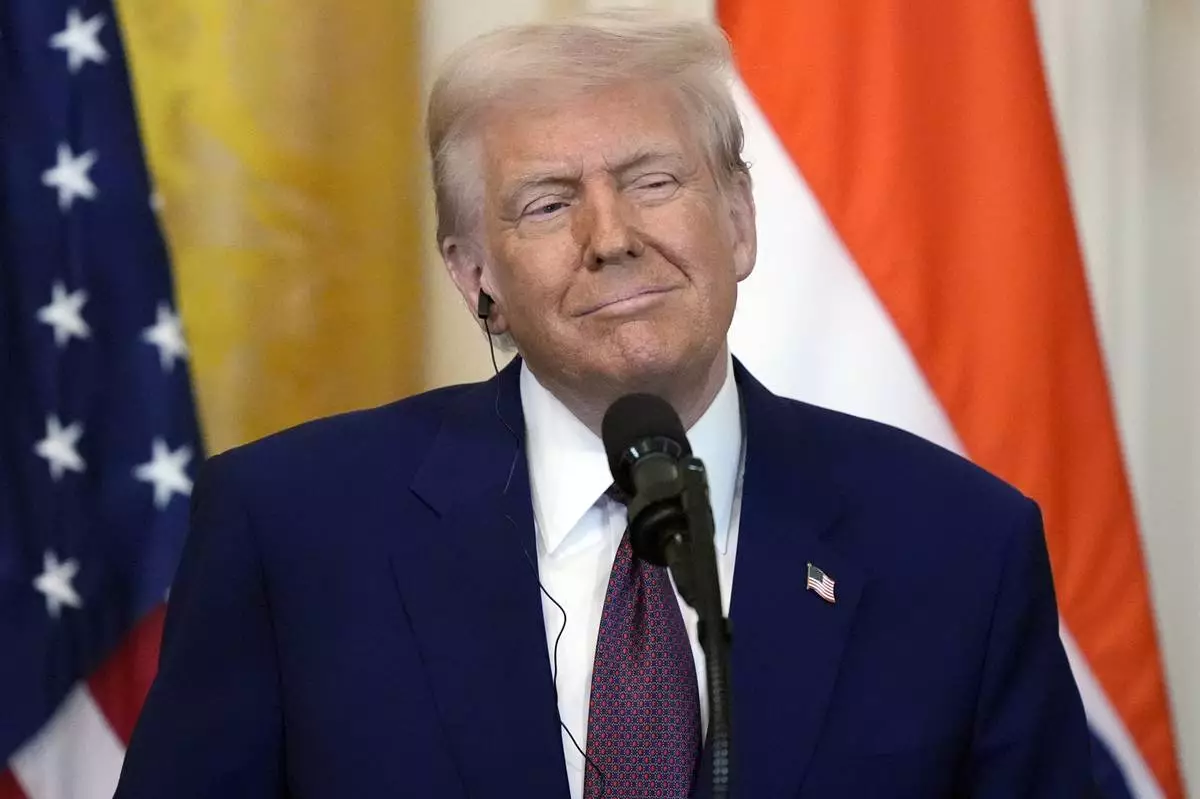
FILE - President Donald Trump listens during a news conference with India's Prime Minister Narendra Modi in the East Room of the White House, Feb. 13, 2025, in Washington. (Photo/Alex Brandon, File)
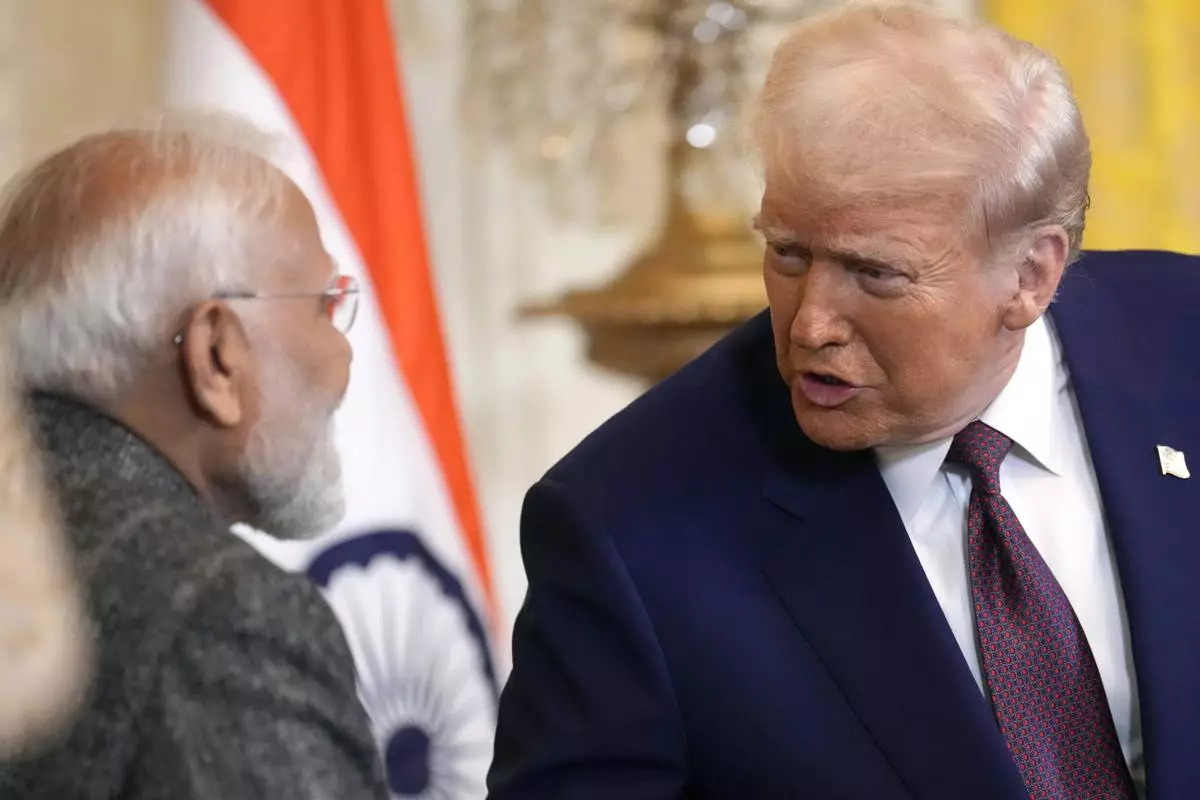
FILE - President Donald Trump, right, speaks with India's Prime Minister Narendra Modi during a news conference in the East Room of the White House, Feb. 13, 2025, in Washington. (AP Photo/Ben Curtis, File)
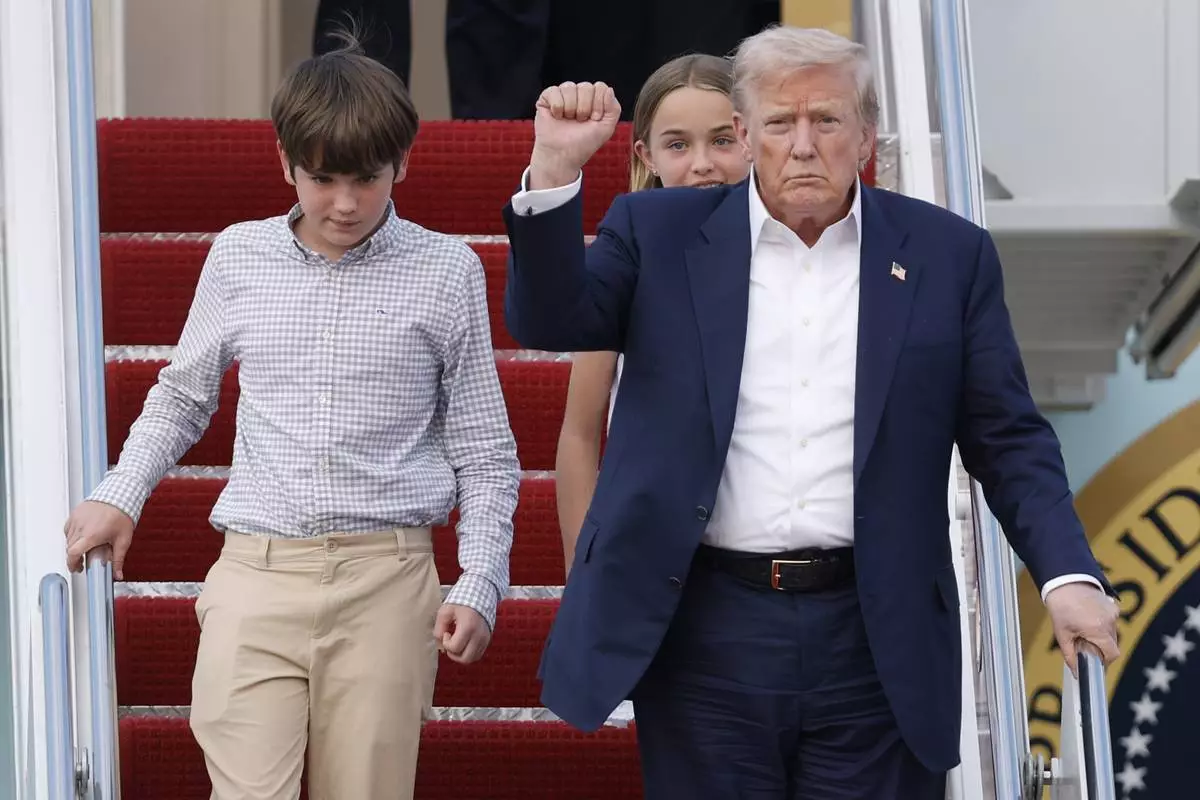
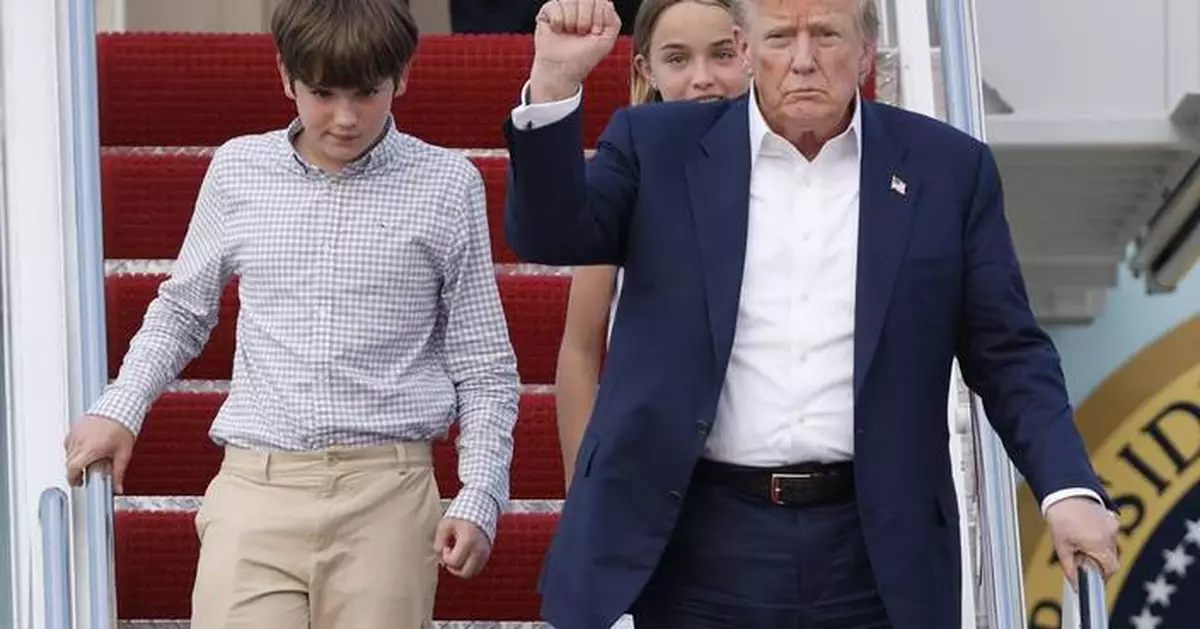
President Donald Trump, front right, gestures as he walks down the stairs of Air Force One with his grandchildren, Spencer, left, and Chloe, back center, upon his arrival at Joint Base Andrews, Md., Tuesday, July 29, 2025. (AP Photo/Luis M. Alvarez)
MINNEAPOLIS (AP) — President Donald Trump on Thursday threatened to invoke an 1807 law and deploy troops to quell persistent protests against the federal officers sent to Minneapolis to enforce his administration's massive immigration crackdown.
The threat comes a day after a man was shot and wounded by an immigration officer who had been attacked with a shovel and broom handle. That shooting further heightened the fear and anger that has radiated across the city since an Immigration and Customs Enforcement agent fatally shot Renee Good in the head.
Trump has repeatedly threatened to invoke the Insurrection Act, a rarely used federal law, to deploy the U.S. military or federalize the National Guard for domestic law enforcement, over the objections of state governors. In 2020, for example, he threatened to use the act to quell protests after George Floyd was killed by Minneapolis police, and in recent months he threatened to use it for immigration protests.
“If the corrupt politicians of Minnesota don’t obey the law and stop the professional agitators and insurrectionists from attacking the Patriots of I.C.E., who are only trying to do their job, I will institute the INSURRECTION ACT, which many Presidents have done before me, and quickly put an end to the travesty that is taking place in that once great State,” Trump said in social media post.
Presidents have invoked the law more than two dozen times, most recently in 1992 by President George H.W. Bush to end unrest in Los Angeles. In that instance, local authorities had asked for the assistance.
“I’m making a direct appeal to the President: Let’s turn the temperature down. Stop this campaign of retribution. This is not who we are,” Gov. Tim Walz, a Democrat, said on X.
Minnesota Attorney General Keith Ellison said he would challenge any such action in court. He's already suing to try to stop the surge by the Department of Homeland Security, which says officers have arrested more than 2,500 people since Nov. 29 as part of an immigration operation in the Twin Cities called Metro Surge.
The operation grew when ICE sent 2,000 officers and agents to the area early in January. ICE is a DHS agency.
In Minneapolis, smoke filled the streets Wednesday night near the site of the latest shooting as federal officers wearing gas masks and helmets fired tear gas into a small crowd. Protesters responded by throwing rocks and shooting fireworks.
Demonstrations have become common in Minneapolis since Good was fatally shot on Jan. 7. Agents who have yanked people from their cars and homes have been confronted by angry bystanders demanding they leave.
“This is an impossible situation that our city is presently being put in and at the same time we are trying to find a way forward to keep people safe,” Minneapolis Mayor Jacob Frey said.
The American Civil Liberties Union of Minnesota filed a class-action lawsuit on behalf of three people who said they were questioned or detained in recent days. The lawsuit says two are Somali and one is Hispanic; all three are U.S. citizens. The lawsuit seeks an end to what the ACLU describes as a practice of racial profiling and warrantless arrests. The government did not immediately comment.
Similar lawsuits have been filed in Los Angeles and Chicago and despite seeing initial success, have tended to fizzle in the face of appeal. In Chicago, for example, last year a judge ordered a senior U.S. Border Patrol official to brief her nightly following a lawsuit by news outlets and protesters who said agents used too much force during demonstrations. But three days later, an appeals court stopped the updates.
Homeland Security said in a statement that federal law enforcement officers on Wednesday stopped a driver from Venezuela who is in the U.S. illegally. The person drove off then crashed into a parked car before fleeing on foot, DHS said.
Officers caught up, then two other people arrived and the three started attacking the officer, according to DHS.
“Fearing for his life and safety as he was being ambushed by three individuals, the officer fired a defensive shot to defend his life,” DHS said. The confrontation took place about 4.5 miles (7.2 kilometers) from where Good was killed.
Police chief Brian O’Hara said the man who was shot did not have a life-threatening injury. O’Hara's account of what happened largely echoed that of Homeland Security, which later said the other two men were also in the U.S. illegally from Venezuela.
The FBI said several government vehicles were damaged and property inside was stolen when agents responded to the shooting. Photos show broken windows and insults made with paint. A reward of up to $100,000 is being offered for information. The FBI’s Minneapolis office did not immediately reply to messages seeking more details.
St. Paul Public Schools, with more than 30,000 students, said it would begin offering an online learning option for students who do not feel comfortable coming to school. Schools will be closed next week until Thursday to prepare for those accommodations.
Minneapolis Public Schools, which has a similar enrollment, is also offering temporary remote learning. The University of Minnesota will start a new term next week with different options depending on the class.
Madhani reported from Washington, D.C. and Golden reported from Seattle. Associated Press reporters Sophia Tareen in Chicago; Bill Barrow in Atlanta; Rebecca Santana in Washington; and Ed White in Detroit contributed.
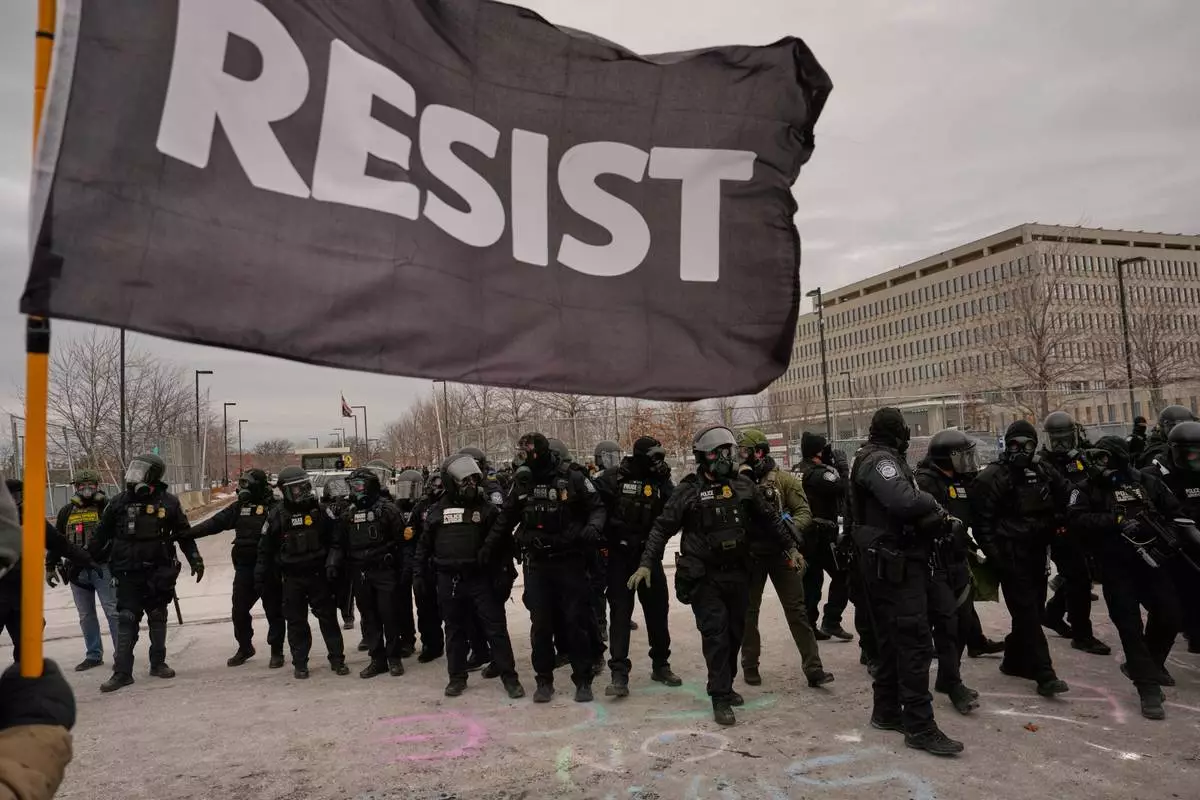
Federal immigration officers confront protesters outside Bishop Henry Whipple Federal Building, Thursday, Jan. 15, 2026, in Minneapolis. (AP Photo/John Locher)
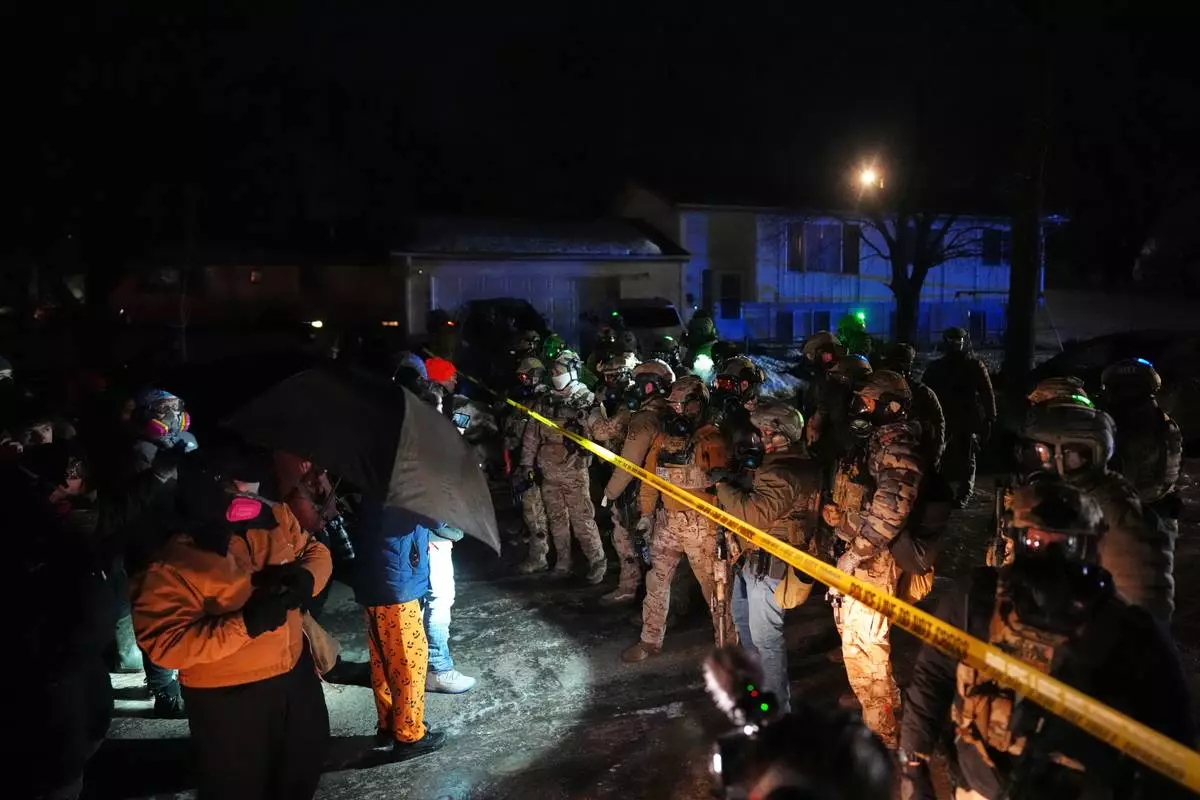
Law enforcement officers at the scene of a reported shooting Wednesday, Jan. 14, 2026, in Minneapolis. (AP Photo/Adam Gray)
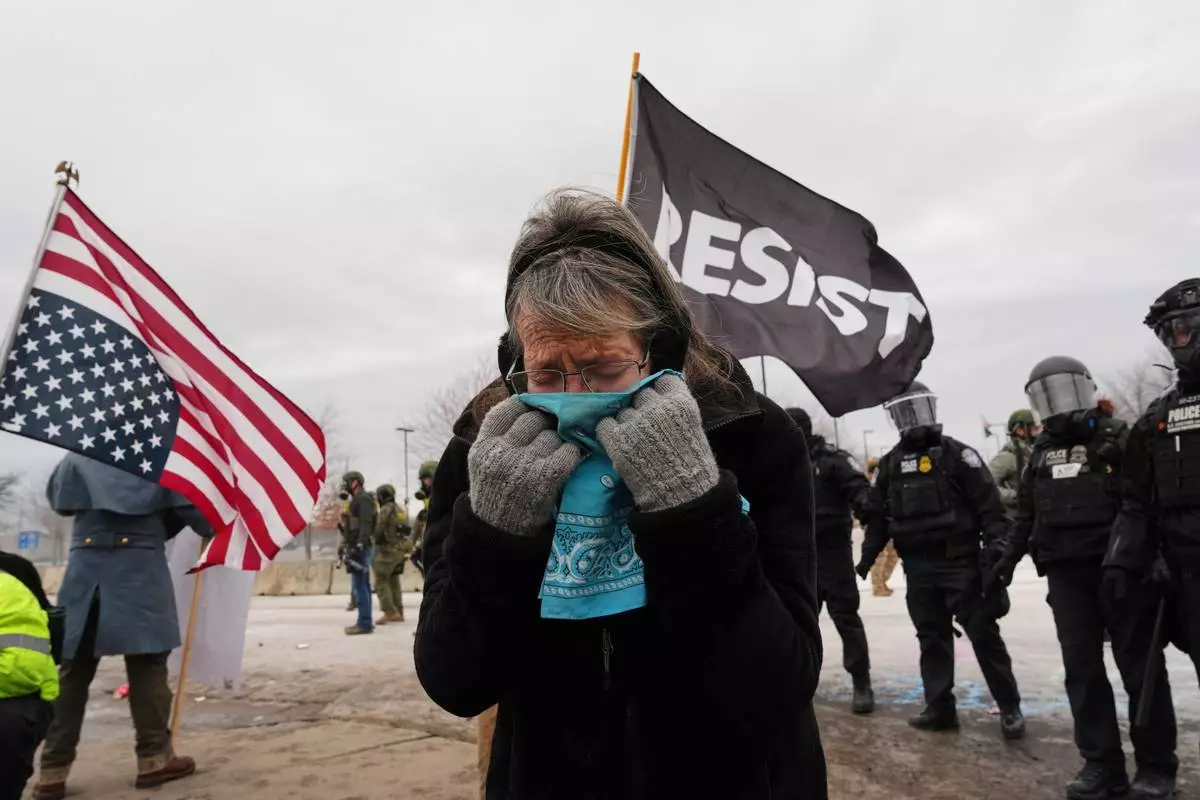
A woman covers her face from tear gas as federal immigration officers confront protesters outside Bishop Henry Whipple Federal Building, Thursday, Jan. 15, 2026, in Minneapolis. (AP Photo/Adam Gray)
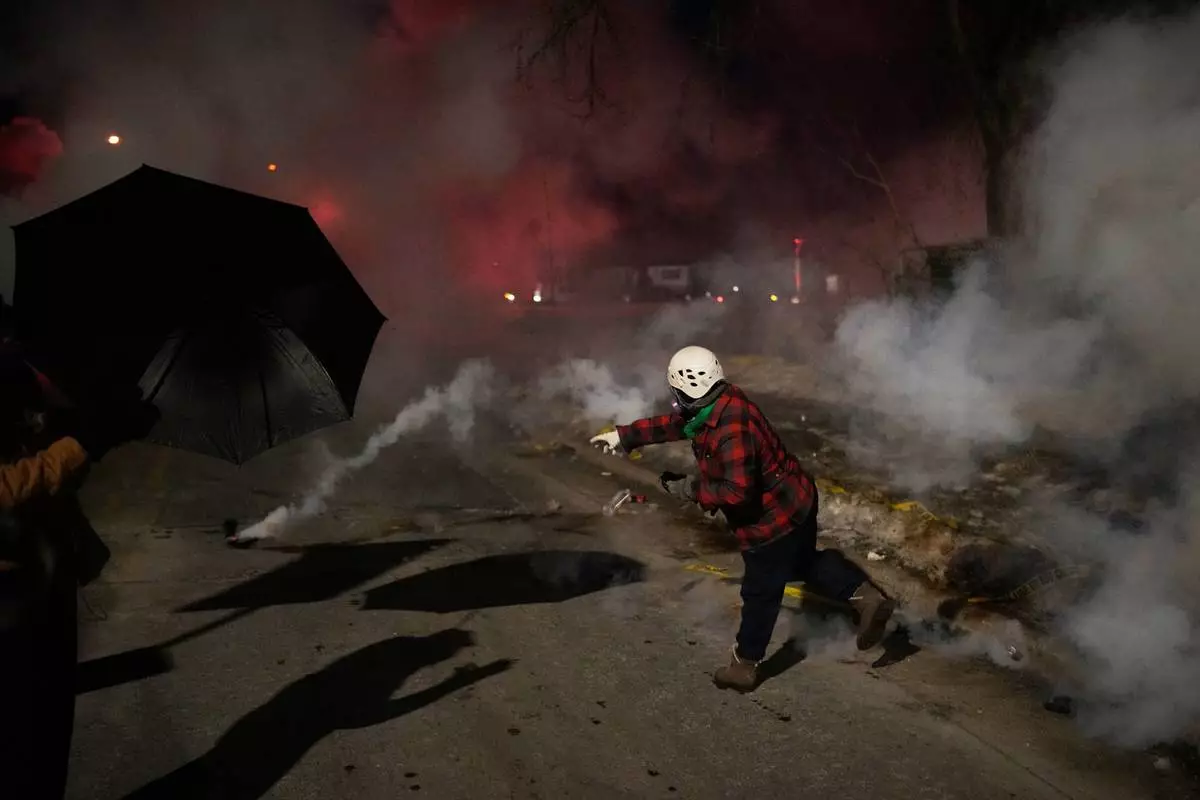
A protester throws back a tear gas canister during a protest after a shooting on Wednesday, Jan. 14, 2026, in Minneapolis. (AP Photo/John Locher)
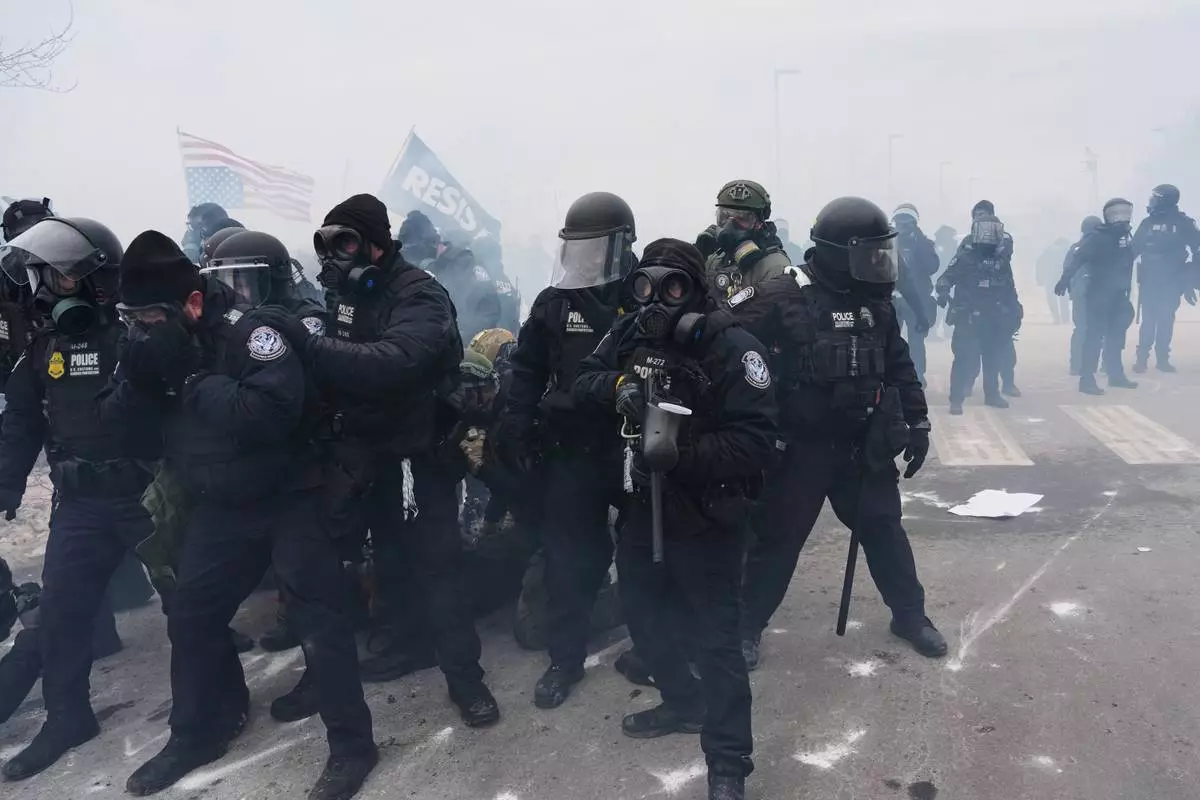
Federal immigration officers confront protesters outside Bishop Henry Whipple Federal Building, Thursday, Jan. 15, 2026, in Minneapolis. (AP Photo/Adam Gray)
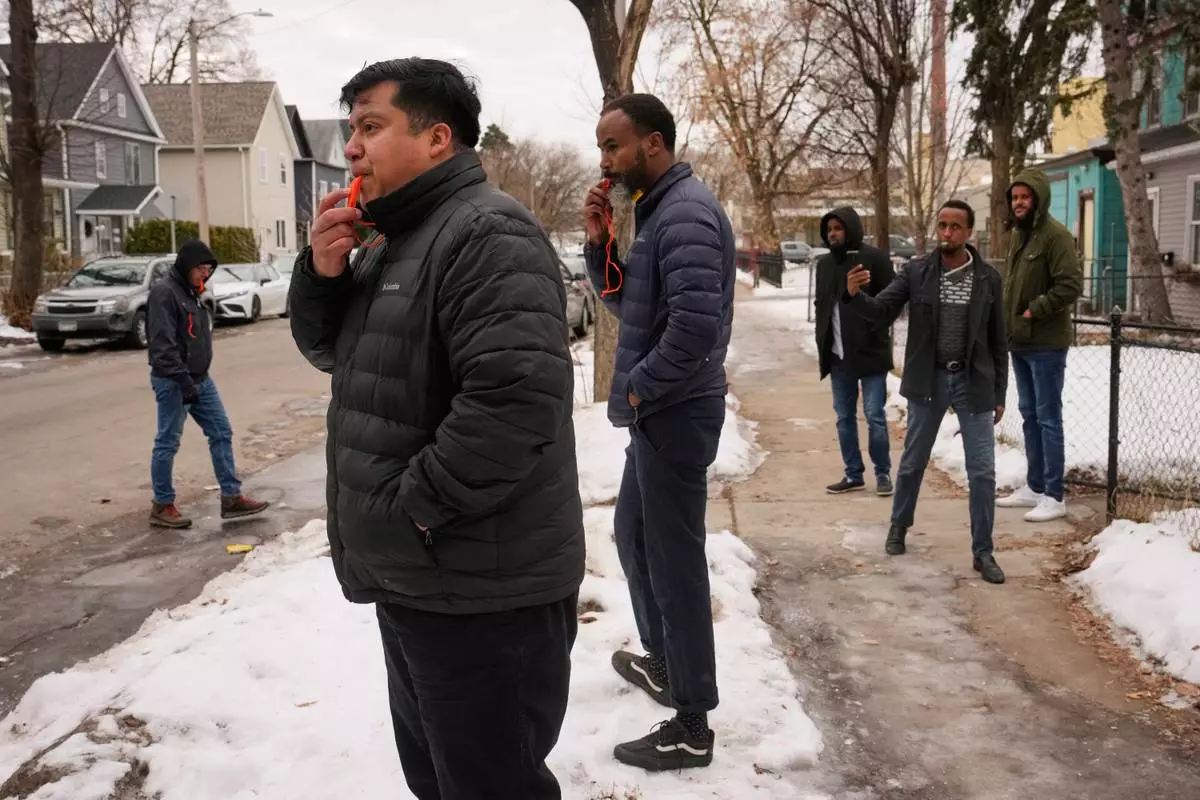
Minneapolis City Council Member Jason Chavez, second from left, blows a whistle with other activists to warn people of federal immigration officers Thursday, Jan. 15, 2026, in Minneapolis. (AP Photo/John Locher)
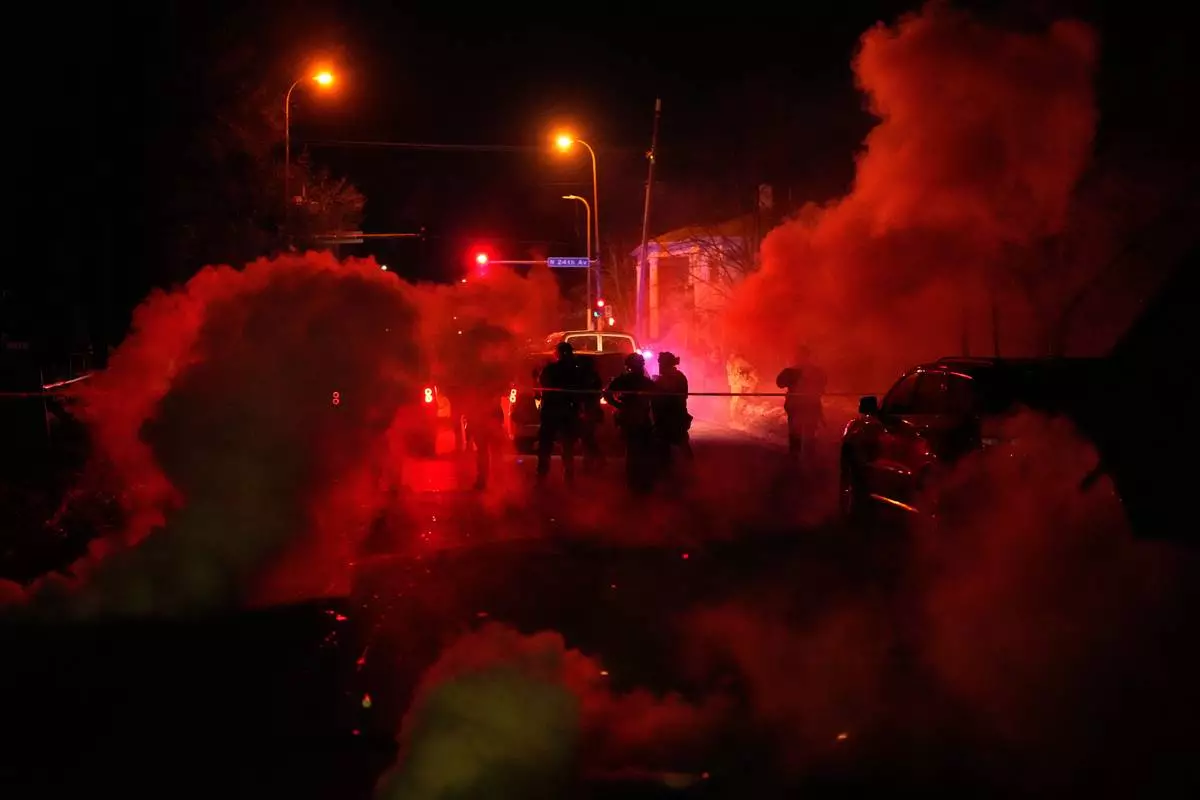
Tear gas surrounds federal law enforcement officers as they leave a scene after a shooting on Wednesday, Jan. 14, 2026, in Minneapolis. (AP Photo/John Locher)
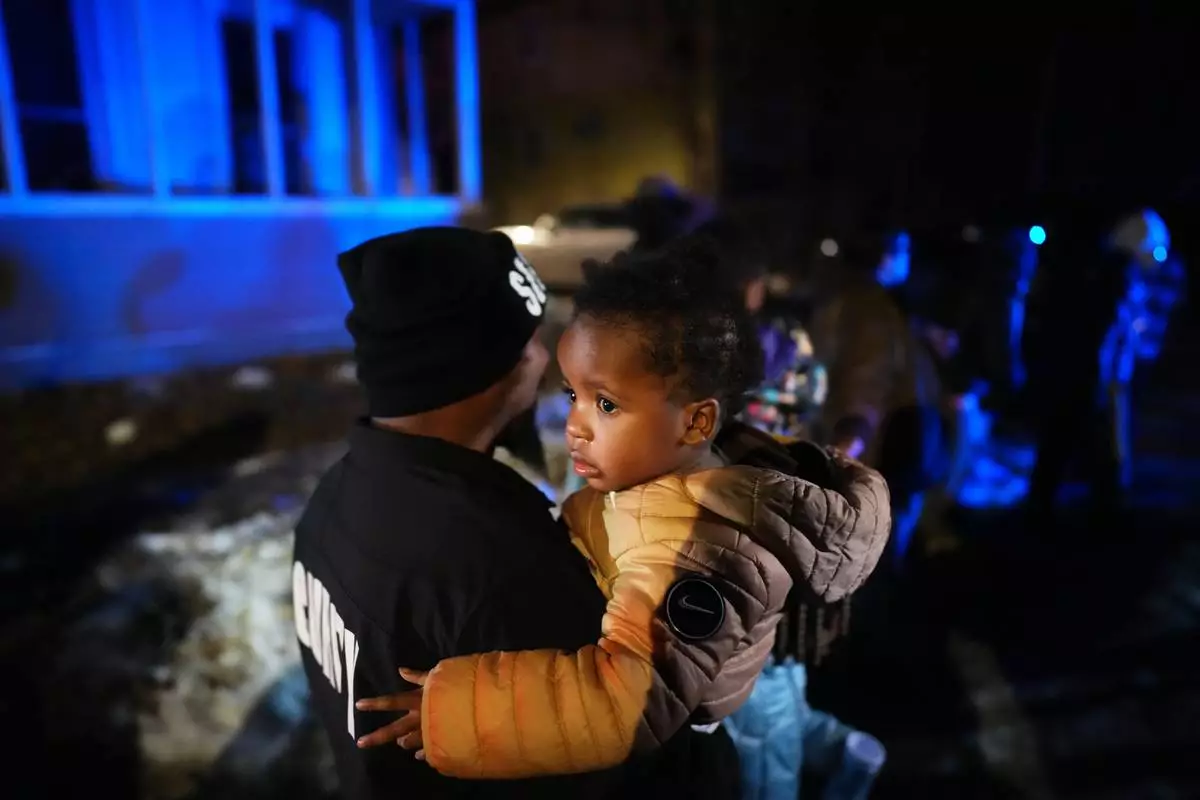
A child and family are escorted away after federal law enforcement deployed tear gas in a neighborhood during protests on Wednesday, Jan. 14, 2026, in Minneapolis. (AP Photo/Adam Gray)
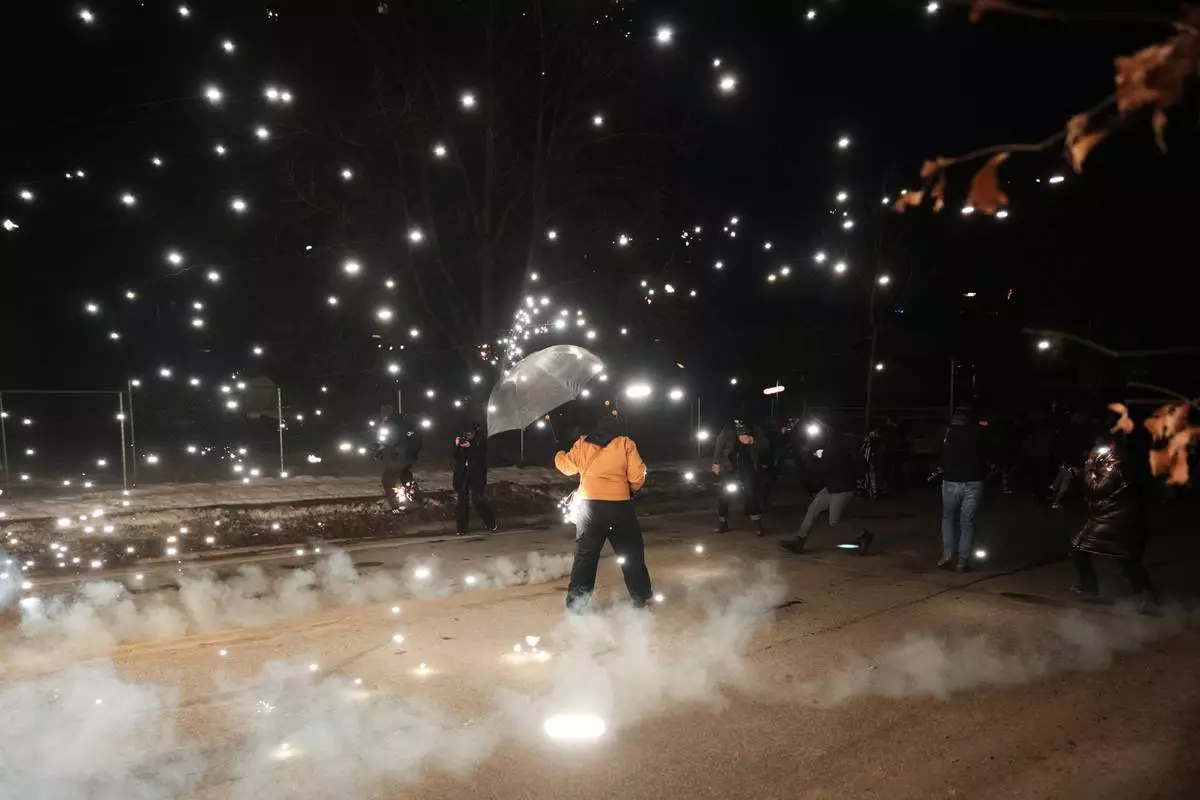
A protester holds an umbrella as sparks fly from a flash bang deployed by law enforcement on Wednesday, Jan. 14, 2026, in Minneapolis. (AP Photo/Adam Gray)
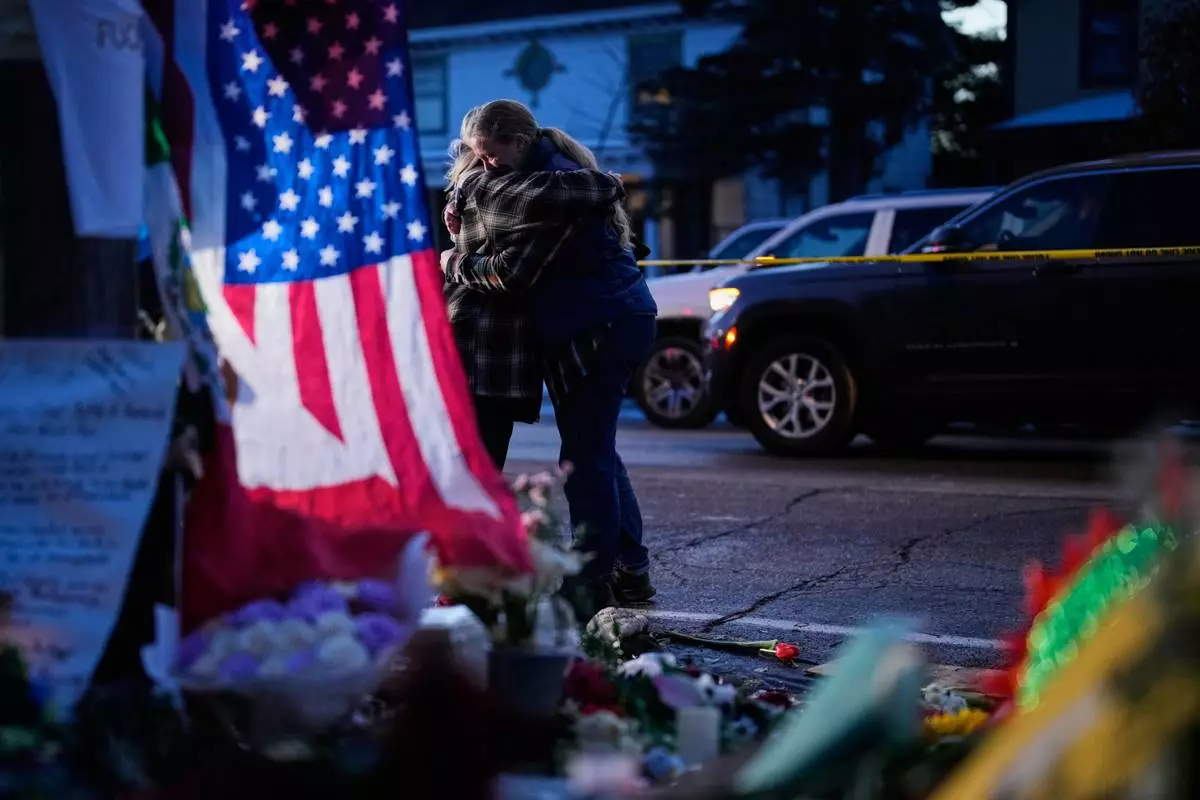
Monica Travis shares an embrace while visiting a makeshift memorial for Renee Good, who was fatally shot by an ICE officer last week, Monday, Jan. 12, 2026, in Minneapolis. (AP Photo/John Locher)
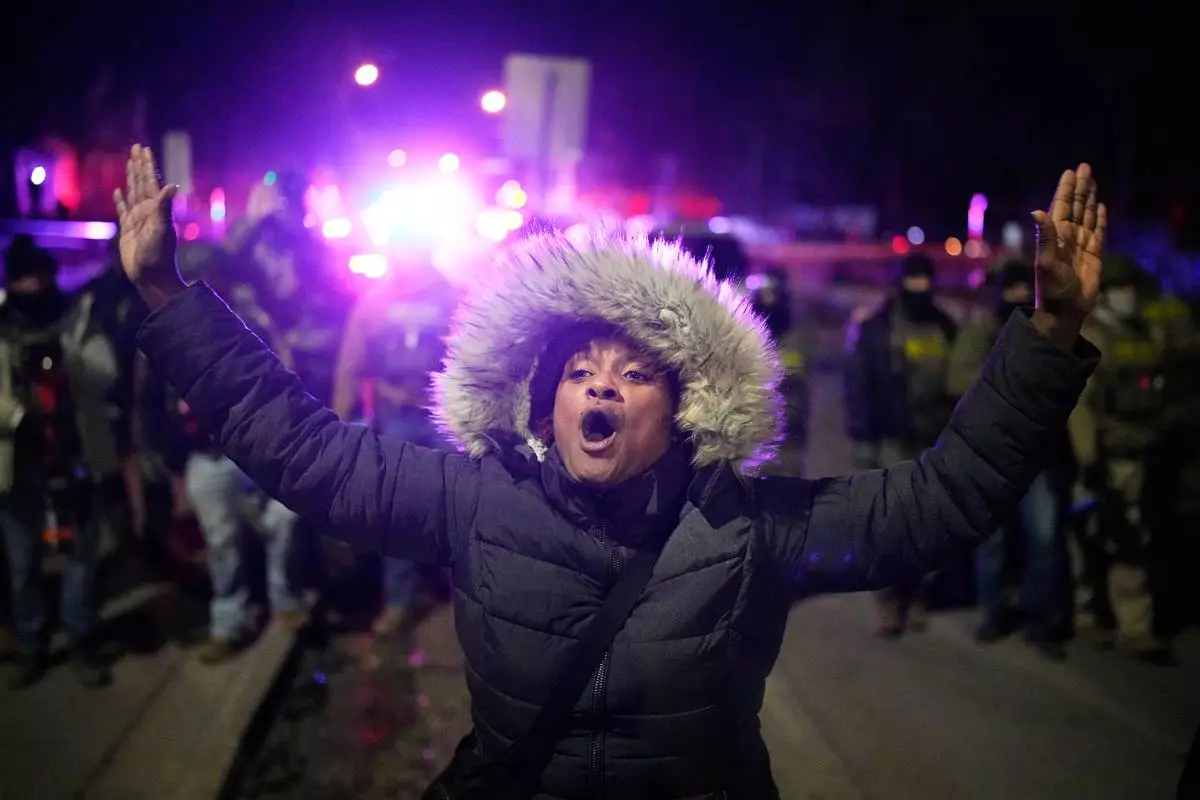
A protester yells in front of law enforcement after a shooting on Wednesday, Jan. 14, 2026, in Minneapolis. (AP Photo/John Locher)
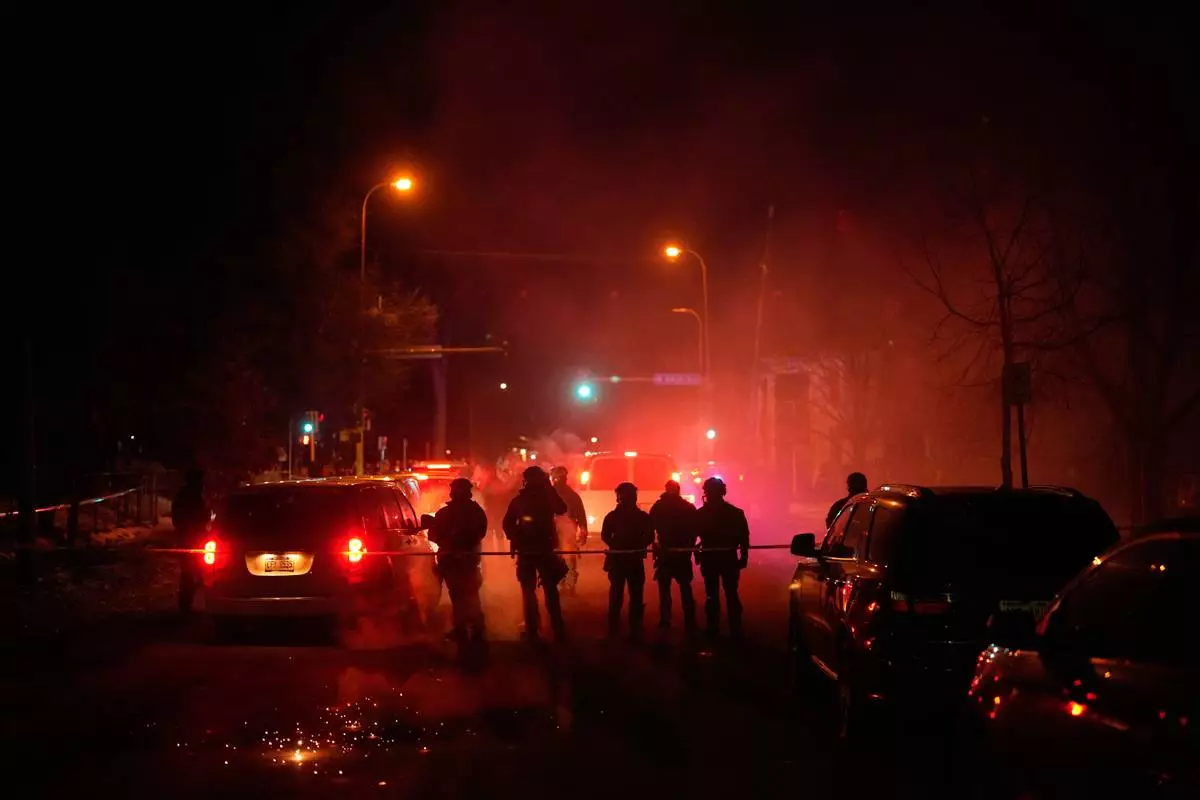
Tear gas surrounds federal law enforcement officers as they leave a scene after a shooting on Wednesday, Jan. 14, 2026, in Minneapolis. (AP Photo/John Locher)
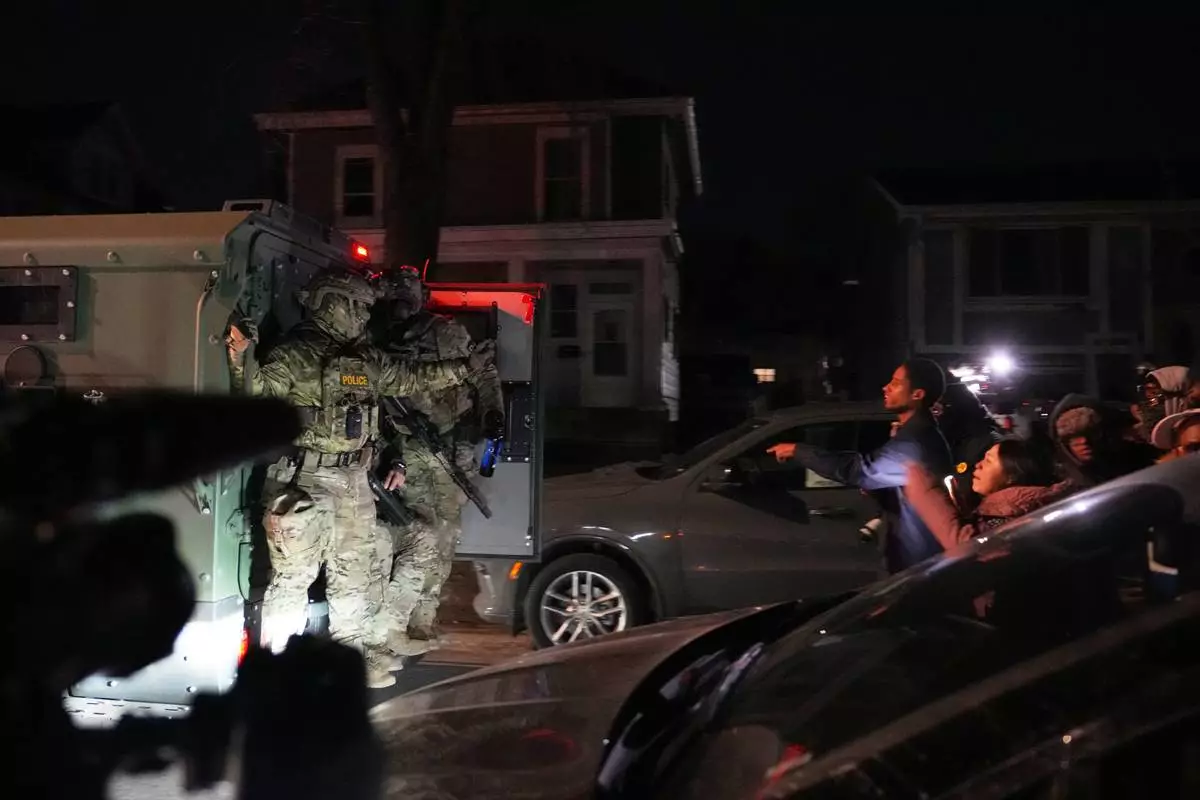
Protesters shout at law enforcement officers after a shooting on Wednesday, Jan. 14, 2026, in Minneapolis. (AP Photo/Abbie Parr)
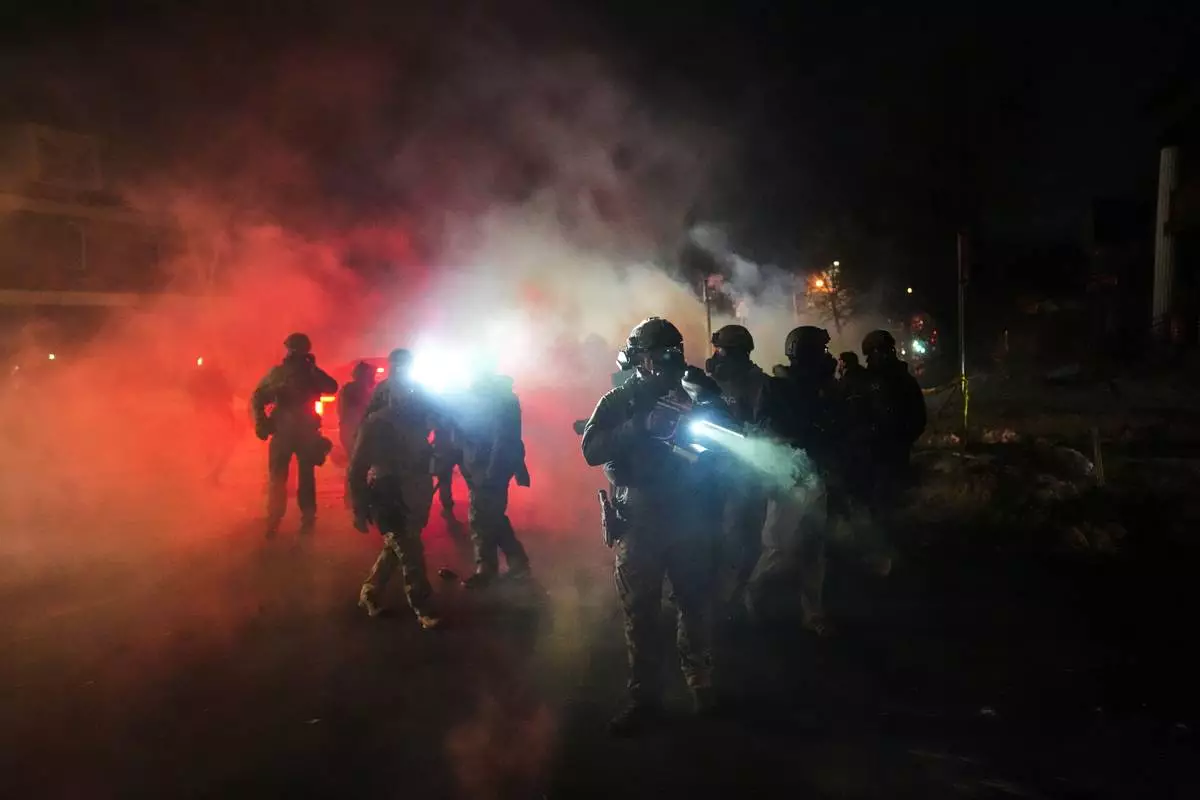
Law enforcement officers stand amid tear gas at the scene of a reported shooting Wednesday, Jan. 14, 2026, in Minneapolis. (AP Photo/Adam Gray)