ATLANTA (AP) — Donald Trump would not be the first president to invoke the Insurrection Act, as he has threatened, so that he can send U.S. military forces to Minnesota.
But he'd be the only commander in chief to use the 19th-century law to send troops to quell protests that started because of federal officers the president already has sent to the area — one of whom shot and killed a U.S. citizen.
The law, which allows presidents to use the military domestically, has been invoked on more than two dozen occasions — but rarely since the 20th Century's Civil Rights Movement.
Federal forces typically are called to quell widespread violence that has broken out on the local level — before Washington's involvement and when local authorities ask for help. When presidents acted without local requests, it was usually to enforce the rights of individuals who were being threatened or not protected by state and local governments. A third scenario is an outright insurrection — like the Confederacy during the Civil War.
Experts in constitutional and military law say none of that clearly applies in Minneapolis.
“This would be a flagrant abuse of the Insurrection Act in a way that we've never seen,” said Joseph Nunn, an attorney at the Brennan Center for Justice's Liberty and National Security Program. “None of the criteria have been met.”
William Banks, a Syracuse University professor emeritus who has written extensively on the domestic use of the military, said the situation is “a historical outlier” because the violence Trump wants to end “is being created by the federal civilian officers” he sent there.
But he also cautioned Minnesota officials would have “a tough argument to win” in court, because the judiciary is hesitant to challenge “because the courts are typically going to defer to the president” on his military decisions.
Here is a look at the law, how it's been used and comparisons to Minneapolis.
George Washington signed the first version in 1792, authorizing him to mobilize state militias — National Guard forerunners — when “laws of the United States shall be opposed, or the execution thereof obstructed.”
He and John Adams used it to quash citizen uprisings against taxes, including liquor levies and property taxes that were deemed essential to the young republic's survival.
Congress expanded the law in 1807, restating presidential authority to counter “insurrection or obstruction” of laws. Nunn said the early statutes recognized a fundamental “Anglo-American tradition against military intervention in civilian affairs” except “as a tool of last resort.”
The president argues Minnesota officials and citizens are impeding U.S. law by protesting his agenda and the presence of U.S. Immigration and Customs Enforcement officers and Customs and Border Protection officers. Yet early statutes also defined circumstances for the law as unrest “too powerful to be suppressed by the ordinary course” of law enforcement.
There are between 2,000 and 3,000 federal authorities in the Minneapolis-St. Paul metro area, compared to Minneapolis, which has fewer than 600 police officers. Protesters' and bystanders' video, meanwhile, has shown violence initiated by federal officers, with the interactions growing more frequent since Renee Good was shot three times and killed.
“ICE has the legal authority to enforce federal immigration laws,” Nunn said. “But what they're doing is a sort of lawless, violent behavior” that goes beyond their legal function and “foments the situation” Trump wants to suppress.
“They can't intentionally create a crisis, then turn around to do a crackdown,” he said, adding that the Constitutional requirement for a president to “faithfully execute the laws” means Trump must wield his power, on immigration and the Insurrection Act, “in good faith.”
Courts have blocked some of Trump's efforts to deploy the National Guard, but he'd argue with the Insurrection Act that he does not need a state's permission to send troops.
That traces to President Abraham Lincoln, who held in 1861 that Southern states could not legitimately secede. So, he convinced Congress to give him express power to deploy U.S. troops, without asking, into Confederate states he contended were still in the Union. Quite literally, Lincoln used the act as a legal basis to fight the Civil War.
Nunn said situations beyond such a clear insurrection as the Confederacy still require a local request or another trigger that Congress added after the Civil War: protecting individual rights. Ulysses S. Grant used that provision to send troops to counter the Ku Klux Klan and other white supremacists who ignored the 14th and 15th amendments and civil rights statutes.
During post-war industrialization, violence erupted around strikes and expanding immigration — and governors sought help.
President Rutherford B. Hayes granted state requests during the Great Railroad Strike of 1877 after striking workers, state forces and local police clashed, leading to dozens of deaths. Grover Cleveland granted a Washington state governor's request — at that time it was a U.S. territory — to help protect Chinese citizens who were being attacked by white rioters. President Woodrow Wilson sent troops to Colorado in 1914 amid a coal strike after workers were killed.
Federal troops helped diffuse each situation.
Banks stressed that the law then and now presumes that federal resources are needed only when state and local authorities are overwhelmed — and Minnesota leaders say their cities would be stable and safe if Trump's feds left.
As Grant had done, mid-20th century presidents used the act to counter white supremacists.
Franklin Roosevelt dispatched 6,000 troops to Detroit — more than double the U.S. forces in Minneapolis — after race riots that started with whites attacking Black residents. State officials asked for FDR's aid after riots escalated, in part, Nunn said, because white local law enforcement joined in violence against Black residents. Federal troops calmed the city after dozens of deaths, including 17 Black residents killed by local police.
Once the Civil Rights Movement began, presidents sent authorities to Southern states without requests or permission, because local authorities defied U.S. civil rights law and fomented violence themselves.
Dwight Eisenhower enforced integration at Central High School in Little Rock, Arkansas; John F. Kennedy sent troops to the University of Mississippi after riots over James Meredith's admission and then pre-emptively to ensure no violence upon George Wallace's “Stand in the Schoolhouse Door” to protest the University of Alabama's integration.
“There could have been significant loss of life from the rioters” in Mississippi, Nunn said.
Lyndon Johnson protected the 1965 Voting Rights March from Selma to Montgomery after Wallace's troopers attacked marchers' on their first peaceful attempt.
Johnson also sent troops to multiple U.S. cities in 1967 and 1968 after clashes between residents and police escalated. The same thing happened in Los Angeles in 1992, the last time the Insurrection Act was invoked.
Riots erupted after a jury failed to convict four white police officers of excessive use of force despite video showing them beating a Rodney King, a Black man. California Gov. Pete Wilson asked President George H.W. Bush for support.
Bush authorized about 4,000 troops — but after he had publicly expressed displeasure over the trial verdict. He promised to “restore order” yet directed the Justice Department to open a civil rights investigation, and two of the L.A. officers were later convicted in federal court.

President Donald Trump answers questions after signing a bill that returns whole milk to school cafeterias across the country, in the Oval Office of the White House, Wednesday, Jan. 14, 2026, in Washington. (AP Photo/Alex Brandon)
A U.S. submarine sank an Iranian warship in international waters, Defense Secretary Pete Hegseth said Wednesday. In addition to striking Tehran, Israel hit the Iranian-backed Hezbollah militant group in Lebanon, while Iran fired on Bahrain, Kuwait and Israel.
As the U.S.-Israeli war on Iran spiraled, Turkey said NATO defenses intercepted a ballistic missile launched from Iran before it entered Turkey’s airspace. Hegseth also said more forces will be arriving in the Middle East, adding that the U.S. “will take all the time we need to make sure that we succeed.”
The war has killed more than 1,000 people in Iran, more than 50 in Lebanon and around a dozen in Israel, according to officials in those countries.
Oil prices have soared following Iranian attacks on traffic through the Strait of Hormuz, and global stock markets have been hammered over worries that the spike in oil prices may grind down the world economy. U.S. stocks appeared steadier at Wednesday’s opening.
Here is the latest:
Gen. Dan Caine, chair of the Joint Chiefs of Staff, says the U.S. Navy fast-attack submarine used “a single Mark 48 torpedo.”
A U.S. official, who was not authorized to comment publicly and spoke on condition of anonymity, confirmed the Iranian ship was the Dena.
The sinking of the Iranian warship in the Indian Ocean illustrates how the U.S. military operation against Iran is stretching far beyond the Islamic Republic’s borders. Trump has said that one of the U.S. military’s main objectives in the campaign is to wipe out its Navy.
By Konstantin Toropin and Ben Finley
Turkey’s foreign ministry has summoned Iran’s ambassador in protest over the firing of a ballistic missile that was intercepted before entering Turkish airspace, a Turkish official says.
The official spoke on condition of anonymity in line with government regulations.
By Suzan Fraser
The officials spoke on condition of anonymity to discuss intelligence matters.
One senior official said the rate of Iranian missile strikes is declining due to U.S. and Israeli success at taking out launch sites, but said Iran may be holding back some of its stocks.
A second official said it’s “definitely an issue” that countries targeted by Iran are going through their defensive missiles, and they will have to carefully manage their own stocks.
By Jill Lawless
Internet monitoring group NetBlocks says Iran has been offline now for 100 hours. This is the second such blackout this year imposed by Iranian authorities. The first was for nationwide protests in January.
NetBlocks says metrics show internet connectivity at 1% of normal levels.
NetBlocks during the previous shutdown in Iran estimated that it cost the country over $37 million.
Navy spokesman Commander Buddhika Sampath says that by the time naval ships reached the location of the Iranian ship’s sinking, “there were only some oil patches and life rafts. We found people floating on the water.”
The U.S. military has said a torpedo from a U.S. submarine sank the ship.
The S&P 500 rose 0.4% in early trading. The Dow Jones Industrial Average rose 197 points. The Nasdaq composite added 0.7%.
Over 20,000 of the more than 36,000 flights scheduled to fly to or from the Middle East between Saturday’s start of the war and today have been canceled. That’s according to aviation analytics firm Cirium.
Shipping tracker MarineTraffic.com reports the sharp trend.
The disruption is costly for the global oil trade. A fifth of the world’s oil passes through the strait.
Major shipping firms have routed vessels away from the area over security concerns.
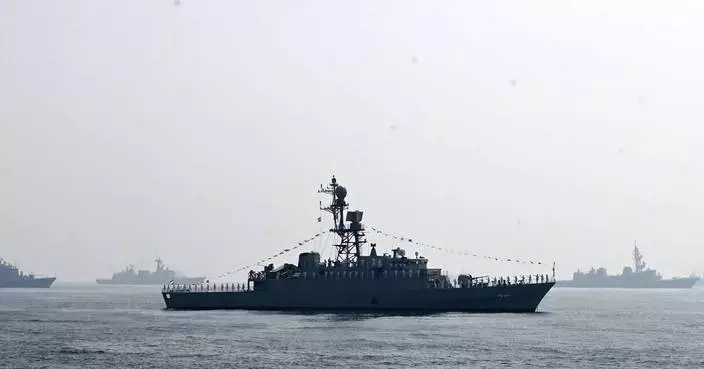
The Iranian warship sunk by a U.S. submarine was in the Indian Ocean. Hegseth called the strike the first such attack on an enemy since World War II.
Sri Lankan authorities said 32 people were rescued from the ship, which sank off their country’s coast. They said others died, without giving a number.
Sirens warning of incoming drones and projectiles have been going off almost nonstop for the past hour and a half in different parts of northern Israel. The Israeli military said that at least some of the fire came from Lebanon.
For the third time Wednesday, there are new sirens in central Jerusalem announcing incoming fire. One loud boom could be heard. Sirens also went off in Tel Aviv.
Israel’s rescue services said there were no immediate casualties from latest barrage.
“We’ve also opened up space available, seats, as C-17s and other airplanes come in to try to help folks get out,” the chair of the Joint Chiefs of Staff says, referring to the large C-17 military transport planes.
Caine gave no details how many Americans are being helped. The U.S. State Department has urged citizens to leave more than a dozen countries.
The country’s interior ministry has just announced them.
An Israeli military official, speaking on condition of anonymity under military protocol, estimates there are 4,000 to 5,000 calls daily to coordinate between Israel and the U.S. across the chain of command.
The official also says top U.S. and Israeli commanders began planning the war’s opening strike three weeks ago.
The defense secretary says the timeline could go further than previously speculated.
“You can say four weeks, but it could be six, it could be eight, it could be three,” he says. “Ultimately, we set the pace and the tempo.”
Stephane Cohen of Israel’s Institute for National Security Studies Data Analytics Center says that based on Israel’s announced targets and satellite imagery, the campaign resembles a dentist’s “root canal” — dismantling Iran’s defense infrastructure and preventing rapid reconstruction.
Targets have included missile sites, Revolutionary Guard stations, naval bases and air defense systems.
The volume of munitions and scale of visible damage far exceed last year’s 12-day war, Cohen said. In some places, the ash, dust and rubble resemble strikes on Gaza.
Cohen says it’s “everything related to the regime.”
“We have pushed every counter-UAS system possible forward, sparing no expense or capability,” Hegseth says, referencing drones. “Like I said, this does not mean we stop everything.”
On Sunday, six American soldiers were killed at an operations center targeted by an Iranian drone strike in the heart of a civilian port in Kuwait.
Top U.S. military officials say U.S. forces have adequate munitions for ongoing operations against Iran.
Gen. Dan Caine, chair of the Joint Chiefs of Staff, was speaking to reporters.
U.S. Defense Secretary Pete Hegseth said that the military used more advanced weapons at the start of the campaign, but was switching to gravity bombs now that the U.S. has control of Iranian skies, and stockpiles of the advanced weapons remain “extremely strong.”
U.S. Defense Secretary Pete Hegseth says a torpedo from a U.S. submarine sank an Iranian warship.
In a Pentagon briefing on Wednesday, Hegseth said that the Tuesday night strike on an Iranian warship was the first such attack on an enemy since World War II.
“An American submarine sunk an Iranian warship that thought it was safe in international waters,” Hegseth said. “Instead, it was sunk by a torpedo.”
An Israeli military official says top U.S. and Israeli commanders began planning the opening strike of the war against Iran three weeks ago.
The official says that once Israel’s government decided on its intention to attack Iran, Israel’s top military brass reached out to the Pentagon to coordinate the operation.
The militaries worked side by side during the opening strikes on Saturday, killing Iran’s supreme leader and dozens of other top officials. As part of the operation, top Israeli commanders went home for the weekend on Friday to deceive Iran into thinking that an attack was not imminent.
NATO spokesperson, Allison Hart, condemned “Iran’s targeting of Turkey” but she did not confirm whether the military organization’s air defenses were used to down the missile.
“NATO stands firmly with all allies, including Turkey, as Iran continues its indiscriminate attacks across the region,” she said. “Our deterrence and defense posture remains strong across all domains, including when it comes to air and missile defense.”
Asked whether NATO air defenses were used, Hart said she “can’t get into operational details.”
NATO has parts of a broader European ballistic missile defense system on Turkish soil, including an early warning radar at the Kurecik base which can detect missiles from Iran.
Turkish Foreign Minister Hakan Fidan has spoken by phone with his Iranian counterpart after an Iranian ballistic missile that was detected heading toward Turkish airspace Wednesday was intercepted.
During the call with Abbas Araghchi, Turkey stressed that “all steps that could escalate the conflict and contribute to its spread” must be avoided, a Turkish official said, speaking on condition of anonymity in line with government protocol.
A container ship was attacked Wednesday afternoon off the coast of Oman, causing fire in its engine room, an agency of the U.K. military said.
The vessel was transiting eastbound through the Strait of Hormuz, 2 nautical miles north of Oman, when it was hit by an unknown projectile, according to the United Kingdom Maritime Trade Operations, UKMTO.
Oman, long an intermediary between the West and Iran, has repeatedly come under attack by Iran.
Ayatollah Ahmad Khatami is a member of the Assembly of Experts, the body charged with picking a new leader. His comments were aired on state television.
“The options have become clear,” Khatami said. Other top officials have indicated a decision may be close.
Sirens have gone off in Jerusalem and elsewhere for simultaneous launches from Lebanon and Iran.
Israel’s military earlier said it is seeing a decline in launches from Iran as the campaign enters its fifth day.
An Iraqi official says a senior Iranian official requested that Iraq take measures to prevent Iranian opposition groups based there from breaching the border.
A statement says Ali Bagheri, deputy secretary of Iran’s Supreme National Security Council, made the request in a call with Iraqi National Security Advisor Qassim al-Araji.
The guard says it is prepared for the “complete destruction of the region’s military and economic infrastructure.” The statement came via Iranian state television.
“The continued mischief and deception by the United States in the region will come at the cost of the complete destruction of the region’s military and economic infrastructure,” it says.
It alleges, without offering evidence, that the U.S. military was using “civilian facilities ... as cover.”
The death toll in Iran from the ongoing war with the United States and Israel has reached at least 1,045 people, an Iranian government agency said Wednesday.
The Iran’s Foundation of Martyrs and Veterans Affairs offered the toll, saying it represented the number of bodies so far identified and prepared for burial.
Turkey’s Defense Ministry says NATO defenses have intercepted a ballistic missile launched from Iran before it entered Turkey’s airspace. A ministry statement said the missile was detected after crossing Iraqi and Syrian airspace. NATO air and missile defense units stationed in the eastern Mediterranean intercepted it in time.
Canadian Prime Minister Mark Carney say he sees the war as an extreme example of a rupturing world order in which countries increasingly act without respect for international norms and laws.
“Geo-strategically, hegemons are increasingly acting without constraint or respect for international norms or laws while others bear the consequences. Now the extremes of this disruption are being played out in real time in the Middle East,” Carney said at the Lowy Institute, a Sydney-based international policy think tank.
But whether the U.S. and Israeli airstrikes on Iran broke international law was “a judgment for others to make,” he said.
Grand Ayatollah Ali al-Sistani, a prominent religious leader based in Iraq, condemned the “military aggression” against Iran. He said attacking a country that is a member of the United Nations without U.N. approval is a violation of international law.
The Iran-born al-Sistani, who is one of the world’s most influential Shiite clerics, warned that war would cause widespread chaos and prolonged unrest “that will bring calamities to the peoples of the region and to the interests of others as well.”
Al-Sistani is based in the holy Shiite city of Najaf.
Iranian state television on Wednesday afternoon said the mourning ceremony for Iranian Supreme Leader Ayatollah Ali Khamenei had been postponed and would be held later after intense strikes targeted Tehran.
The Iranian vessel that was sinking off of Sri Lanka, the IRIS Dena, is one of Iran’s newest warships.
The frigate was the centerpiece of a two-ship international tour in 2023 that included port calls in countries including South Africa and Brazil. It was accompanied by the support ship IRIS Makran, a converted oil tanker.
The U.S. Treasury Department included both ships on a sanctions designation in February 2023 along with eight executives of an Iranian drone manufacturer that supplied the weapons to Russia for use against civilian targets in Ukraine.
The Israeli military is ordering people living in dozens of villages in southern Lebanon close to the border with Israel to evacuate and move “immediately” north of the Litani River.
The Israeli army’s Arabic spokesperson warned people on X that if they decide to move south of the river they will be endangering their lives.
The area south of the Litani River is mostly along the border with Israel. The Lebanese government says it has cleared the area of Hezbollah’s military presence there over the past months.
Israel is seeing a decline in launches from Iran as the campaign enters its fifth day, military spokesperson Brig. Gen. Effie Defrin said.
Defrin also said Israel is not surprised by any new weapons Iran may use and had prepared extensively for the confrontation.
He said Israel would continue to “hunt and destroy” Iran’s military capabilities.
Israel has struck more than 250 Hezbollah targets in Lebanon over the past 48 hours, an Israeli army spokesperson said Wednesday.
Spokesperson Effie Defrin said in a recorded statement that the Iran-backed militant group Hezbollah had been launching rockets at Israel overnight.
Defrin said Israel would continue to target Hezbollah until “the threat is removed.”
“I emphasize: We have no issue with the people of Lebanon. The people of Lebanon are paying the price for the Iranian regime,” he said.
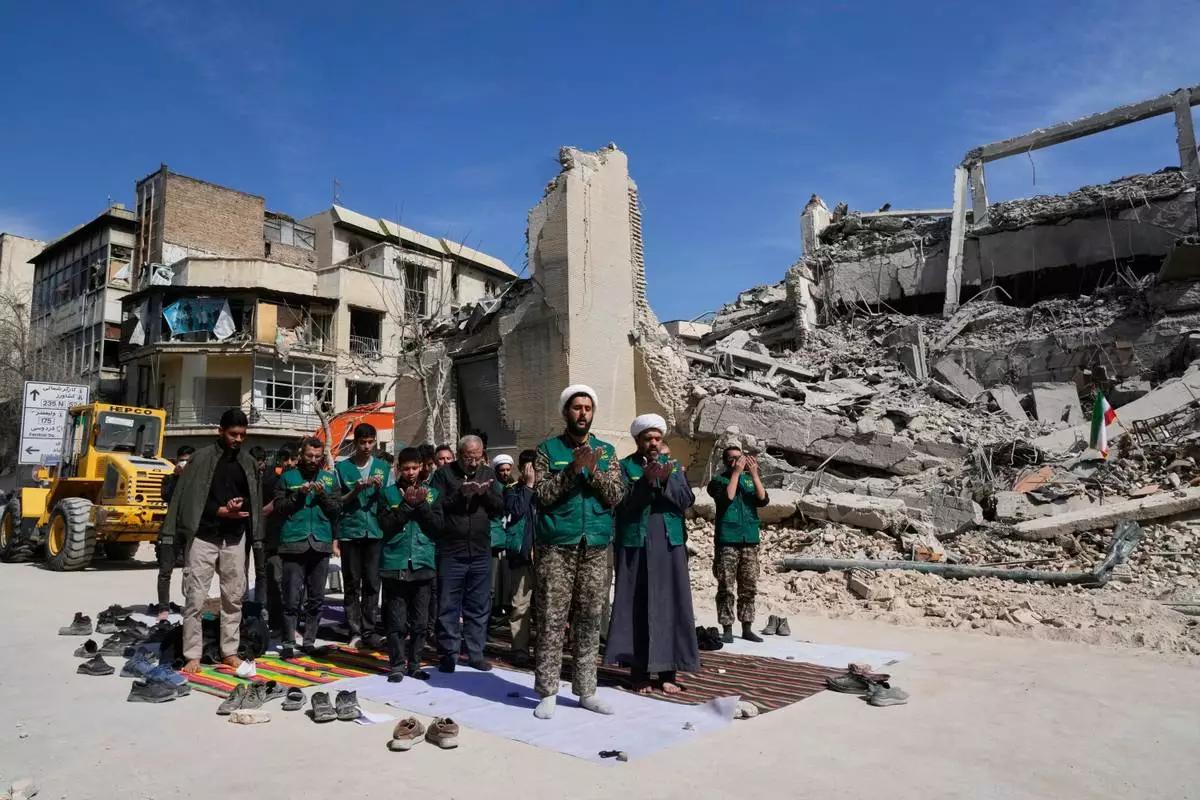
A cleric leads a group of volunteers in prayer next to a police facility struck during the U.S.–Israeli military campaign in Tehran, Iran, Wednesday, March 4, 2026. (AP Photo/Vahid Salemi)
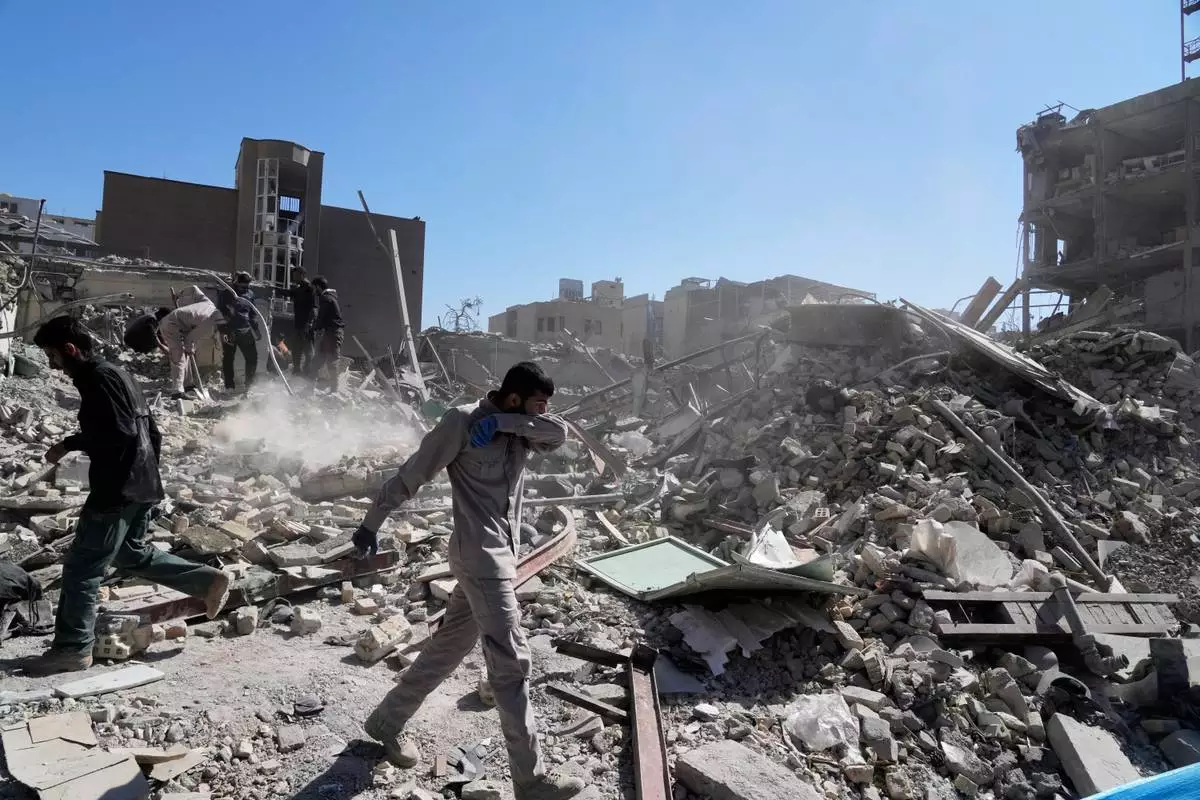
A group of men inspect the ruins of a police station struck Monday amid the U.S.–Israeli military campaign in Tehran, Iran, Tuesday, March 3, 2026. (AP Photo/Vahid Salemi)
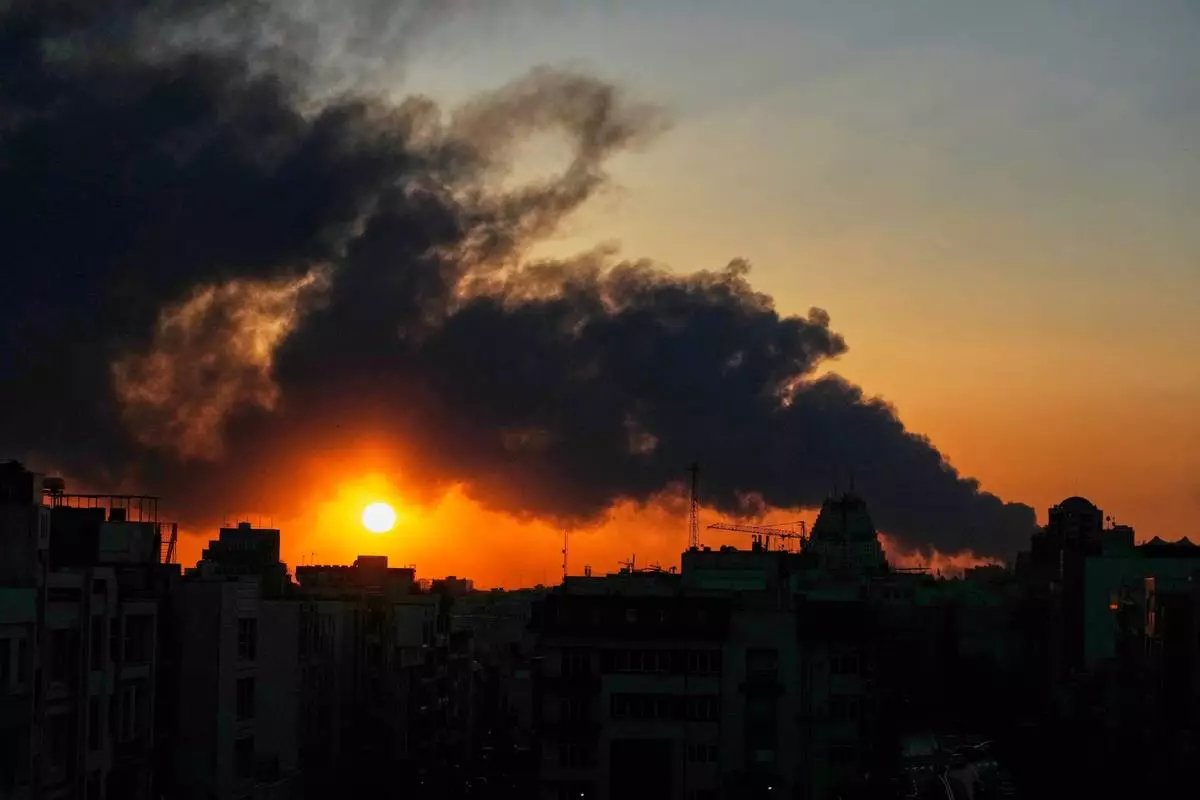
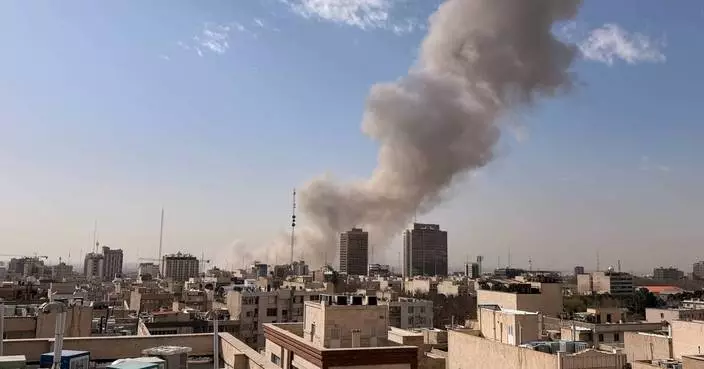
The sun sets behind a plume of smoke rising after a U.S.–Israeli military strike in Tehran, Iran, Tuesday, March 3, 2026. (AP Photo/Vahid Salemi)

Defense Secretary Pete Hegseth and Chairman of the Joint Chiefs of Staff Gen. Dan Caine, speak during a press briefing at the Pentagon, Wednesday, March 4, 2026, in Washington. (AP Photo/Konstantin Toropin)
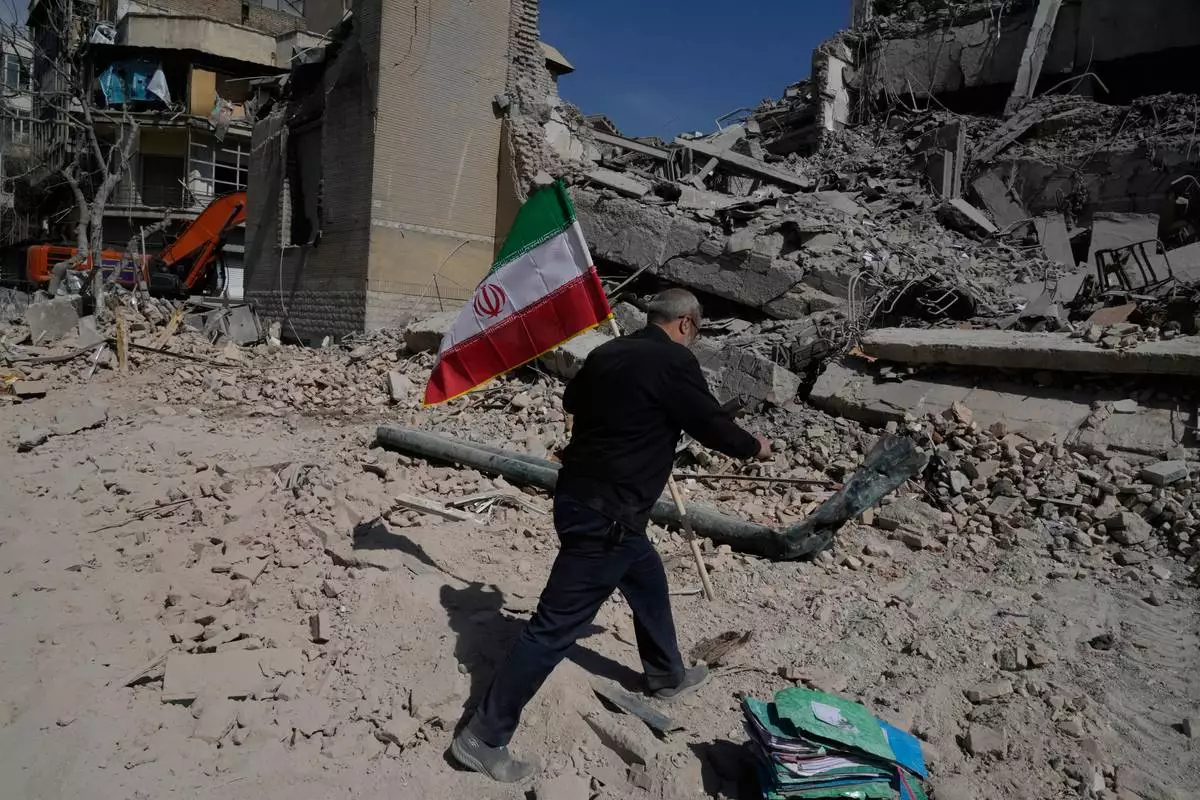
A man carries an Iranian flag to place on the rubble of a police facility struck during the U.S.–Israeli military campaign in Tehran, Iran, Wednesday, March 4, 2026. (AP Photo/Vahid Salemi)
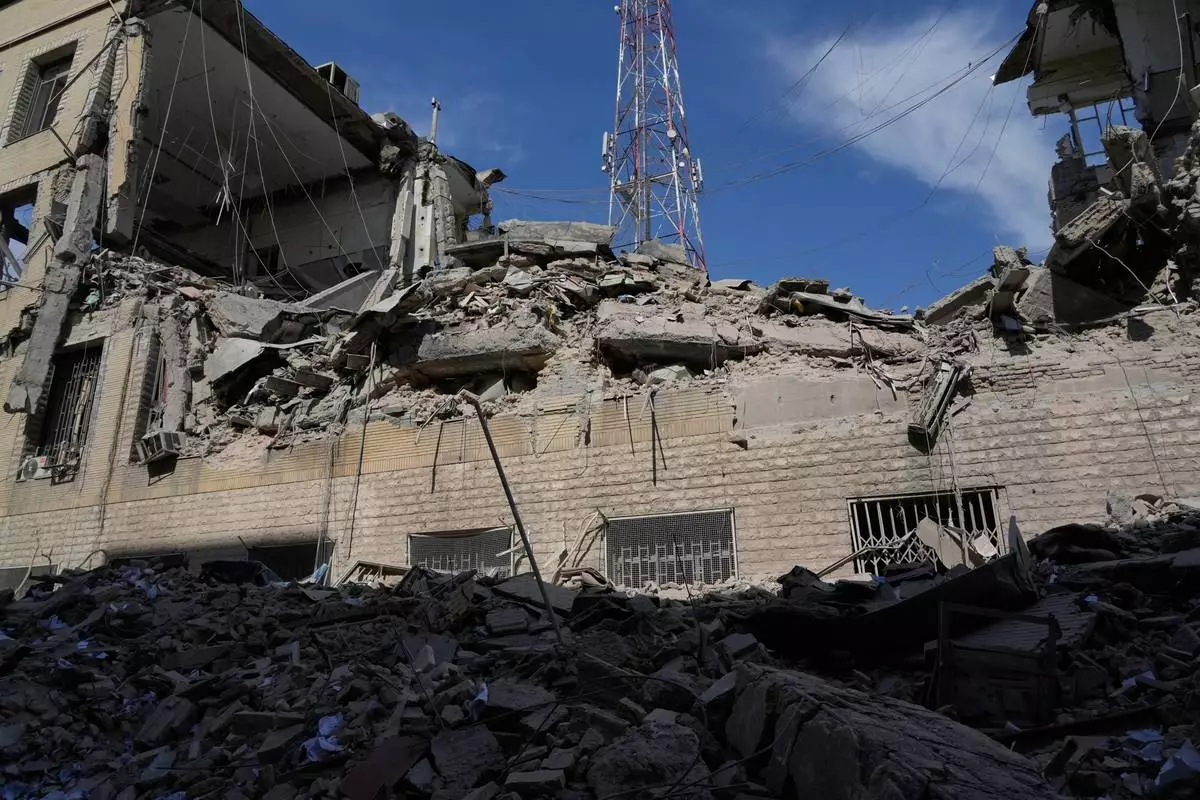
The rubble of a police facility struck during the U.S.–Israeli military campaign is seen in Tehran, Iran, Wednesday, March 4, 2026. (AP Photo/Vahid Salemi)
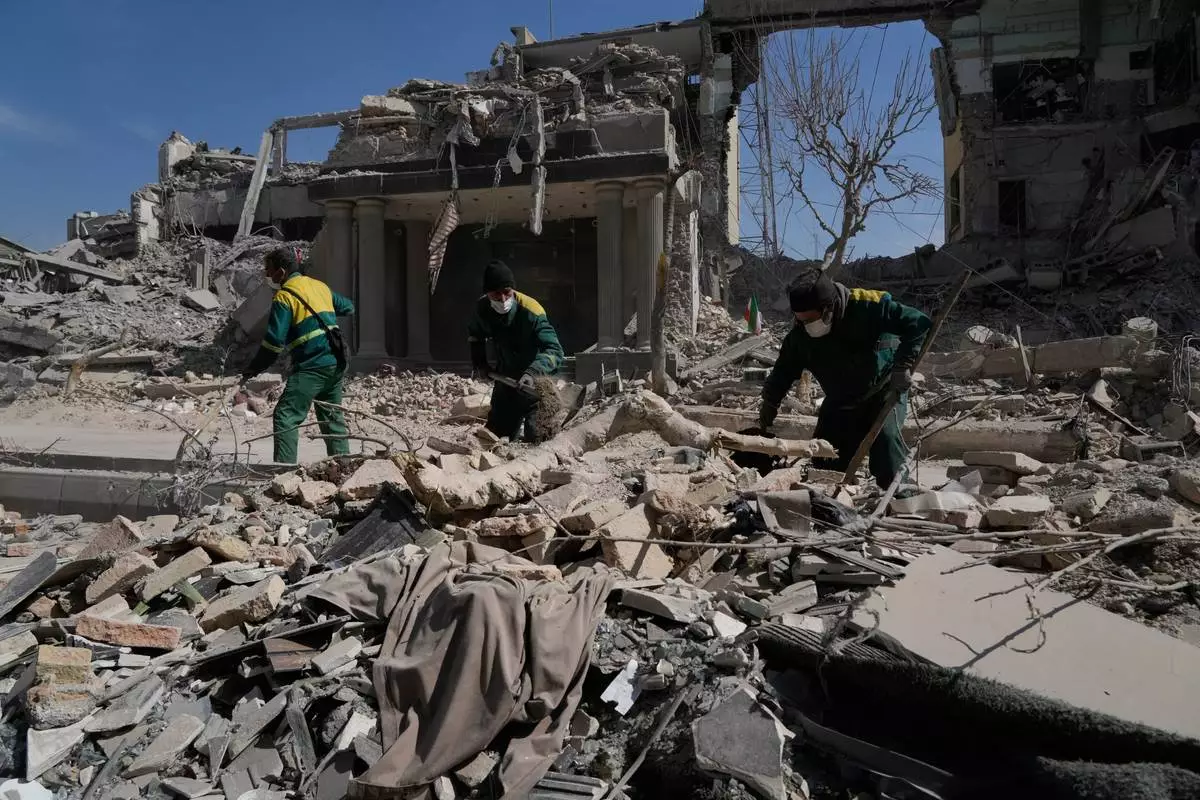
Workers remove the rubble of a police facility struck during the U.S.–Israeli military campaign in Tehran, Iran, Wednesday, March 4, 2026. (AP Photo/Vahid Salemi)
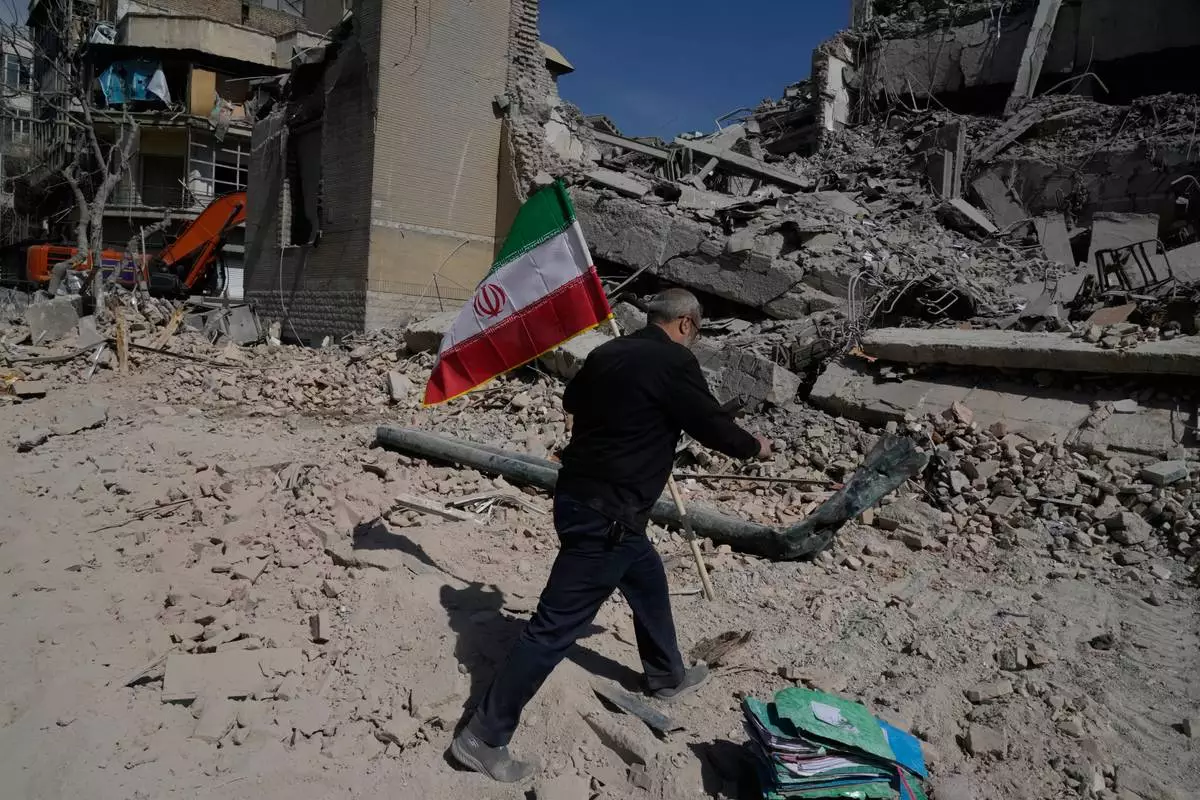
A man carries an Iranian flag to place on the rubble of a police facility struck during the U.S.–Israeli military campaign in Tehran, Iran, Wednesday, March 4, 2026. (AP Photo/Vahid Salemi)
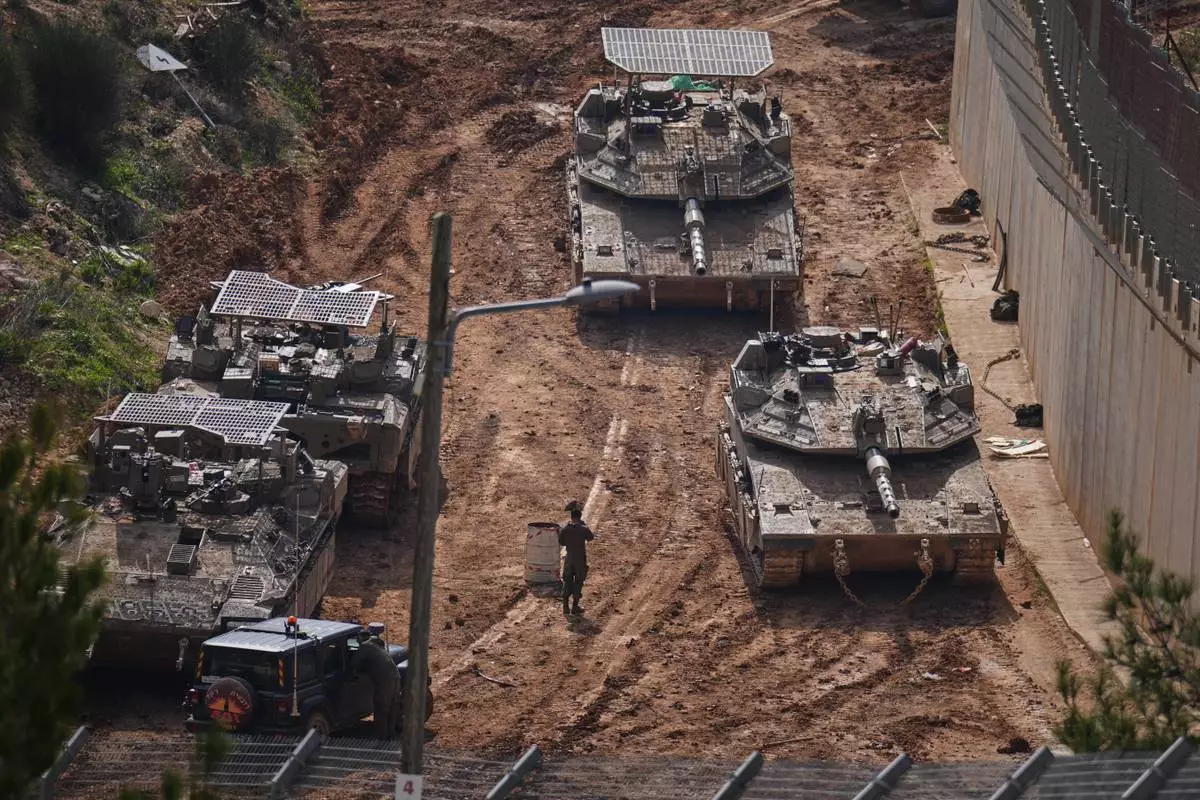
Israeli tanks maneuver near the Israel-Lebanon border, in northern Israel, Wednesday, March 4, 2026. (AP Photo/Ariel Schalit)
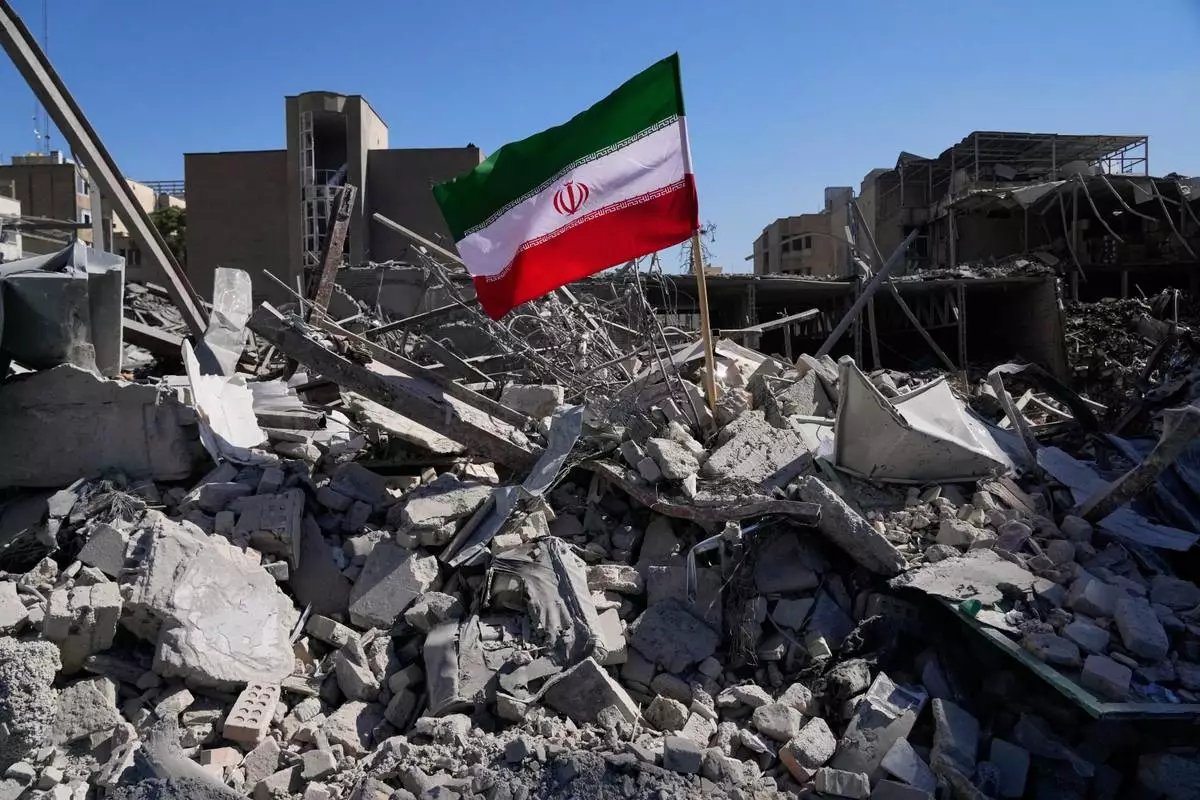
An Iranian flag is placed among the ruins of a police station struck Monday during the U.S.–Israeli military campaign in Tehran, Iran, Tuesday, March 3, 2026. (AP Photo/Vahid Salemi)
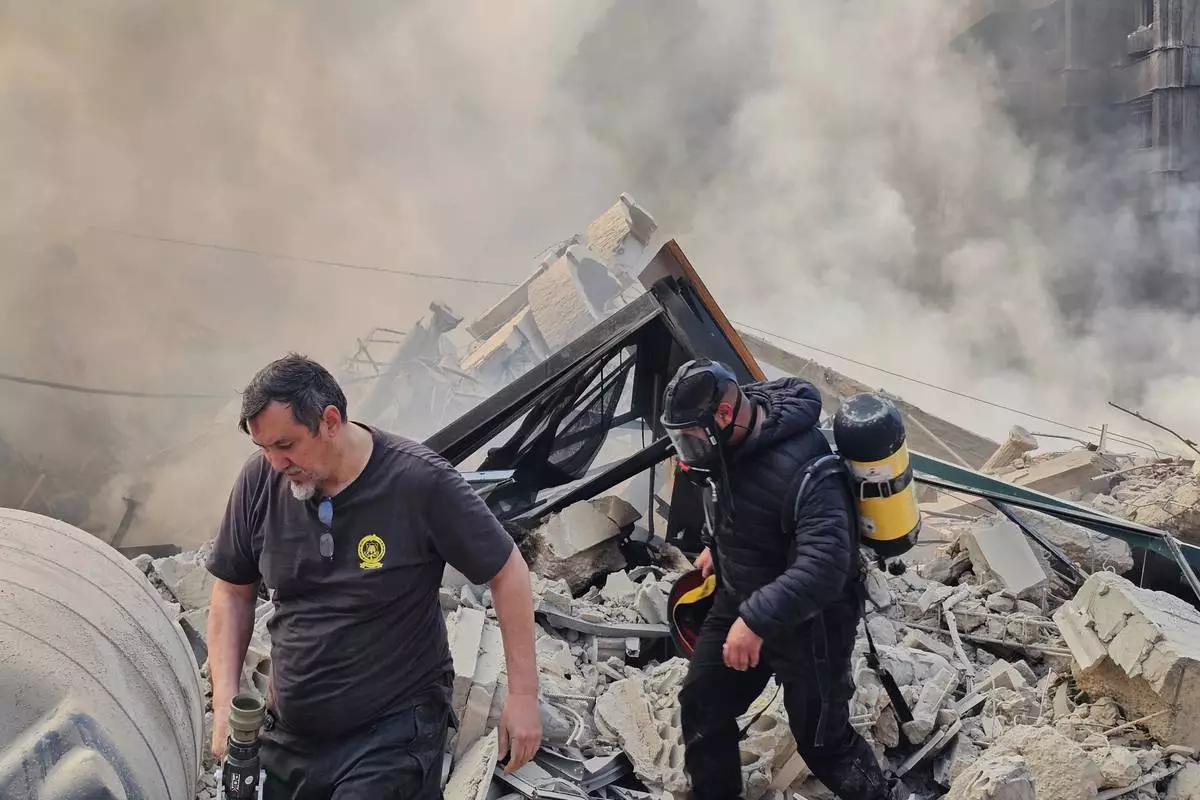
Firefighters inspect the rubble as smoke rises from a building hit by an Israeli airstrike in Dahiyeh, a southern suburb of Beirut, Lebanon, Tuesday, March 3, 2026. (AP Photo/Hassan Ammar)
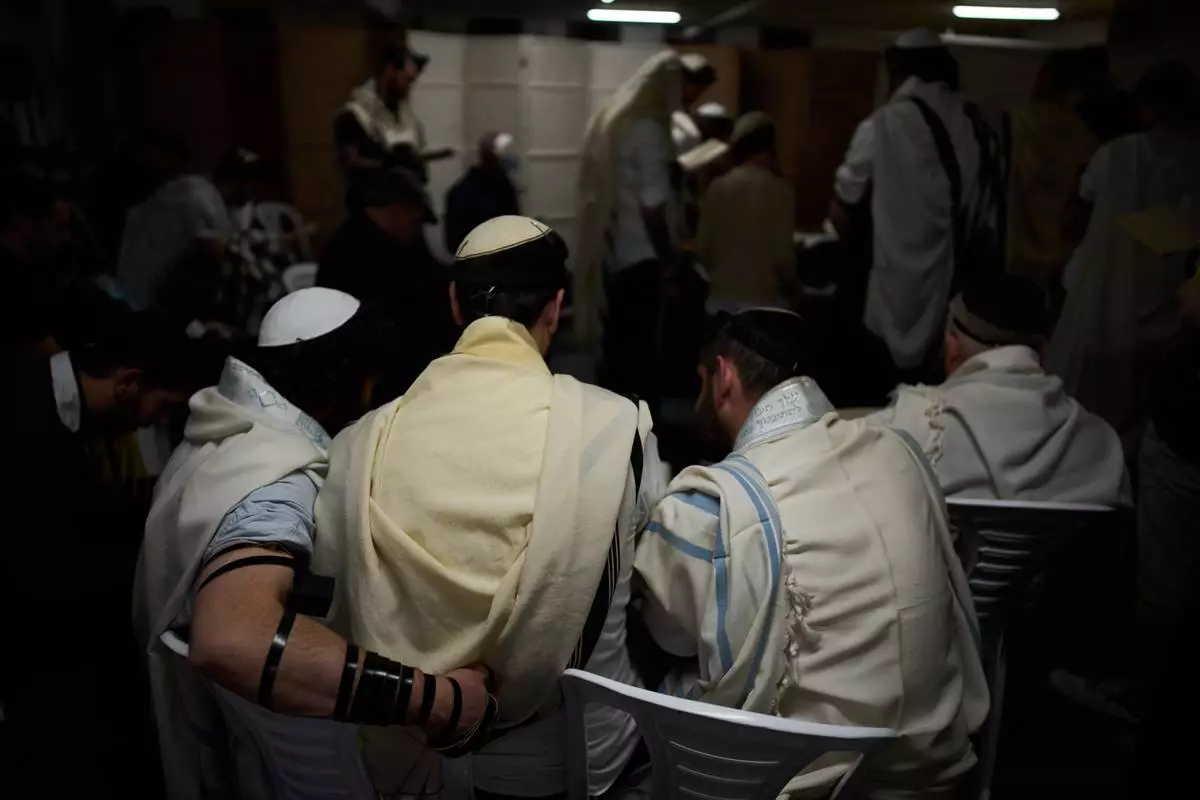
Jewish men covered in prayer shawls pray in an underground parking garage as a precaution against possible Iranian missile attacks, in Tel Aviv, Israel, Tuesday, March 3, 2026. (AP Photo/Oded Balilty)
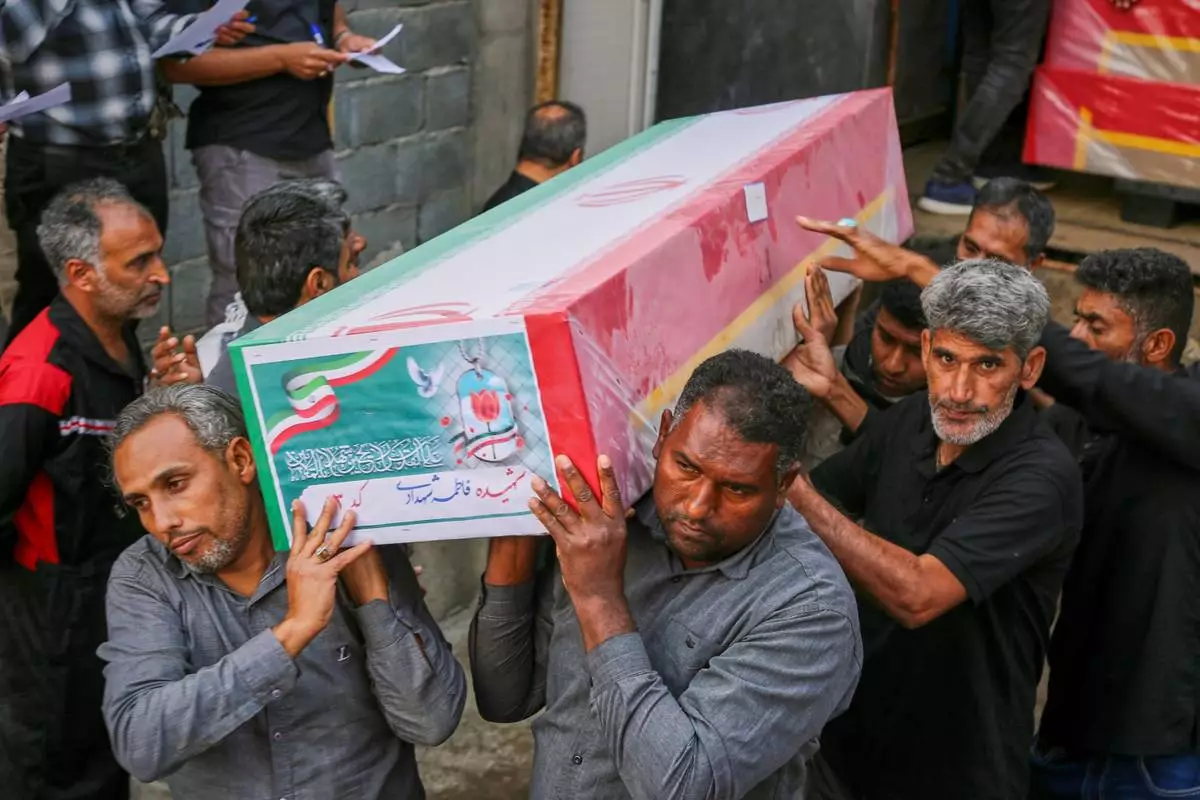
A coffin is carried during the funeral of mostly children killed in what Iranian officials said was an Israeli-U.S. strike Feb. 28 at a girls' elementary school in Minab, Iran, Tuesday, March 3, 2026. (Abbas Zakeri/Mehr News Agency via AP)

A man takes shelter in an underground metro station as a precaution against possible Iranian missile attacks, in Ramat Gan, Israel Monday, March 2, 2026. (AP Photo/Oded Balilty)
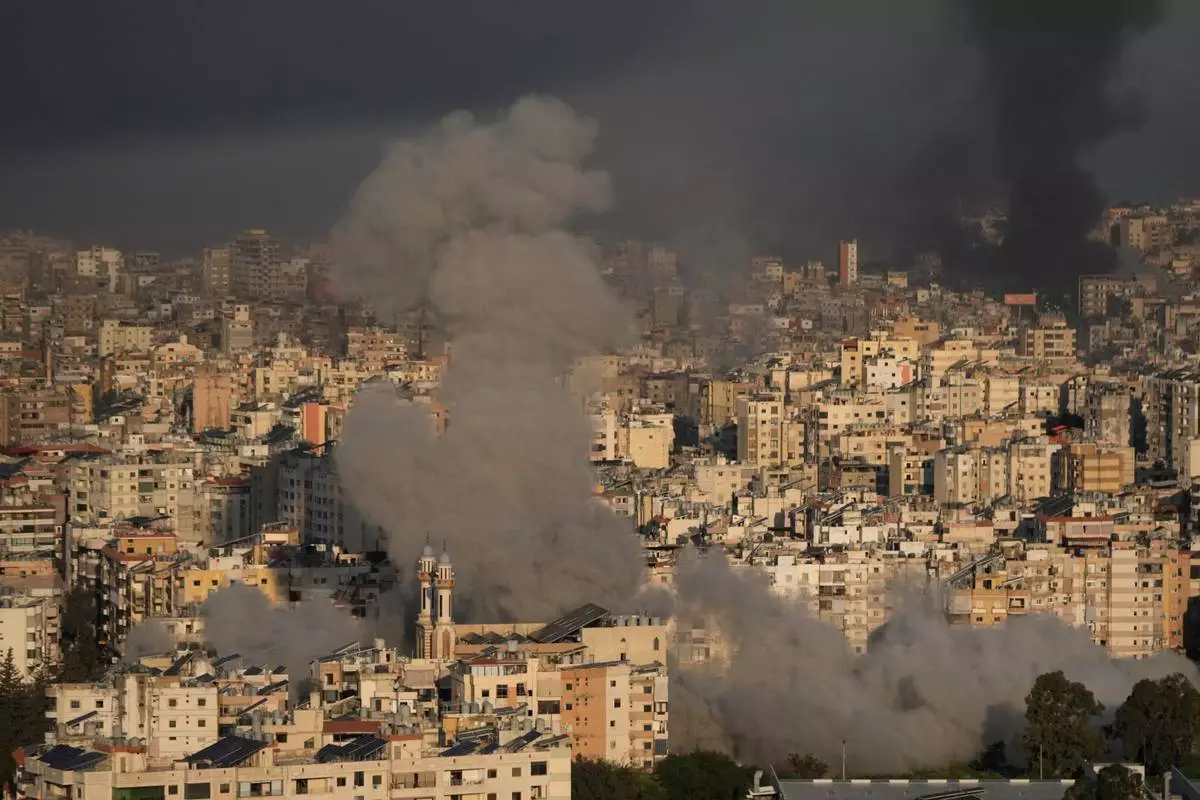
Smoke rises from Israeli airstrikes in Dahiyeh, a southern suburb of Beirut, Lebanon, Tuesday, March 3, 2026. (AP Photo/Hussein Malla)