Skip to Content Facebook Feature Image

Trump administration is launching a new private health tracking system with Big Tech's help

News

Trump administration is launching a new private health tracking system with Big Tech's help
News

News

Trump administration is launching a new private health tracking system with Big Tech's help

2025-07-31 05:25 Last Updated At:05:30

WASHINGTON (AP) — The Trump administration announced it is launching a new program that will allow Americans to share personal health data and medical records across health systems and apps run by private tech companies, promising that will make it easier to access health records and monitor wellness.

More than 60 companies, including major tech companies like Google, Amazon and Apple as well as health care giants like UnitedHealth Group and CVS Health, have agreed to share patient data in the system. The initiative will focus on diabetes and weight management, conversational artificial intelligence that helps patients, and digital tools such as QR codes and apps that register patients for check-ins or track medications.

“For decades America’s health care networks have been overdue for a high tech upgrade,” President Donald Trump said during an event with company CEOs at the White House on Wednesday. “The existing systems are often slow, costly and incompatible with one another, but with today’s announcement, we take a major step to bring health care into the digital age.”

The system, spearheaded by an administration that has already freely shared highly personal data about Americans in ways that have tested legal bounds, could put patients' desires for more convenience at their doctor’s office on a collision course with their expectations that their medical information be kept private.

“There are enormous ethical and legal concerns,” said Lawrence Gostin, a Georgetown University law professor who specializes in public health. “Patients across America should be very worried that their medical records are going to be used in ways that harm them and their families.”

Officials at the Centers for Medicare and Medicaid Services, who will be in charge of maintaining the system, have said patients will need to opt in for the sharing of their medical records and data, which will be kept secure.

Those officials said patients will benefit from a system that lets them quickly call up their own records without the hallmark difficulties, such as requiring the use of fax machines to share documents, that have prevented them from doing so in the past.

“We're going to have remarkable advances in how consumers can use their own records,” Dr. Mehmet Oz, who leads the Centers for Medicare and Medicaid Services, said during the White House event.

Popular weight loss and fitness subscription service Noom, which has signed onto the initiative, will be able to pull medical records after the system's expected launch early next year.

That might include labs or medical tests that the app could use to develop an AI-driven analysis of what might help users lose weight, CEO Geoff Cook told The Associated Press. Apps and health systems will also have access to their competitors' information, too. Noom would be able to access a person's data from Apple Health, for example.

“Right now you have a lot of siloed data,” Cook said.

Patients who travel across the country for treatment at the Cleveland Clinic often have a hard time obtaining all their medical records from various providers, said the hospital system's CEO, Dr. Tomislav Mihaljevic. He said the new system would eliminate that barrier, which sometimes delays treatment or prevents doctors from making an accurate diagnosis because they do not have a full view of a patient's medical history.

Having seamless access to health app data, such as what patients are eating or how much they are exercising, will also help doctors manage obesity and other chronic diseases, Mihaljevic said.

“These apps give us insight about what’s happening with the patient’s health outside of the physician's office,” he said.

CMS will also recommend a list of apps on Medicare.gov that are designed to help people manage chronic diseases, as well as help them select health care providers and insurance plans.

Digital privacy advocates are skeptical that patients will be able to count on their data being stored securely.

The federal government, however, has done little to regulate health apps or telehealth programs, said Jeffrey Chester at the Center for Digital Democracy.

Health and Human Services Secretary Robert F. Kennedy Jr. and those within his circle have pushed for more technology in health care, advocating for wearable devices that monitor wellness and telehealth.

Kennedy also sought to collect more data from Americans’ medical records, which he has previously said he wants to use to study autism and vaccine safety. Kennedy has filled the agency with staffers who have a history of working at or running health technology startups and businesses.

CMS already has troves of information on more than 140 million Americans who enroll in Medicare and Medicaid. Earlier this month, the federal agency agreed to hand over its massive database, including home addresses, to deportation officials.

The new initiative would deepen the pool of information on patients for the federal government and tech companies. Medical records typically contain far more sensitive information, such as doctors' notes about conversations with patients and substance abuse or mental health history.

“This scheme is an open door for the further use and monetization of sensitive and personal health information,” Chester said.

The Trump administration tried to launch a less ambitious electronic record program in 2018 that did not get finalized during his first term, but it did not have buy in from major tech companies at the time.
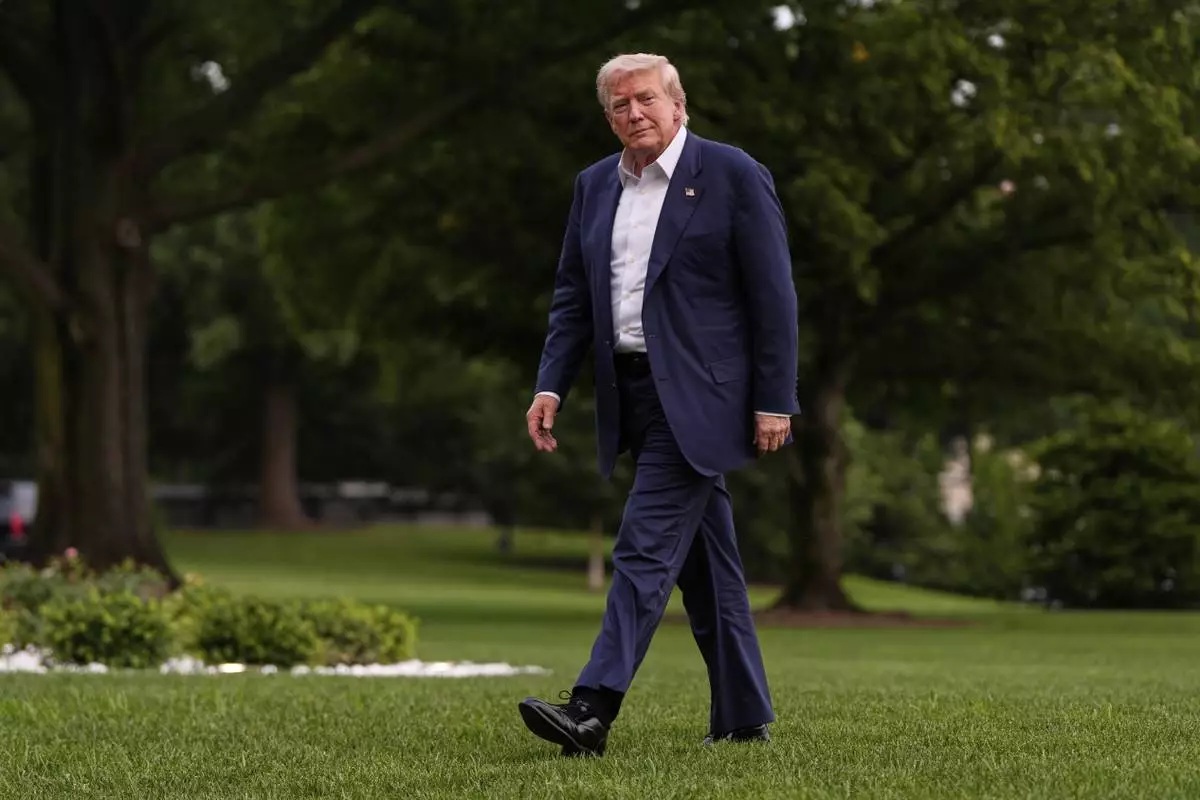
President Donald Trump walks from Marine One after arriving on the South Lawn of the White House, Tuesday, July 29, 2025, in Washington. (AP Photo/Julia Demaree Nikhinson)
President Donald Trump walks from Marine One after arriving on the South Lawn of the White House, Tuesday, July 29, 2025, in Washington. (AP Photo/Julia Demaree Nikhinson)

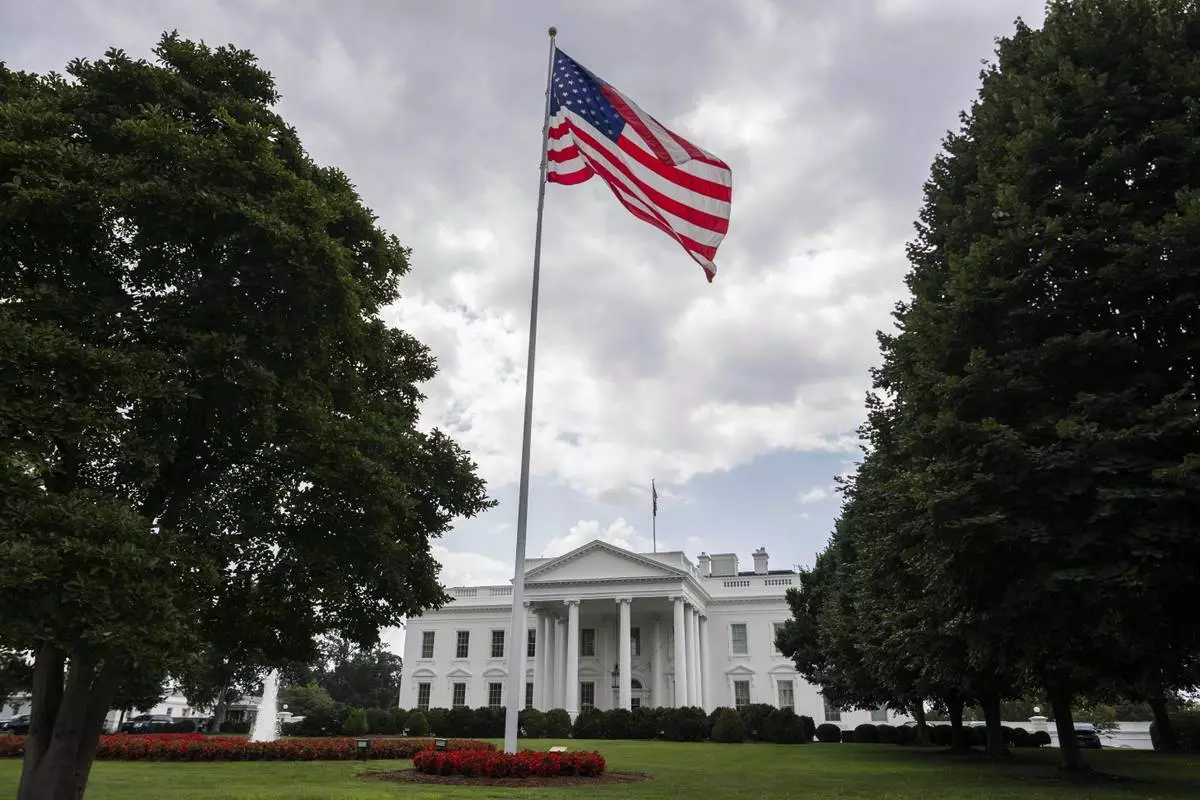
An American flag flies in front of the White House, Wednesday, July 23, 2025, in Washington. (AP Photo/Julia Demaree Nikhinson)


An American flag flies in front of the White House, Wednesday, July 23, 2025, in Washington. (AP Photo/Julia Demaree Nikhinson)
BEIJING (AP) — Breaking with the United States, Canada has agreed to cut its 100% tariff on Chinese electric cars in return for lower tariffs on Canadian farm products, Prime Minister Mark Carney said Friday.

Carney made the announcement after two days of meetings with Chinese leaders. He said there would be an initial cap of 49,000 vehicles on Chinese EV exports to Canada, growing to 70,000 over five years. China will reduce its tariff on canola seeds, a major Canadian export, from about 84% to about 15%, he told reporters.

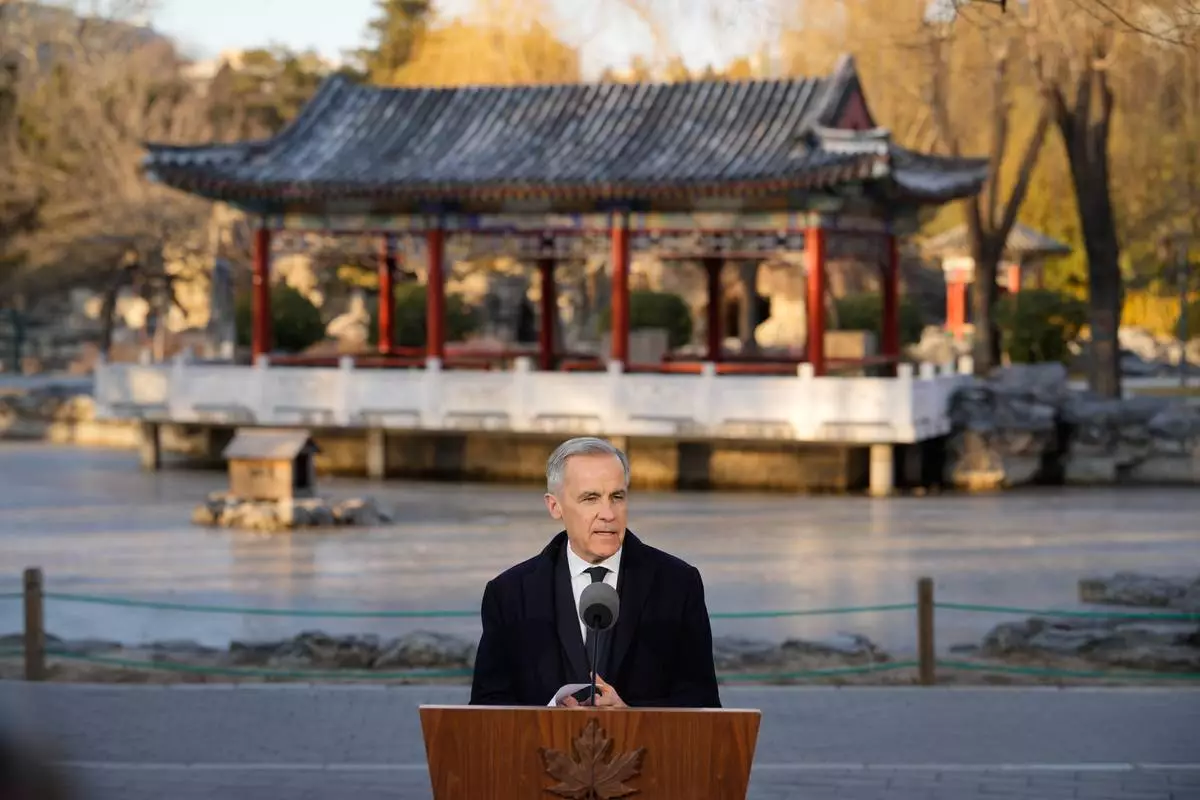
“It has been a historic and productive two days,” Carney said, speaking outside against the backdrop of a traditional pavilion and a frozen pond at a Beijing park. “We have to understand the differences between Canada and other countries, and focus our efforts to work together where we’re aligned.”

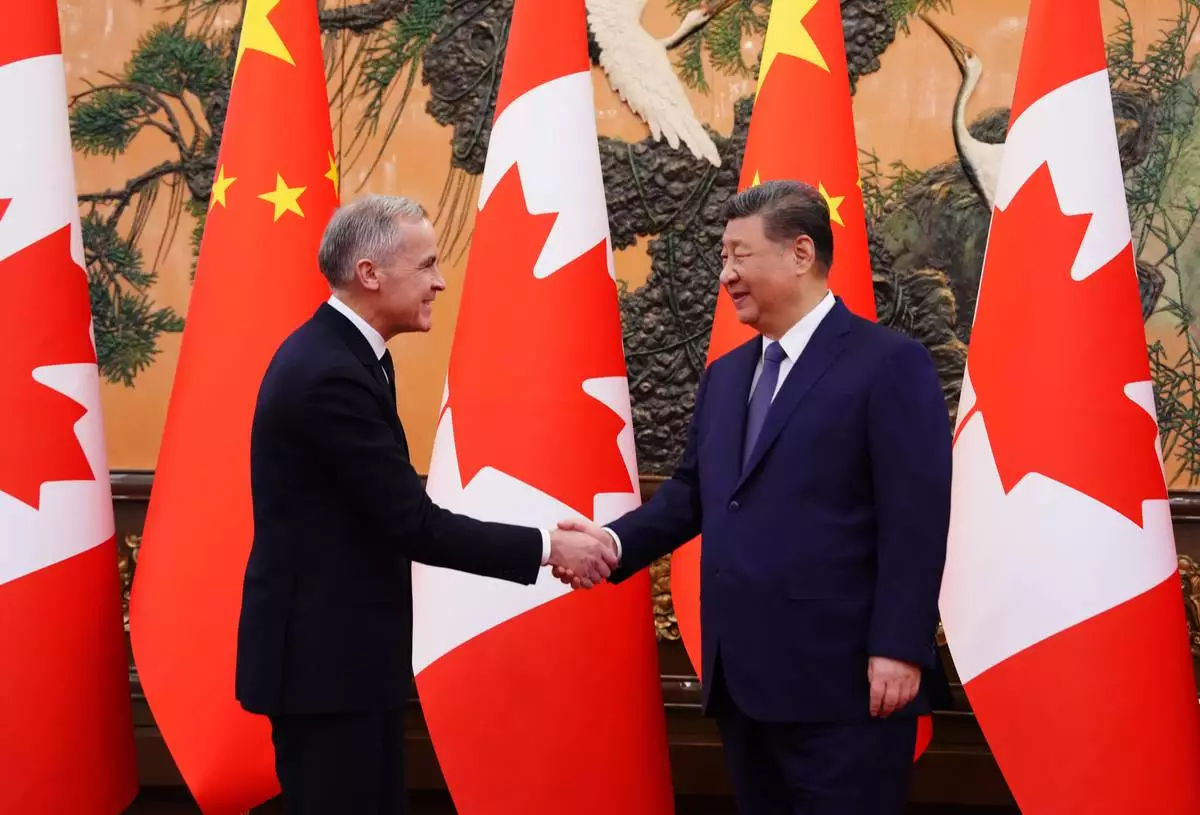
Earlier Friday, he and Chinese leader Xi Jinping pledged to improve relations between their two nations after years of acrimony.

Xi told Carney in a meeting at the Great Hall of the People that he is willing to continue working to improve ties, noting that talks have been underway on restoring and restarting cooperation since the two held an initial meeting in October on the sidelines of a regional economic conference in South Korea.

“It can be said that our meeting last year opened a new chapter in turning China–Canada relations toward improvement,” China's top leader said.

Carney, the first Canadian prime minister to visit China in eight years, said better relations would help improve a global governance system that he described as “under great strain.”

He called for a new relationship “adapted to new global realities” and cooperation in agriculture, energy and finance.

Those new realities reflect in large part the so-called America-first approach of U.S. President Donald Trump. The tariffs he has imposed have hit both the Canadian and Chinese economies. Carney, who has met with several leading Chinese companies in Beijing, said ahead of his trip that his government is focused on building an economy less reliant on the U.S. at what he called “a time of global trade disruption.”

A Canadian business owner in China called Carney's visit game-changing, saying it re-establishes dialogue, respect and a framework between the two nations.

“These three things we didn’t have,” said Jacob Cooke, the CEO of WPIC Marketing + Technologies, which helps exporters navigate the Chinese market. “The parties were not talking for years.”

Canada had followed the U.S. in putting tariffs of 100% on EVs from China and 25% on steel and aluminum under former Prime Minister Justin Trudeau, Carney’s predecessor.

China responded by imposing duties of 100% on Canadian canola oil and meal and 25% on pork and seafood. It added a 75.8% tariff on canola seeds last August. Collectively, the import taxes effectively closed the Chinese market to Canadian canola, an industry group has said. Overall, China's imports from Canada fell 10.4% last year to $41.7 billion, according to Chinese trade data.

China is hoping Trump’s pressure tactics on allies such as Canada will drive them to pursue a foreign policy that is less aligned with the United States. The U.S. president has suggested Canada could become America's 51st state.

Carney departs China on Saturday and visits Qatar on Sunday before attending the annual gathering of the World Economic Forum in Switzerland next week. He will meet business leaders and investors in Qatar to promote trade and investment, his office said.

Associated Press business writer Chan Ho-him in Hong Kong contributed to this report.

Canada's Prime Minister Mark Carney, speaks to the media at Ritan Park in Beijing, China, Friday, Jan. 16, 2026. (AP Photo/Vincent Thian)

Canada's Prime Minister Mark Carney, speaks to the media at Ritan Park in Beijing, China, Friday, Jan. 16, 2026. (AP Photo/Vincent Thian)

Canada's Prime Minister Mark Carney, leaves after speaking to the media at Ritan Park in Beijing, China, Friday, Jan. 16, 2026. (AP Photo/Vincent Thian)

Canada's Prime Minister Mark Carney, leaves after speaking to the media at Ritan Park in Beijing, China, Friday, Jan. 16, 2026. (AP Photo/Vincent Thian)

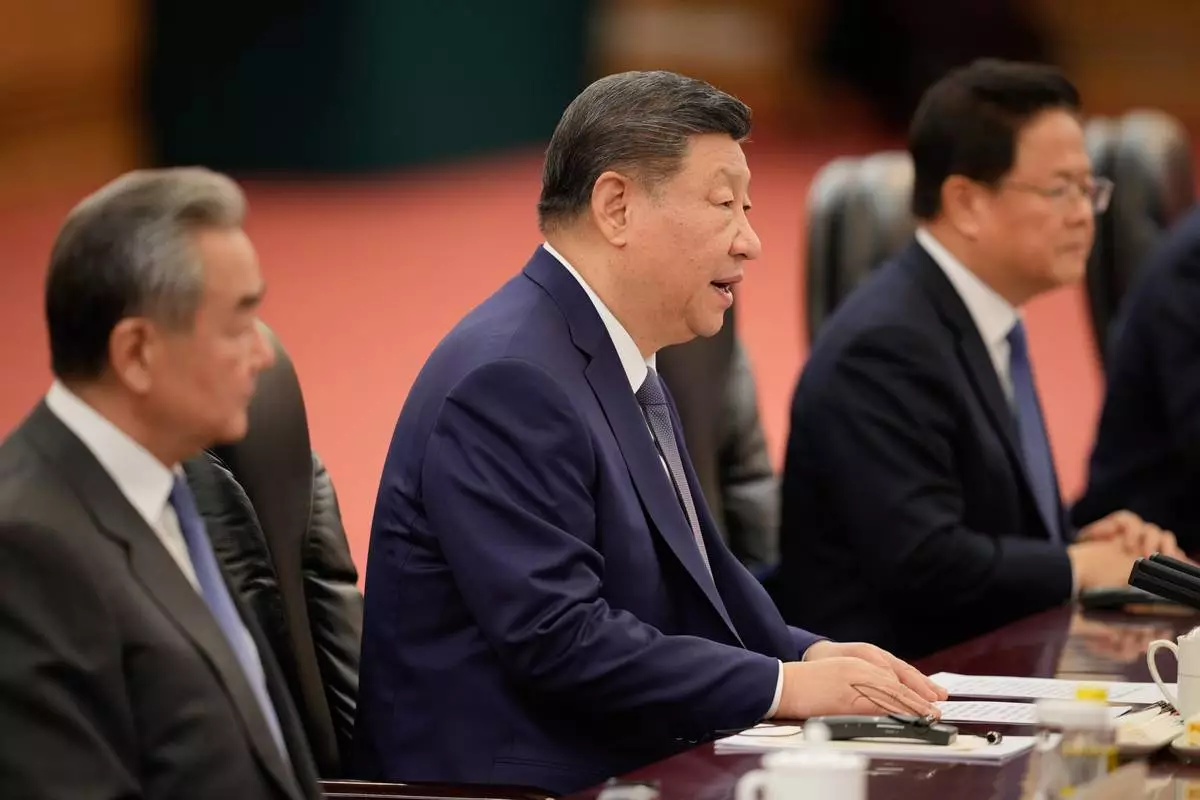
Chinese President Xi Jinping, centre, reacts during a meeting with Canada's Prime Minister Mark Carney (not in the picture), at the Great Hall of the People in Beijing, China, Friday, Jan. 16, 2026. (AP Photo/Vincent Thian, Pool)

Chinese President Xi Jinping, centre, reacts during a meeting with Canada's Prime Minister Mark Carney (not in the picture), at the Great Hall of the People in Beijing, China, Friday, Jan. 16, 2026. (AP Photo/Vincent Thian, Pool)

Canada's Prime Minister Mark Carney, speaks to the media at Ritan Park in Beijing, China, Friday, Jan. 16, 2026. (AP Photo/Vincent Thian)

Canada's Prime Minister Mark Carney, speaks to the media at Ritan Park in Beijing, China, Friday, Jan. 16, 2026. (AP Photo/Vincent Thian)

Canada's Prime Minister Mark Carney, center, arrives to meet with Chinese President Xi Jinping, at the Great Hall of the People in Beijing, China, Friday, Jan. 16, 2026. (AP Photo/Vincent Thian, Pool)

Canada's Prime Minister Mark Carney, center, arrives to meet with Chinese President Xi Jinping, at the Great Hall of the People in Beijing, China, Friday, Jan. 16, 2026. (AP Photo/Vincent Thian, Pool)

Canada's Prime Minister Mark Carney, left, meets with Chinese President Xi Jinping at the Great Hall of the People in Beijing Friday, Jan. 16, 2026. (Sean Kilpatrick/The Canadian Press via AP)

Canada's Prime Minister Mark Carney, left, meets with Chinese President Xi Jinping at the Great Hall of the People in Beijing Friday, Jan. 16, 2026. (Sean Kilpatrick/The Canadian Press via AP)

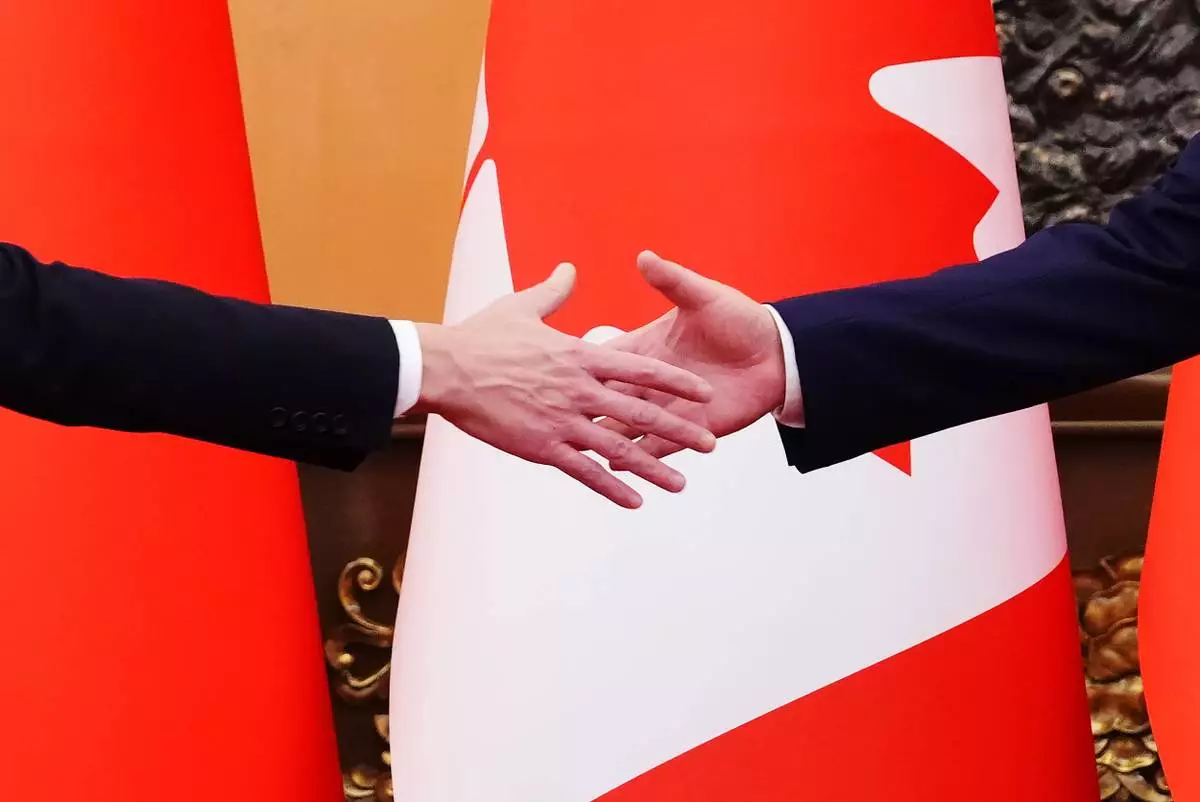
Canada's Prime Minister Mark Carney, left, shakes hands with China's President Xi Jinping at the Great Hall of the People in Beijing Friday, Jan. 16, 2026. (Sean Kilpatrick/The Canadian Press via AP)

Canada's Prime Minister Mark Carney, left, shakes hands with China's President Xi Jinping at the Great Hall of the People in Beijing Friday, Jan. 16, 2026. (Sean Kilpatrick/The Canadian Press via AP)

Recommended Articles