RIO DE JANEIRO (AP) — The U.S. Treasury Department on Wednesday announced sanctions on Brazilian Supreme Court Justice Alexandre de Moraes over alleged suppression of freedom of expression and the ongoing trial of former President Jair Bolsonaro.
De Moraes oversees the criminal case against Bolsonaro, who is accused of masterminding a plot to stay in power despite his 2022 election defeat to current President Luiz Inácio Lula da Silva.
“De Moraes is responsible for an oppressive campaign of censorship, arbitrary detentions that violate human rights, and politicized prosecutions — including against former President Jair Bolsonaro,” U.S. Treasury Secretary Scott Bessent said in a statement.
The department cited the Global Magnitsky Human Rights Accountability Act, which targets perpetrators of human rights abuse and corrupt officials, as its authority to issue the sanctions.
The decision orders the freezing of any assets or property de Moraes may have in the U.S.
Brazil’s Supreme Court and the Presidential Palace did not immediately respond to a request for comment.
Wednesday’s sanctions follow the U.S. State Department's announcement of visa restrictions on Brazilian judicial officials, including de Moraes, on July 18.
They also come after U.S. President Donald Trump announced a 50% tariff on Brazilian imported goods on July 9. In a letter announcing the tariff, Trump explicitly linked the import tax to what he called the “witch hunt” trial of Bolsonaro currently underway in Brazil.
Trump appears to identify with Bolsonaro, who is accused of trying to overturn the results of his 2022 loss to Lula. Similarly, Trump was indicted in 2023 on allegations that he tried to overturn the results of the 2020 U.S. presidential election.
Bolsonaro has been ordered to wear an ankle monitor after being deemed a flight risk.
Bolsonaro's son Eduardo celebrated the U.S. Treasury Department announcement on X, calling it a “historic milestone” and a warning that “abuses of authority now have global consequences.”
Eduardo Bolsonaro relocated to the U.S. in March and is under investigation for allegedly working with U.S. authorities to impose sanctions against Brazilian officials.
Also on Wednesday, Trump signed an executive order to implement the 50% tariff announced earlier this month. The White House said in a statement that the order was a response to “recent policies, practices, and actions” of Brazil that “constitute an unusual and extraordinary threat to the national security, foreign policy, and economy of the United States.”
That was a shift in rationale for the tariff. The legal basis of the threat on July 9 was an earlier executive order premised on trade imbalances being a threat to the U.S. economy. But the U.S. ran a $6.8 billion trade surplus last year with Brazil, according to the U.S. Census Bureau.
In Wednesday's order, Trump said Brazil’s policies and criminal prosecution of former President Jair Bolsonaro constitute an economic emergency under a 1977 law.
After the tariff was announced earlier this month, Lula said that Trump wasn't elected to be “emperor of the world.” He has defended Brazil's sovereignty and the independence of Brazil's judiciary.
Lula called an emergency meeting with some ministers following Wednesday’s events, local newspaper O Globo reported.
The left-wing president had earlier sanctioned a law banning the use of live animals in laboratory testing for personal hygiene products, cosmetics and perfumes, calling Wednesday a “sacred day of sovereignty.”
In a video posted on social media, Lula said he left the event in capital Brasilia in a hurry to defend “the sovereignty of the Brazilian people in light of the measures announced by the President of the United States.”
Originally due to come into effect on Aug 1, Wednesday's order said the tariffs would go into effect seven days after its signing.
Flavia Loss, an international relations professor at Foundation School of Sociology and Politics in Sao Paulo, said the sanctions against Moraes and the tariffs order marked an escalation in the tensions between the U.S. and Brazil.
“We are not talking about a normal commercial dispute between countries, we are talking about using commercial tools to coerce what happens in Brazil,” Loss said.
Human Rights Watch in Brazil said on X the sanctions “are a clear violation of judicial independence, a pillar of democracy.”
Follow AP’s coverage of Latin America and the Caribbean at https://apnews.com/hub/latin-america
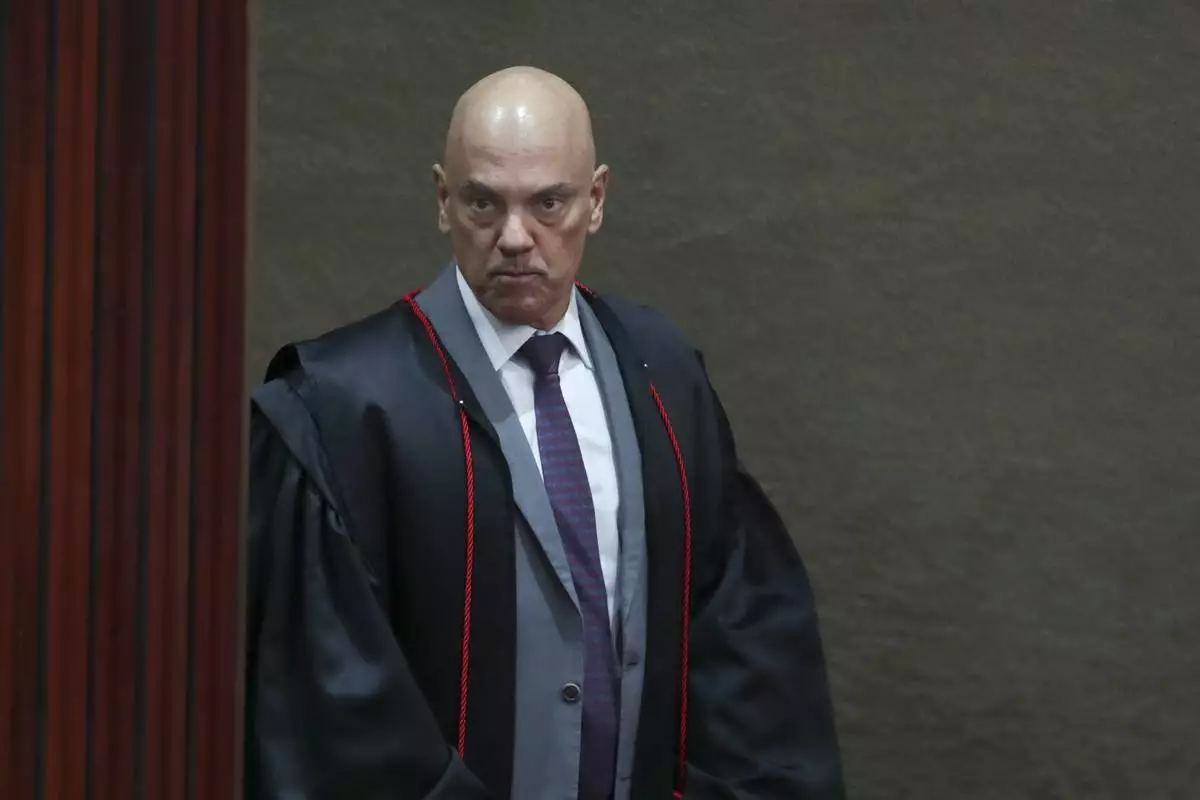
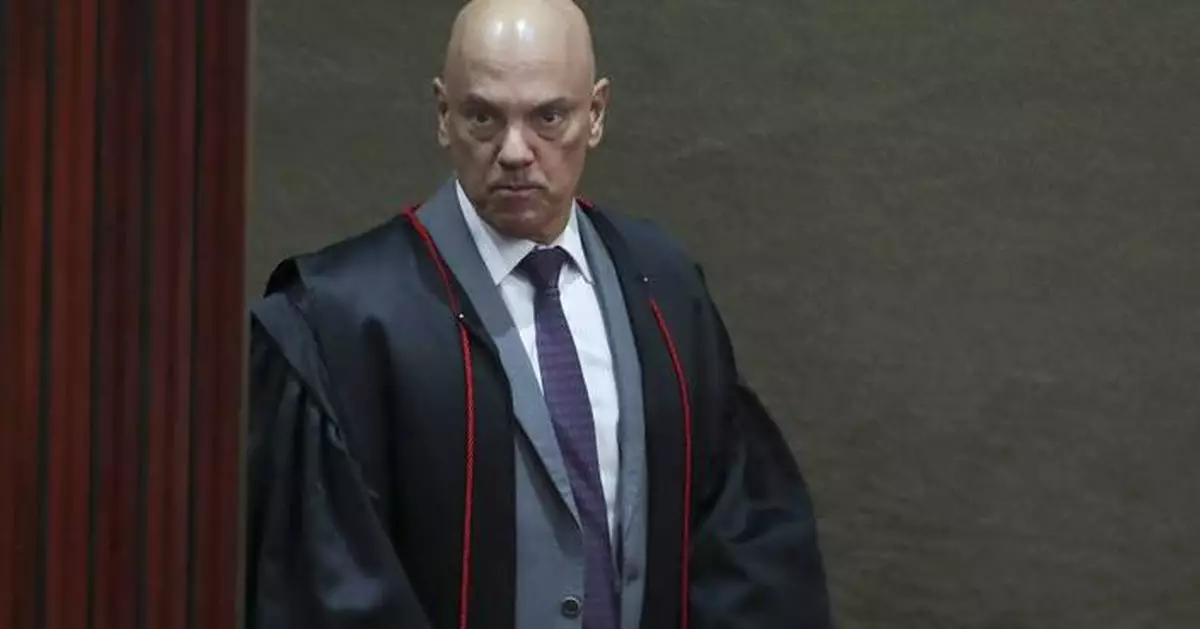
FILE - President of the Supreme Electoral Court, Minister Alexandre de Moraes arrives to preside over the trial of former President Jair Bolsonaro in Brasilia, Brazil, June 29, 2023. (AP Photo/Gustavo Moreno, File)
MINNEAPOLIS (AP) — President Donald Trump on Thursday threatened to invoke an 1807 law and deploy troops to quell persistent protests against the federal officers sent to Minneapolis to enforce his administration's massive immigration crackdown.
The threat comes a day after a man was shot and wounded by an immigration officer who had been attacked with a shovel and broom handle. That shooting further heightened the fear and anger that has radiated across the city since an Immigration and Customs Enforcement agent fatally shot Renee Good in the head.
Trump has repeatedly threatened to invoke the Insurrection Act, a rarely used federal law, to deploy the U.S. military or federalize the National Guard for domestic law enforcement, over the objections of state governors.
“If the corrupt politicians of Minnesota don’t obey the law and stop the professional agitators and insurrectionists from attacking the Patriots of I.C.E., who are only trying to do their job, I will institute the INSURRECTION ACT, which many Presidents have done before me, and quickly put an end to the travesty that is taking place in that once great State,” Trump said in social media post.
Presidents have invoked the law more than two dozen times, most recently in 1992 by President George H.W. Bush to end unrest in Los Angeles. In that instance, local authorities had asked for the assistance.
“I’m making a direct appeal to the President: Let’s turn the temperature down. Stop this campaign of retribution. This is not who we are,” Gov. Tim Walz, a Democrat, said on X.
Minnesota Attorney General Keith Ellison said he would challenge any such action in court. He's already suing to try to stop the surge by the Department of Homeland Security, which says officers have arrested more than 2,500 people since Nov. 29 as part of an immigration operation in the Twin Cities called Metro Surge.
The operation grew when ICE sent 2,000 officers and agents to the area early in January. ICE is a DHS agency.
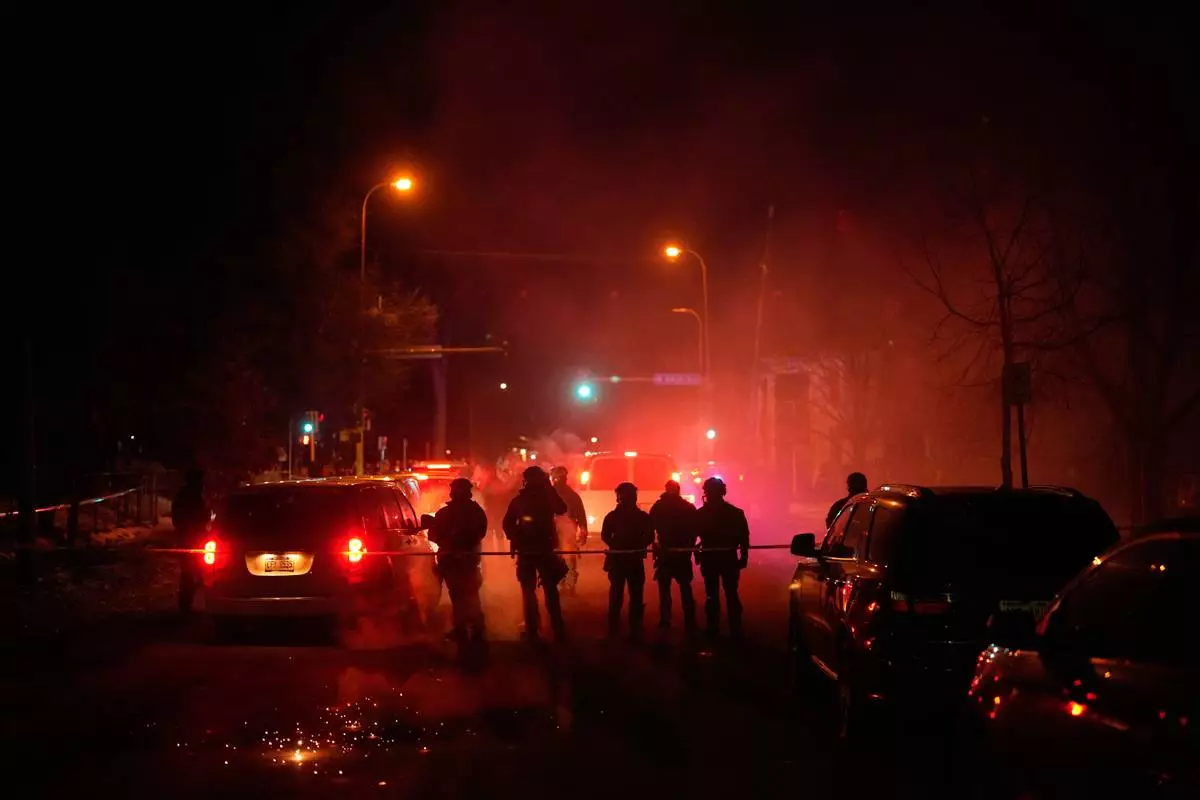
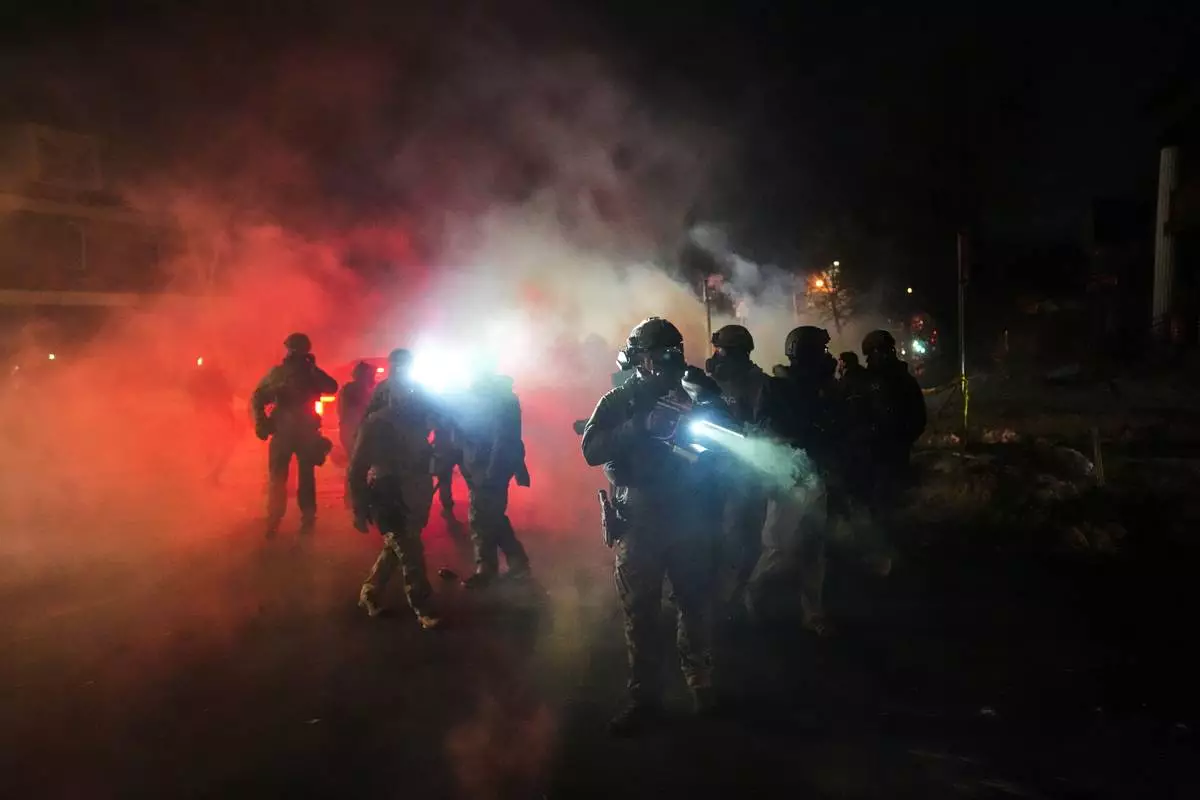
In Minneapolis, smoke filled the streets Wednesday night near the site of the latest shooting as federal officers wearing gas masks and helmets fired tear gas into a small crowd. Protesters responded by throwing rocks and shooting fireworks.
Demonstrations have become common in Minneapolis since Good was fatally shot on Jan. 7. Agents who have yanked people from their cars and homes have been confronted by angry bystanders demanding they leave.
“This is an impossible situation that our city is presently being put in and at the same time we are trying to find a way forward to keep people safe, to protect our neighbors, to maintain order,” Minneapolis Mayor Jacob Frey said.
The American Civil Liberties Union of Minnesota filed a class-action lawsuit on behalf of three people who said they were questioned or detained in recent days. The lawsuit says two are Somali and one is Hispanic; all three are U.S. citizens. The lawsuit seeks an end to what the ACLU describes as a practice of racial profiling and warrantless arrests. The government did not immediately comment.
Homeland Security said in a statement that federal law enforcement officers on Wednesday stopped a driver from Venezuela who is in the U.S. illegally. The person drove off then crashed into a parked car before fleeing on foot, DHS said.
Officers caught up, then two other people arrived and the three started attacking the officer, according to DHS.
“Fearing for his life and safety as he was being ambushed by three individuals, the officer fired a defensive shot to defend his life,” DHS said. The confrontation took place about 4.5 miles (7.2 kilometers) from where Good was killed.
Police chief Brian O’Hara said the man who was shot did not have a life-threatening injury. O’Hara's account of what happened largely echoed that of Homeland Security, which later said the other two men were also in the U.S. illegally from Venezuela.
The FBI said several government vehicles were damaged and property inside was stolen when agents responded to the shooting. Photos show broken windows and insults made with paint. A reward of up to $100,000 is being offered for information. The FBI’s Minneapolis office did not immediately reply to messages seeking more details.
St. Paul Public Schools, with more than 30,000 students, said it would begin offering an online learning option for students who do not feel comfortable coming to school. Schools will be closed next week until Thursday to prepare for those accommodations.
Minneapolis Public Schools, which has a similar enrollment, is also offering temporary remote learning. The University of Minnesota will start a new term next week with different options depending on the class.
Madhani reported from Washington, D.C. Associated Press reporters Sophia Tareen in Chicago; Bill Barrow in Atlanta; Rebecca Santana in Washington; and Ed White in Detroit contributed.
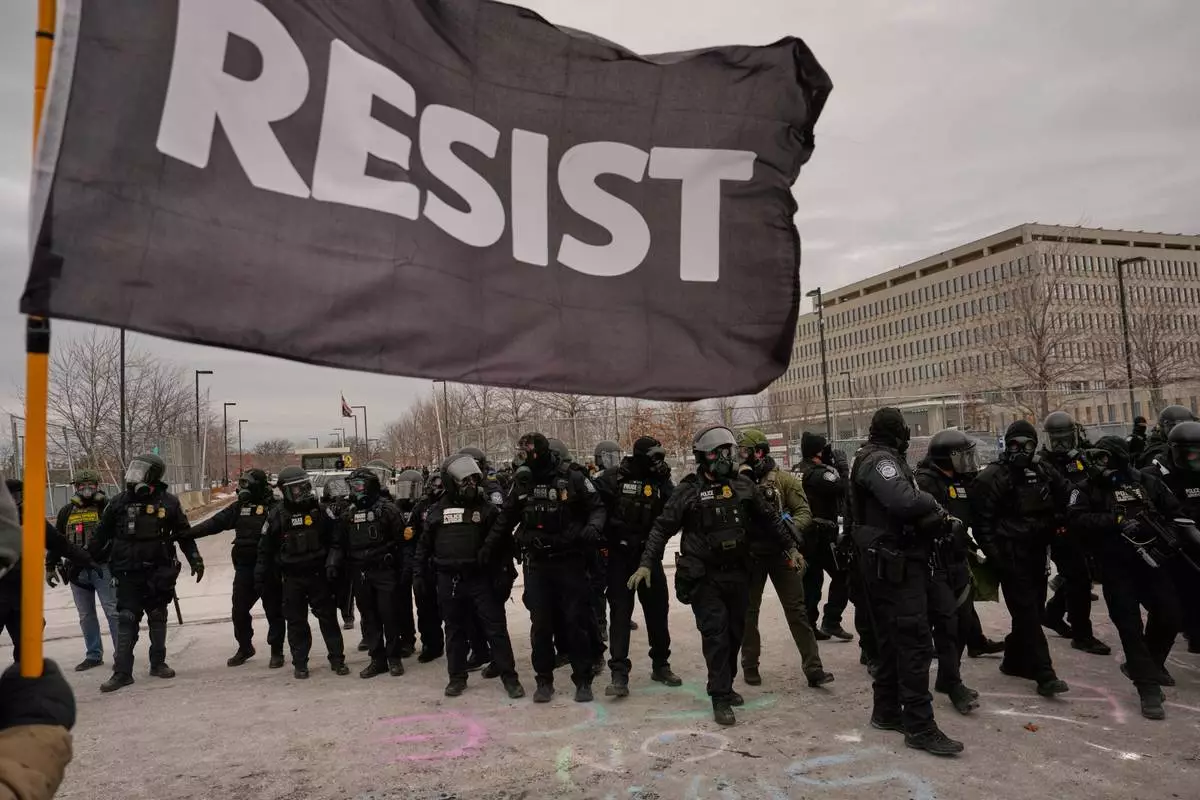
Federal immigration officers confront protesters outside Bishop Henry Whipple Federal Building, Thursday, Jan. 15, 2026, in Minneapolis. (AP Photo/John Locher)
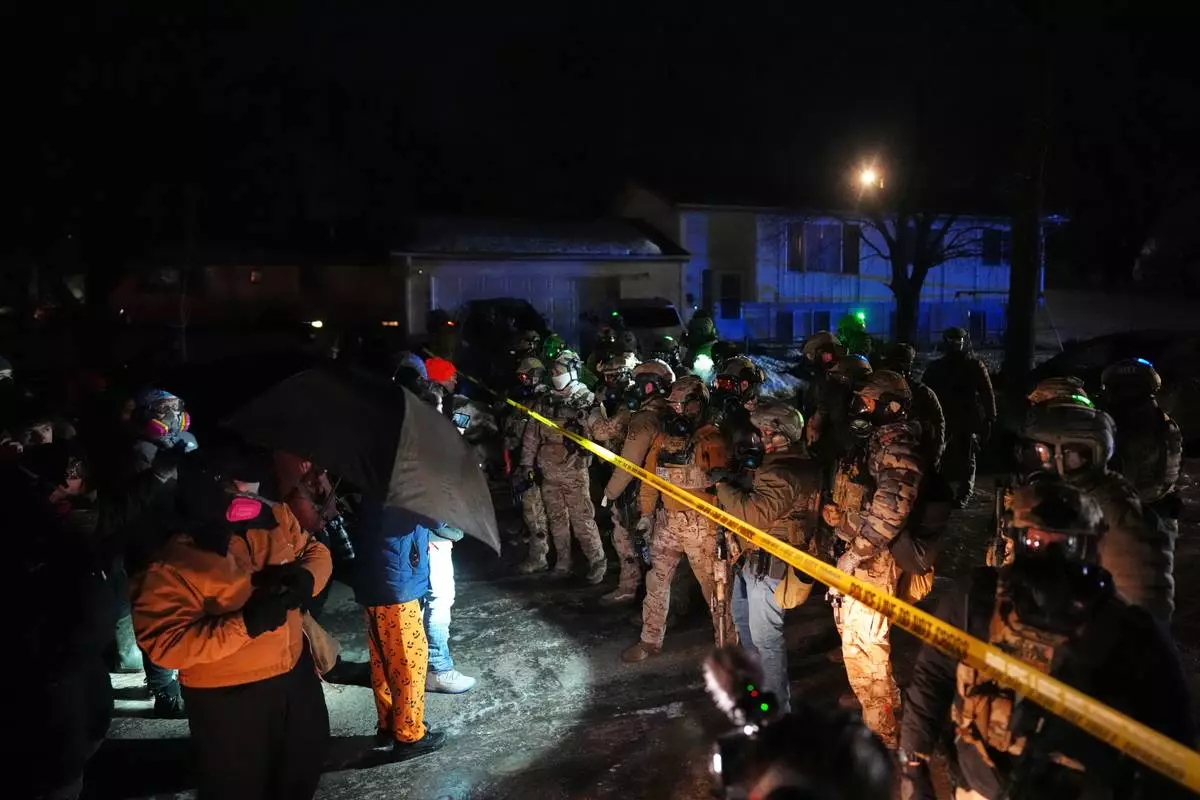
Law enforcement officers at the scene of a reported shooting Wednesday, Jan. 14, 2026, in Minneapolis. (AP Photo/Adam Gray)
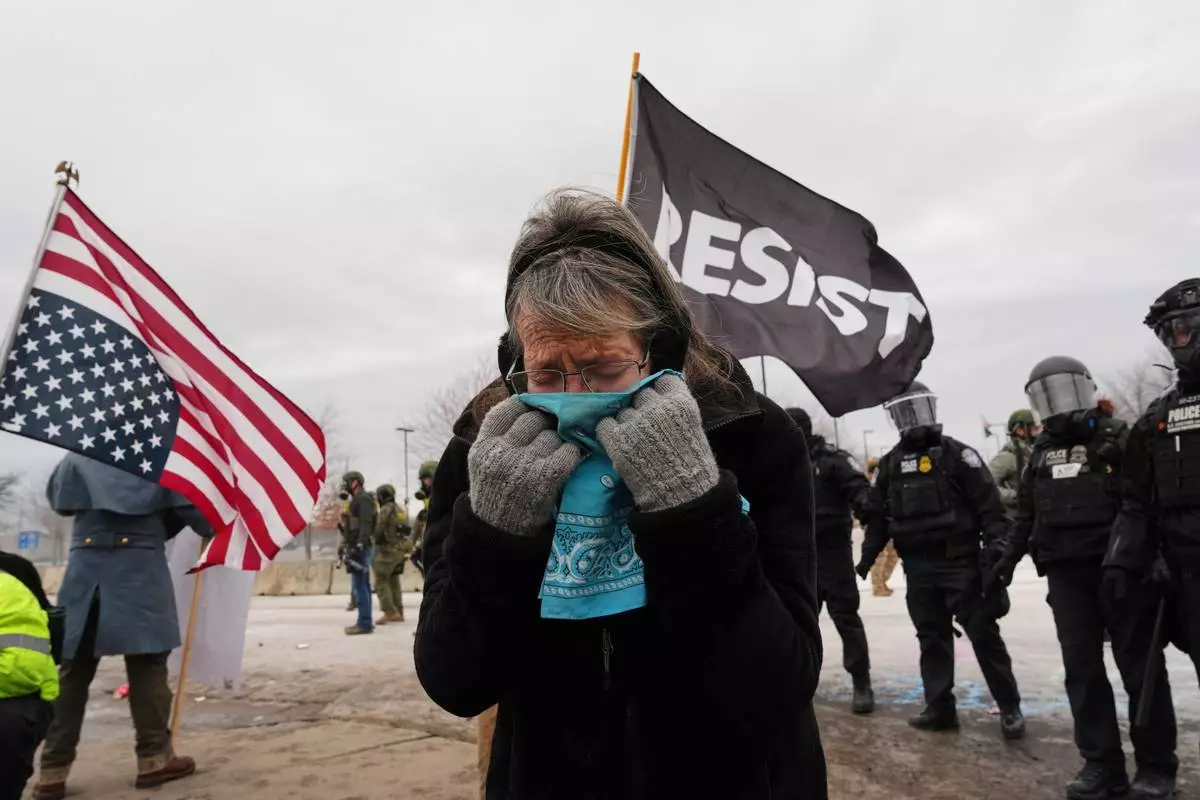
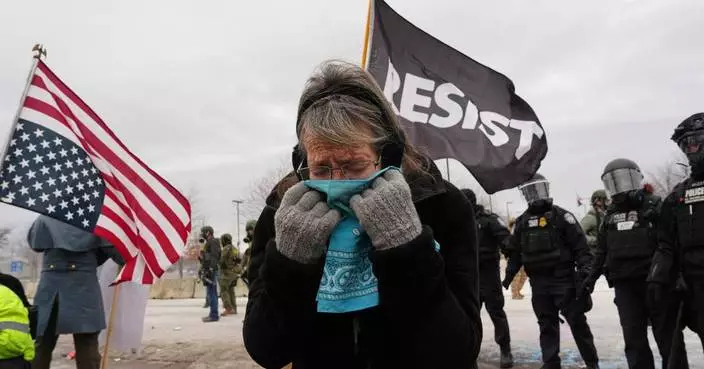
A woman covers her face from tear gas as federal immigration officers confront protesters outside Bishop Henry Whipple Federal Building, Thursday, Jan. 15, 2026, in Minneapolis. (AP Photo/Adam Gray)
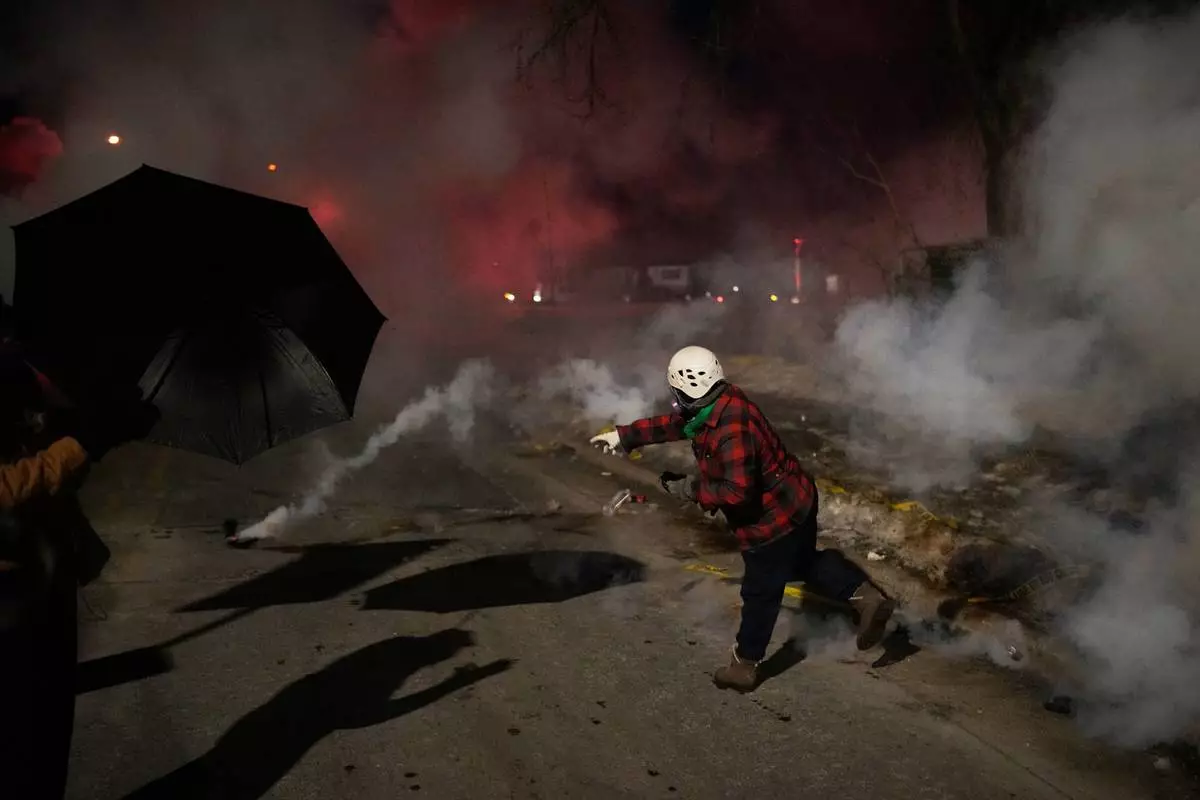
A protester throws back a tear gas canister during a protest after a shooting on Wednesday, Jan. 14, 2026, in Minneapolis. (AP Photo/John Locher)
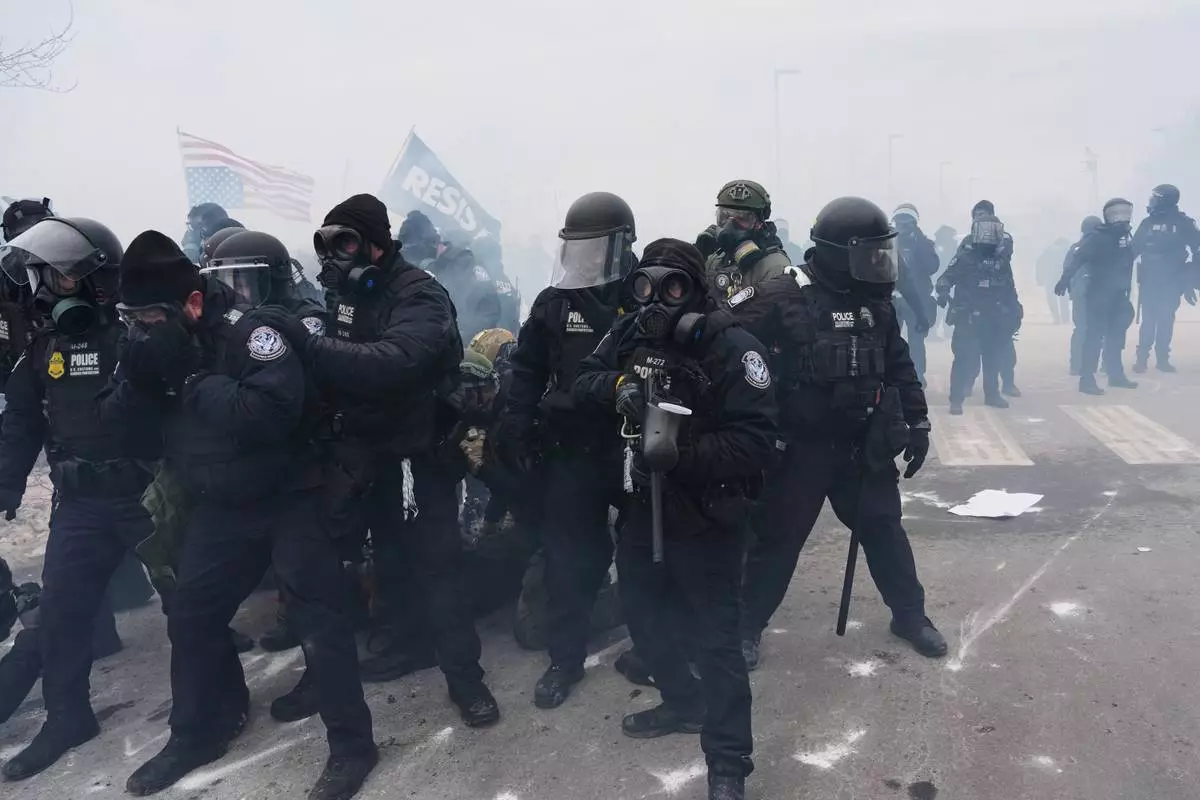
Federal immigration officers confront protesters outside Bishop Henry Whipple Federal Building, Thursday, Jan. 15, 2026, in Minneapolis. (AP Photo/Adam Gray)
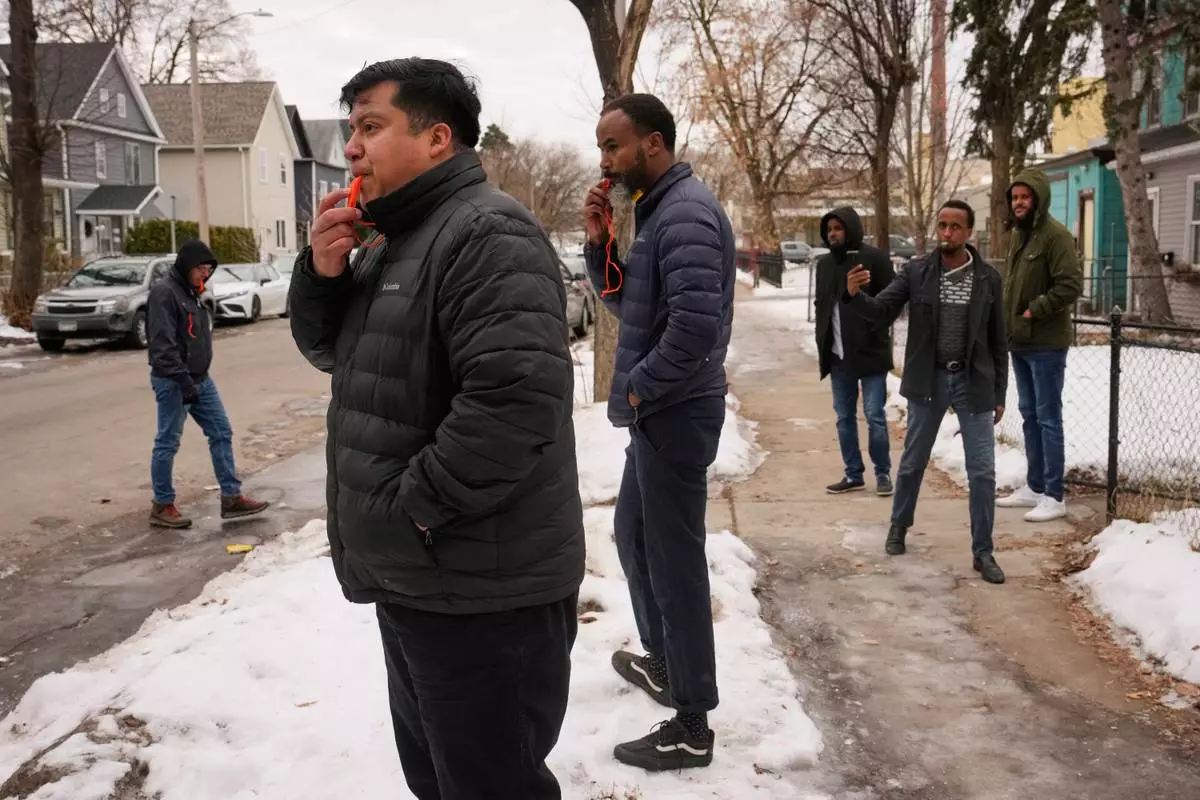
Minneapolis City Council Member Jason Chavez, second from left, blows a whistle with other activists to warn people of federal immigration officers Thursday, Jan. 15, 2026, in Minneapolis. (AP Photo/John Locher)
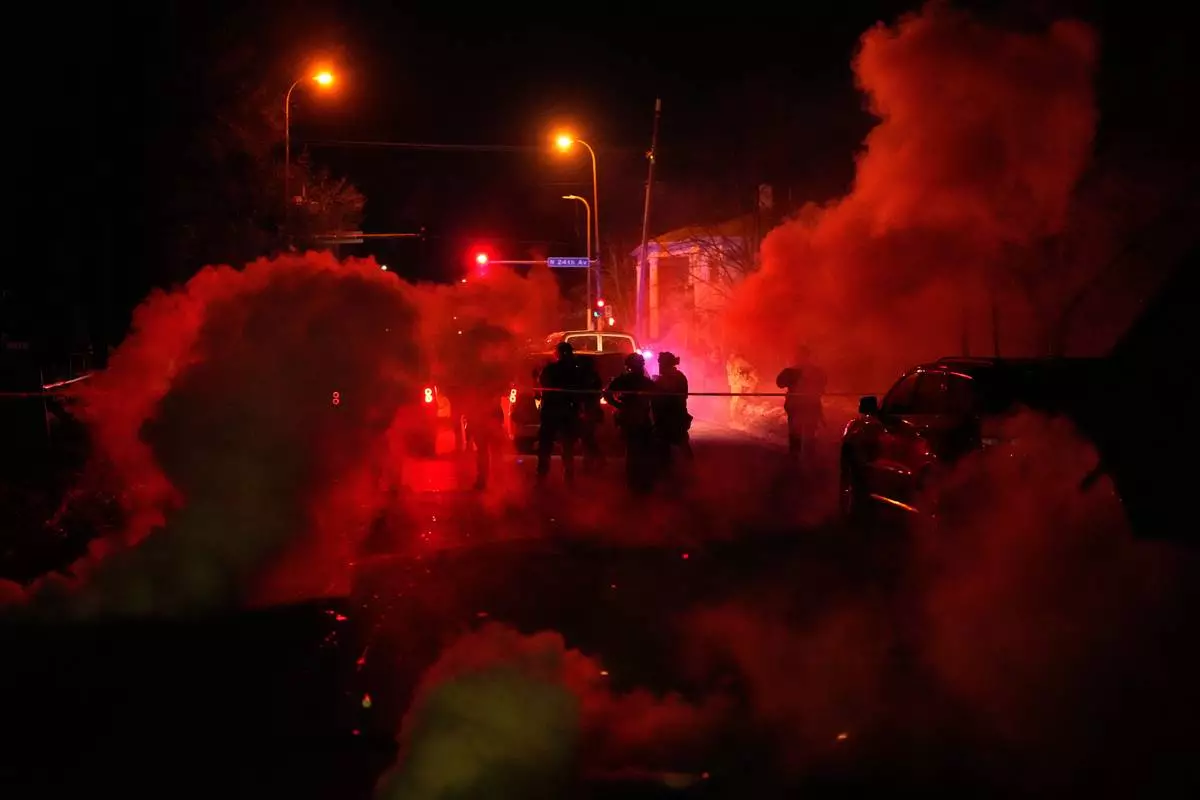
Tear gas surrounds federal law enforcement officers as they leave a scene after a shooting on Wednesday, Jan. 14, 2026, in Minneapolis. (AP Photo/John Locher)
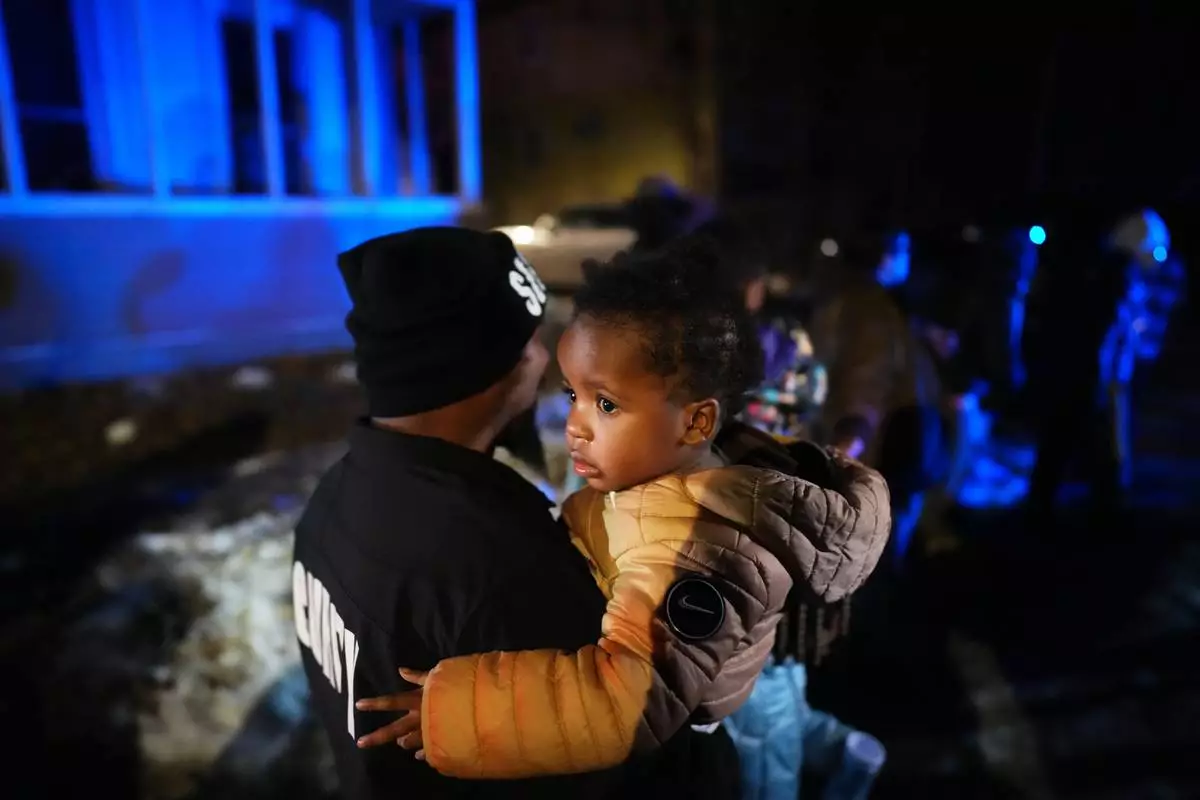
A child and family are escorted away after federal law enforcement deployed tear gas in a neighborhood during protests on Wednesday, Jan. 14, 2026, in Minneapolis. (AP Photo/Adam Gray)
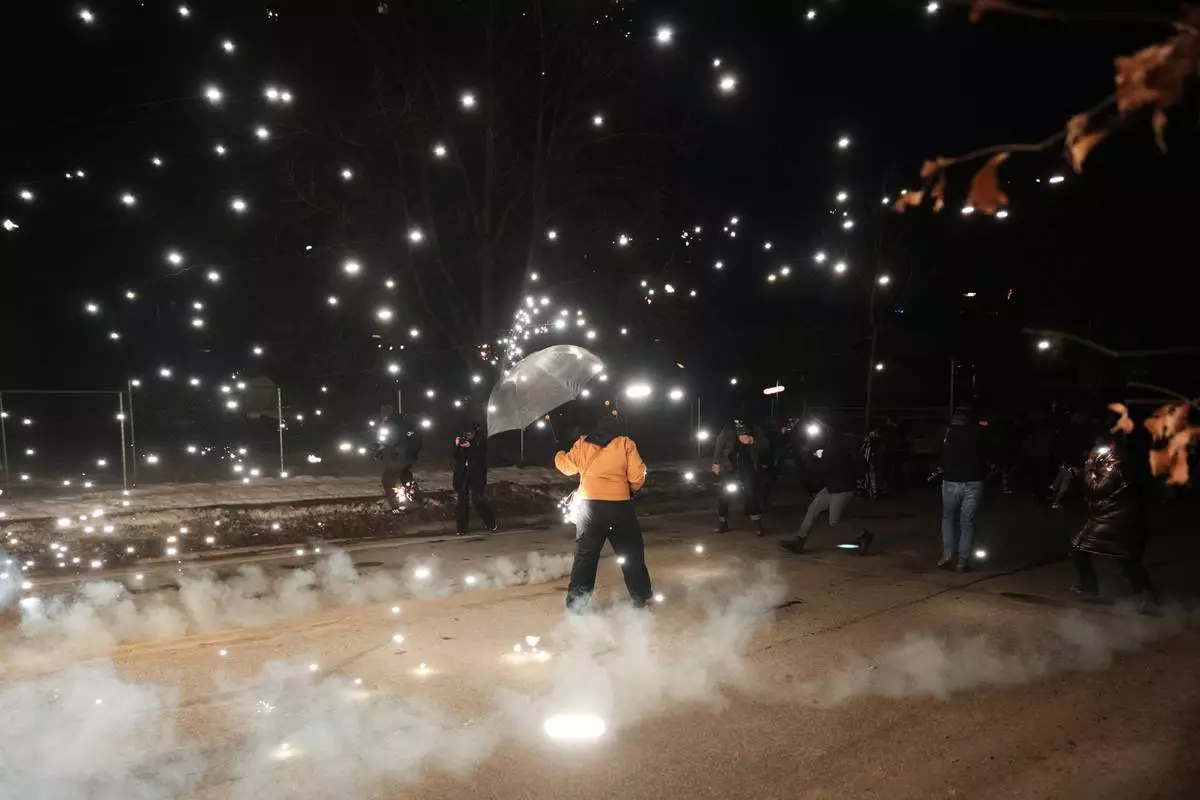
A protester holds an umbrella as sparks fly from a flash bang deployed by law enforcement on Wednesday, Jan. 14, 2026, in Minneapolis. (AP Photo/Adam Gray)
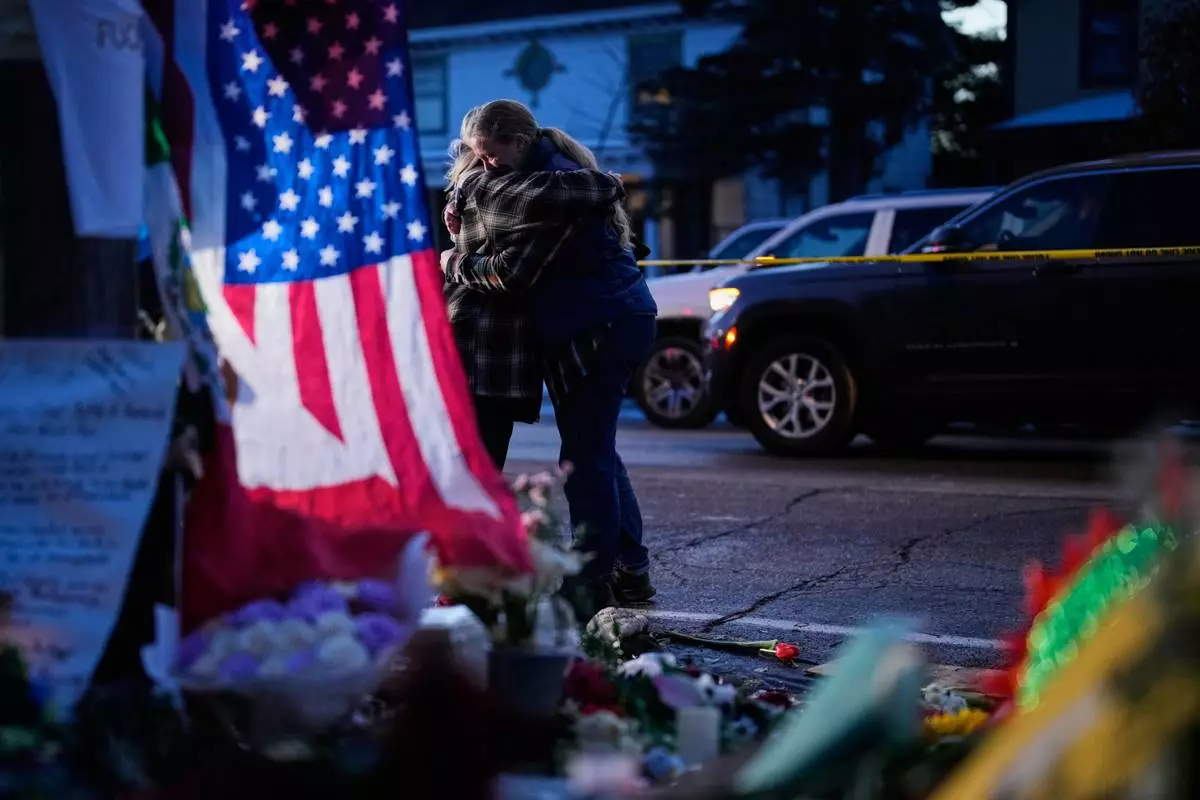
Monica Travis shares an embrace while visiting a makeshift memorial for Renee Good, who was fatally shot by an ICE officer last week, Monday, Jan. 12, 2026, in Minneapolis. (AP Photo/John Locher)
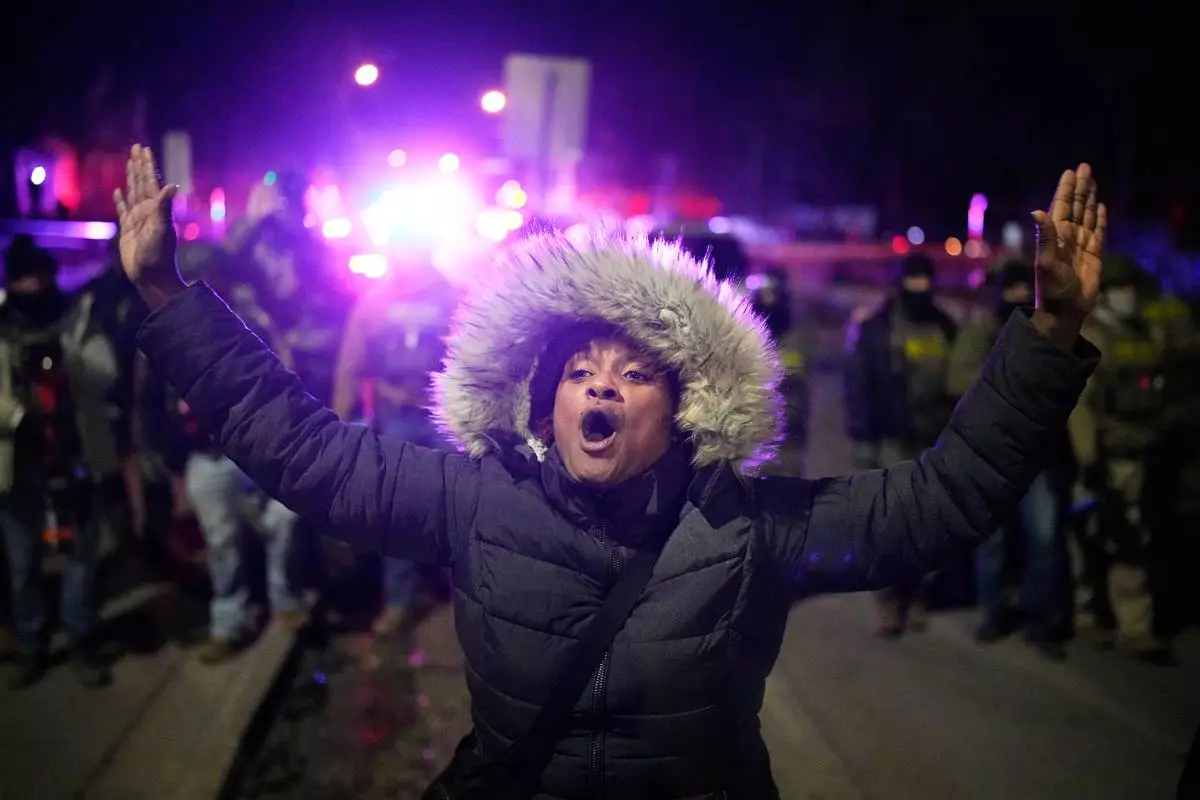
A protester yells in front of law enforcement after a shooting on Wednesday, Jan. 14, 2026, in Minneapolis. (AP Photo/John Locher)
Tear gas surrounds federal law enforcement officers as they leave a scene after a shooting on Wednesday, Jan. 14, 2026, in Minneapolis. (AP Photo/John Locher)
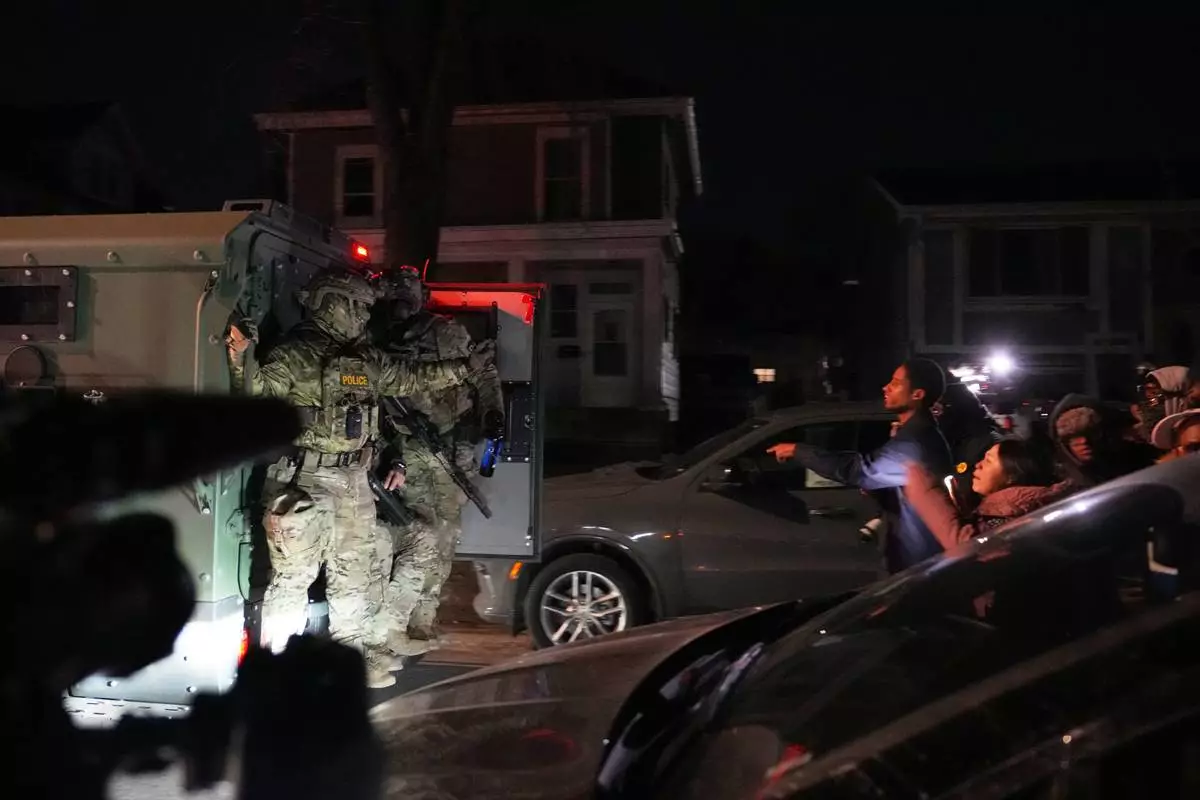
Protesters shout at law enforcement officers after a shooting on Wednesday, Jan. 14, 2026, in Minneapolis. (AP Photo/Abbie Parr)
Law enforcement officers stand amid tear gas at the scene of a reported shooting Wednesday, Jan. 14, 2026, in Minneapolis. (AP Photo/Adam Gray)