Skip to Content Facebook Feature Image

Emotional journey for Atlanta's homeless as city races to house 400 people before the World Cup

News

Emotional journey for Atlanta's homeless as city races to house 400 people before the World Cup
News

News

Emotional journey for Atlanta's homeless as city races to house 400 people before the World Cup

2025-07-31 06:58 Last Updated At:07:11

ATLANTA (AP) — Allen Hall called it a “very emotional experience” as he boarded a bus with more than 20 other former residents of an Atlanta homeless encampment where a close friend had been fatally injured earlier this year by a bulldozer that struck his tent.

Although the city and its partners secured housing by mid-July for everyone they thought lived in the downtown encampment along Old Wheat Street, Hall and seven others moved temporarily into a hotel funded by advocates.

“It was like something was changing for us, for real,” Hall said, recalling the day this summer when friends and acquaintances moved into apartments after spending years sleeping on sidewalks.

Atlanta and the agencies that provide services for the city's surging homeless population have been mobilizing resources for an ambitious plan to “eliminate” homelessness before visitors arrive for eight World Cup games next summer. By the end of the year, they're aiming to house some 400 people living on downtown streets.

There are challenges, though, including long waitlists for city-funded supportive living spaces that often require documentation unhoused people like Hall lack. Many have built communities downtown where social services are accessible, and it can be easy to miscount the number of people living in encampments.

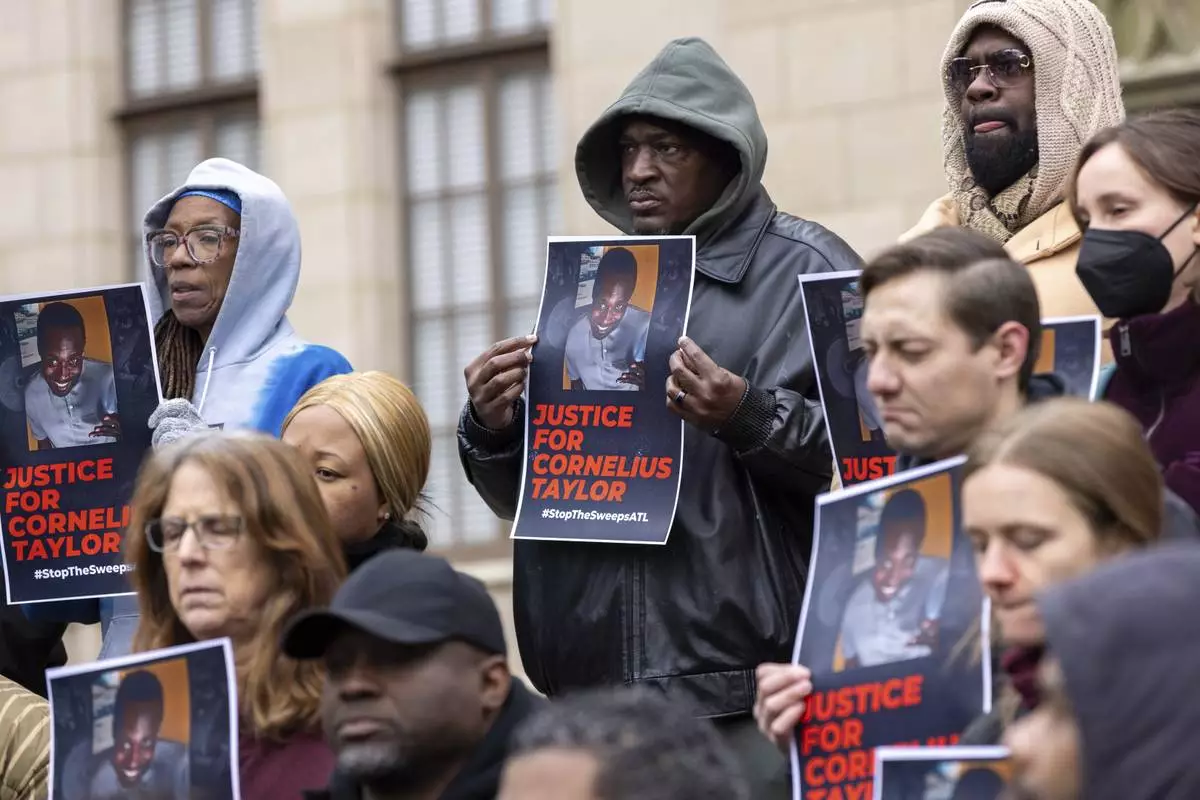
Tensions skyrocketed after Cornelius Taylor’s death in January as the city attempted to clear the Old Wheat Street encampment ahead of the celebration of the Martin Luther King Jr. holiday at nearby Ebenezer Baptist Church, where King had preached. Amid the uproar, the city temporarily suspended clearing the Old Wheat Street encampment and others, before resuming the actions this month.

Some, including Hall — who has spent more than three decades living on streets — were eventually offered shelter spaces and the support of case workers in finding housing, but he turned the shelter down. Many say they’d rather live on the streets than in shelters with strict rules known for poor or unsafe conditions.

The city originally offered housing to 14 people case workers counted at the encampment but agreed to help others after residents and advocates said there were at least twice as many living there. Hall said he had been living at the encampment residents called “Backstreet” for five years but didn’t make the list.

“Whether or not these were residents at one time, we rallied the requisite amount of housing that we could for the individuals that were known to us,” said Cathryn Vassell, CEO of Partners for HOME, the organization that leads Atlanta's homelessness services. “The additional names were brought at the last minute and we’re trying to rally like we do for everybody in our system an appropriate resource for them.”

Case workers came up with the list of 14 by going to the encampment early in the morning and at night for several months to count and build relationships with those living there, according to city partners.

Seven additional people have been housed, said Vassell, and most of those housed are at a supportive housing complex called Welcome House.

A city spokesperson said the eight individuals advocates with the Justice for Cornelius Taylor Coalition were paying to house turned down offers to live in shelters. Most, including Hall, didn’t have adequate identifying documents for Welcome House, Vassell said, but agencies are trying to find them options.

Advocates want officials to act faster and say those who got housing aren't receiving enough resources.

“They say they’re gonna do good things, but we can’t take care of these eight people?” said Tim Franzen, a member of the Justice for Cornelius Taylor Coalition who has long criticized the city’s policies on homelessness. “There’s been months to prepare for this. There’s not a real plan.”

Shun Palmour moved into the encampment with his family a few months ago after losing his smoke shop job. The city placed him, his girlfriend, two kids and his girlfriend's mother at a Motel 6.

“No one comes out and checks on us,” Palmour said. “Nobody comes out to make sure we’re eating.”

Management tried to kick them out of the motel three times, and other times they got locked out of their room, Palmour said last week.

He said they’ve been assigned a case manager from a local nonprofit but the uncertainty makes him nervous.

“We’re very appreciative of what’s taking place but when they stop and put us out, are we gonna end back up homeless or back on the street after this or what?” Palmour said. “Nobody’s letting us know what’s the next step.”

A spokesperson for the city said they are providing dinner and working to get them into housing.

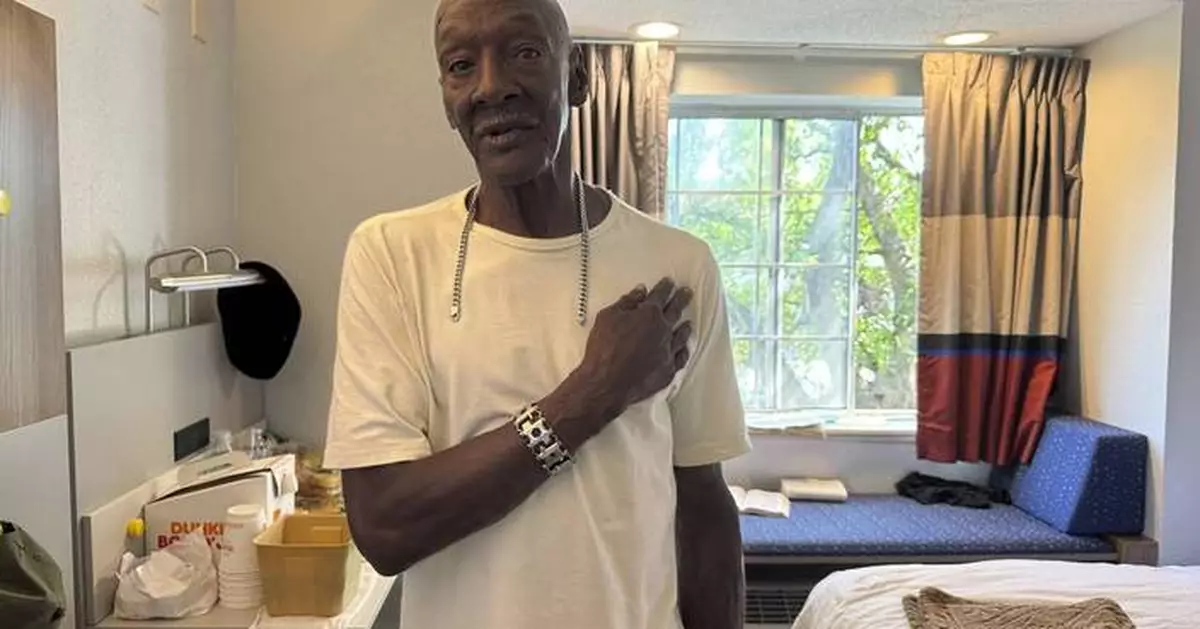
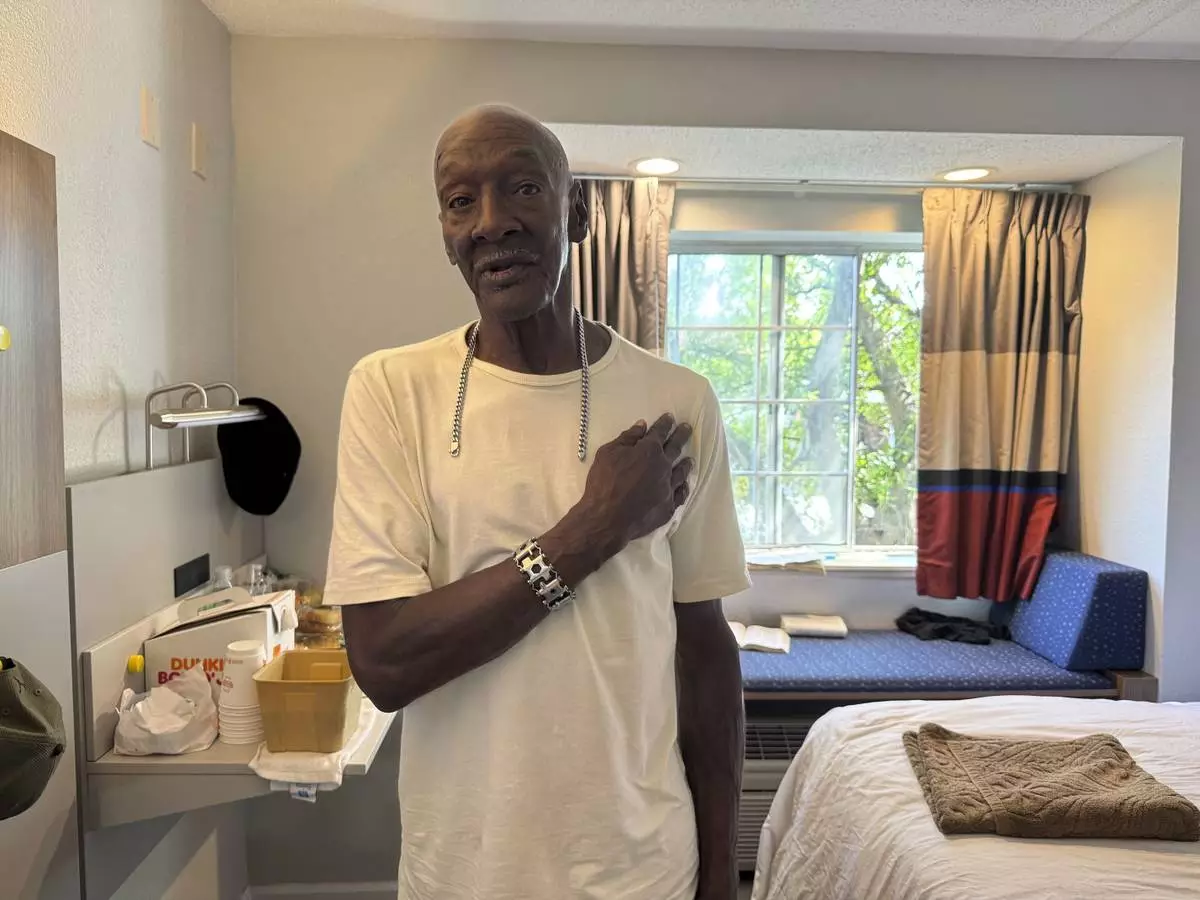
Hall has since moved into another temporary unit. He still wears a bracelet gifted to him by Taylor before his death. While at the hotel, he hardly left and relished feeling “cozy” in his own space with books thrown around and news blasting from the TV.

“It’s the normal things that people get to do,” Hall said. “Take a cup of coffee, just simple things that people take for granted every day.”

Kramon reported from Atlanta. She is a corps member for The Associated Press/Report for America Statehouse News Initiative. Report for America is a nonprofit national service program that places journalists in local newsrooms to report on undercovered issues.
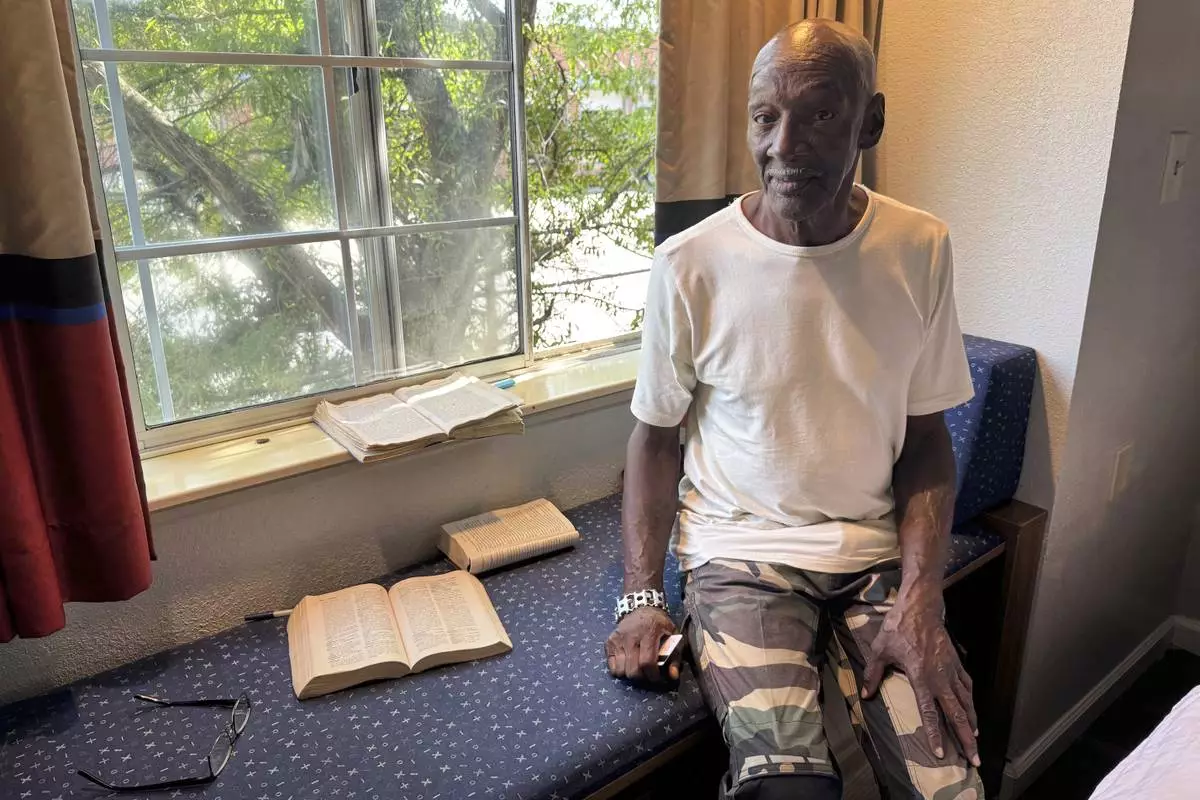
Allen Hall, 71, poses for a photo in his room at a hotel in Atlanta, Wednesday, July 23, 2025, wearing a bracelet given to him by Cornelius Taylor, who died after he was crushed by a bulldozer at a homeless encampment in January. (AP Photo/Charlotte Kramon)
Allen Hall, 71, poses for a photo in his room at a hotel in Atlanta, Wednesday, July 23, 2025, wearing a bracelet given to him by Cornelius Taylor, who died after he was crushed by a bulldozer at a homeless encampment in January. (AP Photo/Charlotte Kramon)

FILE - Family members and activists protest the death of Cornelius Taylor, an unhoused man killed when the city cleared an encampment last week, in front of City Hall in Atlanta, Jan. 23, 2025. (Arvin Temkar/Atlanta Journal-Constitution via AP, File)
FILE - Family members and activists protest the death of Cornelius Taylor, an unhoused man killed when the city cleared an encampment last week, in front of City Hall in Atlanta, Jan. 23, 2025. (Arvin Temkar/Atlanta Journal-Constitution via AP, File)

Allen Hall, 71, poses for a photo in his room at a hotel in Atlanta, Wednesday, July 23, 2025, with a bracelet and chain given to him by Cornelius Taylor, who died after he was crushed by a bulldozer at a homeless encampment in January. (AP Photo/Charlotte Kramon)

Allen Hall, 71, poses for a photo in his room at a hotel in Atlanta, Wednesday, July 23, 2025, with a bracelet and chain given to him by Cornelius Taylor, who died after he was crushed by a bulldozer at a homeless encampment in January. (AP Photo/Charlotte Kramon)
SEOUL, South Korea (AP) — A South Korean court sentenced former President Yoon Suk Yeol to five years in prison Friday in the first verdict from eight criminal trials over the martial law debacle that forced him out of office and other allegations.

Yoon was impeached, arrested and dismissed as president after his short-lived imposition of martial law in December 2024 triggered huge public protests calling for his ouster.

The most significant criminal charge against him alleges that his martial law enforcement amounted to a rebellion, and the independent counsel has requested the death sentence in the case that is to be decided in a ruling next month.

Yoon has maintained he didn’t intend to place the country under military rule for an extended period, saying his decree was only meant to inform the people about the danger of the liberal-controlled parliament obstructing his agenda. But investigators have viewed Yoon’s decree as an attempt to bolster and prolong his rule, charging him with rebellion, abuse of power and other criminal offenses.

In Friday’s case, the Seoul Central District Court sentenced Yoon for defying attempts to detain him, fabricating the martial law proclamation, and sidestepping a legally mandated full Cabinet meeting and thus depriving some Cabinet members who were not convened of their due rights to deliberate on his decree.

Judge Baek Dae-hyun said in the televised ruling that imposing “a grave punishment” was necessary because Yoon hasn’t shown remorse and has only repeated “hard-to-comprehend excuses.” The judge also restoring legal systems damaged by Yoon’s action was necessary.

Yoon’s defense team said they will appeal the ruling, which they believe was “politicized” and reflected “the unliberal arguments by the independent counsel.” Yoon’s defense team argued the ruling “oversimplified the boundary between the exercise of the president’s constitutional powers and criminal liability.”

Prison sentences in the multiple, smaller trials Yoon faces would matter if he is spared the death penalty or life imprisonment at the rebellion trial.

Park SungBae, a lawyer who specializes in criminal law, said there is little chance the court would decide Yoon should face the death penalty in the rebellion case. He said the court will likely issue a life sentence or a sentence of 30 years or more in prison.

South Korea has maintained a de facto moratorium on executions since 1997 and courts rarely hand down death sentences. Park said the court would take into account that Yoon’s decree didn’t cause casualties and didn’t last long, although Yoon hasn’t shown genuine remorse for his action.

South Korea has a history of pardoning former presidents who were jailed over diverse crimes in the name of promoting national unity. Those pardoned include strongman Chun Doo-hwan, who received the death penalty at a district court over his 1979 coup, the bloody 1980 crackdowns of pro-democracy protests that killed about 200 people, and other crimes.

Some observers say Yoon will likely retain a defiant attitude in the ongoing trials to maintain his support base in the belief that he cannot avoid a lengthy sentence but could be pardoned in the future.

On the night of Dec. 3, 2024, Yoon abruptly declared martial law in a televised speech, saying he would eliminate “anti-state forces” and protect “the constitutional democratic order.” Yoon sent troops and police officers to encircle the National Assembly, but many apparently didn’t aggressively cordon off the area, allowing enough lawmakers to get into an assembly hall to vote down Yoon’s decree.

No major violence occurred, but Yoon's stunt caused the biggest political crisis in South Korea and rattled its diplomacy and financial markets. For many, his decree, the first of its kind in more than four decades in South Korea, brought back harrowing memories of past dictatorships in the 1970s and 1980s, when military-backed leaders used martial law and emergency measures to deploy soldiers and tanks on the streets to suppress demonstrations.

After Yoon's ouster, his liberal rival Lee Jae Myung became president via a snap election last June. After taking office, Lee appointed three independent counsels to look into allegations involving Yoon, his wife and associates.

Yoon's other trials deal with charges like ordering drone flights over North Korea to deliberately inflame animosities to look for a pretext to declare martial law. Other charges accuse Yoon of manipulating the investigation into a marine’s drowning in 2023 and receiving free opinion surveys from an election broker in return for a political favor.

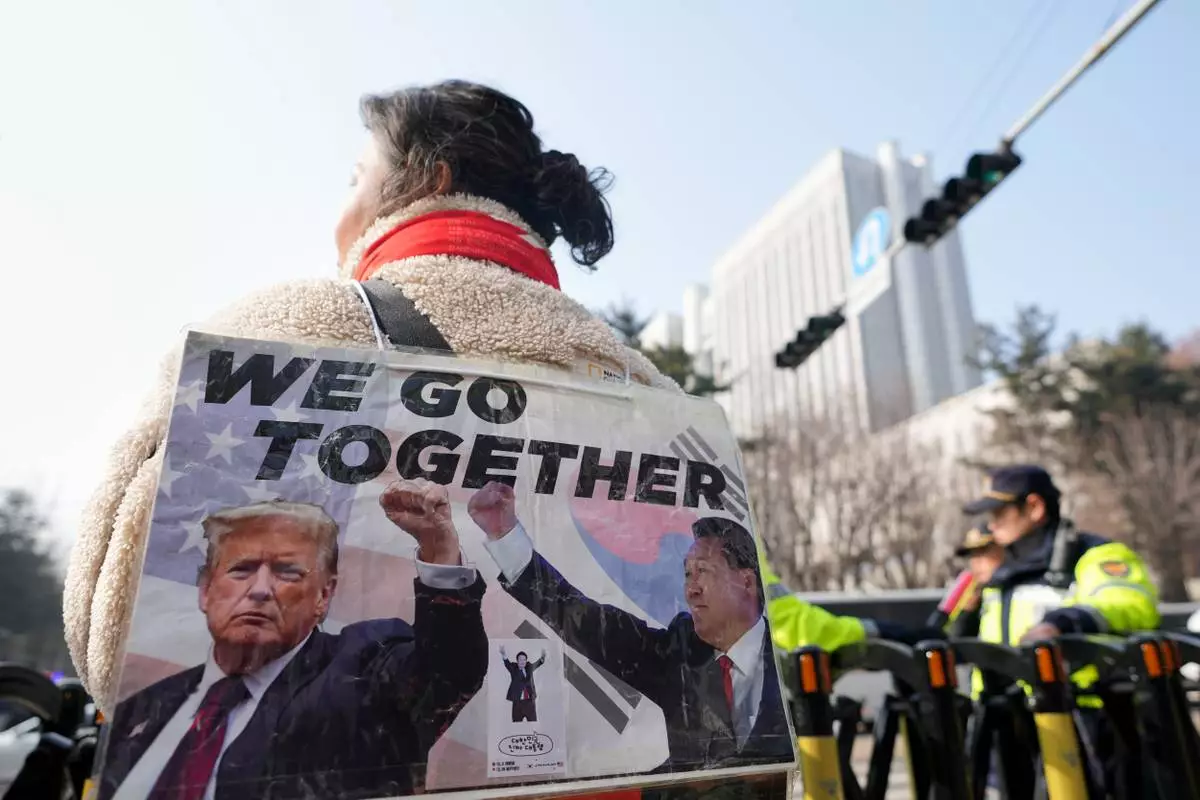
A supporter of former South Korean President Yoon Suk Yeol shouts slogans outside Seoul Central District Court, in Seoul, South Korea, Friday, Jan. 16, 2026. (AP Photo/Lee Jin-man)

A supporter of former South Korean President Yoon Suk Yeol shouts slogans outside Seoul Central District Court, in Seoul, South Korea, Friday, Jan. 16, 2026. (AP Photo/Lee Jin-man)

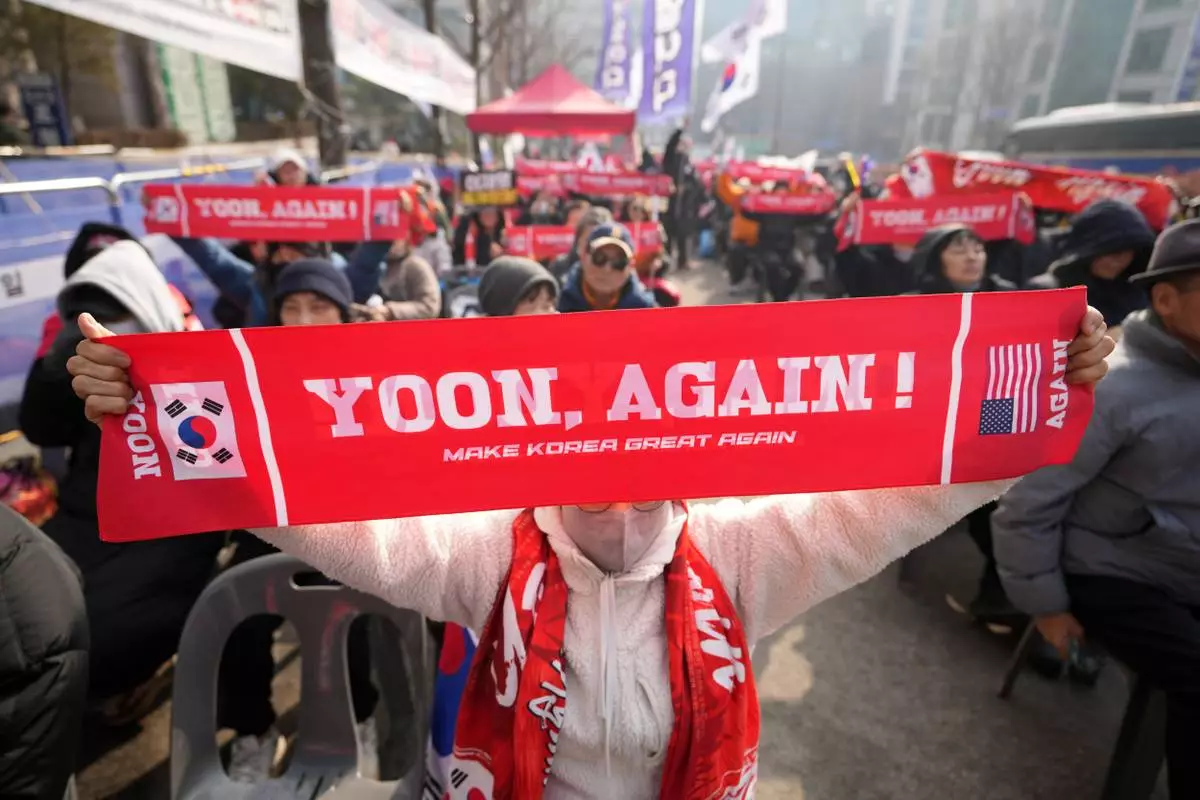
Supporters of former South Korean President Yoon Suk Yeol hold signs and flags outside Seoul Central District Court, in Seoul, South Korea, Friday, Jan. 16, 2026. (AP Photo/Lee Jin-man)

Supporters of former South Korean President Yoon Suk Yeol hold signs and flags outside Seoul Central District Court, in Seoul, South Korea, Friday, Jan. 16, 2026. (AP Photo/Lee Jin-man)

A supporter of former South Korean President Yoon Suk Yeol waits for a bus carrying former South Korean President Yoon Suk Yeol outside Seoul Central District Court, in Seoul, South Korea, Friday, Jan. 16, 2026. (AP Photo/Lee Jin-man)

A supporter of former South Korean President Yoon Suk Yeol waits for a bus carrying former South Korean President Yoon Suk Yeol outside Seoul Central District Court, in Seoul, South Korea, Friday, Jan. 16, 2026. (AP Photo/Lee Jin-man)

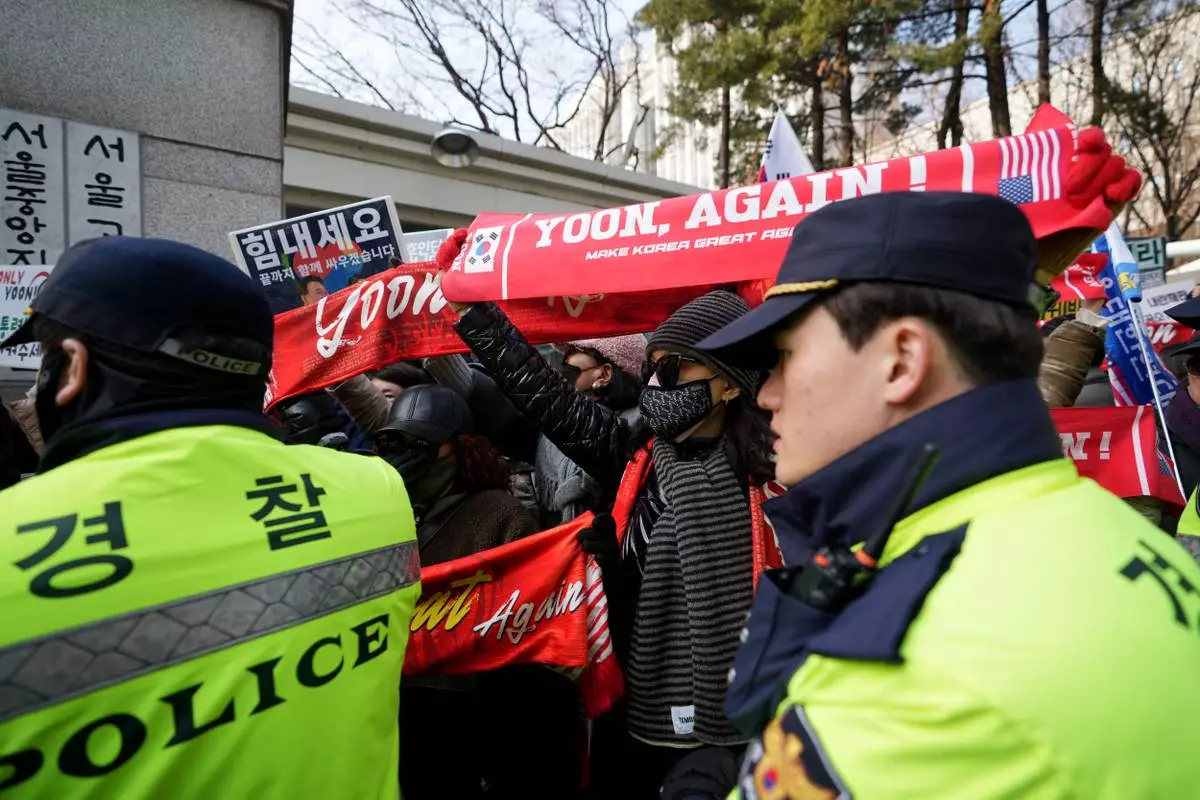
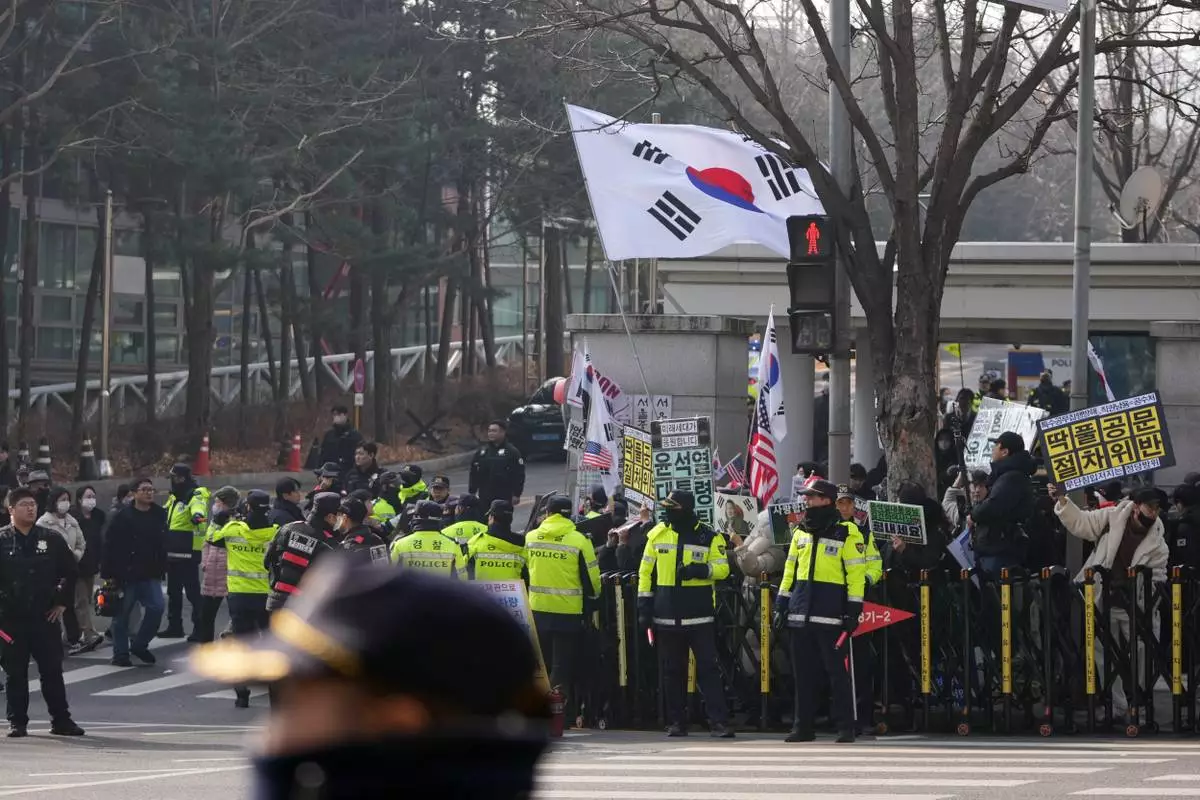
Supporters of former South Korean President Yoon Suk Yeol hold signs as police officers stand guard outside Seoul Central District Court, in Seoul, South Korea, Friday, Jan. 16, 2026. (AP Photo/Lee Jin-man)

Supporters of former South Korean President Yoon Suk Yeol hold signs as police officers stand guard outside Seoul Central District Court, in Seoul, South Korea, Friday, Jan. 16, 2026. (AP Photo/Lee Jin-man)

Supporters of former South Korean President Yoon Suk Yeol hold signs and flags outside Seoul Central District Court, in Seoul, South Korea, Friday, Jan. 16, 2026. (AP Photo/Lee Jin-man)

Supporters of former South Korean President Yoon Suk Yeol hold signs and flags outside Seoul Central District Court, in Seoul, South Korea, Friday, Jan. 16, 2026. (AP Photo/Lee Jin-man)

Supporters of former South Korean President Yoon Suk Yeol hold signs outside Seoul Central District Court, in Seoul, South Korea, Friday, Jan. 16, 2026. (AP Photo/Lee Jin-man)

Supporters of former South Korean President Yoon Suk Yeol hold signs outside Seoul Central District Court, in Seoul, South Korea, Friday, Jan. 16, 2026. (AP Photo/Lee Jin-man)

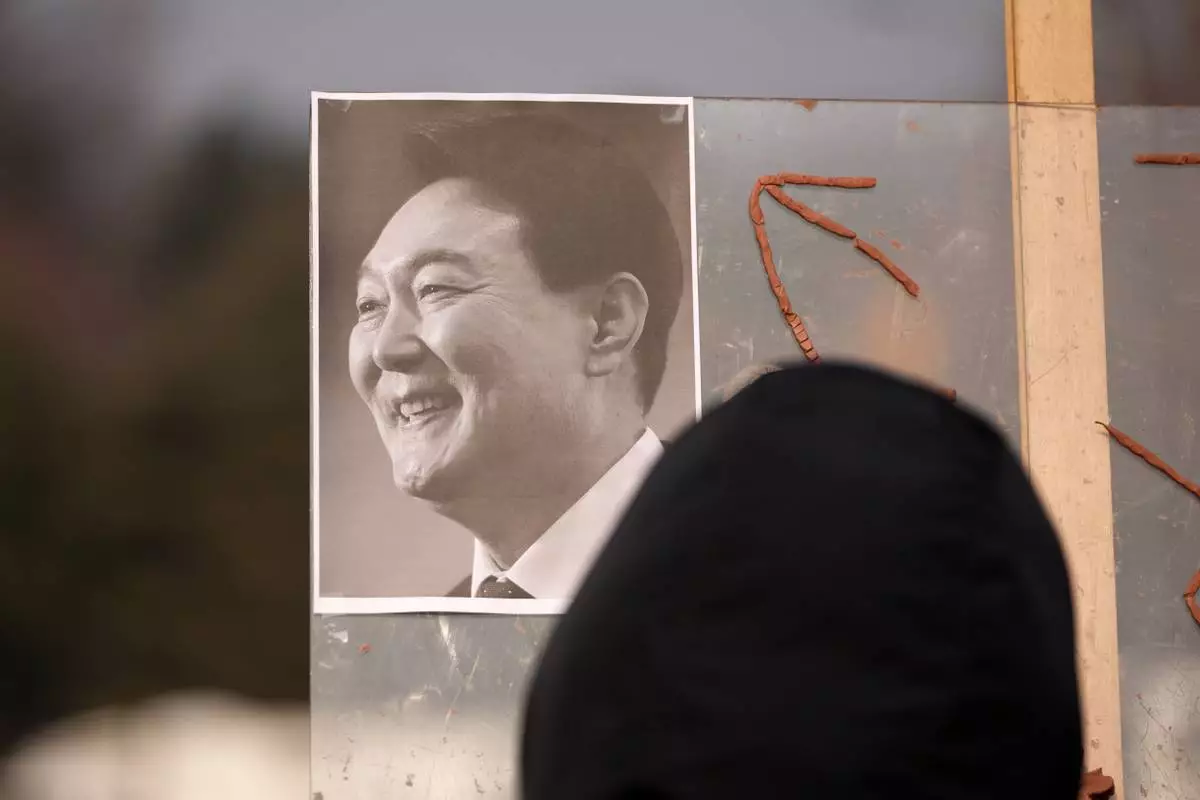
A picture of former South Korean President Yoon Suk Yeol is placed on a board as supporters gather outside Seoul Central District Court, in Seoul, South Korea, Friday, Jan. 16, 2026. (AP Photo/Lee Jin-man)

A picture of former South Korean President Yoon Suk Yeol is placed on a board as supporters gather outside Seoul Central District Court, in Seoul, South Korea, Friday, Jan. 16, 2026. (AP Photo/Lee Jin-man)

Recommended Articles