FLINT, Mich. (AP) — A procession of mothers wearing red sashes, pushing strollers and tending to toddlers made their way Friday to a little festival in Flint, Michigan, where families received diapers and kids played.
It was called a “baby parade.”
Click to Gallery
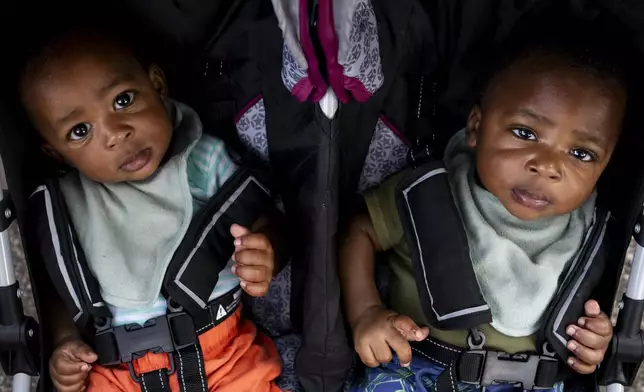
Seven-month-old twins Damonie and Dion Gill sit in a stroller together at the Flint Rx Kids Baby Parade event on July 25, 2025 in on Applewood Campus in Flint, Michigan. The event celebrates the continued impact of Rx Kids on Flint families and babies. (AP Photo/Emily Elconin)
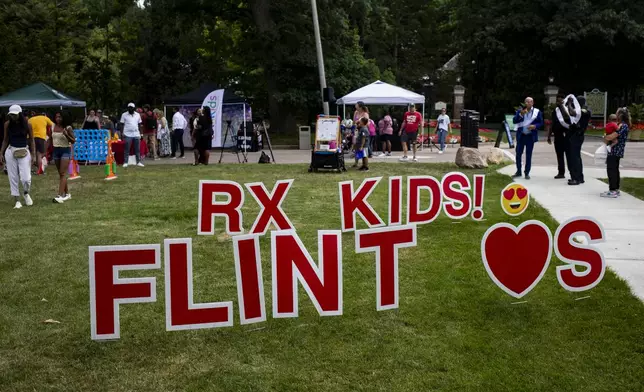
Families and community members arrive for the Flint Rx Kids Baby Parade event on July 25, 2025 on the Applewood Campus in Flint, Michigan. The event celebrates the continued impact of Rx Kids on Flint families and babies. (AP Photo/Emily Elconin)
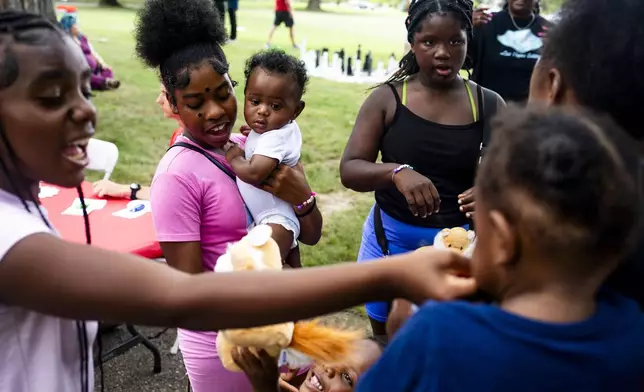
Trinity Wilson, 12, holds her five-month-old cousin, Jaylen, as she and her family walk around the Flint Rx Kids Baby Parade event on July 25, 2025 in on Applewood Campus in Flint, Michigan. The event celebrates the continued impact of Rx Kids on Flint families and babies. (AP Photo/Emily Elconin)
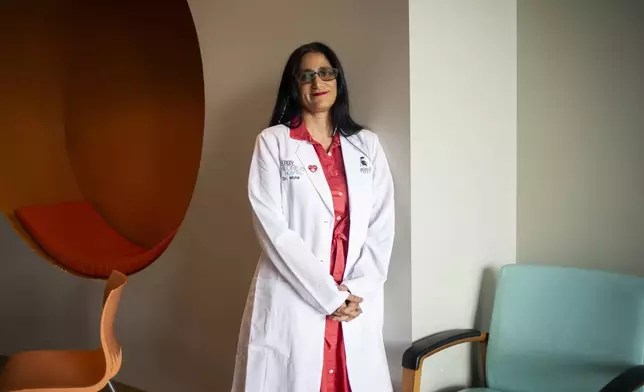
Dr. Mona Hanna, creator of the Flint Rx Kids program, at the Hurley's Children Clinic ahead of the Flint Rx Kids Baby Parade on July 25, 2025 in Flint, Mich. (AP Photo/Emily Elconin)
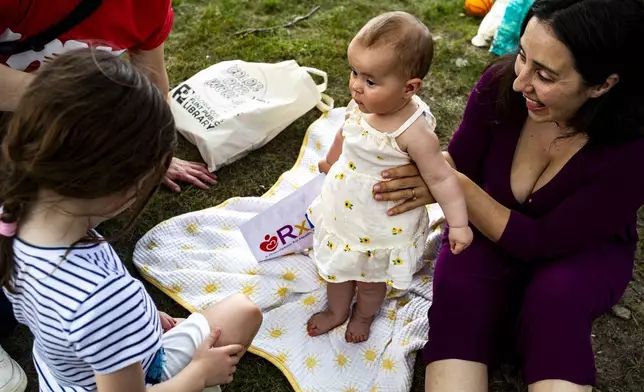
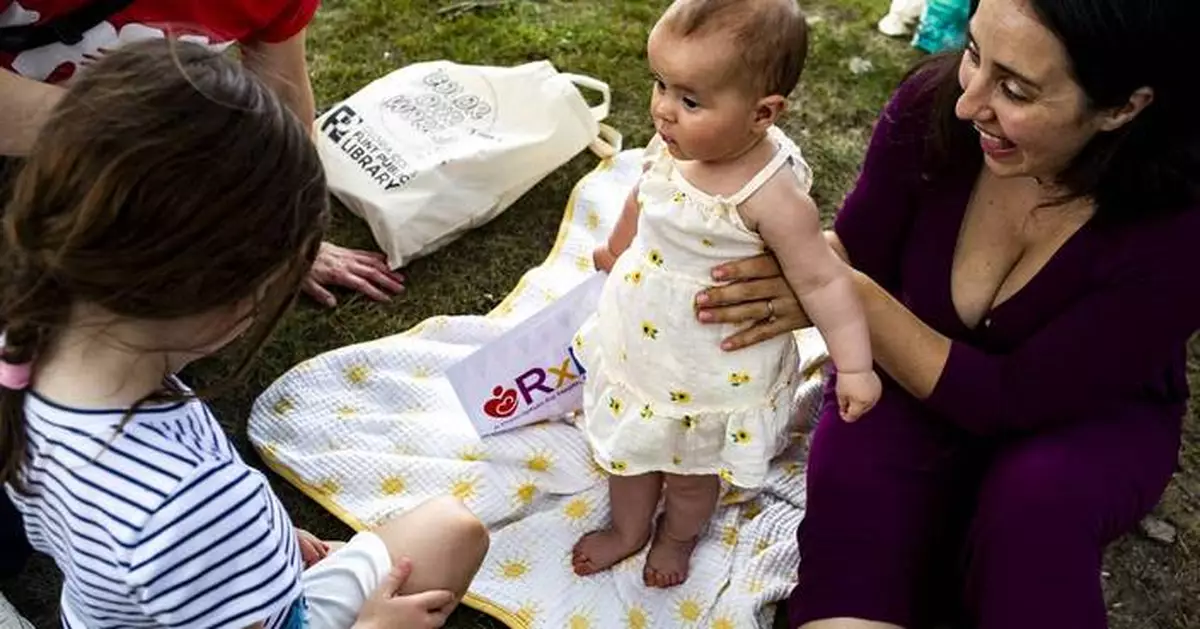
Caroline Doennez smiles as she holds up her nine-month-old daughter, Violet, during the Flint Rx Kids Baby Parade event on July 25, 2025 in on Applewood Campus in Flint, Michigan. The event celebrates the continued impact of Rx Kids on Flint families and babies. (AP Photo/Emily Elconin)
The sashes indicated the women were participants of a growing program in Michigan that helps pregnant women and new moms by giving them cash over the first year of their children's lives. Launched in 2024, the program comes at a time when many voters worry over high child care costs and President Donald Trump’s administration floats policy to reverse the declining birth rate.
Backed by a mix of state, local and philanthropic money, Rx Kids gives mothers of newborns up to $7,500, with no income requirements and no rules for how the money is spent. Supporters believe the program could be a model for mitigating the high cost of having children in the U.S.
“There’s all kinds of reasons, no matter what your political affiliation or ideology is, to support this,” said state Sen. John Damoose, a Republican and ardent supporter of the program.
To qualify, women need to prove they live in a participating location and that they are pregnant, but don’t have to share details about their income.
It's designed to be simple.
Pregnant women receive $1,500 before delivery and $500 every month for the first six to 12 months of their babies’ lives, depending on the program location.
Dr. Mona Hanna, a pediatrician, associate dean for public health at Michigan State University College of Human Medicine and the program's founding director, said that window is a time of great economic vulnerability for new parents — and a critical developmental period for babies.
Most participants need diapers, formula, breast feeding supplies and baby clothes but every family's needs are different. The monthly payment can also help buy food and cover rent, utilities and transportation.
For some moms, the extra cash allows them to afford child care and return to work. For others, it allows them to stay home longer.
The program so far is available in Flint, Pontiac, Kalamazoo and five counties in the Upper Peninsula of Michigan. By fall, it will expand to a rural central Michigan county and several cities near Detroit.
Hanna said the main piece of feedback she hears is that the program should be bigger. She’s heard from lawmakers and others hoping to start similar programs in other states.
Hanna said the program's data shows nearly all pregnant women in Flint have signed up since it became available.
The locations were designed to target low-income families, though there is no income requirement. Luke Shaefer, a professor of public policy at the University of Michigan and a co-founder of Rx Kids, said they wanted to eliminate any stigma or barriers that discourage people from signing up.
The founders also want mothers to feel celebrated, hence the parade Friday.
“For so long moms have been vilified and not supported,” Hanna said.
Friends told Angela Sintery, 44, about Rx Kids when she found out she was pregnant with her second child. She's a preschool teacher who spread the word to other parents.
Sintery had her first daughter 19 years before her second and had to buy all new baby supplies.
She said the cash provided by Rx Kids would have been helpful when she had her first child at age 24, before she went to college.
“So this time around, I didn’t have to stress about anything. I just had to worry about my baby,” she said.
Celeste Lord-Timlin, a Flint resident and program participant, attended the baby parade with her husband and 13-month-old daughter by her side. She said the deposits helped her pay for graduate school while she was pregnant.
“It allowed us to really enjoy being new parents," she said.
The program relies heavily on philanthropic donations but Hanna’s long-term goal is for the government to be the main provider.
“I see philanthropy as the doula of this program, they are helping birth it,” she said. “They are helping us prove that this is possible.”
Democrats in Michigan's state Senate introduced legislation in February that would make the program available to any pregnant woman in the state and it has bipartisan support. But with a divided Legislature only able to pass six bills total this year, it's unlikely the program will yet expand statewide soon.
Even Damoose, among the program's top backers, said he doesn't think Michigan can afford statewide expansion yet. But the lawmaker who represents parts of the Upper Peninsula of Michigan does want to keep growing it.
For fellow Republicans who oppose abortion as he does, the approach is a “no brainer” way to help pregnant women, Damoose said.
“We’ve been accused for years and years, and not without cause, of being pro-birth, but not pro-life,” he said. “And this is a way for us to put our money where our mouth is.”
A new movement of pro-natalist political figures, including Vice President JD Vance, Elon Musk and other members of Trump's periphery, have harped on the country's declining birth rate.
But a recent Associated Press-NORC poll found that most Americans want the government to focus on the high costs of child care — not just the number of babies being born here.
Under Trump’s tax and spending bill that Congress passed in July, the child tax credit is boosted from $2,000 child tax credit to $2,200. But millions of families at lower income levels will not get the full credit.
The bill will also create a new children’s saving program, called Trump Accounts, with a potential $1,000 deposit from the Treasury.
That’s not available until children grow up and is more focused on building wealth rather than immediate relief, Hanna said.
“We don’t have that social infrastructure to invest in our families,” Hanna said. “No wonder people aren’t having children and our birth rates are going down.”
The Trump administration has also toyed with the idea of giving families one-time $5,000 “baby bonuses,” a policy similar to Rx Kids.
Critics have rightly pointed out that doesn't come close to covering the cost of child care or other expenses. Defenders of a cash-in-hand approach, though, say any amount can help in those critical early months.
“I think it’s part of a new narrative or the rekindling of an old narrative where we start to celebrate children and families,” said Damoose.
Associated Press writer Mike Householder contributed to this report.
The Associated Press’ women in the workforce and state government coverage receives financial support from Pivotal Ventures. The AP is solely responsible for all content. Find AP’s standards for working with philanthropies, a list of supporters and funded coverage areas at AP.org.
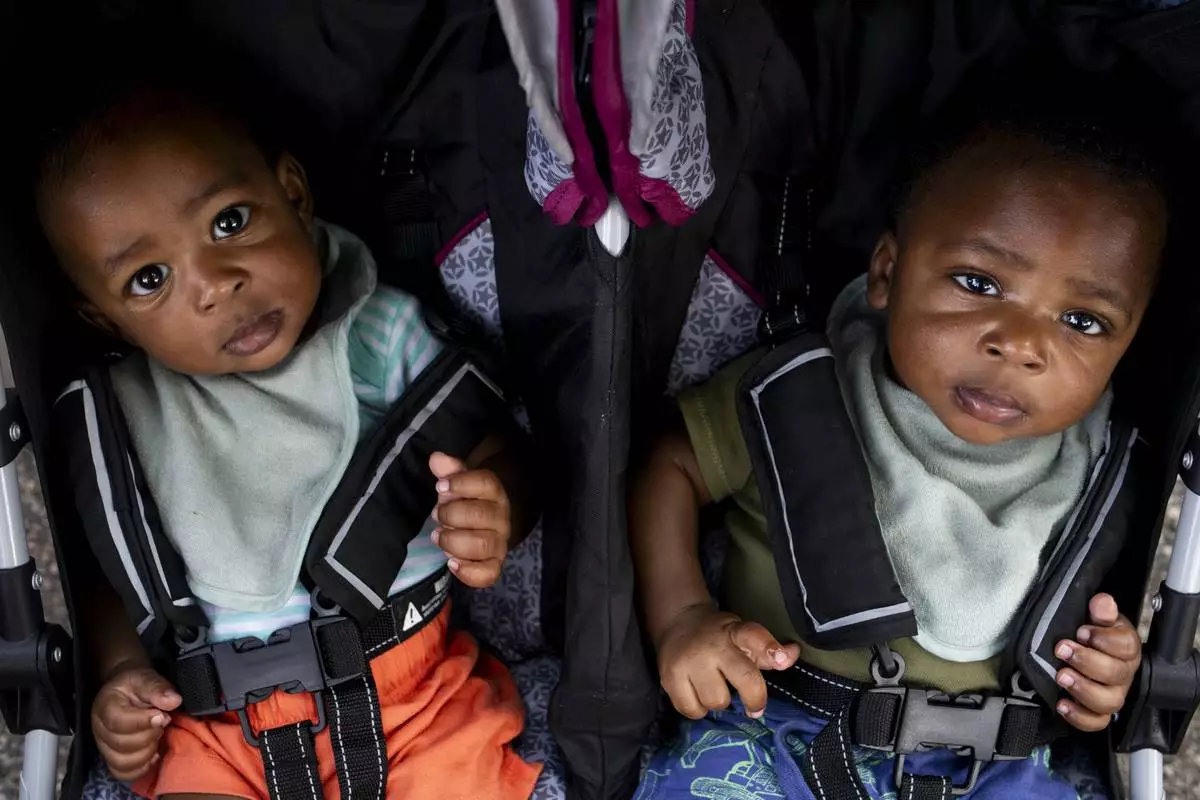
Seven-month-old twins Damonie and Dion Gill sit in a stroller together at the Flint Rx Kids Baby Parade event on July 25, 2025 in on Applewood Campus in Flint, Michigan. The event celebrates the continued impact of Rx Kids on Flint families and babies. (AP Photo/Emily Elconin)
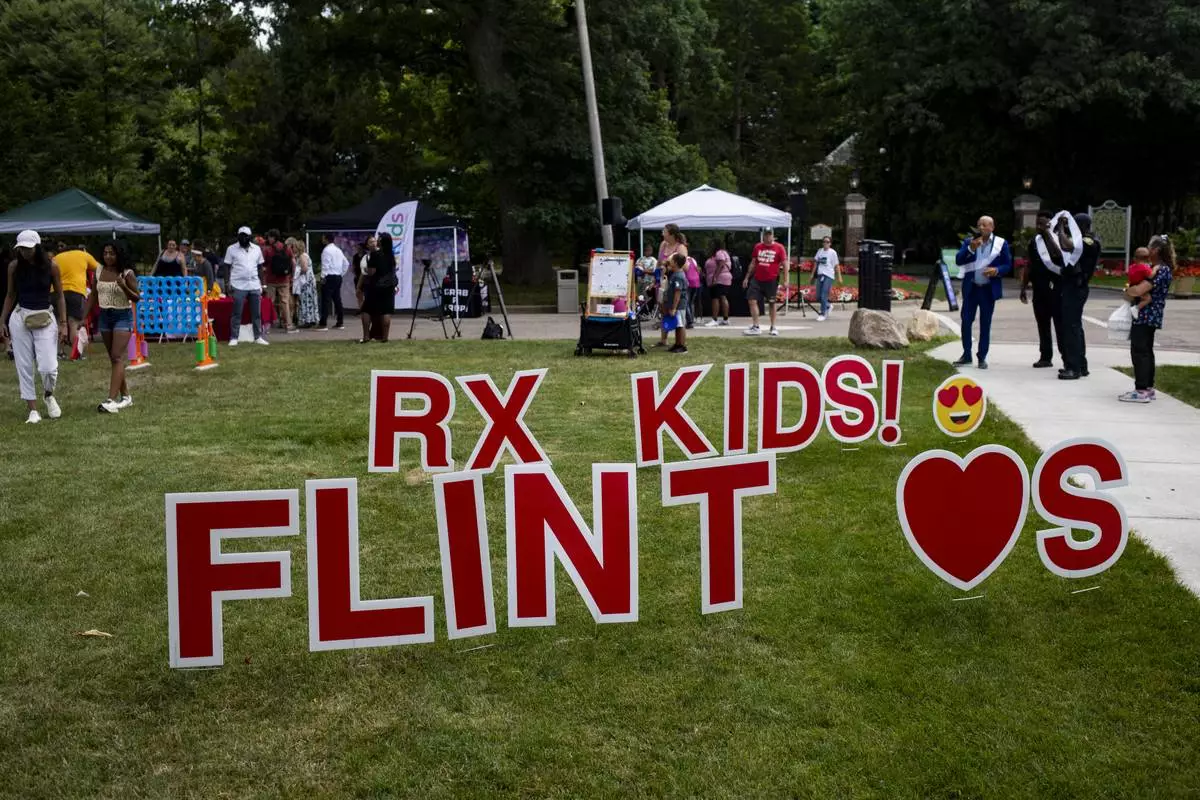
Families and community members arrive for the Flint Rx Kids Baby Parade event on July 25, 2025 on the Applewood Campus in Flint, Michigan. The event celebrates the continued impact of Rx Kids on Flint families and babies. (AP Photo/Emily Elconin)
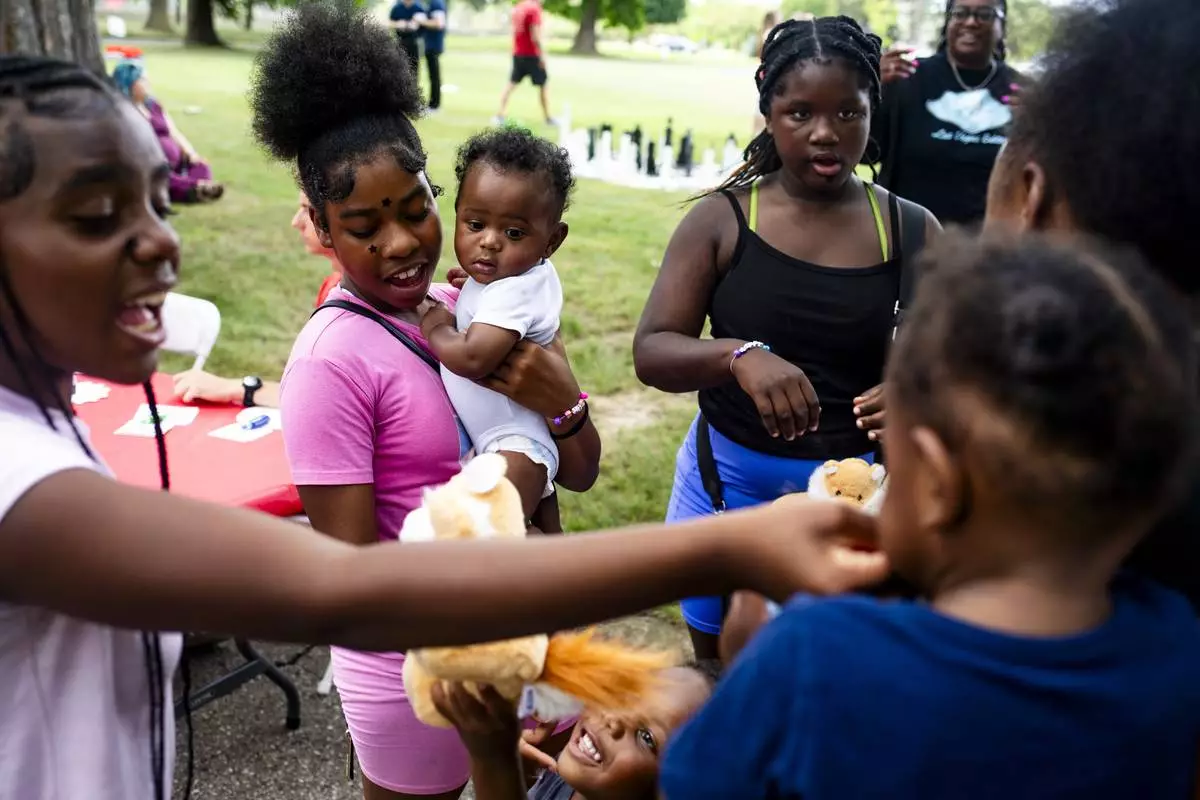
Trinity Wilson, 12, holds her five-month-old cousin, Jaylen, as she and her family walk around the Flint Rx Kids Baby Parade event on July 25, 2025 in on Applewood Campus in Flint, Michigan. The event celebrates the continued impact of Rx Kids on Flint families and babies. (AP Photo/Emily Elconin)
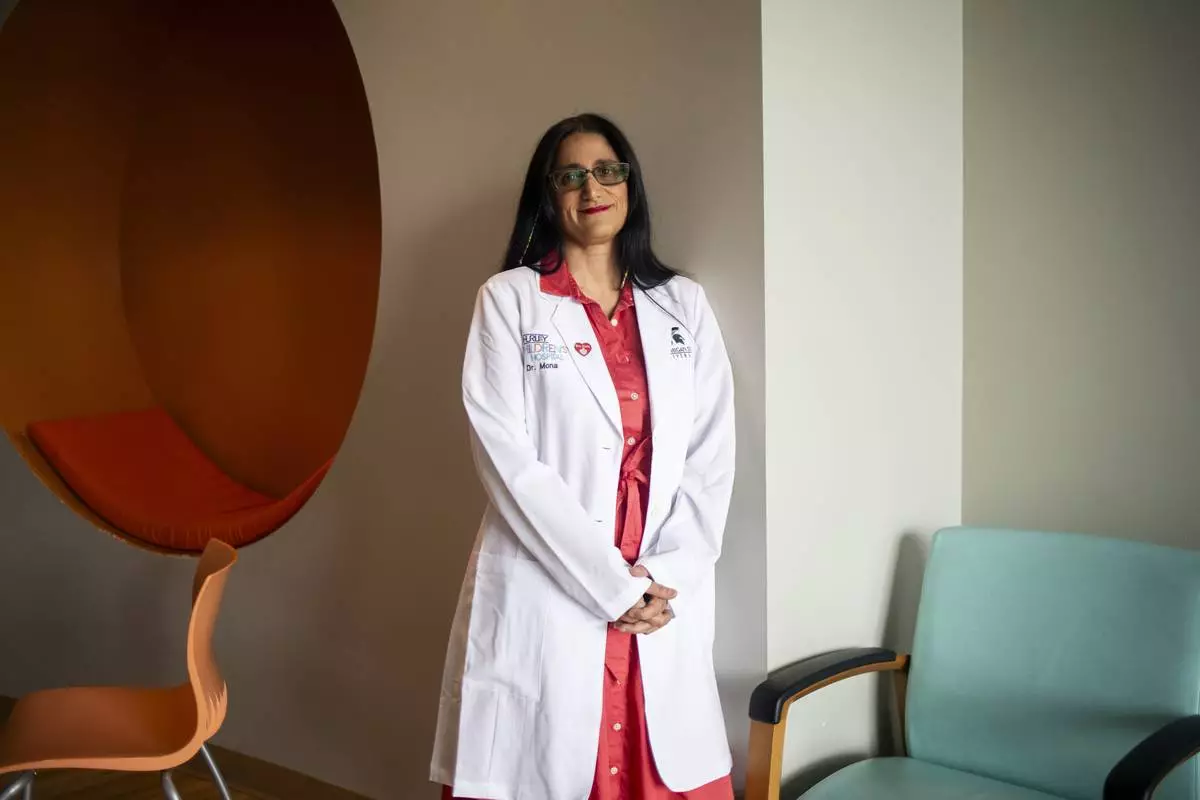
Dr. Mona Hanna, creator of the Flint Rx Kids program, at the Hurley's Children Clinic ahead of the Flint Rx Kids Baby Parade on July 25, 2025 in Flint, Mich. (AP Photo/Emily Elconin)
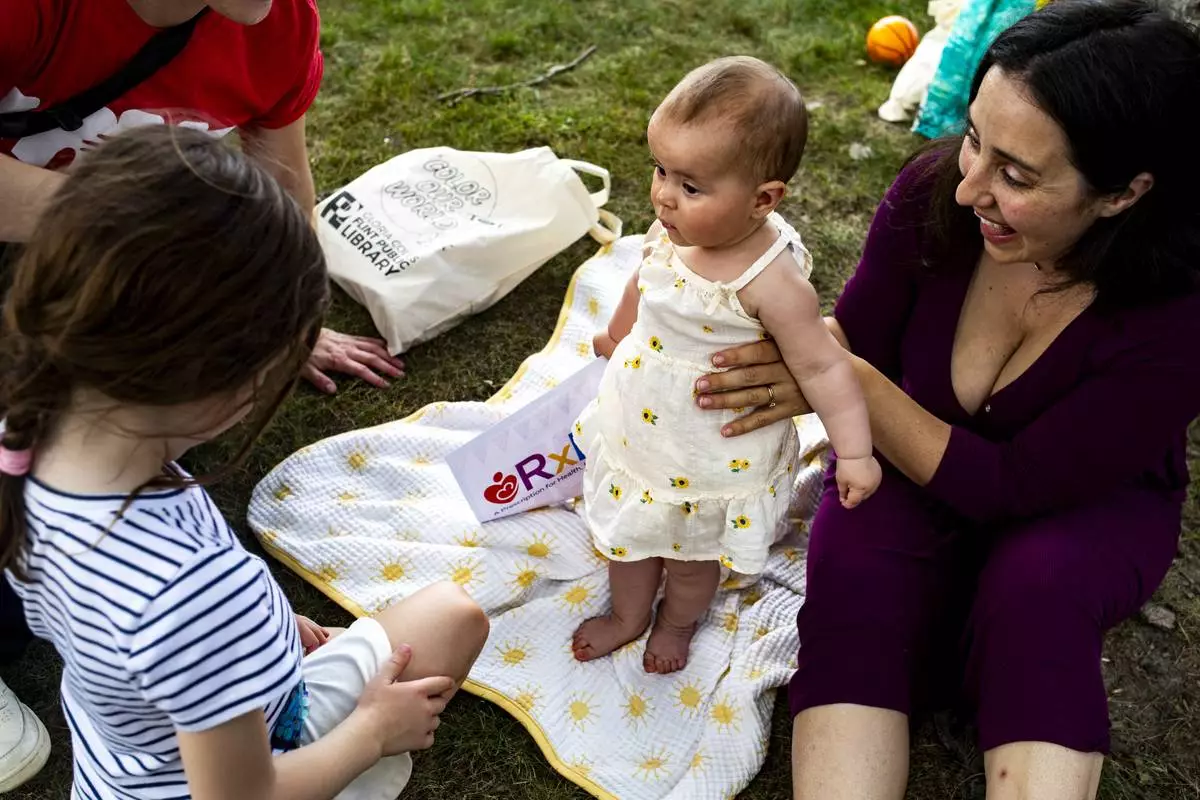
Caroline Doennez smiles as she holds up her nine-month-old daughter, Violet, during the Flint Rx Kids Baby Parade event on July 25, 2025 in on Applewood Campus in Flint, Michigan. The event celebrates the continued impact of Rx Kids on Flint families and babies. (AP Photo/Emily Elconin)