Skip to Content Facebook Feature Image

Judge blocks Trump administration from ending protections for 60,000 from Central America and Nepal

News

Judge blocks Trump administration from ending protections for 60,000 from Central America and Nepal
News

News

Judge blocks Trump administration from ending protections for 60,000 from Central America and Nepal

2025-08-02 10:37 Last Updated At:10:40

SAN FRANCISCO (AP) — A federal judge ruled on Thursday against the Trump administration's plans and extended Temporary Protected Status for 60,000 people from Central America and Asia, including people from Nepal, Honduras and Nicaragua.

Temporary Protected Status is a protection that can be granted by the Homeland Security secretary to people of various nationalities who are in the United States, preventing from being deported and allowing them to work. The Trump administration has aggressively been seeking to remove the protection, thus making more people eligible for removal. It's part of a wider effort by the administration to carry out mass deportations of immigrants.

Homeland Security Secretary Kristi Noem can extend Temporary Protected Status to immigrants in the U.S. if conditions in their homelands are deemed unsafe to return due to a natural disaster, political instability or other dangerous conditions. Noem had ruled to end protections for tens of thousands of Hondurans and Nicaraguans after determining that conditions in their homelands no longer warranted them.

The secretary said the two countries had made “significant progress” in recovering from 1998's Hurricane Mitch, one of the deadliest Atlantic storms in history.

The designation for an estimated 7,000 from Nepal was scheduled to end Aug. 5 while protections allowing 51,000 Hondurans and nearly 3,000 Nicaraguans who have been in the U.S. for more than 25 years were set to expire Sept. 8.

U.S. District Judge Trina L. Thompson in San Francisco did not set an expiration date but rather ruled to keep the protections in place while the case proceeds. The next hearing is Nov. 18.

In a sharply written order, Thompson said the administration ended the migrant status protections without an “objective review of the country conditions,” such as political violence in Honduras and the impact of recent hurricanes and storms in Nicaragua.

If the protections were not extended, immigrants could suffer from loss of employment, health insurance, be separated from their families, and risk being deported to other countries where they have no ties, she wrote, adding that the termination of Temporary Protection Status for people from Nepal, Honduras, and Nicaragua would result in a $1.4 billion loss to the economy.

“The freedom to live fearlessly, the opportunity of liberty, and the American dream. That is all Plaintiffs seek. Instead, they are told to atone for their race, leave because of their names, and purify their blood,” Thompson said.

Lawyers for the National TPS Alliance argued that Noem’s decisions were predetermined by President Donald Trump’s campaign promises and motivated by racial animus.

Thompson agreed, saying that statements Noem and Trump have made perpetuated the “discriminatory belief that certain immigrant populations will replace the white population.”

“Color is neither a poison nor a crime,” she wrote.

The advocacy group that filed the lawsuit said designees usually have a year to leave the country, but in this case, they got far less.

“They gave them two months to leave the country. It’s awful,” said Ahilan Arulanantham, an attorney for plaintiffs at a hearing Tuesday.

Honduras Deputy Foreign Minister Antonio García told The Associated Press, “The judge recognized the need of the (TPS holders) to be able to work in peace, tranquility and legally.”

He recalled that during the first Trump administration, there was a similar legal challenge and the fight took five years in the courts. He hoped for a similar outcome this time that would allow the Hondurans to remain in the U.S.

“Today’s news is hopeful and positive and gives us time and oxygen, hopefully it will be a long road, and the judge will have the final word and not President Trump,” he said.

Meanwhile, in Nicaragua, hundreds of thousands have fled into exile as the government shuttered thousands of nongovernmental organizations and imprisoned political opponents. Nicaragua President Daniel Ortega and his wife and co-President Rosario Murillo have consolidated complete control in Nicaragua since Ortega returned to power two decades ago.

In February, a panel of U.N. experts warned the Nicaraguan government had dismantled the last remaining checks and balances and was “systematically executing a strategy to cement total control of the country through severe human rights violations.”

The broad effort by the Republican administration ’s crackdown on immigration has been going after people who are in the country illegally but also by removing protections that have allowed people to live and work in the U.S. temporarily.

The Trump administration has already terminated protections for about 350,000 Venezuelans, 500,000 Haitians, more than 160,000 Ukrainians and thousands of people from Afghanistan and Cameroon. Some have pending lawsuits in federal courts.

The government argued that Noem has clear authority over the program and that her decisions reflect the administration’s objectives in the areas of immigration and foreign policy.

“It is not meant to be permanent,” Justice Department attorney William Weiland said.

In a statement on Friday, Tricia McLaughlin, the assistant secretary at DHS, said the administration will appeal the decision.

“TPS was never meant to be a de facto asylum system, yet that is how previous administrations have used it for decades,” she said. “We will appeal, and we expect a higher court to vindicate us.”

Ding reported from Los Angeles. Marlon González contributed from Tegucigalpa, Honduras.

U.S. Homeland Security Secretary Kristi Noem sits on a horse as she speaks to the press upon arrival to the Campo De Mayo Military Base in Buenos Aires province, Argentina, Monday, July 28, 2025. (AP Photo/Alex Brandon, Pool)
U.S. Homeland Security Secretary Kristi Noem sits on a horse as she speaks to the press upon arrival to the Campo De Mayo Military Base in Buenos Aires province, Argentina, Monday, July 28, 2025. (AP Photo/Alex Brandon, Pool)
The U.N. Security Council scheduled an emergency meeting Thursday to discuss Iran's deadly protests at the request of the United States, even as President Donald Trump left unclear what actions he would take against the Islamic state.

Tehran appeared to make conciliatory statements in an effort to defuse the situation after Trump threatened to take action to stop further killing of protesters, including the execution of anyone detained in Tehran’s bloody crackdown on nationwide protests.

Iran’s crackdown on the demonstrations has killed at least 2,615, the U.S.-based Human Rights Activists News Agency reported. The death toll exceeds any other round of protest or unrest in Iran in decades and recalls the chaos surrounding the country’s 1979 Islamic Revolution.

Iran closed its airspace to commercial flights for hours without explanation early Thursday and some personnel at a key U.S. military base in Qatar were advised to evacuate. The U.S. Embassy in Kuwait also ordered its personnel to “temporary halt” travel to the multiple military bases in the small Gulf Arab country.

Iran previously closed its airspace during the 12-day war against Israel in June.

Here is the latest:

“We are against military intervention in Iran,” Turkish Foreign Minister Hakan Fidan told journalists in Istanbul on Thursday. “Iran must address its own internal problems… They must address their problems with the region and in global terms through diplomacy so that certain structural problems that cause economic problems can be addressed.”

Ankara and Tehran enjoy warm relations despite often holding divergent interests in the region.

Fidan said the unrest in Iran was rooted in economic conditions caused by sanctions, rather than ideological opposition to the government.

Iranians have been largely absent from an annual pilgrimage to Baghdad, Iraq, to commemorate the death of Imam Musa al-Kadhim, one of the twelve Shiite imams.

Many Iranian pilgrims typically make the journey every year for the annual religious rituals.

Streets across Baghdad were crowded with pilgrims Thursday. Most had arrived on foot from central and southern provinces of Iraq, heading toward the shrine of Imam al-Kadhim in the Kadhimiya district in northern Baghdad,

Adel Zaidan, who owns a hotel near the shrine, said the number of Iranian visitors this year compared to previous years was very small. Other residents agreed.

“This visit is different from previous ones. It lacks the large numbers of Iranian pilgrims, especially in terms of providing food and accommodation,” said Haider Al-Obaidi.

Europe’s largest airline group said Thursday it would halt night flights to and from Tel Aviv and Jordan's capital Amman for five days, citing security concerns as fears grow that unrest in Iran could spiral into wider regional violence.

Lufthansa — which operates Swiss, Austrian Airlines, Brussels Airlines and Eurowings — said flights would run only during daytime hours from Thursday through Monday “due to the current situation in the Middle East.” It said the change would ensure its staff — which includes unionized cabin crews and pilots -- would not be required to stay overnight in the region.

The airline group also said its planes would bypass Iranian and Iraqi airspace, key corridors for air travel between the Middle East and Asia.

Iran closed its airspace to commercial flights for several hours early Thursday without explanation.

A spokesperson for Israel’s Airport Authority, which oversees Tel Aviv’s Ben Gurion Airport, said the airport was operating as usual.

Iranian state media has denied claims that a young man arrested during Iran’s recent protests was condemned to death. The statement from Iran’s judicial authorities on Thursday contradicted what it said were “opposition media abroad” which claimed the young man had been quickly sentenced to death during a violent crackdown on anti-government protests in the country.

State television didn’t immediately give any details beyond his name, Erfan Soltani. Iranian judicial authorities said Soltani was being held in a detention facility outside of the capital. Alongside other protesters, he has been accused of “propaganda activities against the regime,” state media said.

New Zealand’s Foreign Minister Winston Peters said Thursday that his government was “appalled by the escalation of violence and repression” in Iran.

“We condemn the brutal crackdown being carried out by Iran’s security forces, including the killing of protesters,” Peters posted on X.

“Iranians have the right to peaceful protest, freedom of expression, and access to information – and that right is currently being brutally repressed,” he said.

Peters said his government had expressed serious concerns to the Iranian Embassy in Wellington.

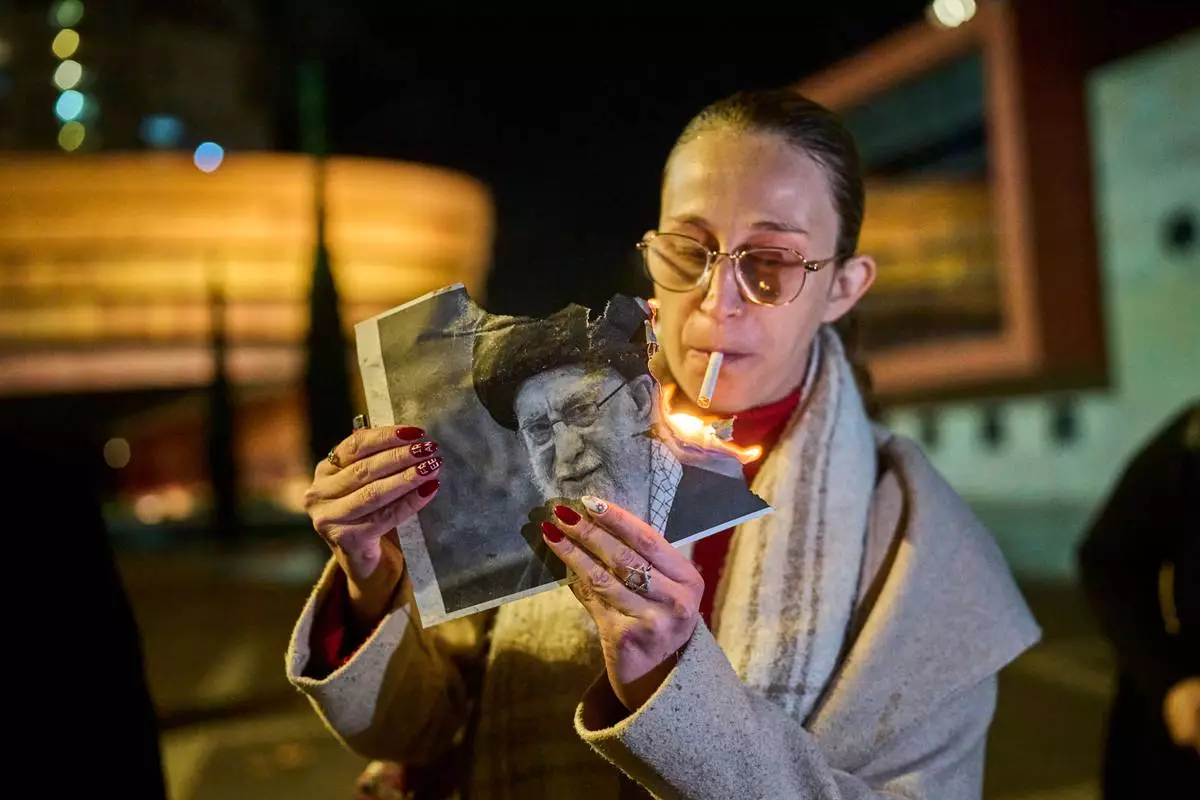
A demonstrator lights a cigarette with a burning poster depicting Supreme Leader Ayatollah Ali Khamenei during a rally in support of Iran's anti-government protests, in Holon, Israel, Wednesday, Jan. 14, 2026. (AP Photo/Ohad Zwigenberg)

A demonstrator lights a cigarette with a burning poster depicting Supreme Leader Ayatollah Ali Khamenei during a rally in support of Iran's anti-government protests, in Holon, Israel, Wednesday, Jan. 14, 2026. (AP Photo/Ohad Zwigenberg)

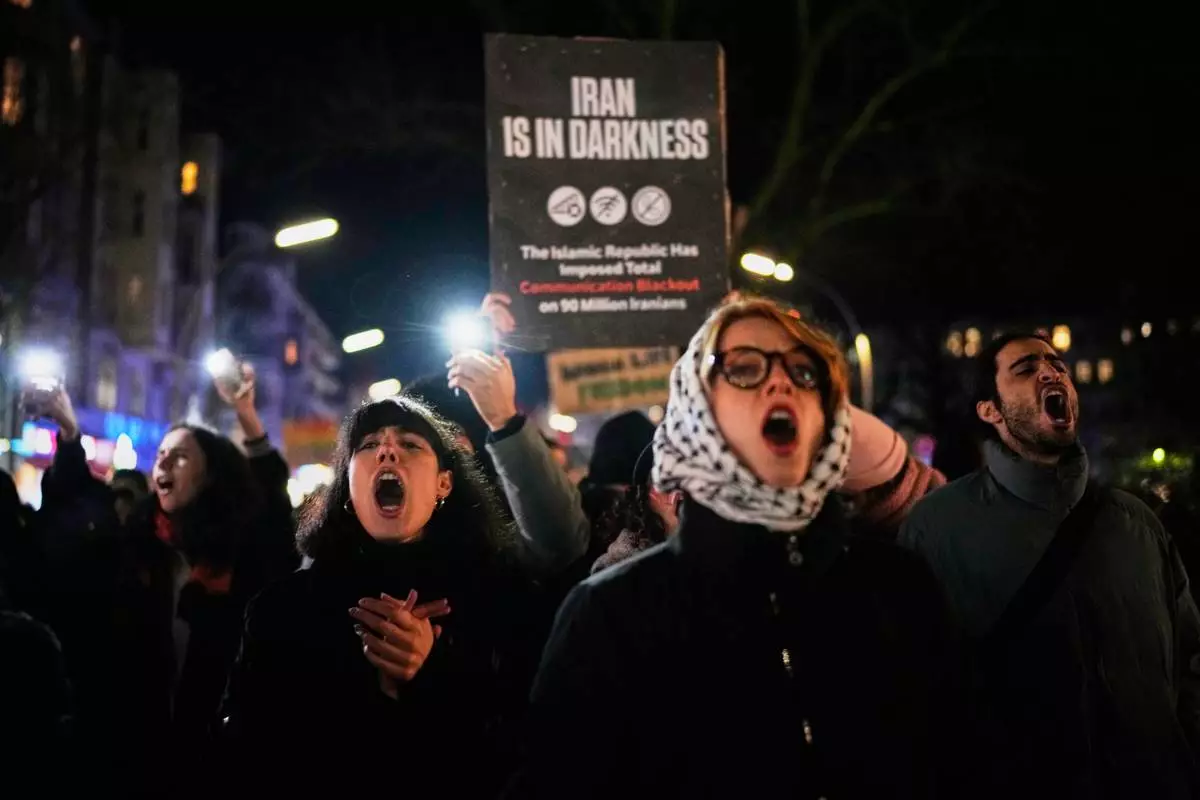
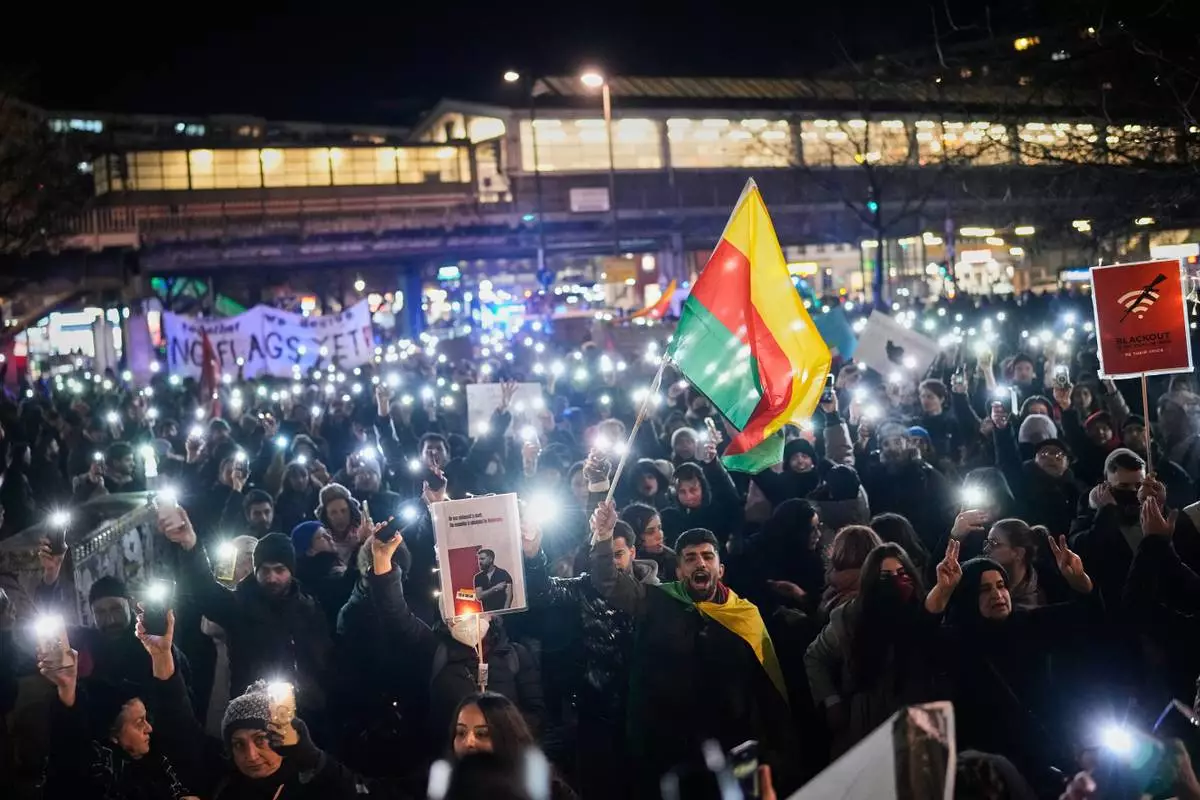
Protesters participate in a demonstration in support of the nationwide mass protests in Iran against the government, in Berlin, Germany, Wednesday, Jan. 14, 2026. (AP Photo/Ebrahim Noroozi)

Protesters participate in a demonstration in support of the nationwide mass protests in Iran against the government, in Berlin, Germany, Wednesday, Jan. 14, 2026. (AP Photo/Ebrahim Noroozi)

Protesters participate in a demonstration in support of the nationwide mass protests in Iran against the government, in Berlin, Germany, Wednesday, Jan. 14, 2026. (AP Photo/Ebrahim Noroozi)

Protesters participate in a demonstration in support of the nationwide mass protests in Iran against the government, in Berlin, Germany, Wednesday, Jan. 14, 2026. (AP Photo/Ebrahim Noroozi)

Recommended Articles