Skip to Content Facebook Feature Image

Why not enough food is reaching people in Gaza even after Israel eased its blockade

News

Why not enough food is reaching people in Gaza even after Israel eased its blockade
News

News

Why not enough food is reaching people in Gaza even after Israel eased its blockade

2025-08-01 09:19 Last Updated At:09:31

International outcry over images of emaciated children and increasing reports of hunger-related deaths have pressured Israel to let more aid into the Gaza Strip. This week, Israel paused fighting in parts of Gaza and airdropped food.

But aid groups and Palestinians say the changes have only been incremental and are not enough to reverse what food experts say is a “ worst-case scenario of famine” unfolding in the war-ravaged territory.

More Images
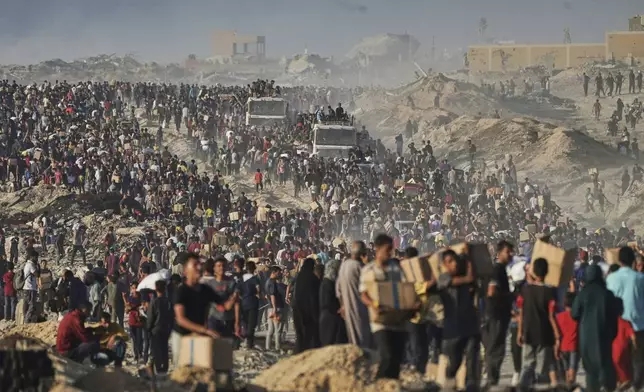
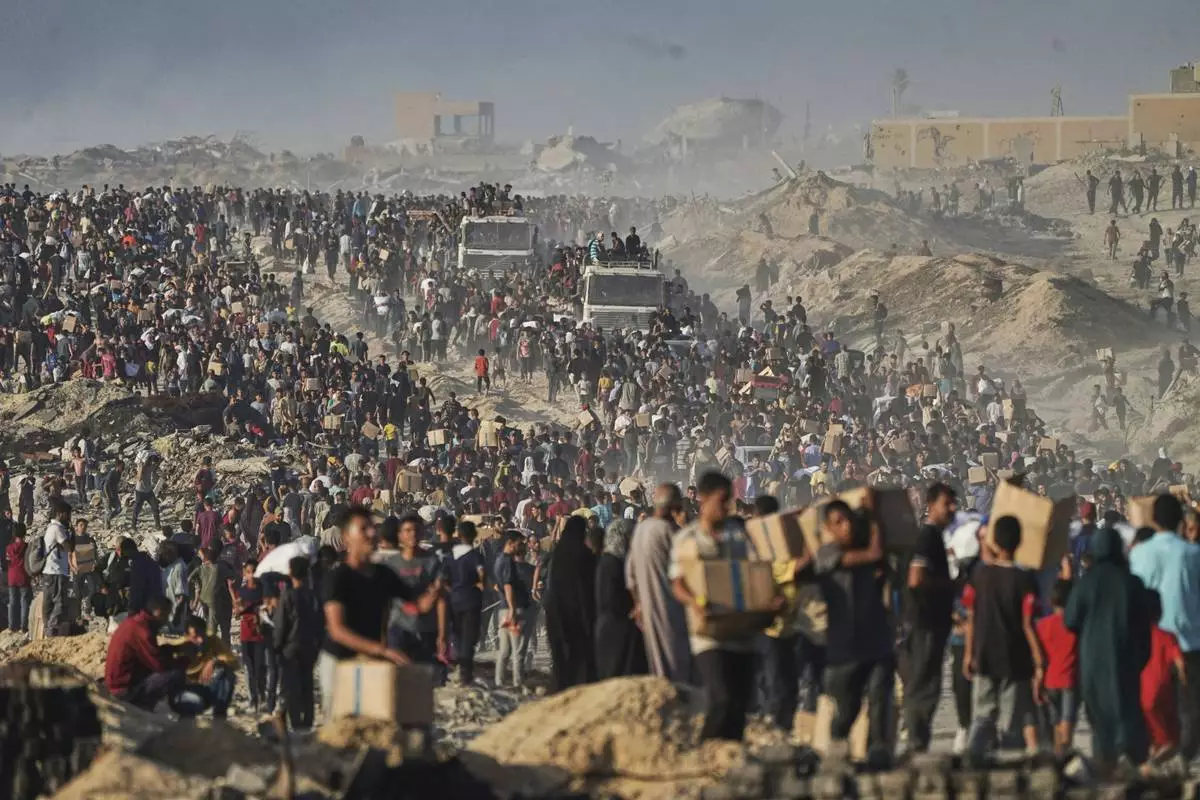
FILE - Palestinians carry humanitarian aid from a World Food Program convoy that was heading to Gaza City, June 16, 2025. (AP Photo/Jehad Alshrafi, File)

FILE - Palestinians carry humanitarian aid from a World Food Program convoy that was heading to Gaza City, June 16, 2025. (AP Photo/Jehad Alshrafi, File)

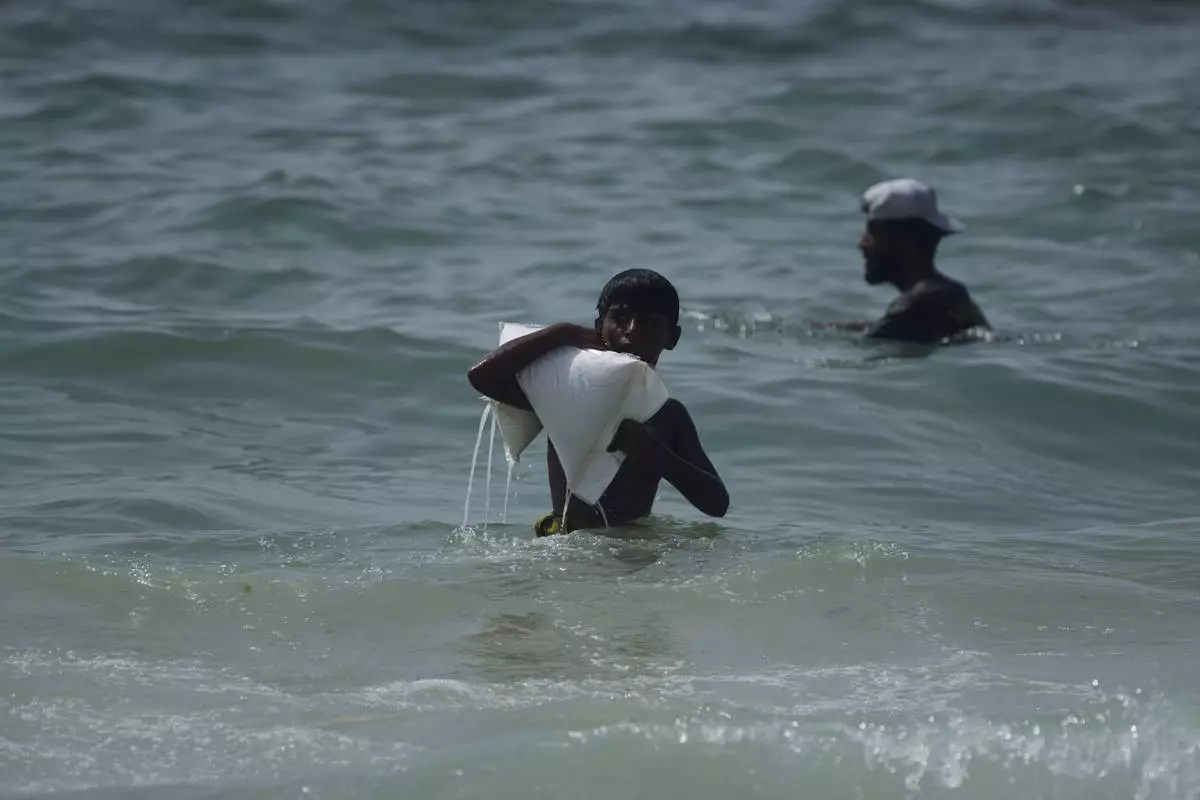
FILE - A Palestinian youth carries a sack of aid that landed in the Mediterranean Sea after being airdropped over central Gaza, Gaza Strip Tuesday, July 29, 2025. (AP Photo/Abdel Kareem Hana, File)
FILE - A Palestinian youth carries a sack of aid that landed in the Mediterranean Sea after being airdropped over central Gaza, Gaza Strip Tuesday, July 29, 2025. (AP Photo/Abdel Kareem Hana, File)

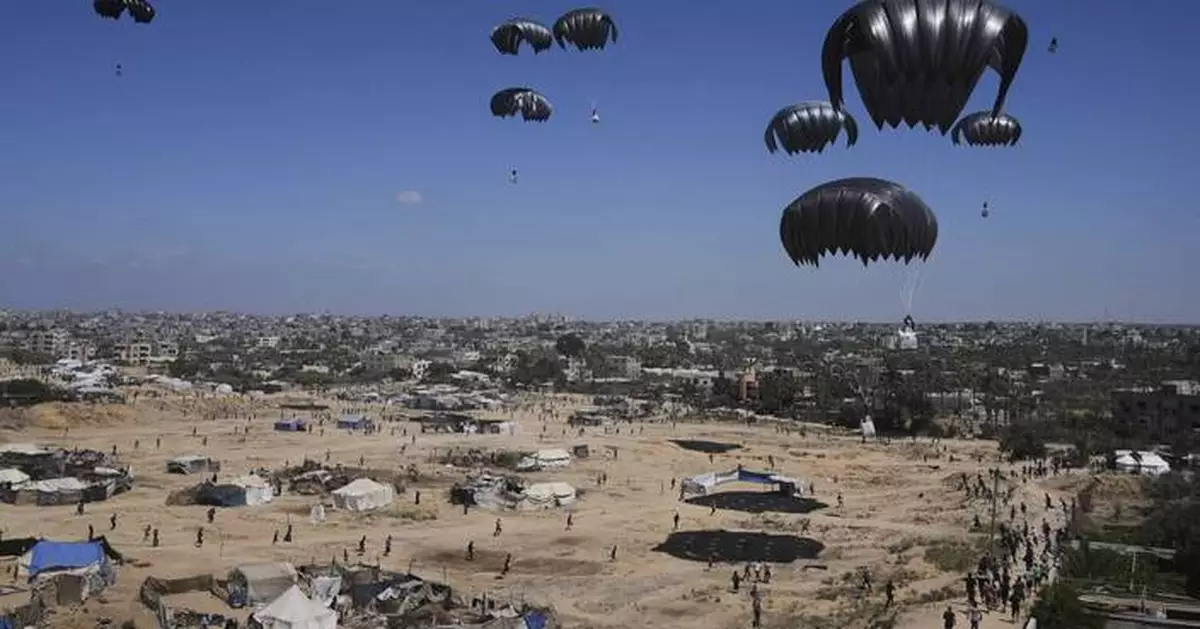
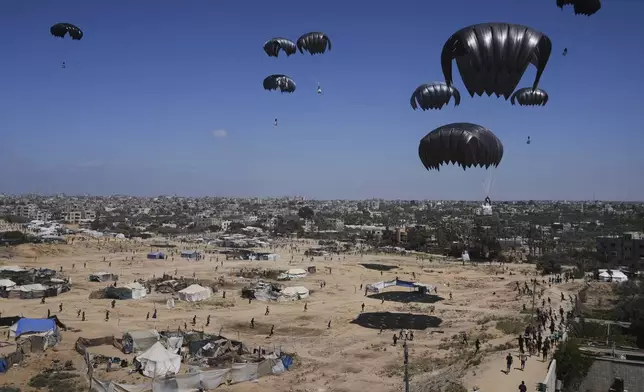
Palestinians rush to collect humanitarian aid airdropped into Zawaida in central Gaza Strip, Thursday, July 31, 2025. (AP Photo/Abdel Kareem Hana)
Palestinians rush to collect humanitarian aid airdropped into Zawaida in central Gaza Strip, Thursday, July 31, 2025. (AP Photo/Abdel Kareem Hana)

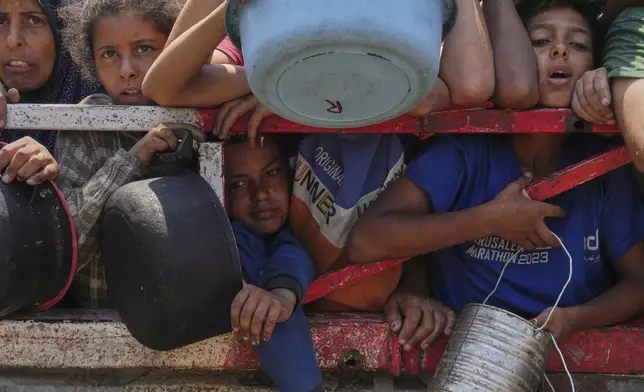
Palestinians struggle to get donated food at a community kitchen, in Gaza City, northern Gaza Strip, Saturday, July 26, 2025. (AP Photo/Abdel Kareem Hana)
Palestinians struggle to get donated food at a community kitchen, in Gaza City, northern Gaza Strip, Saturday, July 26, 2025. (AP Photo/Abdel Kareem Hana)

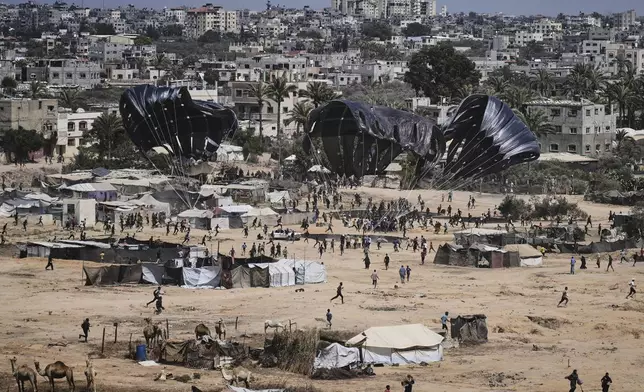
Palestinians rush to collect humanitarian aid airdropped in central Gaza Strip, Thursday, July 31, 2025. (AP Photo/Abdel Kareem Hana)

Palestinians rush to collect humanitarian aid airdropped in central Gaza Strip, Thursday, July 31, 2025. (AP Photo/Abdel Kareem Hana)

The new measures have brought an uptick in the number of aid trucks entering Gaza. But almost none of it reaches U.N. warehouses for distribution.

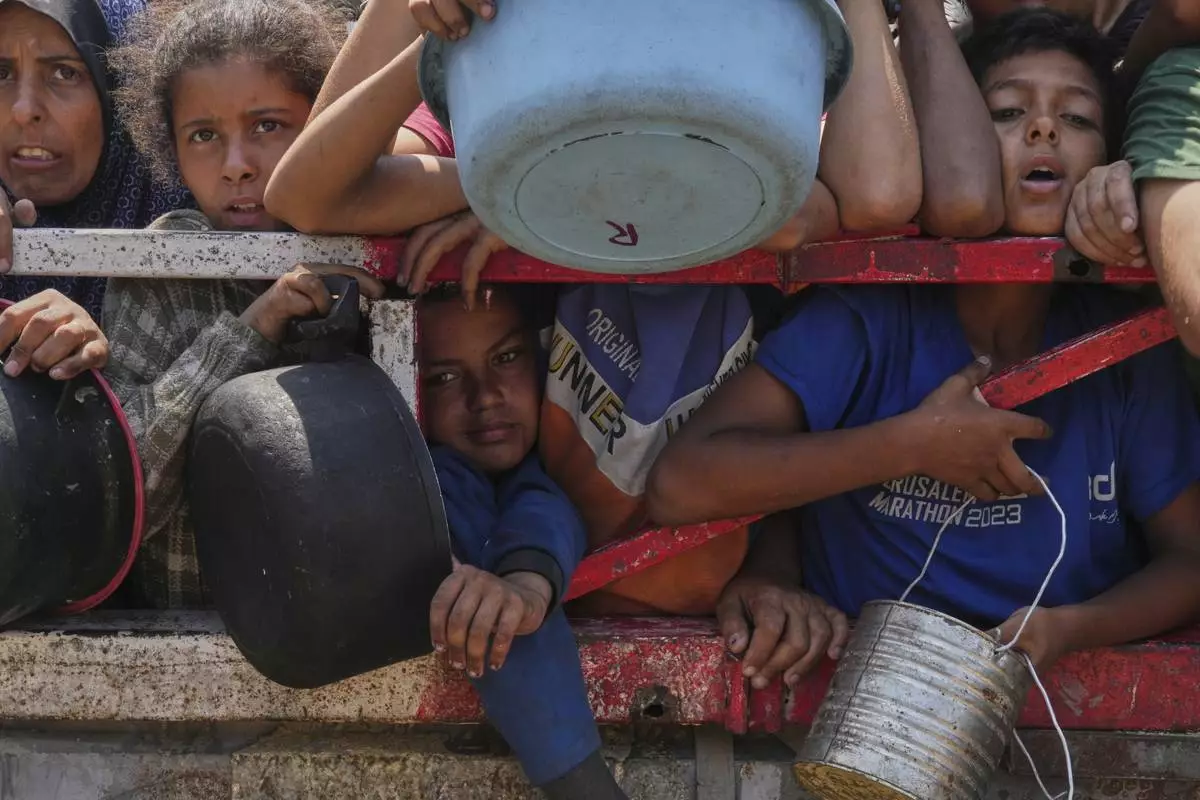
Instead, nearly all the trucks are stripped of their cargo by crowds that overwhelm them on the roads as they drive from the borders. The crowds are a mix of Palestinians desperate for food and gangs armed with knives, axes or pistols who loot the goods to then hoard or sell.

Many have also been killed trying to grab the aid. Witnesses say Israeli troops often open fire on crowds around the aid trucks, and hospitals have reported hundreds killed or wounded. The Israeli military says it has only fired warning shots to control crowds or at people who approach its forces. The alternative food distribution system run by the Israeli-backed Gaza Humanitarian Foundation has also been marred by violence.

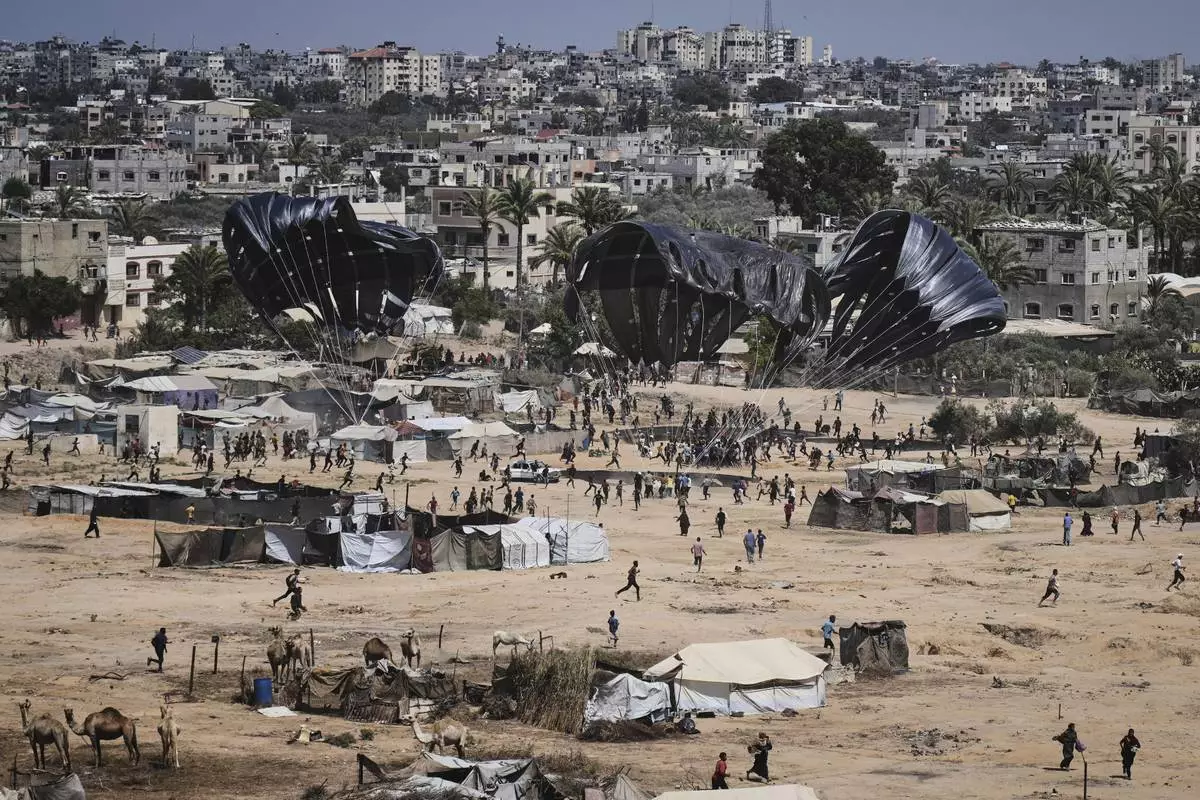
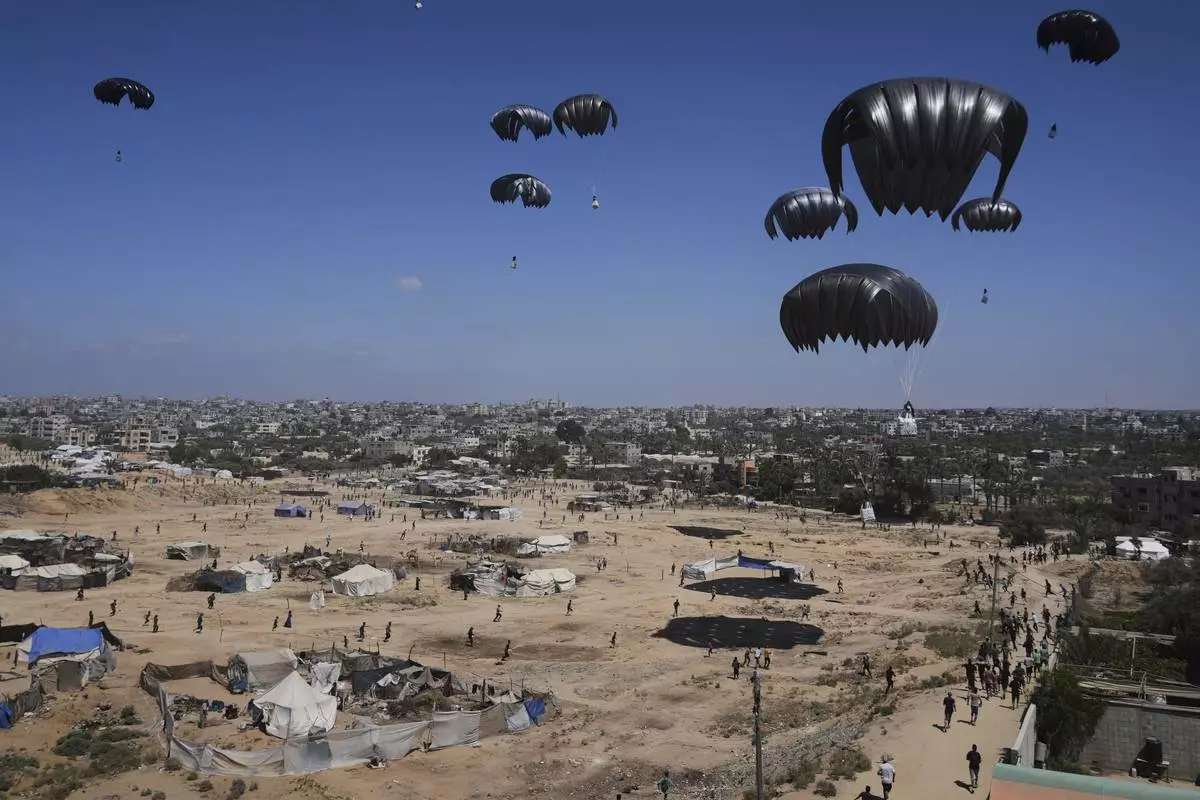
International airdrops of aid have resumed. But aid groups say airdrops deliver only a fraction of what trucks can supply. Also, many parcels have landed in now-inaccessible areas that Palestinians have been told to evacuate, while others have plunged into the Mediterranean Sea, forcing people to swim out to retrieve drenched bags of flour.

Here’s a look at why the aid isn’t being distributed:

The U.N. says that longstanding restrictions on the entry of aid have created an unpredictable environment, and that while a pause in fighting might allow more aid in, Palestinians are not confident aid will reach them.

“This has resulted in many of our convoys offloaded directly by starving, desperate people as they continue to face deep levels of hunger and are struggling to feed their families,” said Olga Cherevko, a spokesperson for the U.N. Office for the Coordination of Humanitarian Affairs, or OCHA.

“The only way to reach a level of confidence is by having a sustained flow of aid over a period of time,” she said.

Israel blocked food entirely from entering Gaza for 2 ½ months starting in March. Since it eased the blockade in late May, it allowed in a trickle of aid trucks for the U.N., about 70 a day on average, according to official Israeli figures. That is far below the 500-600 trucks a day that U.N. agencies say are needed — the amount that entered during a six-week ceasefire earlier this year.

Much of the aid is stacked up just inside the border in Gaza because U.N. trucks could not pick it up. The U.N says that was because of Israeli military restrictions on its movements and because of the lawlessness in Gaza.

Israel has argued that it is allowing sufficient quantities of goods into Gaza and tried to shift the blame to the U.N. “More consistent collection and distribution by U.N. agencies and international organizations = more aid reaching those who need it most in Gaza,” the Israeli military agency in charge of aid coordination, COGAT, said in a statement this week.

With the new measures this week, COGAT, says 220-270 truckloads a day were allowed into Gaza on Tuesday and Wednesday, and that the U.N. was able to pick up more trucks, reducing some of the backlog at the border.

Cherevko said there have been “minor improvements” in approvals by the Israeli military for its movements and some “reduced waiting times” for trucks along the road.

But she said the aid missions are “still facing constraints.” Delays of military approval still mean trucks remain idle for long periods, and the military still restricts the routes that the trucks can take onto a single road, which makes it easy for people to know where the trucks are going, U.N officials say.

Antoine Renard, who directs the World Food Program’s operations in Gaza and the occupied West Bank, said Wednesday that it took nearly 12 hours to bring in 52 trucks on a 10-kilometer (6 mile) route.

“While we’re doing everything that we can to actually respond to the current wave of starvation in Gaza, the conditions that we have are not sufficient to actually make sure that we can break that wave,” he said.

Aid workers say the changes Israel has made in recent days are largely cosmetic. “These are theatrics, token gestures dressed up as progress,” said Bushra Khalidi, Oxfam’s policy lead for Israel and the Palestinian territories.

“Of course, a handful of trucks, a few hours of tactical pauses and raining energy bars from the sky is not going to fix irreversible harm done to an entire generation of children that have been starved and malnourished for months now,” she said.

As desperation mounts, Palestinians are risking their lives to get food, and violence is increasing, say aid workers.

Muhammad Shehada, a political analyst from Gaza who is a visiting fellow at the European Council on Foreign Relations, said aid retrieval has turned into the survival of the fittest. “It’s a Darwin dystopia, the strongest survive,” he said.

A truck driver said Wednesday that he has driven food supplies four times from the Zikim crossing on Gaza’s northern border. Every time, he said, crowds a kilometer long (0.6 miles) surrounded his truck and took everything on it after he passed the checkpoint at the edge of the Israeli military-controlled border zones.

He said some were desperate people, while others were armed. He said that on Tuesday, for the first time, some in the crowd threatened him with knives or small arms. He spoke on condition of anonymity, fearing for his safety.

Ali al-Derbashi, another truck driver, said that during one trip in July armed men shot the tires, stole everything, including the diesel and batteries and beat him. “If people weren’t starving, they wouldn’t resort to this,” he said.

Israel has said it has offered the U.N. armed escorts. The U.N. has refused, saying it can’t be seen to be working with a party to the conflict – and pointing to the reported shootings when Israeli troops are present.

Israel hasn’t given a timeline for how long the measures it implemented this week will continue, heightening uncertainty and urgency among Palestinians to seize the aid before it ends.

Palestinians say the way it’s being distributed, including being dropped from the sky, is inhumane.

“This approach is inappropriate for Palestinians, we are humiliated,” said Rida, a displaced woman.

Momen Abu Etayya said he almost drowned because his son begged him to get aid that fell into the sea during an aid drop.

“I threw myself in the ocean to death just to bring him something,” he said. “I was only able to bring him three biscuit packets”.

Associated Press reporters Wafaa Shurafa in Deir al-Balah, Gaza Strip, Fatma Khaled in Cairo and Michael Biesecker in Washington contributed to this report.
FILE - Palestinians carry humanitarian aid from a World Food Program convoy that was heading to Gaza City, June 16, 2025. (AP Photo/Jehad Alshrafi, File)
FILE - Palestinians carry humanitarian aid from a World Food Program convoy that was heading to Gaza City, June 16, 2025. (AP Photo/Jehad Alshrafi, File)

FILE - A Palestinian youth carries a sack of aid that landed in the Mediterranean Sea after being airdropped over central Gaza, Gaza Strip Tuesday, July 29, 2025. (AP Photo/Abdel Kareem Hana, File)
FILE - A Palestinian youth carries a sack of aid that landed in the Mediterranean Sea after being airdropped over central Gaza, Gaza Strip Tuesday, July 29, 2025. (AP Photo/Abdel Kareem Hana, File)

Palestinians rush to collect humanitarian aid airdropped into Zawaida in central Gaza Strip, Thursday, July 31, 2025. (AP Photo/Abdel Kareem Hana)
Palestinians rush to collect humanitarian aid airdropped into Zawaida in central Gaza Strip, Thursday, July 31, 2025. (AP Photo/Abdel Kareem Hana)

Palestinians struggle to get donated food at a community kitchen, in Gaza City, northern Gaza Strip, Saturday, July 26, 2025. (AP Photo/Abdel Kareem Hana)
Palestinians struggle to get donated food at a community kitchen, in Gaza City, northern Gaza Strip, Saturday, July 26, 2025. (AP Photo/Abdel Kareem Hana)

Palestinians rush to collect humanitarian aid airdropped in central Gaza Strip, Thursday, July 31, 2025. (AP Photo/Abdel Kareem Hana)

Palestinians rush to collect humanitarian aid airdropped in central Gaza Strip, Thursday, July 31, 2025. (AP Photo/Abdel Kareem Hana)
The U.N. Security Council scheduled an emergency meeting Thursday to discuss Iran's deadly protests at the request of the United States, even as President Donald Trump left unclear what actions he would take against the Islamic state.

Tehran appeared to make conciliatory statements in an effort to defuse the situation after Trump threatened to take action to stop further killing of protesters, including the execution of anyone detained in Tehran’s bloody crackdown on nationwide protests.

Iran’s crackdown on the demonstrations has killed at least 2,615, the U.S.-based Human Rights Activists News Agency reported. The death toll exceeds any other round of protest or unrest in Iran in decades and recalls the chaos surrounding the country’s 1979 Islamic Revolution.

Iran closed its airspace to commercial flights for hours without explanation early Thursday and some personnel at a key U.S. military base in Qatar were advised to evacuate. The U.S. Embassy in Kuwait also ordered its personnel to “temporary halt” travel to the multiple military bases in the small Gulf Arab country.

Iran previously closed its airspace during the 12-day war against Israel in June.

Here is the latest:

China’s Foreign Minister Wang Yi has spoken with his counterpart in Iran, who said the situation was “now stable,” China’s Ministry of Foreign Affairs said.

Abbas Araghchi said “he hoped China will play a greater role in regional peace and stability” during the talks, according to the statement from the ministry.

“China opposes imposing its will on other countries, and opposes a return to the ‘law of the jungle’,” Wang said.

“China believes that the Iranian government and people will unite, overcome difficulties, maintain national stability, and safeguard their legitimate rights and interests,” he added. “China hopes all parties will cherish peace, exercise restraint, and resolve differences through dialogue. China is willing to play a constructive role in this regard.”

“We are against military intervention in Iran,” Turkish Foreign Minister Hakan Fidan told journalists in Istanbul on Thursday. “Iran must address its own internal problems… They must address their problems with the region and in global terms through diplomacy so that certain structural problems that cause economic problems can be addressed.”

Ankara and Tehran enjoy warm relations despite often holding divergent interests in the region.

Fidan said the unrest in Iran was rooted in economic conditions caused by sanctions, rather than ideological opposition to the government.

Iranians have been largely absent from an annual pilgrimage to Baghdad, Iraq, to commemorate the death of Imam Musa al-Kadhim, one of the twelve Shiite imams.

Many Iranian pilgrims typically make the journey every year for the annual religious rituals.

Streets across Baghdad were crowded with pilgrims Thursday. Most had arrived on foot from central and southern provinces of Iraq, heading toward the shrine of Imam al-Kadhim in the Kadhimiya district in northern Baghdad,

Adel Zaidan, who owns a hotel near the shrine, said the number of Iranian visitors this year compared to previous years was very small. Other residents agreed.

“This visit is different from previous ones. It lacks the large numbers of Iranian pilgrims, especially in terms of providing food and accommodation,” said Haider Al-Obaidi.

Europe’s largest airline group said Thursday it would halt night flights to and from Tel Aviv and Jordan's capital Amman for five days, citing security concerns as fears grow that unrest in Iran could spiral into wider regional violence.

Lufthansa — which operates Swiss, Austrian Airlines, Brussels Airlines and Eurowings — said flights would run only during daytime hours from Thursday through Monday “due to the current situation in the Middle East.” It said the change would ensure its staff — which includes unionized cabin crews and pilots -- would not be required to stay overnight in the region.

The airline group also said its planes would bypass Iranian and Iraqi airspace, key corridors for air travel between the Middle East and Asia.

Iran closed its airspace to commercial flights for several hours early Thursday without explanation.

A spokesperson for Israel’s Airport Authority, which oversees Tel Aviv’s Ben Gurion Airport, said the airport was operating as usual.

Iranian state media has denied claims that a young man arrested during Iran’s recent protests was condemned to death. The statement from Iran’s judicial authorities on Thursday contradicted what it said were “opposition media abroad” which claimed the young man had been quickly sentenced to death during a violent crackdown on anti-government protests in the country.

State television didn’t immediately give any details beyond his name, Erfan Soltani. Iranian judicial authorities said Soltani was being held in a detention facility outside of the capital. Alongside other protesters, he has been accused of “propaganda activities against the regime,” state media said.

New Zealand’s Foreign Minister Winston Peters said Thursday that his government was “appalled by the escalation of violence and repression” in Iran.

“We condemn the brutal crackdown being carried out by Iran’s security forces, including the killing of protesters,” Peters posted on X.

“Iranians have the right to peaceful protest, freedom of expression, and access to information – and that right is currently being brutally repressed,” he said.

Peters said his government had expressed serious concerns to the Iranian Embassy in Wellington.

A demonstrator lights a cigarette with a burning poster depicting Supreme Leader Ayatollah Ali Khamenei during a rally in support of Iran's anti-government protests, in Holon, Israel, Wednesday, Jan. 14, 2026. (AP Photo/Ohad Zwigenberg)

A demonstrator lights a cigarette with a burning poster depicting Supreme Leader Ayatollah Ali Khamenei during a rally in support of Iran's anti-government protests, in Holon, Israel, Wednesday, Jan. 14, 2026. (AP Photo/Ohad Zwigenberg)

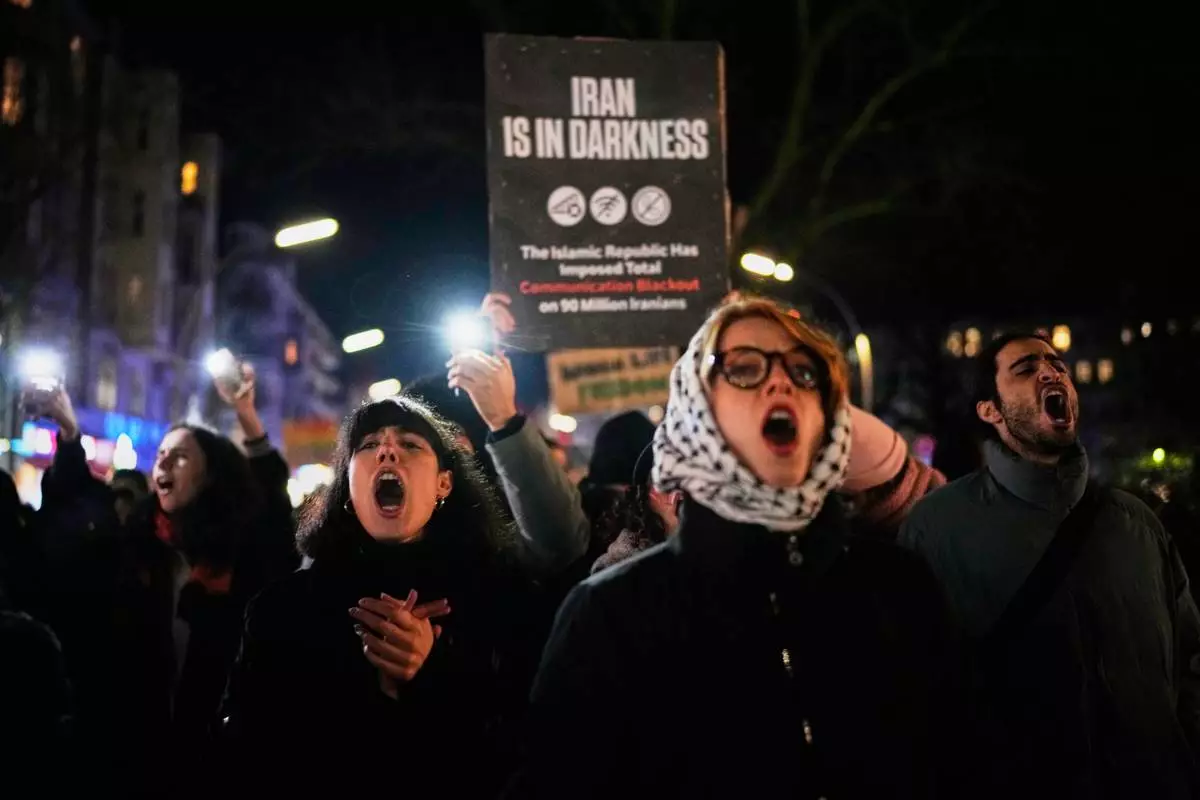
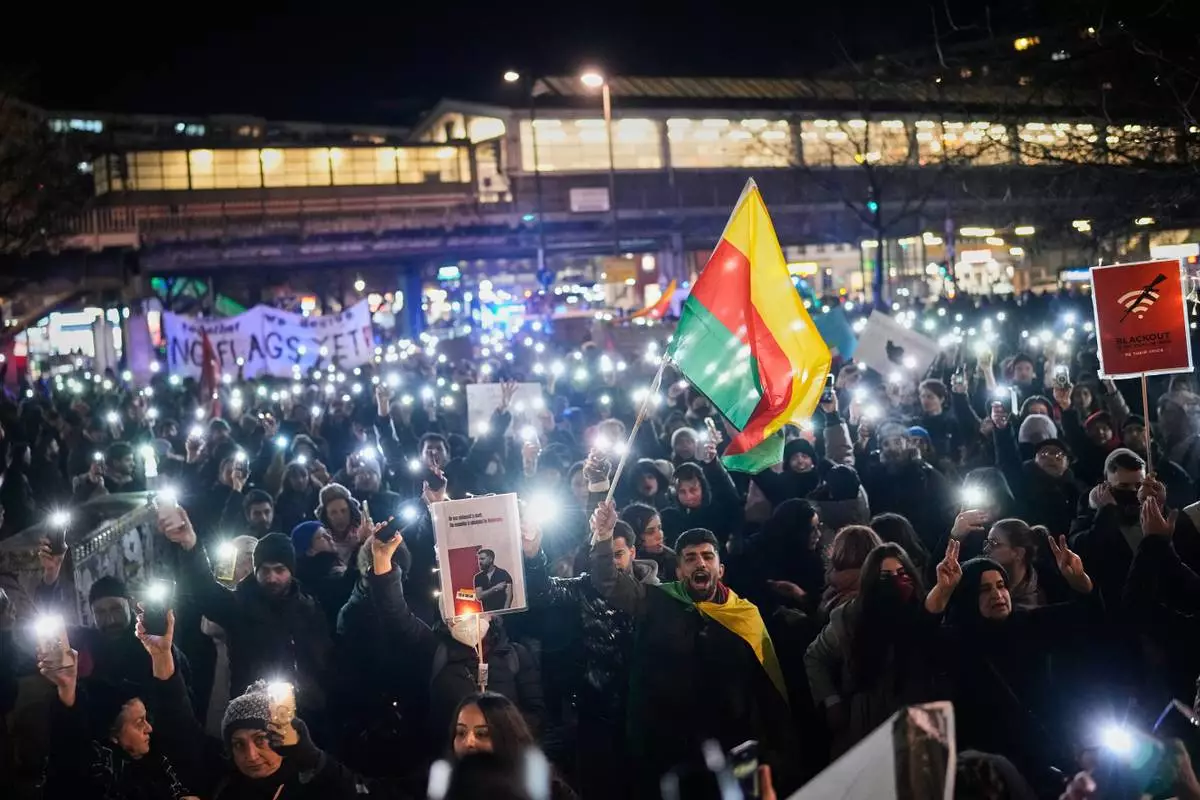
Protesters participate in a demonstration in support of the nationwide mass protests in Iran against the government, in Berlin, Germany, Wednesday, Jan. 14, 2026. (AP Photo/Ebrahim Noroozi)

Protesters participate in a demonstration in support of the nationwide mass protests in Iran against the government, in Berlin, Germany, Wednesday, Jan. 14, 2026. (AP Photo/Ebrahim Noroozi)

Protesters participate in a demonstration in support of the nationwide mass protests in Iran against the government, in Berlin, Germany, Wednesday, Jan. 14, 2026. (AP Photo/Ebrahim Noroozi)

Protesters participate in a demonstration in support of the nationwide mass protests in Iran against the government, in Berlin, Germany, Wednesday, Jan. 14, 2026. (AP Photo/Ebrahim Noroozi)

Recommended Articles