Skip to Content Facebook Feature Image

China's national parks achieve significant progress in ecological protection, restoration

China

China

China

China's national parks achieve significant progress in ecological protection, restoration

2025-08-01 16:12 Last Updated At:08-02 00:57

China's national parks have delivered remarkable ecological, biodiversity and community gains since the first batch was officially established in 2021, a senior official from the National Forestry and Grassland Administration said at a press conference in Beijing on Thursday.

Sun Hongyan, the official from the administration, highlighted significant progress in the five national parks launched that year, namely, Sanjiangyuan National Park, Giant Panda National Park, Northeast China Tiger and Leopard National Park, Hainan Tropical Rainforest National Park, and Wuyi Mountain National Park, including healthier ecosystems, recovering wildlife populations, and improved livelihoods for local residents.

Sanjiangyuan National Park, located in northwest China's Qinghai Province, protects the headwaters of the Yangtze River, Yellow River and Lancang River, and has seen notable environmental improvements.

Compared with 2015, before the area became a pilot site, the number of wild animals has risen sharply, and grassland vegetation coverage has increased by 8.6 percent.

Local residents have seen their annual income rise to between 15,000 and 21,000 yuan, along with increased satisfaction and improved quality of life.

China began piloting a national park system in 2015 to strengthen ecological conservation. In October 2021, five of the ten pilot areas were officially designated as national parks, marking a milestone in the country's environmental governance.

In the Giant Panda National Park in southwest China's Sichuan Province, 13 once-isolated habitats have been reconnected, helping boost the wild panda population from about 1,100 in the 1980s to nearly 1,900 today.

Northeast China Tiger and Leopard National Park has restored wildlife migration corridors, allowing the number of Amur tiger and leopard to rise from 27 to 70, and 42 to 80, respectively.

Notably, for the first time in 30 years, traces of wild tigers have been spotted in the Changbai Mountain region of Jilin Province.

In Hainan Tropical Rainforest National Park, the rainforest ecosystem has gradually recovered, with the wild population of the critically endangered Hainan gibbons increasing from 35 to 42, making them the only gibbon species worldwide to show sustained population growth.

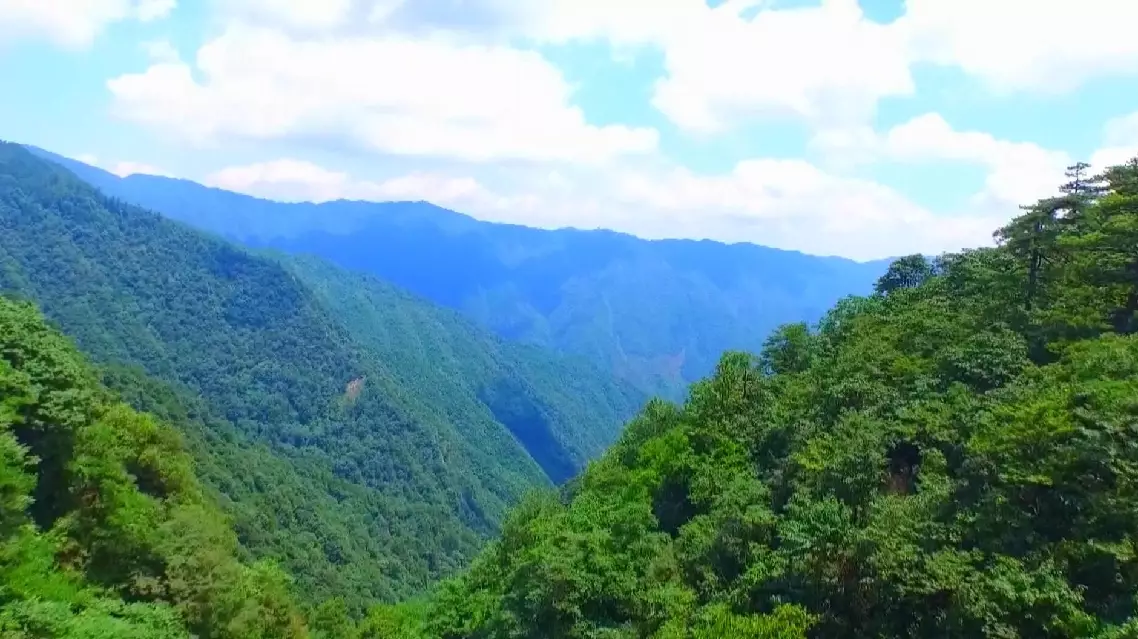
Meanwhile, Wuyi Mountain National Park has carried out coordinated ecosystem restoration across provinces of Fujian and Jiangxi, leading to the discovery of several new species.
China's national parks achieve significant progress in ecological protection, restoration


China's national parks achieve significant progress in ecological protection, restoration
Commemorations honoring Chinese People's Volunteers (CPV) martyrs were held on the banks of the Yalu River in Dandong, Liaoning Province on Tuesday as part of ongoing tributes to those who fought in the War to Resist U.S. Aggression and Aid Korea (1950-1953).

The event was held to mark the return of the remains of 12 CPV martyrs, who were killed in the war, from the Republic of Korea (ROK) on Wednesday.

This will be the 13th such repatriation of CPV remains following the handover agreement between the two countries. Since 2014, the remains of 1,011 soldiers have been returned to China from the ROK, according to China's Ministry of Veterans Affairs.

More than 170 representatives, including veteran CPV soldiers, relatives of the martyrs, active-duty personnel, students, and other from various sectors of society, attended the event.

People boarded a ferry which slowly sailed down the Yalu River. Inside the cabin, all present stood in solemn silence as the national anthem of the People's Republic of China was played, and observed a moment of silence in honor of the CPV martyrs.

Then, they walked to the ship's railings one by one and scattered flower petals into the river to pay tribute to the martyrs.

"We, the CPV, went abroad to fight to defend our motherland, the people, and our good life and to resist U.S. imperialist aggression against the Democratic People's Republic of Korea (DPRK). I hope that our young comrades and students today will study hard and make contributions to our motherland," said Hu Changzhe, a CPV veteran.

"I feel deeply moved as these veteran soldiers are heroes who once fought for our country. Now, standing by the Yalu River, looking back on their past and remembering their comrades, they must be deeply touched," said Hong Jialu, a student at a branch of Liaoning Province Shiyan High School.

At the event, 10 student representatives from primary and middle schools read aloud a letter to express their reverence and remembrance for the heroic martyrs through their sincere words and heartfelt recitation.

The Korean War broke out in June 1950, eight months after the People's Republic of China was founded. At the request of the Democratic People's Republic of Korea (DPRK), China sent 2.9 million CPV soldiers to assist the DPRK during the war, of whom more than 360,000 were killed or injured.

Commemorations held to pay tribute to CPV heroes in northeast China

Commemorations held to pay tribute to CPV heroes in northeast China

Recommended Articles