The Corporation for Public Broadcasting, which helps pay for PBS, NPR, 1,500 local radio and television stations as well as programs like “Sesame Street” and “Finding Your Roots,” said Friday that it would close after the U.S. government withdrew funding.
The organization told employees that most staff positions will end with the fiscal year on Sept. 30. A small transition team will stay until January to finish any remaining work.
The private, nonprofit corporation was founded in 1968 shortly after Congress authorized its formation. It now ends nearly six decades of fueling the production of renowned educational programming, cultural content and emergency alerts about natural disasters.
Here's what to know:
President Donald Trump signed a bill on July 24 canceling about $1.1 billion that had been approved for public broadcasting. The White House says the public media system is politically biased and an unnecessary expense, and conservatives have particularly directed their ire at NPR and PBS.
Lawmakers with large rural constituencies voiced concern about what the cuts could mean for some local public stations in their state. They warned some stations will have to close.
The Senate Appropriations Committee on Thursday reinforced the policy change by excluding funding for the corporation for the first time in more than 50 years as part of a broader spending bill.
Congress passed legislation creating the body in 1967, several years after then-Federal Communications Commission Chairman Newton Minow described commercial television a “vast wasteland” and called for programming in the public interest.
The corporation doesn't produce programming and it doesn't own, operate or control any public broadcasting stations. The corporation, PBS, NPR are independent of each other as are local public television and radio stations.
Roughly 70% of the corporation’s money went directly to 330 PBS and 246 NPR stations across the country. The cuts are expected to weigh most heavily on smaller public media outlets away from big cities, and it’s likely some won’t survive. NPR's president estimated as many as 80 NPR stations may close in the next year.
Mississippi Public Broadcasting has already decided to eliminate a streaming channel that airs children’s programming like “Caillou” and “Daniel Tiger’s Neighborhood” 24 hours a day.
Maine’s public media system is looking at a hit of $2.5 million, or about 12% of its budget, for the next fiscal year. The state's rural residents rely heavily on public media for weather updates and disaster alerts.
In Kodiak, Alaska, KMXT estimated the cuts would slice 22% from its budget. Public radio stations in the sprawling, heavily rural state often provide not just news but alerts about natural disasters like tsunamis, landslides and volcanic eruptions.
The first episode of “Sesame Street” aired in 1969. Child viewers, adults and guest stars alike were instantly hooked. Over the decades, characters from Big Bird to Cookie Monster and Elmo have become household favorites
Entertainer Carol Burnett appeared on that inaugural episode. She told The Associated Press she was a big fan.
"I would have done anything they wanted me to do,” she said. “I loved being exposed to all that goodness and humor.”
Sesame Street said in May it would also get some help from a Netflix streaming deal.
Harvard professor Henry Louis Gates Jr. started “Finding Your Roots” in 2006 under the title “African American Lives.” He invited prominent Black celebrities and traced their family trees into slavery. When the paper trail ran out, they would use DNA to see which ethnic group they were from in Africa. Challenged by a viewer to open the show to non-Black celebrities, Gates agreed and the series was renamed “Faces of America,” which had to be changed again after the name was taken.
The show is PBS’s most-watched program on linear TV and the most-streamed non-drama program. Season 10 reached nearly 18 million people across linear and digital platforms and also received its first Emmy nomination.
Grant money from the nonprofit has also funded lesser-known food, history, music and other shows created by stations across the country.
Documentarian Ken Burns, celebrated for creating the documentaries “The Civil War,” “Baseball” and “The Vietnam War”, told PBS NewsHour said the corporation accounted for about 20% of his films' budgets. He said he would make it up but projects receiving 50% to 75% of their funding from the organization won't.
Children’s programing in the 1960s was made up of shows like “Captain Kangaroo,” ’’Romper Room” and the violent skirmishes between “Tom & Jerry.” "Mr. Rogers’ Neighborhood” mostly taught social skills.
“Sesame Street” was designed by education professionals and child psychologists to help low-income and minority students aged 2-5 overcome some of the deficiencies they had when entering school. Social scientists had long noted white and higher income kids were often better prepared.
One of the most widely cited studies about the impact of “Sesame Street” compared households that got the show with those who didn’t. It found that the children exposed to “Sesame Street” were 14% more likely to be enrolled in the correct grade level for their age at middle and high school.
Over the years, “Finding Your Roots” showed Natalie Morales discovering she’s related to one of the legendary pirates of the Caribbean and former “Saturday Night Live” star Andy Samberg finding his biological grandmother and grandfather. It revealed that drag queen RuPaul and U.S. Sen. Cory Booker are cousins, as are actors Meryl Streep and Eva Longoria.
“The two subliminal messages of ’Finding Your Roots,’ which are needed more urgently today than ever, is that what has made America great is that we’re a nation of immigrants,” Gates told the AP. “And secondly, at the level of the genome, despite our apparent physical differences, we’re 99.99% the same.”
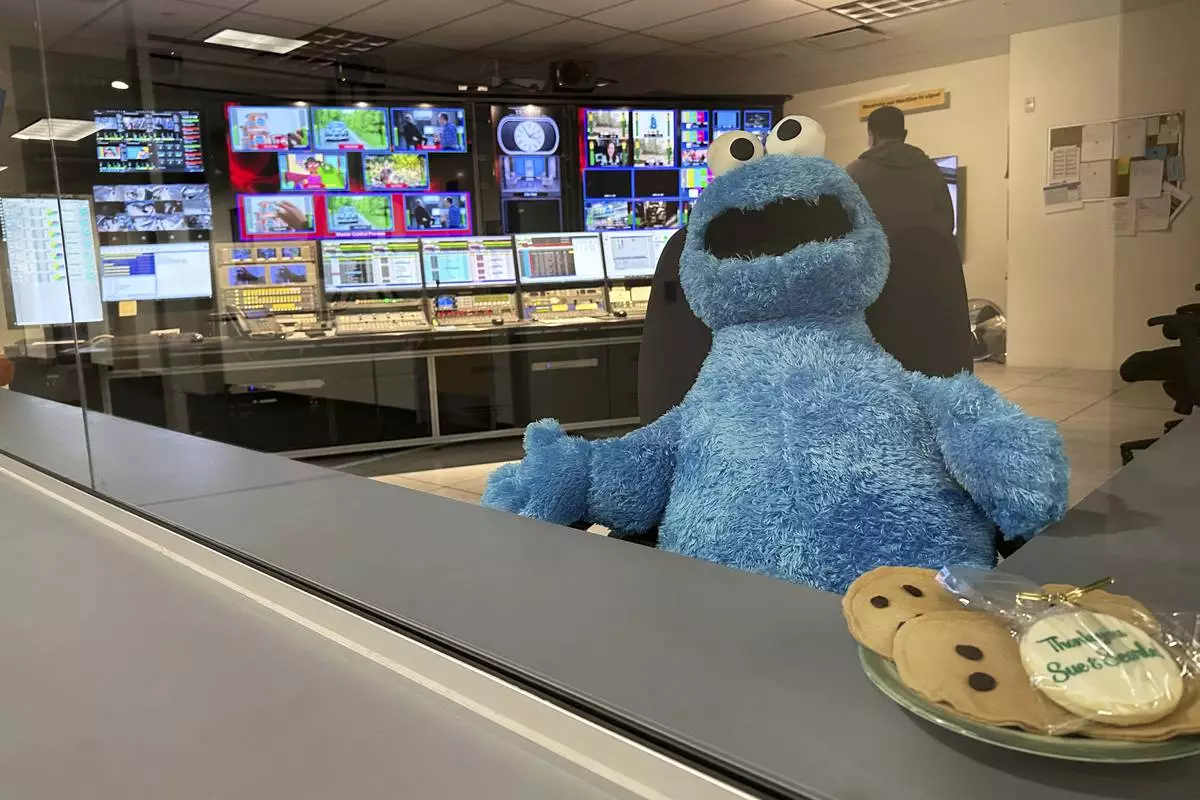
FILE - A stuffed Cookie Monster is seated in a control room at the Arizona PBS offices at the Walter Cronkite School of Journalism and Mass Communication in Phoenix, Friday, May 2, 2025. (AP Photo/Katie Oyan, File)

FILE - One of the control rooms at the Arizona PBS offices at the Walter Cronkite School of Journalism and Mass Communication in Phoenix is seen Friday, May 2, 2025. (AP Photo/Katie Oyan, File)
WASHINGTON (AP) — Senate Democratic leaders believe they have a path to winning the majority in November, though it's one with very little wiggle room.
The party got a new burst of confidence when former Rep. Mary Peltola announced Monday she'll run for the Senate in Alaska. Her bid gives Democrats a critical fourth candidate with statewide recognition in states where Republican senators are seeking reelection this year. Nationally, Democrats must net four seats to edge Republicans out of the majority.
That possibility looked all but impossible at the start of last year. And while the outlook has somewhat improved as 2026 begins, Democrats still almost certainly must sweep those four seats. First they must settle some contentious primaries, the mark of a party still struggling with its way forward after Republicans took full control of Washington in 2024. Importantly, they must also beat back challenges to incumbents in some of the most competitive states on the map.
And though some of Senate Minority Leader Chuck Schumer's top Democratic Senate recruits were lauded for their statewide success in pivotal states, some are nearly 70 or older, hardly the key to a lasting Democratic transformation.
Republicans doubt the chances Democrats can pull off such a task, considering most of the 2026 contests are in states that Donald Trump easily won in 2024.
Still, independent voters have drifted in Democrats' direction over the past year, according to a new Gallup poll, a slight breeze at Democrats' back they didn't expect a year ago when there was little path at all.
“I say it’s a much wider path than the skeptics think, and a much wider path than it was three months ago and certainly a year ago,” Schumer told The Associated Press Tuesday.
Republicans currently hold 53 seats, while the Democratic caucus has 47 members, including two independents.
Schumer argues that Peltola, elected twice statewide to Alaska's at-large House seat, puts the typically Republican-leaning state in play as a potential pickup for Democrats.
It's a development similar to other states where Schumer believes Democrats have recruited strong candidates: former three-term Sen. Sherrod Brown in Ohio, former two-term Gov. Roy Cooper in North Carolina and two-term Gov. Janet Mills in Maine.
But they hardly represent a quartet of guarantees. Brown, a longtime pro-labor progressive in increasingly GOP-leaning Ohio, and Peltola, who was elected during a special election in 2022, both lost reelection in 2024. Mills, finishing her second term as governor, faces a competitive primary challenge from progressive veteran and oyster farmer Graham Platner.
None of the four had runaway popularity with voters in their states in 2024. Right around half of voters had somewhat or very favorable views of all of them, with Cooper slightly higher and Brown slightly lower, according to AP VoteCast, a survey of the electorate.
Age remains another issue. After President Joe Biden, in his early 80s, withdrew from the 2024 race amid concerns he was too old to serve, Democratic Senate leadership hasn't changed course. Schumer, 75, has recruited candidates who are older, with several top recruits – including Mills and Brown – well into their 70s.
“Voters sent a very clear message in 2024 that they’re sick of the gerontocracy. They’re sick of Democrats putting up old candidates and that they want some new blood,” said Lis Smith, a national Democratic strategist. “And some of the recruits, like in Maine, seem to completely ignore the message that voters sent in 2024.”
Schumer said winning back the Senate is paramount over all else.
“It's not young versus old. It's not left versus center. It's who can best win in the states,” he said. “So, these are all really good candidates, and I don't think you look at them through one narrow prism. You look at who can win.”
Before Democrats can test their general-election appeal, they must navigate some primaries that highlight lingering divisions within the party.
Platner, who has been endorsed by independent Sen. Bernie Sanders of Vermont, has demonstrated formidable fundraising for his Maine contest, despite controversies surrounding past social media posts and a tattoo linked to Nazi imagery. Some Democrats worry his insurgent appeal could be a liability in November if he is the nominee.
In Michigan, Democratic Sen. Gary Peters' retirement has opened a seat in a state Trump carried narrowly. Republicans have unified behind former Rep. Mike Rogers, while Democrats face a crowded August primary after failing to recruit Gov. Gretchen Whitmer.
Crowded or contentious primaries are also playing out in Minnesota, Texas and Iowa, forcing Democrats to devote resources even in states not central to their path to a majority.
Sen. Chris Van Hollen is part of an informal group of Democratic senators known as Fight Club that has been openly critical of party leadership’s approach to the midterms. Van Hollen said the group has objected to what it sees as the Senate Democrats’ campaign arm — controlled by Schumer — “wading into certain Democratic primaries.”
“So, yes, we’re taking a look at all of them,” Van Hollen said of endorsing more progressive candidates.
Betsy Ankney, political director for the National Republican Senatorial Committee in 2020, acknowledged Democrats’ desire to make the case for competitiveness but characterized Trump’s presidential victories in Alaska and Ohio in 2024 — by 13 and 11 percentage point margins, respectively — as enormous hurdles.
She said Republicans are “rightly focused, on real tangible targets in Georgia, in Michigan," calling them “very real pickup opportunities.”
Democrats’ shot at the majority almost certainly depends on Sen. Jon Ossoff winning reelection in Georgia, where Trump won in 2024 by 2.2 percentage points, and holding Michigan, where Peters' retirement creates an open seat in a state Trump carried by 1.4 percentage points.
"It’s not just about where the Democrats can play. It’s about where we can play, too,” Ankney said.
Despite the challenges, Democrats see reasons for optimism in the broader political climate.
A new Gallup survey found 47% of U.S. adults now identify with or lean toward the Democrats, while 42% are Republicans or lean Republican. That gives Democrats the advantage in party affiliation for the first time since Trump’s first term.
But the data strongly suggests that independents are moving toward Democrats because of their souring attitude toward Trump, rather than greater goodwill toward Democrats. The Democratic Party’s favorability is still low, and Gallup’s analysis found that, as more Americans identify as independents, they tend to gravitate toward the party that is out of political power — whether it’s the Democrats or the Republicans.
Still, that appears to be a dynamic in Democrats' favor, as economic unease creeps into the election year with little time before the feelings lock into voters' political thinking, veteran Republican pollster Ed Goeas said.
“That creates an environment that will affect these Senate races,” Goeas said, predicting House Republicans could lose their majority. He said Republicans are assuming the economy and the political environment are going to be better.
“I think they are going to end up getting frustrated going into the summer because, first of all, the economy is not on all levels improving. It’s going to be a target-rich environment for Democrats," he said.
“It’s going to be close.”
Beaumont reported from Des Moines, Iowa. Associated Press writer Amelia Thomson DeVeaux in Washington contributed to this report.
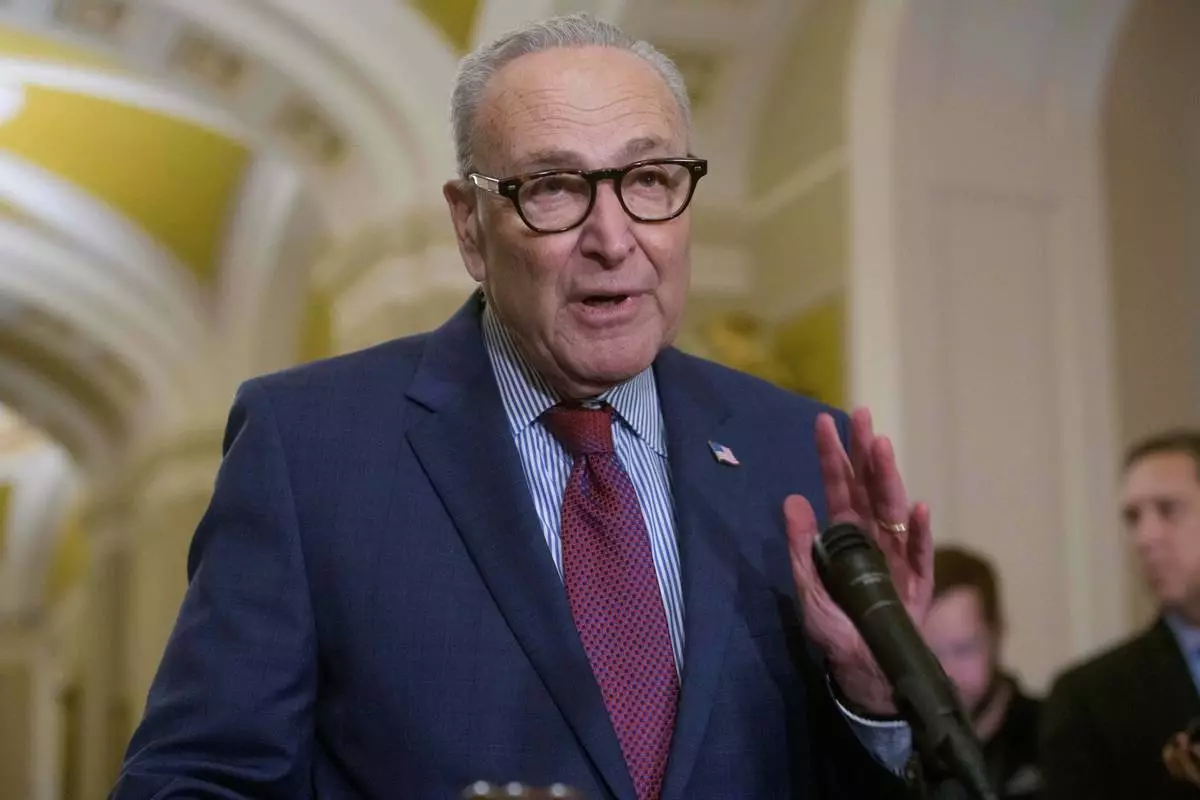
Senate Minority Leader Chuck Schumer, D-N.Y., speaks during the Senate Democrat policy luncheon news conference at the Capitol, Tuesday, Jan. 13, 2026, in Washington. (AP Photo/Rod Lamkey, Jr.)
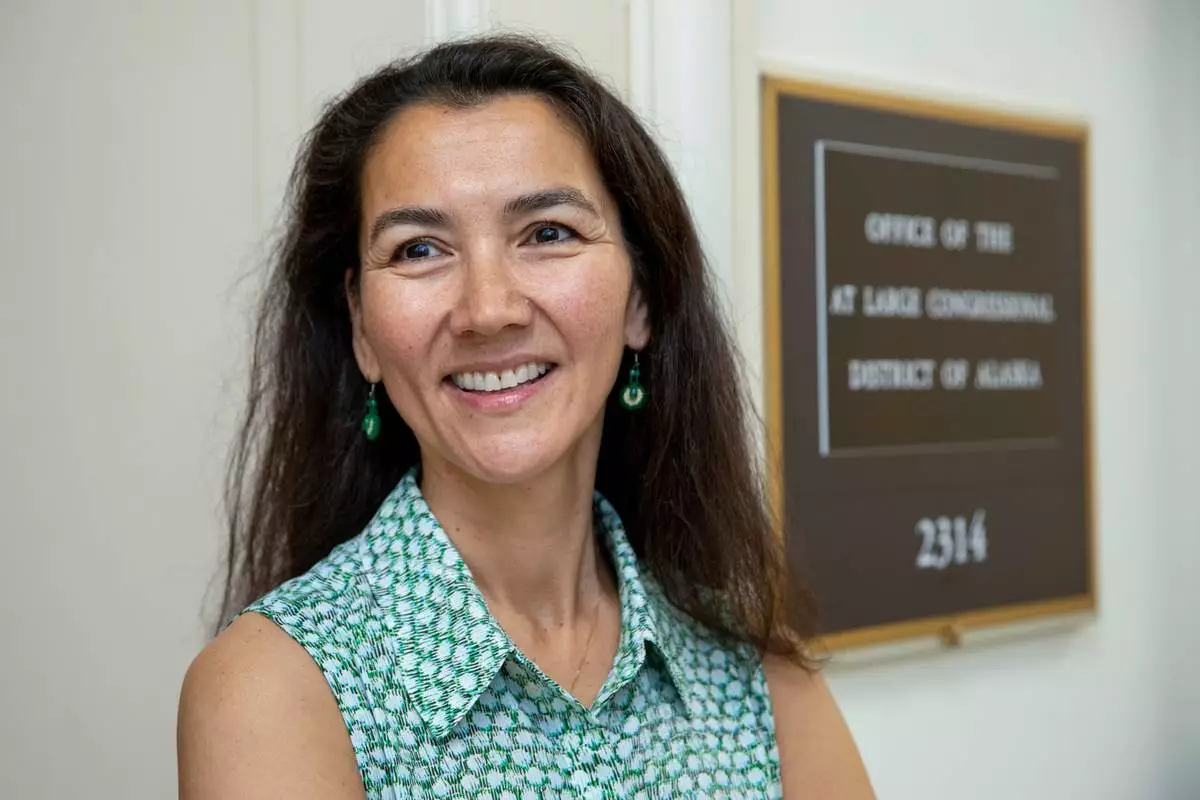
FILE - Rep.-elect Mary Peltola, D-Alaska, is interviewed on Capitol Hill in Washington, Sept. 12, 2022. (AP Photo/Amanda Andrade-Rhoades, File)