Skip to Content Facebook Feature Image

Appeals court keeps order blocking Trump administration from indiscriminate immigration sweeps

News

Appeals court keeps order blocking Trump administration from indiscriminate immigration sweeps
News

News

Appeals court keeps order blocking Trump administration from indiscriminate immigration sweeps

2025-08-03 05:14 Last Updated At:05:20

LOS ANGELES (AP) — A federal appeals court ruled Friday night to uphold a lower court’s temporary order blocking the Trump administration from conducting indiscriminate immigration stops and arrests in Southern California.

A three-judge panel of the Ninth U.S. Circuit Court of Appeals held a hearing Monday afternoon at which the federal government asked the court to overturn a temporary restraining order issued July 12 by Judge Maame E. Frimpong, arguing it hindered their enforcement of immigration law.

Immigrant advocacy groups filed suit last month accusing President Donald Trump’s administration of systematically targeting brown-skinned people in Southern California during the administration's crackdown on illegal immigration. The lawsuit included three detained immigrants and two U.S. citizens as plaintiffs.

In her order, Frimpong said there was a “mountain of evidence” that federal immigration enforcement tactics were violating the Constitution. She wrote the government cannot use factors such as apparent race or ethnicity, speaking Spanish or English with an accent, presence at a location such as a tow yard or car wash, or someone’s occupation as the only basis for reasonable suspicion to detain someone.

The appeals court panel agreed and questioned the government's need to oppose an order preventing them from violating the constitution.

“If, as Defendants suggest, they are not conducting stops that lack reasonable suspicion, they can hardly claim to be irreparably harmed by an injunction aimed at preventing a subset of stops not supported by reasonable suspicion,” the judges wrote.

The Department of Homeland Security said being in the country illegally is what makes someone a target of immigration officers, not their skin color, race or ethnicity.

“Unelected judges are undermining the will of the American people,” department spokesperson Tricia McLaughlin said Saturday in an emailed statement. “President Trump and Secretary Noem are putting the American people first by removing illegal aliens who pose a threat to our communities.”

A hearing for a preliminary injunction, which would be a more substantial court order as the lawsuit proceeds, is scheduled for September.

The Los Angeles region has been a battleground with the Trump administration over its aggressive immigration strategy that spurred protests and the deployment of the National Guards and Marines for several weeks. Federal agents have rounded up immigrants without legal status to be in the U.S. from Home Depots, car washes, bus stops, and farms, many who have lived in the country for decades.

Among the plaintiffs is Los Angeles resident Brian Gavidia, who was shown in a video taken by a friend June 13 being seized by federal agents as he yells, “I was born here in the states, East LA bro!”

They want to “send us back to a world where a U.S. citizen ... can be grabbed, slammed against a fence and have his phone and ID taken from him just because he was working at a tow yard in a Latino neighborhood,” American Civil Liberties Union attorney Mohammad Tajsar told the court Monday.

The federal government argued that it hadn’t been given enough time to collect and present evidence in the lawsuit, given that it was filed shortly before the July 4 holiday and a hearing was held the following week.

“It’s a very serious thing to say that multiple federal government agencies have a policy of violating the Constitution,” attorney Jacob Roth said.

He also argued that the lower court’s order was too broad, and that immigrant advocates did not present enough evidence to prove that the government had an official policy of stopping people without reasonable suspicion.

He referred to the four factors of race, language, presence at a location, and occupation that were listed in the temporary restraining order, saying the court should not be able to ban the government from using them at all. He also argued that the order was unclear on what exactly is permissible under law.

“Legally, I think it’s appropriate to use the factors for reasonable suspicion,” Roth said

The judges sharply questioned the government over their arguments.

“No one has suggested that you cannot consider these factors at all,” Judge Jennifer Sung said.

However, those factors alone only form a “broad profile” and don’t satisfy the reasonable suspicion standard to stop someone, she said.

Sung, a Biden appointee, said that in an area like Los Angeles, where Latinos make up as much as half the population, those factors “cannot possibly weed out those who have undocumented status and those who have documented legal status.”

She also asked: “What is the harm to being told not to do something that you claim you’re already not doing?”

Los Angeles Mayor Karen Bass called the Friday night decision a “victory for the rule of law” and said the city will protect residents from the “racial profiling and other illegal tactics” used by federal agents.
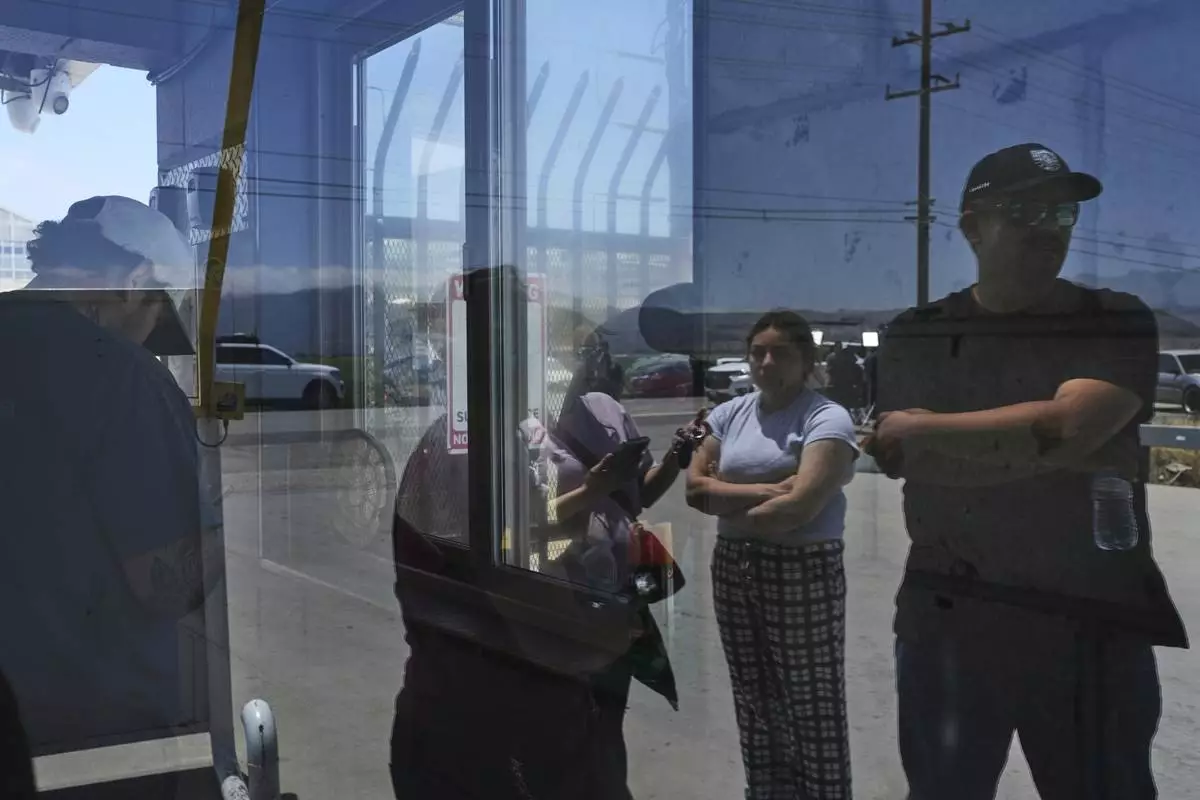
FILE - People wait outside of Glass House Farms, a day after an immigration raid on the facility, Friday, July 11, 2025, in Camarillo, Calif. (AP Photo/Jae C. Hong, File)
FILE - People wait outside of Glass House Farms, a day after an immigration raid on the facility, Friday, July 11, 2025, in Camarillo, Calif. (AP Photo/Jae C. Hong, File)
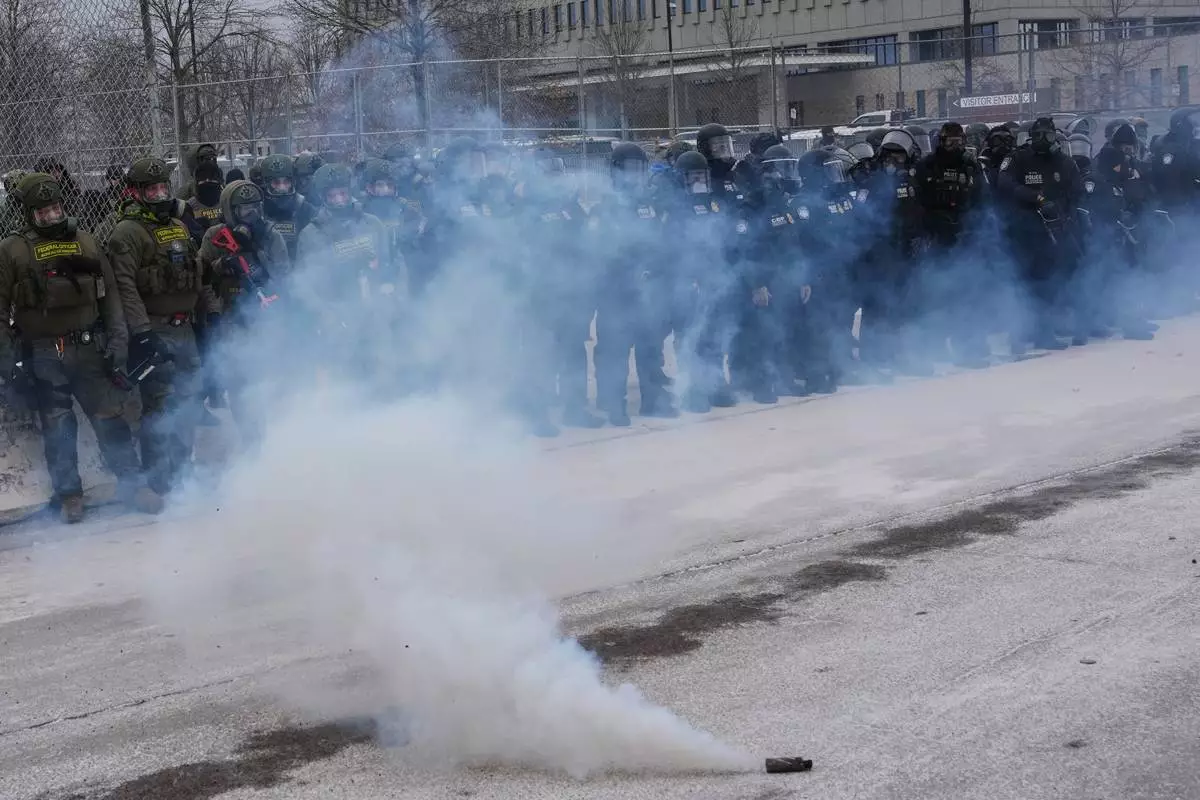
MINNEAPOLIS (AP) — Federal officers in the Minneapolis area participating in its largest recent U.S. immigration enforcement operation can’t detain or tear gas peaceful protesters who aren't obstructing authorities, including when these people are observing the agents, a judge in Minnesota ruled Friday.

U.S. District Judge Kate Menendez's ruling addresses a case filed in December on behalf of six Minnesota activists. The six are among the thousands who have been observing the activities of Immigration and Customs Enforcement and Border Patrol officers enforcing the Trump administration’s immigration crackdown in the Minneapolis-St. Paul area since last month.

Federal agents and demonstrators have repeatedly clashed since the crackdown began. The confrontations escalated after an immigration agent fatally shot Renee Good in the head on Jan. 7 as she drove away from a scene in Minneapolis, an incident that was captured on video from several angles. Agents have arrested or briefly detained many people in the Twin Cities.

The activists in the case are represented by the American Civil Liberties Union of Minnesota, which says government officers are violating the constitutional rights of Twin Cities residents.

After the ruling, U.S. Department of Homeland Security Assistant Secretary Tricia McLaughlin issued a statement saying her agency was taking “appropriate and constitutional measures to uphold the rule of law and protect our officers and the public from dangerous rioters.”

She said people have assaulted officers, vandalized their vehicles and federal property, and attempted to impede officers from doing their work.

“We remind the public that rioting is dangerous — obstructing law enforcement is a federal crime and assaulting law enforcement is a felony,” McLaughlin said.

The ACLU didn't immediately respond to requests for comment Friday night.

The ruling prohibits the officers from detaining drivers and passengers in vehicles when there is no reasonable suspicion they are obstructing or interfering with the officers.

Safely following agents “at an appropriate distance does not, by itself, create reasonable suspicion to justify a vehicle stop,” the ruling said.

Menendez said the agents would not be allowed to arrest people without probable cause or reasonable suspicion the person has committed a crime or was obstructing or interfering with the activities of officers.

Menendez is also presiding over a lawsuit filed Monday by the state of Minnesota and the cities of Minneapolis and St. Paul seeking to suspend the enforcement crackdown, and some of the legal issues are similar. She declined at a hearing Wednesday to grant the state’s request for an immediate temporary restraining order in that case.

“What we need most of all right now is a pause. The temperature needs to be lowered,” state Assistant Attorney General Brian Carter told her.

Menendez said the issues raised by the state and cities in that case are “enormously important.” But she said it raises high-level constitutional and other legal issues, and for some of those issues there are few on-point precedents. So she ordered both sides to file more briefs next week.

McAvoy reported from Honolulu. Associated Press writer Hallie Golden in Seattle contributed to this report.

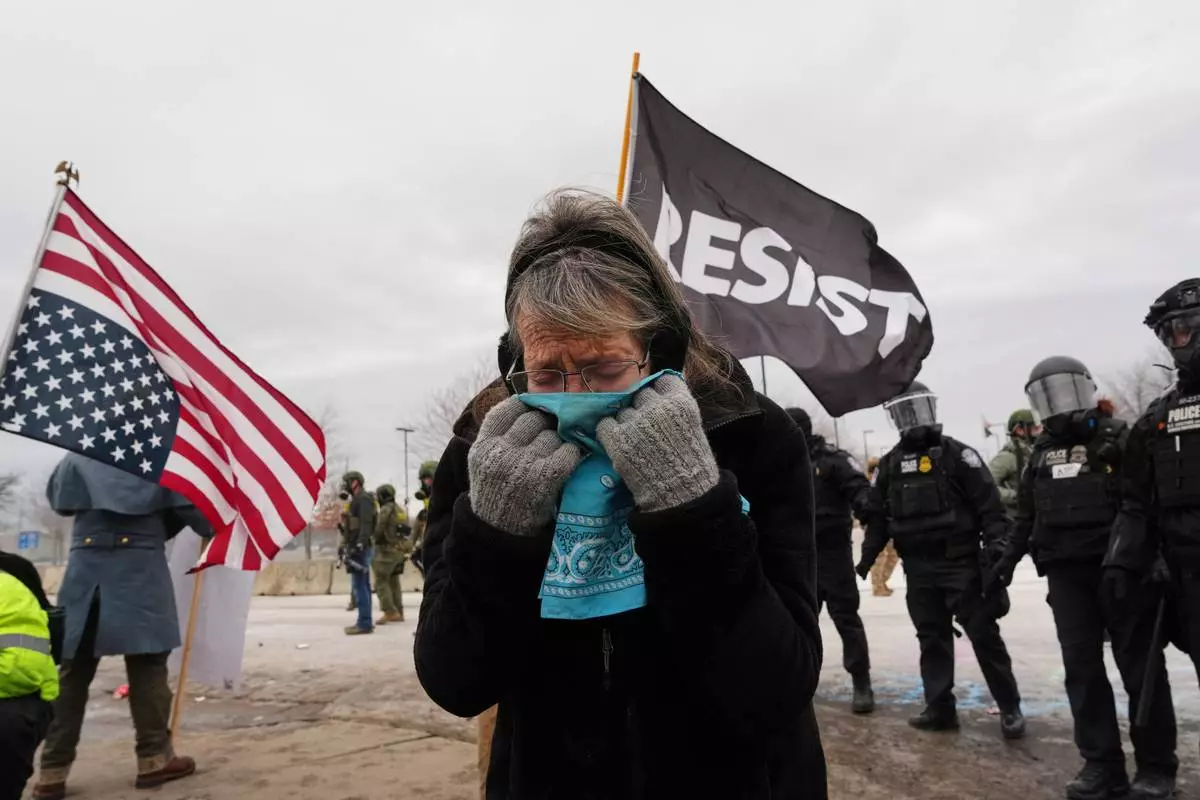
A woman covers her face from tear gas as federal immigration officers confront protesters outside Bishop Henry Whipple Federal Building, Thursday, Jan. 15, 2026, in Minneapolis. (AP Photo/Adam Gray)

A woman covers her face from tear gas as federal immigration officers confront protesters outside Bishop Henry Whipple Federal Building, Thursday, Jan. 15, 2026, in Minneapolis. (AP Photo/Adam Gray)

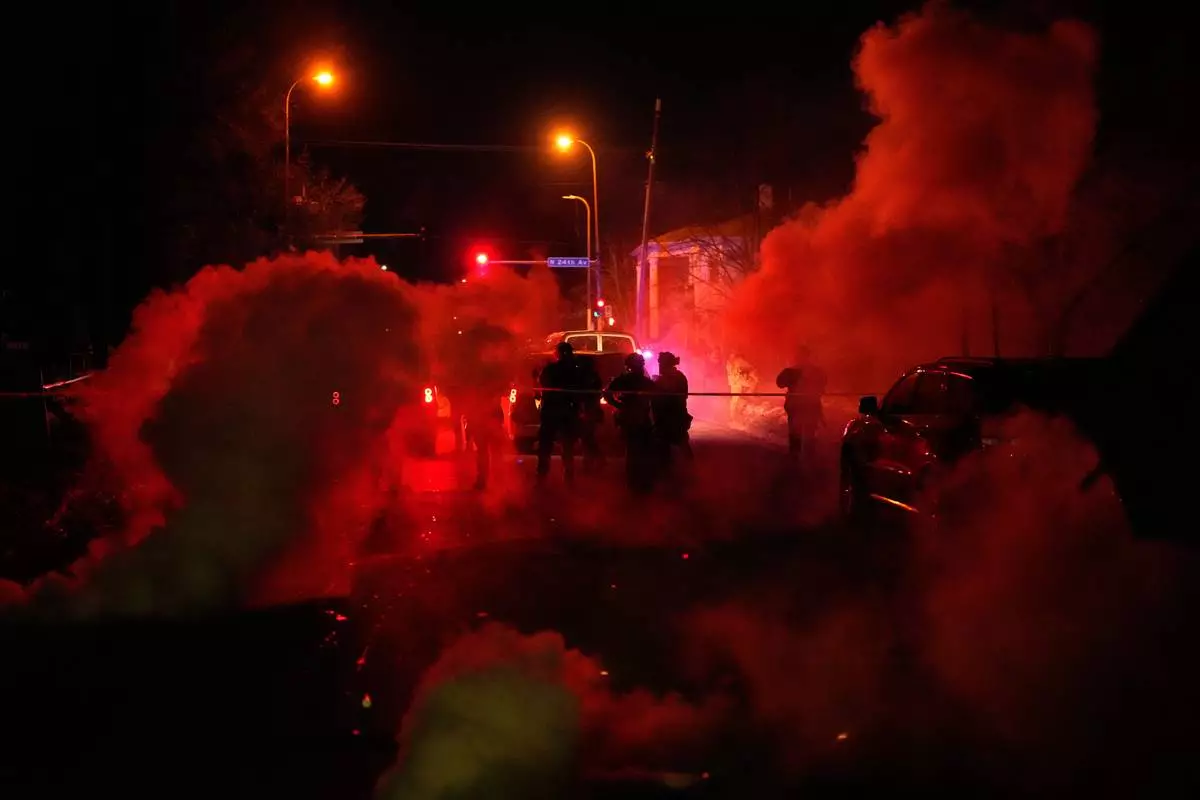
Tear gas surrounds federal law enforcement officers as they leave a scene after a shooting on Wednesday, Jan. 14, 2026, in Minneapolis. (AP Photo/John Locher)

Tear gas surrounds federal law enforcement officers as they leave a scene after a shooting on Wednesday, Jan. 14, 2026, in Minneapolis. (AP Photo/John Locher)

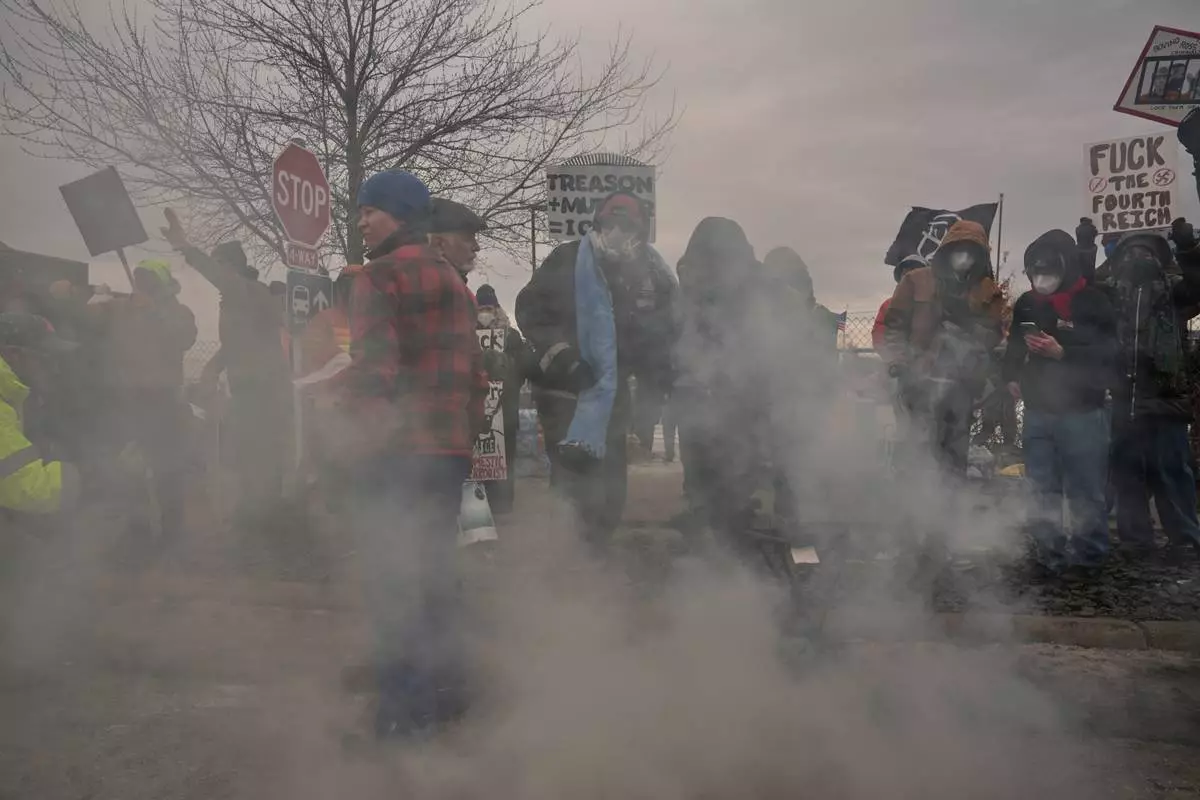
People cover tear gas deployed by federal immigration officers outside Bishop Henry Whipple Federal Building, Thursday, Jan. 15, 2026, in Minneapolis. (AP Photo/Adam Gray)

People cover tear gas deployed by federal immigration officers outside Bishop Henry Whipple Federal Building, Thursday, Jan. 15, 2026, in Minneapolis. (AP Photo/Adam Gray)

Federal immigration officers stand outside Bishop Henry Whipple Federal Building as tear gas is deployed Thursday, Jan. 15, 2026, in Minneapolis. (AP Photo/Adam Gray)

Federal immigration officers stand outside Bishop Henry Whipple Federal Building as tear gas is deployed Thursday, Jan. 15, 2026, in Minneapolis. (AP Photo/Adam Gray)

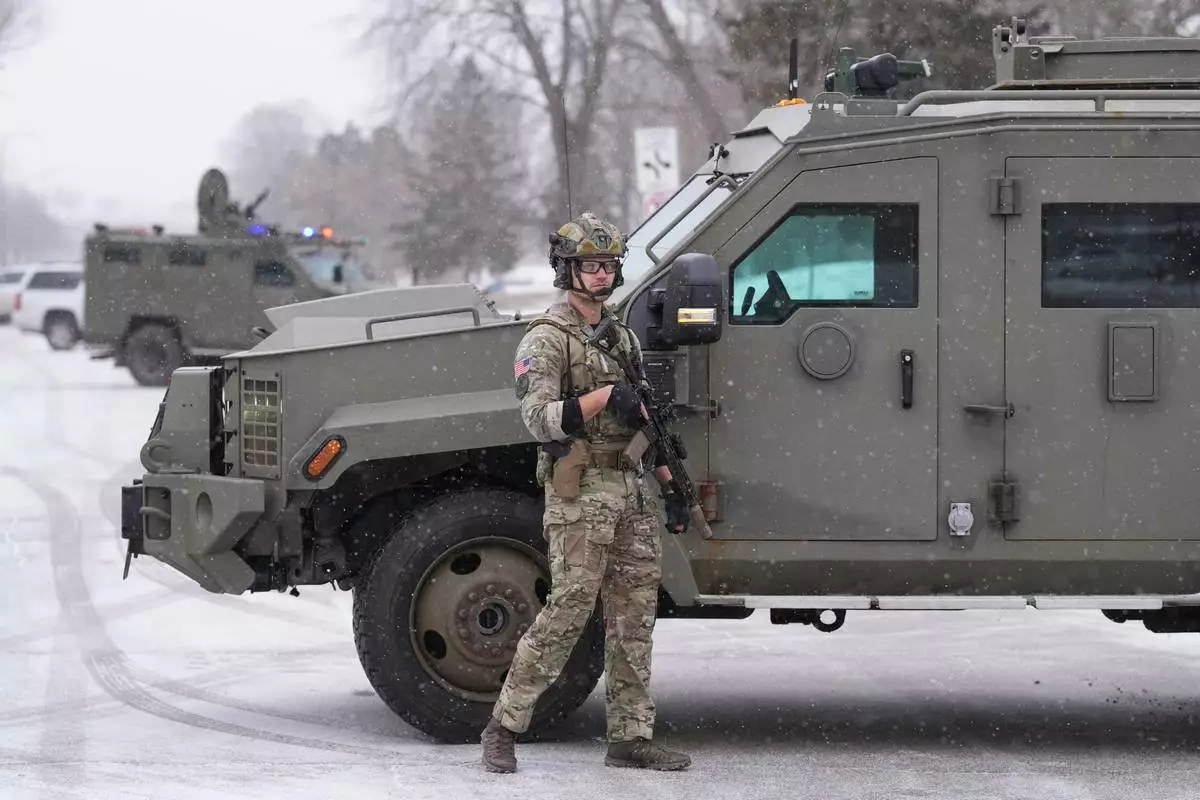
An FBI officer works the scene during operations on Friday, Jan. 16, 2026, in St. Paul, Minn. (AP Photo/Adam Gray)

An FBI officer works the scene during operations on Friday, Jan. 16, 2026, in St. Paul, Minn. (AP Photo/Adam Gray)

Recommended Articles