In a resonant call echoing from Malawi's capital to the global stage, Vitumbiko Caroline Ng'oma, a young Malawian woman and rising advocate for gender equity, has urged the international community to ensure that every girl - regardless of where she was born - has a fair chance at leadership.
Speaking to China Global Television Network (CGTN) on the sidelines of activities commemorating the 80th anniversary of the United Nations, Ng'oma emphasized that meaningful inclusion must move beyond words to action.
"To me, social equity means recognizing difference, addressing imbalance, and doing the hard work of inclusion, not just in slogans, but in budgets, laws, and lived realities. It means making sure that a rural girl in Malawi has the same shot at leadership as anyone in the world, not by chance, but by design," said Ng'oma.
She believes that only by breaking cultural and structural barriers and ensuring that inclusion is not merely symbolic, but has real transformative power, can we achieve fairness and equality in society.
"As we celebrate the 80th anniversary of the United Nations, as a Malawian and I have seen the cost of exclusion and the transformative power that comes with equity. I reflect on my own journey through the lens of social equity, a principle I explored through my thesis on the effects of the 50-50 campaign on women's political participation in Malawi. My research revealed that while campaigns can open doors, equity requires systems that sustains access to leadership, brick cultural and structural barriers, and also ensures that inclusion is not just symbolic but transformational. The 50-50 campaign in Malawi is backed by UN women and UNDP. The campaign brought significant benefits of inclusive leadership. The launch of the campaign led to the rise of women in political participation across the country," Ng'oma said.
In the Malawian capital Lilongwe, efforts to advance women's political participation have gained ground through targeted initiatives supported by international partners.
"In Lilongwe, this movement took root through several initiatives that placed women at the heart of governance. One of the key initiatives was the launch of African Women Leaders Network (AWLN) with support from UN Women. This platform brings women together from politics, grassroots organizations and private sector, creating space for inter generational dialogue, policy influence, mentorship and collective leadership. The platform ensures that women from diverse backgrounds are not just represented, but are shaping the decisions that affect their lives and communities, bridging the gap between rural and urban voices, between emerging leaders and seasoned change makers," Ng'oma noted.
She believes that the real legacy of global institutions lies not in what is built, but in what is dismantled - especially the barriers that keep girls and women from taking the lead.
"As we honor the 80 years of UN, I believe our greatest legacy would not be the structures we've built, but the barriers we have dismantled. Equity should not just be an agenda, an agenda item but our foundation that a girl born in the rural village has the same right to lead, to decide and to thrive as anybody else in the world, from the margins to the center moving forward together," said the young woman.
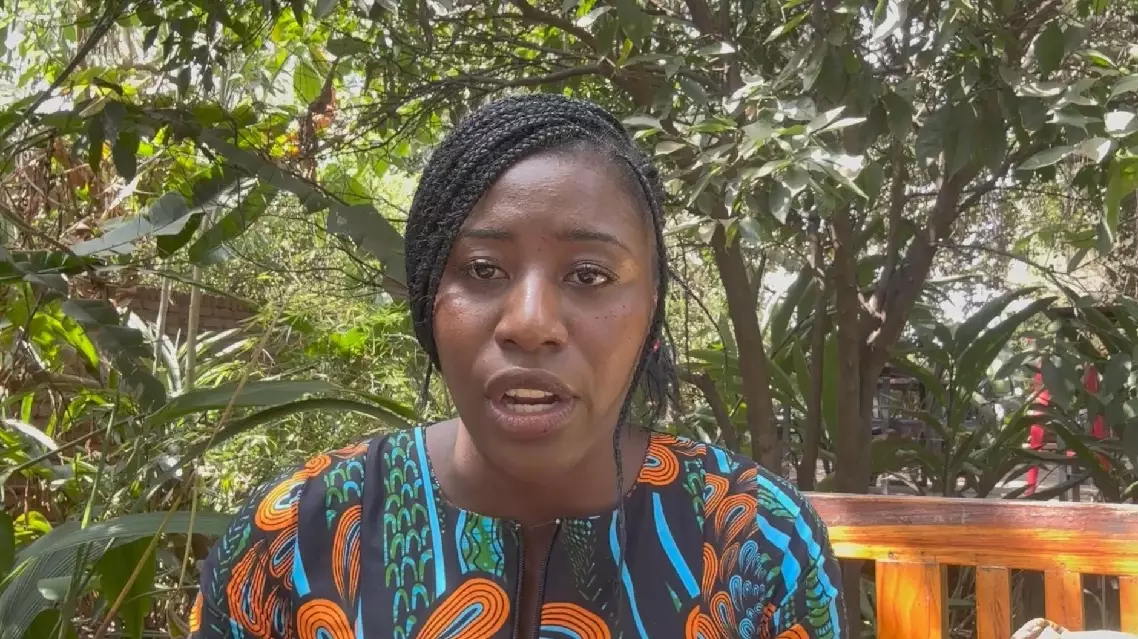
Malawian youth calls for equal right to leadership for every woman