Beijing authorities renewed a yellow alert for geological disasters and severe weather on Saturday afternoon, warning that parts of the capital city's suburbs face continued threats of landslides, rockfalls and mudslides on Sunday.
Seven suburban districts in the city's north, east and west are bracing for potential geological hazards following a new round of rain just days after a devastating downpour.
In the northwestern Yanqing District, where flash-flood, lightning, and rainstorm warnings were also in force on Saturday, residents at risk had been moved to safety.
Meanwhile, affected regions have begun damage evaluation and recovery efforts.
Yanqing is planning to build permanent resettlement housing for some of the residents whose homes were rendered uninhabitable by the recent downpour.
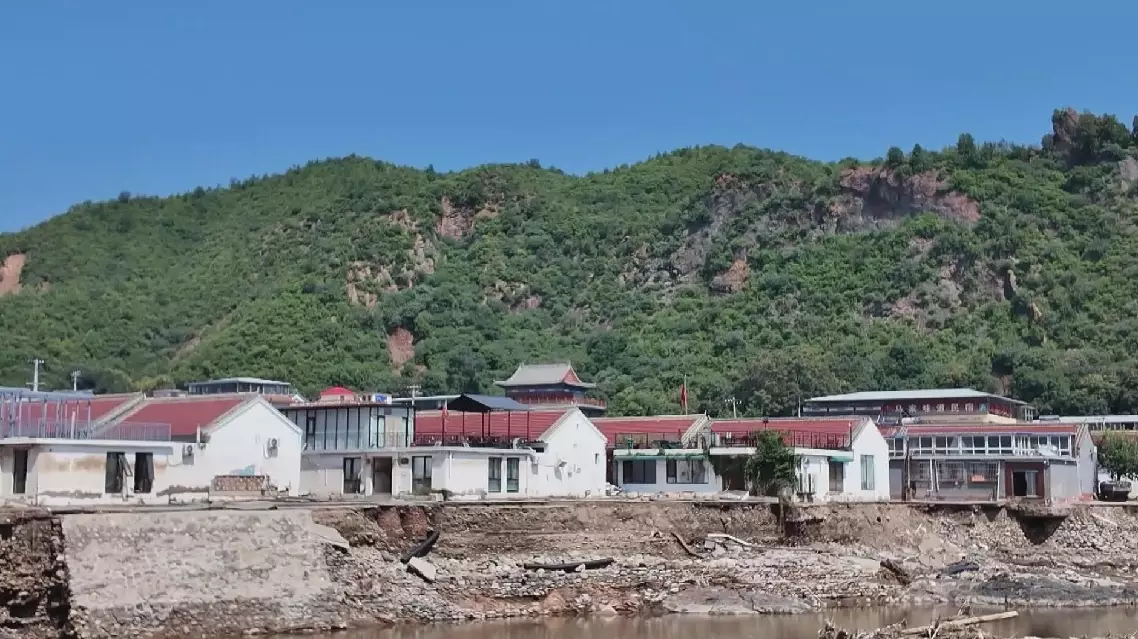
In the northern district of Huairou, the worst-hit town of Liulimiao saw blocked roads reopened to traffic, and power has been partially restored. Residents have also returned to check on their houses.
"Everything on the ground floor was swept away," said Zhang, a homestay owner.
Starting Friday, door-to-door safety checks began in affected regions of Huairou, with dozens of licensed structural safety assessors dispatched to evaluate conditions on every flood-damaged home.
"We assess the overall external condition of each house, including the depth of flooding it experienced, whether cracks are present, whether the foundation remains stable, and whether there is any sliding or tilting," said Li Ran, a structural safety assessor.
Local governments are expected to come up with tailored plans for affected housing based on the evaluation results.
In Pinggu District's Zhenluoying township, where rainfall peaked above 500 millimeters, some 3,000 people were relocated. The district has mobilized a debris-clearing task force of over 1,000 people to assist the recovery in some 40 affected villages.
By Saturday, 9,000 rural residents of the district who had been evacuated had returned to their homes, with water, electricity and gas restored.
Beijing renews alerts for geological disasters, severe weather
The three astronauts of China's recently-returned Shenzhou-20 mission on Friday shared the experiences of their dramatic 204-day space mission, including detailing the emergency procedures which were implemented to bring them safely home after their return capsule was struck by space debris.
The trio -- Chen Dong, Chen Zhongrui, and Wang Jie -- met with the press in Beijing on Friday afternoon, marking their first public appearance since returning to Earth in November.
When detailing the emergency response mechanisms which were enacted prior to their scheduled return, the astronauts explained that upon discovering a triangular crack on the spacecraft's viewport window, they immediately took photos for documentation and transmitted them to the ground team, who swiftly activated an emergency plan to get the trio home safely.
Experienced mission commander Chen Dong explained how the crew had complete faith in their colleagues on the ground to find a solution to these unforeseen circumstances which led to their return being delayed.
"First, we must trust the ground team, who would anticipate everything and develop the safest return plan for us. Second, we must believe in ourselves; as well-trained astronauts, we have the ability to manage various unexpected failures. I believe that with the collaboration of astronauts and researchers on the ground, our space home will surely go farther, more steadily, and for a longer time," he said.
Following their extended stay in space as a result of the debris incident, the Shenzhou-20 crew spent a total 204 days in orbit, setting a new record for the longest duration by a single group of Chinese astronauts.
During their mission, they completed multiple payload operations, conducted extensive scientific experiments, and carried out four extravehicular activities.
"Our crew worked together with the ground team in unity and coordination, completing four extravehicular activities, several payload entry and exit tasks, and a large number of scientific experiments. It was a fulfilling yet challenging mission. The path to exploring the heavens is long and arduous, but I firmly believe that China's space missions will succeed," said Chen Zhongrui, a former air force pilot who was making his first spaceflight during the mission.
"From the ground to space, from learning to application, I have deeply felt the solid progress of Chinese space endeavors and the quiet dedication of countless personnel behind the scenes. In the future, I will accomplish each mission with full commitment, living up to the trust of the motherland and the people," said fellow astronaut Wang Jie, who was also making his debut spaceflight.
After returning to Earth on Nov 14, the trio successfully completed their isolation recovery and rehabilitation and will now resume normal training following health assessments.
The crew's return, originally scheduled for Nov 5, was postponed due to safety concerns, with the astronauts later using the return capsule belonging to their successor crew of the Shenzhou-21 mission to get back to Earth. China later launched the unmanned Shenzhou-22 spacecraft which will serve the future return of the crew now aboard the Tiangong Space Station.
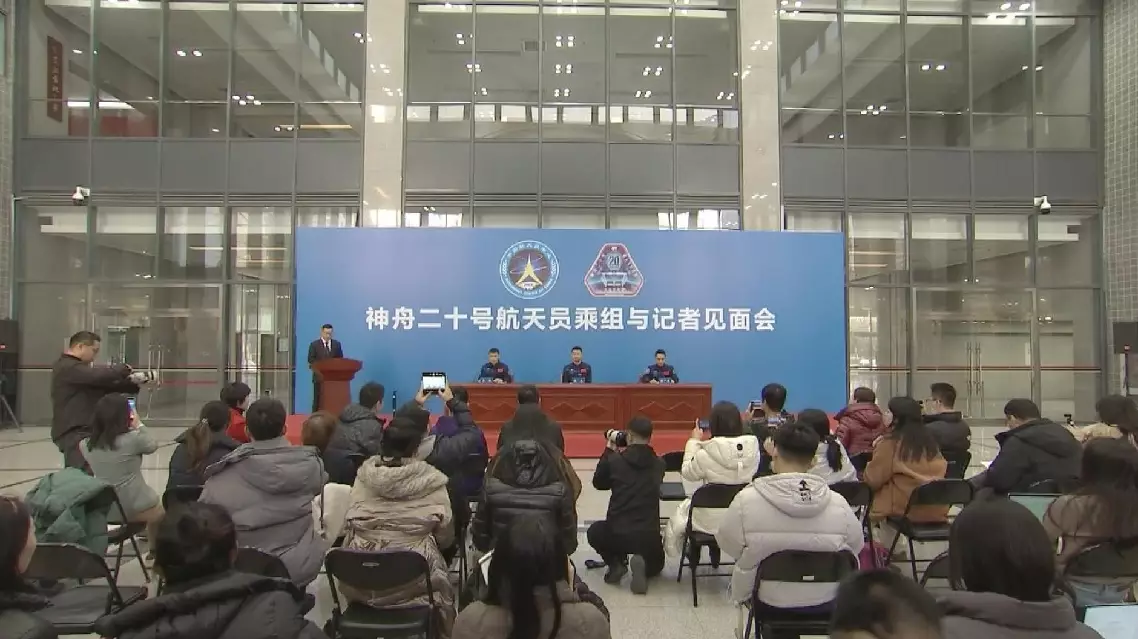
Shenzhou-20 astronauts share experiences after safely returning from debris incident