Skip to Content Facebook Feature Image

Fresh clashes break out in Syria as the interim government struggles to ease tensions

News

Fresh clashes break out in Syria as the interim government struggles to ease tensions
News

News

Fresh clashes break out in Syria as the interim government struggles to ease tensions

2025-08-03 20:25 Last Updated At:20:30

BEIRUT (AP) — New outbreaks of violence overnight into Sunday rocked Syria at two distinct flashpoints, straining a fragile ceasefire and calling into question the ability of the transitional government to exert its authority across the whole country.

In the north, government-affiliated fighters confronted Kurdish-led forces who control much of the region, while in the southern province of Sweida, they clashed with Druze armed groups.

The outbreaks come at a time when Syria's interim authorities are trying to maintain a tense ceasefire in Sweida province after clashes with Druze factions last month, and to implement an agreement with the U.S.-backed, Kurdish-led Syrian Democratic Forces that would reintegrate large swaths of northeastern Syria with the rest of the country.

The Syrian government under interim President Ahmad al-Sharaa has been struggling to consolidate control since he led a surprise insurgency that ousted former President Bashar Assad in December, ending the Assad family's decades-long autocratic rule. Political opponents and ethnic and religious minorities have been suspicious of Sharaa's de facto Islamist rule and cooperation with affiliated fighters that come from militant groups.

State state television said clashes between government forces and militias belonging to the Druze religious minority rocked the southern province of Sweida on Saturday after Druze factions attacked Syrian security forces, killing at least one member. The state-run Alikhbaria channel cited an anonymous security official who said the ceasefire has been broken. The Defense Ministry has not issued any formal statement.

Meanwhile, the Syrian Observatory for Human Rights, a Britain-based war monitor, said in addition to the member of the security forces killed, one Druze was killed and at least nine others were wounded in the clashes that took place in the in the western part of Sweida province. The Observatory said the clashes took place at the strategic Tal al-Hadeed heights that overlook Daraa province next door.

State media says that aid convoys continue to enter Sweida city as a part of a tense truce after over a week of violent clashes in July between Druze militias and armed Bedouin clans backed by government forces. However, humanitarian conditions remain dire, and residents of Sweida have called for the road into the city to be fully opened, saying the aid that has come in is not enough.

The clashes that displaced tens of thousands of people came after months of tensions between Damascus and Sweida. The fighting led to a series of targeted sectarian attacks against the Druze minority, who are now skeptical of peaceful coexistence. Druze militias retaliated against Bedouin communities who largely lived in western areas of Sweida province, displacing many to neighboring Daraa.

Elsewhere, in the northern Aleppo province, government-affiliated fighters clashed with the SDF. The Defense Ministry said three civilians and four soldiers were wounded after the SDF launched a barrage of rockets near the city of Manbij “in an irresponsible way and for unknown reasons."

SDF spokesperson Farhad Shami on the other hand said the group was responding to shelling by “undisciplined factions” within government forces on Deir Haffar, an eastern city in the same province.

The eastern part of Aleppo province straddles areas controlled by the government and by the SDF. Though the two are slowly trying to implement a ceasefire and agreement that would integrate the areas under Damascus, tensions remain.

“The Ministry of Defense’s attempts to distort facts and mislead public opinion do not contribute to security or stability,” Shami said in a post on X, formerly Twitter.

In Quneitra province, in the south, the Israeli military announced it conducted another ground operation in the area that borders the Israeli-annexed Golan Heights. It said its troops questioned several suspects they accuse of involvement in weapons trafficking in the village of Hader, and raided four areas where they found weapons being trafficked.

Since Assad's ouster, Israel has conducted numerous strikes and military operations in southern Syria, saying its forces are taking out militant groups that they suspect could harm Israelis and residents in the Golan Heights.

Damascus has been critical of Israel's military activity, and the two sides have been trying to reach a security arrangement through U.S.-mediated talks. Syria has repeatedly said it does not intend to take military action against Israel.

Those talks intensified after Israel backed the Druze in Sweida during the earlier clashes. Israel struck military personnel near the southern city and most notably launched an airstrike targeting the Defense Ministry headquarters in the heart of Damascus.
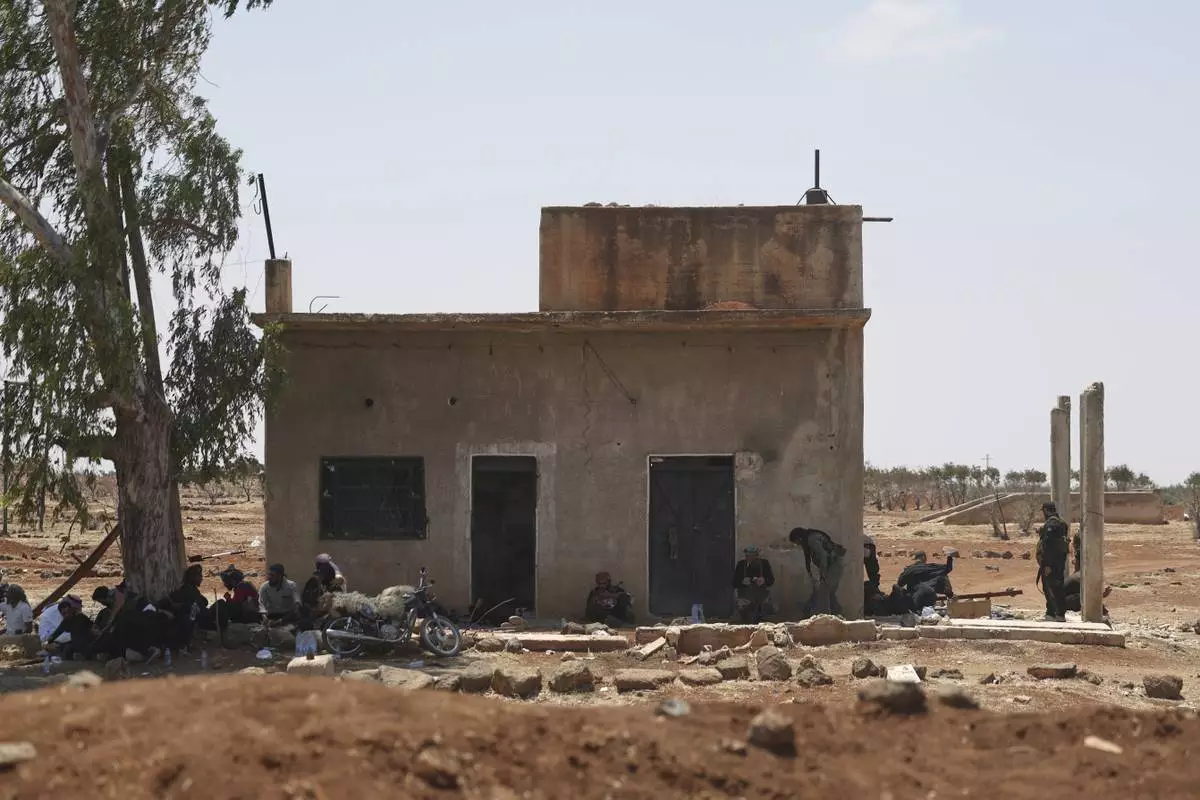
Bedouin fighters rest in the shade of a house as Syrian government security forces block them from entering Sweida province, in Busra al-Harir village, southern Syria, Sunday, July 20, 2025. (AP Photo/Ghaith Alsayed)
Bedouin fighters rest in the shade of a house as Syrian government security forces block them from entering Sweida province, in Busra al-Harir village, southern Syria, Sunday, July 20, 2025. (AP Photo/Ghaith Alsayed)

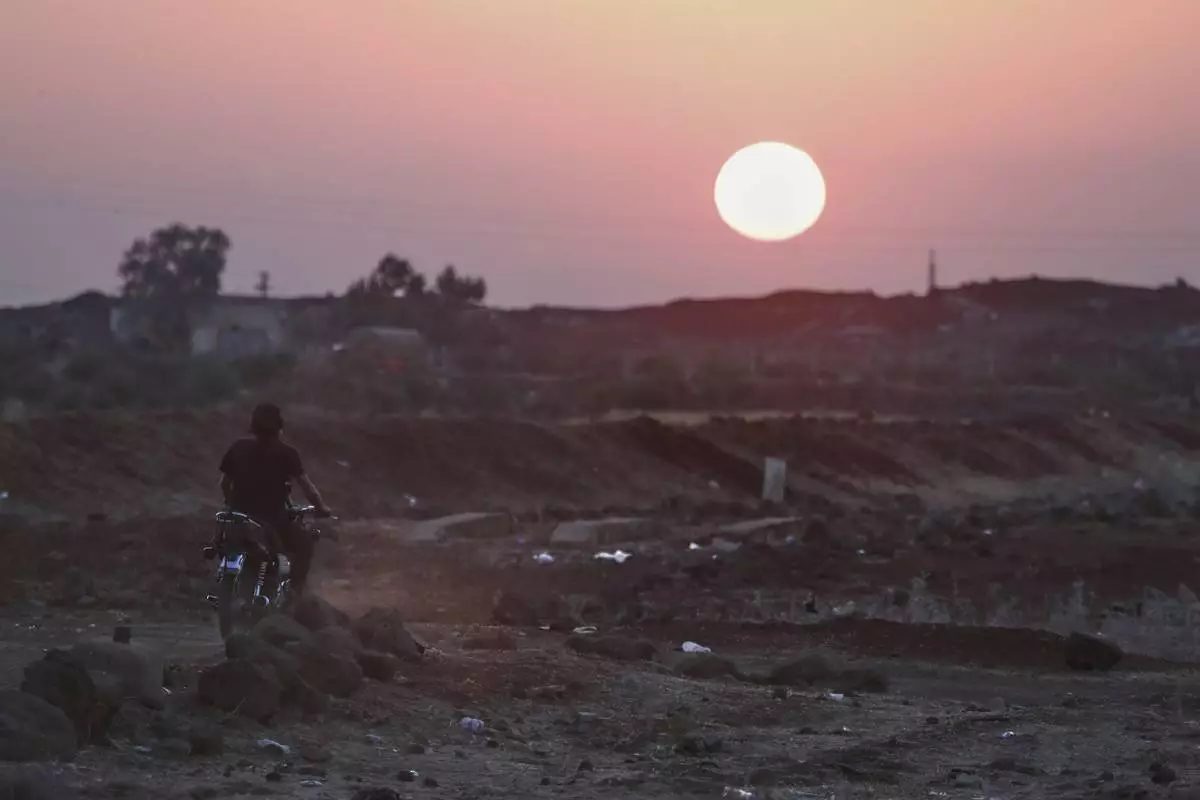
A Bedouin fighter rides a motorcycle as the sun sets over the village of Busra al-Harir, southern Syria, Tuesday, July 22, 2025. (AP Photo/Omar Sanadiki)
A Bedouin fighter rides a motorcycle as the sun sets over the village of Busra al-Harir, southern Syria, Tuesday, July 22, 2025. (AP Photo/Omar Sanadiki)

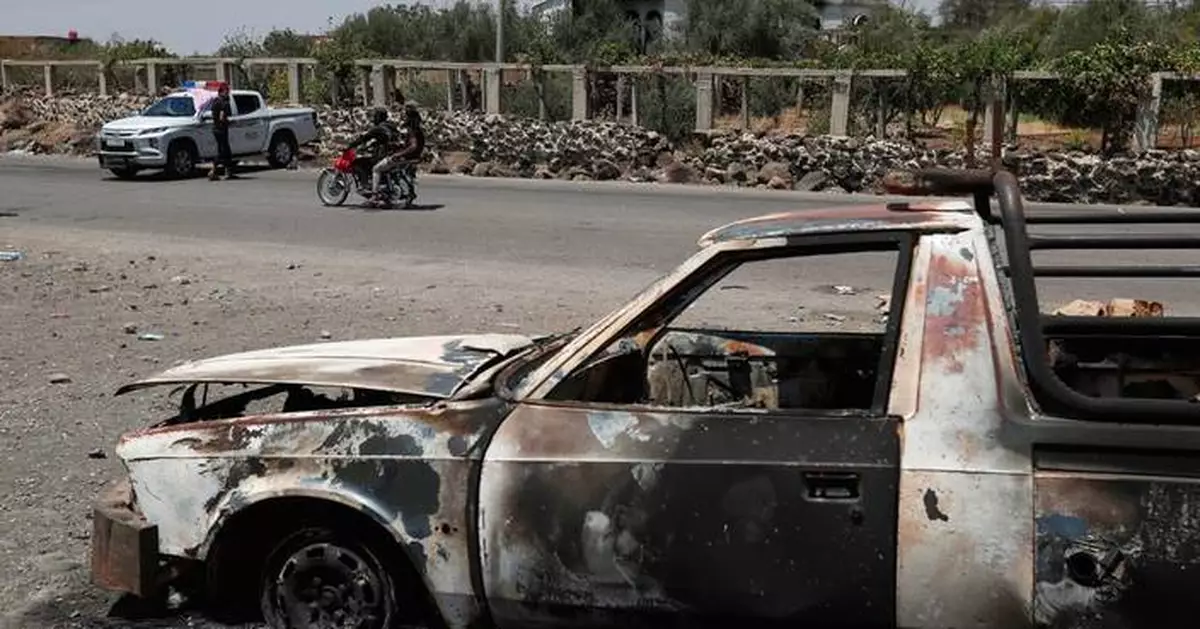
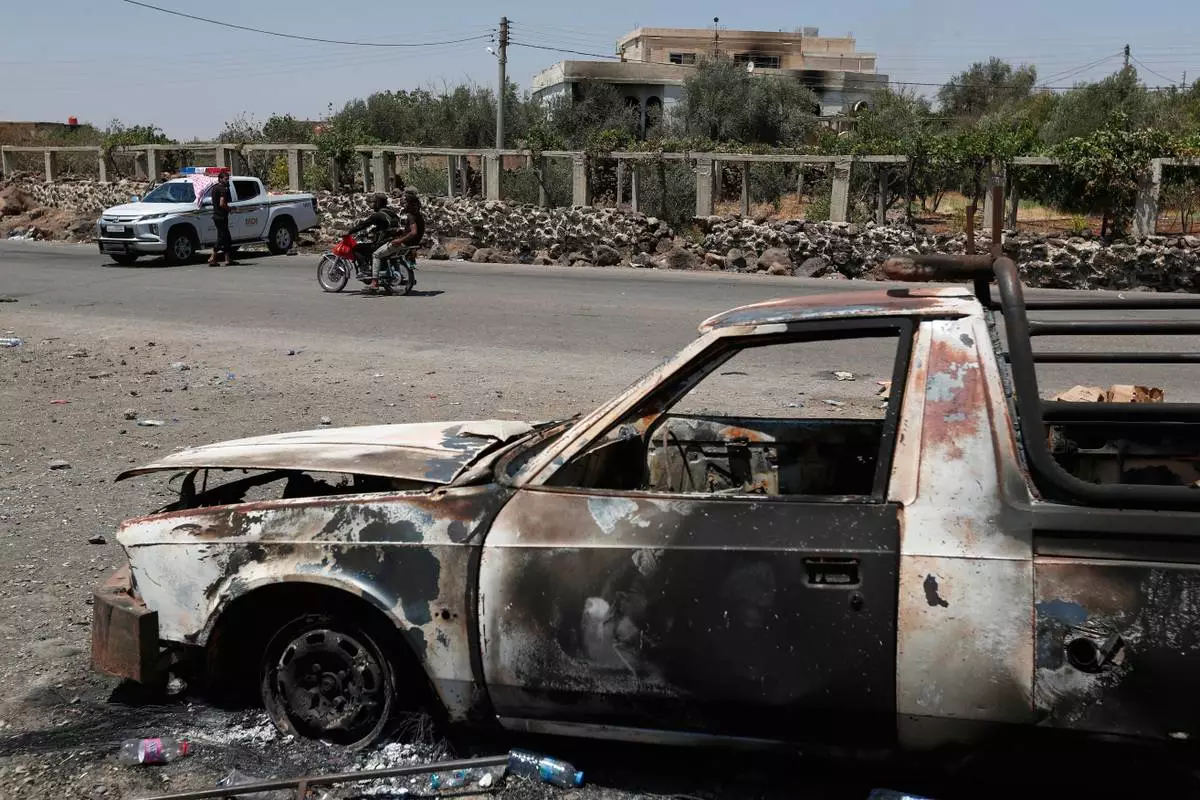
A Syrian security checkpoint is seen as forces deploy in Mazraa village on the outskirts of Sweida city, in southern Syria, Sunday, July 20, 2025. A burned-out vehicle is seen in the foreground. (AP Photo/Omar Sanadiki)
A Syrian security checkpoint is seen as forces deploy in Mazraa village on the outskirts of Sweida city, in southern Syria, Sunday, July 20, 2025. A burned-out vehicle is seen in the foreground. (AP Photo/Omar Sanadiki)
UTICA, N.Y. (AP) — A New York prison guard who failed to intervene as he watched an inmate being beaten to death should be convicted of manslaughter, a prosecutor told a jury Thursday in the final trial of correctional officers whose pummeling, recorded by body-cameras, provoked outrage.

“For seven minutes — seven gut-churning, nauseating, disgusting minutes — he stood in that room close enough to touch him and he did nothing,” special prosecutor William Fitzpatrick told jurors during closing arguments. The jury began deliberating Thursday afternoon.

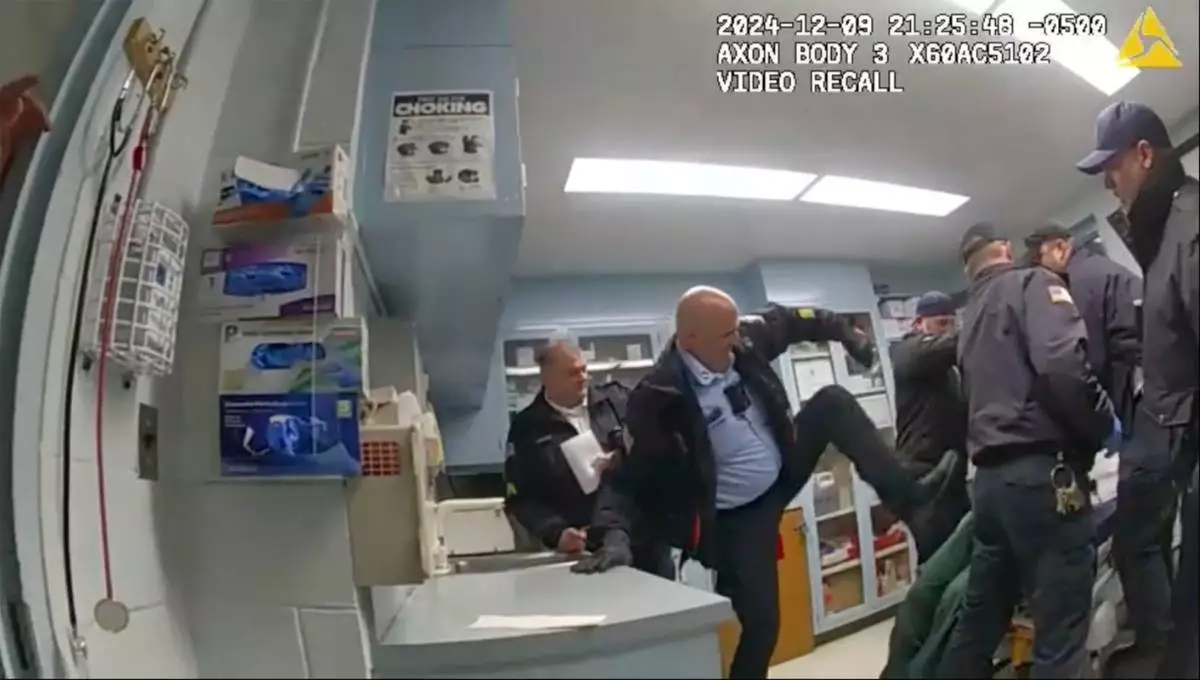
Former corrections officer Michael Fisher, 55, is charged with second-degree manslaughter in the death of Robert Brooks, who was beaten by guards upon his arrival at Marcy Correctional Facility on the night of Dec. 9, 2024, his agony recorded silently on the guards' body cameras.

Fisher’s attorney, Scott Iseman, said his client entered the infirmary after the beating began and could not have known the extent of his injuries.

Fisher was among 10 guards indicted in February. Three more agreed to plead guilty to reduced charges in return for cooperating with prosecutors. Of the 10 officers indicted in February, six pleaded guilty to manslaughter or lesser charges. Four rejected plea deals. One was convicted of murder, and two were acquitted in the first trial last fall.

Fisher, standing alone, is the last of the guards to face a jury.

The trial closes a chapter in a high-profile case led to reforms in New York's prisons. But advocates say the prisons remain plagued by understaffing and other problems, especially since a wildcat strike by guards last year.

Officials took action amid outrage over the images of the guards beating the 43-year-old Black man in the prison's infirmary. Officers could be seen striking Brooks in the chest with a shoe, lifting him by the neck and dropping him.

Video shown to the jury during closing arguments Thursday indicates Fisher stood by the doorway and didn't intervene.

“Did Michael Fisher recklessly cause the death of Robert Brooks? Of course he did. Not by himself. He had plenty of other helpers,” said Fitzpatrick, the Onondaga County district attorney.

Iseman asked jurors looking at the footage to consider what Fisher could have known at the time “without the benefit of 2020 hindsight.”

“Michael Fisher did not have a rewind button. He did not have the ability to enhance. He did not have the ability to pause. He did not have the ability to get a different perspective of what was happening in the room,” Iseman said.

Even before Brooks' death, critics claimed the prison system was beset by problems that included brutality, overworked staff and inconsistent services. By the time criminal indictments were unsealed in February, the system was reeling from an illegal three-week wildcat strike by corrections officers who were upset over working conditions. Gov. Kathy Hochul deployed National Guard troops to maintain operations. More than 2,000 guards were fired.

Prison deaths during the strike included Messiah Nantwi on March 1 at Mid-State Correctional Facility, which is across the road from the Marcy prison. 10 other guards were indicted in Nantwi's death in April, including two charged with murder.

There are still about 3,000 National Guard members serving the state prison system, according to state officials.

“The absence of staff in critical positions is affecting literally every aspect of prison operations. And I think the experience for incarcerated people is neglect,” Jennifer Scaife, executive director of the Correctional Association of New York, an independent monitoring group, said on the eve of Fisher's trial.

Hochul last month announced a broad reform agreement with lawmakers that includes a requirement that cameras be installed in all facilities and that video recordings related to deaths behind bars be promptly released to state investigators.

The state also lowered the hiring age for correction officers from 21 to 18 years of age.

FILE - This image provided by the New York State Attorney General office shows body camera footage of correction officers beating a handcuffed man, Robert Brooks, at the Marcy Correctional Facility in Oneida County, N.Y., Dec. 9, 2024. (New York State Attorney General office via AP, File)

FILE - This image provided by the New York State Attorney General office shows body camera footage of correction officers beating a handcuffed man, Robert Brooks, at the Marcy Correctional Facility in Oneida County, N.Y., Dec. 9, 2024. (New York State Attorney General office via AP, File)

Recommended Articles