Texas Democrats fled the state Sunday in an effort to hinder Republicans from approving a new U.S. House map that could boost their slim congressional majority in 2026.
The walkout lets the minority party keep Republicans in charge from having enough votes for maps that would add five new Republican-leaning congressional districts. The proposed boundaries slice up Democratic-leaning urban centers where most of the state’s 30 million people live.
Though such theatrics are uncommon, both parties have used walkouts to deny quorum in state Legislatures from Oregon to New Hampshire. In some places, walking off the job, whether for a day or months at a time, has led to punishments like fines, arrest threats or being booted from the ballot.
“We’re leaving Texas to fight for Texans,” Gene Wu, chair of the House Democratic Caucus, said in a statement Sunday. “We’re not walking out on our responsibilities; we’re walking out on a rigged system that refuses to listen to the people we represent.”
Here’s a closer look at how lawmakers around the country have used walkouts.
Four years ago, Texas Democrats walked off the job over a proposal for voting restrictions and fled to Washington D.C.
While initially successful in killing the measure, they couldn’t block the plan again during a special session when Republicans had law enforcement issue civil arrest warrants to bring Democrats back. The stalemate lasted more than a month. The bill prohibited 24-hour polling sites, banned drive-through voting and gave more access to partisan poll watchers.
Democrats in the state used the same tactic in 2003, when House members went to Oklahoma and senators traveled to New Mexico. They failed to thwart a Republican congressional redistricting plan.
Oregon legislators in both parties have boycotted daily sessions to halt work in one or both chambers since the 1970s. After several GOP walkouts, voters in 2022 approved an amendment to the state constitution barring lawmakers from seeking reelection if they have more than 10 unexcused absences in a single annual legislative session.
In 2023, Republicans staged a six-week boycott — the longest in the Oregon Legislature's history — over measures protecting abortion rights and gender-affirming care for transgender people. Ten lawmakers were barred from seeking reelection the following year.
In 2021, New Hampshire Democrats walked out when an anti-abortion bill came up for a vote, protesting what they saw as a partisan manipulation of the calendar. That prompted the Republican House speaker to lock the doors to maintain a quorum.
“I’m locking the doors right now so everybody in the chamber will stay in the chamber!” shouted House Speaker Sherman Packard, who later refused to let Democrats back in to vote on the bill.
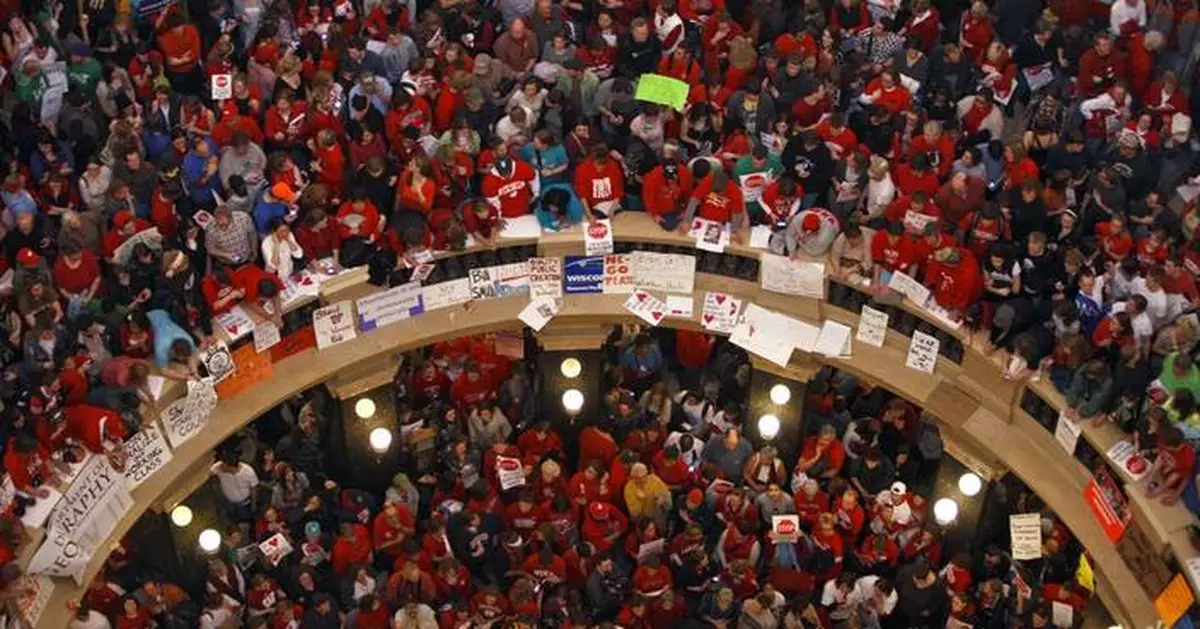
Democratic state senators from Wisconsin fled to neighboring Illinois in 2011, blocking a vote on GOP Gov. Scott Walker’s plan to strip most public workers of their union rights. At the same time, pro-union protesters descended on the state Capitol.
The stalemate ended several weeks later after Republicans weakened their legislation.
Indiana Democrats left the state for Illinois in 2011 to prevent a Republican bill prohibiting mandatory labor union fees. The absence of Democrats left the House short of the two-thirds needed for a quorum.
Democrats threatened to stay in Illinois until they received assurances from top leaders that the bills would not be called, while Republican leaders said they wouldn't negotiate with legislators who didn't show up to their jobs.
Republicans successfully passed the bill the following year.
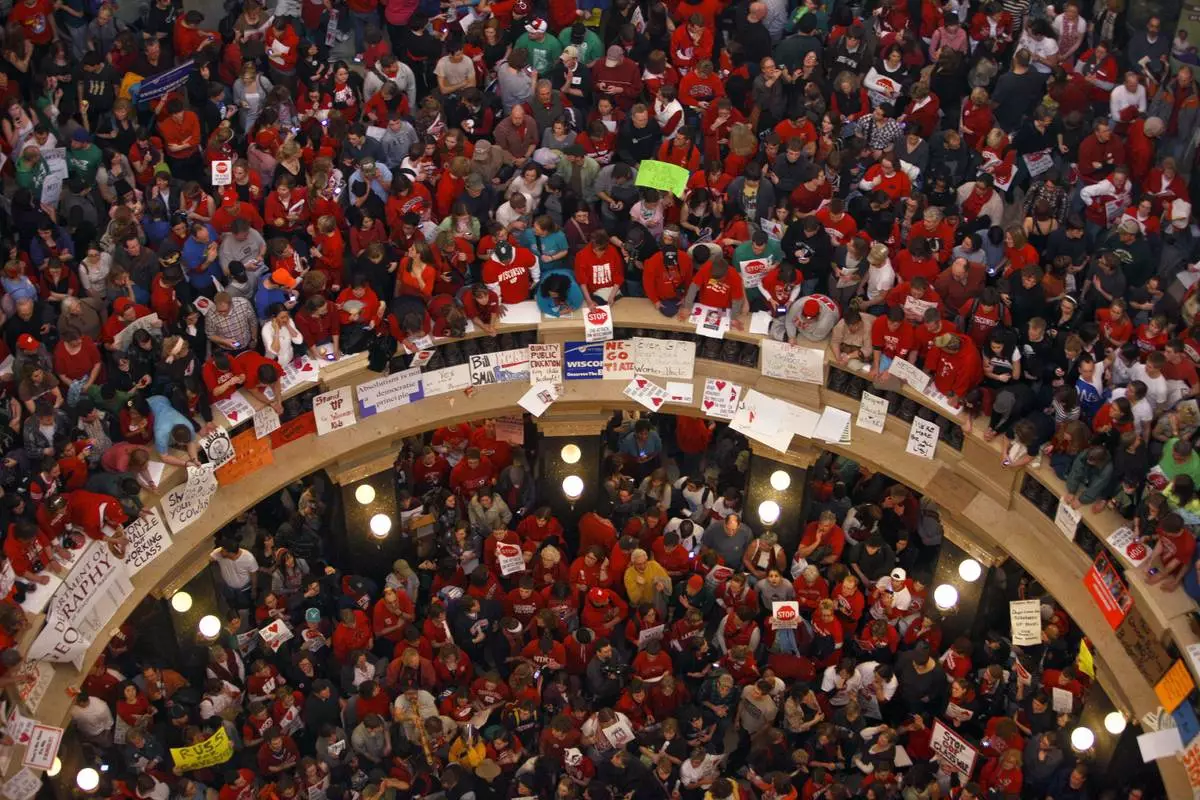
FILE - This file photo taken Feb. 17, 2011 shows protestors of Wisconsin Gov. Scott Walker's bill to eliminate collective bargaining rights for many state workers packing the rotunda at the State Capitol in Madison, Wis. (AP Photo/Andy Manis, File)
WASHINGTON (AP) — U.S. forces in the Caribbean Sea have seized another sanctioned oil tanker that the Trump administration says has ties to Venezuela, part of a broader U.S. effort to take control of the South American country’s oil.
Homeland Security Secretary Kristi Noem wrote on social media that the U.S. Coast Guard had boarded the Motor Tanker Veronica early Thursday. She said the ship had previously passed through Venezuelan waters and was operating in defiance of President Donald Trump’s "established quarantine of sanctioned vessels in the Caribbean.”
U.S. Southern Command said Marines and sailors launched from the aircraft carrier USS Gerald R. Ford to take part in the operation alongside a Coast Guard tactical team, which Noem said conducted the boarding as in previous raids. The military said the ship was seized “without incident.”
Noem posted a brief video that appeared to show part of the ship’s capture. The black-and-white footage showed helicopters hovering over the deck of a merchant vessel while armed troops dropped down on the deck by rope.
The Veronica is the sixth sanctioned tanker seized by U.S. forces as part of the effort by Trump’s administration to control the production, refining and global distribution of Venezuela’s oil products and the fourth since the U.S. ouster of Venezuela President Nicolás Maduro in a surprise nighttime raid almost two weeks ago.
The Veronica last transmitted its location on Jan. 3 as being at anchor off the coast of Aruba, just north of Venezuela’s main oil terminal. According to the data it transmitted at the time, it was partially filled with crude.
The ship is currently listed as flying the flag of Guyana and is considered part of the shadow fleet that moves cargoes of oil in violation of U.S. sanctions.
According to its registration data, the ship also has been known as the Galileo, owned and managed by a company in Russia. In addition, a tanker with the same registration number previously sailed under the name Pegas and was sanctioned by the U.S. Treasury Department for moving cargoes of illicit Russian oil.
As with prior posts about such raids, Noem and the military framed the seizure as part of an effort to enforce the law. Noem argued that the multiple captures show that “there is no outrunning or escaping American justice.”
However, other officials in Trump's Republican administration have made clear that they see the actions as a way to generate cash as they seek to rebuild Venezuela’s battered oil industry and restore its economy.
Trump met with executives from oil companies last week to discuss his goal of investing $100 billion in Venezuela to repair and upgrade its oil production and distribution. His administration has said it expects to sell at least 30 million to 50 million barrels of sanctioned Venezuelan oil.
This story has been corrected to show the Veronica is the fourth, not the third, tanker seized by U.S. forces since Maduro's capture.
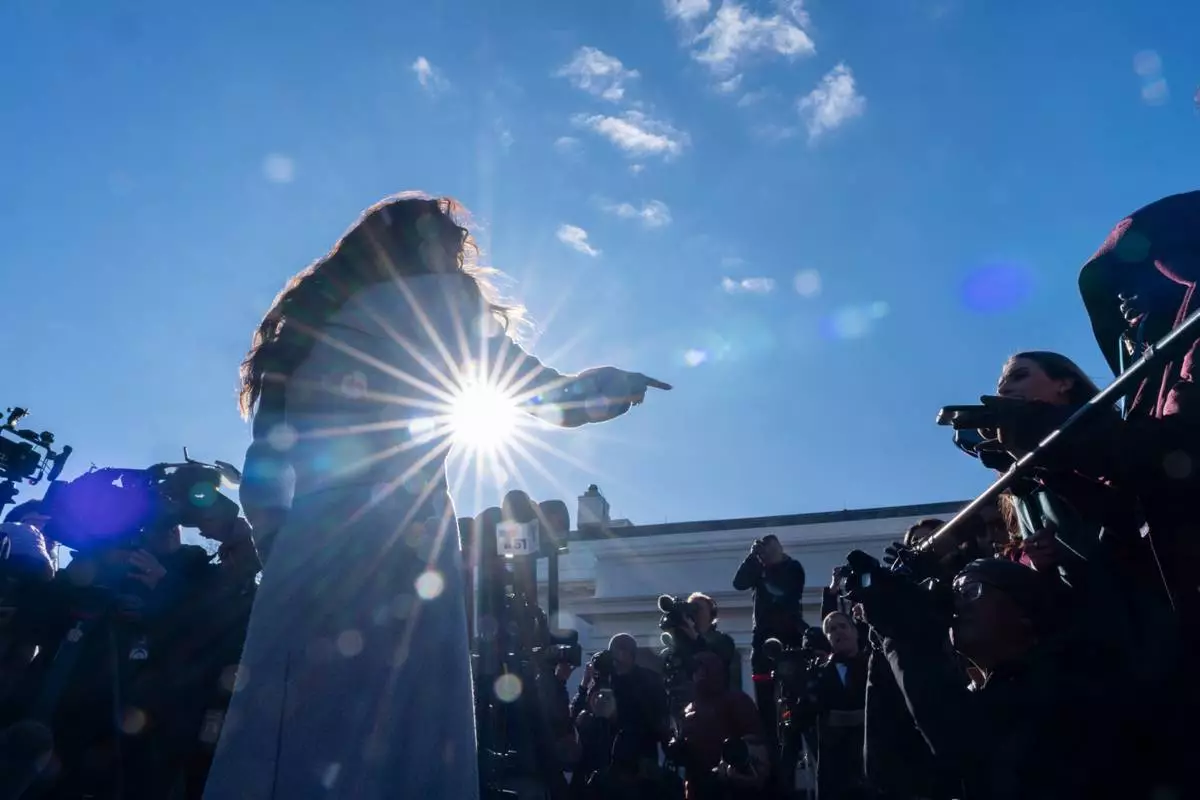
Homeland Security Secretary Kristi Noem speaks with reporters at the White House, Thursday, Jan. 15, 2026, in Washington. (AP Photo/Alex Brandon)
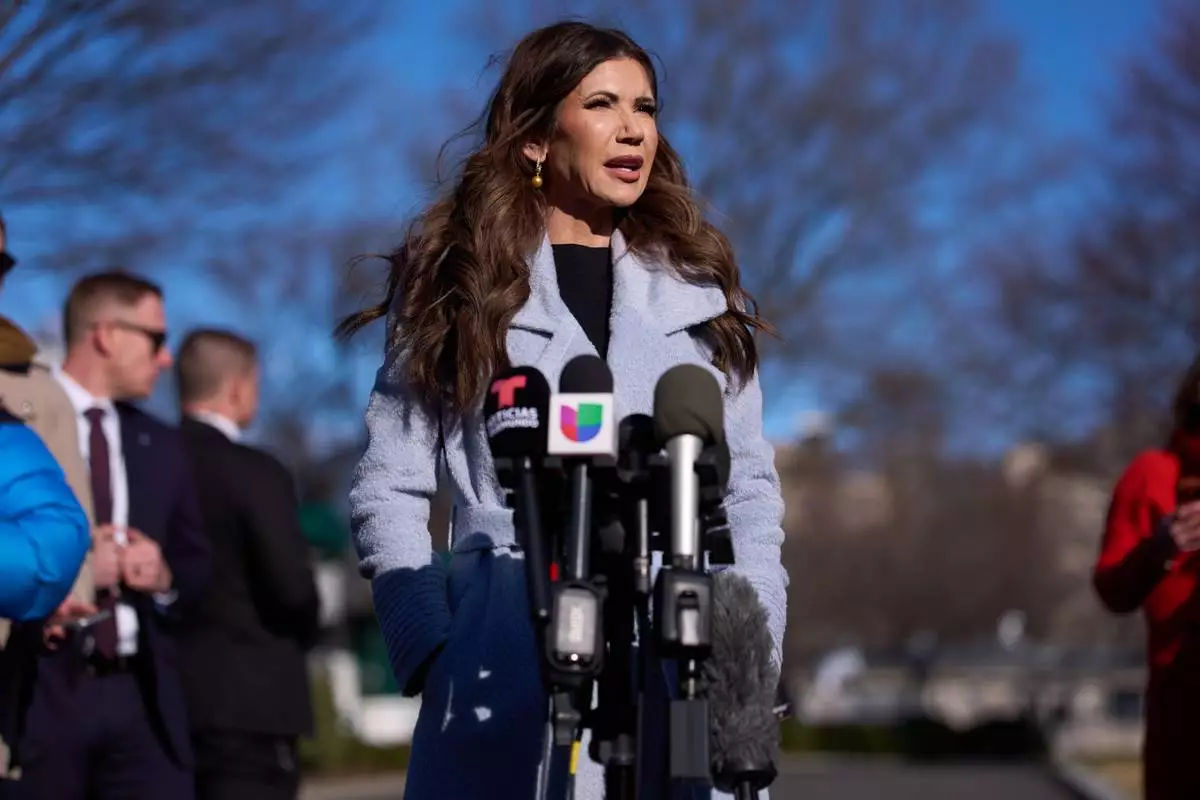
Homeland Security Secretary Kristi Noem speaks with reporters at the White House, Thursday, Jan. 15, 2026, in Washington. (AP Photo/Evan Vucci)
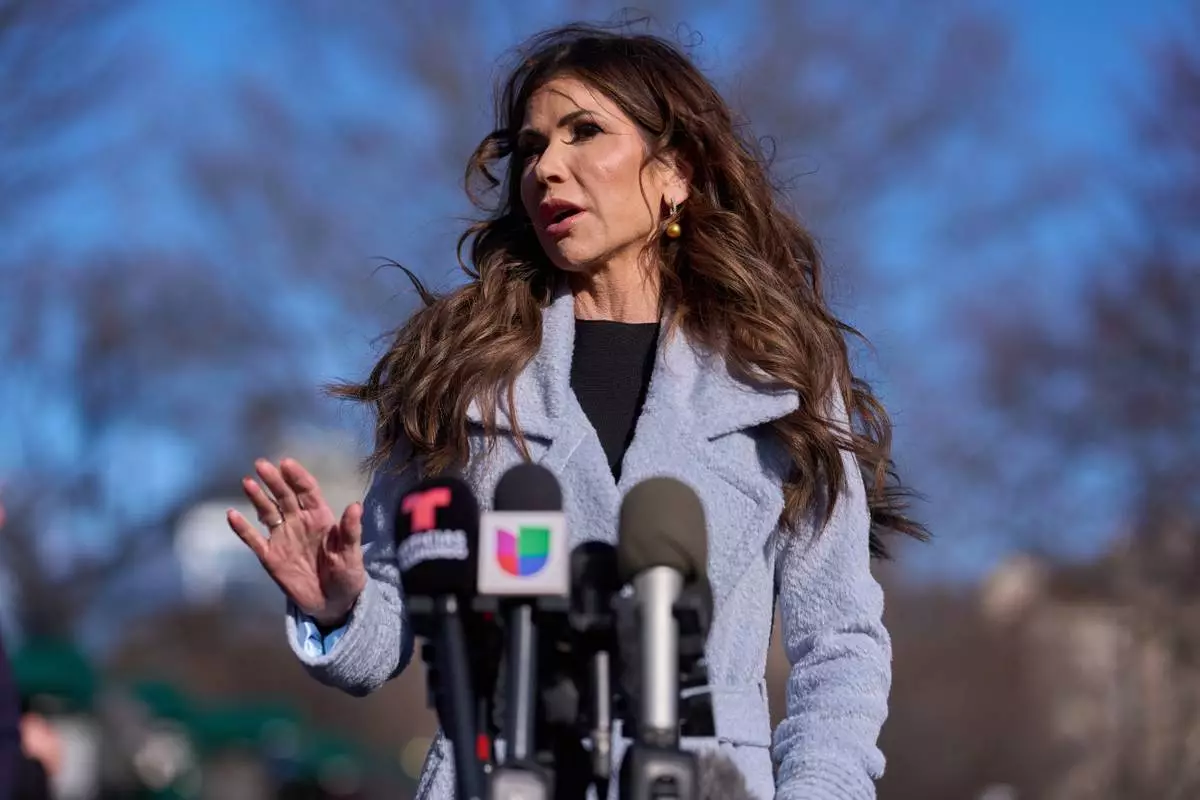
Homeland Security Secretary Kristi Noem speaks with reporters at the White House, Thursday, Jan. 15, 2026, in Washington. (AP Photo/Evan Vucci)
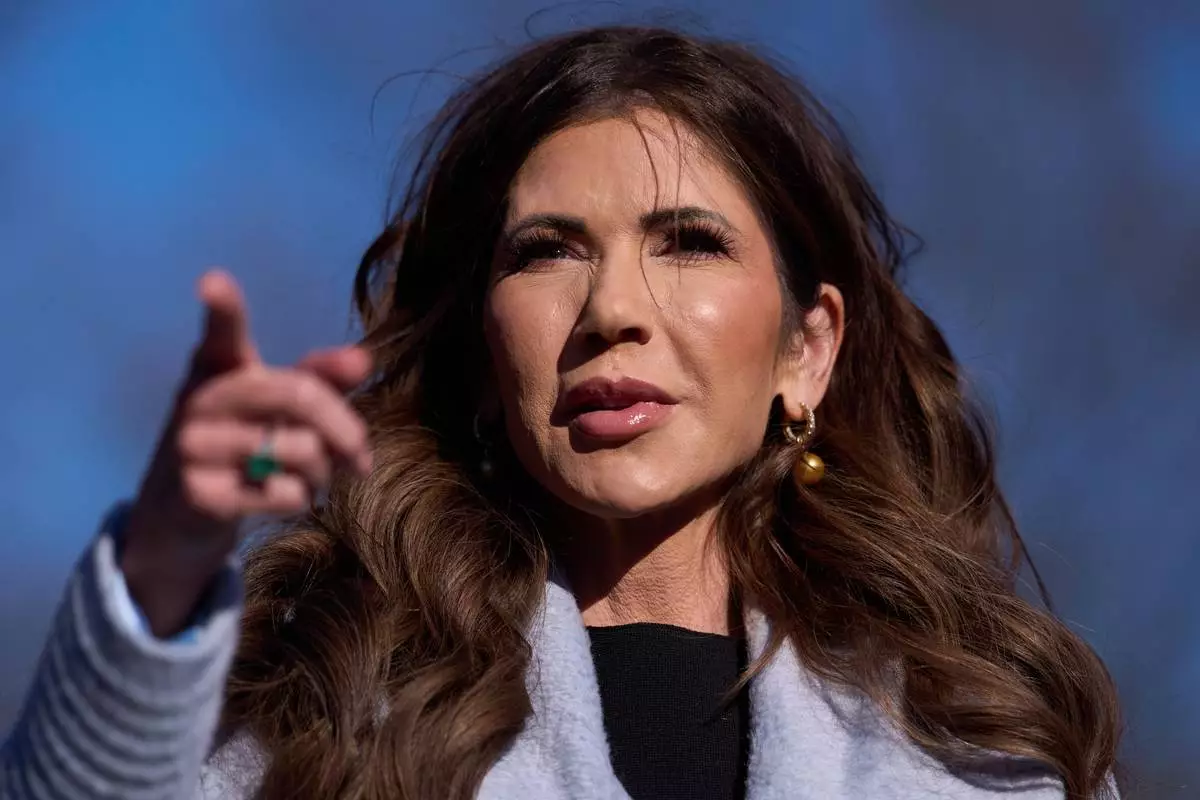
Homeland Security Secretary Kristi Noem speaks with reporters at the White House, Thursday, Jan. 15, 2026, in Washington. (AP Photo/Evan Vucci)
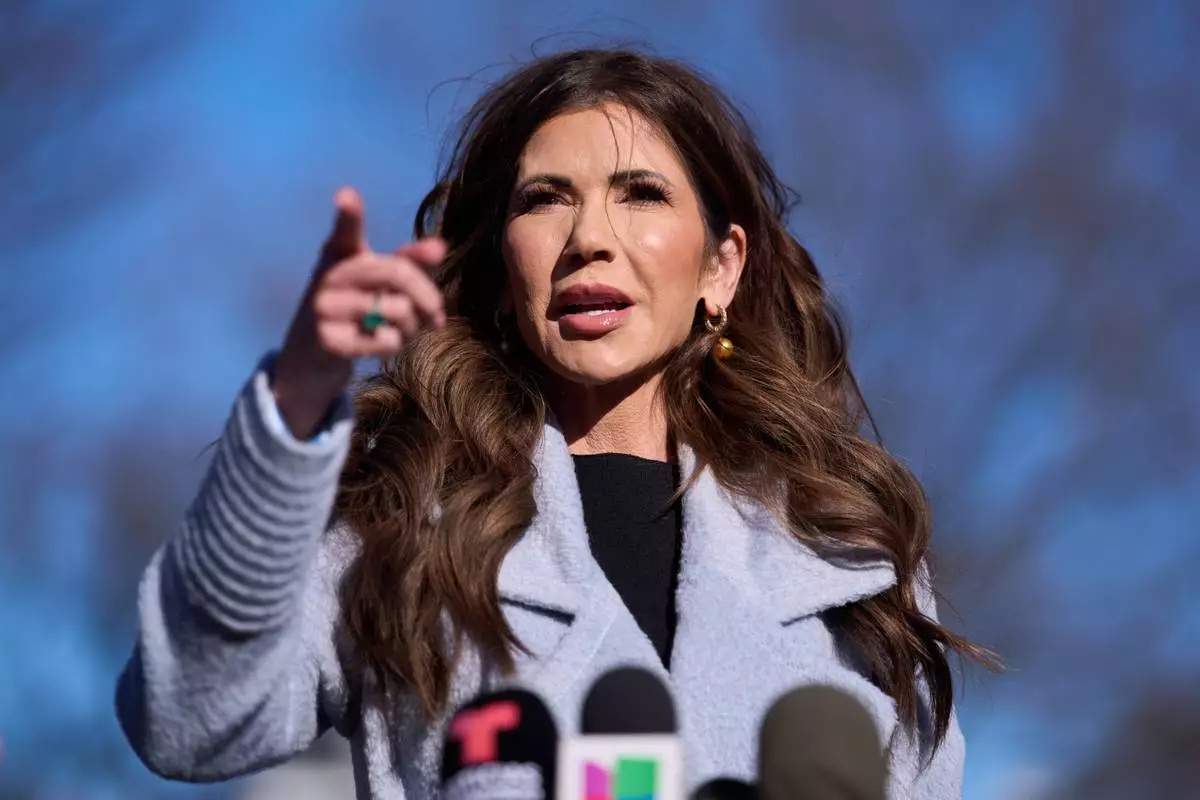
Homeland Security Secretary Kristi Noem speaks with reporters at the White House, Thursday, Jan. 15, 2026, in Washington. (AP Photo/Evan Vucci)
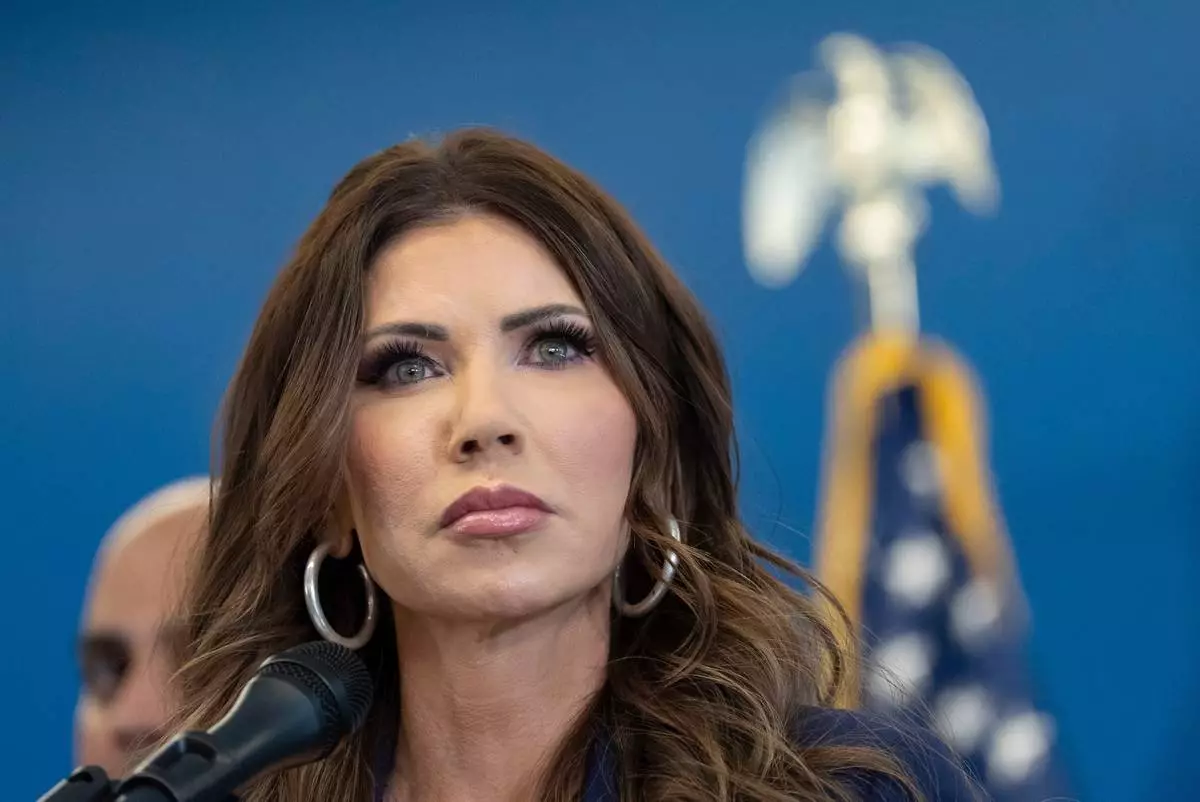
U.S. Homeland Security Secretary Kristi Noem speaks during a press conference, Thursday, Jan. 8, 2026, in New York. (AP Photo/Yuki Iwamura)

U.S. Homeland Security Secretary Kristi Noem speaks at a news conference at Harry Reid International Airport, Nov. 22, 2025, in Las Vegas. (AP Photo/Ronda Churchill, File)