Nations kicked off a meeting on Tuesday to try to complete a landmark treaty aimed at ending the plastic pollution crisis that affects every ecosystem and person on the planet.
It’s the sixth time negotiators are meeting and they hope the last. A key split is whether the treaty should require cutting plastic production, with powerful oil-producing nations opposed; most plastic is made from fossil fuels. They say redesign, recycling and reuse can solve the problem, while other countries and some major companies say that’s not enough.
Click to Gallery
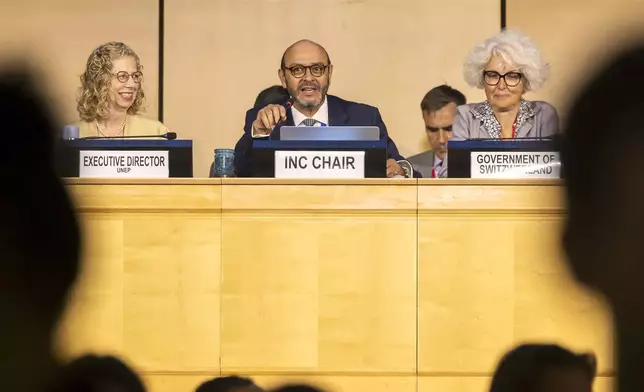
Chair of the International Negotiating Committee Luis Vayas Valdivieso, center, Executive Director of the United Nations Environment Programme Inger Andersen, left, and Director of the Federal Office for the Environment Katrin Schneeberger begin the second part of the fifth Session of the Intergovernmental Negotiating Committee on Plastic Pollution, at the European headquarters of the United Nations in Geneva, Switzerland, Tuesday, Aug. 5, 2025. (Salvatore Di Nolfi/Keystone via AP)
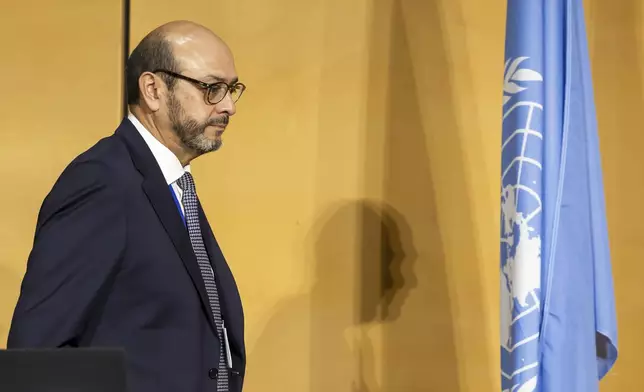
Chair of the International Negotiating Committee Luis Vayas Valdivieso arrives for the start of the second part of the fifth session of the Intergovernmental Negotiating Committee on Plastic Pollution, at the European headquarters of the United Nations in Geneva, Switzerland, Tuesday, Aug. 5, 2025. (Salvatore Di Nolfi/Keystone via AP)
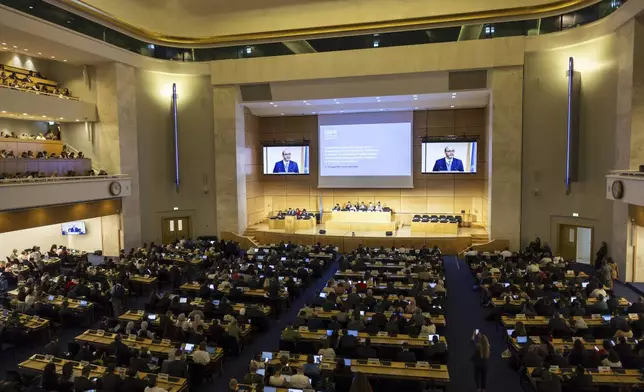
Chair of the International Negotiating Committee Luis Vayas Valdivieso delivers his opening remarks, during the second part of the fifth Session of the Intergovernmental Negotiating Committee on Plastic Pollution, at the European headquarters of the United Nations in Geneva, Switzerland, Tuesday, Aug. 5, 2025. (Salvatore Di Nolfi/Keystone via AP)
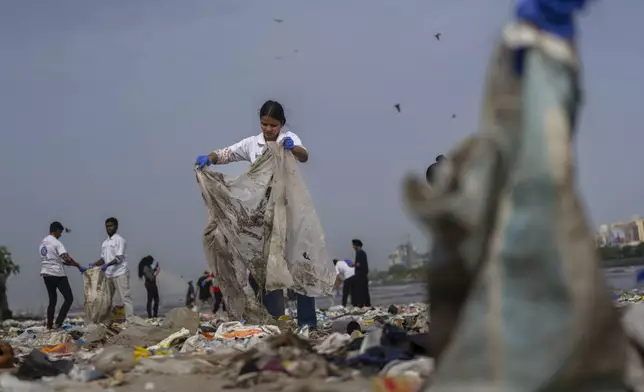
FILE - Volunteers clean up plastic and other waste materials on a beach on the Arabian Sea coast on World Environment Day in Mumbai, India, June 5, 2025. (AP Photo/Rafiq Maqbool, File)
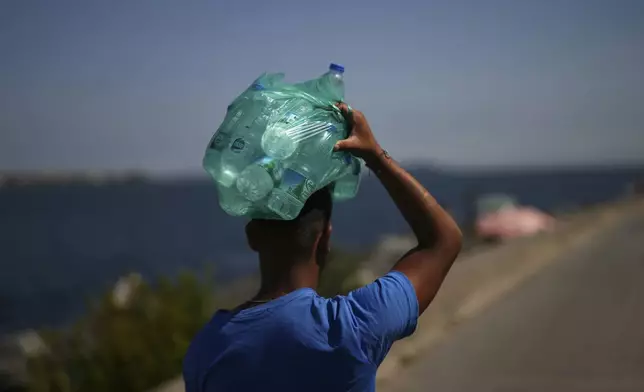
FILE - A street vendor carries plastic bottles of water on his head during a summer day in Istanbul, Thursday, July 10, 2025. (AP Photo/Francisco Seco, File)
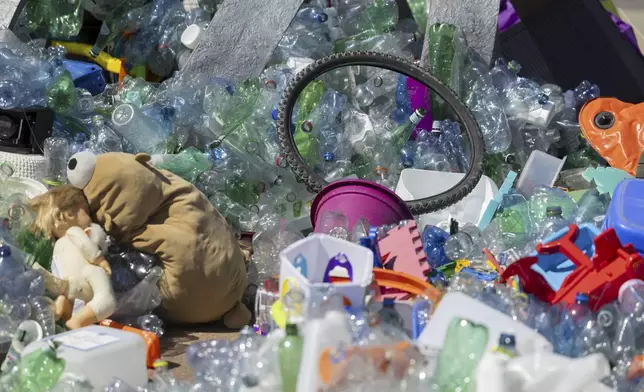
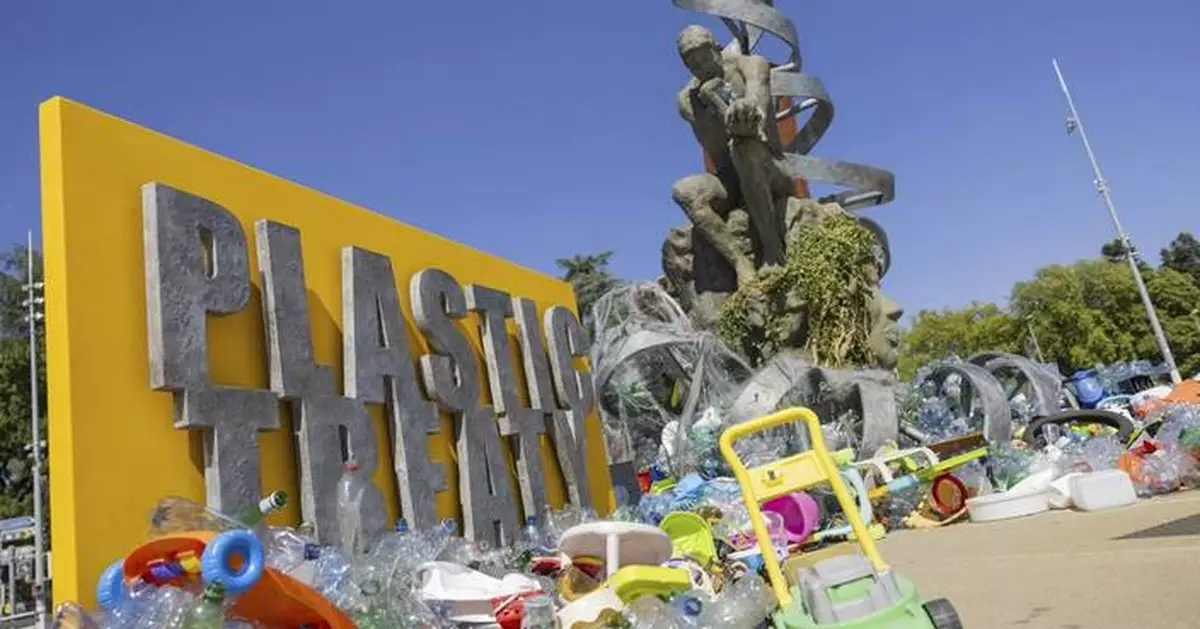
Plastic items are seen on Place des Nations in front of the European headquarters of the United Nations in Geneva, Switzerland, Monday, Aug. 4, 2025 before the second segment of the fifth session of the Intergovernmental Negotiating Committee on Plastic Pollution (INC-5.2). (Salvatore Di Nolfi/Keystone via AP)
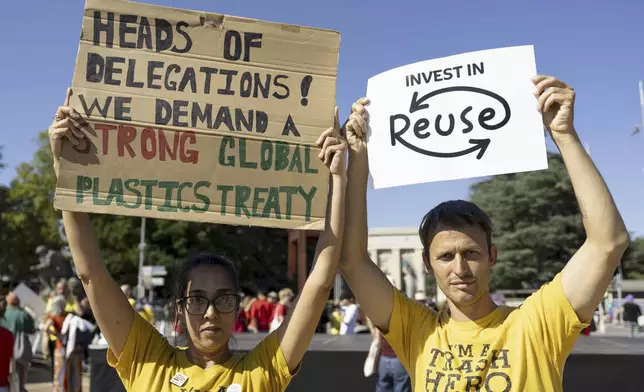
People gather in response to Greenpeace's call to support the plastics treaty on Place des Nations in front of the European headquarters of the United Nations in Geneva, Switzerland, Monday, Aug. 4, 2025 before the second segment of the fifth session of the Intergovernmental Negotiating Committee on Plastic Pollution (INC-5.2). (Salvatore Di Nolfi/Keystone via AP)
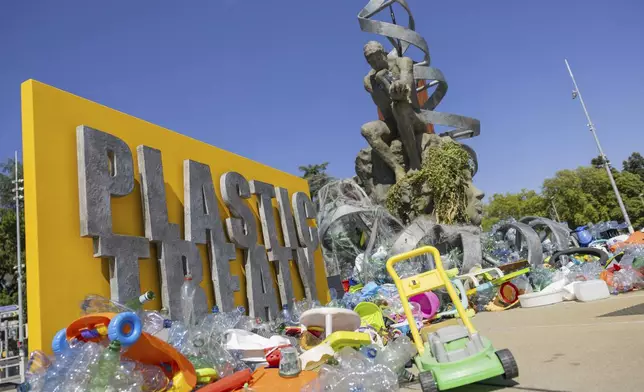
Plastic items are seen next to an artwork by Canadian artist and activist Benjamin Von Wong, titled 'The Thinker's Burden', a 6-meter-tall sculptural remix of Rodin's iconic Thinker, created especially for the Plastics Treaty negotiations, on Place des Nations in front of the European headquarters of the United Nations in Geneva, Switzerland, Monday, Aug. 4, 2025 before the second segment of the fifth session of the Intergovernmental Negotiating Committee on Plastic Pollution (INC-5.2). (Salvatore Di Nolfi/Keystone via AP)
Luis Vayas Valdivieso, the chair of the negotiating committee that aims to develop a legally binding instrument on plastic pollution, said: “We are pretty sure nobody wants plastic pollution. Still, we have not been able to find a systematic and an effective way to stop it.”
Vayas believes the 10-day gathering in Geneva can be groundbreaking.
“For the first time in history, the world is within our reach of a legally binding international instrument to end plastic pollution,” said Vayas, who is also Ecuador's ambassador to Britain. “We are facing a global crisis. Plastic pollution is damaging ecosystems, polluting our oceans and rivers, threatening biodiversity, harming human health and unfairly impacting the most vulnerable. The urgency is real.”
Only a treaty can mobilize the necessary global action, said Angelique Pouponneau, lead ocean negotiator for 39 small island and low-lying coastal developing states. At home in the Seychelles, Pouponneau said, plastic contaminates the fish they eat, piles up on beaches and chokes the ocean to undermine tourism and their way of life.
“It’s the world’s final opportunity to get this done and to get it done right,” she said. “It would be a tragedy if we didn’t live up to our mandate."
United Nations Environment Programme Executive Director Inger Andersen said the issues are complex, but the crisis is “really spiraling” and there's a narrow pathway to a treaty. She said many countries agree on redesigning plastic products to be recycled and improving waste management, for example.
“We need to get a solution to this problem. Everybody wants it. I’ve yet to meet somebody who is in favor of plastic pollution,” Andersen said.
Between 19 million and 23 million tons of plastic waste leak into aquatic ecosystems annually, which could jump 50% by 2040 without urgent action, according to the UN.
In March 2022, 175 nations agreed to make the first legally binding treaty on plastics pollution by the end of 2024. It was to address the full life cycle of plastic, including production, design and disposal.
Talks last year in South Korea were supposed to be the final round, but they adjourned in December at an impasse over cutting production. Every year, the world makes more than 400 million tons of new plastic, and that could grow by about 70% by 2040 without policy changes.
About 100 countries want to limit production as well as tackle cleanup and recycling. Many have said it's essential to address toxic chemicals.
Panama led an effort in South Korea to address production in the treaty. Negotiator Debbra Cisneros said they'll do so again in Geneva because they strongly believe in addressing pollution at the source, not just through downstream measures like waste management.
“If we shy away from that ambition now, we risk adopting an agreement that is politically convenient, but environmentally speaking, is ineffective,” she said.
About 300 businesses that are members of the Business Coalition for a Global Plastics Treaty — companies such as Walmart, the Coca-Cola Company, PepsiCo, and L’Oréal — support reducing production along with increasing recycling and reuse. The coalition includes major food and beverage companies and retailers who want an effective, binding treaty with global rules to spare them the headaches of differing approaches in different countries.
Some plastic-producing and oil and gas countries firmly oppose production limits. Saudi Arabia, the world's largest exporter of one common type of plastic, has led that group in asserting there should be no problem producing plastic if the world addresses plastic pollution.
The U.S. doesn’t support global production caps or bans on certain plastic products or chemical additives to them.
The State Department says it supports provisions to improve waste collection and management, improve product design and drive recycling, reuse and other efforts to cut the plastic dumped into the environment. On Tuesday, the United States proposed striking language in the objective of the agreement about addressing the full life cycle of plastics, the mandate from the resolution for creating a treaty. Such a change could stop the inclusion of anything related to the supply of plastic or plastic production.
“If the negotiations are to succeed, the agreement must be aimed at protecting the environment from plastic pollution, and the agreement should recognize the importance plastics play in our economies,” the State Department said in a statement to The Associated Press.
That’s similar to the views of the plastics industry, which says that a production cap could have unintended consequences, such as raising the cost of plastics, and that chemicals are best regulated elsewhere.
China, the United States and Germany lead the global plastics trade by exports and imports, according to the Plastics Industry Association.
For any proposal to make it into the treaty, every nation must agree. Some countries want to change the process so decisions may be made by a vote if necessary. India, Saudi Arabia, Iran, Kuwait and others have opposed that, arguing that consensus is vital to an effective treaty.
Negotiators are discussing making some provisions opt-in or opt-out to avoid a stalemate. Bjorn Beeler, international coordinator for the International Pollutants Elimination Network, said that would mean a treaty without teeth or obligations, with little value. Cisneros said that if carefully crafted, it's an option to find some common ground.
Tracey Campbell, an executive vice president at the plastics and chemicals company LyondellBasell and vice chair of the executive committee of the World Plastics Council, said she'll ask negotiators to “find a way to agree on a few things and get started” and then build from there.
She suggested tackling things like product redesign, recycled content mandates and financing waste collection, waste sorting and recycling technologies.
In contrast, Greenpeace will be in Geneva calling for at least a 75% reduction in plastic production by 2040.
“We will never recycle our way out of this problem,” said Graham Forbes, who leads the Greenpeace delegation.
Delegates from most countries, the plastics industry and businesses that use plastics, environmentalists, scientists, Indigenous leaders and communities affected by plastic pollution are in Geneva. About 80 government ministers are attending talks that will last 10 days — the longest session yet, with adjournment scheduled for Aug. 14.
Frankie Orona, executive director of the Texas-based Society of Native Nations, has been to every negotiating session. Indigenous land, water and air are being contaminated as fossil fuels are extracted and plastic is manufactured using hazardous chemicals, said Orona.
“We feel we absolutely have to be present to let them know, and see, who are the people that are really being impacted by the plastics crisis,” he said.
This story has been updated to correct the second reference to Luis Vayas Valdivieso, the chair of the negotiating committee.
The Associated Press’ climate and environmental coverage receives financial support from multiple private foundations. AP is solely responsible for all content. Find AP’s standards for working with philanthropies, a list of supporters and funded coverage areas at AP.org.
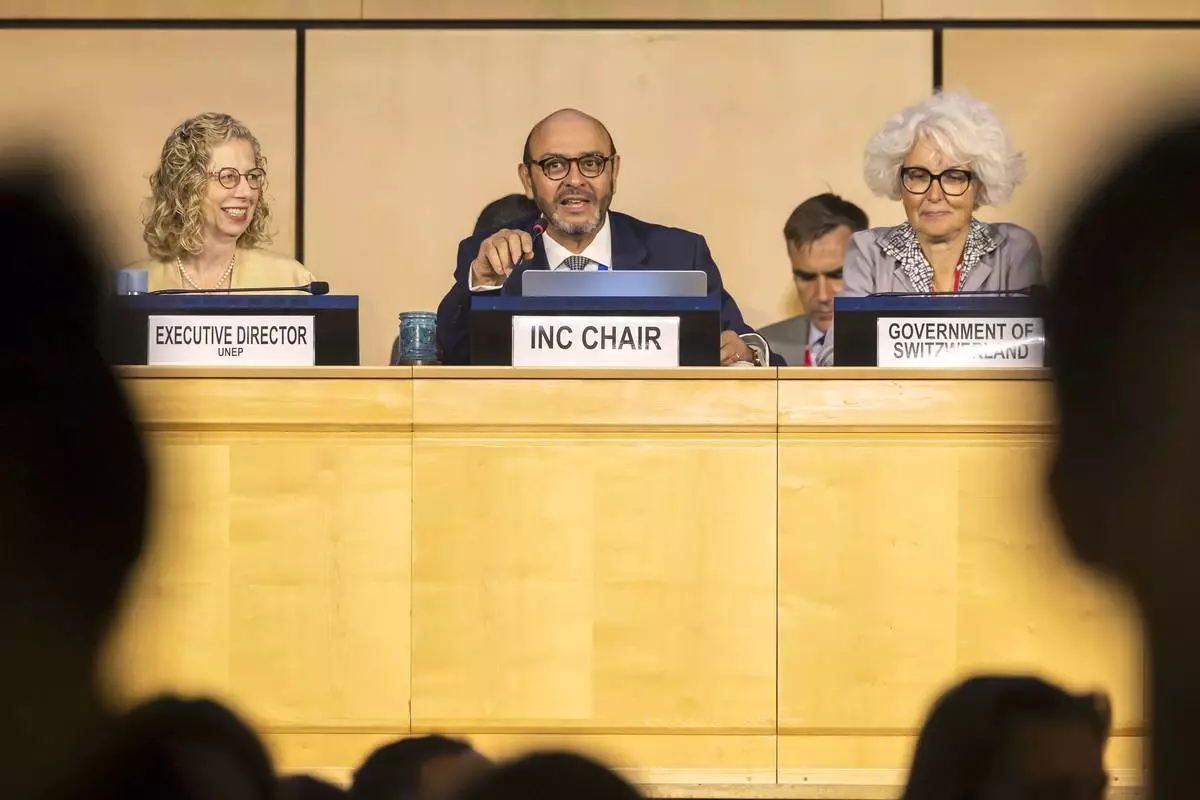
Chair of the International Negotiating Committee Luis Vayas Valdivieso, center, Executive Director of the United Nations Environment Programme Inger Andersen, left, and Director of the Federal Office for the Environment Katrin Schneeberger begin the second part of the fifth Session of the Intergovernmental Negotiating Committee on Plastic Pollution, at the European headquarters of the United Nations in Geneva, Switzerland, Tuesday, Aug. 5, 2025. (Salvatore Di Nolfi/Keystone via AP)

Chair of the International Negotiating Committee Luis Vayas Valdivieso arrives for the start of the second part of the fifth session of the Intergovernmental Negotiating Committee on Plastic Pollution, at the European headquarters of the United Nations in Geneva, Switzerland, Tuesday, Aug. 5, 2025. (Salvatore Di Nolfi/Keystone via AP)
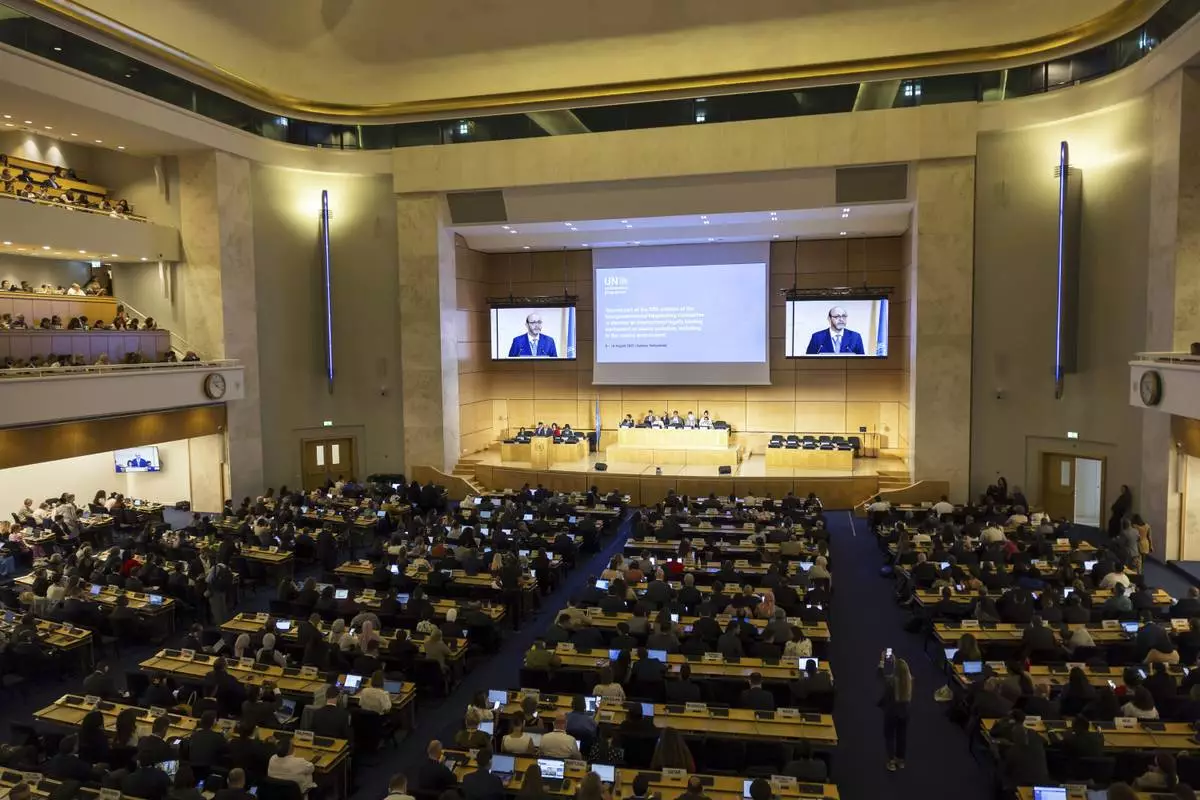
Chair of the International Negotiating Committee Luis Vayas Valdivieso delivers his opening remarks, during the second part of the fifth Session of the Intergovernmental Negotiating Committee on Plastic Pollution, at the European headquarters of the United Nations in Geneva, Switzerland, Tuesday, Aug. 5, 2025. (Salvatore Di Nolfi/Keystone via AP)
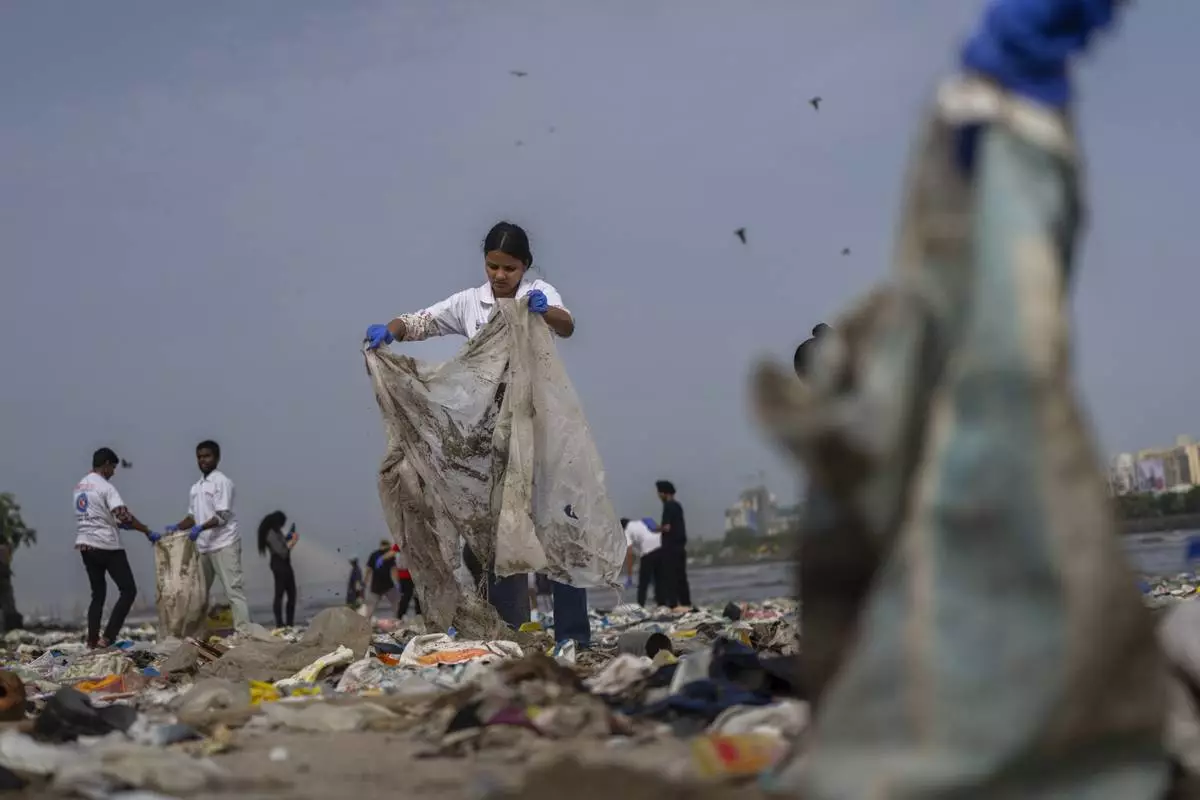
FILE - Volunteers clean up plastic and other waste materials on a beach on the Arabian Sea coast on World Environment Day in Mumbai, India, June 5, 2025. (AP Photo/Rafiq Maqbool, File)
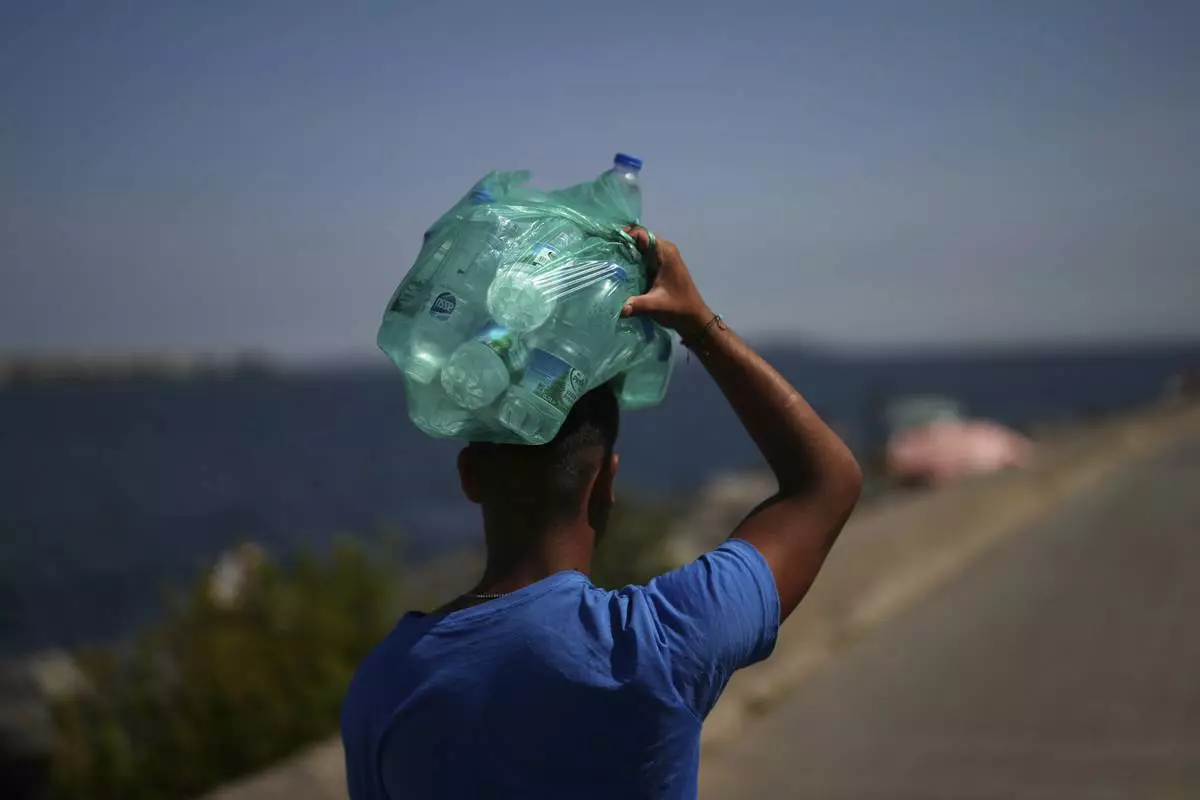
FILE - A street vendor carries plastic bottles of water on his head during a summer day in Istanbul, Thursday, July 10, 2025. (AP Photo/Francisco Seco, File)

Plastic items are seen on Place des Nations in front of the European headquarters of the United Nations in Geneva, Switzerland, Monday, Aug. 4, 2025 before the second segment of the fifth session of the Intergovernmental Negotiating Committee on Plastic Pollution (INC-5.2). (Salvatore Di Nolfi/Keystone via AP)
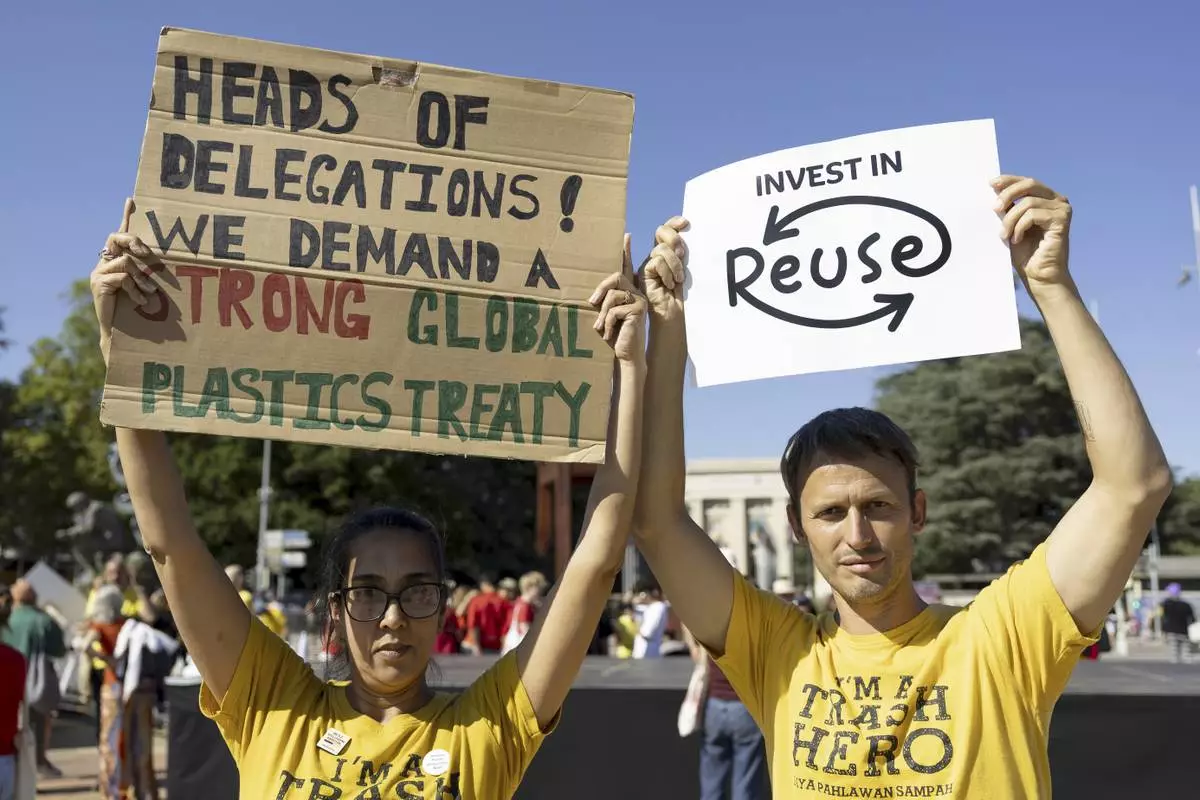
People gather in response to Greenpeace's call to support the plastics treaty on Place des Nations in front of the European headquarters of the United Nations in Geneva, Switzerland, Monday, Aug. 4, 2025 before the second segment of the fifth session of the Intergovernmental Negotiating Committee on Plastic Pollution (INC-5.2). (Salvatore Di Nolfi/Keystone via AP)
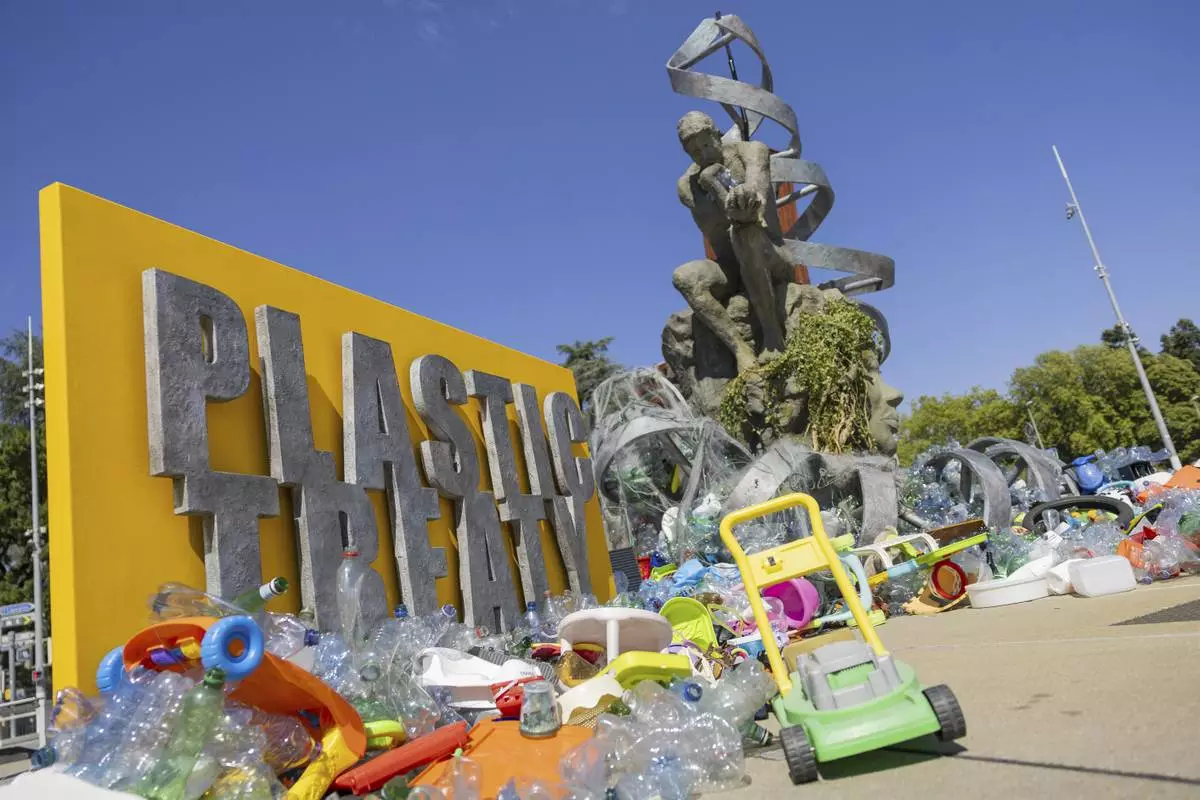
Plastic items are seen next to an artwork by Canadian artist and activist Benjamin Von Wong, titled 'The Thinker's Burden', a 6-meter-tall sculptural remix of Rodin's iconic Thinker, created especially for the Plastics Treaty negotiations, on Place des Nations in front of the European headquarters of the United Nations in Geneva, Switzerland, Monday, Aug. 4, 2025 before the second segment of the fifth session of the Intergovernmental Negotiating Committee on Plastic Pollution (INC-5.2). (Salvatore Di Nolfi/Keystone via AP)