Skip to Content Facebook Feature Image

Frequent disasters expose climate risks to infrastructure in South Asia

News

Frequent disasters expose climate risks to infrastructure in South Asia
News

News

Frequent disasters expose climate risks to infrastructure in South Asia

2025-08-05 20:39 Last Updated At:20:50

KATHMANDU, Nepal (AP) — Floods that damaged hydropower dams in Nepal and destroyed the main bridge connecting the country to China show the vulnerability of infrastructure and need for smart rebuilding in a region bearing the brunt of a warming planet, experts say.

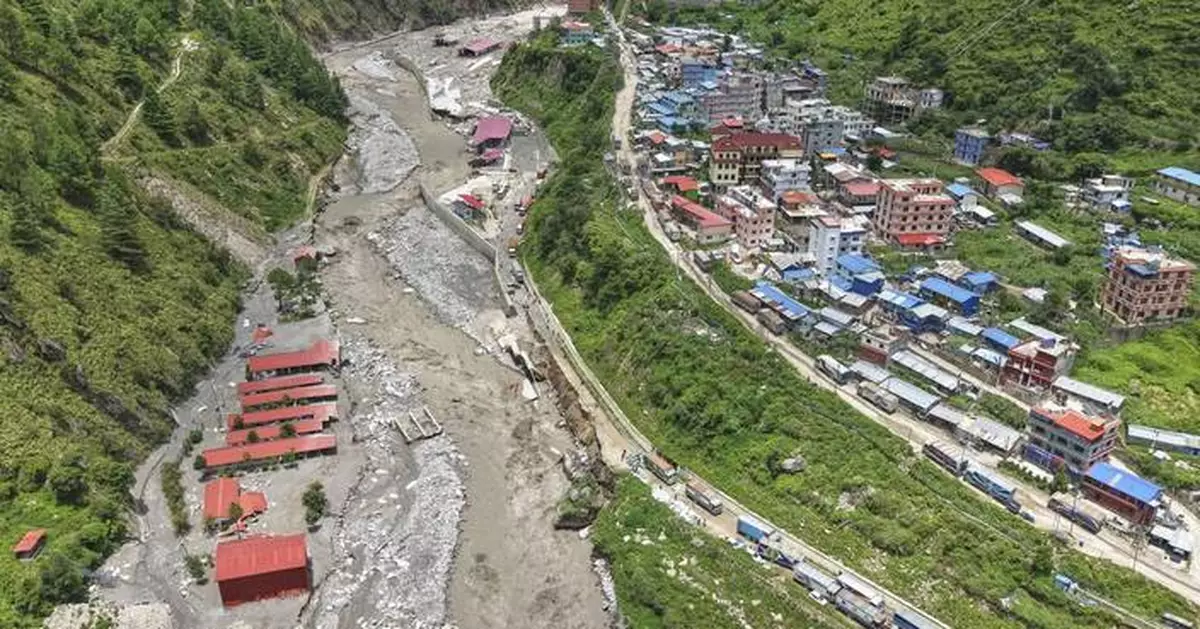
The flooding of the Bhotekoshi River on July 8 also killed nine people and damaged an inland container depot that was being built to support increasing trade between the two countries. The 10 damaged hydropower facilities, including three under construction, have a combined capacity that could power 600,000 South Asian homes.

More Images
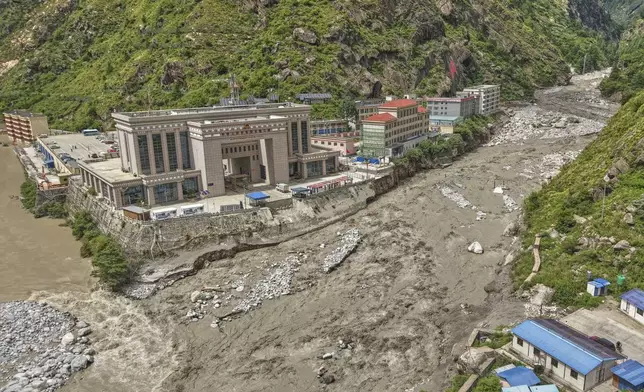
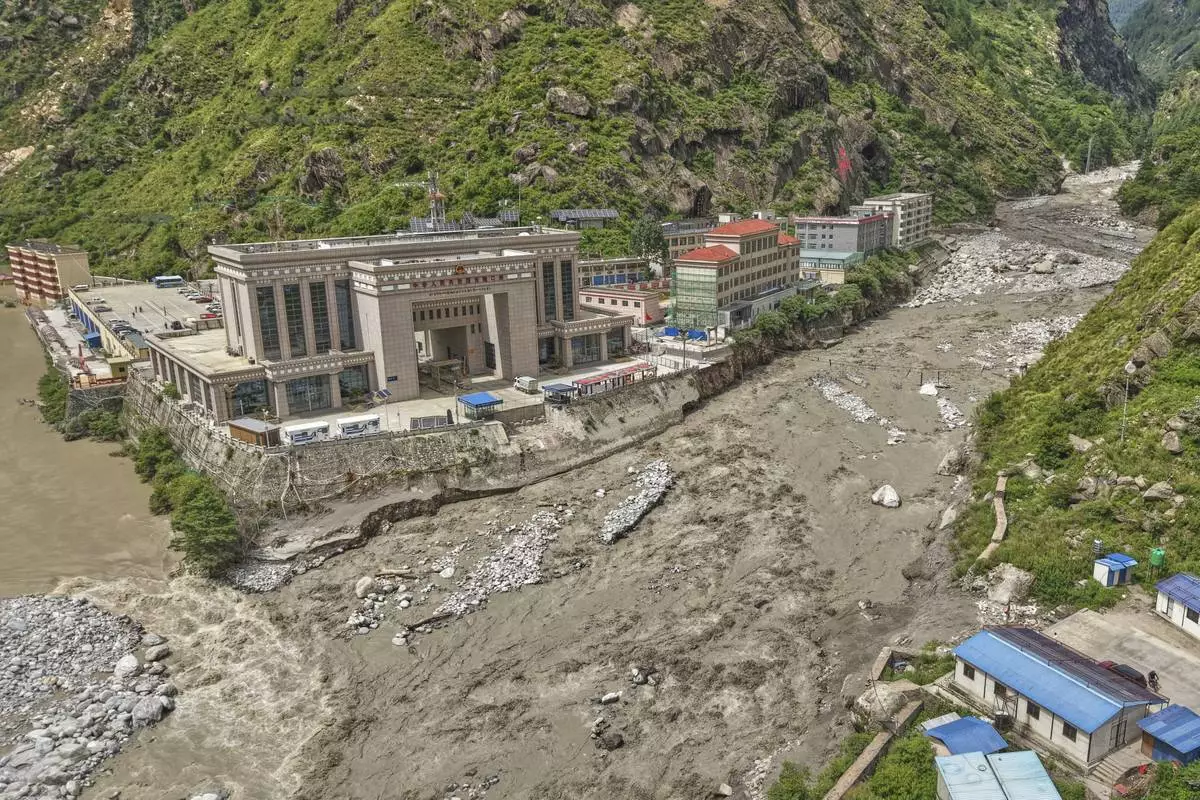
FILE - Chinese land on left, and Nepalese land on right are visible after Friendship Bridge, a key bridge over the Bhotekoshi River connecting Nepal with China was swept away in monsoon rain in Rasuwagadi, north of the capital, Kathmandu, Nepal, Wednesday, July, 9, 2025. (AP Photo/Sujan Gurung, File)
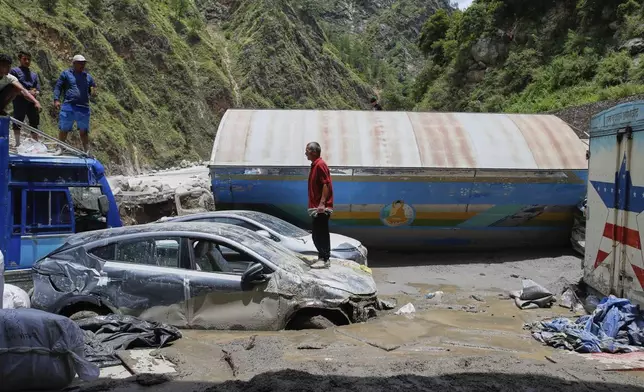
FILE - Chinese land on left, and Nepalese land on right are visible after Friendship Bridge, a key bridge over the Bhotekoshi River connecting Nepal with China was swept away in monsoon rain in Rasuwagadi, north of the capital, Kathmandu, Nepal, Wednesday, July, 9, 2025. (AP Photo/Sujan Gurung, File)

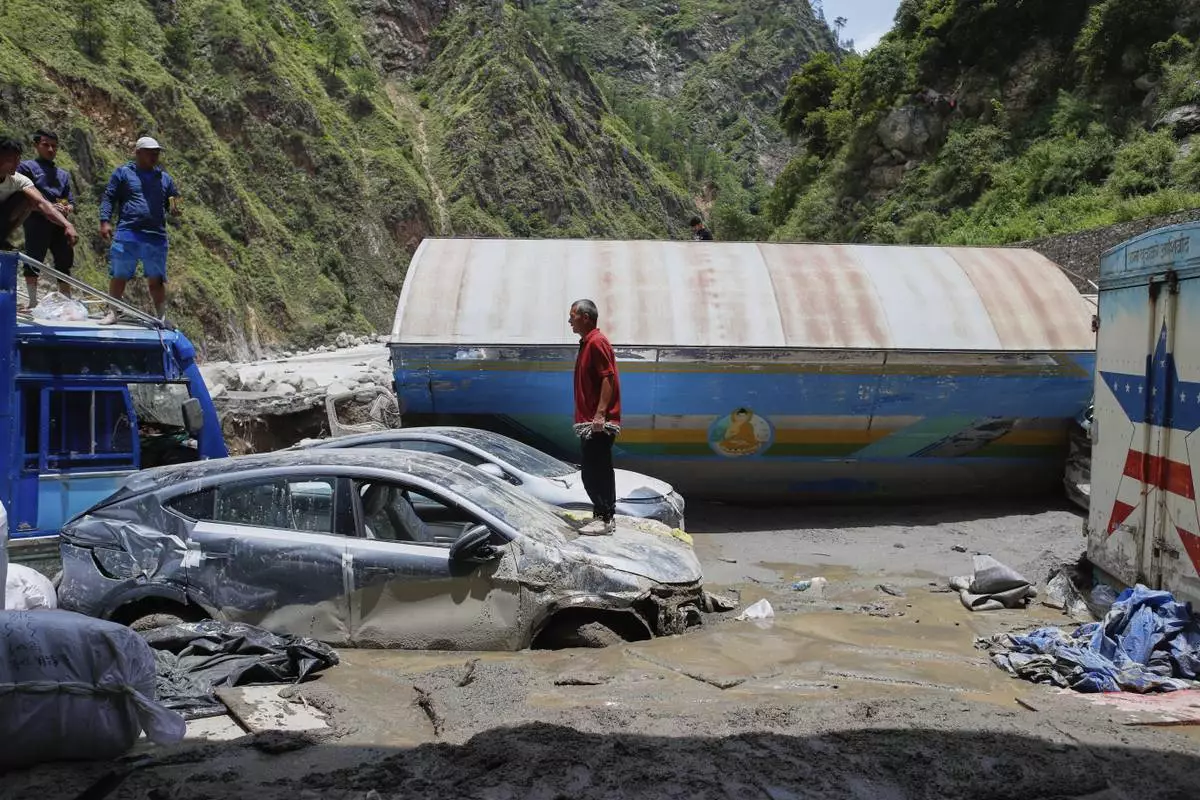
FILE - Damaged vehicles are visible after severe monsoon rains flooded the Bhotekoshi River and swept away a key bridge connecting the country with China in Rasuwagadi, north of the capital, Kathmandu, Nepal, July, 9, 2025. (AP Photo/Sujan Gurung, File)
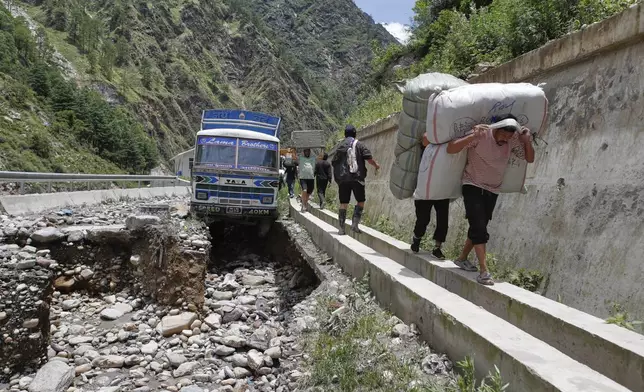
FILE - Damaged vehicles are visible after severe monsoon rains flooded the Bhotekoshi River and swept away a key bridge connecting the country with China in Rasuwagadi, north of the capital, Kathmandu, Nepal, July, 9, 2025. (AP Photo/Sujan Gurung, File)
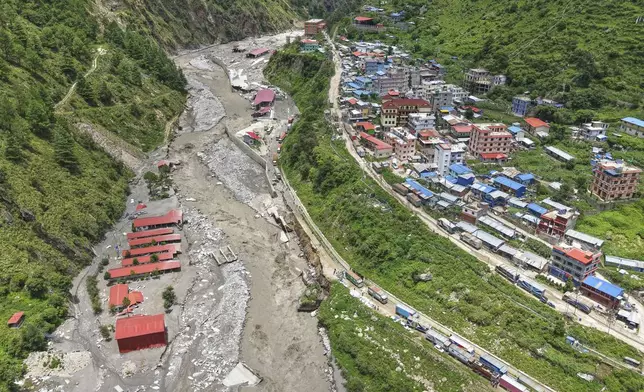
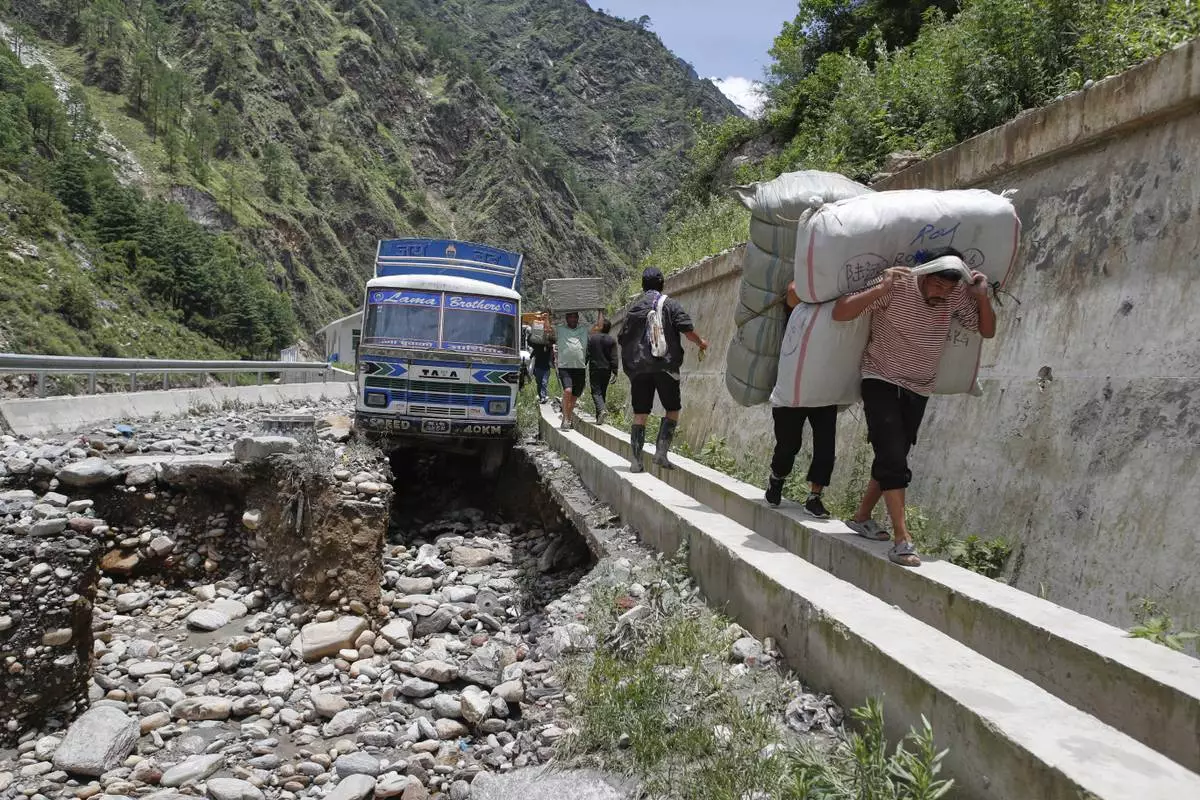
FILE - People carry goods from a damaged truck stuck after monsoon rains swept away a key bridge connecting the country with China in Rasuwagadi, north of the capital, Kathmandu, Nepal, July, 9, 2025. (AP Photo/Sujan Gurung, File)

FILE - People carry goods from a damaged truck stuck after monsoon rains swept away a key bridge connecting the country with China in Rasuwagadi, north of the capital, Kathmandu, Nepal, July, 9, 2025. (AP Photo/Sujan Gurung, File)

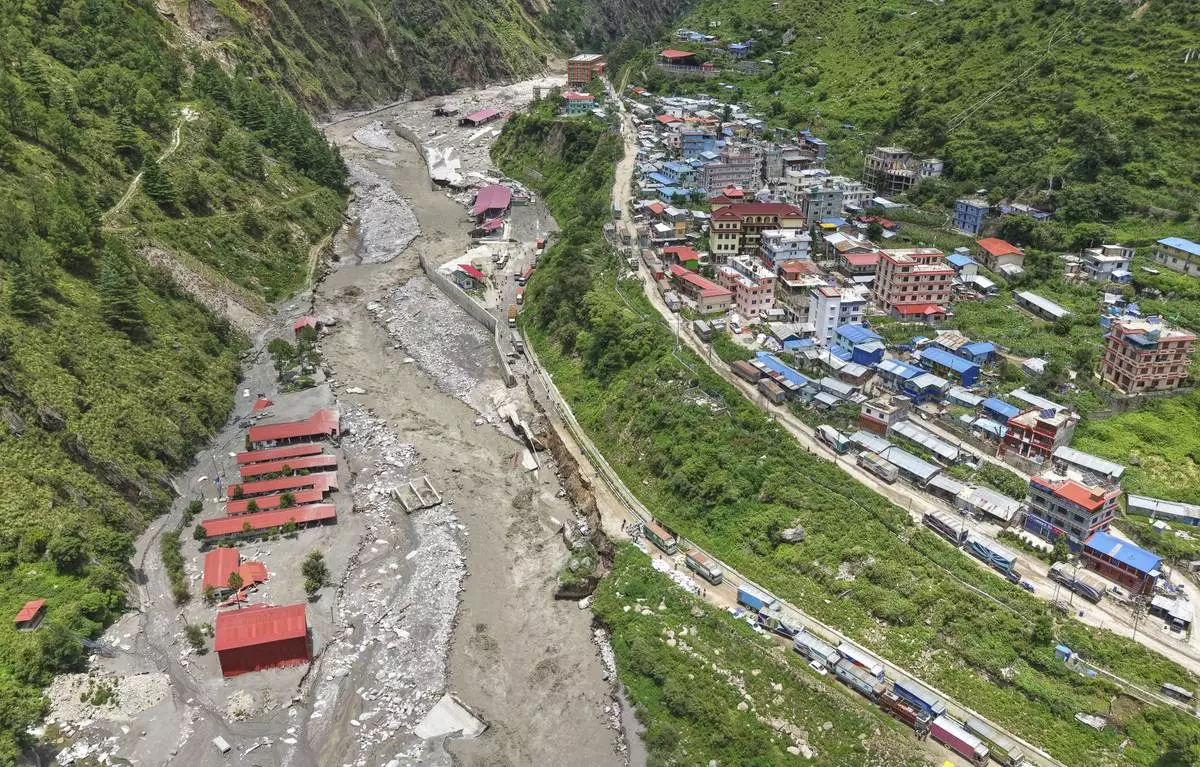
FILE - Damaged buildings, on left, are visible after severe monsoon rains flooded Bhotekoshi River and swept away a key bridge connecting the country with China in Rasuwagadi, north of the capital, Kathmandu, Nepal, July, 9, 2025. (AP Photo/Sujan Gurung, File)

FILE - Damaged buildings, on left, are visible after severe monsoon rains flooded Bhotekoshi River and swept away a key bridge connecting the country with China in Rasuwagadi, north of the capital, Kathmandu, Nepal, July, 9, 2025. (AP Photo/Sujan Gurung, File)

Another smaller flood in the area on July 30 damaged roads and structures, but caused less overall destruction. Elsewhere in the Himalayas, flash floods swept away roads, homes and hotels on Tuesday in northern India, killing at least four people and leaving many others trapped under debris, officials said.

The Himalayan region, which crosses Nepal and several nearby countries including India, is especially vulnerable to heavy rains, floods and landslides because the area is warming up faster than the rest of the world due to human-caused climate change. Climate experts say the increasing frequency of extreme weather has changed the playbook for assessing infrastructure risks while also increasing the need for smart rebuilding plans.

“The statistics of the past no longer apply for the future,” said John Pomeroy, a hydrologist at the University of Saskatchewan in Canada. “The risk that goes into building a bridge or other infrastructure is generally based on historical observations of past risk, but this is no longer useful because future risk is different and often much higher.”

While damage estimates from the July floods in the Rasuwa region are still being calculated, past construction costs give a sense of the financial toll. The Sino-Nepal Friendship Bridge alone, for example, took $68 million to rebuild after it was destroyed by a 2015 earthquake that ravaged Nepal.

The latest disaster has also stoked fears of long-lasting economic damage in a region north of the capital city Kathmandu that spent years rebuilding after the 2015 quake. Nepali government officials estimate that $724 million worth of trade with China is conducted over the bridge each year, and that has come to a standstill.

“Thank God there wasn’t much damage to local villages, but the container depot and bridges have been completely destroyed. This has severely affected workers, hotel operators, laborers, and truck drivers who rely on cross-border trade for their livelihoods,” said Kaami Tsering, a local government official, in a phone interview with The Associated Press.

Among those affected is Urken Tamang, a 50-year-old parking attendant at the depot who has been out of work for several weeks. A small tea shop he runs nearby with his family has also suffered.

“We’ve been unlucky,” said Tamang, a former farmer who sold his land and changed jobs when work on the depot began. He added: “The whole area was severely damaged by the 2015 earthquake, and just when life was slowly returning to normal, this devastating flood struck."

The Nepal floods are the latest in a series of disasters in South Asia during this year’s monsoon season. Research has shown that extreme weather has become more frequent in the region including heat waves, heavy rains and melting glaciers.

Climate experts said smart planning and rebuilding in climate-vulnerable regions must include accounting for multiple risks, installing early warning systems, preparing local communities for disasters and, when needed, relocating infrastructure.

“What we have to avoid is the insanity of rebuilding after a natural disaster in the same place where it occurred and where we know it will occur again at even higher probability," said Pomeroy, the Canadian hydrologist. "That’s a very poor decision. Unfortunately, that’s what most countries do.”

Before rebuilding in Rasuwa, Nepal government officials need to assess overall risks, including those due to extreme weather and climate change, said Bipin Dulal, an analyst at Kathmandu-based International Centre for Integrated Mountain Development.

The bridge connecting the two countries was rebuilt to better withstand earthquakes after it was destroyed in 2015, but it appears that officials didn't properly account for the risk of flooding as intense as what occurred in early July, Dulal said.

“We have to see what the extreme risk scenarios can be and we should rebuild in a way in which the infrastructure can handle those extremes,” said Dulal.

Dulal said that large building projects in South Asia typically undertake environmental impact assessments that don’t adequately factor in the risks of floods and other disasters. The center is developing a multi-hazard risk assessment framework that it hopes will be adopted by planners and builders in the region to better account for the dangers of extreme weather.

In 2024 alone, there were 167 disasters in Asia — including storms, floods, heat waves and earthquakes — which was the most of any continent, according to the Emergency Events Database maintained by the University of Louvain, Belgium. These led to losses of over $32 billion, the researchers found.

“These disasters are all wake-up calls. These risks are real,” said Ramesh Subramaniam, global director of programs and strategy at the Coalition for Disaster Resilient Infrastructure.

A CDRI analysis found that $124 billion worth of Nepal's infrastructure is vulnerable to the impacts of climate-driven disasters, creating the potential for hundreds of millions of dollars in annual losses if the country doesn't invest in resiliency.

“Investing a relatively smaller figure now would prevent the loss of these enormous sums of damages,” said Subramaniam.

Subramaniam said that most climate investments are directed towards mitigation, such as building clean energy projects and trying to reduce the amount of planet-heating gases being released. But given extreme weather damage already occurring, investing in adapting to global warming is also equally important, he said.

“I think countries are learning and adaptation is becoming a standard feature in their annual planning,” he said.

Global efforts to prepare for and deal with such losses include a climate loss and damage fund set up by the United Nations in 2023. The fund currently has $348 million available, which the U.N. warns is only a fraction of the yearly need for economic damage related to human-caused climate change. The World Bank and Asian Development Bank have also provided loans or grants to build climate-resilient projects.

In Nepal’s recently flood-ravaged region, Tsering, the local government official, said the repeated disasters have taken more than a financial toll on residents.

“Even though the river has now returned to a normal flow, the fear remains," he said. "People will always worry that something like this could happen again.”

Follow Sibi Arasu on X at @sibi123

Follow Niranjan Shrestha on Instagram at @nirishrestha

The Associated Press’ climate and environmental coverage receives financial support from multiple private foundations. AP is solely responsible for all content. Find AP’s standards for working with philanthropies, a list of supporters and funded coverage areas at AP.org.
FILE - Chinese land on left, and Nepalese land on right are visible after Friendship Bridge, a key bridge over the Bhotekoshi River connecting Nepal with China was swept away in monsoon rain in Rasuwagadi, north of the capital, Kathmandu, Nepal, Wednesday, July, 9, 2025. (AP Photo/Sujan Gurung, File)
FILE - Chinese land on left, and Nepalese land on right are visible after Friendship Bridge, a key bridge over the Bhotekoshi River connecting Nepal with China was swept away in monsoon rain in Rasuwagadi, north of the capital, Kathmandu, Nepal, Wednesday, July, 9, 2025. (AP Photo/Sujan Gurung, File)

FILE - Damaged vehicles are visible after severe monsoon rains flooded the Bhotekoshi River and swept away a key bridge connecting the country with China in Rasuwagadi, north of the capital, Kathmandu, Nepal, July, 9, 2025. (AP Photo/Sujan Gurung, File)
FILE - Damaged vehicles are visible after severe monsoon rains flooded the Bhotekoshi River and swept away a key bridge connecting the country with China in Rasuwagadi, north of the capital, Kathmandu, Nepal, July, 9, 2025. (AP Photo/Sujan Gurung, File)
FILE - People carry goods from a damaged truck stuck after monsoon rains swept away a key bridge connecting the country with China in Rasuwagadi, north of the capital, Kathmandu, Nepal, July, 9, 2025. (AP Photo/Sujan Gurung, File)
FILE - People carry goods from a damaged truck stuck after monsoon rains swept away a key bridge connecting the country with China in Rasuwagadi, north of the capital, Kathmandu, Nepal, July, 9, 2025. (AP Photo/Sujan Gurung, File)
FILE - Damaged buildings, on left, are visible after severe monsoon rains flooded Bhotekoshi River and swept away a key bridge connecting the country with China in Rasuwagadi, north of the capital, Kathmandu, Nepal, July, 9, 2025. (AP Photo/Sujan Gurung, File)
FILE - Damaged buildings, on left, are visible after severe monsoon rains flooded Bhotekoshi River and swept away a key bridge connecting the country with China in Rasuwagadi, north of the capital, Kathmandu, Nepal, July, 9, 2025. (AP Photo/Sujan Gurung, File)

Iran fired missiles at Israel and some Gulf nations while explosions could be heard around Tehran and the central Iranian city of Isfahan on Friday, as the United States prepared to further reinforce its already significant military forces in the Middle East.

As the war that began Feb. 28 was to enter its sixth week, Israel, Bahrain, Kuwait warned about incoming missile fire, although it was unclear if anything was struck. Activists reported strikes around Tehran and the central city of Isfahan but it wasn’t immediately clear what was hit.

Iran’s attacks on Gulf region energy infrastructure and its tight grip on the Strait of Hormuz, through which a fifth of the world’s oil and natural gas transits in peacetime, has sent oil prices skyrocketing.

Oil prices surged while Asian financial markets rose moderately during cautious trading. Benchmark U.S. crude rose 11.4% to $111.54 a barrel. The price of Brent crude, the international standard, jumped 7.8% to $109.03 per barrel.

U.S. President Donald Trump said U.S. forces will keep hitting Iran “very hard” in the next two or three weeks.

The largest American aircraft carrier in service sailed out of Split, in Croatia and “remains poised for full mission tasking in support of national objectives in any area of operation,” the Navy’s 6th Fleet announced.

It was unclear where it was going. The USS Abraham Lincoln remains in the Arabian Sea and the USS George H. W. Bush aircraft carrier departed Norfolk on Wednesday to head to the Mideast.

Here is the latest:

Oil prices continued to surge on worries of a prolonged Iran war but the Asian markets that were open Friday rose moderately in cautious trading, while others were closed for the Good Friday holidays.

Benchmark U.S. crude rose 11.4% to $111.54 a barrel. The price of Brent crude, the international standard, jumped 7.8% to $109.03 per barrel.

The U.S. only relies on the Persian Gulf for a fraction of the oil it imports, but oil is a commodity and prices are set in a global market.

The situation is very different in Asia. Japan, for example, relies on access to the Strait of Hormuz for much of the nation’s oil import needs and would need to rely on alternative routes. But some analysts say Japan and oher nations are counting on an agreement with Iran to allow transports.

Japan’s benchmark Nikkei 225 gained 0.9% in Friday morning trading to 52,938.62. South Korea’s Kospi jumped 2.1% to 5,344.41. The Shanghai Composite sank 0.5% to 3,899.57. Trading was closed in Hong Kong, Singapore, Australia, New Zealand, the Philippines, Indonesia and India.

Wall Street, where trading is closed Friday, finished its first winning week since the start of the Iran war, although trading started out with a decline driven by a surge in oil prices.

Bangladesh is curtailing office hours and enforcing early closure of malls and shops beginning Friday to handle its energy crisis related to the war.

The country’s cabinet ordered 30% spending cuts for fuel and power at government offices, suspended some staff training and stopped purchases of new vehicles, ships and aircraft. Decorative lighting will not be allowed for celebrations.

Bangladesh, a nation of more than 170 million people, is seeking alternative fuel sources and $2.5 billion in external financing for imports, which account for 95% of its fuel.

Australian Energy Minister Chris Bowen on Friday urged motorists getting away for a long weekend during the Easter holiday to fill up in cities because most of the nation’s fuel shortages are in rural areas.

Among 2,400 gas stations in New South Wales, Australia’s most populous state, 182 had run out of diesel by Friday.

In Australia’s second-most populous state, Victoria, 76 gas stations were out of diesel. In the remaining states ranked by the most populous first, Queensland had 75 stations without diesel, Western Australia had 37, South Australia had 28 and in Tasmania there were seven.

“For those Australians planning a road trip this weekend, given our shortages are predominantly in rural and regional Australia, it makes sense to fill up in the city to help the country if you can,” Bowen said in Sydney.

The government, which blamed regional shortages on panic buying and distribution problems, is concentrating on delivering fuel to farmers for planting crops.

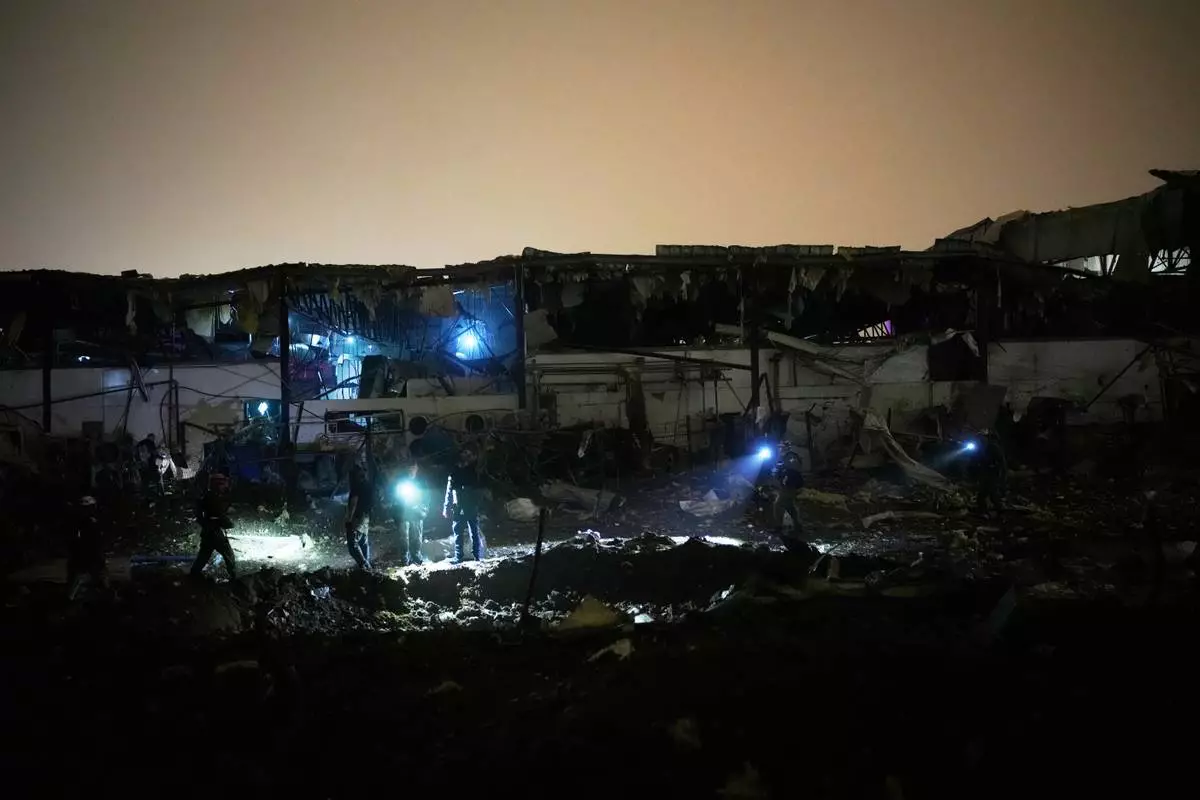
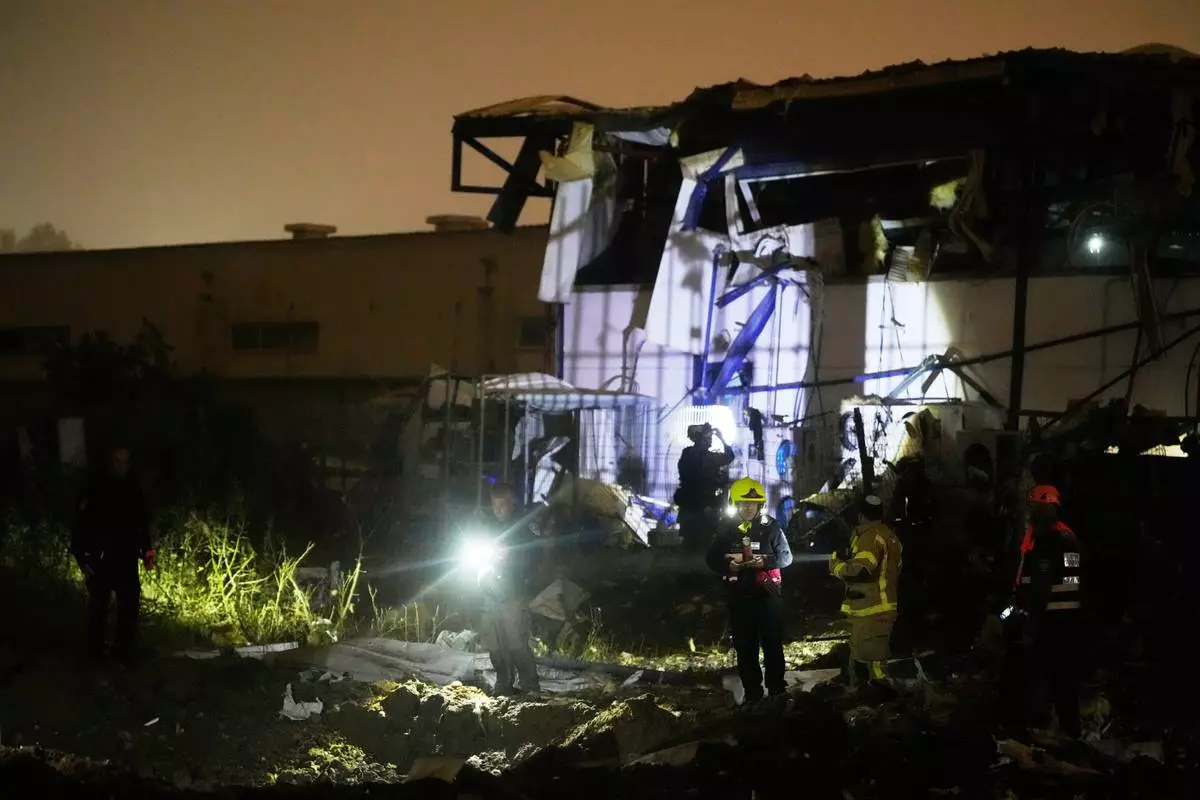
Israeli security forces and rescue teams inspect a site struck by an Iranian missile in Petah Tikva, Israel,Thursday, April 2, 2026. (AP Photo/Ohad Zwigenberg)

Israeli security forces and rescue teams inspect a site struck by an Iranian missile in Petah Tikva, Israel,Thursday, April 2, 2026. (AP Photo/Ohad Zwigenberg)

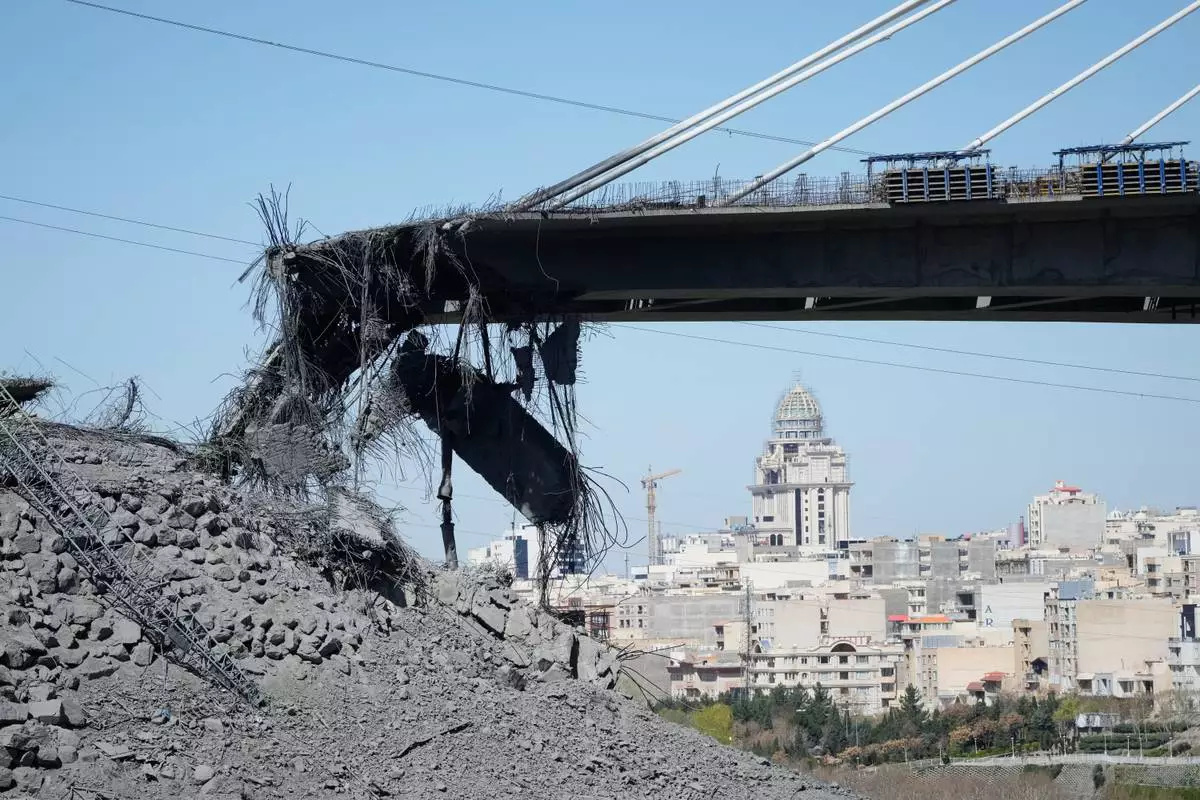
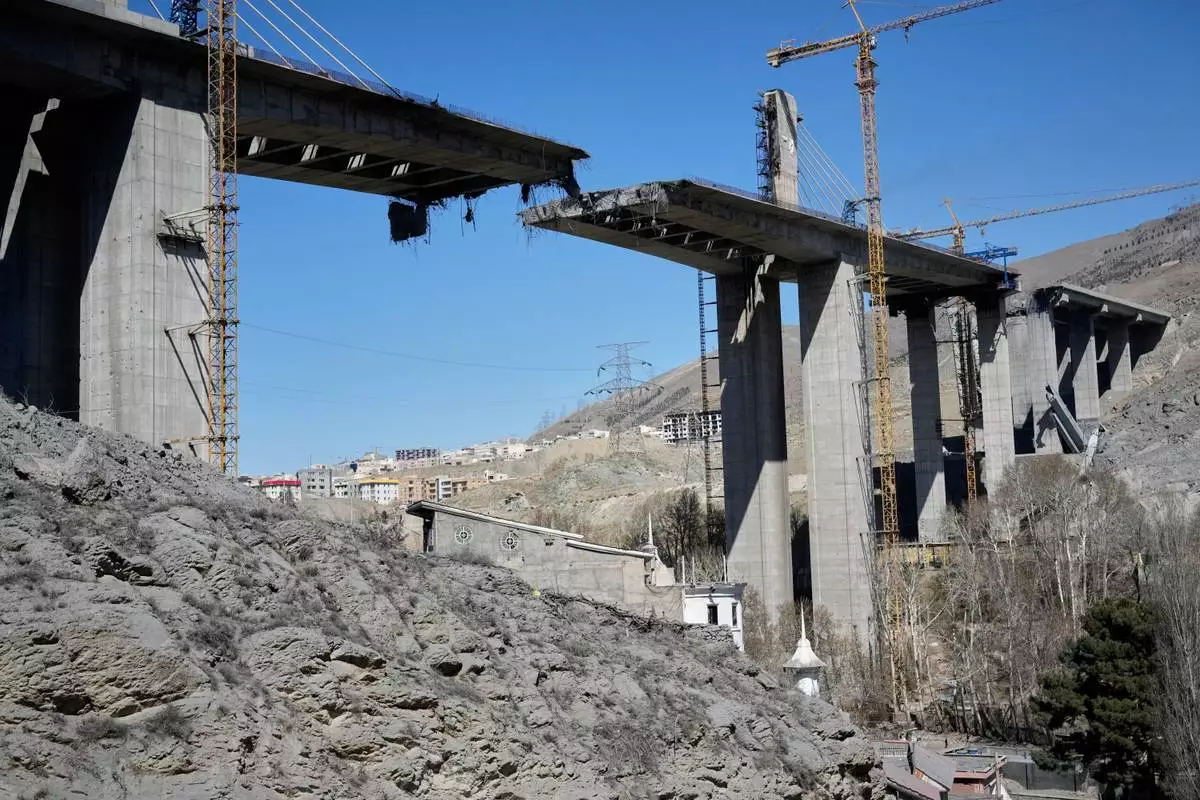
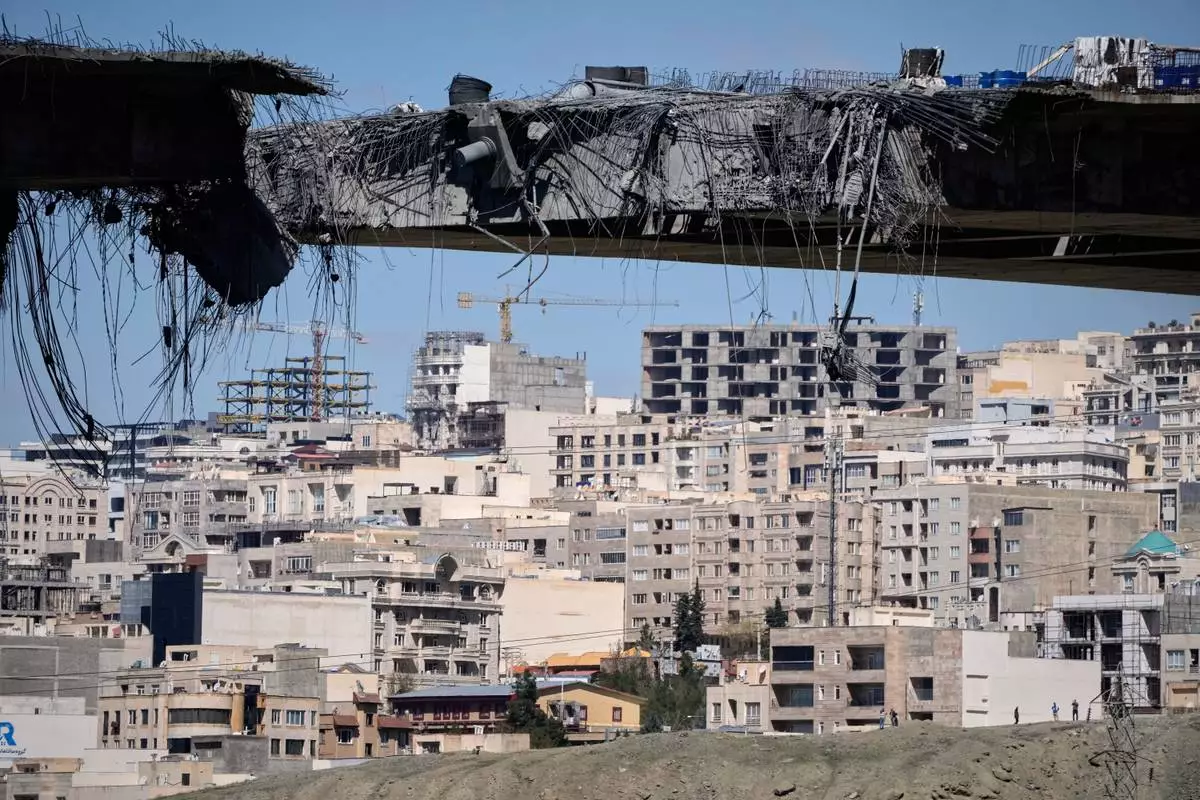
A newly constructed bridge struck by U.S. airstrikes Thursday is seen in Karaj, west of Tehran, Iran, Friday, April 3, 2026. (AP Photo/Vahid Salemi)

A newly constructed bridge struck by U.S. airstrikes Thursday is seen in Karaj, west of Tehran, Iran, Friday, April 3, 2026. (AP Photo/Vahid Salemi)

A newly constructed bridge struck by U.S. airstrikes Thursday is seen in Karaj, west of Tehran, Iran, Friday, April 3, 2026. (AP Photo/Vahid Salemi)

A newly constructed bridge struck by U.S. airstrikes Thursday is seen in Karaj, west of Tehran, Iran, Friday, April 3, 2026. (AP Photo/Vahid Salemi)

A bridge struck by U.S. airstrikes on Thursday is seen in the town of Karaj, west of Tehran, Iran, Friday, April 3, 2026. (AP Photo/Vahid Salemi)

A bridge struck by U.S. airstrikes on Thursday is seen in the town of Karaj, west of Tehran, Iran, Friday, April 3, 2026. (AP Photo/Vahid Salemi)

Israeli security forces and rescue teams inspect a site struck by an Iranian missile in Petah Tikva, Israel,Thursday, April 2, 2026. (AP Photo/Ohad Zwigenberg)

Israeli security forces and rescue teams inspect a site struck by an Iranian missile in Petah Tikva, Israel,Thursday, April 2, 2026. (AP Photo/Ohad Zwigenberg)

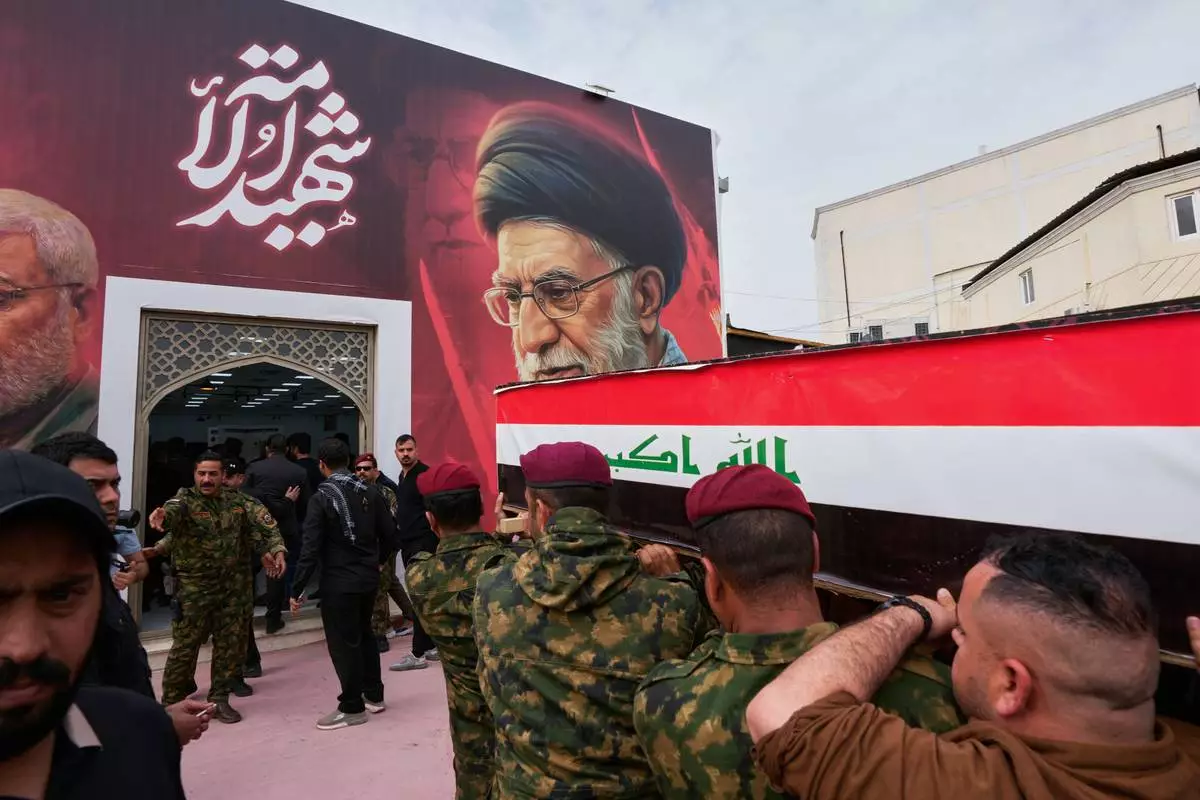
Members from the Popular Mobilization Forces attend a funeral of fighters who were killed in a U.S. airstrike, in Tal Afar, Nineveh province, north of Baghdad, Iraq, Thursday, April 2, 2026. (AP Photo/Hadi Mizban)

Members from the Popular Mobilization Forces attend a funeral of fighters who were killed in a U.S. airstrike, in Tal Afar, Nineveh province, north of Baghdad, Iraq, Thursday, April 2, 2026. (AP Photo/Hadi Mizban)

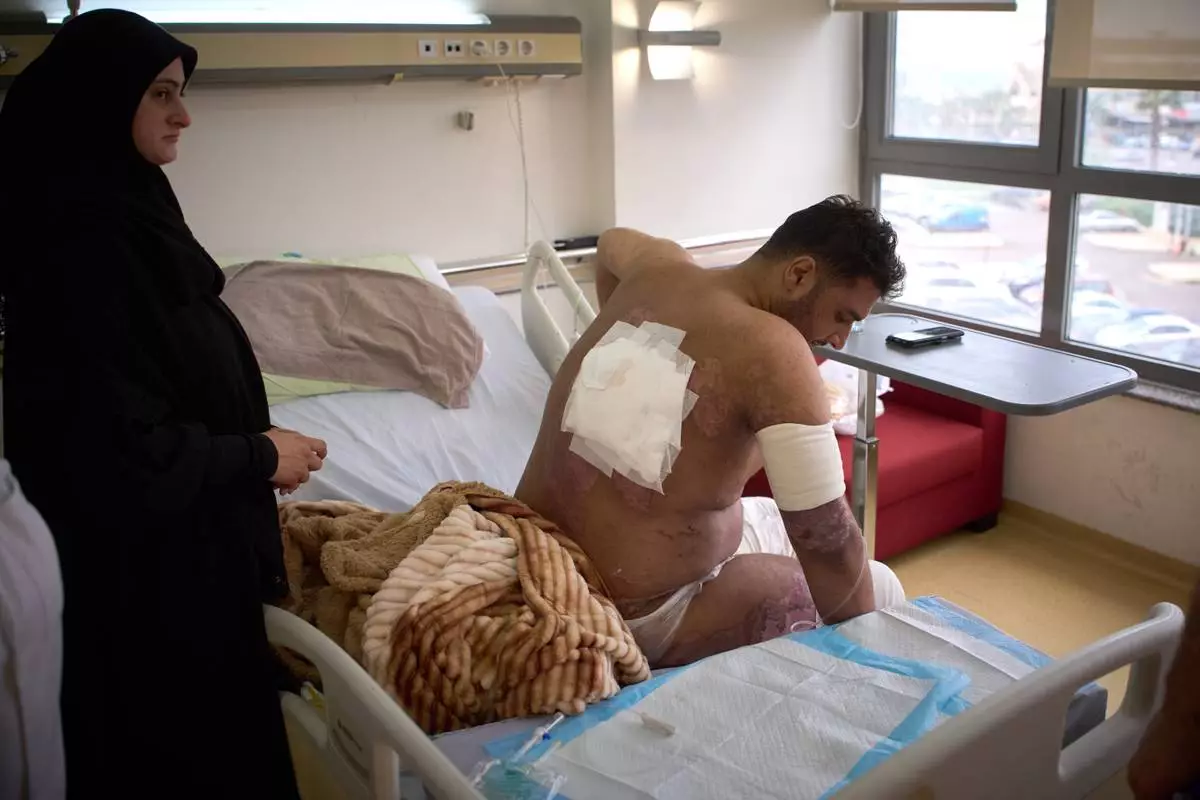
A man with burn wounds from an Israeli airstrike on southern Lebanon sits on a bed at the Sidon Government Hospital in Sidon, Lebanon, Thursday, April 2, 2026. (AP Photo/Emilio Morenatti)

A man with burn wounds from an Israeli airstrike on southern Lebanon sits on a bed at the Sidon Government Hospital in Sidon, Lebanon, Thursday, April 2, 2026. (AP Photo/Emilio Morenatti)

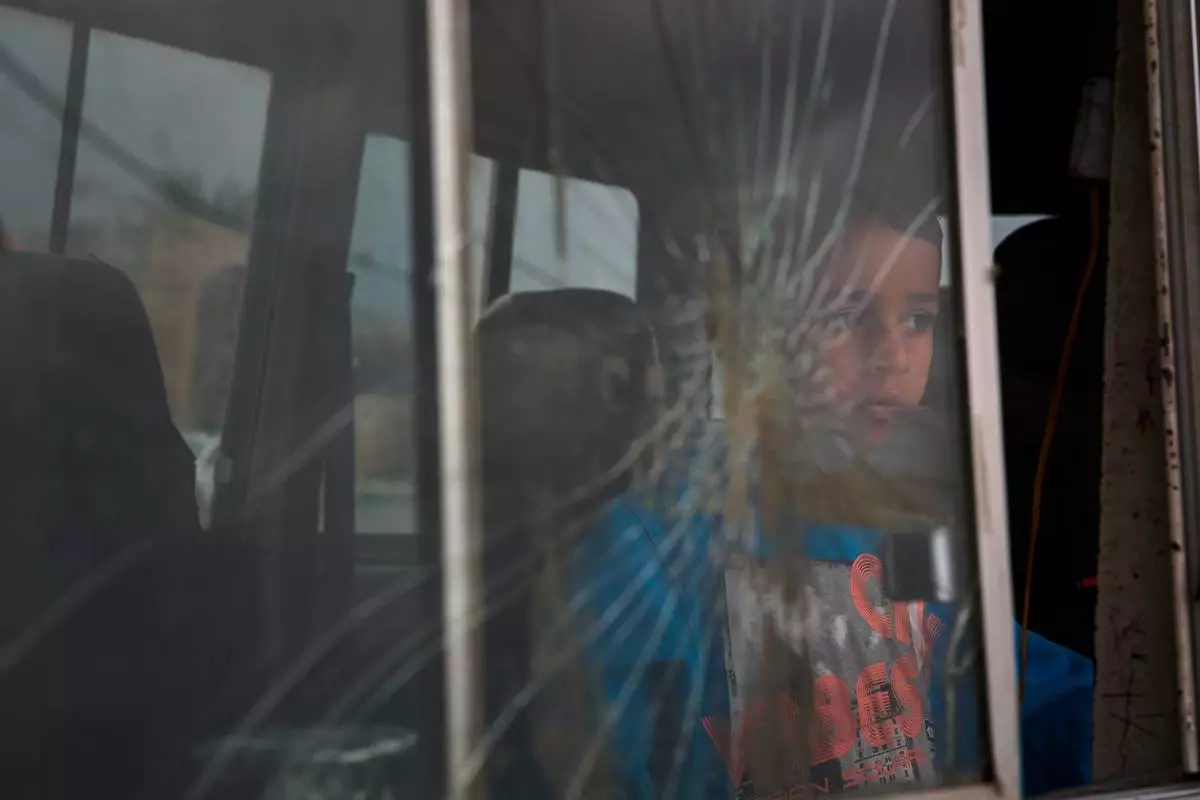
A boy who fled with his family following Israeli strikes in southern Lebanon sits inside the van they are using as shelter in Sidon, Lebanon, Thursday, April 2, 2026. (AP Photo/Emilio Morenatti)

A boy who fled with his family following Israeli strikes in southern Lebanon sits inside the van they are using as shelter in Sidon, Lebanon, Thursday, April 2, 2026. (AP Photo/Emilio Morenatti)

President Donald Trump arrives from the Blue Room to speak about the Iran war from the Cross Hall of the White House on Wednesday, April 1, 2026, in Washington. (AP Photo/Alex Brandon, Pool)

President Donald Trump arrives from the Blue Room to speak about the Iran war from the Cross Hall of the White House on Wednesday, April 1, 2026, in Washington. (AP Photo/Alex Brandon, Pool)

Recommended Articles