AUSTIN, Texas (AP) — The two most populous U.S. states — California and Texas — are grappling for political advantage ahead of the 2026 elections, setting up a national proxy war as Democrats and Republicans vie for control of Congress in the latter half of Donald Trump's second presidency.
Texas Democrats on Tuesday again delayed their state’s House of Representatives from moving forward with a redrawn congressional map sought by Trump to shore up Republicans’ midterm prospects as his political standing falters. For a second day, Democrats forced a quick adjournment by denying the GOP majority the required attendance to take votes.
Click to Gallery
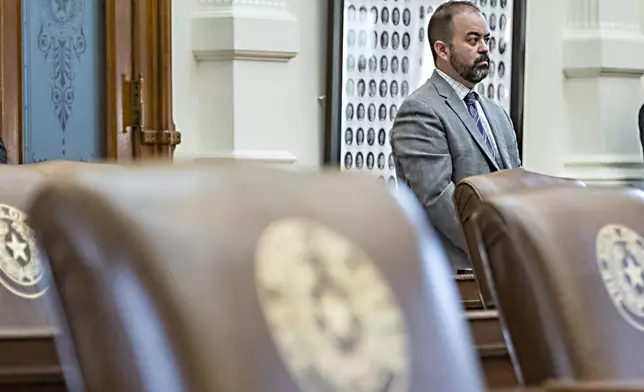
Texas House Rep. Joe Moody, D - El Paso, stands at the back of the House Chambers with empty chairs belonging to House Democrats protesting a redistricting map at the State Capitol, Tuesday, Aug. 5, 2025, in Austin, Texas. (AP Photo/Rodolfo Gonzalez)
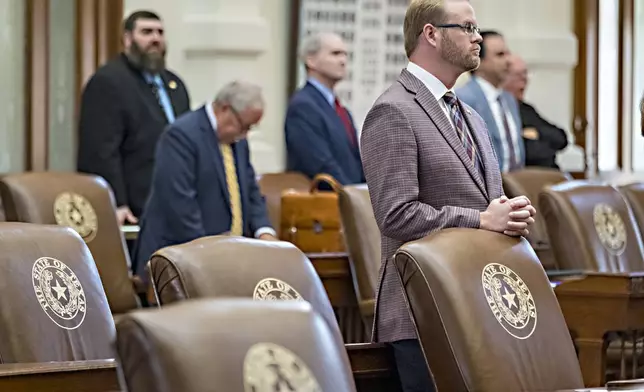
Texas House Rep. Daniel Alders, R - Tyler, stands at his desk during with empty chairs belonging to House Democrats remain empty in the State Capitol, Tuesday, Aug. 5, 2025, in Austin, Texas. (AP Photo/Rodolfo Gonzalez)
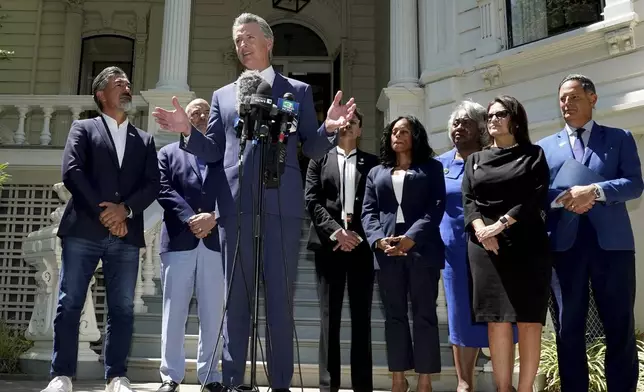
FILE - California Gov. Gavin Newsom, accompanied by several members of the Texas state Legislature, calls for a new way for California to redraw its voting districts, during a news conference In Sacramento, Calif., Friday July 25, 2025. (AP Photo by Rich Pedroncelli,File)
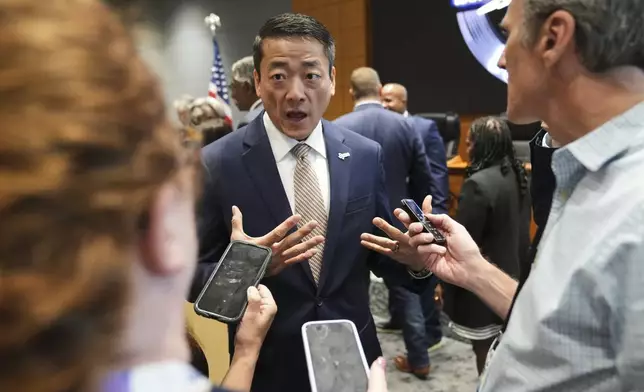
Democratic Texas Rep. Gene Wu, center, speaks with the media following a press conference with other Texas House Democrats and Democratic members of Congress at the Democratic Party in Warrenville, Ill., Monday, Aug. 4, 2025. (AP Photo/Nam Y. Huh)
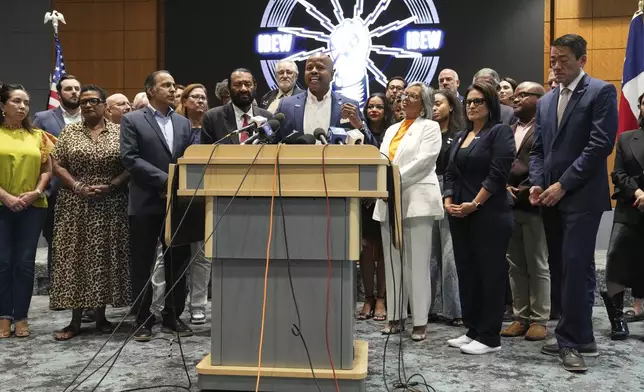
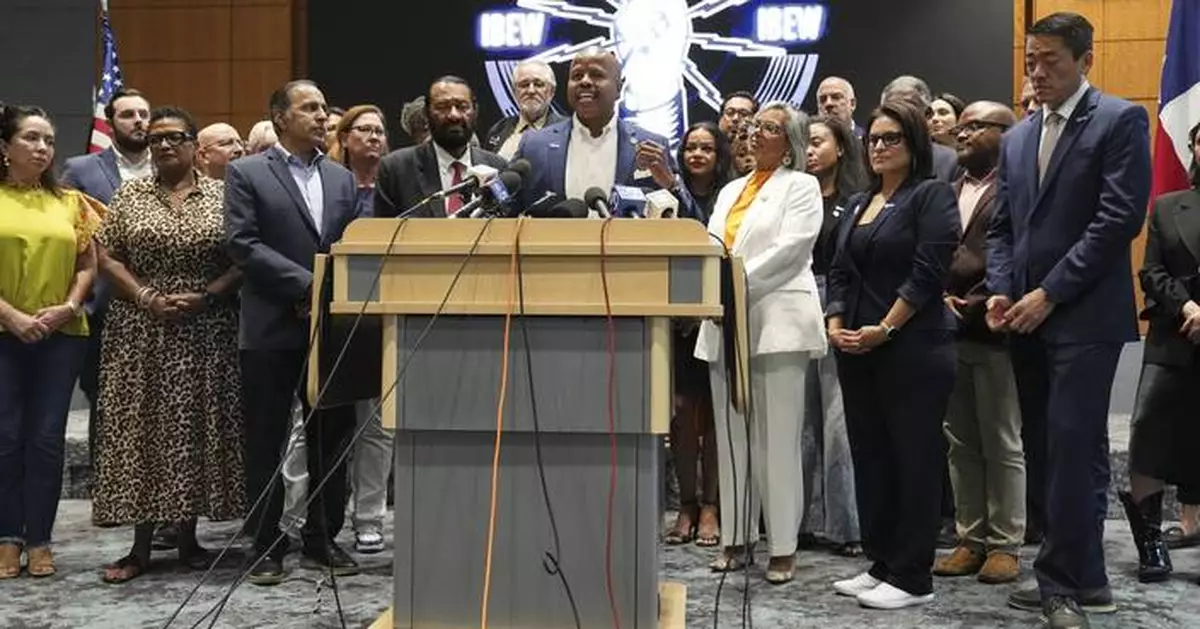
Democratic Texas Rep. Ron Reynolds, center, surrounded by other Texas House Democrats and Democratic members of Congress, speaks during a press conference at the Democratic Party in Warrenville, Ill., Monday, Aug. 4, 2025. (AP Photo/Nam Y. Huh)
In California, Democrats encouraged by Gov. Gavin Newsom are considering new political maps that could slash Republican-held House seats in the left-leaning state while bolstering Democratic incumbents in battleground districts. The move is intended to counter any GOP gains in Texas — though California Democrats could face even more complex legal and logistical hurdles.
Under existing maps, Democrats are within three seats of reclaiming the U.S. House majority.
For years, the two behemoth states have set competing political and cultural curves, dueling over jobs, innovation, prestige and ideology. Now, the rivalry is at the center of the two major parties' scramble to win an edge in 2026.
“We are entitled to five more seats" in Texas, Trump insisted Tuesday in a CNBC interview. He pointed to California’s existing maps, which are drawn by an independent commission unlike the Texas maps drawn by a partisan legislature: “They did it to us.”
National Democratic Chairman Ken Martin said Trump and compliant Republicans are subverting democracy out of fear given the president's lagging approval ratings and voter angst over the massive tax and policy bill he signed last month.
“Republicans are running scared that voting for this monstrosity will make them lose their majority, and it certainly will,” Martin said in Illinois, where multiple Texas Democrats have settled temporarily to deny their Republican colleagues a quorum in Austin.
Though the two states are seeking similar outcomes, Texas is in the final stages of its effort while California is just embarking on a path riddled with obstacles. Both states are likely to face well-funded legal challenges should they move ahead with new maps. The fight could spill over to other statehouses.
After dozens of Democrats left Texas, the Republican-dominated House remains unable to establish the quorum of lawmakers required to do business.
The House issued civil arrest warrants for absent Democrats and Republican Gov. Greg Abbott ordered state troopers to find and arrest them, but lawmakers physically outside Texas are beyond state authorities' jurisdiction. Democrats’ retort that Abbott is blustering about legal authority he does not have.
House Speaker Rep. Dustin Burrows said Tuesday that Texas officers are continuing efforts to corral lawmakers but offered no details.
Abbott, for his part, has derided absent Democrats as “un-Texan.” Democrats cast the governor and his ally, Texas Attorney General Ken Paxton, as Trump lackeys.
“When Donald Trump calls, they say, ‘Yes, sir. Right away,’” Illinois Gov. JB Pritzker said Tuesday.
Republicans currently hold 25 of Texas' 38 U.S. House seats. The GOP replacement map is drawn to give Republicans five more seats. Republicans' current advantage of nearly 2-to-1 already is a wider partisan gap than the 2024 presidential results: Trump won 56.1% of Texas ballots, while Democrat Kamala Harris received 42.5%.
The Texas House will convene again Friday.
In California, Democrats are looking into a plan to secure 48 of 52 congressional seats. That’s up from the 43 seats. The existing party gap outpaces the statewide presidential split in 2024: Harris got 58.5% of the vote to Trump's 38.3%.
Newsom has said he won’t move ahead if Texas pauses its efforts. But he and legislative Democrats face a tight timeline to advance their plan. Once they hit go, several hurdles await.
Unlike Texas, which only requires legislative approval on the maps, California's maps would also need support from voters. They may be skeptical to give it after handing redistricting power to an independent commission years ago. The governor said he’d call a special election for the first week of November. Voter turnout in odd-year elections is hard to predict, and Newsom would be campaigning at a time when his popularity among voters has been sagging.
And opposition has formed quickly.
Former Republican Gov. Arnold Schwarzenegger has signaled he'd campaign to protect the independent redistricting commission that was one of his signature accomplishments. Schwarzenegger spokesman Danile Ketchell said in a statement that the former governor has always advocated “taking power from the politicians and returning it to the people where it belongs, and he believes gerrymandering is evil no matter who does it.”
Still, many Democrats hope Newsom's push will compel Texas Republicans to stand down.
Despite California's cumbersome path, a potentially extended stalemate in Texas — even if the GOP ultimately gets its way there — could give Newsom and his allies more time to rally support.
Thad Kousser, a political science professor at the University of California, San Diego, said there is uncertainty but that “Democrats have a path to victory if they can make this a referendum on Donald Trump and his collaboration with Texas to stack the deck in his favor.”
Further, Pritzker and New York Gov. Kathy Hochul, who also welcomed some Texas lawmakers, have promised to explore ways to redraw congressional districts to counter GOP efforts. That means Texas and California could simply be blueprints for a multistate redistricting bonanza.
For their parts, Texas legislators who left declined to say how long they'll hold out.
“There's folks saying that we walked out. I think everyone behind me would say we're standing up, and as Texans would say, we're standing tall,” said state Rep. Ramon Romero, who decamped to Illinois.
Walkouts often only delay passage of a bill, like in 2021, when Democrats left Texas for 38 days to protest proposed voting restrictions. Once they returned, Republicans passed that measure. After that dispute, Texas Republicans adopted $500 daily fines for lawmakers who don't show.
“I’ll pay that price for America,” Romero said.
Barrow reported from Atlanta. Blood reported from Los Angeles. Trân Nguyễn contributed from Sacramento.
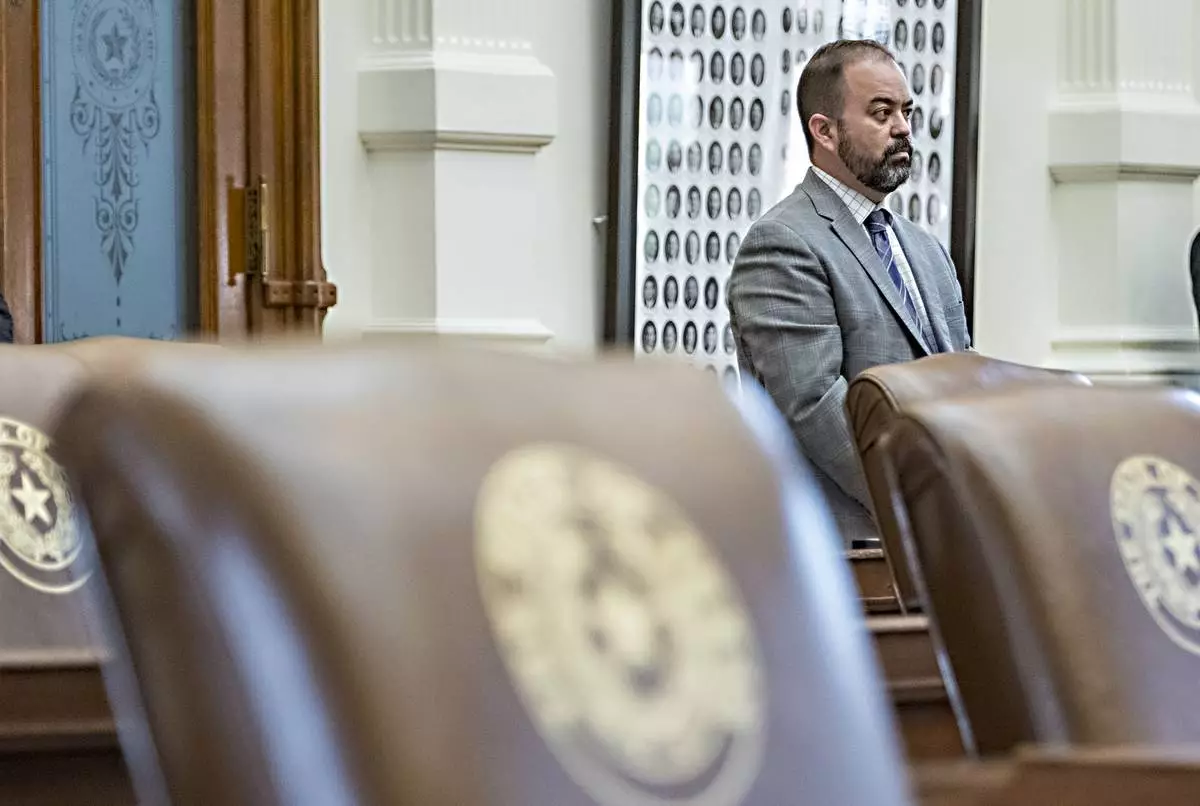
Texas House Rep. Joe Moody, D - El Paso, stands at the back of the House Chambers with empty chairs belonging to House Democrats protesting a redistricting map at the State Capitol, Tuesday, Aug. 5, 2025, in Austin, Texas. (AP Photo/Rodolfo Gonzalez)
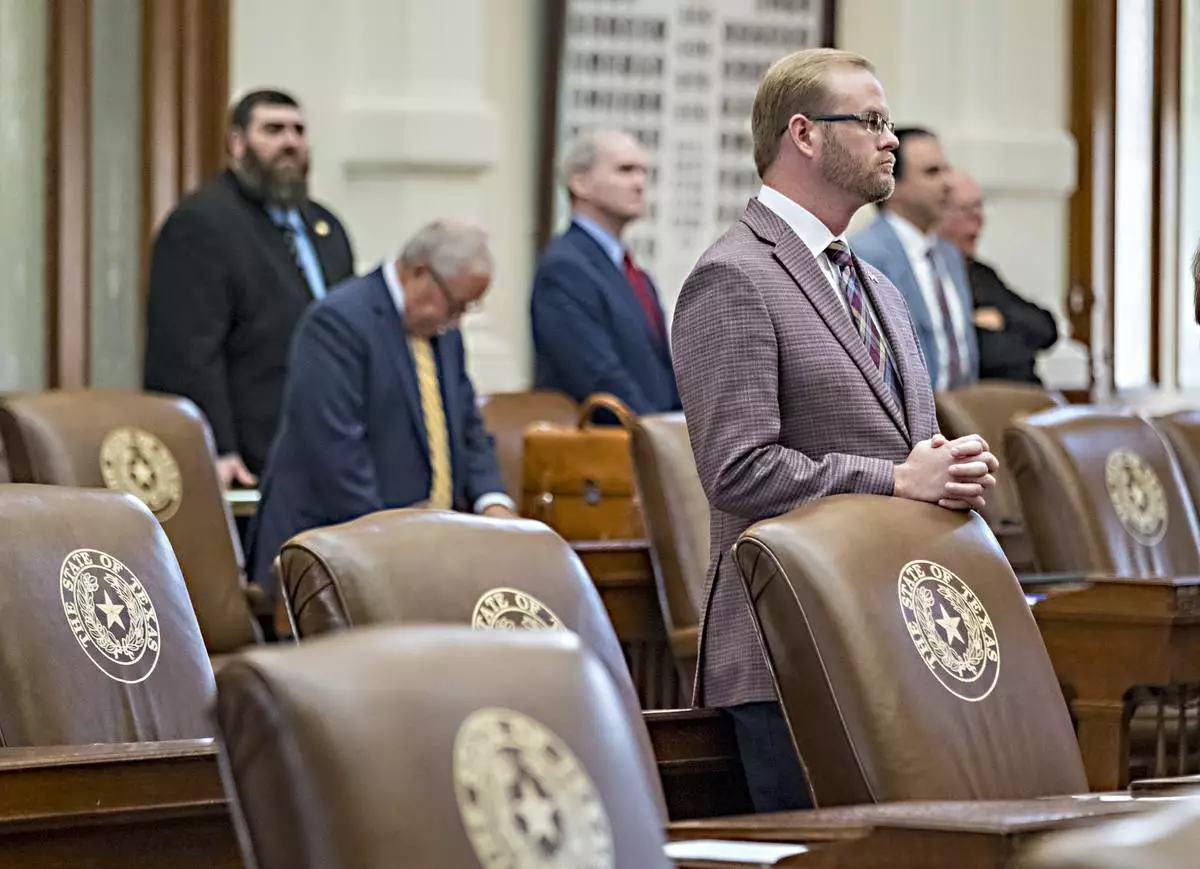
Texas House Rep. Daniel Alders, R - Tyler, stands at his desk during with empty chairs belonging to House Democrats remain empty in the State Capitol, Tuesday, Aug. 5, 2025, in Austin, Texas. (AP Photo/Rodolfo Gonzalez)
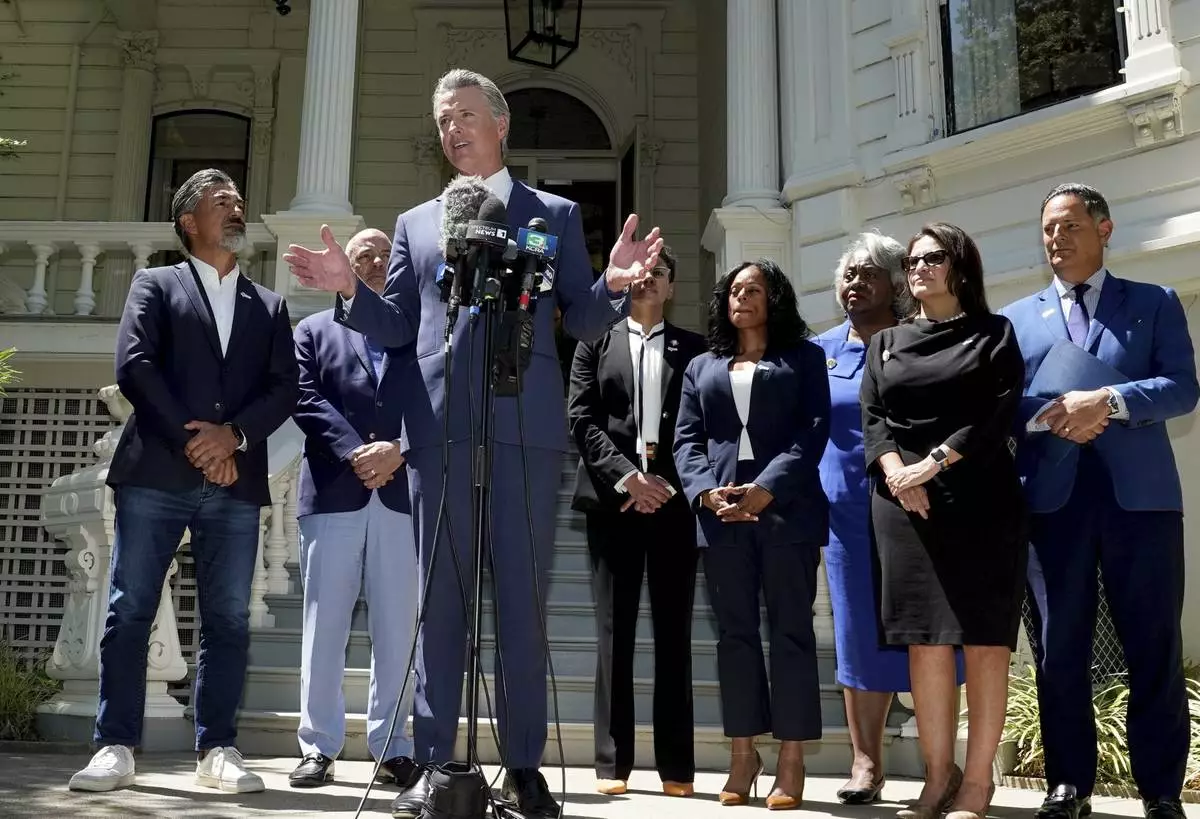
FILE - California Gov. Gavin Newsom, accompanied by several members of the Texas state Legislature, calls for a new way for California to redraw its voting districts, during a news conference In Sacramento, Calif., Friday July 25, 2025. (AP Photo by Rich Pedroncelli,File)
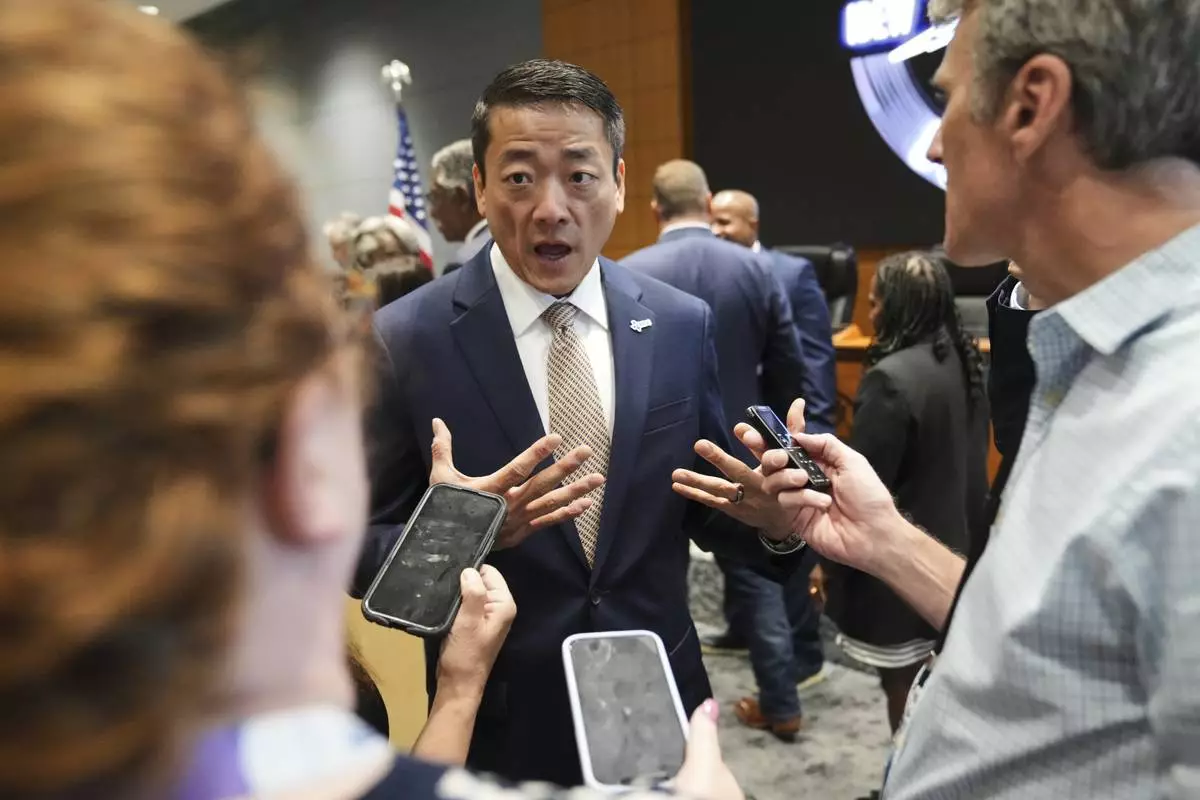
Democratic Texas Rep. Gene Wu, center, speaks with the media following a press conference with other Texas House Democrats and Democratic members of Congress at the Democratic Party in Warrenville, Ill., Monday, Aug. 4, 2025. (AP Photo/Nam Y. Huh)
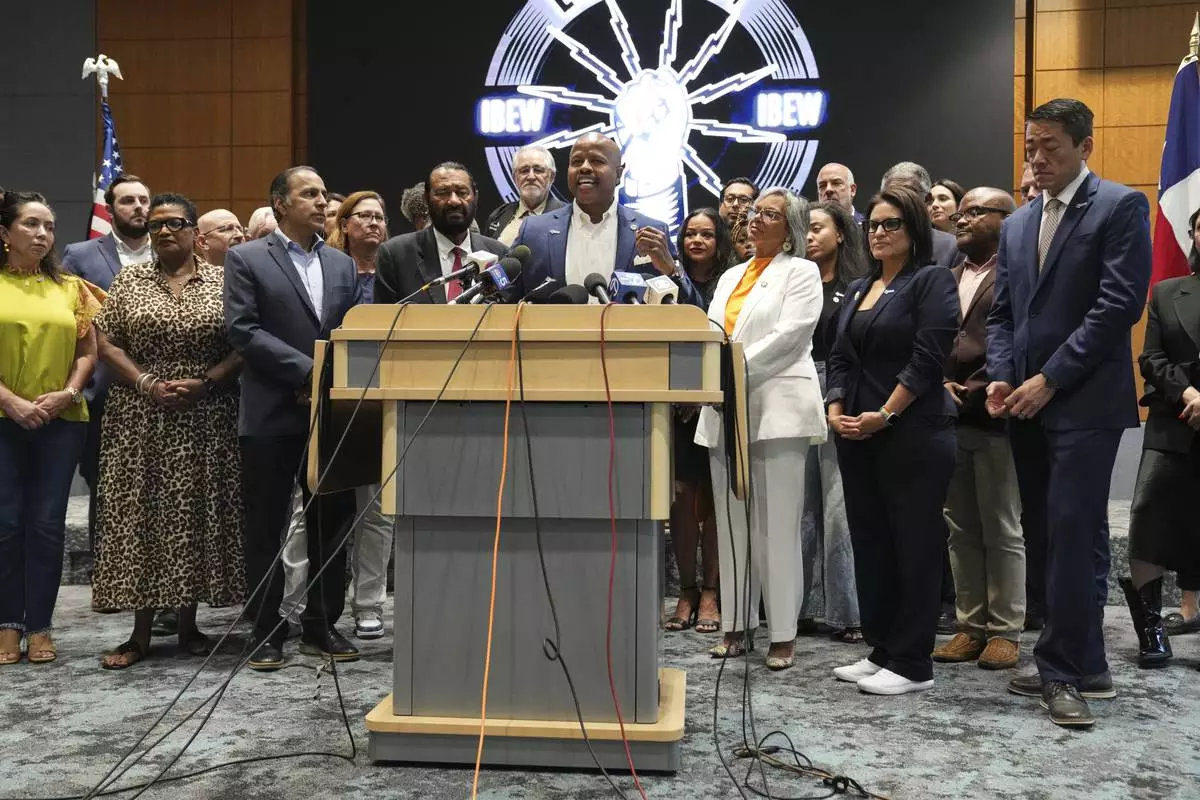
Democratic Texas Rep. Ron Reynolds, center, surrounded by other Texas House Democrats and Democratic members of Congress, speaks during a press conference at the Democratic Party in Warrenville, Ill., Monday, Aug. 4, 2025. (AP Photo/Nam Y. Huh)