Skip to Content Facebook Feature Image

What to know as Israel considers reoccupying Gaza in what would be a major escalation of the war

News

What to know as Israel considers reoccupying Gaza in what would be a major escalation of the war
News

News

What to know as Israel considers reoccupying Gaza in what would be a major escalation of the war

2025-08-06 05:10 Last Updated At:05:20

Israeli Prime Minister Benjamin Netanyahu is considering ordering the full reoccupation of the Gaza Strip, according to Israeli media, a move that would draw fierce opposition internationally and within Israel.

It would mark a stunning escalation of the nearly 22-month war in the territory that has already been largely destroyed and where experts say famine is unfolding. It would put the lives of countless Palestinians and about 20 living hostages at risk, and deepen Israel's already stark international isolation.

More Images
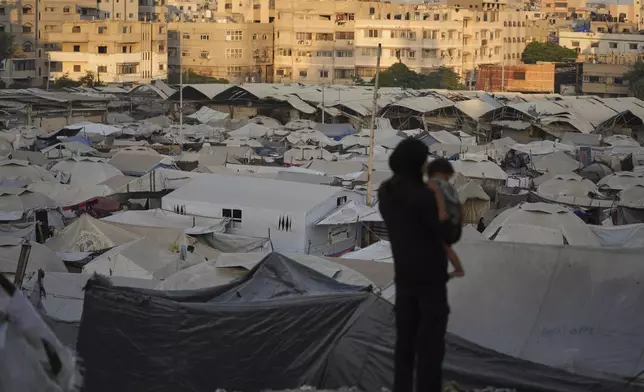
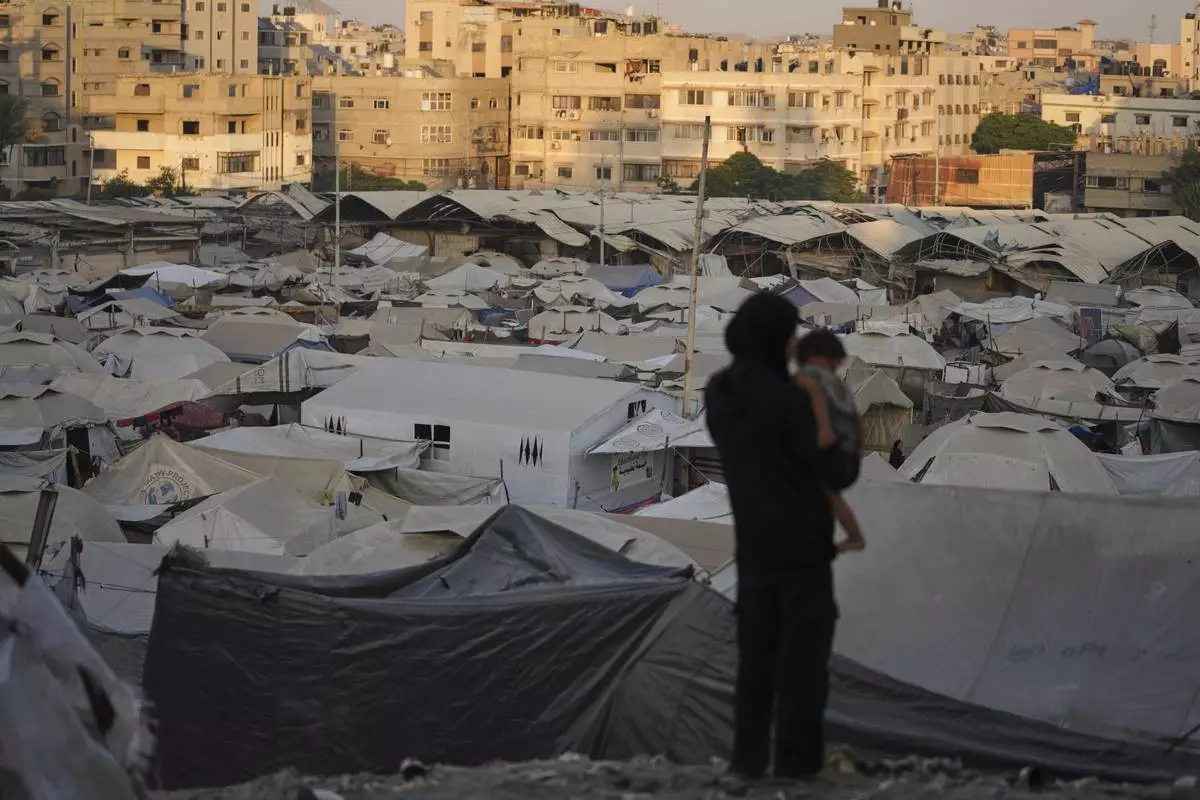
A tent camp for displaced Palestinians stretches along Gaza City, Sunday, Aug. 3, 2025. (AP Photo/Jehad Alshrafi)
A tent camp for displaced Palestinians stretches along Gaza City, Sunday, Aug. 3, 2025. (AP Photo/Jehad Alshrafi)

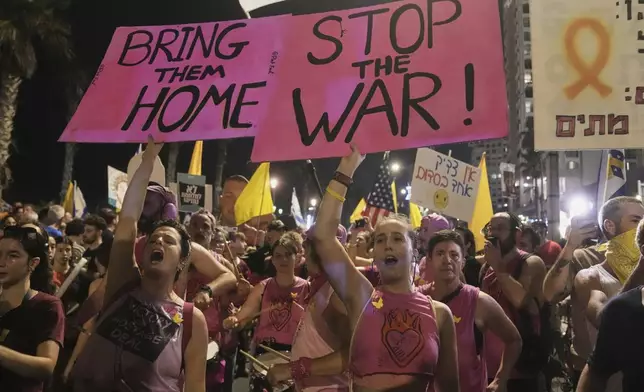
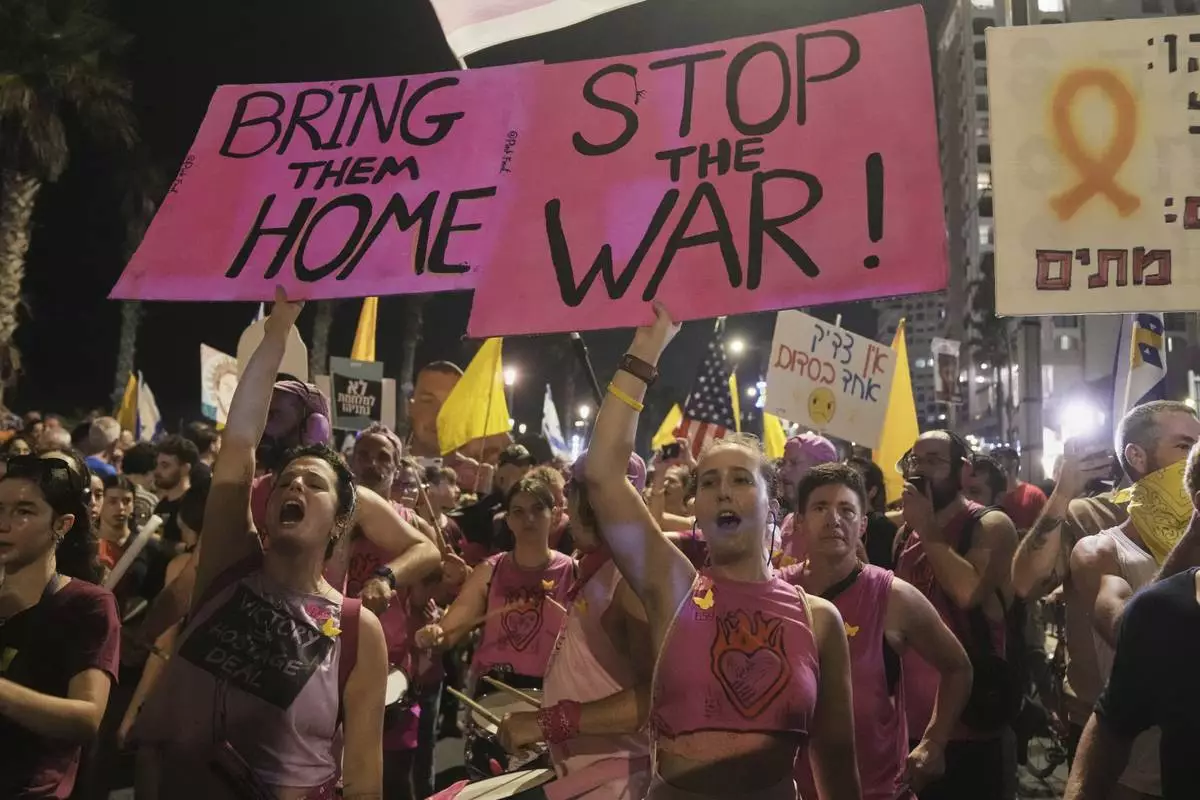
People take part in a protest outside US Embassy Branch demanding the end of the war and immediate release of hostages held by Hamas in the Gaza Strip, and against Prime Minister Benjamin Netanyahu's government in Tel Aviv, Saturday, July 26, 2025. (AP Photo/Mahmoud Illean)
People take part in a protest outside US Embassy Branch demanding the end of the war and immediate release of hostages held by Hamas in the Gaza Strip, and against Prime Minister Benjamin Netanyahu's government in Tel Aviv, Saturday, July 26, 2025. (AP Photo/Mahmoud Illean)

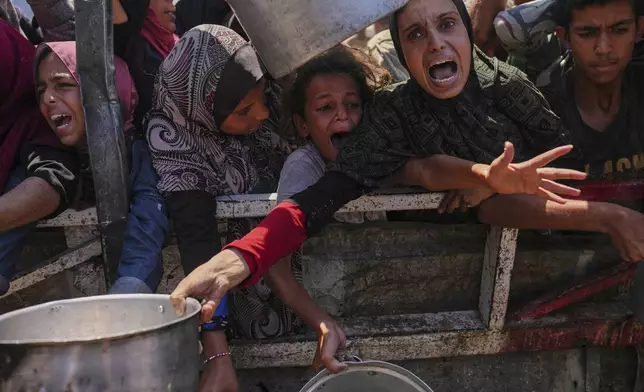
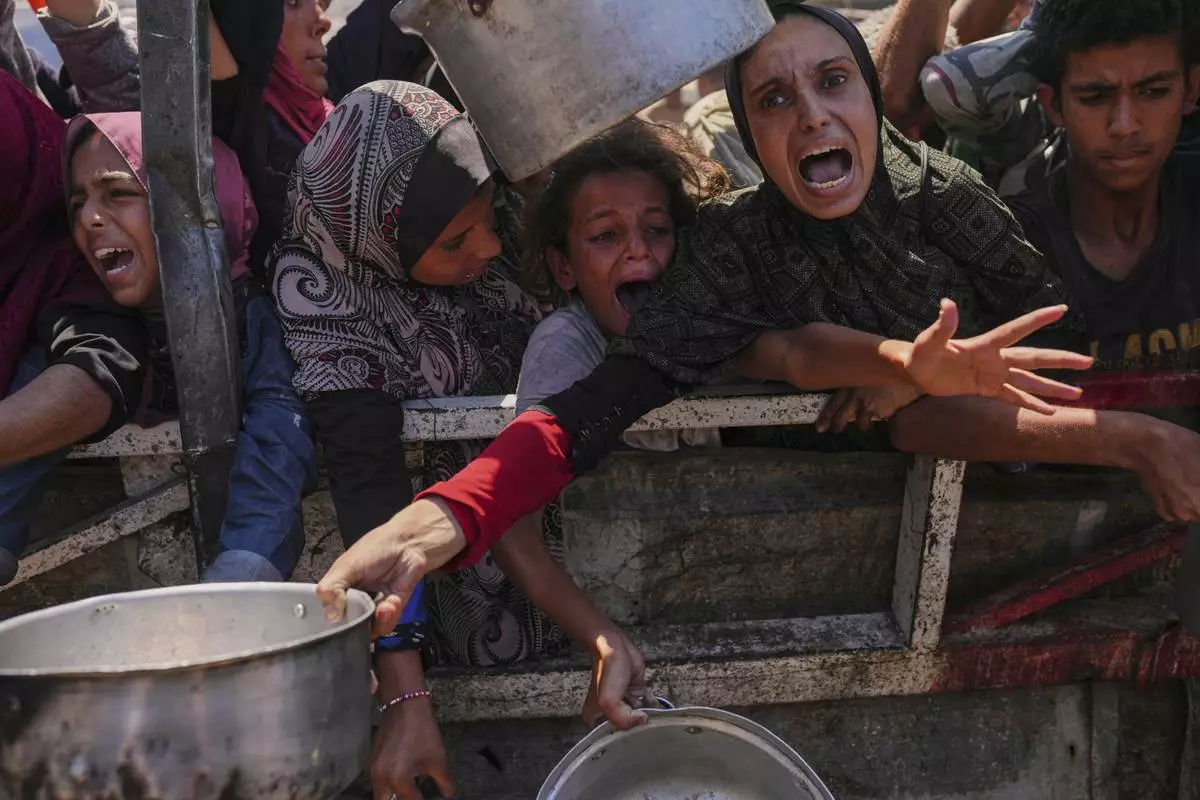
Palestinians struggle to get donated food at a community kitchen in Gaza City, northern Gaza Strip, Monday, Aug. 4, 2025. (AP Photo/Jehad Alshrafi)
Palestinians struggle to get donated food at a community kitchen in Gaza City, northern Gaza Strip, Monday, Aug. 4, 2025. (AP Photo/Jehad Alshrafi)

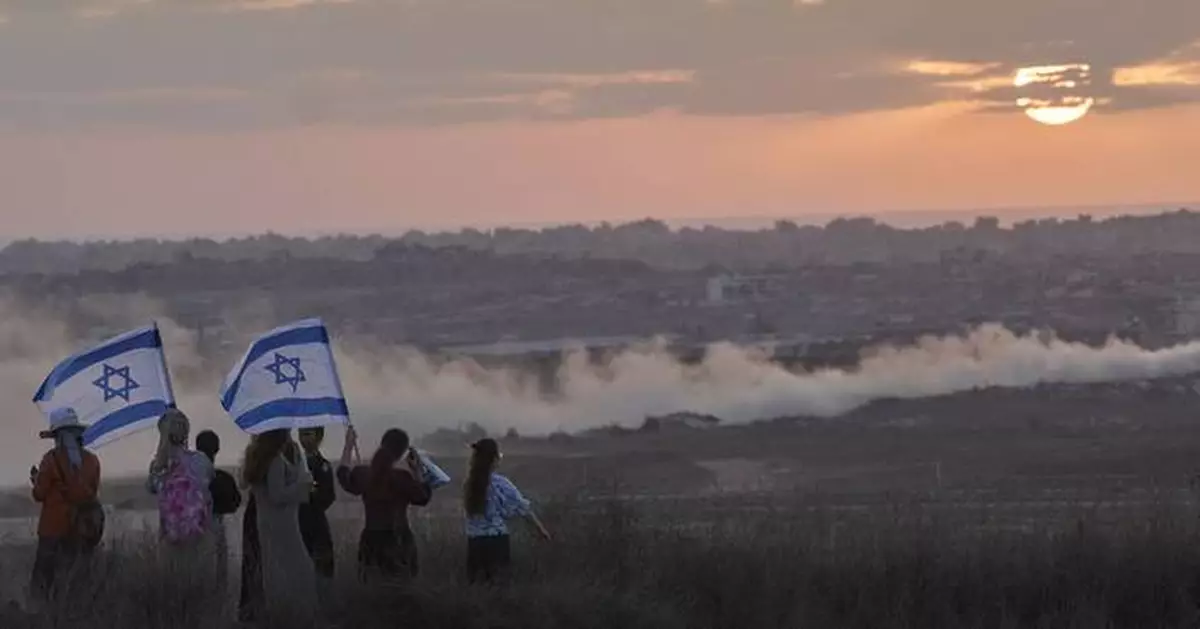
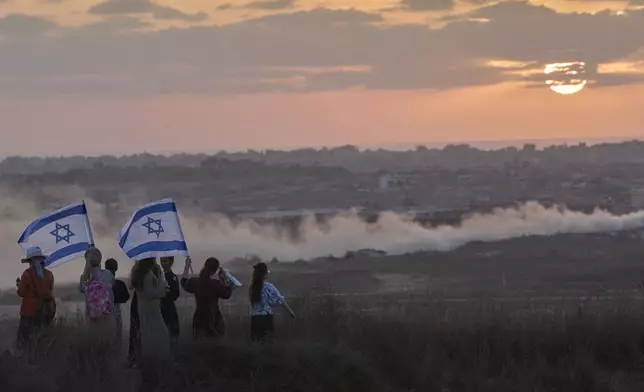
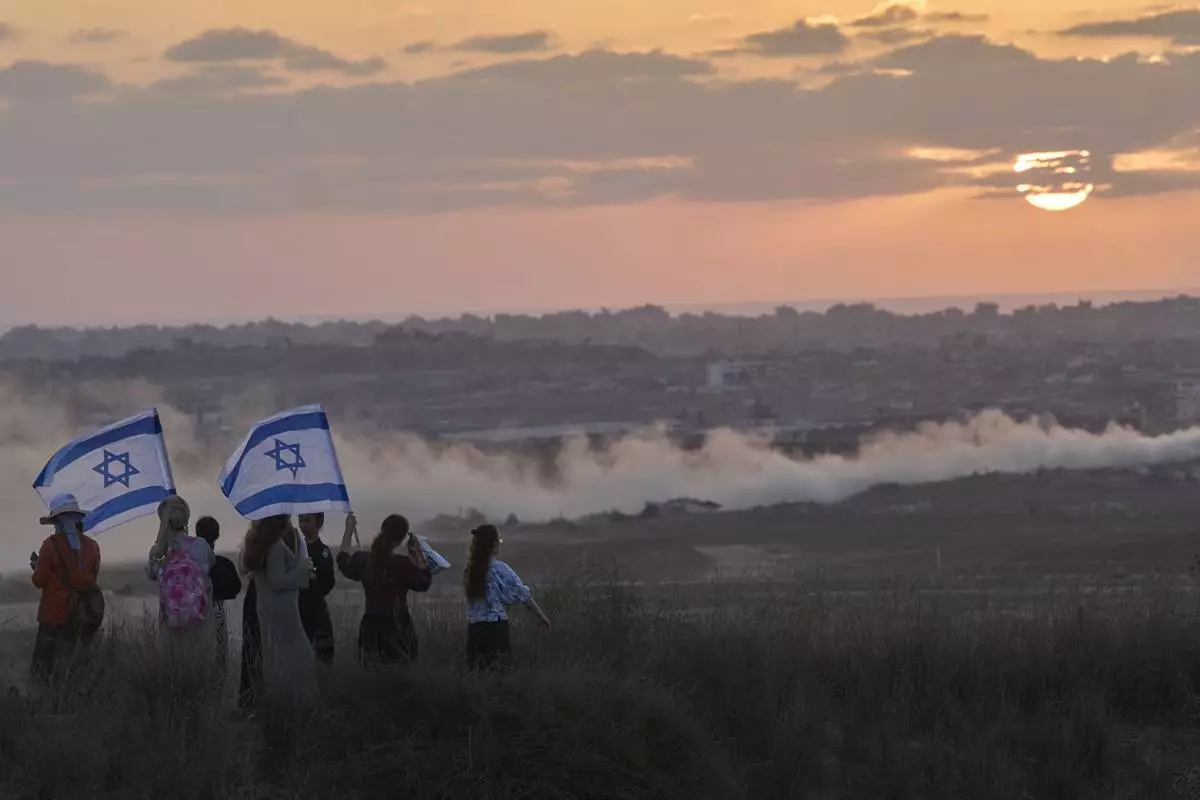
Israeli right-wing activists watch the northern Gaza Strip during a rally calling for the re-establishment of Jewish settlements in the Gaza Strip, near the border in southern Israel, Wednesday, July 30, 2025. (AP Photo/Ohad Zwigenberg)

Israeli right-wing activists watch the northern Gaza Strip during a rally calling for the re-establishment of Jewish settlements in the Gaza Strip, near the border in southern Israel, Wednesday, July 30, 2025. (AP Photo/Ohad Zwigenberg)

It would also face fierce opposition within Israel: Families of the hostages would consider it a virtual death sentence, and much of the security establishment is also reportedly opposed to an open-ended occupation that would bog down and further strain the army after nearly two years of regional wars.

The threat to reoccupy Gaza could be a negotiating tactic aimed at pressuring Hamas after talks mediated by the United States, Egypt and Qatar appeared to have broken down last month. Or it could be aimed at shoring up support from Netanyahu's far-right coalition partners.

His governing allies have long called for escalating the war, taking over Gaza, relocating much of its population through what they refer to as voluntary emigration and reestablishing Jewish settlements that were dismantled when Israel withdrew in 2005.

Whether they prevail will likely depend on the one person with leverage over Israel — U.S. President Donald Trump. Asked Tuesday whether he thought Israel should reoccupy Gaza, he said he wasn't aware of the “suggestion” but that “it’s going to be pretty much up to Israel.”

To take full control of Gaza, Israel would need to launch ground operations in the last areas of the territory that haven't been flattened and where most of Gaza's 2 million Palestinians have sought refuge.

That would mean going into the central city of Deir al-Balah and Muwasi, a so-called humanitarian zone where hundreds of thousands of people live in squalid tent camps along the coast. Such operations would force another wave of mass displacement and further disrupt aid deliveries as the U.N. agencies and humanitarian organizations are already struggling to avert famine.

Israel already controls around 75% of the territory, which has been declared a buffer zone or placed under evacuation orders. With Israel also largely sealing Gaza's borders, it's unclear where civilians would go.

It would also pose a major risk for the remaining 20 or so living hostages, likely held in tunnels or other secret locations. Hamas is believed to have ordered its guards to kill captives if Israeli forces approach.

Hamas-led militants abducted 251 hostages in the Oct. 7, 2023, attack that ignited the war and killed around 1,200 people that day, mostly civilians. They are still holding 50 hostages, less than half of them believed to be alive, and recent videos have shown emaciated captives pleading for their lives.

Israel's retaliatory offensive has killed over 61,000 Palestinians, according to Gaza's Health Ministry, which does not say how many were civilians or combatants. The ministry, which is part of the Hamas-run government and run by medical professionals, is seen by the United Nations and other experts as the most reliable source on casualties. Israel disputes its toll but has not provided its own.

Israel's wartime conduct has shocked much of the international community, and prompted even close Western allies to call for an end to the war and to take steps to recognize Palestinian statehood.

The International Court of Justice is considering allegations of genocide, and the International Criminal Court has issued arrest warrants for Netanyahu and his former defense minister, alleging war crimes and crimes against humanity, including the use of starvation as a method of war.

Israel has rejected the allegations and accused those making them of antisemitic “blood libel." It says it has taken every effort to avoid harming civilians and blames Hamas for their deaths because the militants are deeply entrenched in heavily populated areas.

Israel has said it will keep fighting until all the hostages are returned, Hamas is defeated or disarmed, and Gaza's population is given the option of “voluntary emigration,” which the Palestinians and much of the international community view as forcible expulsion.

Hamas has said it will only release the remaining hostages in return for a lasting ceasefire and an Israeli withdrawal. It says it is willing to give up power but will not lay down its arms as long as Israel occupies territories the Palestinians want for a future state.

Israel captured Gaza, the West Bank and east Jerusalem in the 1967 Middle East war. The United Nations, the Palestinians and others continued to view Gaza as occupied territory after the 2005 withdrawal of Israeli troops and settlers, as Israel maintained control of its airspace, coastline, most of its land border and its population registry.

The full reoccupation of Gaza would pose long-term challenges that Israel is well aware of given its long history of occupying Arab lands, including the likelihood of a prolonged insurgency. Israeli support for the war already appears to have declined since Netanyahu ended a ceasefire in March, as soldiers have been killed in hit-and-run attacks.

As an occupying power, Israel would be expected to maintain order and ensure the basic needs of the population are met. In the West Bank, it has largely outsourced that to the Palestinian Authority, which exercises limited autonomy in population centers.

But in Gaza, Netanyahu has ruled out any future role for the PA, accusing it of not being fully committed to peace, and has not produced any plan for Gaza's postwar governance and reconstruction.

Even if Israel succeeds in suppressing Hamas, the reoccupation of Gaza could pose an even more profound threat to the country.

It would leave Israel in full control of the territory between the Mediterranean Sea and the Jordan River, which is home to around 7 million Jews and 7 million Palestinians — most of the latter denied basic rights, including the vote. Even before the war, major human rights groups said the situation amounted to apartheid, something Israel vehemently denies.

Unless large numbers of Palestinians are expelled — no longer merely a fantasy of Israel's far-right — Israel would face an all-too-familiar existential dilemma: Create a Palestinian state in the 1967 territories and preserve Israel as a Jewish and democratic state, or rule over millions of Palestinians indefinitely and hope they never rally behind the idea of equal rights in a binational state.

Israel would no longer be able to point to Hamas' rule in Gaza, or factional divisions among Palestinians, as reasons to avoid such a reckoning. And when Trump leaves office, it may find it has few friends to back it up.

Follow AP’s war coverage at https://apnews.com/hub/israel-hamas-war
A tent camp for displaced Palestinians stretches along Gaza City, Sunday, Aug. 3, 2025. (AP Photo/Jehad Alshrafi)
A tent camp for displaced Palestinians stretches along Gaza City, Sunday, Aug. 3, 2025. (AP Photo/Jehad Alshrafi)

People take part in a protest outside US Embassy Branch demanding the end of the war and immediate release of hostages held by Hamas in the Gaza Strip, and against Prime Minister Benjamin Netanyahu's government in Tel Aviv, Saturday, July 26, 2025. (AP Photo/Mahmoud Illean)
People take part in a protest outside US Embassy Branch demanding the end of the war and immediate release of hostages held by Hamas in the Gaza Strip, and against Prime Minister Benjamin Netanyahu's government in Tel Aviv, Saturday, July 26, 2025. (AP Photo/Mahmoud Illean)

Palestinians struggle to get donated food at a community kitchen in Gaza City, northern Gaza Strip, Monday, Aug. 4, 2025. (AP Photo/Jehad Alshrafi)
Palestinians struggle to get donated food at a community kitchen in Gaza City, northern Gaza Strip, Monday, Aug. 4, 2025. (AP Photo/Jehad Alshrafi)

Israeli right-wing activists watch the northern Gaza Strip during a rally calling for the re-establishment of Jewish settlements in the Gaza Strip, near the border in southern Israel, Wednesday, July 30, 2025. (AP Photo/Ohad Zwigenberg)

Israeli right-wing activists watch the northern Gaza Strip during a rally calling for the re-establishment of Jewish settlements in the Gaza Strip, near the border in southern Israel, Wednesday, July 30, 2025. (AP Photo/Ohad Zwigenberg)
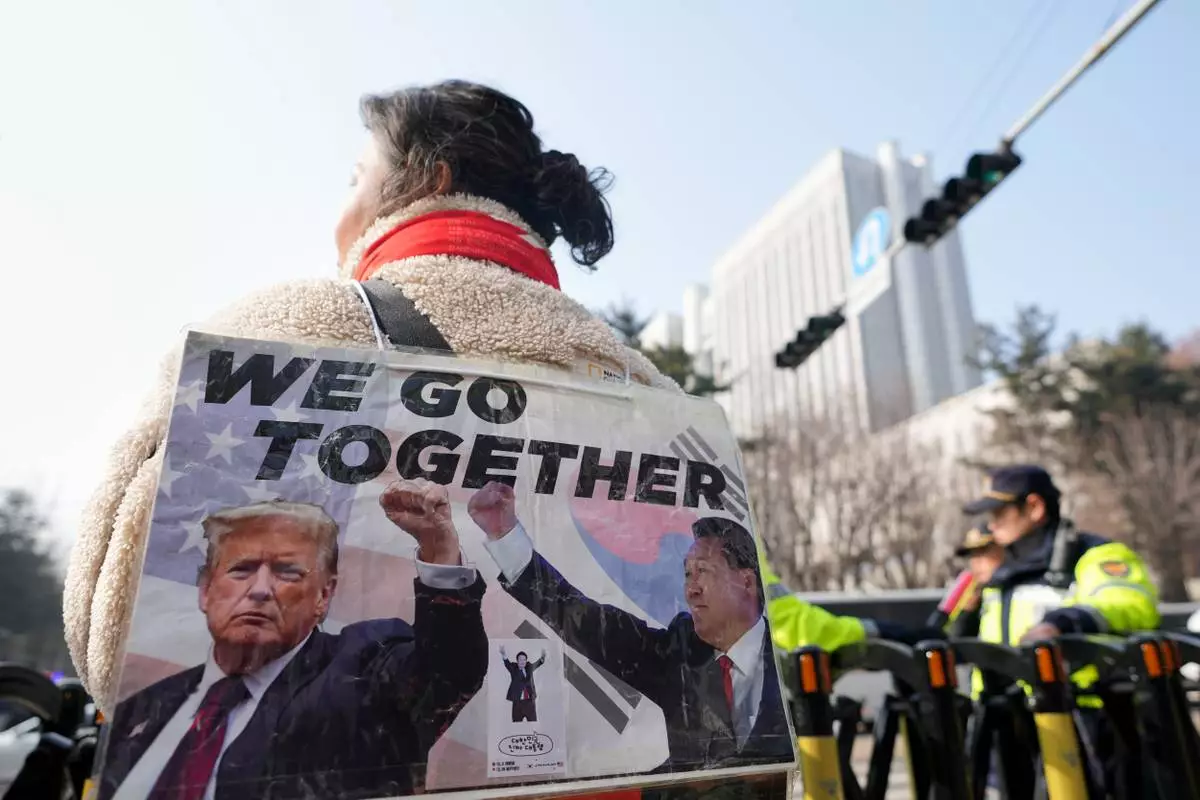
SEOUL, South Korea (AP) — A South Korean court sentenced former President Yoon Suk Yeol to five years in prison Friday in the first verdict from eight criminal trials over the martial law debacle that forced him out of office and other allegations.

Yoon was impeached, arrested and dismissed as president after his short-lived imposition of martial law in December 2024 triggered huge public protests calling for his ouster.

The most significant criminal charge against him alleges that his martial law enforcement amounted to a rebellion, and the independent counsel has requested the death sentence in the case that is to be decided in a ruling next month.

Yoon has maintained he didn’t intend to place the country under military rule for an extended period, saying his decree was only meant to inform the people about the danger of the liberal-controlled parliament obstructing his agenda. But investigators have viewed Yoon’s decree as an attempt to bolster and prolong his rule, charging him with rebellion, abuse of power and other criminal offenses.

In Friday’s case, the Seoul Central District Court sentenced Yoon for defying attempts to detain him, fabricating the martial law proclamation, and sidestepping a legally mandated full Cabinet meeting and thus depriving some Cabinet members who were not convened of their due rights to deliberate on his decree.

Judge Baek Dae-hyun said in the televised ruling that imposing “a grave punishment” was necessary because Yoon hasn’t shown remorse and has only repeated “hard-to-comprehend excuses.” The judge also restoring legal systems damaged by Yoon’s action was necessary.

Yoon’s defense team said they will appeal the ruling, which they believe was “politicized” and reflected “the unliberal arguments by the independent counsel.” Yoon’s defense team argued the ruling “oversimplified the boundary between the exercise of the president’s constitutional powers and criminal liability.”

Prison sentences in the multiple, smaller trials Yoon faces would matter if he is spared the death penalty or life imprisonment at the rebellion trial.

Park SungBae, a lawyer who specializes in criminal law, said there is little chance the court would decide Yoon should face the death penalty in the rebellion case. He said the court will likely issue a life sentence or a sentence of 30 years or more in prison.

South Korea has maintained a de facto moratorium on executions since 1997 and courts rarely hand down death sentences. Park said the court would take into account that Yoon’s decree didn’t cause casualties and didn’t last long, although Yoon hasn’t shown genuine remorse for his action.

South Korea has a history of pardoning former presidents who were jailed over diverse crimes in the name of promoting national unity. Those pardoned include strongman Chun Doo-hwan, who received the death penalty at a district court over his 1979 coup, the bloody 1980 crackdowns of pro-democracy protests that killed about 200 people, and other crimes.

Some observers say Yoon will likely retain a defiant attitude in the ongoing trials to maintain his support base in the belief that he cannot avoid a lengthy sentence but could be pardoned in the future.

On the night of Dec. 3, 2024, Yoon abruptly declared martial law in a televised speech, saying he would eliminate “anti-state forces” and protect “the constitutional democratic order.” Yoon sent troops and police officers to encircle the National Assembly, but many apparently didn’t aggressively cordon off the area, allowing enough lawmakers to get into an assembly hall to vote down Yoon’s decree.

No major violence occurred, but Yoon's stunt caused the biggest political crisis in South Korea and rattled its diplomacy and financial markets. For many, his decree, the first of its kind in more than four decades in South Korea, brought back harrowing memories of past dictatorships in the 1970s and 1980s, when military-backed leaders used martial law and emergency measures to deploy soldiers and tanks on the streets to suppress demonstrations.

After Yoon's ouster, his liberal rival Lee Jae Myung became president via a snap election last June. After taking office, Lee appointed three independent counsels to look into allegations involving Yoon, his wife and associates.

Yoon's other trials deal with charges like ordering drone flights over North Korea to deliberately inflame animosities to look for a pretext to declare martial law. Other charges accuse Yoon of manipulating the investigation into a marine’s drowning in 2023 and receiving free opinion surveys from an election broker in return for a political favor.

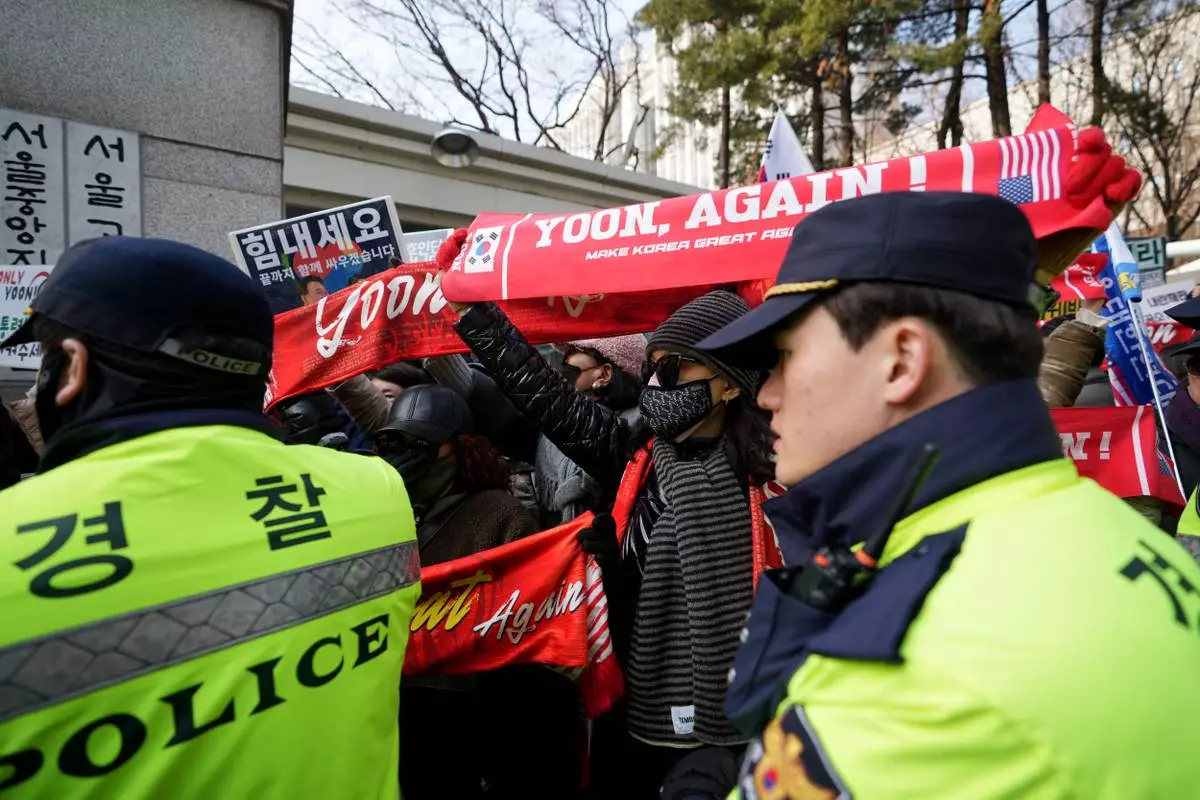
A supporter of former South Korean President Yoon Suk Yeol shouts slogans outside Seoul Central District Court, in Seoul, South Korea, Friday, Jan. 16, 2026. (AP Photo/Lee Jin-man)

A supporter of former South Korean President Yoon Suk Yeol shouts slogans outside Seoul Central District Court, in Seoul, South Korea, Friday, Jan. 16, 2026. (AP Photo/Lee Jin-man)

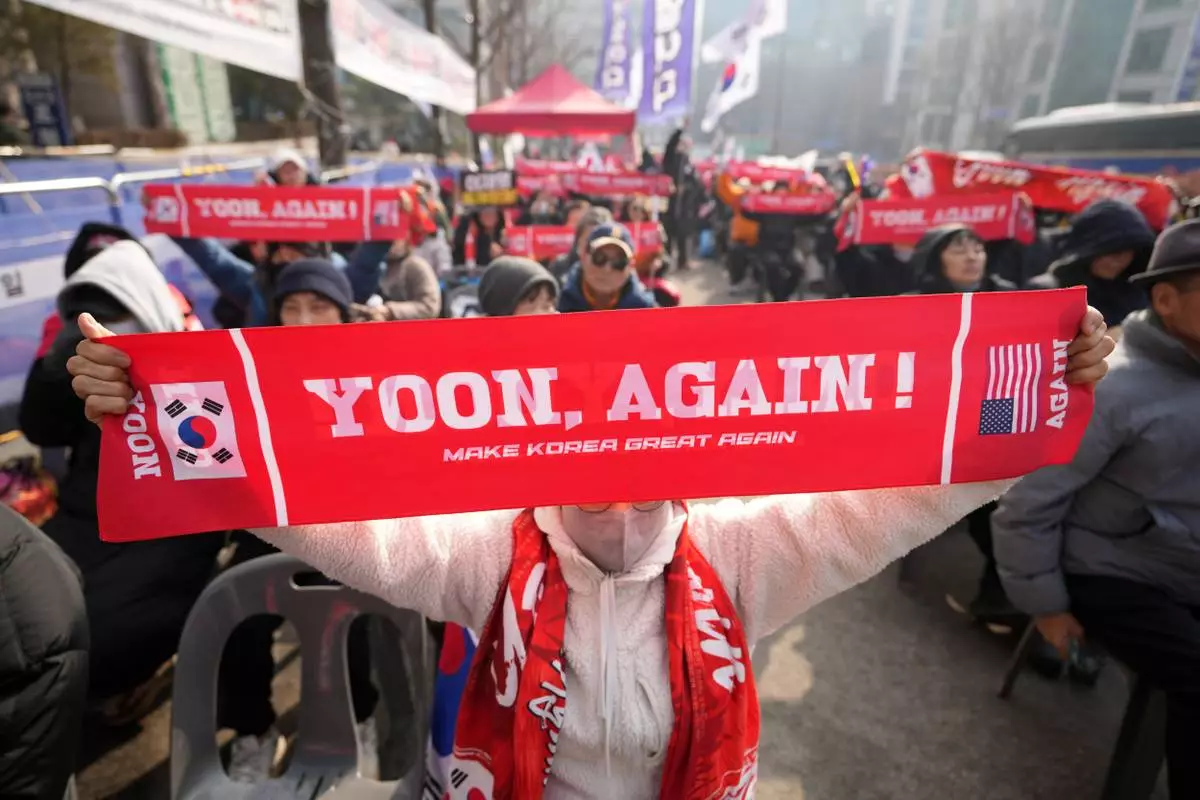
Supporters of former South Korean President Yoon Suk Yeol hold signs and flags outside Seoul Central District Court, in Seoul, South Korea, Friday, Jan. 16, 2026. (AP Photo/Lee Jin-man)

Supporters of former South Korean President Yoon Suk Yeol hold signs and flags outside Seoul Central District Court, in Seoul, South Korea, Friday, Jan. 16, 2026. (AP Photo/Lee Jin-man)

A supporter of former South Korean President Yoon Suk Yeol waits for a bus carrying former South Korean President Yoon Suk Yeol outside Seoul Central District Court, in Seoul, South Korea, Friday, Jan. 16, 2026. (AP Photo/Lee Jin-man)

A supporter of former South Korean President Yoon Suk Yeol waits for a bus carrying former South Korean President Yoon Suk Yeol outside Seoul Central District Court, in Seoul, South Korea, Friday, Jan. 16, 2026. (AP Photo/Lee Jin-man)

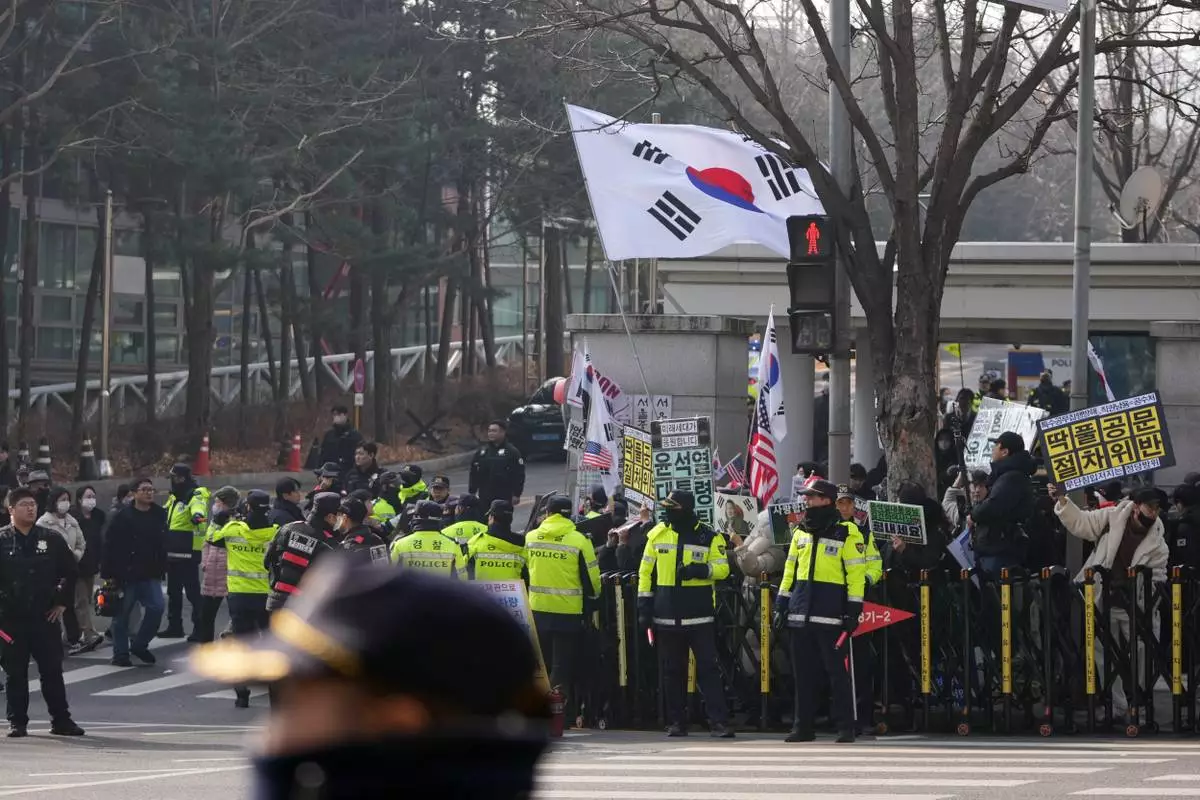
Supporters of former South Korean President Yoon Suk Yeol hold signs as police officers stand guard outside Seoul Central District Court, in Seoul, South Korea, Friday, Jan. 16, 2026. (AP Photo/Lee Jin-man)

Supporters of former South Korean President Yoon Suk Yeol hold signs as police officers stand guard outside Seoul Central District Court, in Seoul, South Korea, Friday, Jan. 16, 2026. (AP Photo/Lee Jin-man)

Supporters of former South Korean President Yoon Suk Yeol hold signs and flags outside Seoul Central District Court, in Seoul, South Korea, Friday, Jan. 16, 2026. (AP Photo/Lee Jin-man)

Supporters of former South Korean President Yoon Suk Yeol hold signs and flags outside Seoul Central District Court, in Seoul, South Korea, Friday, Jan. 16, 2026. (AP Photo/Lee Jin-man)

Supporters of former South Korean President Yoon Suk Yeol hold signs outside Seoul Central District Court, in Seoul, South Korea, Friday, Jan. 16, 2026. (AP Photo/Lee Jin-man)

Supporters of former South Korean President Yoon Suk Yeol hold signs outside Seoul Central District Court, in Seoul, South Korea, Friday, Jan. 16, 2026. (AP Photo/Lee Jin-man)

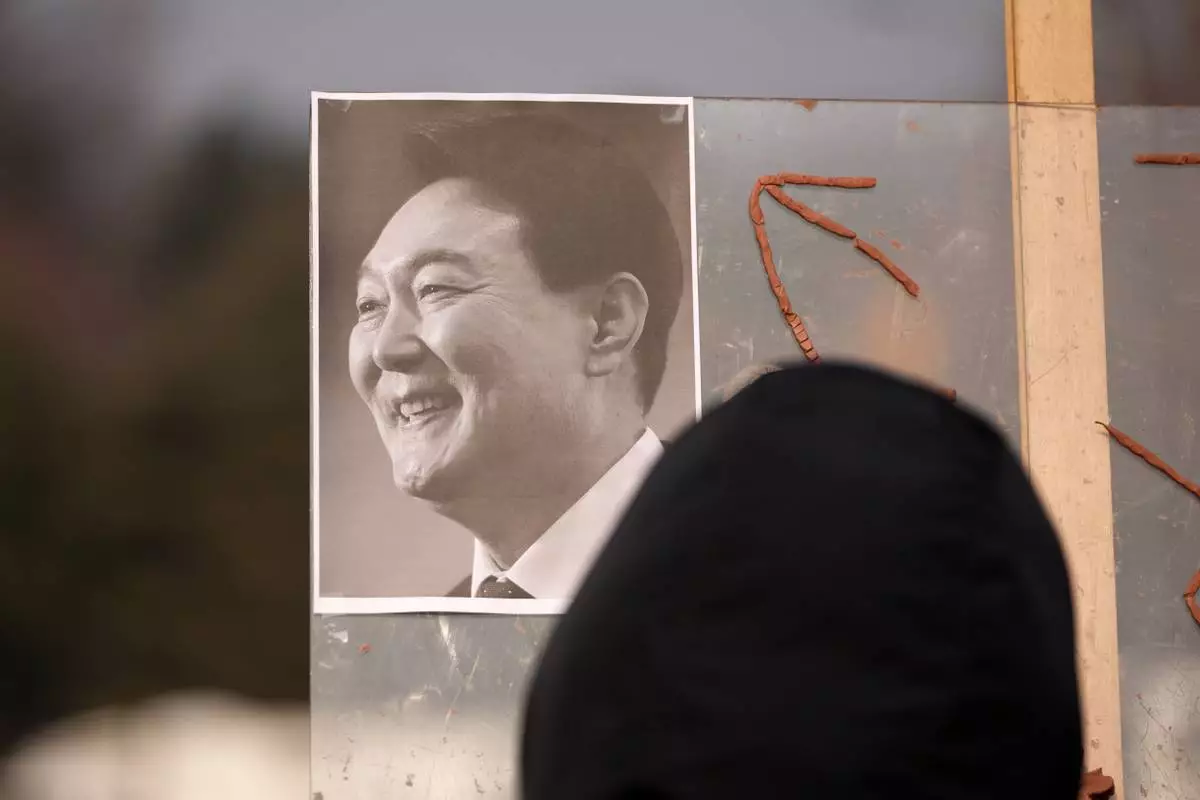
A picture of former South Korean President Yoon Suk Yeol is placed on a board as supporters gather outside Seoul Central District Court, in Seoul, South Korea, Friday, Jan. 16, 2026. (AP Photo/Lee Jin-man)

A picture of former South Korean President Yoon Suk Yeol is placed on a board as supporters gather outside Seoul Central District Court, in Seoul, South Korea, Friday, Jan. 16, 2026. (AP Photo/Lee Jin-man)

Recommended Articles