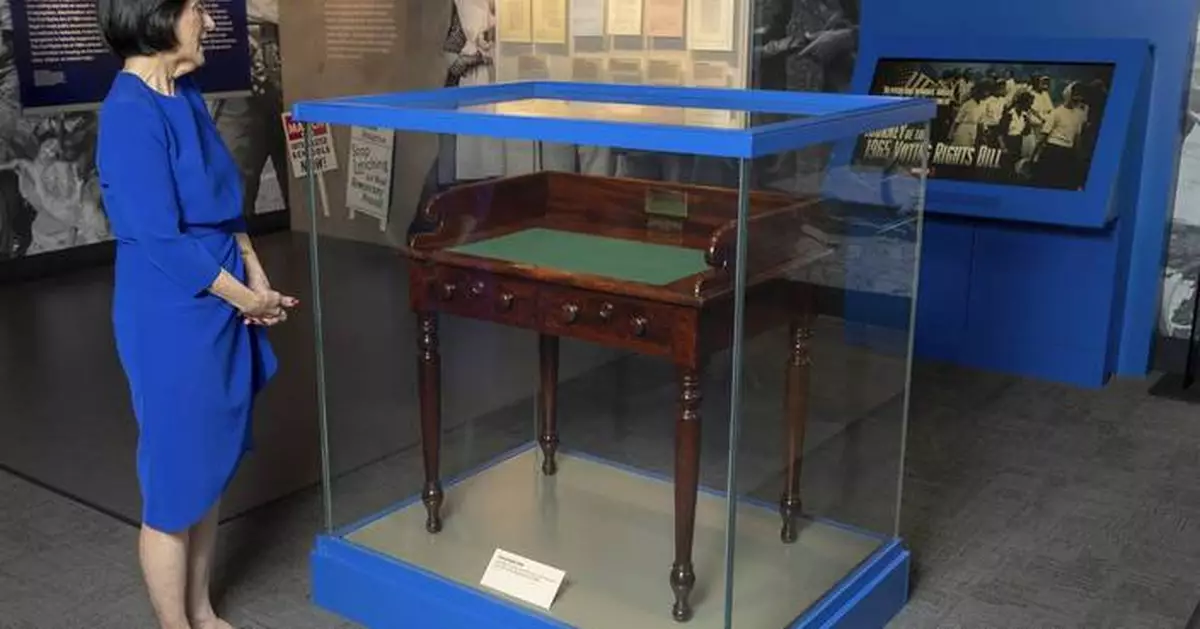
WASHINGTON (AP) — The Voting Rights Act of 1965 was follow-up legislation to the Civil Rights Act passed a year earlier. In a break from tradition, then-President Lyndon Johnson went to Capitol Hill to sign the bill rather than hold a signing ceremony at the White House.
His daughter Luci Baines Johnson told The Associated Press in a 2023 interview that he did it to honor the courage of members who had supported the legislation even though it could cost them their seats in Congress.
There were several elements to the law, but it primarily ended the discriminatory practices against Black voters that were prevalent in many states, including poll taxes and literacy tests that allowed those voters to be turned away. The law also established a process known as preclearance, which required that all or parts of 15 states with a history of discriminatory practices in voting get federal approval before making changes to the way they hold elections.
The 15th Amendment was ratified in 1870 and barred states from preventing people from voting on the basis of race, color or a previous condition of servitude. Despite the amendment, several Southern states were able to enact literacy tests on Black citizens that were not required of white citizens who had either voted or were descendants of voters from before the ratification of the 14th Amendment. That tactic was known as the grandfather clause and worked to exclude Black voters.
Black citizens also were excluded in some states from participating in party primaries. Poll taxes, or fees for voting, were a barrier, and lynching and other forms of violence served to intimidate would-be Black voters.
Civil rights activists were holding a series of marches and protests in Alabama in 1965 when a pastor was arrested in the town of Marion. Afraid he would be lynched, his supporters planned a night protest march to the jail from a nearby church. They were met by police. A church deacon, Jimmie Lee Jackson, was fatally shot in the ensuing melee.
The Southern Christian Leadership Conference and local leaders considered taking Jackson's body from Marion to Montgomery. Instead, he was buried near Marion and plans were made to stage a march from Selma, 30 miles (48 kilometers) away and a more logical staging area. In what became known as Bloody Sunday, on March 7, 1965, hundreds of marchers were met by state troopers, who attacked them on the Edmund Pettus Bridge. Footage of the violence shocked the country and provided momentum for the landmark federal law.
In 2013, the Supreme Court issued a 5-4 decision known as Shelby v. Holder that removed the preclearance requirement in the law. Within hours, states began announcing changes to their laws that began restricting voting rights. That accelerated in Republican-controlled states after President Donald Trump began falsely claiming his loss for reelection in 2020 was due to widespread fraud.
The Supreme Court is deciding whether to hear a case out of North Dakota in which the 8th Circuit Court of Appeals has held that private individuals and entities cannot file voting rights challenges. This is how the vast majority of such cases have been brought. The court has said that only the U.S. attorney general can file those cases. Two other 8th Circuit panels have made similar rulings. Other circuits have ruled that there is a right of private action for such challenges.
Separately, the Supreme Court is waiting to be briefed by attorneys in a Louisiana case that centers on whether a congressional district drawn to benefit Black voters is constitutional. At issue is Section 2 of the Voting Rights Act, which requires political maps to include districts where minority populations’ preferred candidates can win elections.
There also are ongoing actions at the state level as well as an executive order by Trump and congressional legislation that would require documented proof of citizenship to register to vote.
Follow the AP's coverage of voting rights at https://apnews.com/hub/voting-rights.
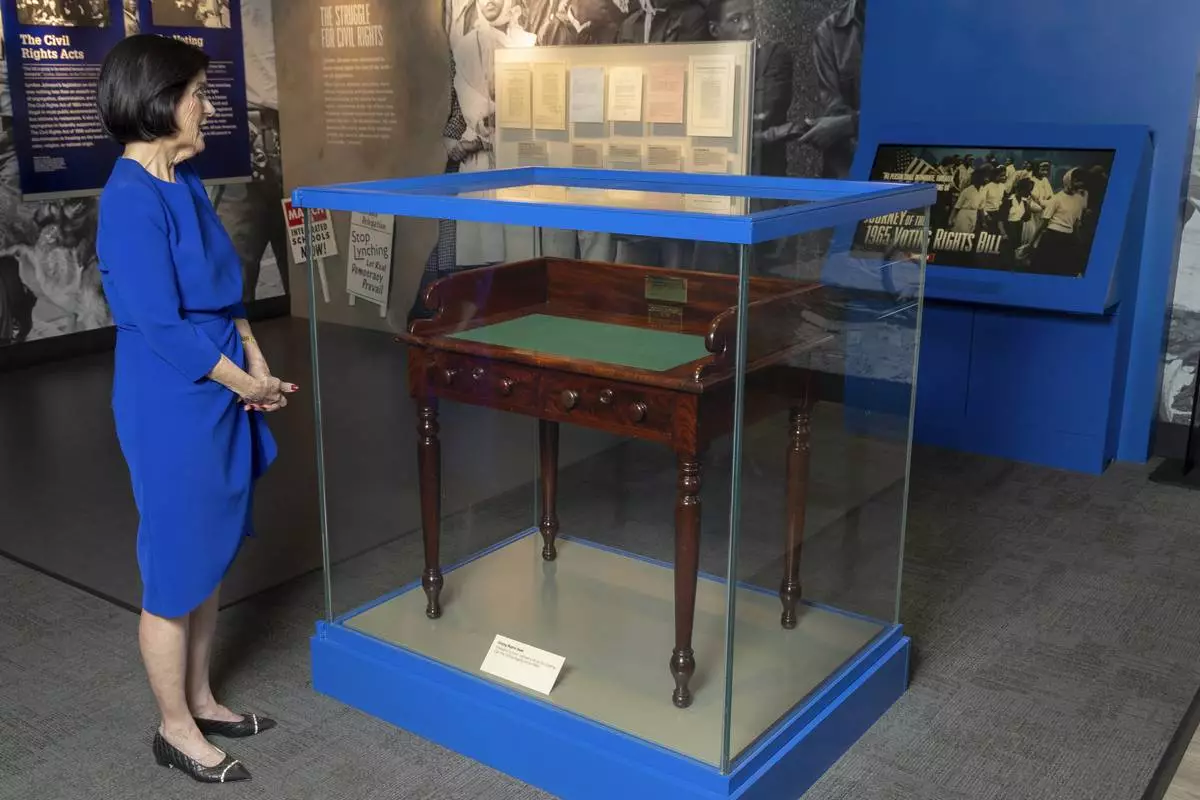
FILE - Luci Baines Johnson looks at the desk May 16, 2023, on display at the LBJ Presidential Library, that President Lyndon B. Johnson sat at in the President's Room at the U.S. Capitol to sign the Voting Rights Act of 1965, on Aug. 6, 1965. (AP Photo/Stephen Spillman, File)
WASHINGTON (AP) — Inflation likely remained elevated last month as the cost of electricity, groceries, and clothing may have jumped and continued to pressure consumers' wallets.
The Labor Department is expected to report that consumer prices rose 2.6% in December compared with a year earlier, according to economists' estimates compiled by data provider FactSet. The yearly rate would be down from 2.7% in November. Monthly prices, however, are expected to rise 0.3% in December, faster than is consistent with the Federal Reserve's 2% inflation goal.
The figures are harder to predict this month, however, because the six-week government shutdown last fall suspended the collection of price data used to compile the inflation rate. Some economists expect the December figures will show a bigger jump in inflation as the data collection process gets back to normal.
Core prices, which exclude the volatile food and energy categories, are also expected to rise 0.3% in December from the previous month, and 2.7% from a year earlier. The yearly core figure would be an increase from 2.6% in November.
In November, annual inflation fell from 3% in September to 2.7%, in part because of quirks in November's data. (The government never calculated a yearly figure for October). Most prices were collected in the second half of November, after the government reopened, when holiday discounts kicked in, which may have biased November inflation lower.
And since rental prices weren't fully collected in October, the agency that prepares the inflation reports used placeholder estimates that may have biased prices lower, economists said.
Inflation has come down significantly from the four-decade peak of 9.1% that it reached in June 2022, but it has been stubbornly close to 3% since late 2023. The cost of necessities such as groceries is about 25% higher than it was before the pandemic, and other necessities such as rent and clothing have also gotten more expensive, fueling dissatisfaction with the economy that both President Donald Trump and former President Joe Biden have sought to address, though with limited success.
The Federal Reserve has struggled to balance its goal of fighting inflation by keeping borrowing costs high, while also supporting hiring by cutting interest rates when unemployment worsens. As long as inflation remains above its target of 2%, the Fed will likely be reluctant to cut rates much more.
The Fed reduced its key rate by a quarter-point in December, but Chair Jerome Powell, at a press conference explaining its decision, said the Fed would probably hold off on further cuts to see how the economy evolves.
The 19 members of the Fed’s interest-rate setting committee have been sharply divided for months over whether to cut its rate further, or keep it at its curent level of about 3.6% to combat inflation.
Trump, meanwhile, has harshly criticized the Fed for not cutting its key short-term rate more sharply, a move he has said would reduce mortgage rates and the government's borrowing costs for its huge debt pile. Yet the Fed doesn't directly control mortgage rates, which are set by financial markets.
In a move that cast a shadow over the ability of the Fed to fight inflation in the future, the Department of Justice served the central bank last Friday with subpoenas related to Powell's congressional testimony in June about a $2.5 billion renovation of two Fed office buildings. Trump administration officials have suggested that Powell either lied about changes to the building or altered plans in ways that are inconsistent with those approved by planning commissions.
In a blunt response, Powell said Sunday those claims were “pretexts” for an effort by the White House to assert more control over the Fed.
“The threat of criminal charges is a consequence of the Federal Reserve setting interest rates based on our best assessment of what will serve the public, rather than following the preferences of the President,” Powell said. “This is about whether the Fed will be able to continue to set interest rates based on evidence and economic conditions—or whether instead monetary policy will be directed by political pressure or intimidation.”
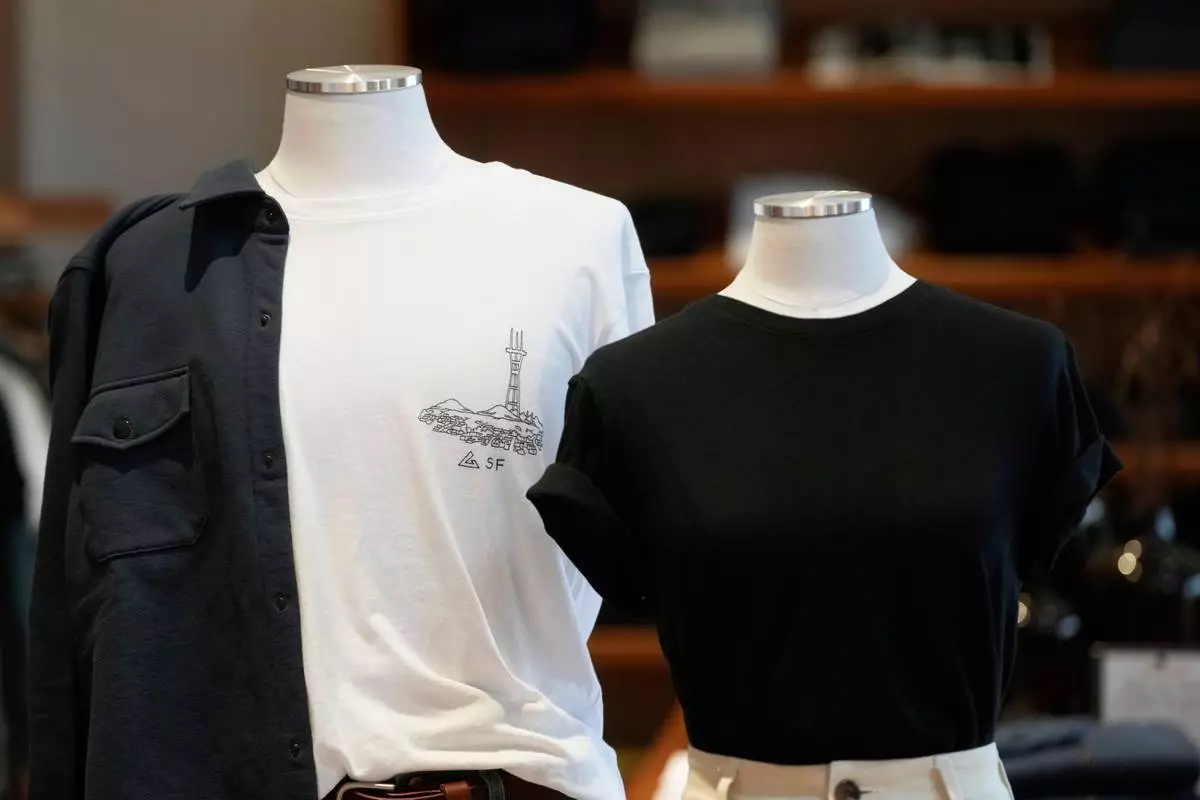
FILE -American Giant clothing is displayed at the company's showroom in San Francisco, April 17, 2025. (AP Photo/Jeff Chiu, File)

FILE -A cashier rings up groceries in Dallas, Aug. 28, 2025. (AP Photo/LM Otero, File)