Skip to Content Facebook Feature Image

Georgian journalist is convicted of slapping a police chief at a protest and gets 2 years in prison

News

Georgian journalist is convicted of slapping a police chief at a protest and gets 2 years in prison
News

News

Georgian journalist is convicted of slapping a police chief at a protest and gets 2 years in prison

2025-08-06 19:50 Last Updated At:20:00

A prominent Georgian journalist was convicted Wednesday of slapping a police chief during an anti-government protest and sentenced to two years in prison in a case that was condemned by rights groups as curbing press freedom.

Mzia Amaghlobeli, who founded two of Georgia’s independent media outlets, was convicted in the coastal city of Batumi. She was initially charged with assault, an offense that carried a maximum prison sentence of up to seven years, but the judge in the end found her guilty on the lighter charge of resistance, threats or violence against a defender of the public order or other government official.

The case is just one of many to draw protests and international criticism in recent months as the ruling Georgian Dream party has been accused of eroding civil society and democratic rights in the South Caucasus nation.

A visibly gaunt Amaghlobeli, 50, heard the verdict in the Batumi City Court packed with journalists and supporters, while a protest was held outside the courthouse. Sporadic chants of “Free Mzia!” broke out both outside the courthouse and in the courtroom.

She was arrested Jan. 12, one of over 50 people taken into custody on criminal charges from a series of demonstrations in the country of 3.7 million.

Video shared by Georgian media outlets showed Amaghlobeli striking Police Chief Irakli Dgebuadze. Amaghlobeli said that after she was detained, Dgebuadze spat at her and tried to attack her.

Her lawyer told the court she reacted emotionally after getting caught in a stampede, falling, and witnessing the arrest of those close to her. She also said a police investigation was not impartial and she did not receive a fair trial.

In a closing statement Monday, Amaghlobeli described chaotic scenes at the protest.

“In a completely peaceful setting, the police suddenly appear, create chaos, and surround me with masked officers," she said. "As a result of strong pushes and blows from behind, I fall to the asphalt. Then they trample over me with their feet.”

She added that she was abused at the police station after her arrest.

She also thanked her colleagues and the activists for their continued resistance, and urged them to fight on.

“You must never lose faith in your own capabilities. There is still time. The fight continues— until victory!” she said.

Amaghlobeli is the founder and manager of investigative news outlet Batumelebi, which covers politics, corruption and human rights in Georgia. She also founded its sister publication, Netgazeti.

In a joint statement in January, 14 embassies, including those of France, Germany, the Netherlands and the U.K., said Amaghlobeli’s case represented “another worrying example of the intimidation of journalists in Georgia, restricting media freedom and freedom of expression.”

Gypsy Guillén Kaiser, advocacy and communications director for the Committee to Protect Journalists, warned that Amaghlobeli’s case was “a sign of the declining environment for press freedom in Georgia and a symbol for the fight between truth and control.”

“You have to decide whether you’re going to vilify journalists, criminalize them, and present them as nefarious characters with malicious intent in order to control information, or whether you’re going to have a public that is truly free, freely informed and empowered,” Guillén Kaiser said. “And that is a fundamental question for every country and for Georgia specifically right now.”

Leading Georgian officials defended her arrest. Prime Minister Irakli Kobakhidze accused her of seeking to fulfill a “directive” to discredit police but did not provide proof or say who was behind it.

“She attempted to discredit the law enforcement structures, to discredit the police, but she received exactly the kind of response such actions deserve,” he said. “Those who are trying to undermine statehood in Georgia are the ones who are upset by this. But this will not succeed — we will defend the interests of our state to the end.”

Georgia has seen widespread political unrest and protests since its parliamentary election on Oct. 26, which was won by Georgian Dream. Protesters and the country’s opposition declared the result illegitimate amid allegations of vote-rigging aided by Russia.

At the time, opposition leaders vowed to boycott sessions of parliament until a new election could be held under international supervision and alleged ballot irregularities were investigated.

Nearly all the leaders of Georgia’s pro-Western opposition parties have been jailed for refusing to testify at a parliamentary inquiry into alleged wrongdoing by the government of former President Mikhail Saakashvili, a probe that critics of Georgian Dream say is an act of political revenge.

The critics accuse Georgian Dream — established by Bidzina Ivanishvili, a billionaire who made his fortune in Russia — of becoming increasingly authoritarian and tilted toward Moscow, accusations the party has denied. It recently pushed through laws similar to those used by the Kremlin to crack down on freedom of speech and LGBTQ+ rights.

Among controversial legislation passed by Georgian Dream is the so-called “ foreign influence law," which requires organizations that receive more than 20% of their funding from abroad to register as “pursuing the interest of a foreign power.”

That law later was replaced with one called the Foreign Agent’s Registration Act, under which individuals or organizations considered as “agents of a foreign principal” must register with the government or face penalties, including criminal prosecution and imprisonment. Members of civil society fear that the law’s broad definition of “foreign agent” could be used to label any critical media outlet or nongovernmental organization as acting on behalf of a foreign entity.

Many independent news outlets receive grants from abroad to fund their work.

“I think that the main goal of the government was to scare us, for us to leave the country or shut down or change profession,” says Mariam Nikuradze, founder of the OC Media outlet. Most journalists still want to stay in the country, she said, and cover what she described as growing authoritarian rule.

“Everybody’s being very brave and everybody’s very motivated,” she said.
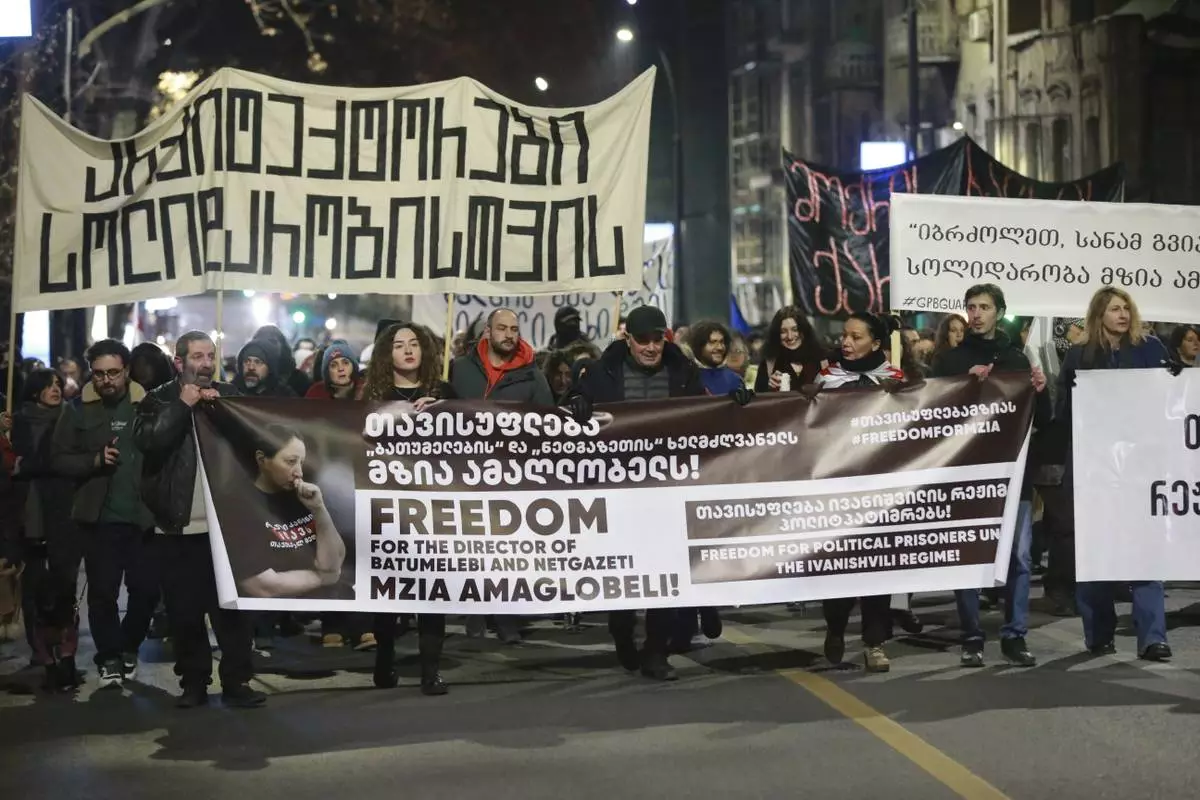
FILE - Protesters hold banners calling for the release of jailed journalist Mzia Amaghlobeli as they march through the streets in Tbilisi, Georgia, on Wednesday, Jan. 29, 2025. (AP Photo/Zurab Tsertsvadze, File)
FILE - Protesters hold banners calling for the release of jailed journalist Mzia Amaghlobeli as they march through the streets in Tbilisi, Georgia, on Wednesday, Jan. 29, 2025. (AP Photo/Zurab Tsertsvadze, File)

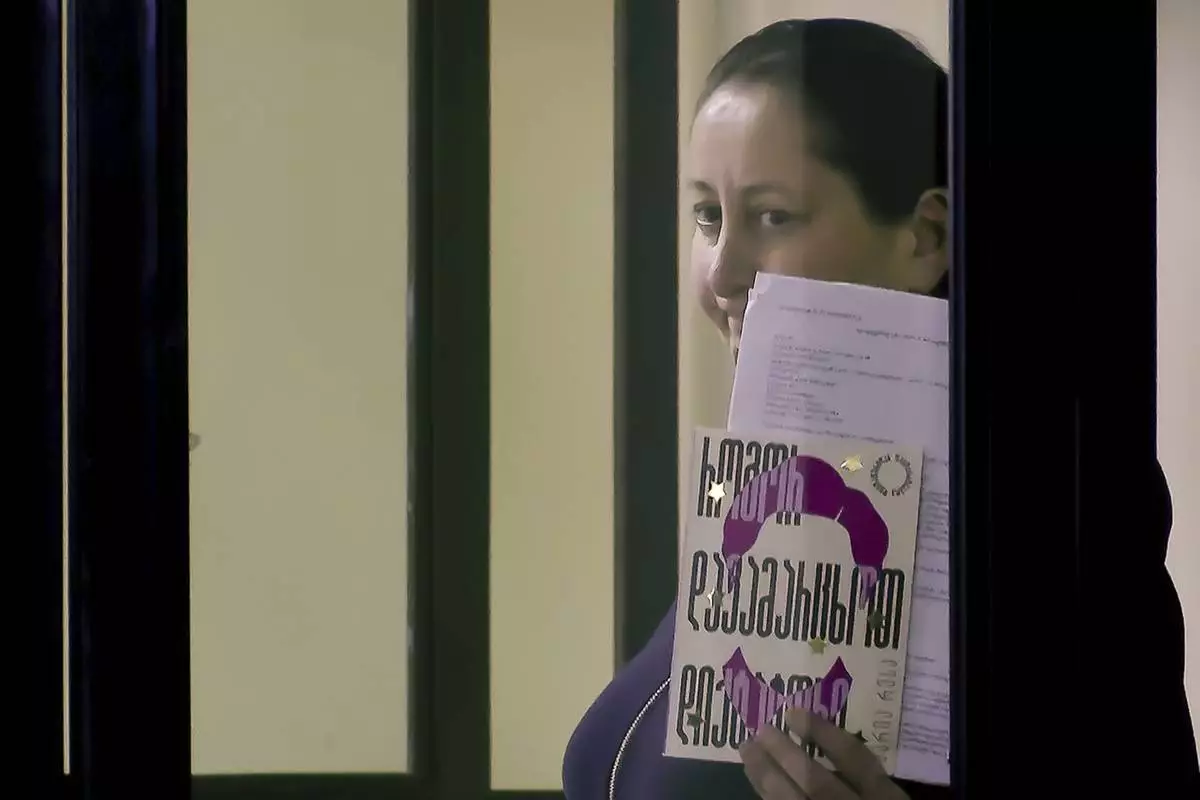
FILE - In this image made from a Formula TV video, Mzia Amaghlobeli, a Georgian journalist and founder of the independent media outlets Batumelebi and Netgazeti, stands in a defendants' cage in a court in Batumi, Georgia, on Saturday, Feb. 1, 2025, and holds a book by Nobel Peace Prize laureate and journalist Maria Ressa titled, "How to Stand Up to a Dictator." (Formula TV via AP, File)
FILE - In this image made from a Formula TV video, Mzia Amaghlobeli, a Georgian journalist and founder of the independent media outlets Batumelebi and Netgazeti, stands in a defendants' cage in a court in Batumi, Georgia, on Saturday, Feb. 1, 2025, and holds a book by Nobel Peace Prize laureate and journalist Maria Ressa titled, "How to Stand Up to a Dictator." (Formula TV via AP, File)
KAMPALA, Uganda (AP) — Uganda’s presidential election was plagued by widespread delays Thursday in addition to a days-long internet shutdown that has been criticized as an anti-democratic tactic in a country where the president has held office since 1986.

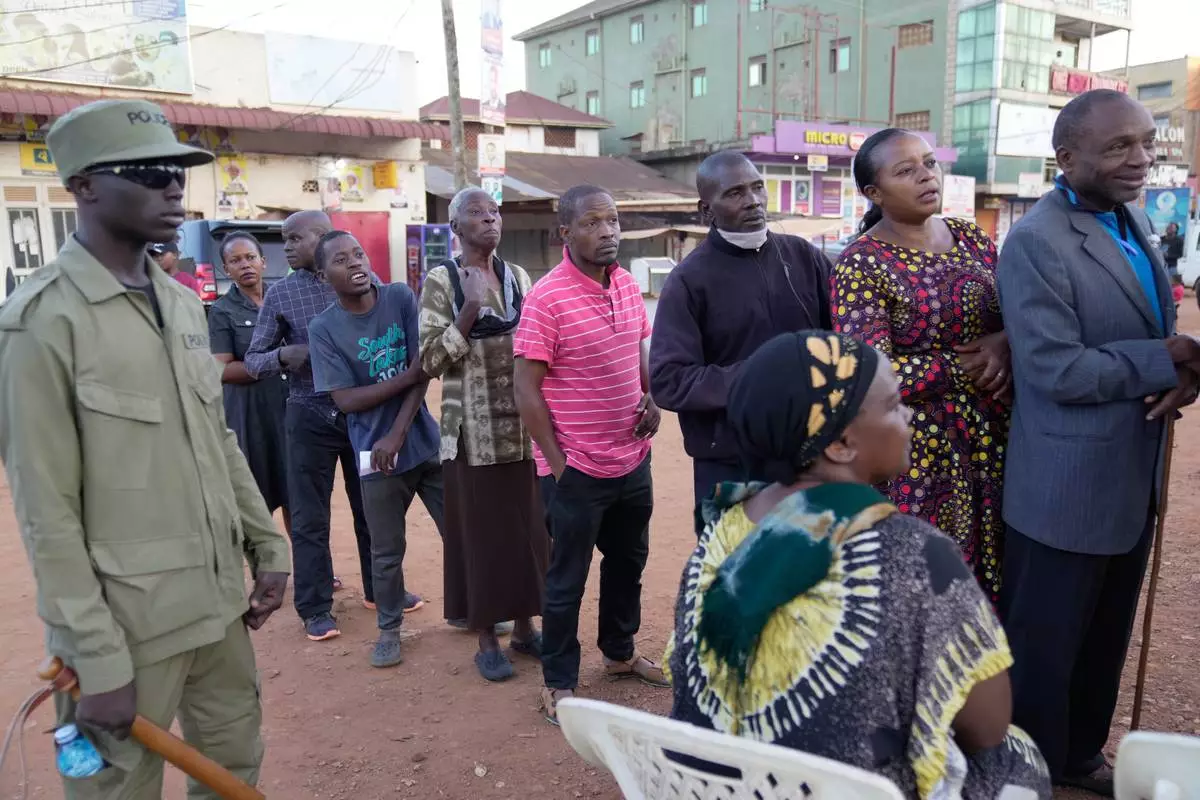
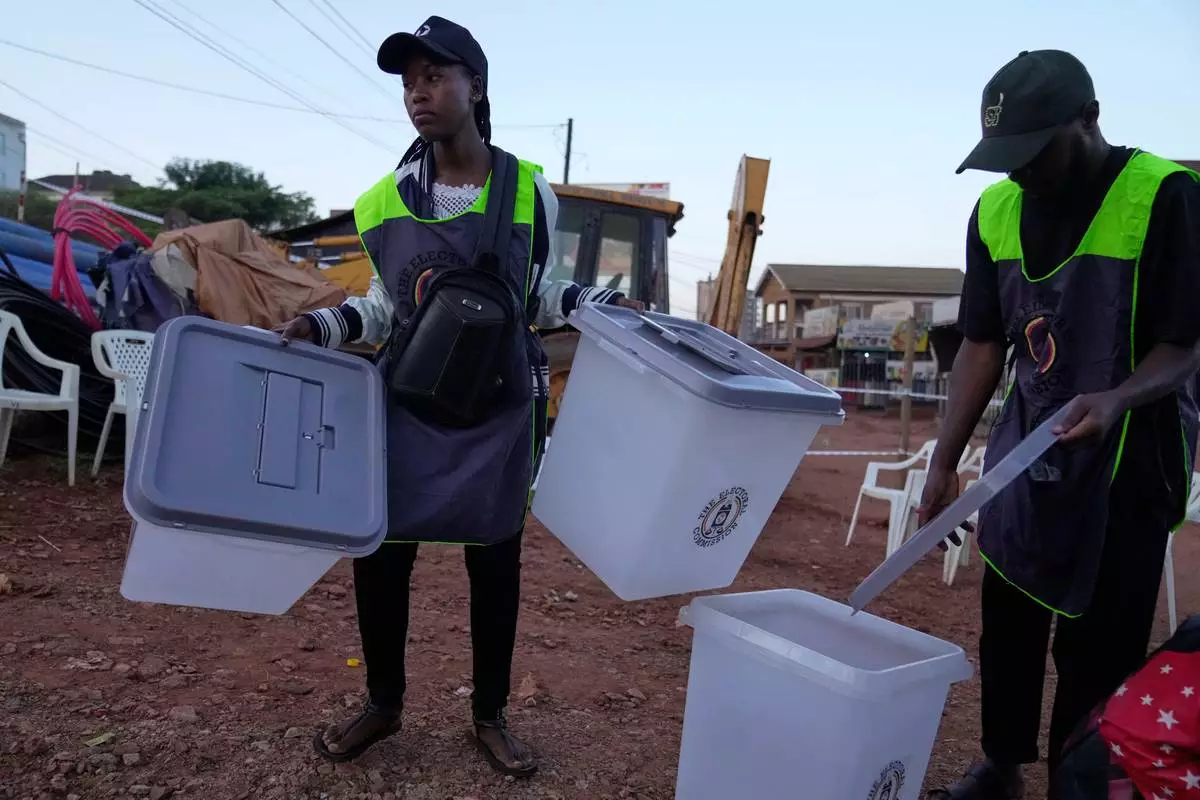
Some polling stations remained closed for up to four hours after the scheduled 7 a.m. start time due to “technical challenges," according to the nation's electoral commission, which asked polling officers to use paper registration records to ensure the difficulties did not “disenfranchise any voter.”

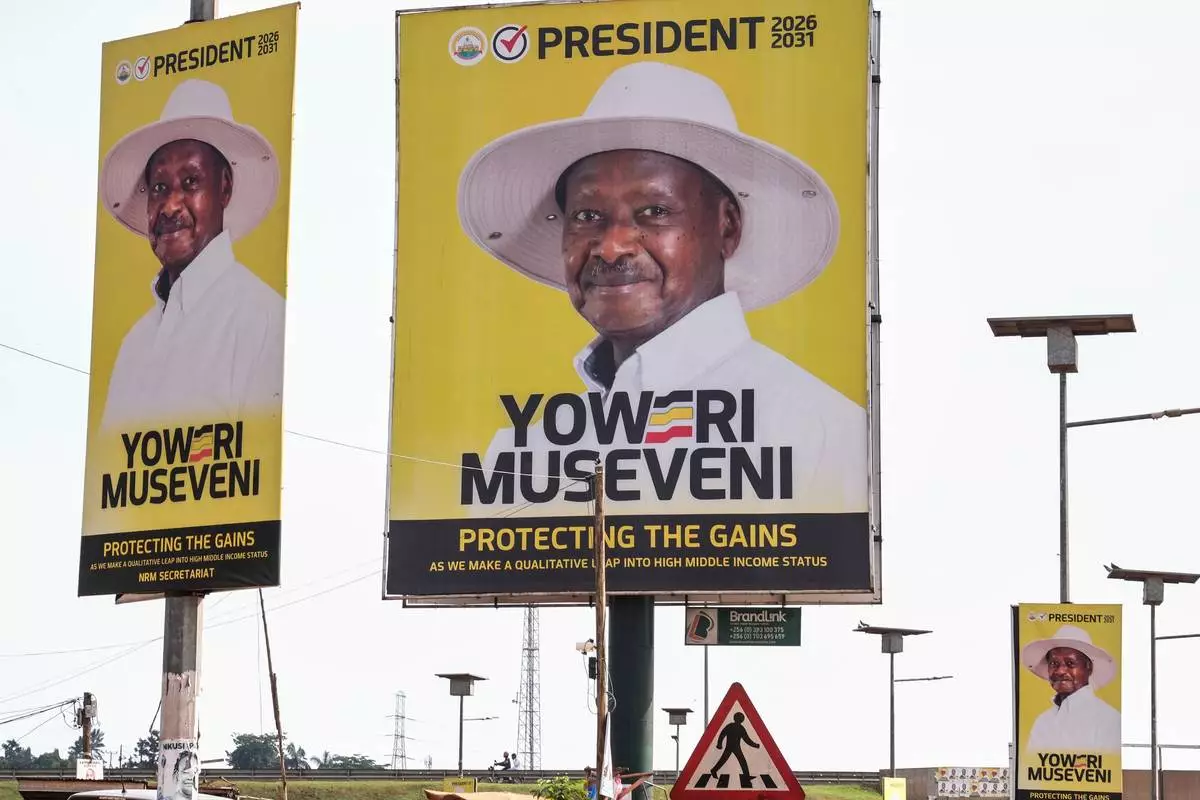
President Yoweri Museveni, 81, faces seven other candidates, including Robert Kyagulanyi, a musician-turned-politician best known as Bobi Wine, who is calling for political change.

The East African country of roughly 45 million people has 21.6 million registered voters. Polls were expected to close at 4 p.m., but voting was extended one hour until 5 p.m. local time. Results are constitutionally required to be announced in 48 hours.

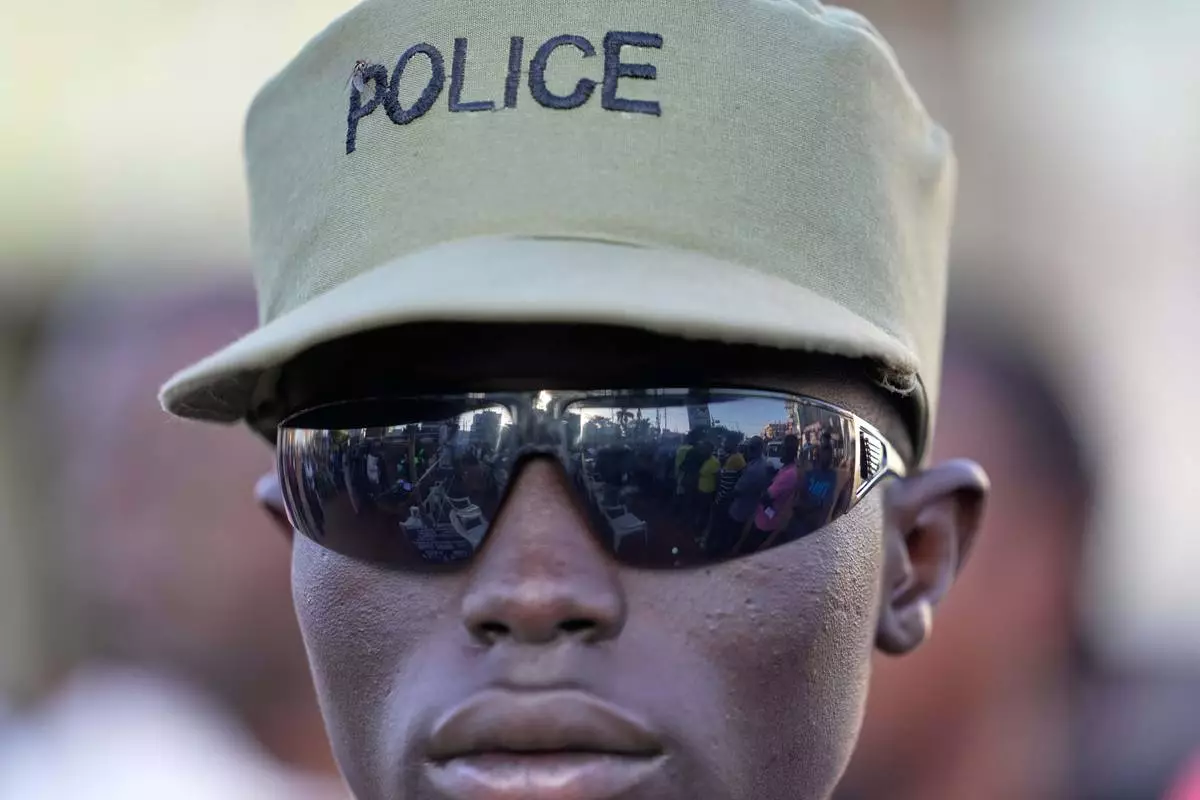
In the morning, impatient crowds gathered outside polling stations expressing concerns over the delays. Umaru Mutyaba, a polling agent for a parliamentary candidate, said it was “frustrating” to be waiting outside a station in the capital Kampala.

“We can’t be standing here waiting to vote as if we have nothing else to do," he said.

Wine, the candidate, alleged electoral fraud, noting that biometric voter identification machines were not working at polling places and claiming that there was “ballot stuffing.”

Wine wrote in a post on X that his party's leaders had been arrested. “Many of our polling agents and supervisors abducted, and others chased off polling stations,” the post said.

Museveni told journalists he was notified that biometric machines weren't working at some stations and that he supported the electoral body's decision to revert to paper registration records. He did not comment on allegations of fraud.

Ssemujju Nganda, a prominent opposition figure and lawmaker seeking reelection in Kira municipality, told The Associated Press he had been waiting in line to vote for three hours.

Nganda said the delays likely would lead to apathy and low turnout in urban areas where the opposition has substantial support. "It’s going to be chaos,” he said.

Nicholas Sengoba, an independent analyst and newspaper columnist, said delays to the start of voting in urban, opposition areas favored the ruling party.

Emmanuel Tusiime, a young man who was among dozens prevented from entering a polling station in Kampala past closing time said the officials had prevented him from participating.

“My vote has not been counted, and, as you can see, I am not alone," he said he was left feeling “very disappointed.”

Uganda has not witnessed a peaceful transfer of presidential power since independence from British colonial rule six decades ago.

Museveni has served the third-longest term of any African leader and is seeking to extend his rule into a fifth decade. The aging president’s authority has become increasingly dependent on the military led by his son, Muhoozi Kainerugaba.

Museveni and Wine are reprising their rivalry from the previous election in 2021, when Wine appealed to mostly young people in urban areas. With voter turnout of 59%, Wine secured 35% of the ballots against Museveni’s 58%, the president’s smallest vote share since his first electoral campaign three decades ago.

The lead-up to Thursday's election produced concerns about transparency, the possibility of hereditary rule, military interference and possible vote tampering.

Uganda's internet was shut down Tuesday by the government communications agency, which cited misinformation, electoral fraud and incitement of violence. The shutdown has affected the public and disrupted critical sectors such as banking.

There has been heavy security leading up to voting, including military units deployed on the streets this week.

Amnesty International said security forces are engaging in a “brutal campaign of repression,” citing a Nov. 28 opposition rally in eastern Uganda where the military blocked exits and opened fire on supporters, killing one person.

Museveni urged voters to come out in large numbers during his final rally Tuesday.

“You go and vote, anybody who tries to interfere with your freedom will be crushed. I am telling you this. We are ready to put an end to this indiscipline,” he said.

The national electoral commission chairperson, Simon Byabakama, urged tolerance among Ugandans as they vote.

“Let us keep the peace that we have,” Byabakama said late Wednesday. “Let us be civil. Let us be courteous. Let’s be tolerant. Even if you know that this person does not support (your) candidate, please give him or her room or opportunity to go and exercise his or her constitutional right."

Authorities also suspended the activities of several civic groups during the campaign season. That Group, a prominent media watchdog, closed its office Wednesday after the interior ministry alleged in a letter that the group was involved in activities “prejudicial to the security and laws of Uganda.”

Veteran opposition figure Kizza Besigye, a four-time presidential candidate, remains in prison after he was charged with treason in February 2025.

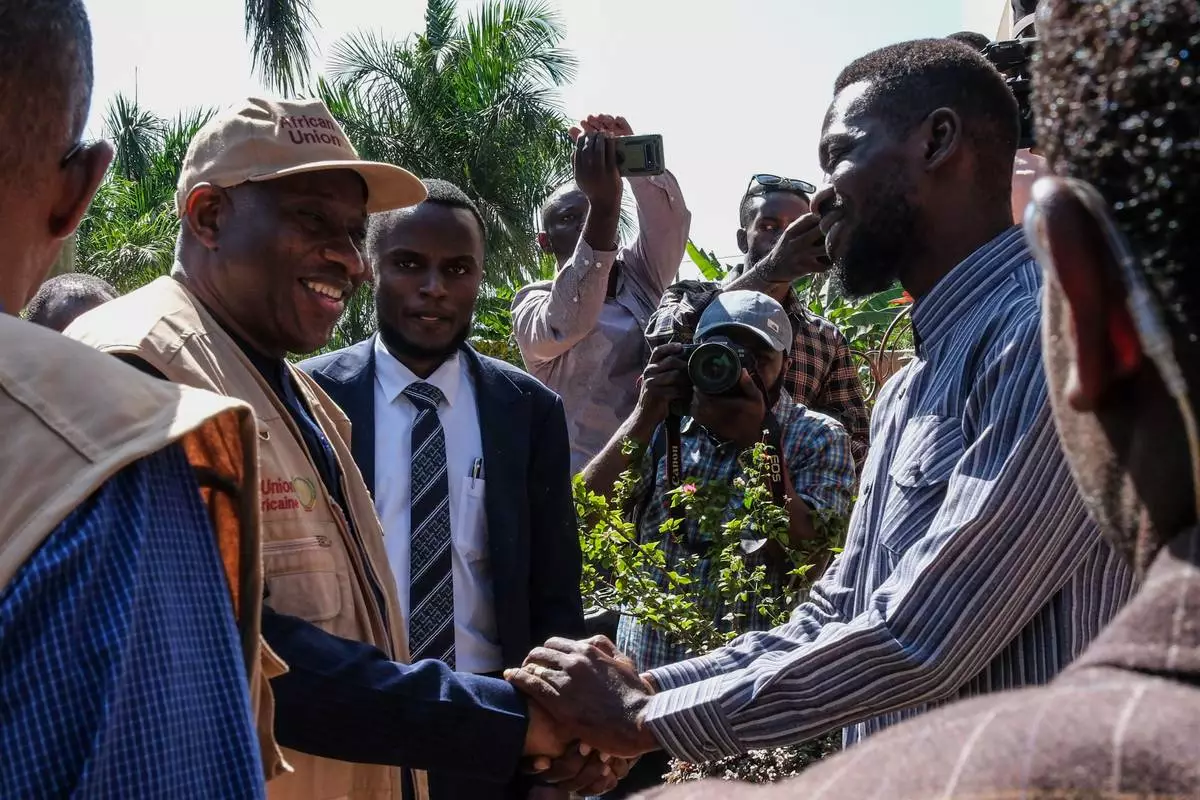
Uganda opposition presidential candidate Robert Kyagulanyi Ssentamu, known as Bobi Wine, right, greets election observers, including former Nigerian President Goodluck Jonathan, at his home in Magere village on the outskirts of Kampala, Uganda, Wednesday, Jan. 14, 2026. (AP Photo/Hajarah Nalwadda)

Uganda opposition presidential candidate Robert Kyagulanyi Ssentamu, known as Bobi Wine, right, greets election observers, including former Nigerian President Goodluck Jonathan, at his home in Magere village on the outskirts of Kampala, Uganda, Wednesday, Jan. 14, 2026. (AP Photo/Hajarah Nalwadda)

Billboards of Uganda President and National Resistance Movement (NRM) presidential candidate Yoweri Museveni are seen in Kampala, Uganda, Tuesday, Jan. 13, 2026. (AP Photo/Samson Otieno)

Billboards of Uganda President and National Resistance Movement (NRM) presidential candidate Yoweri Museveni are seen in Kampala, Uganda, Tuesday, Jan. 13, 2026. (AP Photo/Samson Otieno)

Electoral workers deliver ballot boxes to a polling station during presidential election in Kampala, Uganda, Thursday, Jan. 15, 2026. (AP Photo/Brian Inganga)

Electoral workers deliver ballot boxes to a polling station during presidential election in Kampala, Uganda, Thursday, Jan. 15, 2026. (AP Photo/Brian Inganga)

Voters are reflected in a police officer's sunglasses as they wait in line after voting failed to start on time due to system failures during presidential election in Kampala, Uganda, Thursday, Jan. 15, 2026. (AP Photo/Brian Inganga)

Voters are reflected in a police officer's sunglasses as they wait in line after voting failed to start on time due to system failures during presidential election in Kampala, Uganda, Thursday, Jan. 15, 2026. (AP Photo/Brian Inganga)

Voters wait to cast their ballots during the presidential election in Kampala, Uganda, Thursday, Jan. 15, 2026. (AP Photo/Brian Inganga)

Voters wait to cast their ballots during the presidential election in Kampala, Uganda, Thursday, Jan. 15, 2026. (AP Photo/Brian Inganga)

Recommended Articles