Skip to Content Facebook Feature Image

Many Delaware beachgoers feel the sting of a blooming jellyfish population

News

Many Delaware beachgoers feel the sting of a blooming jellyfish population
News

News

Many Delaware beachgoers feel the sting of a blooming jellyfish population

2025-08-06 23:11 Last Updated At:23:21

LEWES, Del. (AP) — More beachgoers have been getting an unexpected shock this summer as jellyfish numbers bloom along the Delaware coast, interrupting — but not stopping — the summer fun.

Beach patrol captains reported a dramatic increase in jellyfish activity and stings in July, the most they’ve seen in recent memory. Lewes Beach reported a fourfold increase in stings compared to 2024.

More Images
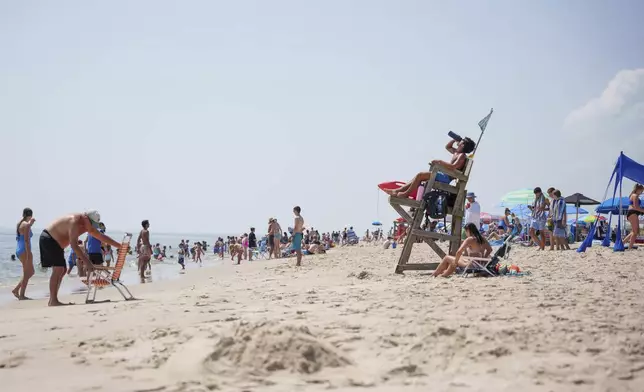
Beachgoers enjoy a summer day at Towers Beach, in Rehoboth Beach, Del., on Wednesday, July 30, 2025. (AP Photo/Mingson Lau)
Beachgoers enjoy a summer day at Towers Beach, in Rehoboth Beach, Del., on Wednesday, July 30, 2025. (AP Photo/Mingson Lau)

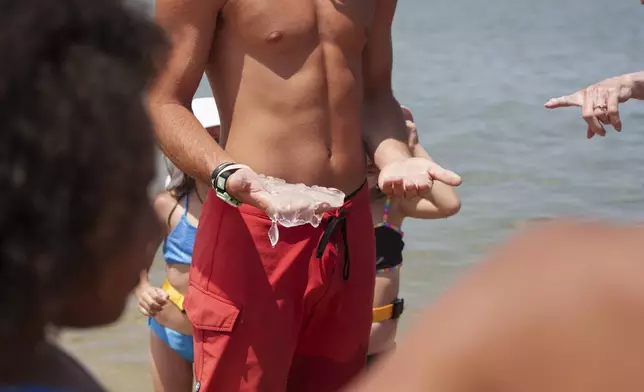
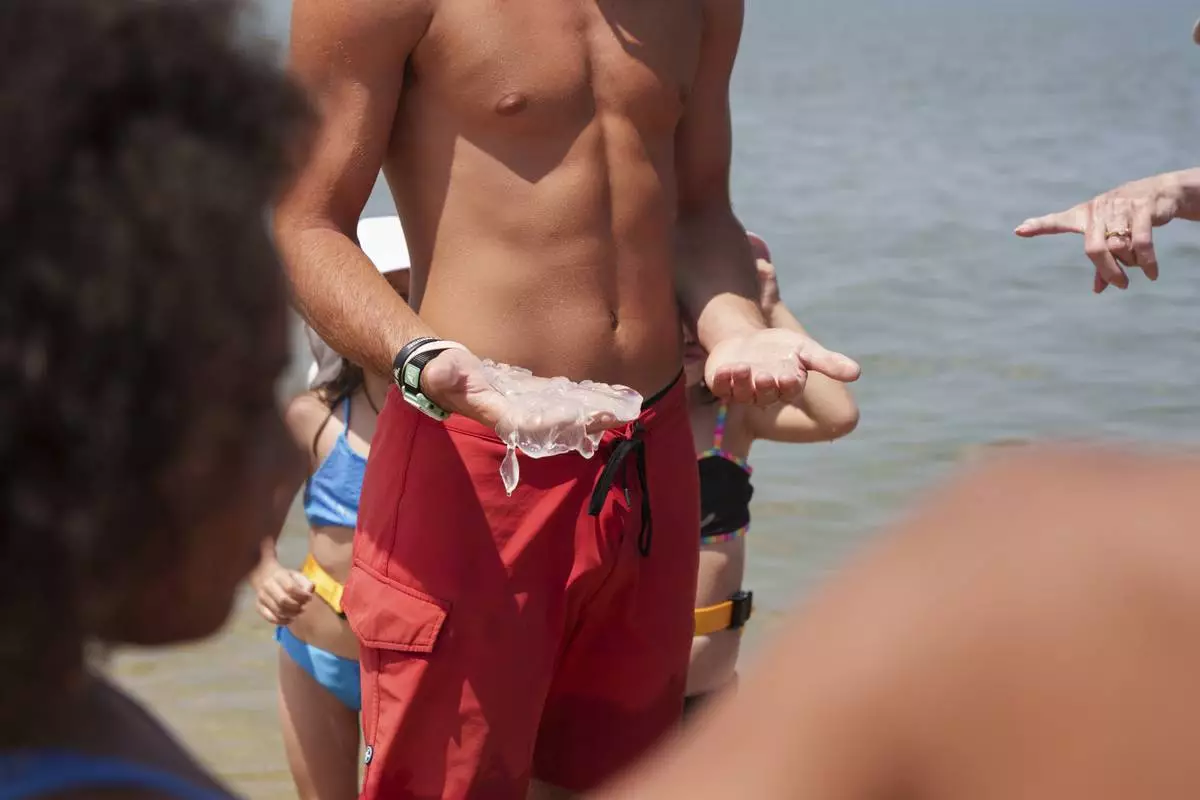
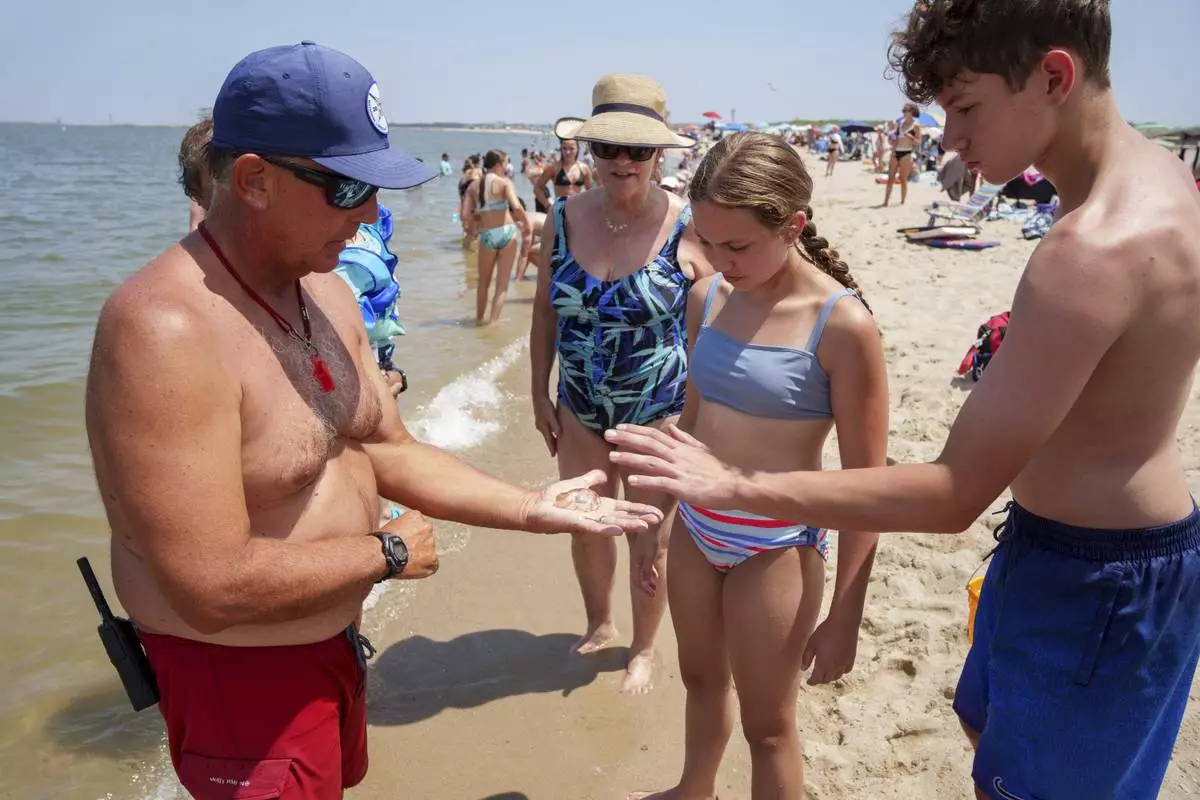
Lewes Beach Patrol Lieutenant Landon Hudson holds a pair of moon jellyfish during a wildlife education presentation at Savannah Beach, in Lewes, Del., before releasing the jellyfish back into the wild on Wednesday, July 30, 2025. (AP Photo/Mingson Lau)
Lewes Beach Patrol Lieutenant Landon Hudson holds a pair of moon jellyfish during a wildlife education presentation at Savannah Beach, in Lewes, Del., before releasing the jellyfish back into the wild on Wednesday, July 30, 2025. (AP Photo/Mingson Lau)

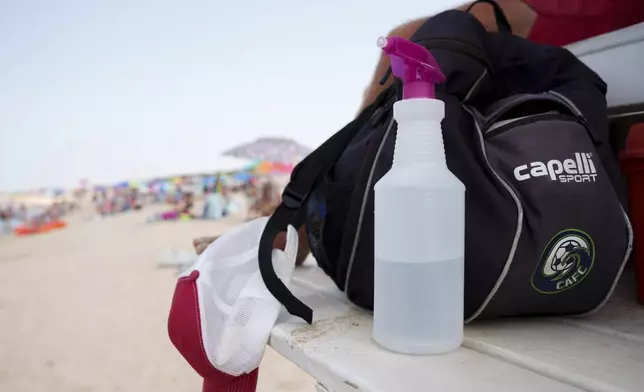
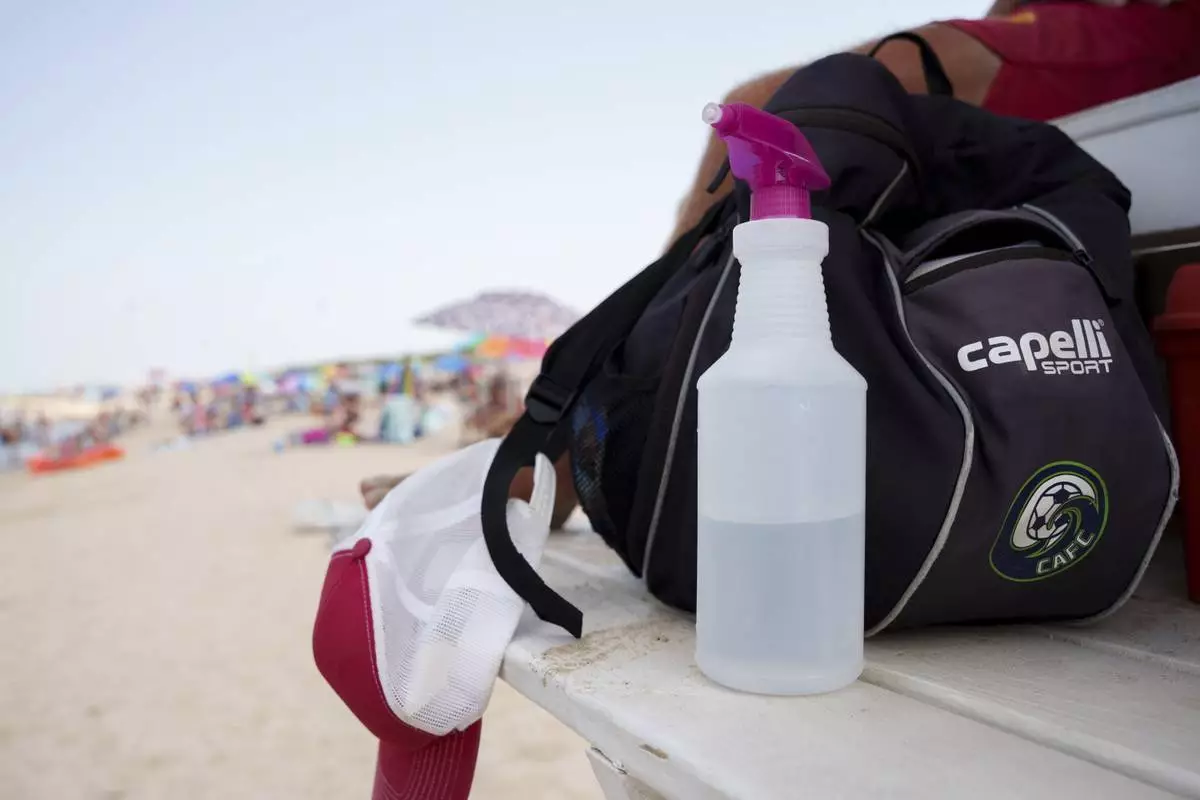
A vinegar-based solution, for the treatment of jellyfish stings, at a Lewes Beach Patrol lifeguard station at Savannah Beach, in Lewes, Del., on Wednesday, July 30, 2025. (AP Photo/Mingson Lau)
A vinegar-based solution, for the treatment of jellyfish stings, at a Lewes Beach Patrol lifeguard station at Savannah Beach, in Lewes, Del., on Wednesday, July 30, 2025. (AP Photo/Mingson Lau)

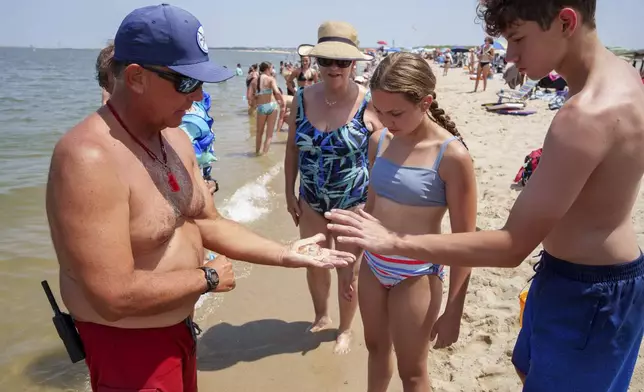
Lewes Beach Patrol Chief Mark Woodard, left, holds a moon jellyfish during a wildlife education presentation at Savannah Beach, in Lewes, Del., before releasing the jellyfish back into the wild on Wednesday, July 30, 2025. (AP Photo/Mingson Lau)
Lewes Beach Patrol Chief Mark Woodard, left, holds a moon jellyfish during a wildlife education presentation at Savannah Beach, in Lewes, Del., before releasing the jellyfish back into the wild on Wednesday, July 30, 2025. (AP Photo/Mingson Lau)

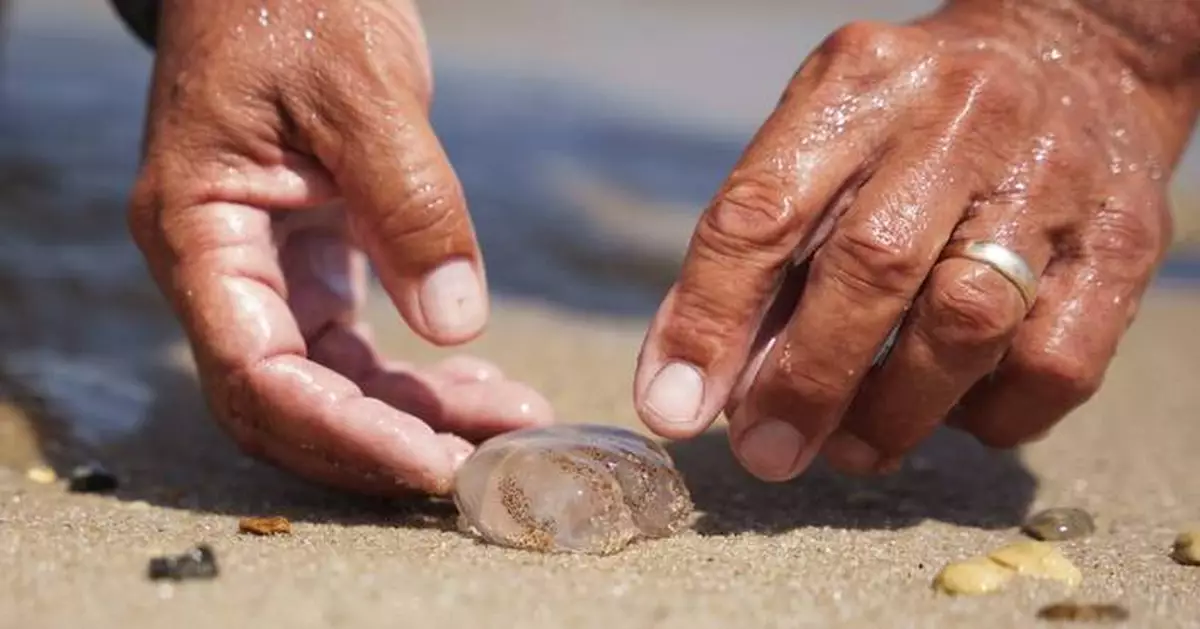
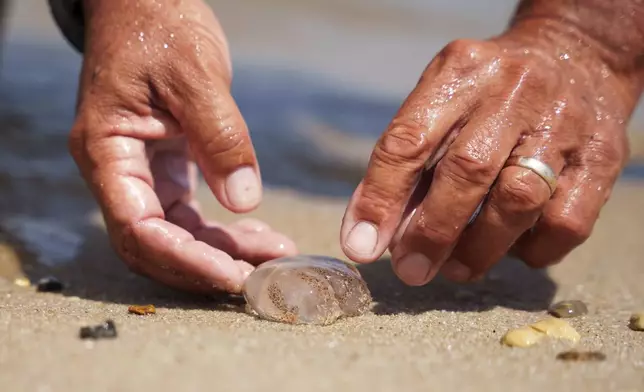
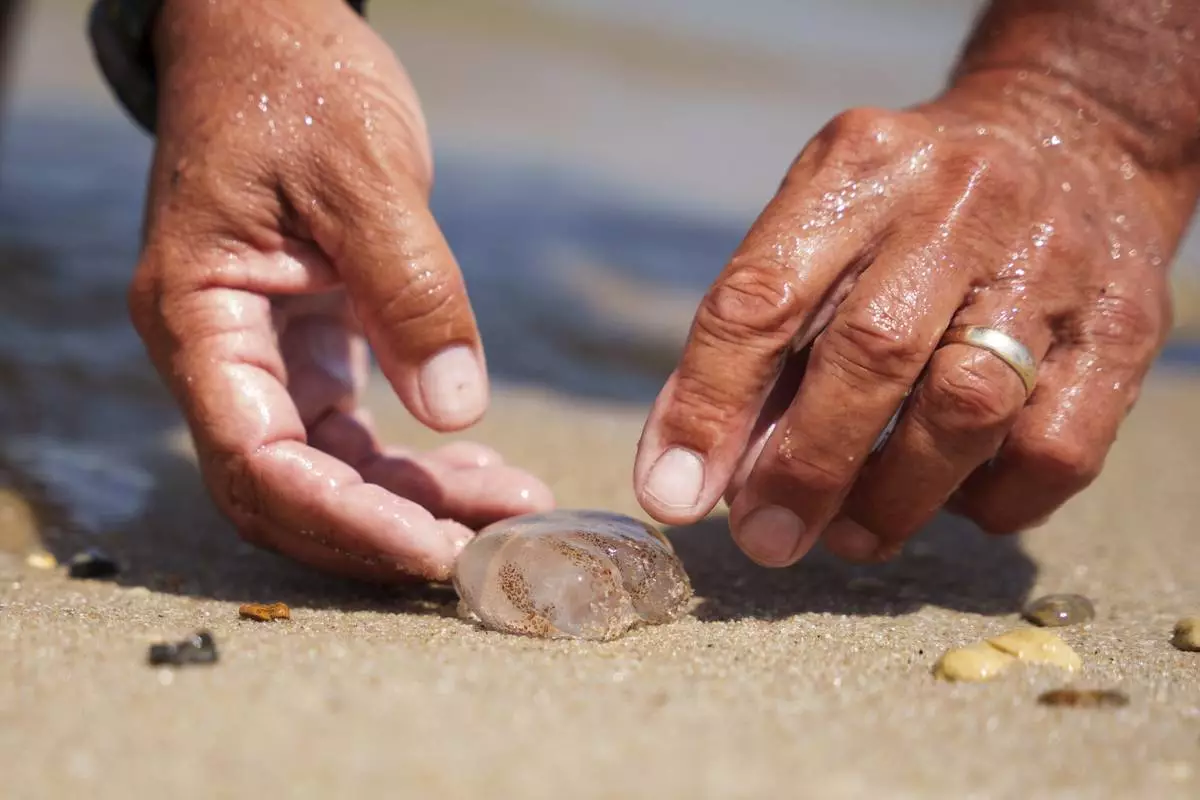
Lewes Beach Patrol Chief Mark Woodard rests a moon jellyfish on the sand at Savannah Beach, in Lewes, Del., on Wednesday, July 30, 2025. (AP Photo/Mingson Lau)

Lewes Beach Patrol Chief Mark Woodard rests a moon jellyfish on the sand at Savannah Beach, in Lewes, Del., on Wednesday, July 30, 2025. (AP Photo/Mingson Lau)

Lion’s manes, which can have 100-foot (30-meter) tentacles, sea nettles and moon jellyfish are some varieties that frequent Delaware’s summertime waters.

Jellyfish blooms have become common from Maine to Florida in recent years. Warming waters can create ideal conditions for jellyfish growth.

Normally, Delaware’s five state parks may report a handful of summer jellyfish stings, said Bailey Noel, a beach patrol captain. But Fenwick Island State Park recently reported 92 stings on a single July day. Three lifeguards were taken to urgent care after swimming in jellyfish-infested waters, Noel said.

The jellyfish at Delaware’s Towers Beach surprised Philadelphia resident Christina Jones, whose two daughters refused to wade back into the water after being stung, she said.

“The jellyfish are pretty bad,” Jones said. “And not only are they a lot in number, but they’re pretty big.”

Delaware State Beach Patrol started tracking jellyfish stings this year due to the rise in cases, said Noel. Most patrol teams do not track the data.

Lewes Beach Patrol treated 295 stings in 2024, the first year the data was collected, but reported over 1,200 cases so far in 2025, said Capt. Strohm Edwards. Lifeguards started carrying vinegar solutions, which can neutralize the venom agents, to help ease pain, he said.

But vinegar solutions may cause microscopic venom-coated barbs known as nematocysts to discharge, according to some research. Those experts recommend a baking soda slurry.

While venomous, stings from Delaware's lion’s manes and sea nettles typically only cause minor irritation and pain, said Edwards. In cases of severe allergic reactions and symptoms — nausea, vomiting and trouble breathing — lifeguards can help.

Jellyfish blooms, sudden fluctuations in jellyfish populations, are not uncommon, said Gisele Muller-Parker, a retired marine biologist who would count dozens of lion’s mane jellyfish during her daily Lewes Beach walks in July. Temperature, salinity and food availability influence jellyfish breeding, and in favorable conditions, such as warmer waters, populations can explode.

“This year, we’ve never seen anything like this,” Muller-Parker said.

The jellyfish were near the end of their life cycle, finishing their reproductive phase and laying their eggs. Those jellyfish will die once water temperatures cool, said Keith Bayha, a research collaborator with the Smithsonian Institution National Museum of Natural History.

The jellyfish boom can harm ecosystems and marine industries, said Bayha, who has studied the animals for more than 20 years and helped identify a nettle species. Fish larvae primarily feed on plankton, but jellyfish can eat both the plankton and the fish. And with few natural predators, the jellyfish food chain is an ecological dead end, said Bayha.

Delaware's boom this summer is far from alone. Florida's Volusia County reported hundreds of stings around Memorial Day weekend. Gloucester, Massachusetts, reminded beachgoers to stay safe around jellyfish in mid-July. And in June, Maine's Ogunquit Fire Department warned beachgoers about the increase in jellyfish after stings were reported.

Jellyfish research is limited, but Muller-Parker hopes more work will be done to assess the ecological ramifications of jellyfish blooms and improve safety advisories.

For now, some unlucky beachgoers will have to rely on home remedies and, in the case of Massachusetts resident Kathy Malloy-Harder’s third-grade nephew, a little bravery.

“When he got stung, he jumped up and started crying and said, ’I’m never coming back to the beach again ever,’” said Malloy-Harder, who had to try two stores to find vinegar for him. But she said that after talking about it “and once the sting subsided, he was interested in coming back and enjoying the beach.”

Whittle reported from Portland, Maine.
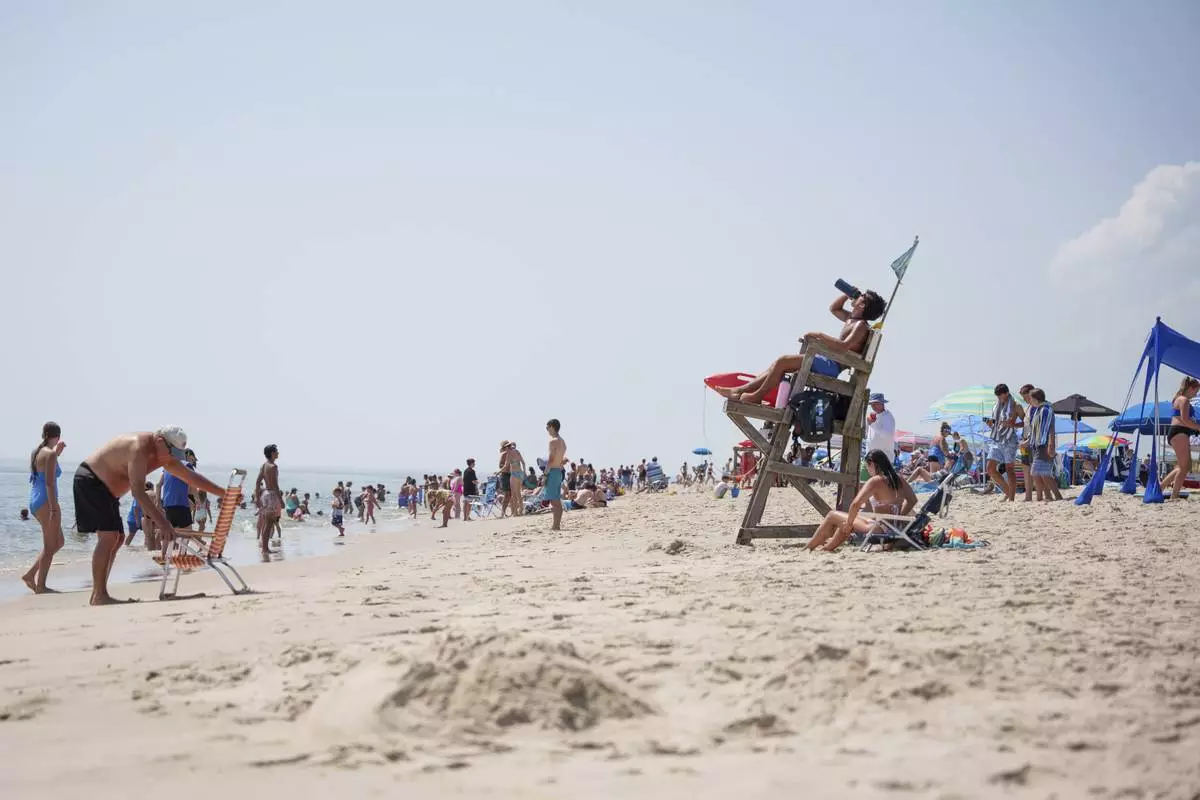
Beachgoers enjoy a summer day at Towers Beach, in Rehoboth Beach, Del., on Wednesday, July 30, 2025. (AP Photo/Mingson Lau)
Beachgoers enjoy a summer day at Towers Beach, in Rehoboth Beach, Del., on Wednesday, July 30, 2025. (AP Photo/Mingson Lau)

Lewes Beach Patrol Lieutenant Landon Hudson holds a pair of moon jellyfish during a wildlife education presentation at Savannah Beach, in Lewes, Del., before releasing the jellyfish back into the wild on Wednesday, July 30, 2025. (AP Photo/Mingson Lau)
Lewes Beach Patrol Lieutenant Landon Hudson holds a pair of moon jellyfish during a wildlife education presentation at Savannah Beach, in Lewes, Del., before releasing the jellyfish back into the wild on Wednesday, July 30, 2025. (AP Photo/Mingson Lau)

A vinegar-based solution, for the treatment of jellyfish stings, at a Lewes Beach Patrol lifeguard station at Savannah Beach, in Lewes, Del., on Wednesday, July 30, 2025. (AP Photo/Mingson Lau)
A vinegar-based solution, for the treatment of jellyfish stings, at a Lewes Beach Patrol lifeguard station at Savannah Beach, in Lewes, Del., on Wednesday, July 30, 2025. (AP Photo/Mingson Lau)

Lewes Beach Patrol Chief Mark Woodard, left, holds a moon jellyfish during a wildlife education presentation at Savannah Beach, in Lewes, Del., before releasing the jellyfish back into the wild on Wednesday, July 30, 2025. (AP Photo/Mingson Lau)
Lewes Beach Patrol Chief Mark Woodard, left, holds a moon jellyfish during a wildlife education presentation at Savannah Beach, in Lewes, Del., before releasing the jellyfish back into the wild on Wednesday, July 30, 2025. (AP Photo/Mingson Lau)

Lewes Beach Patrol Chief Mark Woodard rests a moon jellyfish on the sand at Savannah Beach, in Lewes, Del., on Wednesday, July 30, 2025. (AP Photo/Mingson Lau)


Lewes Beach Patrol Chief Mark Woodard rests a moon jellyfish on the sand at Savannah Beach, in Lewes, Del., on Wednesday, July 30, 2025. (AP Photo/Mingson Lau)

LONDON (AP) — Laws that will make it illegal to create online sexual images of someone without their consent are coming into force soon in the U.K., officials said Thursday, following a global backlash over the use of Elon Musk's artificial intelligence chatbot Grok to make sexualized deepfakes of women and children.

Musk's company, xAI, announced late Wednesday that it has introduced measures to prevent Grok from allowing the editing of photos of real people to portray them in revealing clothing in places where that is illegal.

British Prime Minister Keir Starmer welcomed the move, and said X must “immediately” ensure full compliance with U.K. law. He stressed that his government will remain vigilant on any transgressions by Grok and its users.

“Free speech is not the freedom to violate consent," Starmer said Thursday. “I am glad that action has now been taken. But we’re not going to let this go. We will continue because this is a values argument.”

The chatbot, developed by Musk's company xAI and freely accessed through his social media platform X, has faced global scrutiny after it emerged that it was used in recent weeks to generate thousands of images that “undress” people without their consent. The digitally-altered pictures included nude images as well as depictions of women and children in bikinis or in sexually explicit poses.

Critics have said laws regulating generative AI tools are long overdue, and that the U.K. legal changes should have been brought into force much sooner.

A look at the problem and how the U.K. aims to tackle it:

Britain's media regulator has launched an investigation into whether X has breached U.K. laws over the Grok-generated images of children being sexualized or people being undressed. The watchdog, Ofcom, said such images — and similar productions made by other AI models — may amount to pornography or child sexual abuse material.

The problem stemmed from the launch last year of Grok Imagine, an AI image generator that allows users to create videos and pictures by typing in text prompts. It includes a so-called “spicy mode” that can generate adult content.

Technology Secretary Liz Kendall cited a report from the internet Watch Foundation saying the deepfake images included sexualization of 11-year-olds and women subjected to physical abuse.

“The content which has circulated on X is vile. It is not just an affront to decent society, it is illegal,” she said.

Authorities said they are making legal changes to criminalize those who use or supply “nudification” tools.

First, the government says it is fast-tracking provisions in the Data (Use and Access) Act making it a criminal offense to create or request deepfake images. The act was passed by Parliament last year, but had not yet been brought into force.

The legislation is set to come into effect on Feb. 6

“Let this be a clear message to every cowardly perpetrator hiding behind a screen: you will be stopped and when you are, make no mistake that you will face the full force of the law,” Justice Secretary David Lammy said

Separately, the government said it is also criminalizing “nudification” apps as part of the Crime and Policing Bill, which is currently going through Parliament.

The new criminal offense will make it illegal for companies to supply tools designed to create non-consensual intimate images. Kendall said this would “target the problem at its source.”

The investigation by Ofcom is ongoing. Kendall said X could face a fine of up to 10% of its qualifying global revenue depending on the investigation’s outcome and a possible court order blocking access to the site.

Starmer has faced calls for his government to stop using X. Downing Street said this week it was keeping its presence on the platform “under review."

Musk insisted Grok complied with the law. “When asked to generate images, it will refuse to produce anything illegal, as the operating principle for Grok is to obey the laws of any given country or state,” he posted on X. “There may be times when adversarial hacking of Grok prompts does something unexpected. If that happens, we fix the bug immediately.”

FILE - Workers install lighting on an "X" sign atop the company headquarters, formerly known as Twitter, in downtown San Francisco, July 28, 2023. (AP Photo/Noah Berger, File)

FILE - Workers install lighting on an "X" sign atop the company headquarters, formerly known as Twitter, in downtown San Francisco, July 28, 2023. (AP Photo/Noah Berger, File)

Recommended Articles