The Trump administration is moving to shut down two NASA missions that monitor a potent greenhouse gas and plant health, potentially shutting off an important source of data for scientists, policymakers and farmers.
President Donald Trump's budget request for fiscal year 2026 includes no money for the Orbiting Carbon Observatories, which can precisely show where carbon dioxide is being emitted and absorbed and how well crops are growing.
NASA said in an emailed statement Wednesday that the missions were “beyond their prime mission” and being terminated “to align with the President’s agenda and budget priorities.”
But the missions — a free-flying satellite launched in 2014 and an instrument attached to the International Space Station in 2019 that include technology used in the Hubble Space Telescope — still are more sensitive and accurate than any other systems in the world, operating or planned, and a “national asset” that should be saved, said David Crisp, a retired NASA scientist who led their development.
They helped scientists discover, for example, that the Amazon rain forest emits more carbon dioxide than it absorbs, while boreal forests in Canada, Russia and places where permafrost is melting absorb more than they emit, Crisp said.
They also can detect the “glow” of photosynthesis in plants, which helps monitor drought and predict food shortages that can lead to civil unrest and famine, he said.
“This is really critical,” Crisp said. “We’re learning so much about this rapidly changing planet.”
The decision to end the missions is “extremely shortsighted,” said Jonathan Overpeck, a climate scientist at the University of Michigan.
“The observations provided by these satellites ... (are) critical for managing growing climate change impacts around the planet, including in the U.S.," he said.
Crisp and others hope Congress will vote to preserve funding for the missions, which are funded through the fiscal year that ends Sept. 30.
A bill in the House closely aligns with the president’s request and would eliminate the missions, while a Senate version preserves them. But with Congress in recess, it is unclear whether a budget will be adopted before the new fiscal year begins Oct. 1.
If it doesn't, Congress could adopt a resolution to continue current funding until a budget is passed, though some lawmakers fear the Trump administration could try to delay or withhold that money.
Congressional Democrats warned acting NASA Administrator Sean Duffy last month that it would be illegal to terminate missions or impound funds already appropriated by Congress.
Experts said the administration's move to eliminate funding aligns with other actions to cut or bury climate science.
“The principle seems to be that if we stop measuring climate change it will just disappear from the American consciousness,” said University of Pennsylvania climate scientist Michael Mann.
Crisp and others also are trying to put together a coalition of outside partners — including from Japan and Europe — that could fund and operate the instrument attached to the space station. NASA said it will accept outside proposals through Aug. 29.
The free-flying satellite, though, is at risk of being brought down, meaning it would burn up in the atmosphere. National Public Radio first reported that NASA employees were making plans to end the missions.
Crisp said advocates are hoping NASA also allows outside control of that satellite, which covers more of the globe, but there are legal hurdles to overcome because it would mean giving control of a U.S. satellite to a group that could include foreign partners.
“We’re going out to billionaires. We’re going out to foundations,” Crisp said. “But ... it’s a really, really bad idea to try and push it off onto private industry or private individuals or private donors. It just doesn’t make sense.”
The Associated Press’ climate and environmental coverage receives financial support from multiple private foundations. AP is solely responsible for all content. Find AP’s standards for working with philanthropies, a list of supporters and funded coverage areas at AP.org.
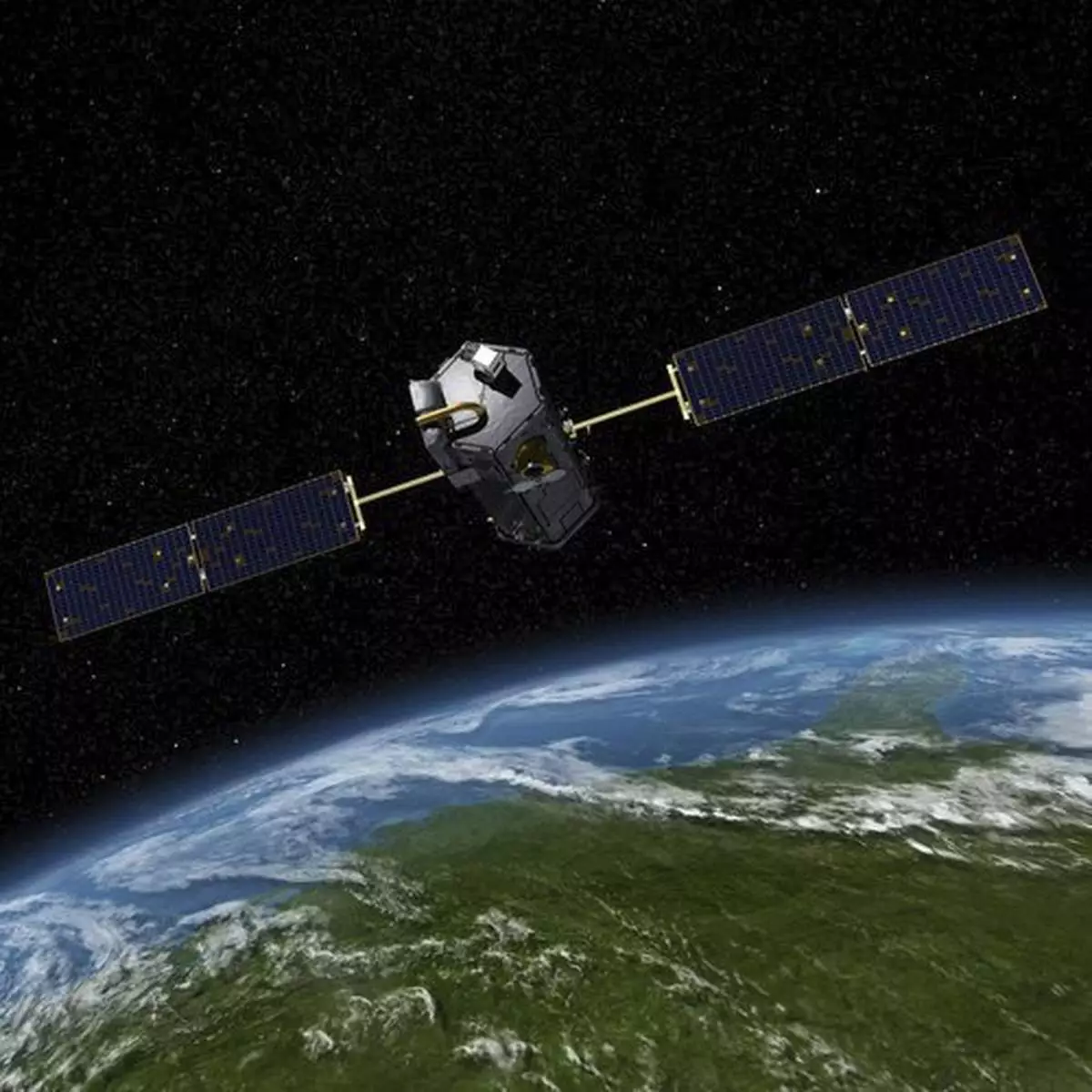
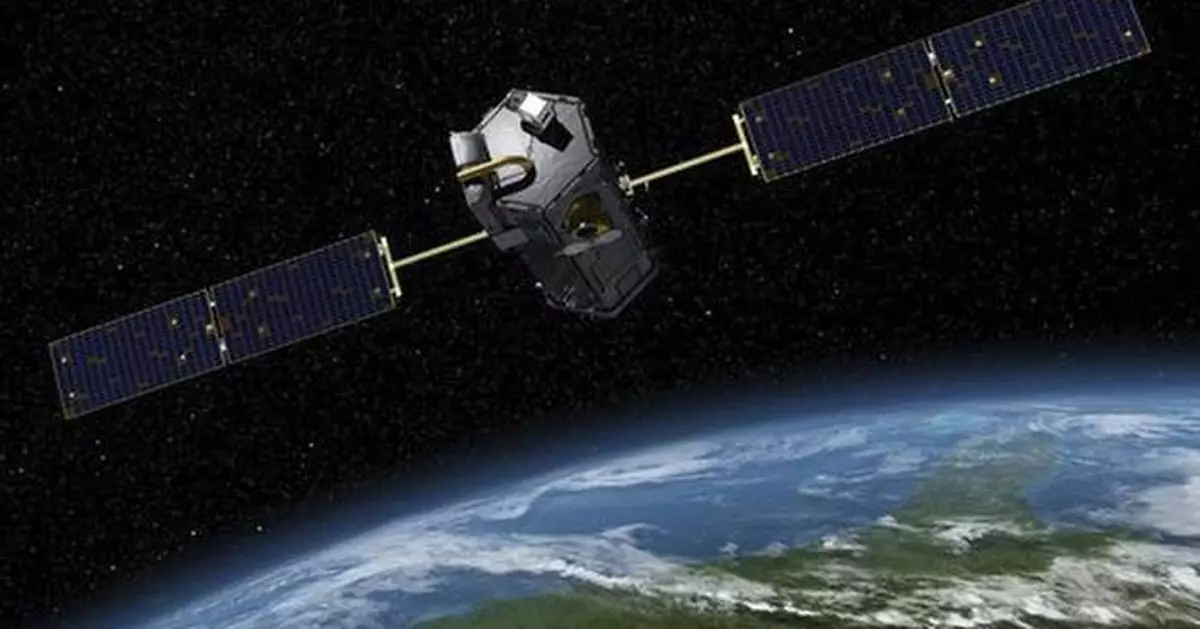
This artist rendering provided by NASA shows the Orbiting Carbon Observatory 2. (NASA/John Howard/JPL via AP)
BERLIN (AP) — The eight European countries targeted by U.S. President Donald Trump for a 10% tariff for opposing American control of Greenland blasted the move Sunday, warning that the American leader's threats “undermine transatlantic relations and risk a dangerous downward spiral.”
In an unusual and very strong joint statement coming from major U.S. allies, Denmark, Norway, Sweden, France, Germany, the United Kingdom, the Netherlands and Finland on Sunday said troops sent to Greenland for the Danish military training exercise “Arctic Endurance” pose “no threat to anyone.”
Trump's Saturday announcement sets up a potentially dangerous test of U.S. partnerships in Europe. The Republican president appeared to indicate that he was using the tariffs as leverage to force talks over the status of Greenland, a semiautonomous territory of NATO ally Denmark that he regards as critical to U.S. national security.
“We stand in full solidarity with the Kingdom of Denmark and the people of Greenland," the group said. “Building on the process begun last week, we stand ready to engage in a dialogue based on the principles of sovereignty and territorial integrity that we stand firmly behind. Tariff threats undermine transatlantic relations and risk a dangerous downward spiral.”
There are immediate questions about how the White House could try to implement the tariffs because the EU is a single economic zone in terms of trading. It was unclear, too, how Trump could act under U.S. law, though he could cite emergency economic powers that are currently subject to a U.S. Supreme Court challenge.
European Union foreign policy chief Kaja Kallas said China and Russia will benefit from the divisions between the U.S. and Europe. She added in a post on social media: “If Greenland’s security is at risk, we can address this inside NATO. Tariffs risk making Europe and the United States poorer and undermine our shared prosperity."
Trump's move was also panned domestically.
U.S. Sen. Mark Kelly, a former U.S. Navy pilot and Democrat who represents Arizona, posted that Trump’s threatened tariffs on U.S. allies would make Americans “pay more to try to get territory we don’t need.”
“Troops from European countries are arriving in Greenland to defend the territory from us. Let that sink in,” he wrote on social media. “The damage this President is doing to our reputation and our relationships is growing, making us less safe. If something doesn’t change we will be on our own with adversaries and enemies in every direction.”
Six of the countries targeted are part of the 27-member EU, which operates as a single economic zone in terms of trading. It was not immediately clear if Trump's tariffs would impact the entire bloc. EU envoys scheduled emergency talks for Sunday evening to determine a potential response.
The tariff announcement even drew blowback from Trump's populist allies in Europe.
Italy’s right-wing premier, Giorgia Meloni, considered one of Trump’s closest allies on the continent, said Sunday she had spoken to him about the tariffs, which she described as “a mistake.”
The deployment to Greenland of small numbers of troops by some European countries was misunderstood by Washington, Meloni told reporters. She said the deployment was not a move against the U.S. but aimed to provide security against “other actors” that she didn’t name.
French President Emmanuel Macron wrote on social media that “no intimidation or threats will influence us, whether in Ukraine, Greenland or anywhere else in the world when we are faced with such situations." He added that "tariff threats are unacceptable and have no place in this context.”
Jordan Bardella, president of Marine Le Pen’s far-right National Rally party in France and also a European Parliament lawmaker, posted that the EU should suspend last year’s tariff deal with the U.S., describing Trump’s threats as “commercial blackmail.”
Trump also achieved the rare feat of uniting Britain’s main political parties — including the hard-right Reform UK party — all of whom criticized the tariff threat.
“We don’t always agree with the U.S. government and in this case we certainly don’t. These tariffs will hurt us,” Reform UK leader Nigel Farage, a longtime champion and ally of Trump, wrote on social media. He stopped short of criticizing Trump's designs on Greenland.
Meanwhile, U.K. Prime Minister Keir Starmer, who leads the center-left Labour Party, said the tariffs announcement was “completely wrong” and his government would “be pursuing this directly with the U.S. administration.”
The foreign ministers of Denmark and Norway are also expected to address the crisis Sunday in Oslo during a news conference.
__
Leicester reported from Paris and Cook from Brussels. Associated Press writers Jill Lawless in London, Barry Hatton in Lisbon, Portugal, Aamer Madhani in Washington and Josh Boak in West Palm Beach, Florida, contributed to this report.

A crowd walks to the US consulate to protest against Trump's policy towards Greenland in Nuuk, Greenland, Saturday, Jan. 17, 2026. (AP Photo/Evgeniy Maloletka)

A boy holds a crossed out map of Greenland topped by a hairpiece symbolizing U.S. President Donald Trump, during a protest against Trump's policy towards Greenland in front of the US consulate in Nuuk, Greenland, Saturday, Jan. 17, 2026. (AP Photo/Evgeniy Maloletka)
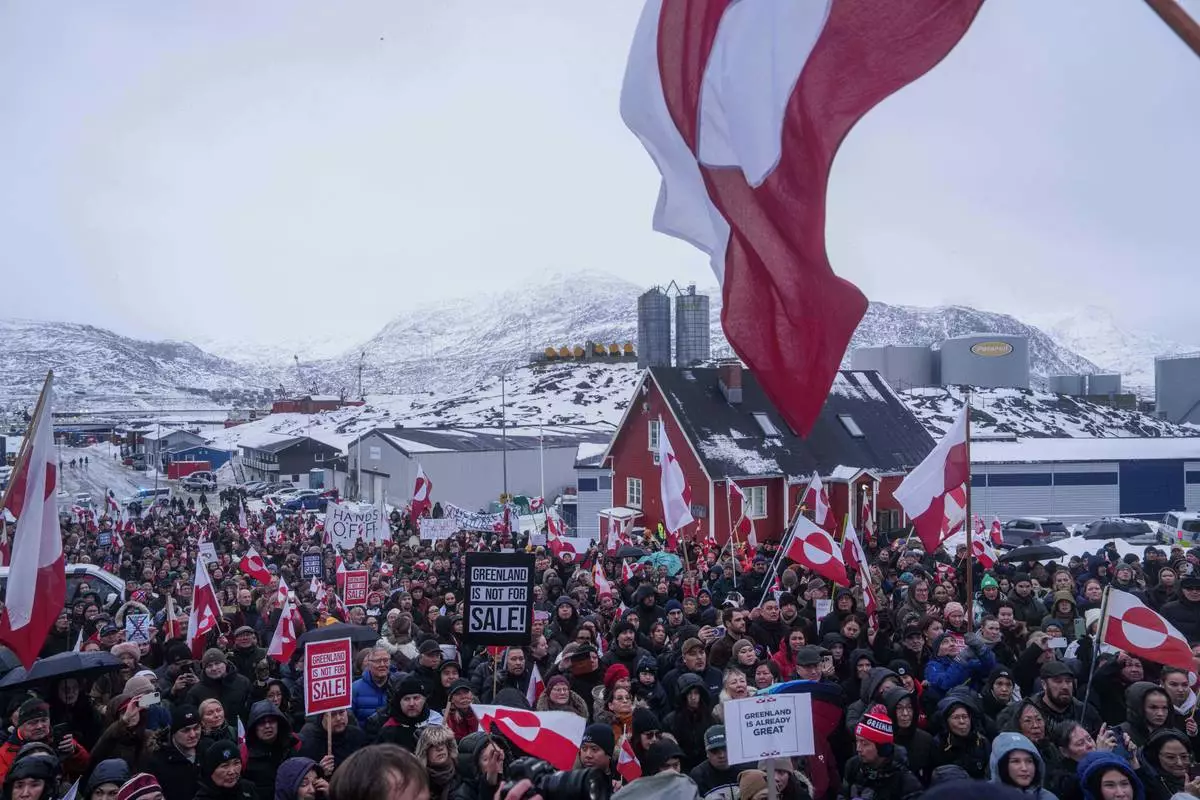
People protest against Trump's policy towards Greenland in front of the US consulate in Nuuk, Greenland, Saturday, Jan. 17, 2026. (AP Photo/Evgeniy Maloletka)