Skip to Content Facebook Feature Image

Grandchildren of 2 men who experienced both A-bomb attacks in Japan work for peace 80 years later

News

Grandchildren of 2 men who experienced both A-bomb attacks in Japan work for peace 80 years later
News

News

Grandchildren of 2 men who experienced both A-bomb attacks in Japan work for peace 80 years later

2025-08-08 21:11 Last Updated At:21:20

HIROSHIMA, Japan (AP) — When the United States dropped the atomic bombs on the Japanese cities of Hiroshima and Nagasaki in August 1945, Ari Beser’s grandfather was on board both of the American B-29 bombers that carried the weapons. On the ground, Kosuzu Harada’s grandfather survived both attacks.

Neither of the men — U.S. radar specialist Jacob Beser and Japanese engineer Tsutomu Yamaguchi — met during their lives. But both became staunch advocates of nuclear abolishment.

Decades later, that shared goal has brought their grandchildren together. Ari Beser and Harada are telling their grandfathers’ linked stories, and working to seek reconciliation and understanding about an attack that continues to divide people in Japan and the United States.

During this week's commemoration of the 80th anniversaries of the Hiroshima and Nagasaki attacks, the grandchildren visited a station in Hiroshima where Yamaguchi, badly injured, boarded a train back to his hometown of Nagasaki a day after the bombing on Aug. 6, 1945.

The two grandchildren then went to the Hiroshima peace park where they spoke with The Associated Press about what their grandfathers experienced during two of the 20th century's most momentous events and their consequences.

Yamaguchi was 29 when he was burned severely in the Hiroshima bombing. He was in the city on a temporary assignment as a shipbuilding engineer. After Yamaguchi arrived in Nagasaki, and was telling colleagues about the attack he had witnessed in Hiroshima, the second bomb exploded.

Harada first learned about her grandfather’s experience of both bombs when she interviewed him for an assignment in elementary school.

Yamaguchi didn’t talk about his experience in public until he was 90 because of worries about discrimination. He then became a vocal activist for peace until he died in 2010.

In 2013, Harada learned that the grandson of an American who was on the planes that bombed both Hiroshima and Nagasaki wanted to hear about Yamaguchi's story.

“I had mixed feelings as a family member of the survivors,” Harada said, recalling Ari Beser’s first visit.

Ari Beser quietly listened as Harada’s mother talked about Yamaguchi.

Harada and her mother were surprised when they learned that the senior Beser was exposed to radiation during his missions.

“We used to see ourselves only from the victims’ perspective," she said. "We learned that war affects and ruins everyone’s lives.”

“I feel it is my role to keep telling about the horror ... so that the same mistake will never be repeated," Harada said.

She visits places across Japan to talk about her grandfather's story and to push for a nuclear-free world.

Yamaguchi used to say that he could never forgive the U.S. government for dropping the bombs, but he had no hatred for Americans. Even as his health deteriorated, Yamaguchi still spoke of his past, holding an interview from his hospital bed.

Beser, a visual journalist and producer, has since regularly visited Nagasaki, and he and Harada have become friends.

Harada believes the U.S. government should formally apologize for the bombings.

“A reconciliation takes time. It’s a long process which takes generations,” Harada said.

When he was asked about the attacks during his first visit to Hiroshima 40 years ago, Jacob Beser didn't apologize, but said: “I wouldn’t say it was our proudest moment.” He said the world needed to make sure it doesn’t happen again.

At 8:15 a.m. on Aug. 6, 1945, Jacob Beser was on the bomber Enola Gay approaching Hiroshima after a seven-hour flight from the Mariana Islands. The B-29 quickly descended from 32,000 feet (nearly 10,000 meters) to 1,820 feet (about 550 meters) and then dropped the bomb.

"A door was open to a new era in man’s inhumanity to his fellow man,” he said in a lecture at Johns Hopkins University in 1985. Beser, who was in the back of the aircraft working as a radar specialist, said that all he saw out of the window was a “boiling muddy mess with fires continuing to break out on the periphery.”

Three days later, he was in another bomber, Bockscar, above Yamaguchi's hometown. The city was gone when he got to the window.

Growing up, Ari Beser was told that his grandfather's bone cancer was presumably from his radiation exposure during the bombing missions.

In 2011, Ari Beser traveled to Japan for the first time to learn more about the bombings. He has since met with many survivors and is eager to hear their stories.

“Before, I think that we all believed in the same justifications. I can’t justify it anymore,” Ari Beser said about the bombings. “For me, all I focus on is trying to convey it to people so that it doesn’t happen again."

Because his grandfather was on both B-29s, Ari Beser was always interested in meeting a double survivor. That led him to Harada’s family 12 years ago.

“It’s passing the baton and it’s leaving the record … We are the keepers of memory,” Ari Beser said.

He was young when his grandfather died and never got to talk with him about the bombings.

“I also want to interview him or just want to ask him so many questions” and find out if there were other options besides dropping the bomb.

Despite language difficulties, the two grandchildren keep communicating and working together on projects, including a book about their grandfathers.

As the world increasingly becomes a divisive place, with fighting in the Middle East and Ukraine, Ari Beser believes that his work with Harada is more important than ever.

“It makes you nervous, makes you worry because if this history repeats with today’s nuclear weapons, it’s almost unimaginable how much would be destroyed,” Ari Beser said.

Visiting Japan and meeting with Harada, he said, “makes me a little bit more hopeful. ... Everybody needs hope and this is how I get hope."

This story has been corrected to show that the the spelling of the second bomber is Bockscar, not Bochscar.

The Associated Press receives support for nuclear security coverage from the Carnegie Corporation of New York and Outrider Foundation. The AP is solely responsible for all content.

Additional AP coverage of the nuclear landscape: https://apnews.com/projects/the-new-nuclear-landscape/
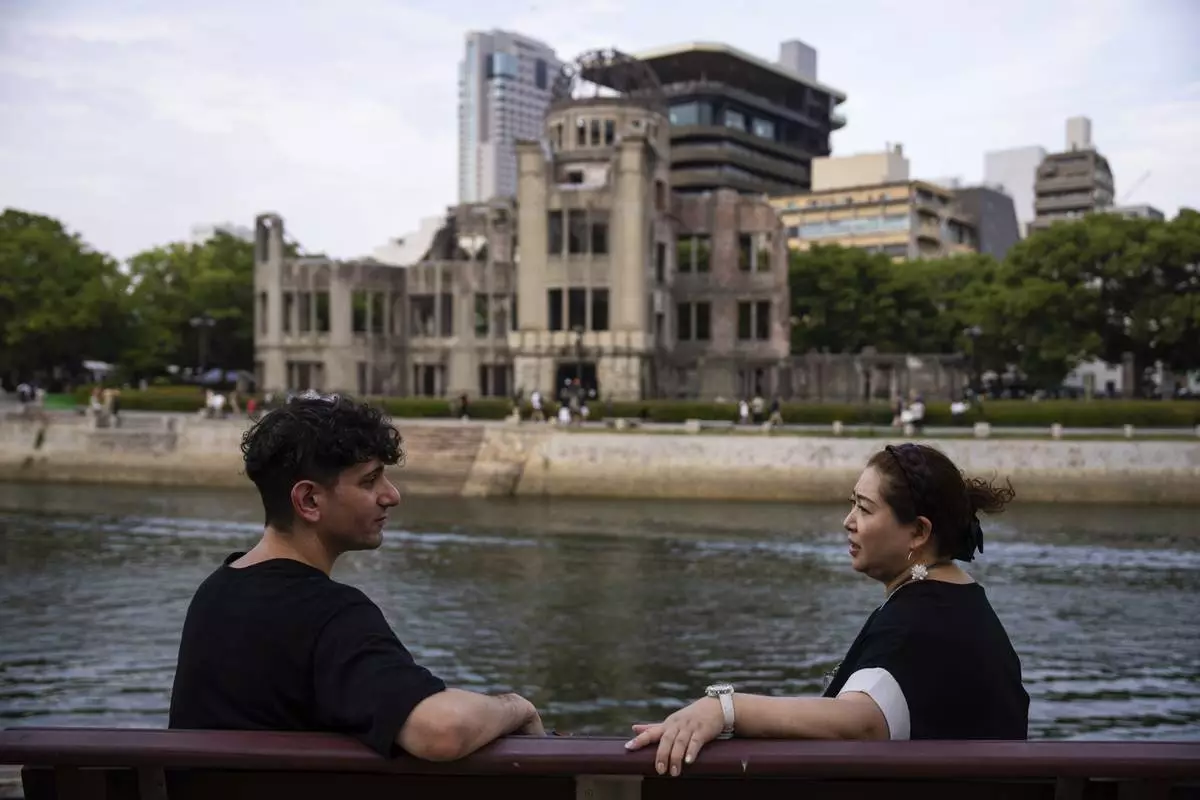
Ari Beser, left, and Kosuzu Harada, right, chat as they pose for photographs after an interview with The Associated Press in front of the Atomic Bomb Dome in Hiroshima, western Japan Tuesday, Aug. 5, 2025. (AP Photo/Louise Delmotte)
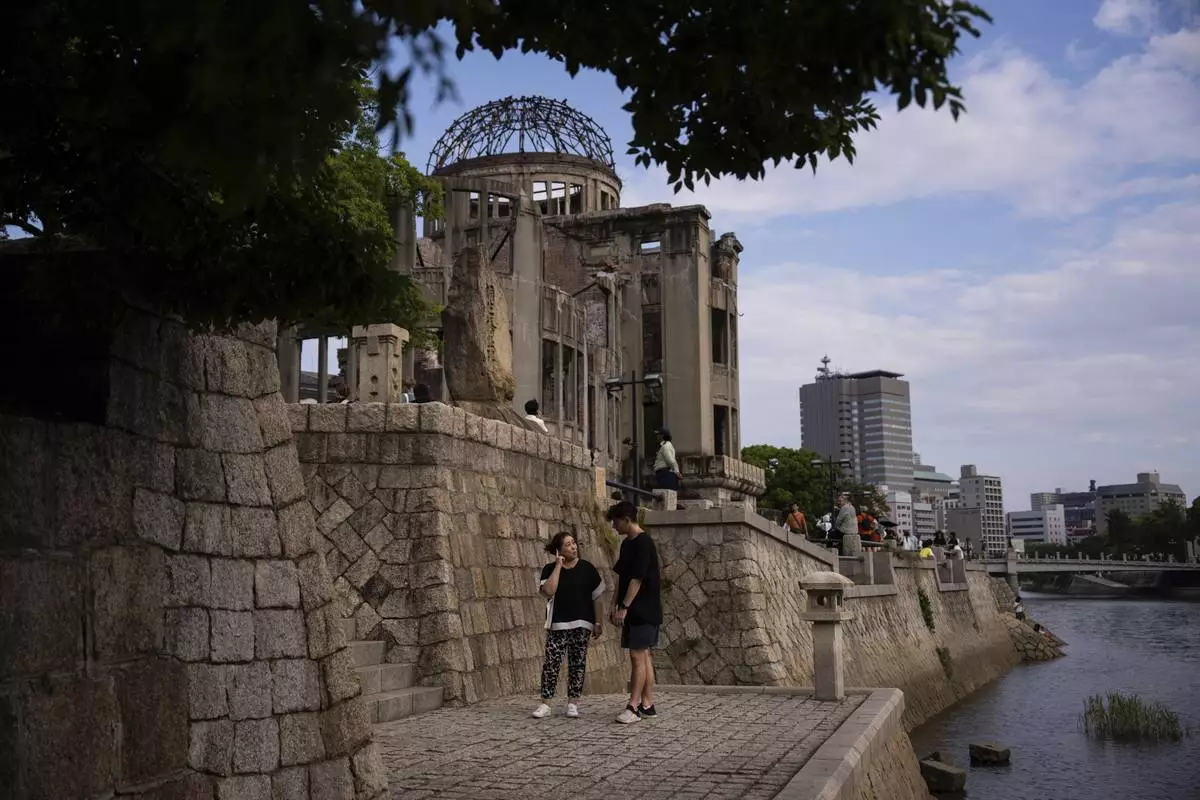
Ari Beser, left, and Kosuzu Harada, right, chat as they pose for photographs after an interview with The Associated Press in front of the Atomic Bomb Dome in Hiroshima, western Japan Tuesday, Aug. 5, 2025. (AP Photo/Louise Delmotte)
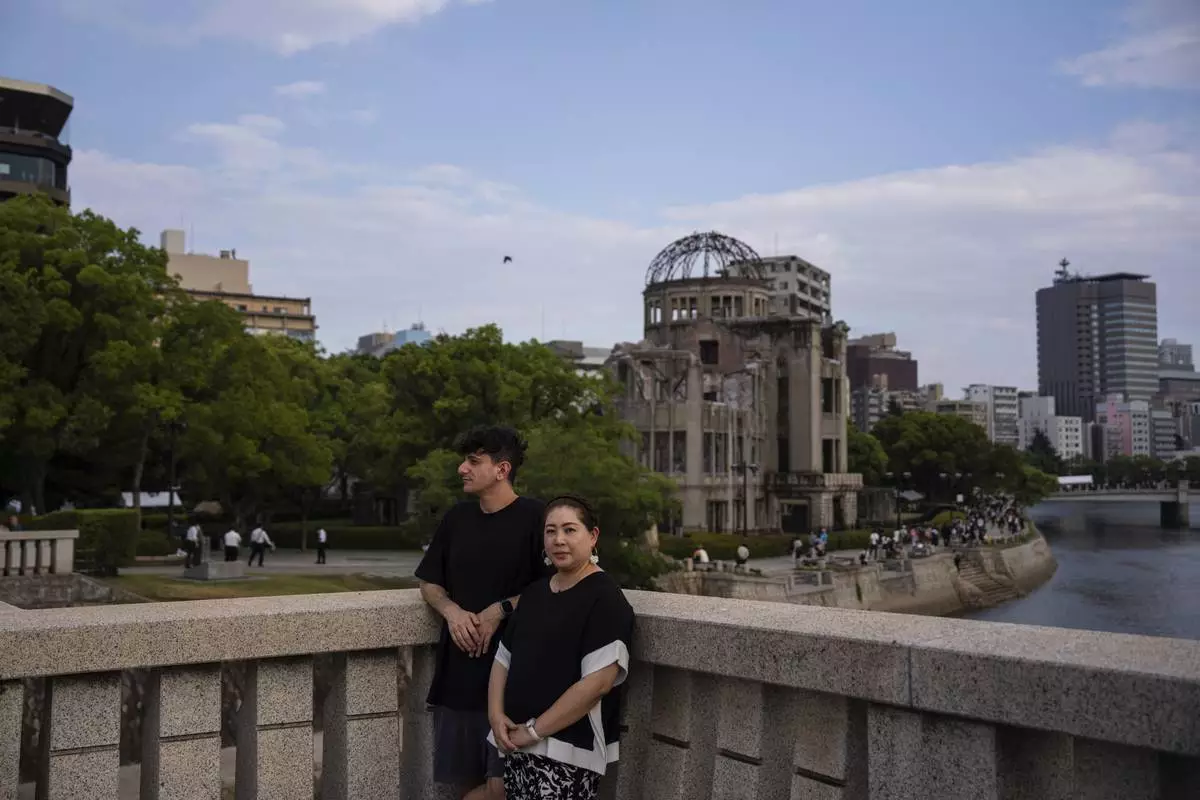
Ari Beser, left, and Kosuzu Harada, right, chat as they pose for photographs after an interview with The Associated Press in front of the Atomic Bomb Dome in Hiroshima, western Japan Tuesday, Aug. 5, 2025. (AP Photo/Louise Delmotte)
Ari Beser, left, and Kosuzu Harada, right, chat as they pose for photographs after an interview with The Associated Press in front of the Atomic Bomb Dome in Hiroshima, western Japan Tuesday, Aug. 5, 2025. (AP Photo/Louise Delmotte)
Ari Beser, left, and Kosuzu Harada, right, pose for photographs after an interview with The Associated Press in front of the Atomic Bomb Dome in Hiroshima, western Japan Tuesday, Aug. 5, 2025. (AP Photo/Louise Delmotte)
Ari Beser, left, and Kosuzu Harada, right, pose for photographs after an interview with The Associated Press in front of the Atomic Bomb Dome in Hiroshima, western Japan Tuesday, Aug. 5, 2025. (AP Photo/Louise Delmotte)
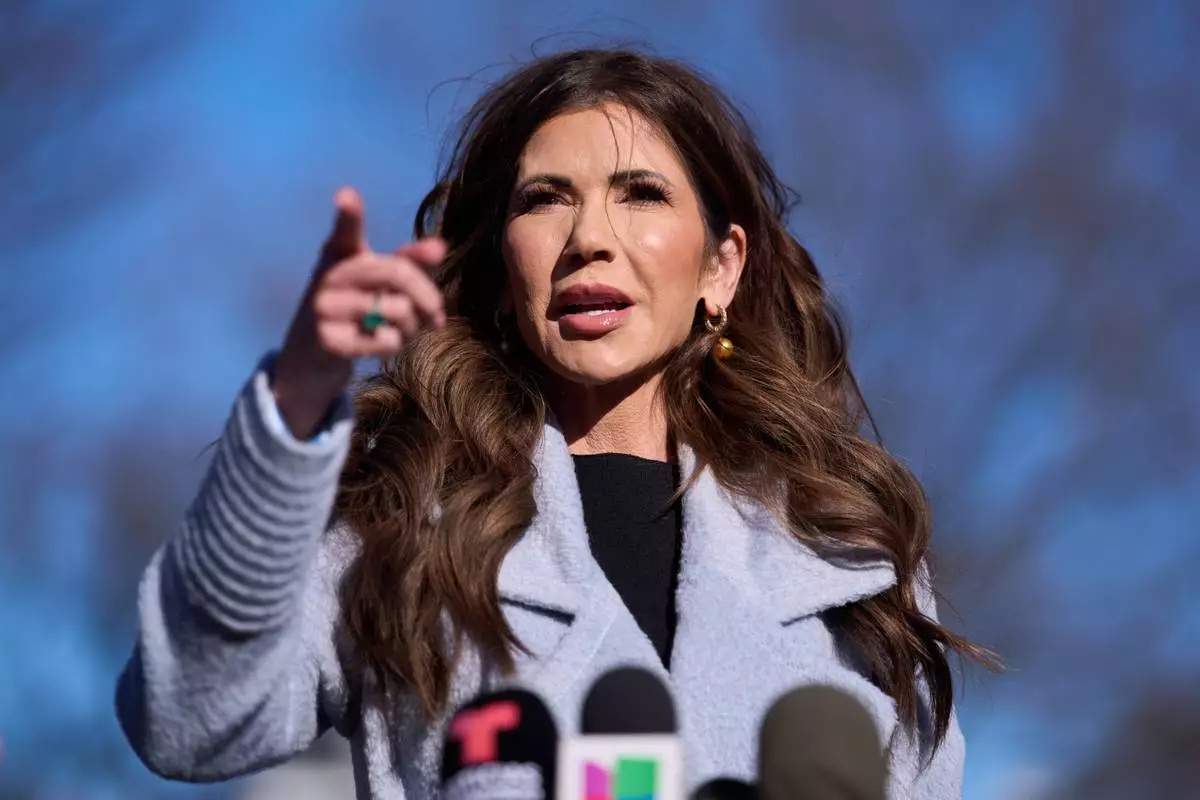
WASHINGTON (AP) — U.S. forces in the Caribbean Sea have seized another sanctioned oil tanker that the Trump administration says has ties to Venezuela, part of a broader U.S. effort to take control of the South American country’s oil.

The U.S. Coast Guard boarded the tanker, named Veronica, early Thursday, Homeland Security Secretary Kristi Noem wrote on social media. The ship had previously passed through Venezuelan waters and was operating in defiance of President Donald Trump’s "established quarantine of sanctioned vessels in the Caribbean,” she said.

U.S. Southern Command said Marines and sailors launched from the aircraft carrier USS Gerald R. Ford to take part in the operation alongside a Coast Guard tactical team, which Noem said conducted the boarding as in previous raids. The military said the ship was seized “without incident.”

Several U.S. government social media accounts posted brief videos that appeared to show various parts of the ship’s capture. Black-and-white footage showed at least four helicopters approaching the ship before hovering over the deck while armed troops dropped down by rope. At least nine people could be seen on the deck of the ship.

The Veronica is the sixth sanctioned tanker seized by U.S. forces as part of the effort by Trump’s administration to control the production, refining and global distribution of Venezuela’s oil products and the fourth since the U.S. ouster of Venezuela President Nicolás Maduro in a surprise nighttime raid almost two weeks ago.

The Veronica last transmitted its location on Jan. 3 as being at anchor off the coast of Aruba, just north of Venezuela’s main oil terminal. According to the data it transmitted at the time, the ship was partially filled with crude.

Days later, the Veronica became one of at least 16 tankers that left the Venezuelan coast in contravention of the quarantine that U.S. forces have set up to block sanctioned ships, according to Samir Madani, the co-founder of TankerTrackers.com. He said his organization used satellite imagery and surface-level photos to document the ship movements.

The ship is currently listed as flying the flag of Guyana and is considered part of the shadow fleet that moves cargoes of oil in violation of U.S. sanctions.

According to its registration data, the ship also has been known as the Gallileo, owned and managed by a company in Russia. In addition, a tanker with the same registration number previously sailed under the name Pegas and was sanctioned by the Treasury Department for being associated with a Russian company moving cargoes of illicit oil.

As with prior posts about such raids, Noem and the military framed the seizure as part of an effort to enforce the law. Noem argued that the multiple captures show that “there is no outrunning or escaping American justice.”

Speaking to reporters at the White House later Thursday, Noem declined to say how many sanctioned oil tankers the U.S. is tracking or whether the government is keeping tabs on freighters beyond the Caribbean Sea.

“I can’t speak to the specifics of the operation, although we are watching the entire shadow fleet and how they’re moving,” she told reporters.

But other officials in Trump's Republican administration have made clear they see the actions as a way to generate cash as they seek to rebuild Venezuela’s battered oil industry and restore its economy.

Trump met with executives from oil companies last week to discuss his goal of investing $100 billion in Venezuela to repair and upgrade its oil production and distribution. His administration has said it expects to sell at least 30 million to 50 million barrels of sanctioned Venezuelan oil.

Associated Press writer Ben Finley contributed to this report.

This story has been corrected to show the Veronica is the fourth, not the third, tanker seized by U.S. forces since Maduro’s capture and the ship also has been known as the Gallileo, not the Galileo.

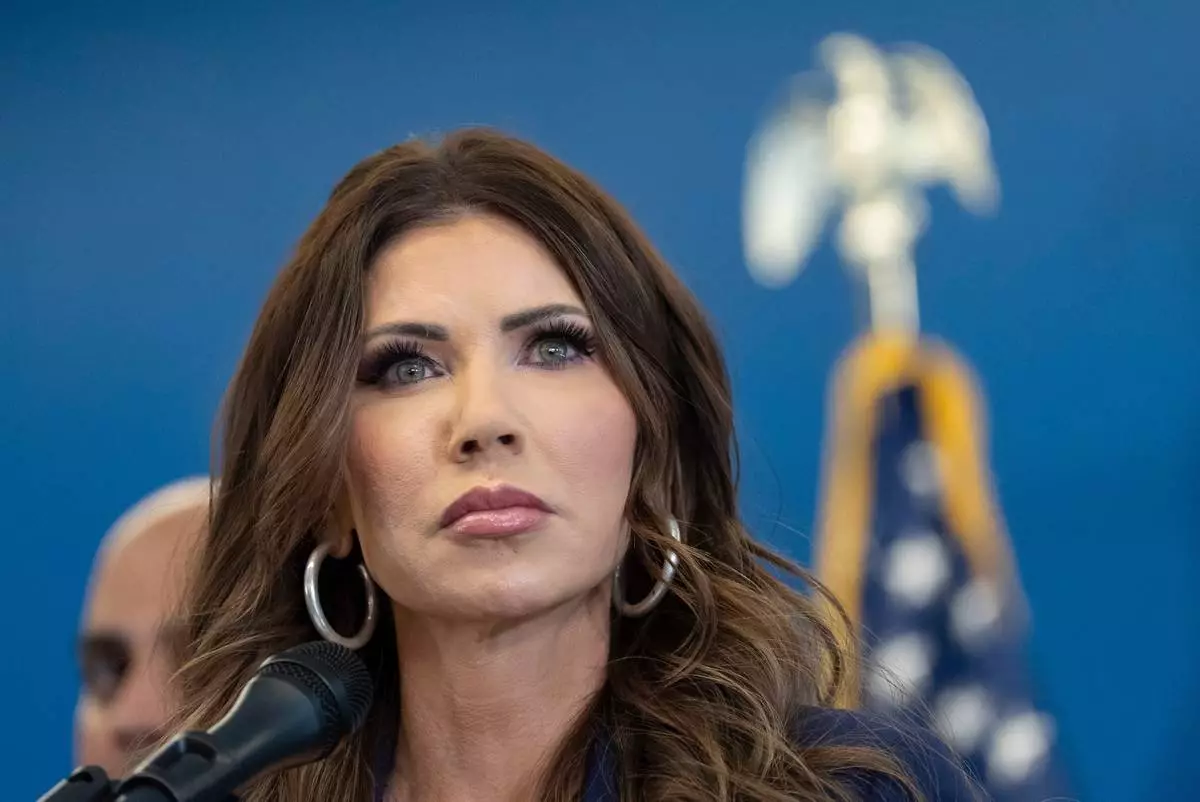
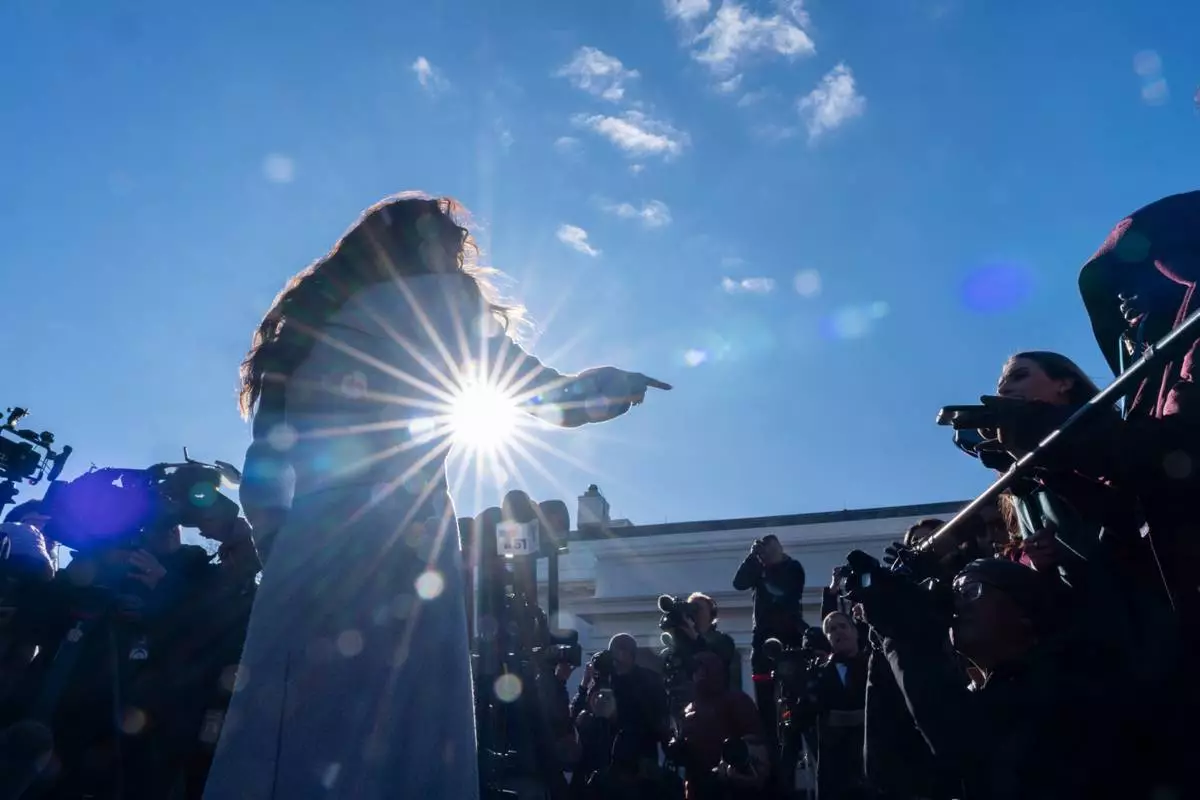
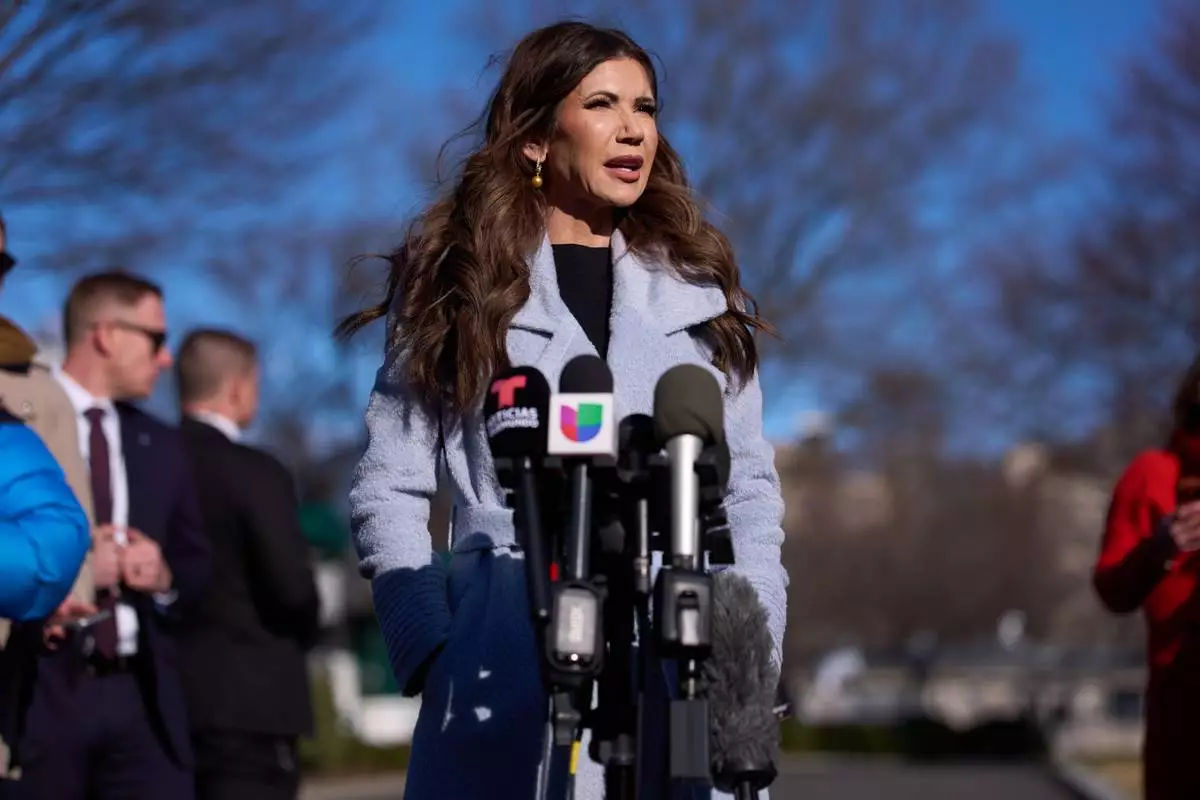
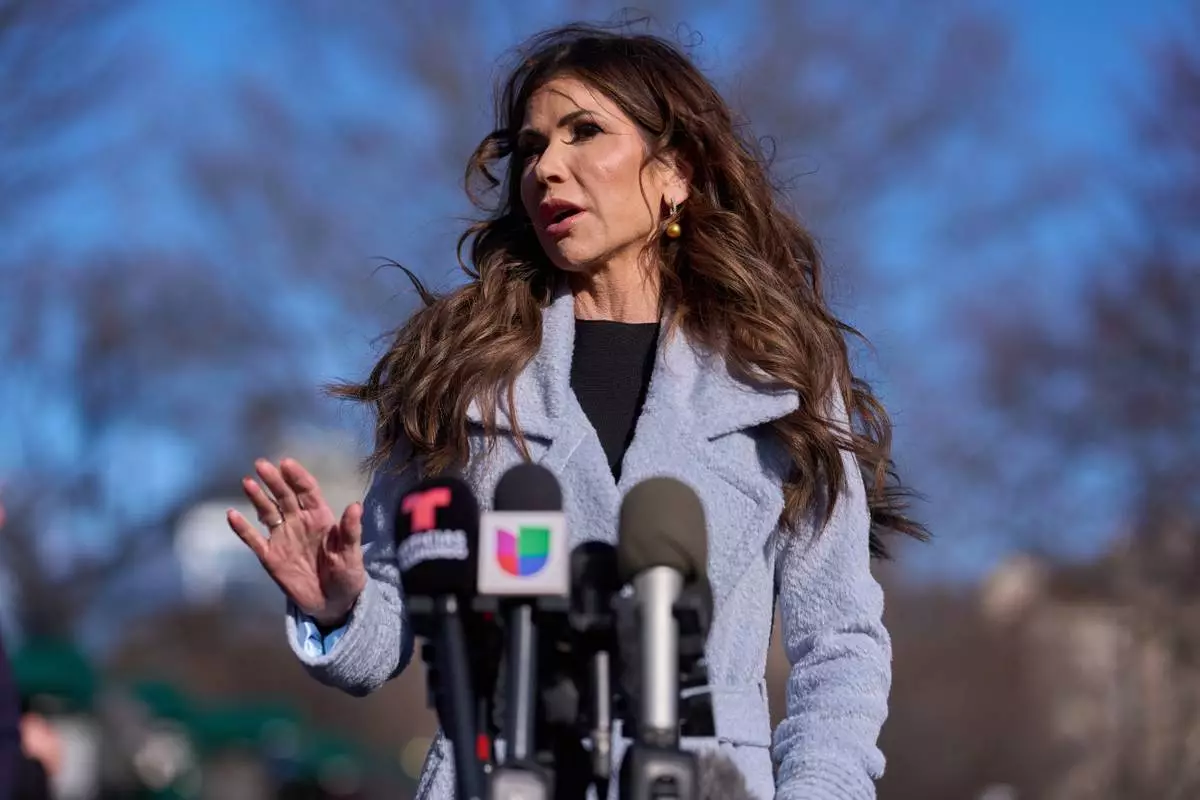
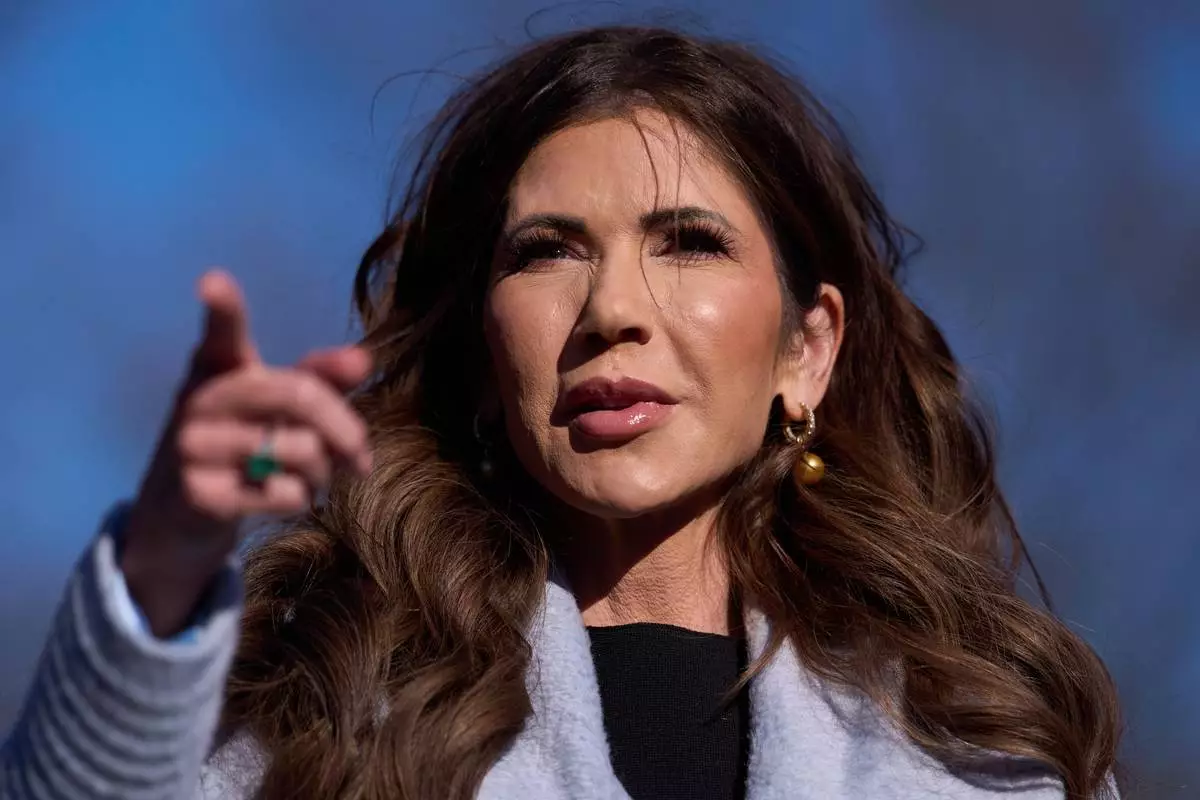
Homeland Security Secretary Kristi Noem speaks with reporters at the White House, Thursday, Jan. 15, 2026, in Washington. (AP Photo/Alex Brandon)

Homeland Security Secretary Kristi Noem speaks with reporters at the White House, Thursday, Jan. 15, 2026, in Washington. (AP Photo/Alex Brandon)

Homeland Security Secretary Kristi Noem speaks with reporters at the White House, Thursday, Jan. 15, 2026, in Washington. (AP Photo/Evan Vucci)

Homeland Security Secretary Kristi Noem speaks with reporters at the White House, Thursday, Jan. 15, 2026, in Washington. (AP Photo/Evan Vucci)

Homeland Security Secretary Kristi Noem speaks with reporters at the White House, Thursday, Jan. 15, 2026, in Washington. (AP Photo/Evan Vucci)

Homeland Security Secretary Kristi Noem speaks with reporters at the White House, Thursday, Jan. 15, 2026, in Washington. (AP Photo/Evan Vucci)

Homeland Security Secretary Kristi Noem speaks with reporters at the White House, Thursday, Jan. 15, 2026, in Washington. (AP Photo/Evan Vucci)

Homeland Security Secretary Kristi Noem speaks with reporters at the White House, Thursday, Jan. 15, 2026, in Washington. (AP Photo/Evan Vucci)

Homeland Security Secretary Kristi Noem speaks with reporters at the White House, Thursday, Jan. 15, 2026, in Washington. (AP Photo/Evan Vucci)

Homeland Security Secretary Kristi Noem speaks with reporters at the White House, Thursday, Jan. 15, 2026, in Washington. (AP Photo/Evan Vucci)

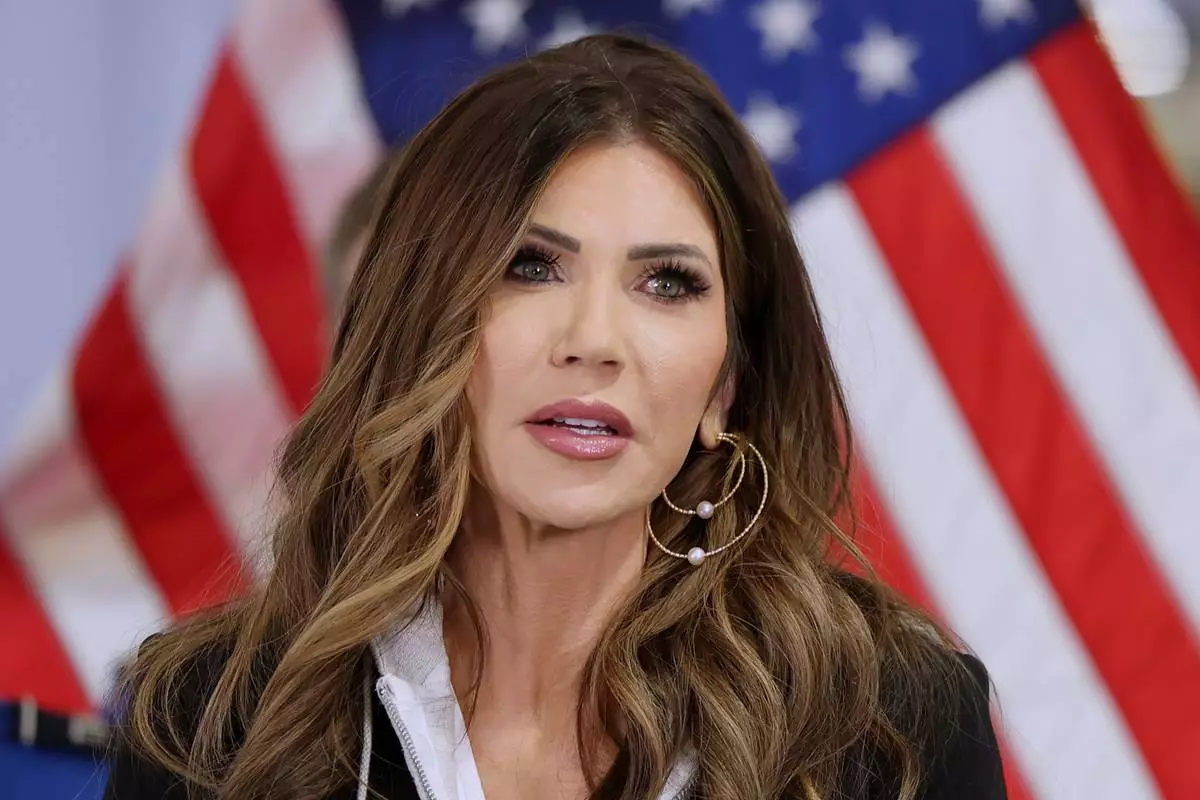
U.S. Homeland Security Secretary Kristi Noem speaks during a press conference, Thursday, Jan. 8, 2026, in New York. (AP Photo/Yuki Iwamura)

U.S. Homeland Security Secretary Kristi Noem speaks during a press conference, Thursday, Jan. 8, 2026, in New York. (AP Photo/Yuki Iwamura)

U.S. Homeland Security Secretary Kristi Noem speaks at a news conference at Harry Reid International Airport, Nov. 22, 2025, in Las Vegas. (AP Photo/Ronda Churchill, File)

U.S. Homeland Security Secretary Kristi Noem speaks at a news conference at Harry Reid International Airport, Nov. 22, 2025, in Las Vegas. (AP Photo/Ronda Churchill, File)

Recommended Articles