TOKYO (AP) — Toyota's profit plunged 37% in the April-June quarter, the company said Thursday, cutting its full year earnings forecasts largely because of President Donald Trump’s tariffs.
The Japanese automaker said it based its report on the assumption that Trump’s tariffs on exports from Japan, including autos, would be 12.5% starting this month. As of now they stand at 15%.
The world’s top automaker also makes vehicles in Mexico and Canada. Toyota’s profit in the last quarter totaled 841 billion yen, or $5.7 billion, down from 1.33 trillion yen in the same period the year before. Its quarterly sales rose 3%.
The status of those exports is unclear since Mexico and Canada are beneficiaries of the U.S. Mexico Canada Agreement, renegotiated from a 1990s pact during Trump's first term in office, that eliminated most tariffs and trade barriers between the three countries.
Toyota Motor Corp.’s April-June profit totaled 841 billion yen ($5.7 billion), down from 1.33 trillion yen in the same period of 2024. Quarterly sales rose 3% to 12 trillion yen ($82 billion).
Toyota said the tariffs cost its quarterly operating profit 450 billion yen ($3 billion). Cost reduction efforts and the negative impact of an unfavorable exchange rate also hurt its bottom line.
The company, which makes the Camry sedan and Lexus luxury models, forecast a 2.66 trillion yen ($18 billion) profit for the full fiscal year ending in March 2026, down from an earlier forecast for a 3.1 trillion yen ($21 billion) profit. Toyota earned nearly 4.8 trillion yen in the previous fiscal year.
“Despite a challenging external environment, we have continued to make comprehensive investments, as well as improvements such as increased unit sales, cost reductions and expanded value chain profits,” Toyota said in a statement that outlined its efforts to minimize the impact of the tariffs.
At the retail level, Toyota sold 2.4 million vehicles globally, with sales growing in Japan, North America and Europe from the previous year, when global retail totaled 2.2 million vehicles.
Analysts say Toyota is likely among the worst hit by the tariffs among global companies, even compared with other Japanese automakers.
Also Thursday, Toyota announced it was building a new car assembly plant in Japan that it expects to have up and running in the early 2030s. It is acquiring a site in Toyota city, Aichi Prefecture, central Japan, where the automaker is headquartered.
The models to be produced there are still undecided, but the plant will be part of the company's plan to maintain a production capacity of 3 million vehicles in Japan, according to Toyota. Billed as “a plant of the future,” it will also feature new technology tailored for what Toyota said will be a diverse work force.
Yuri Kageyama is on Threads: https://www.threads.com/@yurikageyama
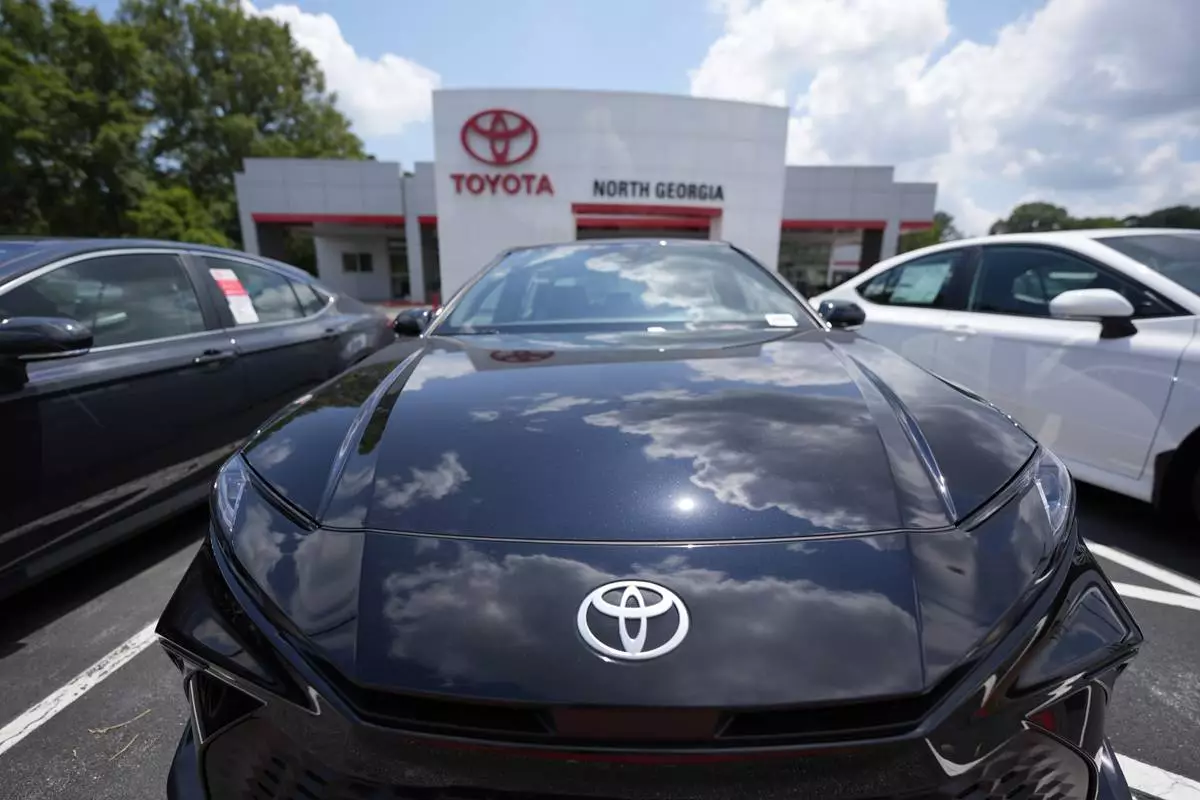
New Toyota vehicles are seen, Friday, Aug. 1, 2025, in Dalton, Ga. (AP Photo/Mike Stewart)
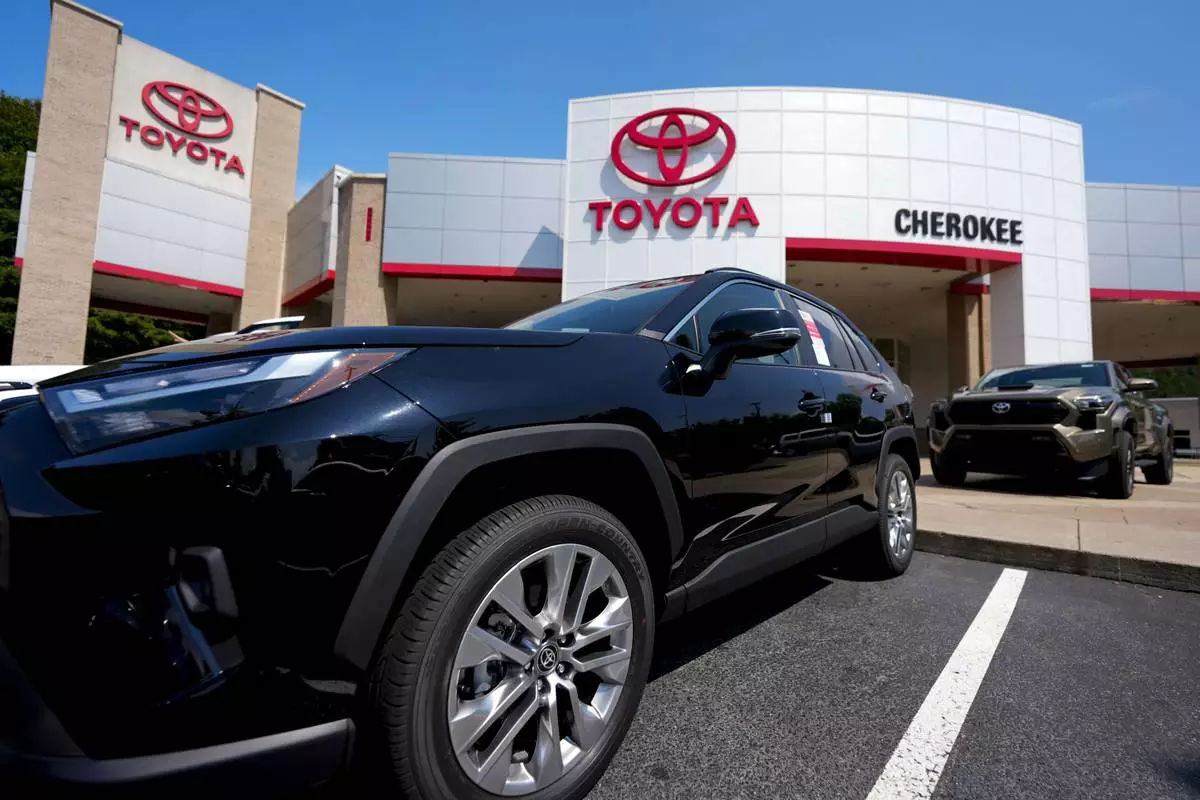
New Toyota vehicles are seen, Friday, Aug. 1, 2025, in Canton, Ga. (AP Photo/Mike Stewart)
FILE - The Toyota Motor Corp. logo is seen, May 11, 2022, at a dealer in Tokyo. (AP Photo/Eugene Hoshiko, File)
CARACAS, Venezuela (AP) — Venezuela’s acting President Delcy Rodríguez on Thursday asked lawmakers to approve reforms to the oil industry that would open the doors to greater foreign investment during her first state of the union speech less than two weeks after its longtime leader was toppled by the United States.
Rodríguez, who has been under pressure by the Trump administration to fall in line with its vision for the oil-rich nation, said sales of Venezuelan oil would go to bolster crisis-stricken health services, economic development and other infrastructure projects.
She outlined a distinct vision for the future, straying from her predecessors, who have long railed against American intervention in Venezeula. “Let us not be afraid of diplomacy” with the U.S., said Rodriguez, the former vice president who must now navigate competing pressures from the Trump administration and a government loyal to former President Nicolás Maduro.
The speech, which was broadcast on a delay in Venezuela, came one day after Rodríguez said her government would continue releasing prisoners detained under Maduro in what she described as “a new political moment” since his ouster.
On Thursday, Trump met at the White House with Venezuelan opposition leader María Corina Machado, whose political party is widely considered to have won 2024 elections rejected by Maduro. But in endorsing Rodríguez, who served as Maduro’s vice president since 2018, Trump has sidelined Machado.
Rodríguez, who had a call with Trump earlier this week, said Wednesday evening on state television that her government would use “every dollar” earned from oil sales to overhaul the nation’s public health care system. Hospitals and other health care facilities across the country have long been crumbling, and patients are asked to provide practically all supplies needed for their care, from syringes to surgical screws.
The acting president must walk a tightrope, balancing pressures from both Washington and top Venezuelan officials who hold sway over Venezuela's security forces and strongly oppose the U.S. Her recent public speeches reflect those tensions — vacillating from conciliatory calls for cooperation with the U.S., to defiant rants echoing the anti-imperialist rhetoric of her toppled predecessor.
American authorities have long railed against a government they describe as a “dictatorship,” while Venezuela’s government has built a powerful populist ethos sharply opposed to U.S. meddling in its affairs.
For the foreseeable future, Rodríguez's government has been effectively relieved of having to hold elections. That's because when Venezuela’s high court granted Rodríguez presidential powers on an acting basis, it cited a provision of the constitution that allows the vice president to take over for a renewable period of 90 days.
Trump enlisted Rodríguez to help secure U.S. control over Venezuela’s oil sales despite sanctioning her for human rights violations during his first term. To ensure she does his bidding, Trump threatened Rodríguez earlier this month with a “situation probably worse than Maduro.”
Maduro, who is being held in a Brooklyn jail, has pleaded not guilty to drug-trafficking charges.
Before Rodríguez’s speech on Thursday, a group of government supporters was allowed into the presidential palace, where they chanted for Maduro, who the government insists remains the country’s president. “Maduro, resist, the people are rising,” they shouted.
Follow AP’s coverage of Latin America and the Caribbean at https://apnews.com/hub/latin-america
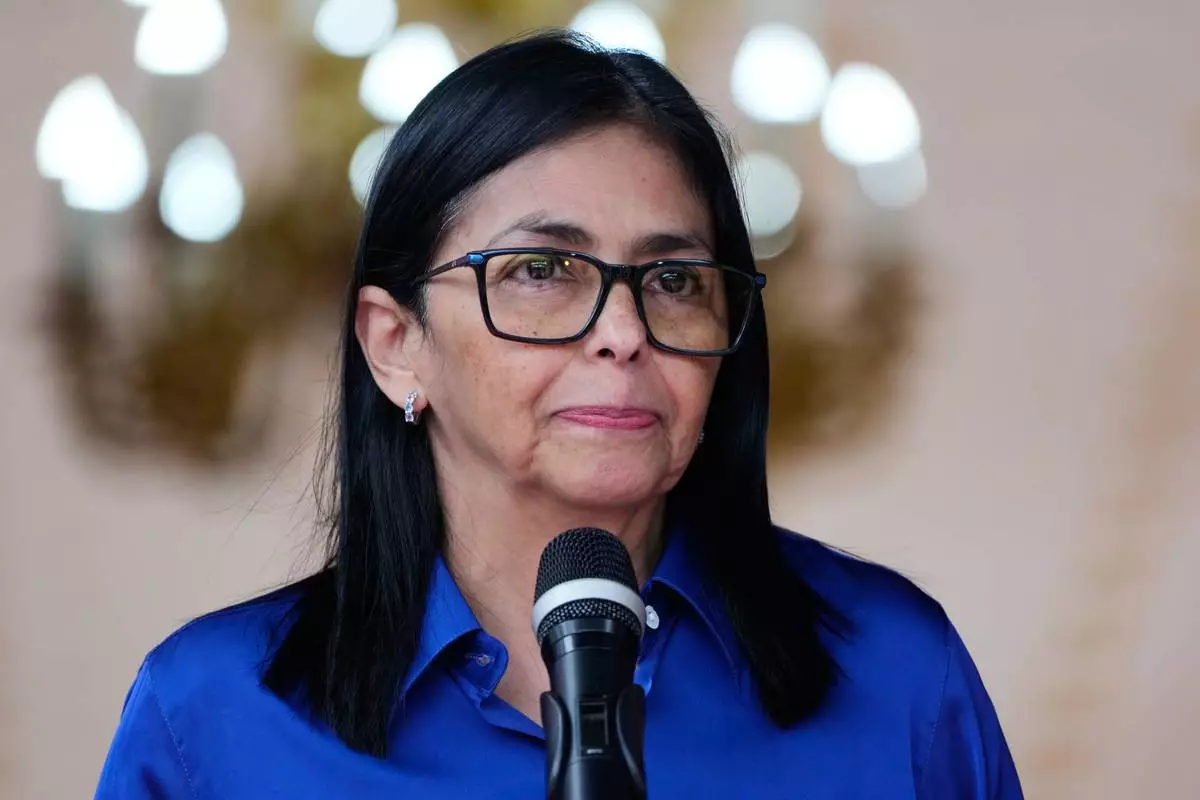
Venezuela's acting President Delcy Rodriguez makes a statement to the press at Miraflores presidential palace in Caracas, Venezuela, Wednesday, Jan. 14, 2026. (AP Photo/Ariana Cubillos)
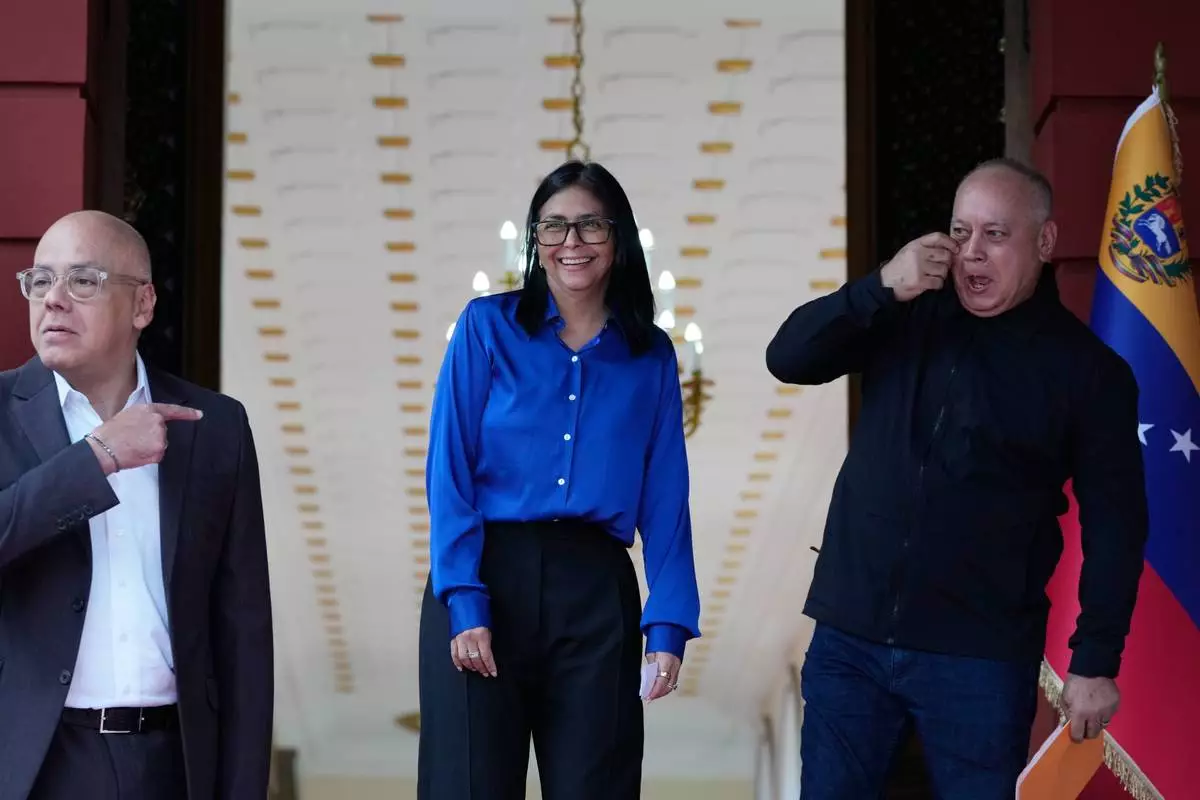
Venezuela's acting President Delcy Rodriguez, center, smiles flanked by Interior Minister Diosdado Cabello, right, and National Assembly President Jorge Rodriguez after making a statement to the press at Miraflores presidential palace in Caracas, Venezuela, Wednesday, Jan. 14, 2026. (AP Photo/Ariana Cubillos)