Skip to Content Facebook Feature Image

InvestHK and Songshan Lake High-Tech Zone Sign MOU to Boost Global Expansion and Innovation Collaboration.

HK

InvestHK and Songshan Lake High-Tech Zone Sign MOU to Boost Global Expansion and Innovation Collaboration.
HK

HK

InvestHK and Songshan Lake High-Tech Zone Sign MOU to Boost Global Expansion and Innovation Collaboration.

2025-08-07 15:16 Last Updated At:15:28

Dongguan Songshan Lake High-Tech Industrial Development Zone strengthens Hong Kong strategic deployment and helps enterprises expand overseas via Hong Kong

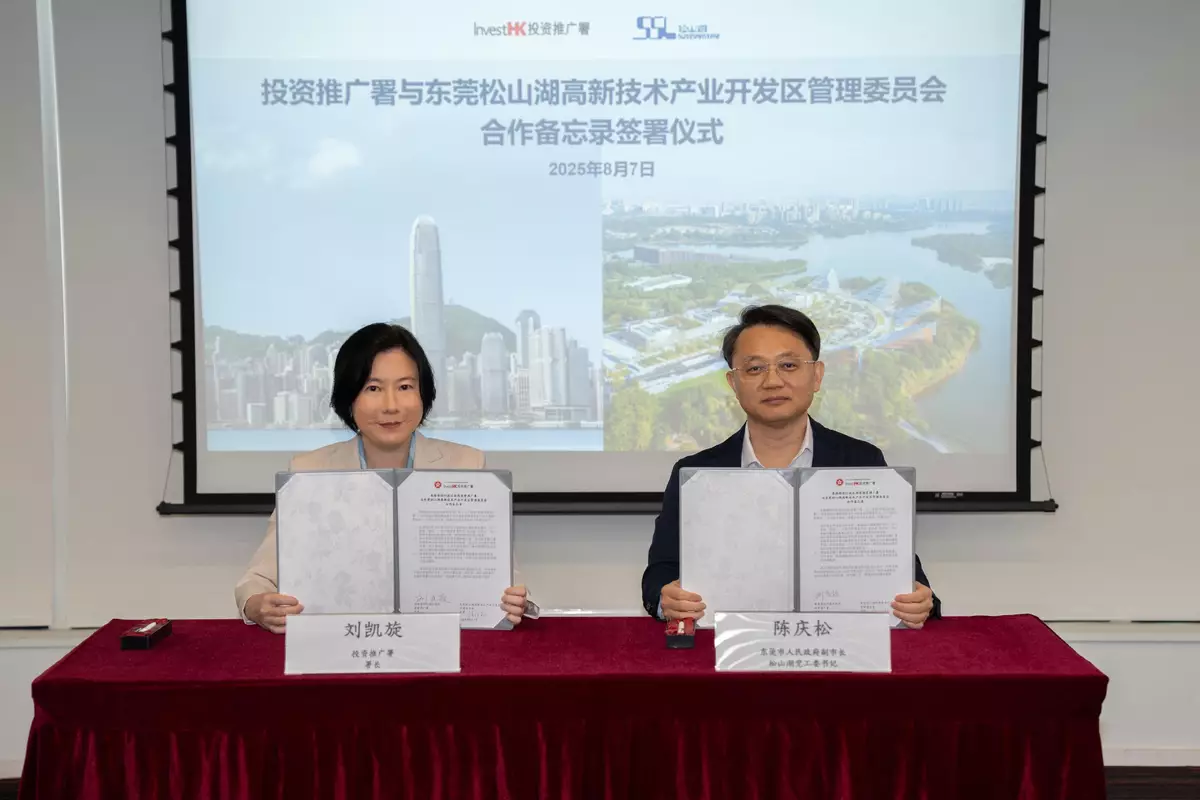
​Invest Hong Kong (InvestHK) and the Dongguan Songshan Lake High-Tech Industrial Development Zone (Songshan Lake High-Tech Zone) signed a Memorandum of Understanding (MOU) and held a meeting today (August 7) to strengthen collaboration and establish a regular co-operation mechanism to support enterprises in Songshan Lake High-Tech Zone in expanding globally via Hong Kong.

Songshan Lake High-Tech Zone is a core innovation engine within the Guangdong-Hong Kong-Macao Greater Bay Area (GBA). Led by Huawei, the zone has developed a smart terminal industrial cluster valued at over RMB100 billion. It focuses on the development of next-generation information technology and intelligent connected vehicle industries, as well as strategic emerging industries such as robotics and intelligent equipment manufacturing, semiconductors and integrated circuits, biomedicine and health, and new materials and new energy, with high-tech manufacturing accounting for 89 per cent of the total companies, making it a national-level green industry demonstration zone and a base for foreign trade transformation and upgrading. In terms of innovation resources, Songshan Lake High-Tech Zone is home to Mainland China's only and the world's fourth spallation neutron source. It has also attracted numerous research institutions, including the City University of Hong Kong (Dongguan) and the Greater Bay Area University (Songshan Lake Campus), positioning itself at the forefront of national scientific research.

To implement the co-operation between Hong Kong and Songshan Lake High-Tech Zone, InvestHK signed an MOU today by the Director-General of Investment Promotion at InvestHK, Ms Alpha Lau, and Vice Mayor of the Dongguan Municipal People's Government and Secretary of the Party Working Committee of Songshan Lake High-Tech Zone, Mr Chen Qingsong, at InvestHK's head office. Representatives from both sides also had in-depth exchanges to further promote the deep integration of scientific research and industry between Dongguan and Hong Kong. Leveraging Hong Kong's advantages in international research network and intellectual property protection, combined with Songshan Lake High-Tech Zone's advanced manufacturing capabilities and comprehensive industrial infrastructure, both parties aim to jointly build a thriving innovation and technology ecosystem. As an international financial and trade centre, Hong Kong serves as both a gateway for bringing in global innovation, technology and capital to Dongguan and a springboard for supporting Dongguan enterprises in expanding into overseas markets.

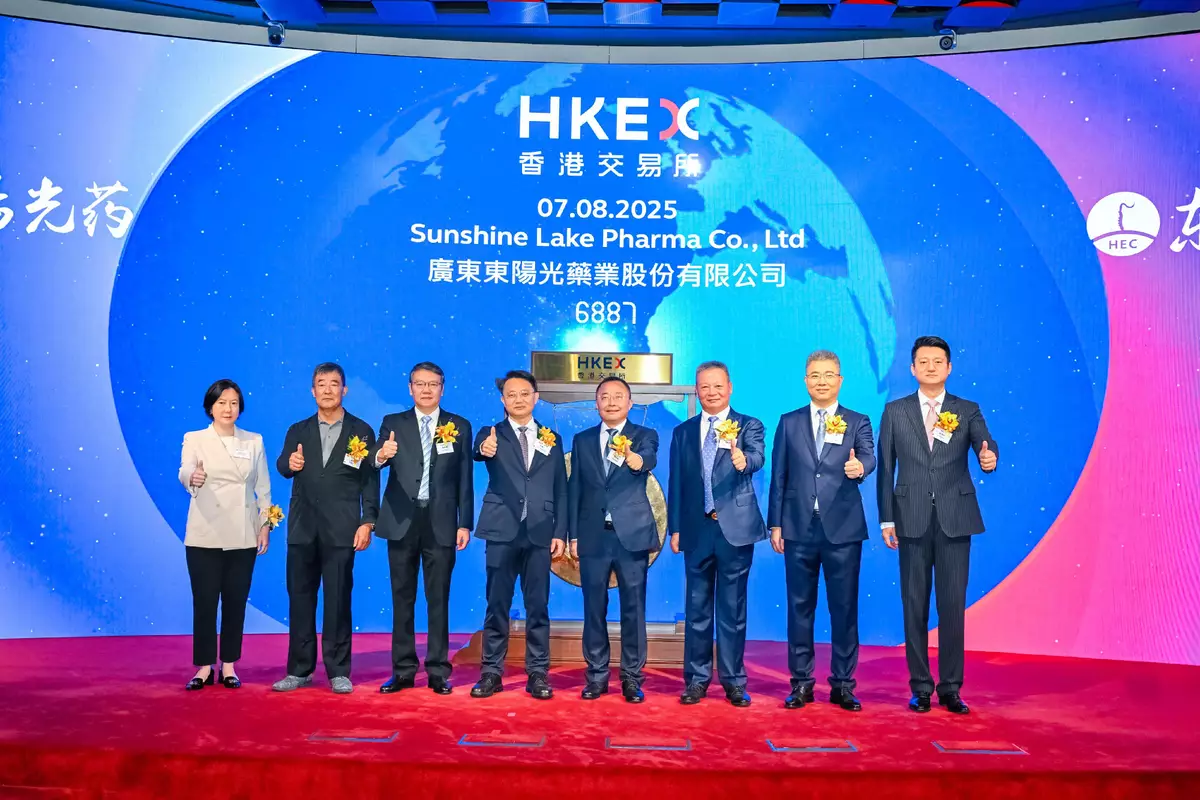
Prior to the signing ceremony, Ms Lau attended the listing ceremony of a renowned pharmaceutical company, Sunshine Lake Pharma, from Songshan Lake High-Tech Zone on the Hong Kong Stock Exchange. This event highlighted the pathway for Mainland enterprises to access international markets through Hong Kong's capital markets. Since its establishment in 2000, InvestHK has assisted over 7 700 enterprises from the Mainland and around the world in setting up or expanding in Hong Kong, with more than 145 successfully listed on the Hong Kong Stock Exchange.

Ms Lau said, "As one of the national-level high-tech industrial development zones, Songshan Lake High-Tech Zone has not only developed numerous cutting-edge technologies and nurtured countless innovative talent but also serves as a crucial platform for promoting the transformation of scientific achievements and industrial upgrading. We believe that this co-operation can create a synergy effect from Hong Kong's international advantages and the innovative edge of Songshan Lake High-Tech Zone, helping enterprises and talent from the zone to shine on the global stage."

Mr Chen said, "Dongguan and Hong Kong have a long history of co-operation. Today, under the guidance of the national development strategy for the GBA, the two cities are accelerating their collaborative development. This MOU signing will further stimulate the synergy effects of resource sharing and complementary advantages, deepen market connectivity, help more high-quality enterprises expand overseas, and jointly explore new opportunities for innovative co-operation."

According to the MOU, InvestHK will provide one-stop support for enterprises from Songshan Lake High-Tech Zone to leverage Hong Kong as a gateway to global markets. This includes facilitating access to international capital markets, matching them with world-class professional service partners, and offering support in areas such as office site selection, R&D implementation and talent acquisition. By integrating resources from the Hong Kong Special Administrative Region Government, InvestHK aims to provide comprehensive assistance to help enterprises expand financing channels and enhance the global influence of their brands and technologies. At the same time, both parties will establish a collaboration mechanism to pool policies, funding, and professional resources, promoting the industrialisation and commercialisation of innovative achievements and jointly creating an internationally competitive ecosystem for innovative enterprises.

Songshan Lake High-Tech Zone also opened a Songshan Lake Science City Hong Kong Operations Centre yesterday (August 6) at the InnoCentre in Hong Kong. This initiative aims to foster collaboration and exchange between Songshan Lake High-Tech Zone and Hong Kong in the technology industry, actively supporting the major strategic deployment of the GBA. InvestHK's leadership team also attended the unveiling ceremony to explore new opportunities for deepening collaboration and exchange.

Looking ahead, InvestHK will continue to work with Songshan Lake High-Tech Zone to deepen co-operation in areas such as innovation and entrepreneurship, talent exchange, and overseas expansion. Through collaborative efforts, the two parties aim to strengthen connection within the GBA, jointly creating a platform for enterprises to go global.

To download event photos, please visit: www.flickr.com/photos/investhk/albums/72177720328219423.
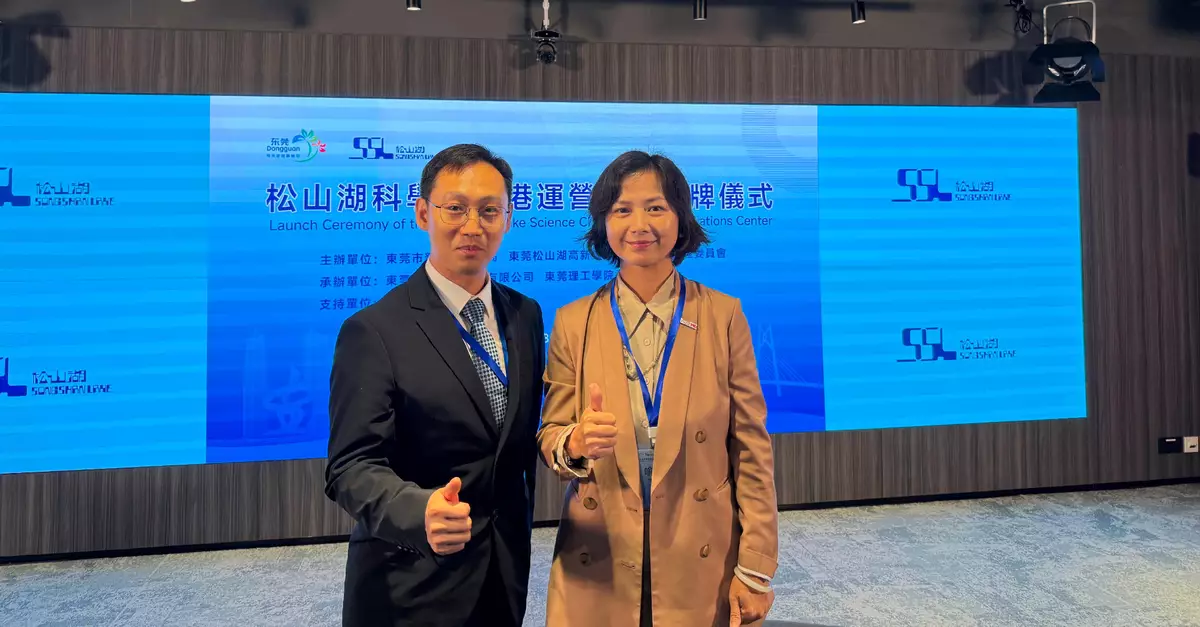
Dongguan Songshan Lake High-Tech Industrial Development Zone strengthens Hong Kong strategic deployment and helps enterprises expand overseas via Hong Kong Source: HKSAR Government Press Releases
Dongguan Songshan Lake High-Tech Industrial Development Zone strengthens Hong Kong strategic deployment and helps enterprises expand overseas via Hong Kong Source: HKSAR Government Press Releases
Dongguan Songshan Lake High-Tech Industrial Development Zone strengthens Hong Kong strategic deployment and helps enterprises expand overseas via Hong Kong Source: HKSAR Government Press Releases
Dongguan Songshan Lake High-Tech Industrial Development Zone strengthens Hong Kong strategic deployment and helps enterprises expand overseas via Hong Kong Source: HKSAR Government Press Releases
Dongguan Songshan Lake High-Tech Industrial Development Zone strengthens Hong Kong strategic deployment and helps enterprises expand overseas via Hong Kong Source: HKSAR Government Press Releases
Dongguan Songshan Lake High-Tech Industrial Development Zone strengthens Hong Kong strategic deployment and helps enterprises expand overseas via Hong Kong Source: HKSAR Government Press Releases

DH continue to actively follow up on hospital-acquired case of Legionnaires' disease

Regarding a patient contracted Legionnaires' disease (LD) during hospitalisation at Hong Kong Sanatorium & Hospital (HKSH), the Centre for Health Protection (CHP) of the Department of Health (DH) today (August 4) announced that water samples taken from devices dispensing cooled boiled water within the hospital had tested positive for Legionella pneumophila (non-serogroup 1) at a concentration exceeding the action level for water supply systems in high-risk areas of hospitals. Sequence-based typing showed that the strain was the same as that found in the patient's respiratory specimen. The CHP considered that it is highly likely that the patient contracted LD by drinking water supplied by the affected water dispensing device. HKSH has completely discontinued the use of the water dispensing devices in question. A total of 137 patients who were hospitalised on the same floor as the patient has been put under medical surveillance. So far, none of them have contracted LD.

The water dispensing device in question was supplied by Aqua Vital Water Filtration Systems Ltd. The product is named the "BC-Tap Classic BA-Heat Exchange". According to the information provided by the supplier, this specific model was supplied exclusively to HKSH but not other hospitals. As a precaution, the DH today issued another letter reminding all private hospitals in Hong Kong to strictly adhere to the "Code of Practice for Prevention of LD" when providing drinking water to patients.

Upon receiving notification of the abovementioned nosocomial LD case last month, the CHP immediately sent personnel to the hospital to conduct an environmental investigation to identify the source of the infection. During the investigation, 10 water samples and six environmental samples were collected from the water tanks of the hospital building and the floor where the patient had been admitted. Test results from the CHP's Public Health Laboratory Services Branch (PHLSB) revealed that two water samples from the outlet of the device dispensing cooled boiled water in the pantry on that floor tested positive for Legionella pneumophila (non-serogroup 1) at levels ranging from 3 to 16.6 colony-forming units per millilitre (cfu/ml), far exceeding the action level for water supply systems in high-risk areas of hospitals (i.e. 0.1 cfu/ml or above). Sequence-based typing showed that the Legionella pneumophila (non-serogroup 1) isolated from the water samples and the patient's respiratory specimen belonged to the same sequence type. The remaining samples, including two water samples collected from the water tanks, six water samples collected from the single room where the patient had been admitted and six environmental samples, tested negative for Legionella pneumophila.

HKSH has since disinfected the relevant ward's water supply system according to the CHPs instructions. HKSH has also suspended the use of the water dispensing devices and is now providing bottled water for patients' consumption.

To assist in assessing the risk posed by the water dispensing device in question, the CHP collected 19 water samples and one environmental sample from the same model of water dispensing devices within the hospital for further testing. The PHLSB's testing results revealed that one environmental sample and four water samples tested positive for Legionella pneumophila at levels ranging from 0.3 to 12.9 cfu/ml. Testing is still underway for two additional water samples.

An in-depth investigation by the CHP and the Electrical and Mechanical Services Department found that the water dispensing device contains a built-in cooling system with a long, coiled metallic water conduit. When the device is not in use, stagnant warm water accumulates inside it. The temperature remains within a range conducive to the growth of Legionella bacteria for an extended period. This stagnant water, which may be contaminated with Legionella, is dispensed for direct consumption. Additionally, the metallic water conduit was not regularly disinfected or cleaned. HKSH has agreed to suspend use of the devices entirely and is currently providing patients with bottled water as a temporary measure.

The CHP will continue to investigate and follow up on the case. A meeting of the Prevention of Legionnaires' Disease Committee (PLDC) will be convened to report on the epidemiological investigation and the cause of the infection.

The PLDC was set up in 1985 to advise the Government from the public health, microbiology and engineering services perspectives on the minimisation of the risk of LD, and the promotion of good practices to building owners and associated practitioners to prevent the outbreak of LD.

Men, people aged over 50, smokers, alcoholics and persons with weakened immunity are more susceptible to LD. Some situations may also increase the risk of infection, including poor maintenance of water systems; living in areas with old water systems, cooling towers or fountains; using electric water heaters, whirlpool spas or hot water spring spas; and recent stays in hotels or ships.

Legionellae are found in various environmental settings and grow well in warm water (20 to 45 degrees Celsius). They can be found in aqueous environments such as water tanks, hot and cold water systems, cooling towers, whirlpool spas, water fountains, humidifiers and home respiratory devices that support breathing. People may become infected when they breathe in contaminated droplets (aerosols) and mist generated by artificial water systems, or when handling garden soil, compost and potting mixes.

The public may visit the CHP's LD page, the Code of Practice for Prevention of LD and the Housekeeping Guidelines for Cold and Hot Water Systems for Building Management of the Prevention of LD Committee, and the CHP's risk-based strategy for prevention and control of LD.

Additionally, as smokers and alcoholics are more susceptible to LD, the Government urges members of the public to quit smoking and avoid drinking. Members of the public may call the DH Integrated Smoking Cessation Hotline at 1833 183, which is answered by registered nurses who provide professional counselling and referral to a wide range of free smoking cessation services. The public may also visit the smoking cessation thematic website (www.livetobaccofree.hk) for more information on smoking cessation. The DH has also developed and promulgated the Alcohol Screening and Brief Intervention tool to primary healthcare service providers to facilitate the early identification and management of at-risk drinkers. For information on alcohol-related harm, please visi the DH's Change for Health website.

Source: AI-found images

Source: AI-found images

Recommended Articles