VILLEROUGE LA CREMADE, France (AP) — France’s largest wildfire in decades was contained Thursday after burning more than 160 square kilometers (62 square miles) in the country's southern wine region and claiming one life, local authorities said.
The blaze erupted Tuesday and tore through the Aude region, spreading rapidly due to hot, dry weather. Cooler overnight temperatures and calmer winds slowed its advance and allowed firefighters to make headway.
Click to Gallery
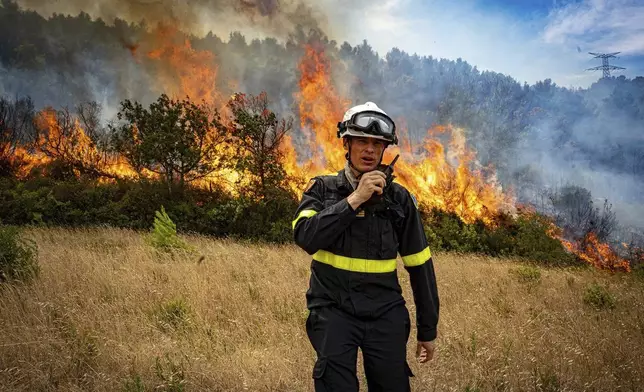
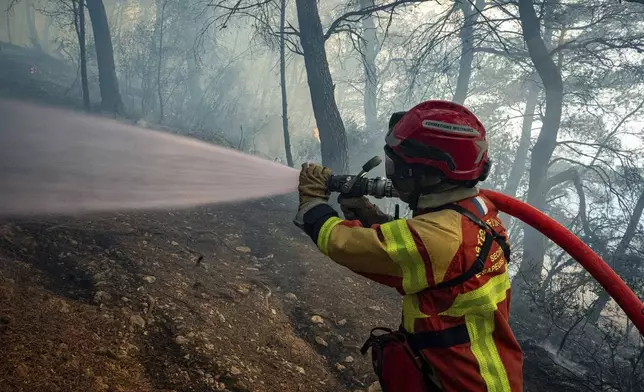
This photo, provided by the Securite Civile on Thursday Aug. 7, 2025, shows a rescuer from the Securite Civile next the wildfire near Saint-Laurent-de-la-Cabrerisse, southern France, Wednesday, Aug. 6, 2025. (Securite Civile via AP)
This photo, provided by the Securite Civile on Thursday Aug. 7, 2025, shows a fireman trying to pull off the wildfire near Saint-Laurent-de-la-Cabrerisse, southern France, Wednesday, Aug. 6, 2025. (Securite Civile via AP)
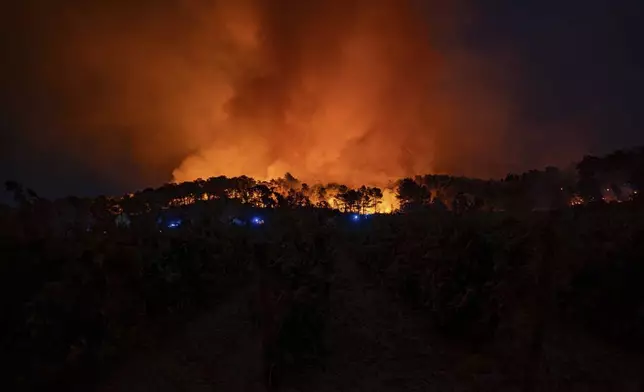
This photo, provided by the Securite Civile on Thursday Aug. 7, 2025, shows the wildfire near Saint-Laurent-de-la-Cabrerisse, southern France, Wednesday, Aug. 6, 2025. (Securite Civile via AP)
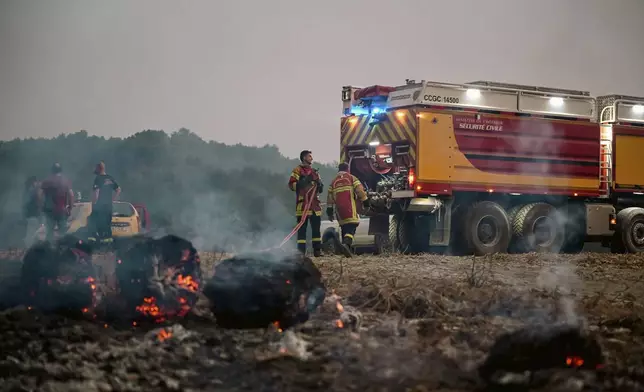
This photo, provided by the Securite Civile on Thursday Aug. 7, 2025, shows firemen from the Securite Civile working at the wildfire near Saint-Laurent-de-la-Cabrerisse, southern France, Wednesday, Aug. 6, 2025. (Securite Civile via AP)
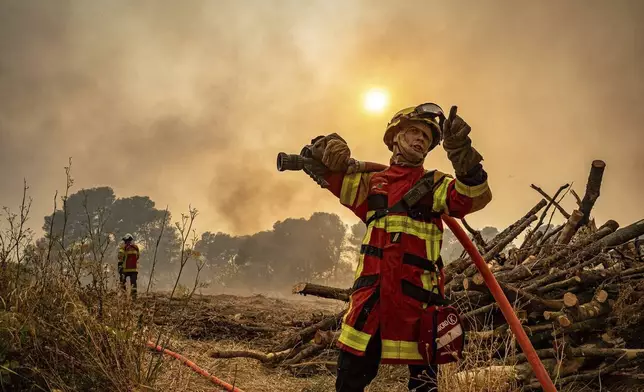
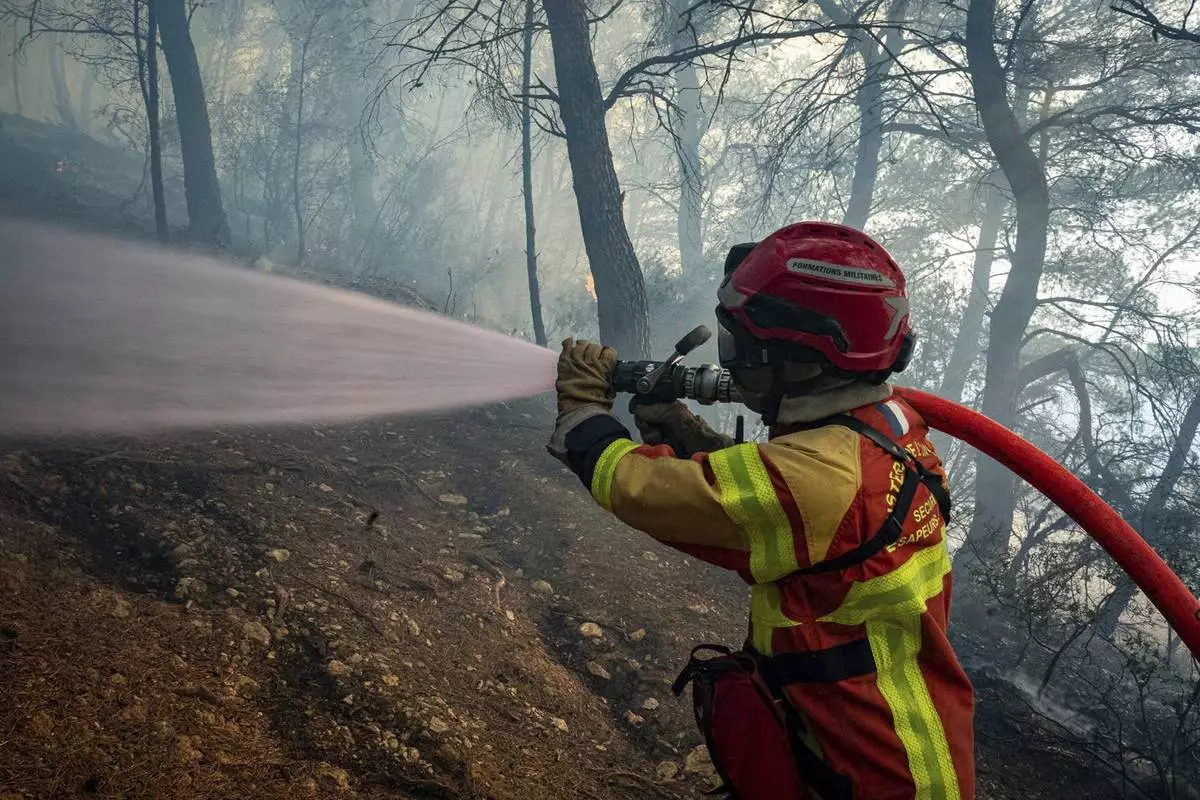
This photo, provided by the Securite Civile on Thursday Aug. 7, 2025, shows a fire man using a hose next to the wildfire near Saint-Laurent-de-la-Cabrerisse, southern France, Wednesday, Aug. 6, 2025. (Securite Civile via AP)
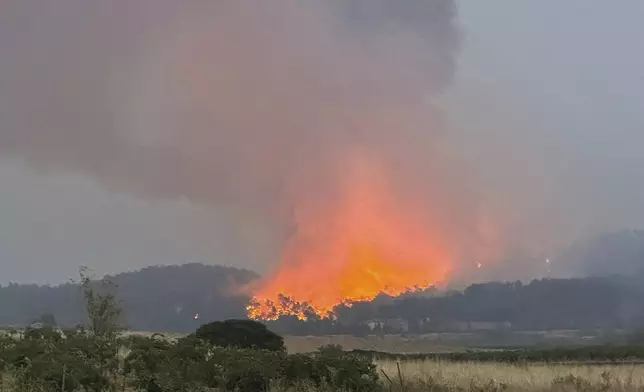
France's biggest wildfire this summer is, raging, near Durban-Corbieres, southern France, Wednesday, Aug.6, 2025. (AP Photo/Hernan Munoz)
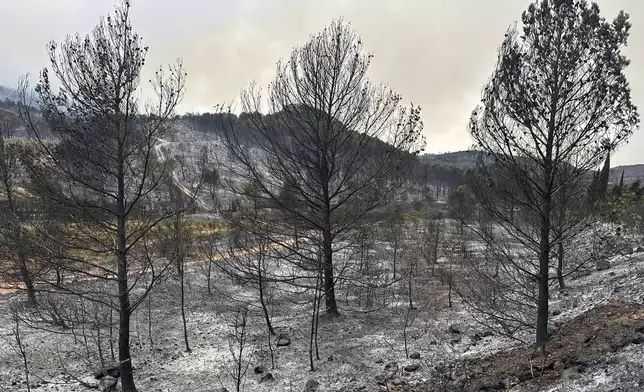
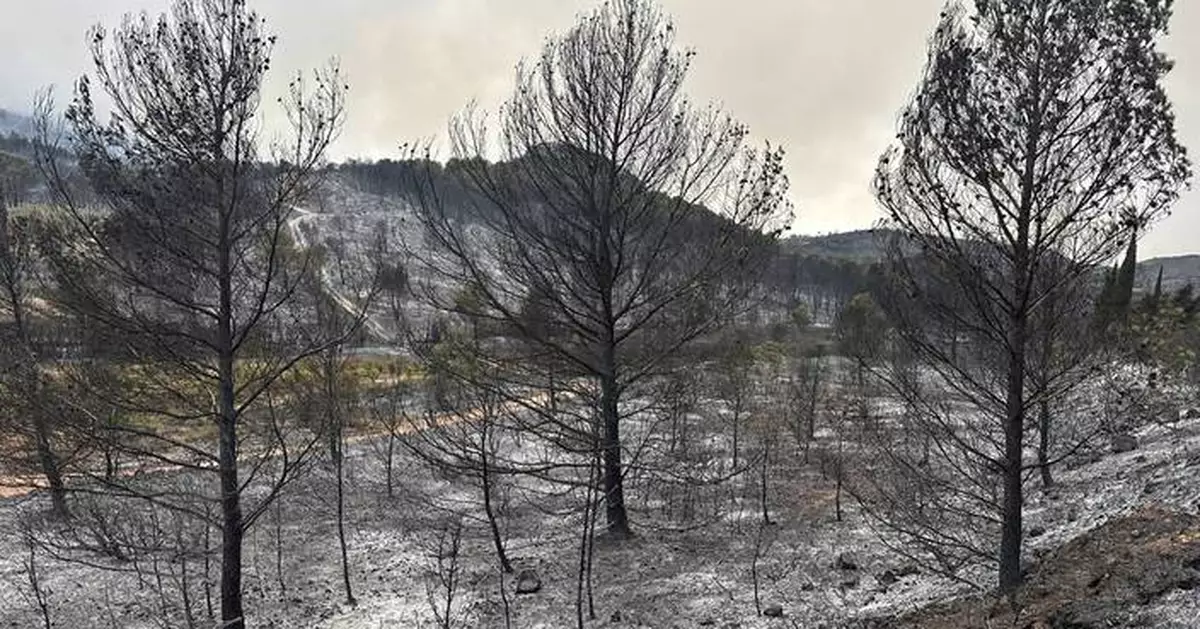
Burned trees during France's biggest wildfire this summer, near Durban-Corbieres, southern France, Wednesday, Aug.6, 2025. (AP Photo/Hernan Munoz)
Late Thursday, the region's top government official said the fire was contained. However, residents were warned not to return home without authorization, as many roads remained blocked and dangerous.
The fire swept through 15 communes in the Corbières mountain region, destroying or damaging at least 36 homes, with a full damage assessment still underway. One person died at home, and at least 13 others were injured, including 11 firefighters, according to local authorities. Three people who were reported missing have been found safe.
An investigation is underway to determine what sparked the fire.
The fire was the largest recorded since France’s national fire database was created in 2006.
But France’s minister for ecological transition, Agnès Pannier-Runacher, called the blaze the worst since 1949 and linked it to climate change.
“It is a fire that is clearly a consequence of climate change and drought in this region,” she told France Info radio.
Despite the breakthrough, officials warned the situation remained fragile.
“We still have a few days before we can say that the fire is completely out,” region administrator Christian Pouget said. “The battle is not over yet.
The region’s economy relies heavily on winemaking and tourism — both hard-hit.
The fire began in the village of Ribaute, in a rural, wooded area known for its wineries. Pouget said between 8 and 9 square kilometers (more than 3 square miles) of vineyards had burned. Officials estimate 80% of local vines were either destroyed or damaged — and even the grapes that survived may be too smoke-tainted to produce quality wine.
“The vineyards are burnt and the landscape is gone,” said Batiste Caval, a seventh-generation winemaker near Saint-Laurent-de-la-Cabrerisse.
Some vineyards acted as natural firebreaks, leaving a surreal patchwork of scorched hills and untouched green vines. But across the Corbières, entire stretches of historic vineyards were reduced to ash. Caval, who owns 60 of the 400 hectares farmed by a local cooperative, said the fire may tip already struggling winemakers into crisis after years of drought and other harsh weather.
New vines typically take three years to bear usable fruit. Some can produce wine for decades, even up to half a century.
“It’s very sad to think about the image we’re going to give of our Corbières region, with its devastated landscapes and desperate women and men, not just today or tomorrow, but for weeks and months to come. It will take years to rebuild,” said Xavier de Volontat, the mayor of Saint-Laurent-de-la-Cabrerisse, speaking to BFMTV.
Residents and tourists in nearby areas had been asked to stay indoors unless ordered to evacuate. Those forced to flee were housed overnight in emergency shelters across 17 municipalities.
Southern Europe has seen multiple large fires this summer. Scientists warn that climate change is exacerbating the frequency and intensity of heat and dryness, making the region more vulnerable to wildfires. Last month, a wildfire that reached the southern port of Marseille, France’s second-largest city, left around 300 people injured.
Europe is the world’s fastest-warming continent, with temperatures increasing at twice the speed of the global average since the 1980s, according to the European Union’s Copernicus Climate Change Service.
Adamson and Petrequin reported from Paris.
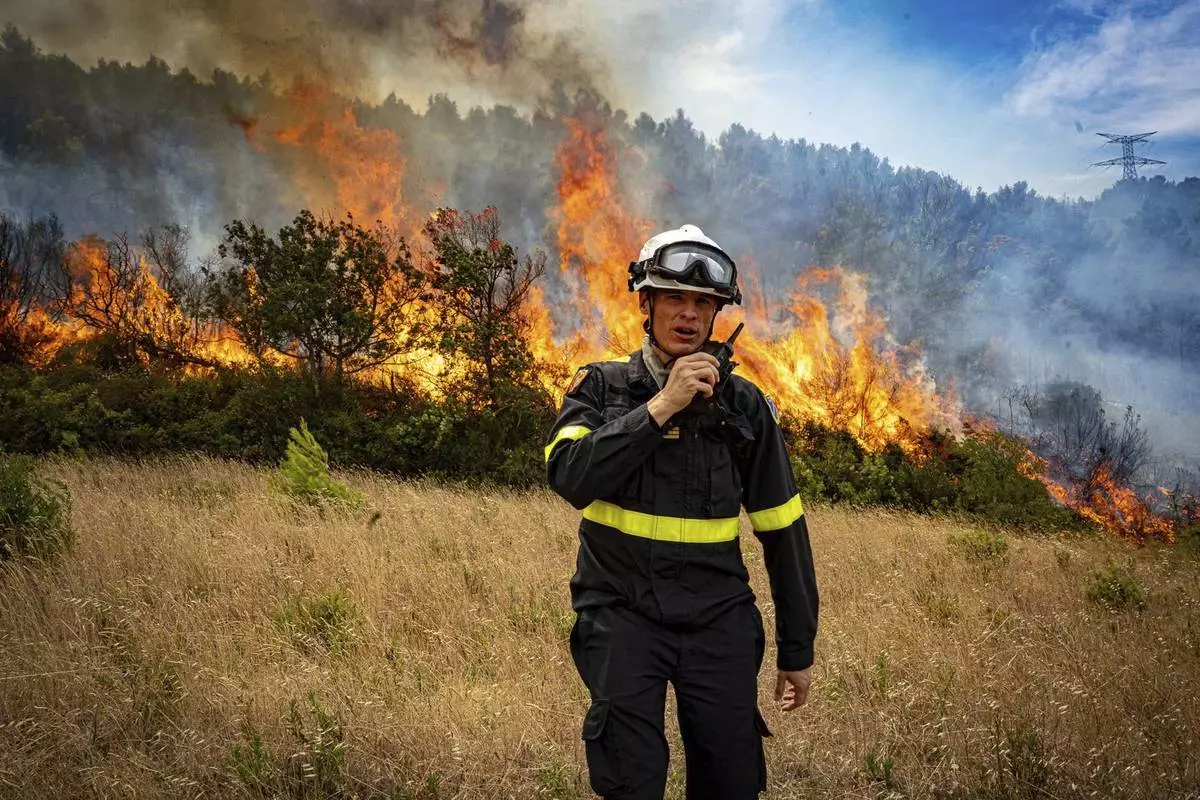
This photo, provided by the Securite Civile on Thursday Aug. 7, 2025, shows a rescuer from the Securite Civile next the wildfire near Saint-Laurent-de-la-Cabrerisse, southern France, Wednesday, Aug. 6, 2025. (Securite Civile via AP)
This photo, provided by the Securite Civile on Thursday Aug. 7, 2025, shows a fireman trying to pull off the wildfire near Saint-Laurent-de-la-Cabrerisse, southern France, Wednesday, Aug. 6, 2025. (Securite Civile via AP)
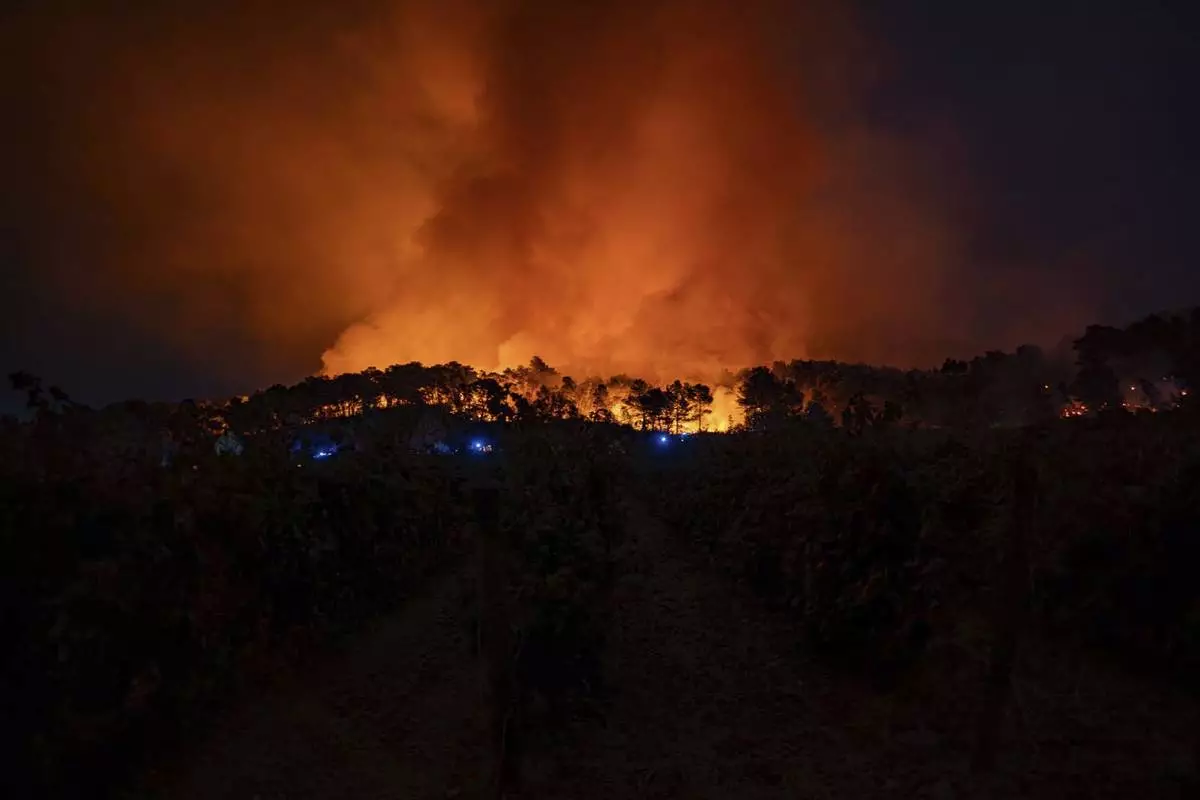
This photo, provided by the Securite Civile on Thursday Aug. 7, 2025, shows the wildfire near Saint-Laurent-de-la-Cabrerisse, southern France, Wednesday, Aug. 6, 2025. (Securite Civile via AP)
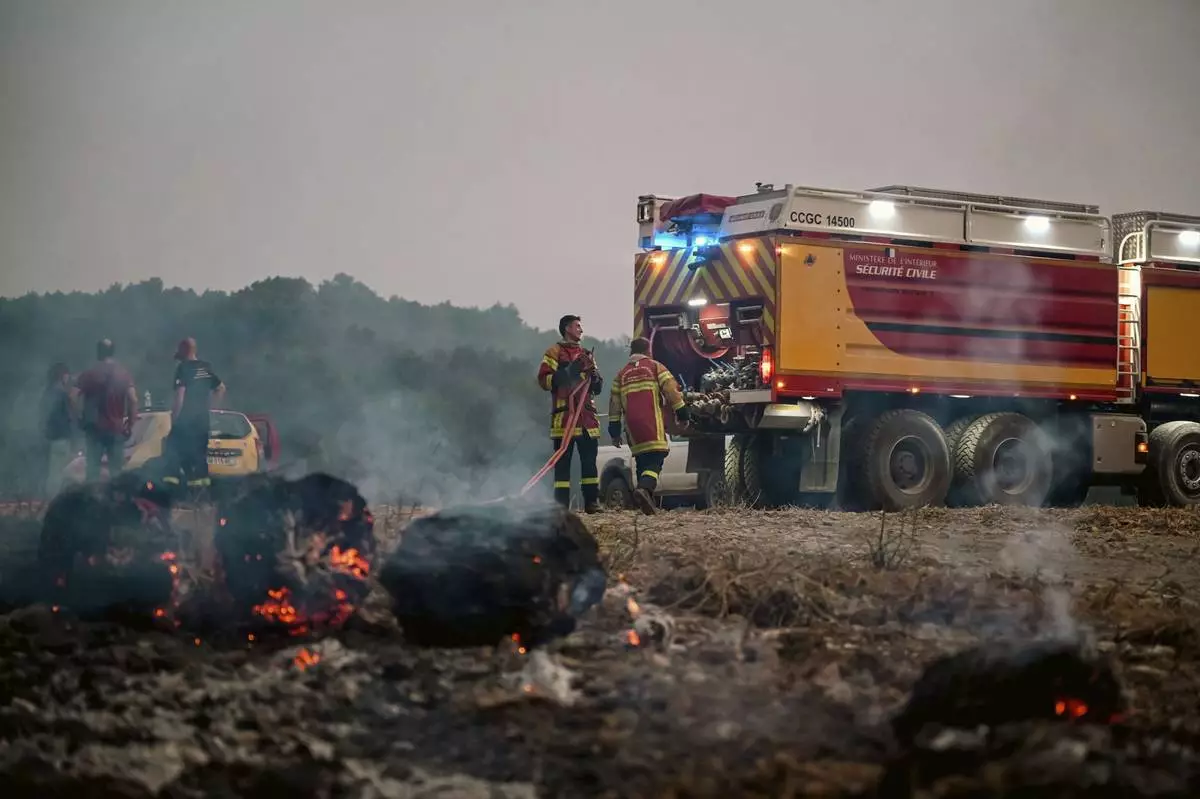
This photo, provided by the Securite Civile on Thursday Aug. 7, 2025, shows firemen from the Securite Civile working at the wildfire near Saint-Laurent-de-la-Cabrerisse, southern France, Wednesday, Aug. 6, 2025. (Securite Civile via AP)
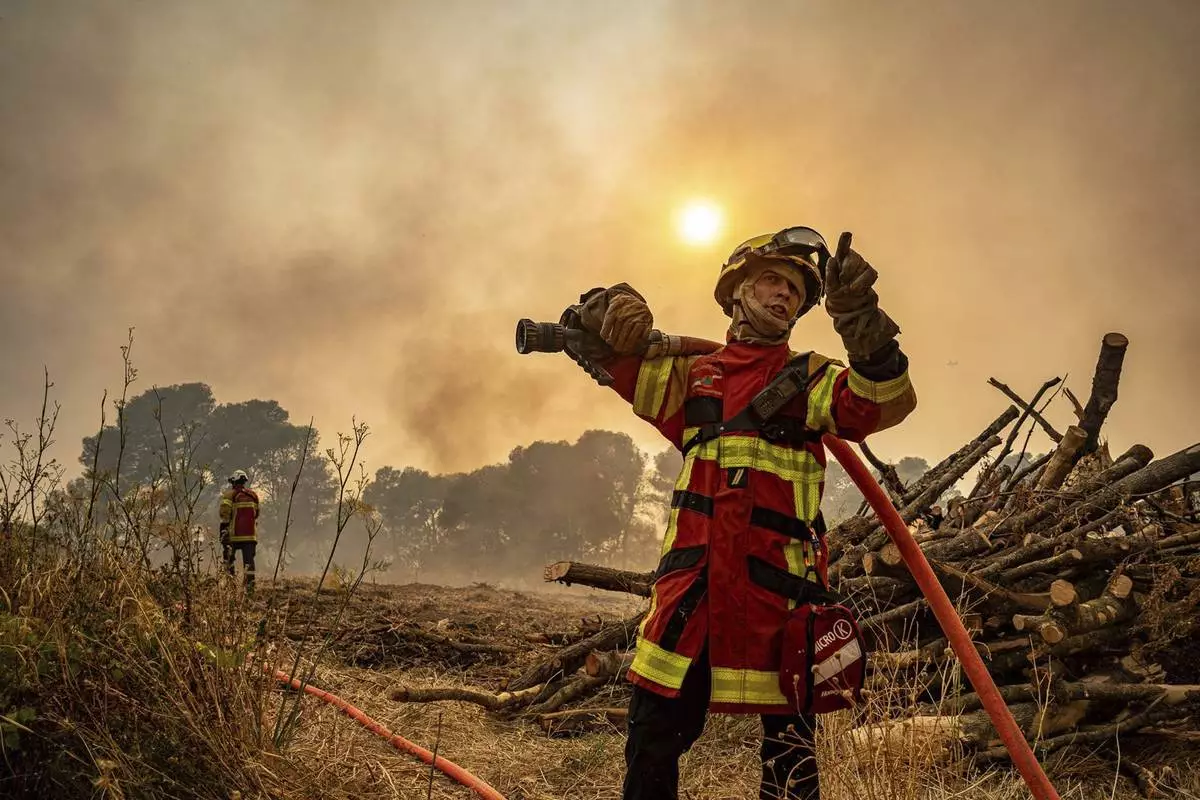
This photo, provided by the Securite Civile on Thursday Aug. 7, 2025, shows a fire man using a hose next to the wildfire near Saint-Laurent-de-la-Cabrerisse, southern France, Wednesday, Aug. 6, 2025. (Securite Civile via AP)
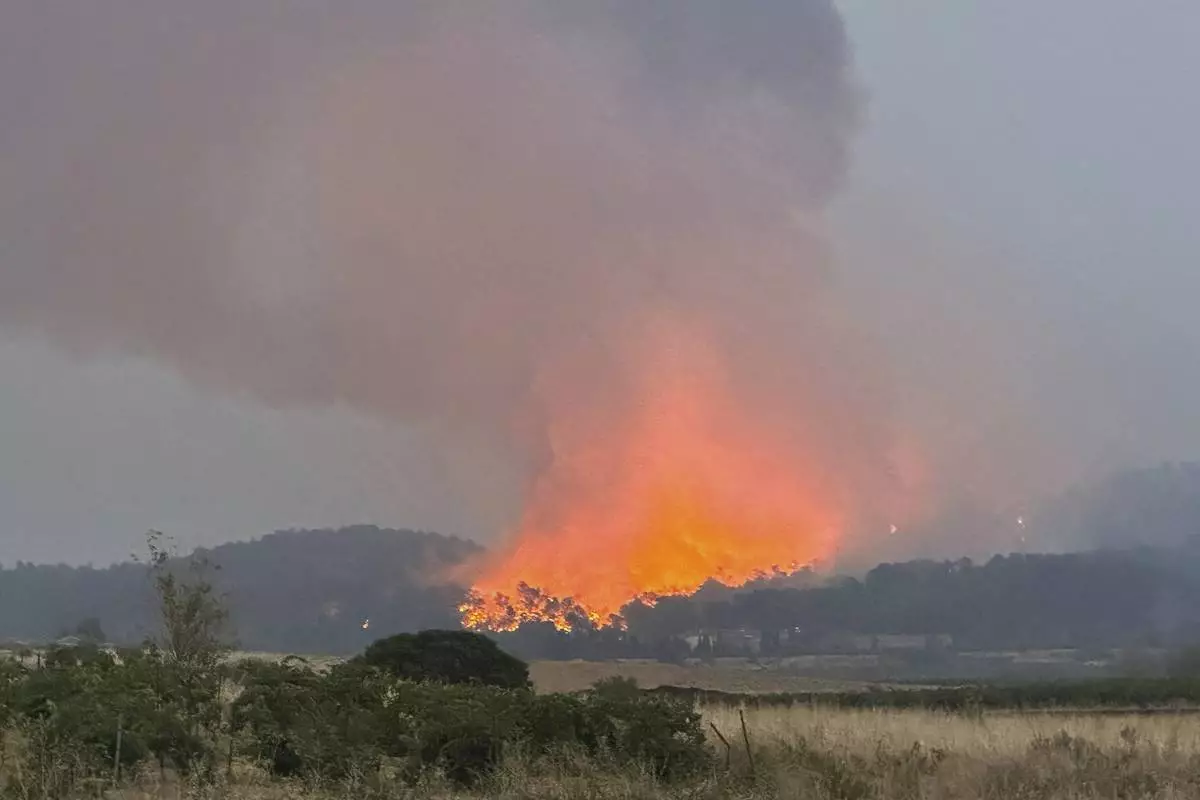
France's biggest wildfire this summer is, raging, near Durban-Corbieres, southern France, Wednesday, Aug.6, 2025. (AP Photo/Hernan Munoz)
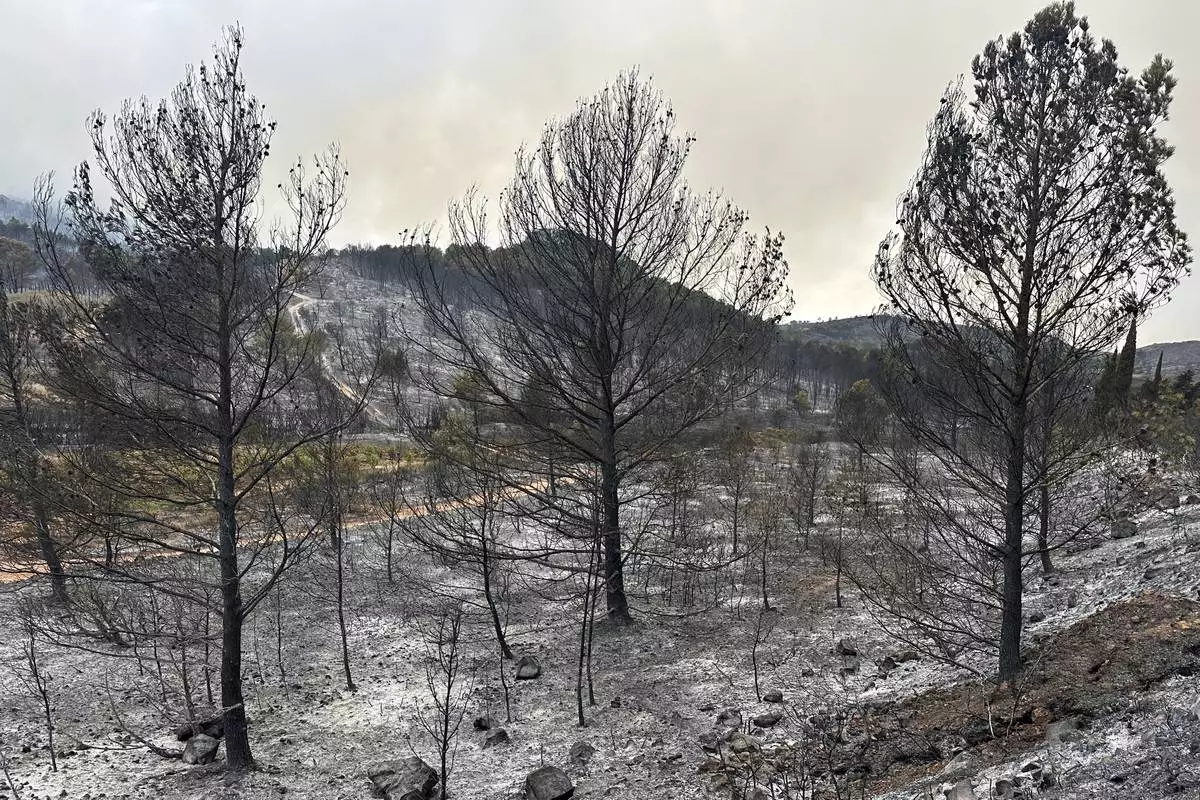
Burned trees during France's biggest wildfire this summer, near Durban-Corbieres, southern France, Wednesday, Aug.6, 2025. (AP Photo/Hernan Munoz)