Skip to Content Facebook Feature Image

China's Lanyue lunar lander completes comprehensive landing, takeoff verification test

China

China's Lanyue lunar lander completes comprehensive landing, takeoff verification test
China

China

China's Lanyue lunar lander completes comprehensive landing, takeoff verification test

2025-08-07 17:14 Last Updated At:21:47

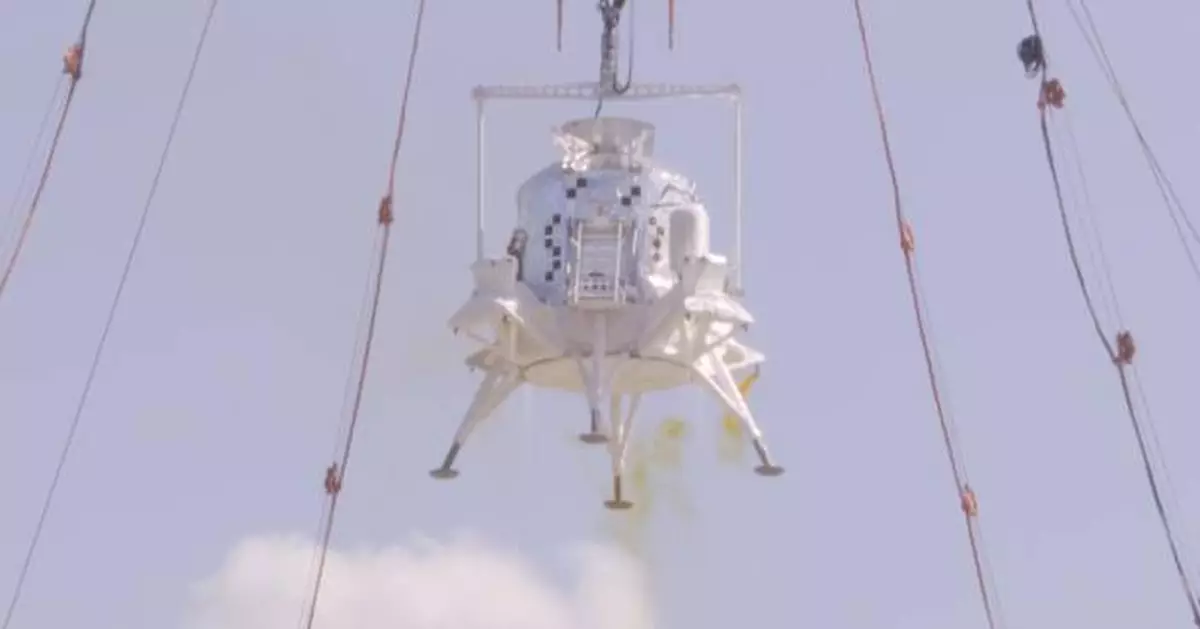
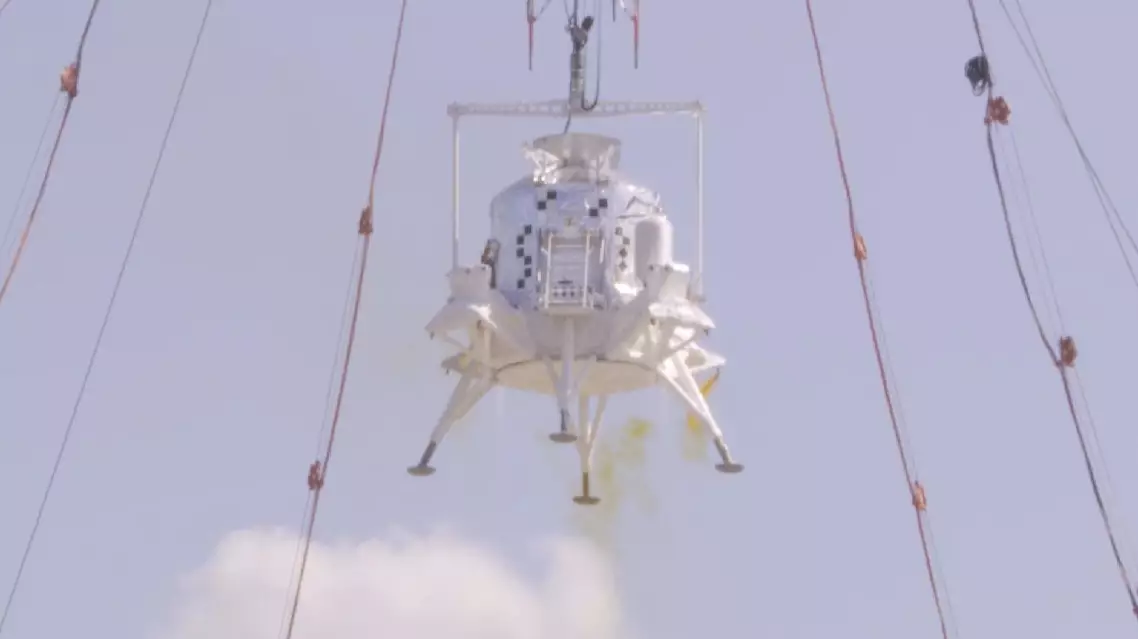
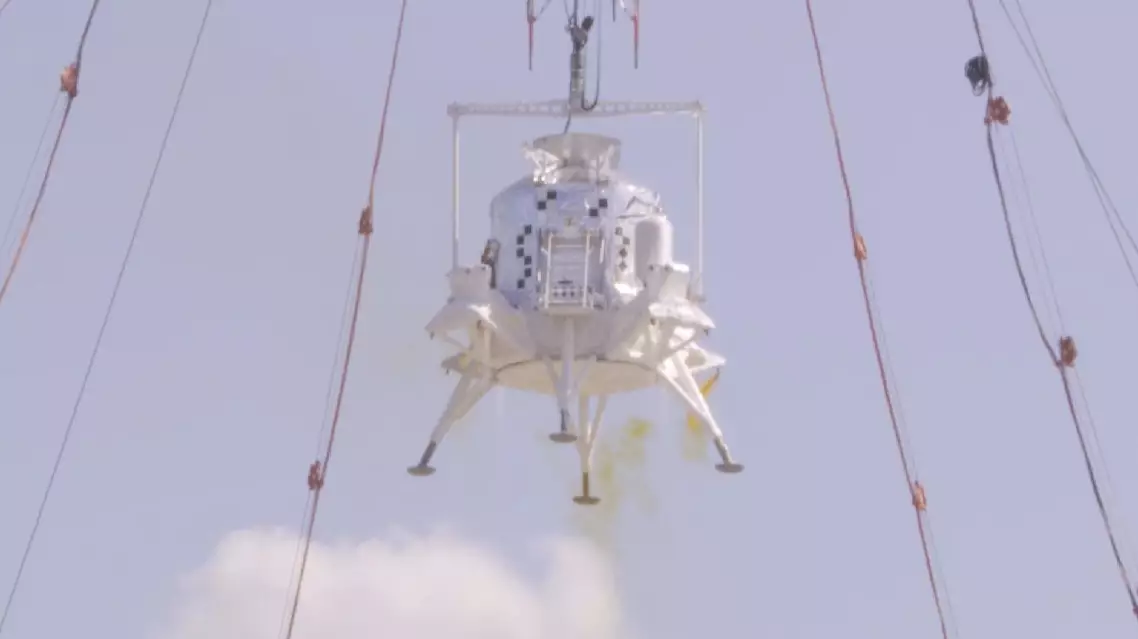
China’s Lanyue lunar lander has successfully completed a comprehensive landing and takeoff verification test at the extraterrestrial celestial landing test site in Huailai County, north China's Hebei Province, marking a significant breakthrough in the country's manned lunar exploration program.

The lunar lander is a newly developed extraterrestrial manned descent and ascent vehicle designed for China's first manned lunar exploration mission, with plans to conduct a manned lunar landing before 2030. It is primarily used for transporting astronauts between lunar orbit and the lunar surface, capable of carrying two astronauts back and forth. It can also carry a lunar rover and scientific payloads, supporting astronauts’ stay and activities on the moon.

During the test, the engine was ignited, simulating the landing of the lunar lander on the moon and its subsequent takeoff. The test validated the lander's landing and takeoff system, control plan, lunar contact shutdown procedures, and the compatibility of interfaces between subsystems, including Guidance, Navigation, Control (GNC) and propulsion.

The test marks China's first landing and takeoff experiment for a manned extraterrestrial spacecraft. It is a milestone in the initial sample development of the lunar lander and a key point in the country's manned lunar exploration program.

With complex test conditions, a long duration, and high technical difficulty, the test covers the performance verification of the lunar lander under different scenarios throughout the landing and takeoff process.

"For instance, during the launch phase, we need to verify its launch payload. So we conducted large-scale mechanical tests to ensure a smooth transition in the extremely complex environment during the launch. The lander will also orbit the moon for a long period, so we performed many thermal tests to ensure that it can withstand the thermal environment of the cislunar space," said Huang Zhen from China Aerospace Science and Technology Corporation.
China's Lanyue lunar lander completes comprehensive landing, takeoff verification test
China's Lanyue lunar lander completes comprehensive landing, takeoff verification test

China's Lanyue lunar lander completes comprehensive landing, takeoff verification test

China's Lanyue lunar lander completes comprehensive landing, takeoff verification test

The holdings of the Liaoning Provincial Archives in northeast China on Imperial Japanese Army Unit 731 directly align with Khabarovsk trials testimonies donated by Russia's state archives, making the cross-verified materials irrefutable proof of the unit's brutal wartime crimes.

Inside the Liaoning Provincial Archives, staff retrieved a 1950 file: The first official evidence-gathering record on Unit 731 made after the founding of the People's Republic of China. It was compiled back then by the Northeast Health Ministry, documenting Japan's germ warfare crimes at the Harbin site. This is China's earliest formal effort to catalog the unit's atrocities.

"On March 11, 1950, acting on the Central Ministry of Health's instructions, the Northeast China Health Ministry probed Japan's germ warfare units and gathered relevant materials. Meanwhile, the northeast people's government issued a circular, mandating detailed victim investigations with witness testimonies, material evidence, or photos and documentary records," said Gong Zhuolu, deputy director of Archives Compilation and Industrial Culture Research Department under the Liaoning Provincial Archives.

When Japan surrendered in 1945, Unit 731 fled Harbin in haste. Abandoned germ-carrying rats and fleas spread into residential areas, triggering large-scale plague and outbreaks. The file includes germ warfare evidence: witness testimonies, victim accounts, and local notices to gather proof, cementing the unit's atrocity record.

"These archival materials align with witness testimonies from the Khabarovsk Trials and Shenyang Trials, serving as compelling evidence to confirm Unit 731's germ warfare crimes," Gong said.

These files preserved by the Liaoning Provincial Archives are just the tip of the iceberg. As Jin Chengmin, curator of the Unit 731 Crime Evidence Hall, noted: "The full extent of Unit 731's crimes remains undisclosed. No one knows exactly how many people were subjected to human experiments -- only Japan holds the key to these answers."

Chinese archives' evidence of Unit 731 biological war crimes aligns with Russian Khabarovsk trials records

Chinese archives' evidence of Unit 731 biological war crimes aligns with Russian Khabarovsk trials records

Recommended Articles