CHAGRIN FALLS, Ohio (AP) — A significant share of U.S. greenhouse gas emissions comes from heating, cooling and powering homes — about 15%, according to one estimate by the Environmental Protection Agency. So if you want to reduce your carbon footprint, the home is an effective place to start.
There are so many factors involved in a household's energy consumption, including whether you have gas or electric heat and how you use your kitchen appliances, washer and dryer. It's often overwhelming to figure out where to begin.
That's why experts recommend a home energy assessment conducted by a professional. The room-by-room examinations help homeowners determine energy use, discover inefficiencies and create a plan to reduce both. In addition to helping the environment, improving efficiency saves money over the long term.
The assessments typically last several hours and cost anywhere from $100 to more than $1,000. Until the end of the year, the Inflation Reduction Act, a major U.S. climate law passed in 2022, helps cover the cost. Congress recently rescinded many of those benefits, which will be phased out.
I’m a climate reporter, so I’ve written about responsible energy use more than a few times. But in May, after years of apartment-dwelling, I moved into the first home I've ever owned.
So, I signed up for a home energy assessment.
My home, outside of Cleveland, is more than 100 years old. When I blast the air conditioning, it's still hot and humid upstairs. I can hear birds chirping outside no matter how hard I shut the windows. And there's a giant pipe in my basement held together by duct tape and prayers.
My assessment delivered pretty bad news. But with it came with lots of room for improvement. Here's how the day unfolded:
Tim Portman, owner of the HVAC company Portman Mechanical in northeast Ohio, started with an hourlong interview about my goals of having a more comfortable and climate-friendly house. Then he headed into the basement to test my furnace, air conditioner and water heater.
The water heater pressure was normal, so Portman said there was no major risk of a water burst. However, the pressure in both the furnace and air conditioner was too high.
Which reveals my first problem: They are too big for the duct work. That's inefficient, and it wears on the equipment. Making matters worse, Portman noticed a bunch of unnecessary turns in the ducts.
He equated it to having great water pressure in a kinked garden hose.
“If you don't get the kink out of that garden hose, you're never going to have a good experience,” he said.
The highlight of my basement woes was a giant pipe that feeds heating and cooling to the rest of the house. It just ... wasn't connected. It was jammed together like two straws without a junction. It bugged him enough that he paused to fix it.
And who am I to stop him?
After the basement, Portman assembled a contraption called a blower door. He jammed a bunch of airtight plastic in my front doorway, shoved a big fan through the middle and turned it on so that it was blowing air out of my house.
“It literally sets up a vacuum in the house. So anywhere where there are leaks, you can see where those leaks are,” he said.
Seconds later, my home got hot and musty as the fan pulled outdoor air through all the leaky seams. Portman guessed the primary culprit immediately. I followed him upstairs into what felt like a sauna near the opening to the attic.
“You literally have hot, humid air — and your attic’s warmer than outside — just pouring into the second floor,” Portman said.
The blower door measures how many cubic feet of air flow through per minute. In a well-sealed house, the number should be less than or equal to the square footage. In my 1,500 square-foot (139-square-meter) house, the blower door number was 4,500. Three times as leaky as it should be.
Portman called it a worst-case scenario.
“It’s like driving your car around with the AC on and the windows rolled down," he said.
Next, Portman grabbed a thermal camera. The goal, since it was 80 degrees Fahrenheit (27 degrees Celsius) outside, was to see if leaks would show up as hot spots on the camera.
There were a lot. On the screen, yellow revealed a hot spot. The coolest spaces were dark blue. The leaky door frame around the attic lit up bright yellow.
"Do you think that's a problem?” Portman joked.
“Oops,” I said.
“Yeah,” he said. “Oops is the right answer.”
There were a few unsurprising finds, including a leaky bathroom fan and gaps around the hundred-year-old windows. Downstairs we also found major gaps in the living room's exposed beams.
Thermal images proved Portman's theory that my walls were not insulated. That’s because my house still has some knob and tube wiring, a system of ceramic supports and porcelain-wrapped wires that's a relic of the early 20th century. Because of how it heats up, only certain insulation can be used with it. It can also be very expensive to remove.
In the basement, the camera revealed major gaps next to pipes and some other just ... random holes. They were maybe where wiring used to be, or just hollow spots in the old wooden framing. But the air seepage was strong enough to make the cobwebs flutter frantically, as if reflecting my dread discovering them.
After his review, Portman's first recommendation was to call an electrician about the old wiring.
“Getting knob and tube out of your house opens the door to have insulation in your walls,” he said.
Once that’s addressed, Portman said I need to upgrade my electrical panel to support an eventual switch to a heat pump and an electric water heater, though those appliances don’t fit my budget this year.
One electrician I spoke to by phone guessed it would cost $30,000 to remove the old wiring. But another said as long as he inspects the wiring and doesn't find any dangerous modifications, I could leave it and replace the panel for roughly $3,000.
I went with the second guy.
Through the end of 2025, federal tax credits will help subsidize weatherization upgrades, including insulation, windows, doors and electrical panels.
In the meantime, my husband and I have a different homework assignment: use a caulk gun and spray foam to plug the holes that we found on the thermal camera.
Between July heat waves and January cold snaps, sealing a house in the Cleveland area isn't just good for the planet. It's a good investment.
“You could potentially cut your bills in half. Potentially even more,” he said.
The Associated Press’ climate and environmental coverage receives financial support from multiple private foundations. AP is solely responsible for all content. Find AP’s standards for working with philanthropies, a list of supporters and funded coverage areas at AP.org.
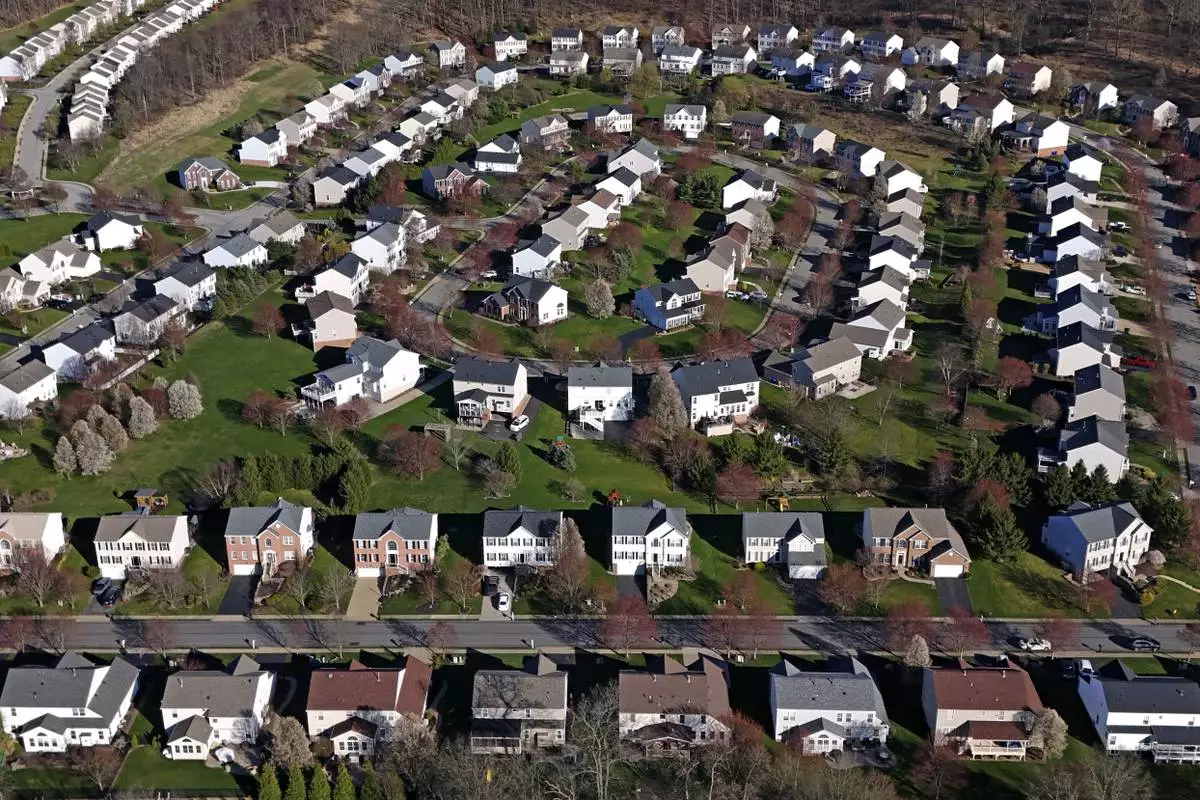
FILE - Homes sit in Cranberry Township, Pa., on March 29, 2024. (AP Photo/Gene J. Puskar, File)