WASHINGTON (AP) — Several Middle Eastern allies of the United States have urged the Trump administration to hold off on strikes against Iran for the government's deadly crackdown on protesters, according to an Arab diplomat familiar with the matter.
Top officials from Egypt, Oman, Saudi Arabia and Qatar have raised concerns in the last 48 hours that a U.S. military intervention would shake the global economy and destabilize an already volatile region, said the diplomat who spoke on condition of anonymity to describe the sensitive conversations.
Oil prices fell on Thursday as the markets appeared to take note of President Donald Trump's shifting tone as a sign that he’s leaning away from attacking Iran after days of launching blistering threats at Tehran for its brutal crackdown.
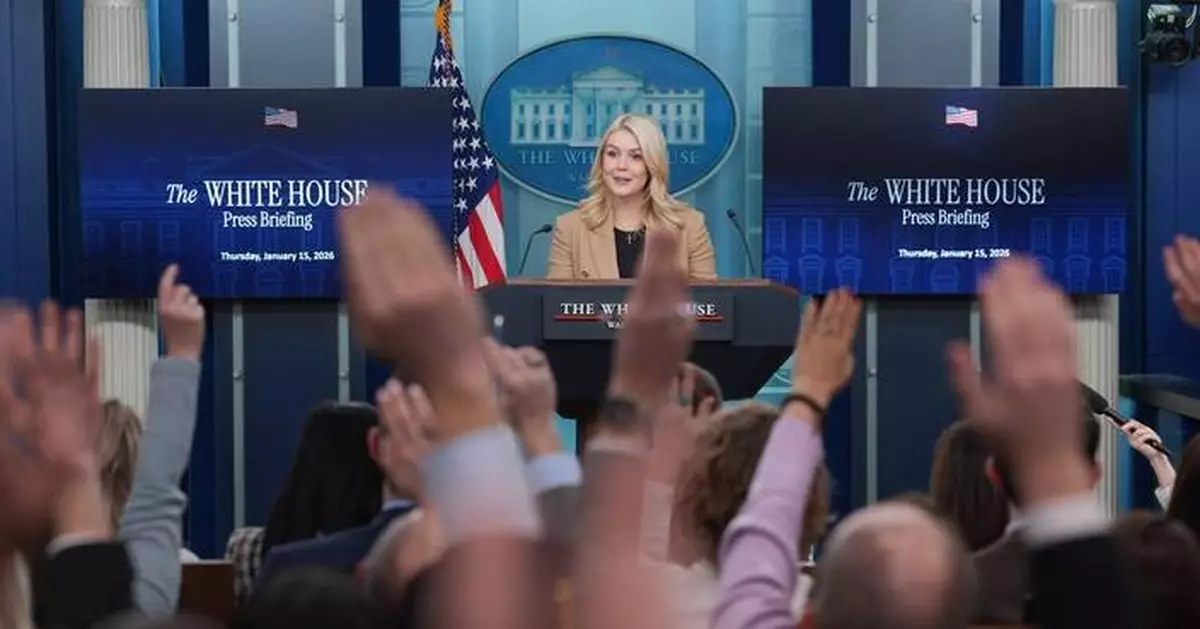
Nevertheless, White House press secretary Karoline Leavitt on Thursday maintained that “all options remain on the table” for Trump as he deals with Iran.
“The truth is only President Trump knows what he’s going to do and a very, very small team of advisers are read into his thinking on that,” Leavitt said. She added, “He continues to closely monitor the situation on the ground in Iran.”
The nationwide protests challenging Iran’s theocracy appeared increasingly smothered Thursday, a week after authorities shut the country off from the world and escalated a bloody crackdown that activists say has killed at least 2,637 people.
The delicate diplomacy from Arab officials comes during a period of rhetorical whiplash from Trump.
Trump, in a matter of a day, went from offering assurances to Iranian citizens that “help is on its way” and urging them to take over their country's institutions to abruptly declaring on Wednesday that he had received information from “very important sources on the other side” that Iran had stopped killing protesters and was not going forward with executions.
The Arab officials also urged senior Iranian officials to quickly end the violent repression of protesters. They warned that any Iranian response to a U.S. action against the U.S. or other targets in the region would have significant repercussions for Iran, the diplomat said.
Asked about reports of allies asking Trump to hold off on the strikes at a White House briefing, Leavitt did not directly address the matter.
Ambassador Mike Waltz, the U.S. envoy to the United Nations, said military action is an option that remains in play.
“President Trump is a man of action, not endless talk like we see at the United Nations,” Waltz said in remarks at a meeting of the U.N. Security Council to discuss the Iran protests. “He has made it clear all options are on the table to stop the slaughter.”
But Trump himself appeared to send signals he could be backing away from a potential U.S. strike on Iran after days of threatening one was in the offing.
He took to social media to highlight a Fox News headline about the suspension of a death sentence for an Iranian shopkeeper, 26-year-old Erfan Soltani.
Iranian state media denied Soltani had been condemned to death. Iranian judicial authorities said Soltani was being held in a detention facility outside of the capital.
Alongside other protesters, he has been accused of “propaganda activities against the regime,” state media said.
“This is good news. Hopefully, it will continue!” Trump said in his post about the reported pause in the execution of the shopkeeper. The White House later asserted that Iran had halted 800 scheduled executions.
Trump has been known to purposefully display ambiguity about his intentions to maintain an element of surprise.
Last June, as Trump was weighing whether to follow Israel as it carried out strikes on Iran, Leavitt read a message to reporters that she said came “directly from the president” in which Trump said he would decide whether to strike Iran “within the next two weeks.”
Less than two days later, Trump ordered B-2 bombers to carry out strikes on critical Iranian nuclear sites.
Jeremy Shapiro, research director of the European Council on Foreign Relations, said Trump may have decided to hold off on strikes because of concerns about the current U.S. force posture in the Middle East.
There are currently no U.S. aircraft carriers, considered a critical asset in a significant military operation, in the region after the USS Gerald R. Ford and its strike group were deployed to the U.S. Southern Command region as the part of a massive counter-narcotics operation focused on Venezuela.
“It might be that they’re delaying things and using the time for getting that posture correct,” Shapiro said.
The Trump administration on Thursday also announced new sanction s against Iran.
Included in Thursday’s sanctions is the secretary of the Supreme Council for National Security, whom the Treasury Department accuses of being one of the first officials to call for violence against Iranian protesters.
The Treasury Department’s Office of Foreign Assets Control also designated 18 people and companies that the U.S. says have participated in laundering money from sales of Iranian oil to foreign markets as part of a shadow banking network of sanctioned Iranian financial institutions Bank Melli and Shahr Bank.
Associated Press writer Fatima Hussein contributed reporting.
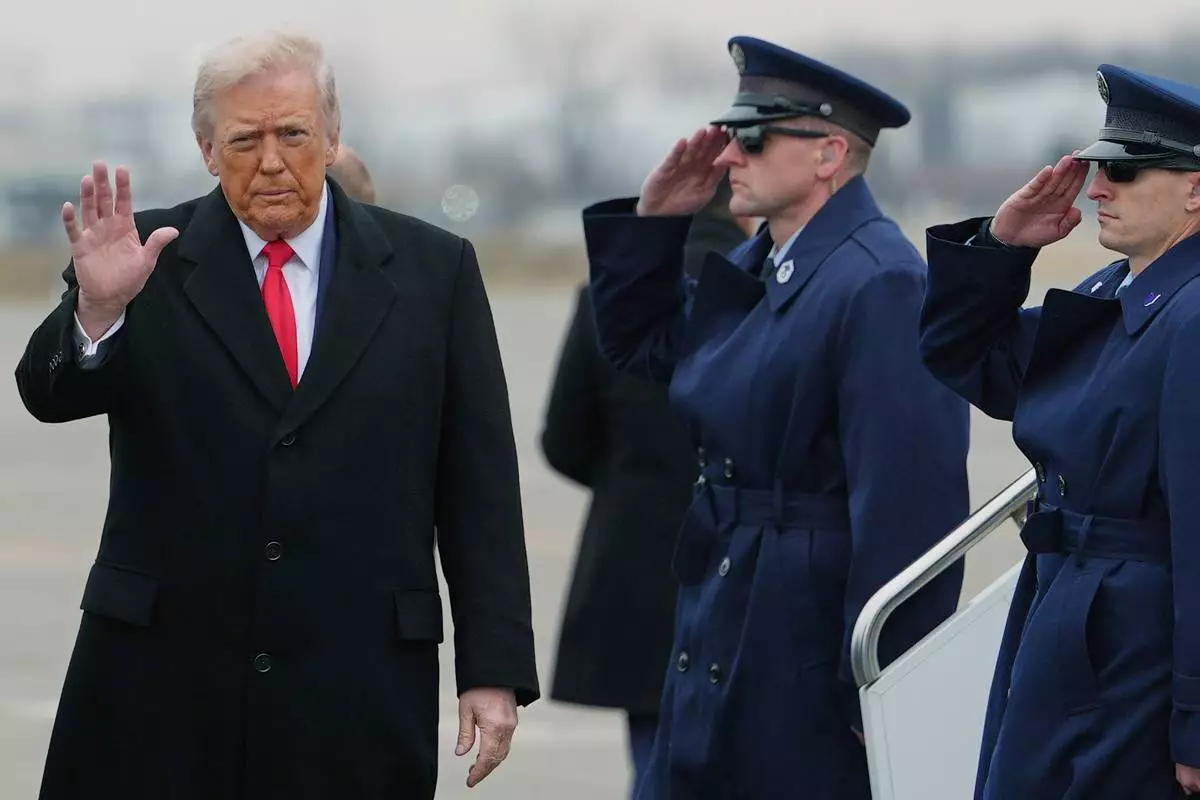
President Donald Trump waves during his arrival at Detroit Metropolitan Wayne County Airport, Tuesday, Jan. 13, 2026, in Detroit. (AP Photo/Evan Vucci)
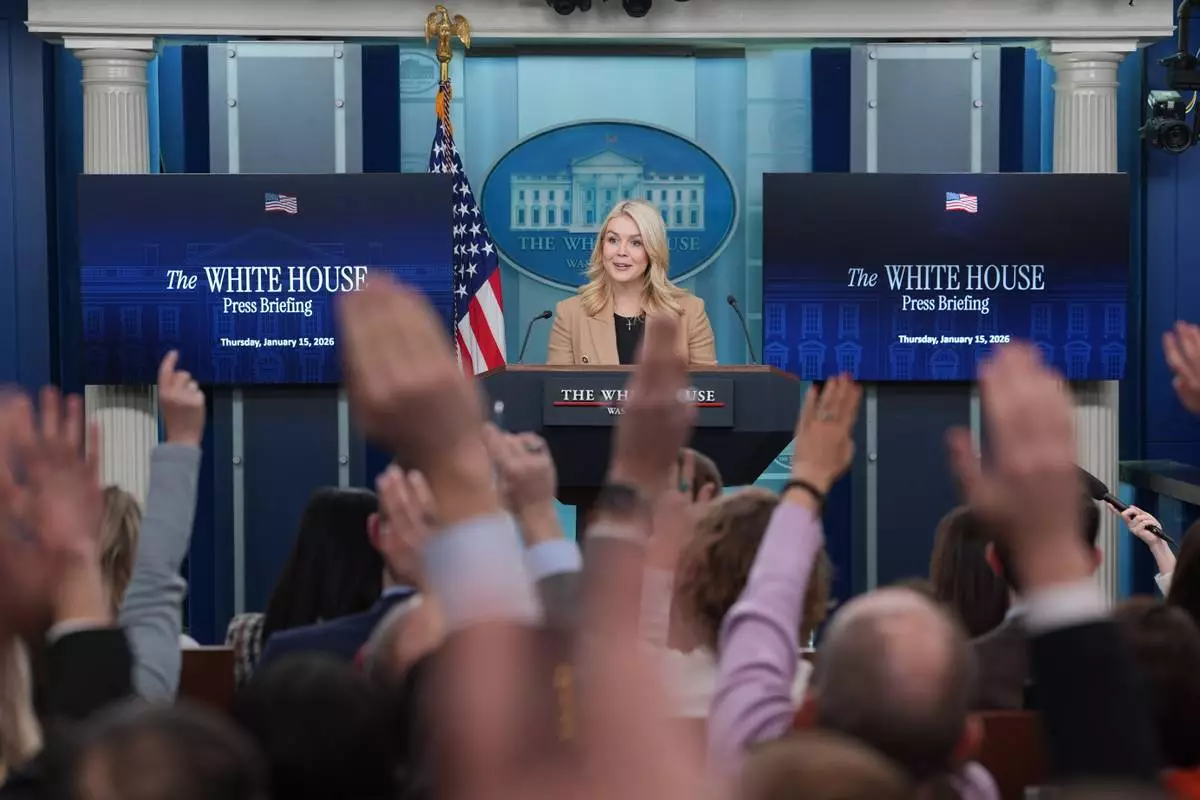
White House press secretary Karoline Leavitt speaks with reporters in the James Brady Press Briefing Room at the White House, Thursday, Jan. 15, 2026, in Washington. (AP Photo/Evan Vucci)
LAS VEGAS (AP) — Shea Theodore scored at 5:38 of the second overtime, avoiding what could have been a potentially devastating loss for the Golden Knights after they blew a four-goal lead, and Vegas beat the Carolina Hurricanes 5-4 on Saturday night for a 2-1 series lead.
Theodore's goal, which went off goalie Brandon Bussi's skate, came long after teammate Mitch Marner had the fastest hat trick in Stanley Cup Final history.
The teams take two days off before meeting in Game 4 on Tuesday night in Las Vegas. Teams that take a 2-1 series lead in the final went on to win the Cup 46 of 57 times, or 80.7%.
Carolina had been 6-0 in overtime this postseason. The Hurricanes were trying to become the first team to win after trailing by at least four goals in the third period, but now clubs in that situation are 0-109.
“We just left our foot off the gas,” Theodore said on the ABC broadcast. "I think we have to be sharper in the third, but I liked the resiliency out of our group. I liked the way we started that second overtime, and I felt like we were more on our toes.”
This was the 10th time the first three games of a Cup Final were decided by a point. The last time occurred in 2016 series between Pittsburgh and San Jose.
The Golden Knights seemed to have the game in hand after scoring four times in the second, including a natural hat trick by Marner.
But Jordan Martinook, Taylor Hall and Jordan Staal scored goals for the Hurricanes to turn what appeared to be a party atmosphere into a white-knuckler for the Golden Knights. Their goals, occurring 39 seconds apart, are the fastest in a Cup Final game.
Andrei Svechnikov jammed in a puck on a six-on-four power play with 1:42 left to force overtime.
Marner's scoring outburst came over a 6:10 stretch of the second period, and he had four points in the period. He had the secondary assist on Tomas Hertl's goal midway through the period.
The last time a player had four points in a period of the Cup final occurred in 1919 when Frank Foyston of the Seattle Metropolitans pulled off that feat.
Marner nearly added to the total in the third period, but failed to capitalize on a breakaway and a penalty shot. Those missed chances came back to bite the Golden Knights.
The Hurricanes made the comeback after changing goalies to open the third, going with Bussi, who stood tall in making 18 saves. Frederik Andersen had given up those four goals on 16 shots.
Carolina also rallied without forward and former Golden Knight William Carrier, who had an upper-body injury in the second period.
Vegas' Carter Hart stopped 29 shots.
Vegas twice thought it took the lead early in the second period, but the Hurricanes successfully challenged both goals to keep the game scoreless.
Mark Stone's goal from the slot 36 seconds into the period was overturned when Brett Howden was determined to be offside after a video review. Another review wiped off Jack Eichel's rebound goal four minutes in when Rasmus Andersson was called for goalie interference.
It's not the first time this series went against the Golden Knights.
An unsuccessful video challenge by Vegas coach John Tortorella in Game 2 on Thursday night led to a power-play goal by Jordan Staal, whose goal helped the Hurricanes rally to win 4-3 in overtime.
The Golden Knights received a major boost when defenseman Brayden McNabb took the ice. He took a puck in the face in the first period Thursday night at Carolina and didn't return to the game. McNabb, who had on a cage to protect his face, is Vegas' best defensive defenseman. He was on the first defensive pair with Theodore.
“I wish I could say it’s shocking, but it’s not," Golden Knights captain Mark Stone said on the ABC broadcast. "Just the way he comes to the rink every day, it’s like nothing happened. He’s one of a kind. They don’t make them like that anymore, that’s for sure.”
This series has been, if anything, unpredictable.
Each team blew two-goal leads in the first two games, with the Golden Knights rallying in the opener and Hurricanes responding with a Game 2 victory in overtime.
AP NHL: https://apnews.com/hub/stanley-cup and https://apnews.com/hub/nhl
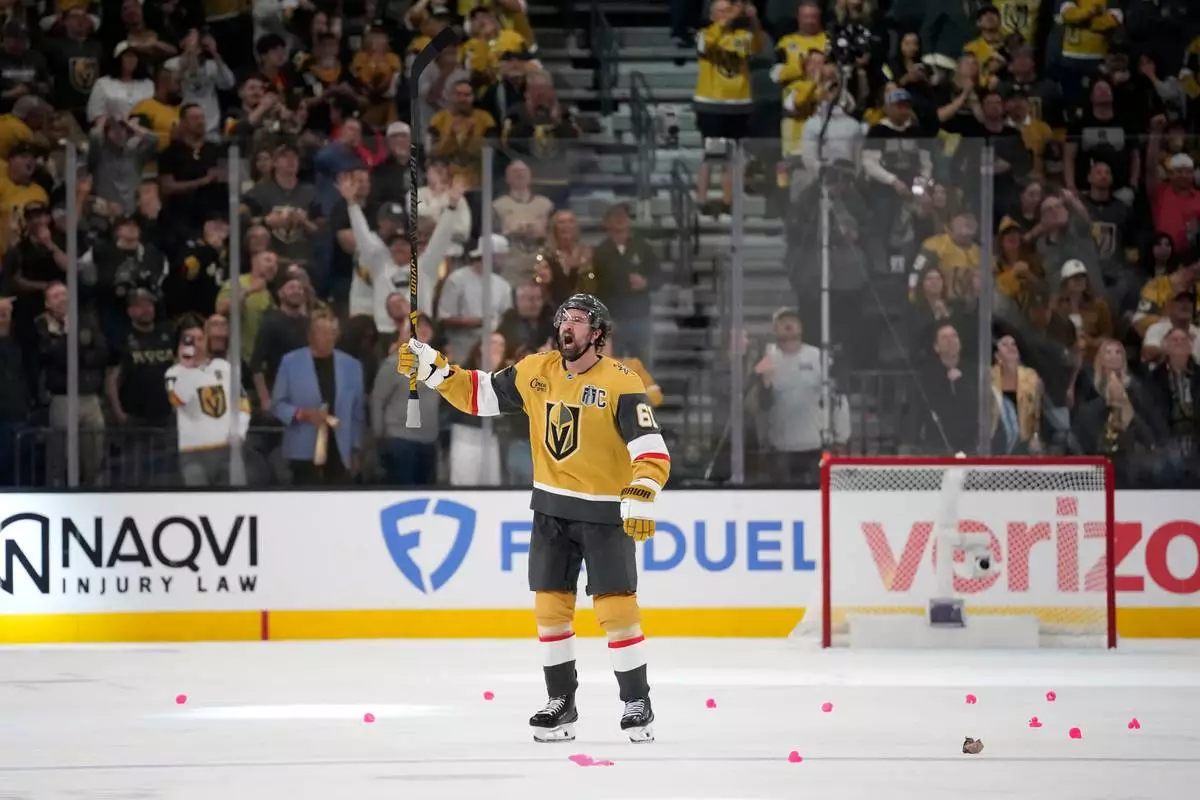
Vegas Golden Knights right wing Mark Stone celebrates after the Golden Knights won in the second overtime in Game 3 of the NHL hockey Stanley Cup Final series against the Carolina Hurricanes, Saturday, June 6, 2026, in Las Vegas. (AP Photo/John Locher)

Carolina Hurricanes right wing Andrei Svechnikov, center, celebrates his goal with defenseman Shayne Gostisbehere, left, and center Sebastian Aho during the third period in Game 3 of the NHL hockey Stanley Cup Final series against the Vegas Golden Knights, Saturday, June 6, 2026, in Las Vegas. (AP Photo/John Locher)
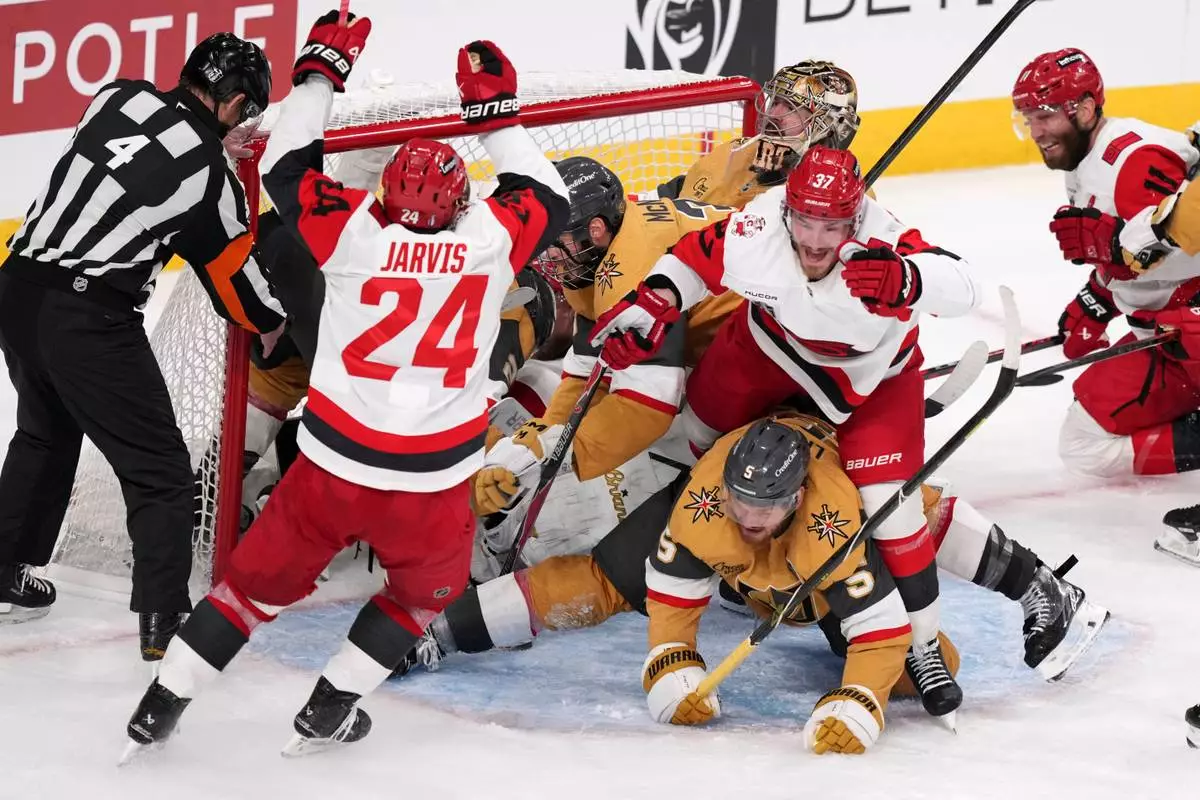
Carolina Hurricanes right wing Andrei Svechnikov (37) celebrates his goal with right wing Seth Jarvis (24) and center Jordan Staal (11) as he steps over Vegas Golden Knights defenseman Jeremy Lauzon (5) during the third period in Game 3 of the NHL hockey Stanley Cup Final series Saturday, June 6, 2026, in Las Vegas. (AP Photo/Candice Ward)
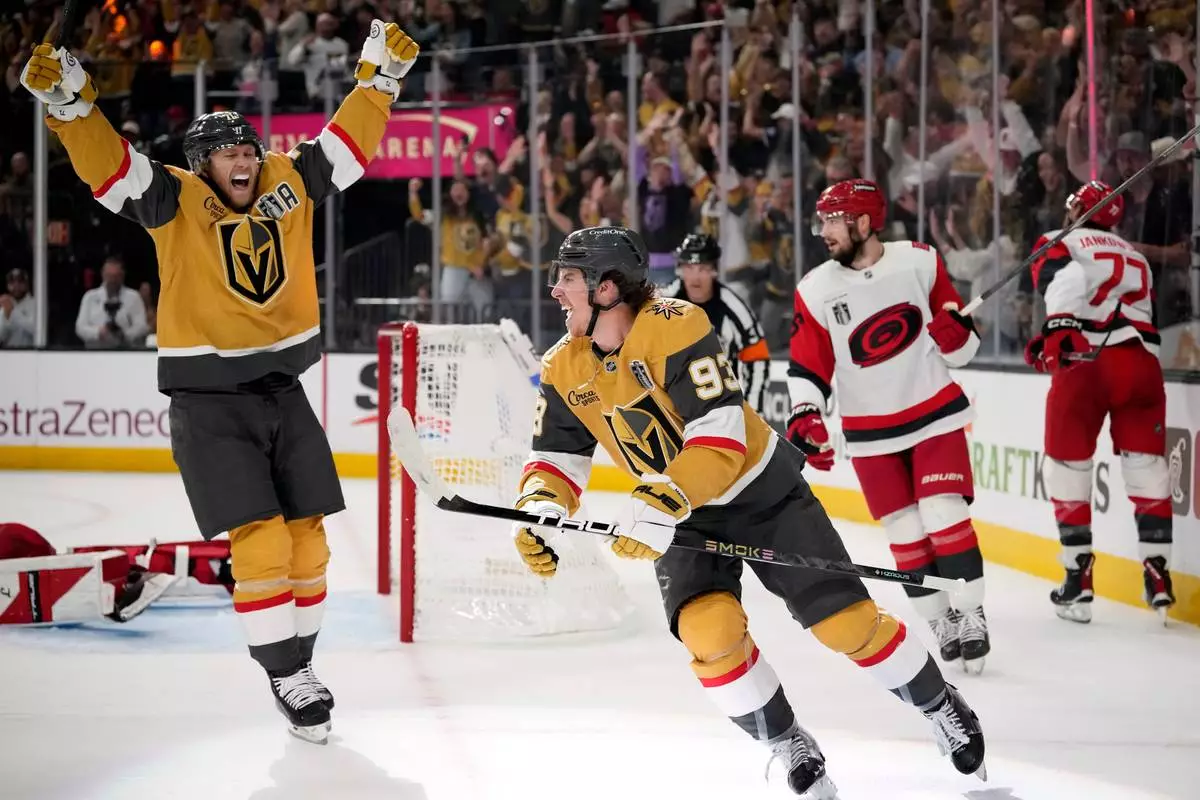
Vegas Golden Knights right wing Mitch Marner, center, celebrates his goal with center William Karlsson, left, during the second period in Game 3 of the NHL hockey Stanley Cup Final series against the Carolina Hurricanes, Saturday, June 6, 2026, in Las Vegas. (AP Photo/John Locher)
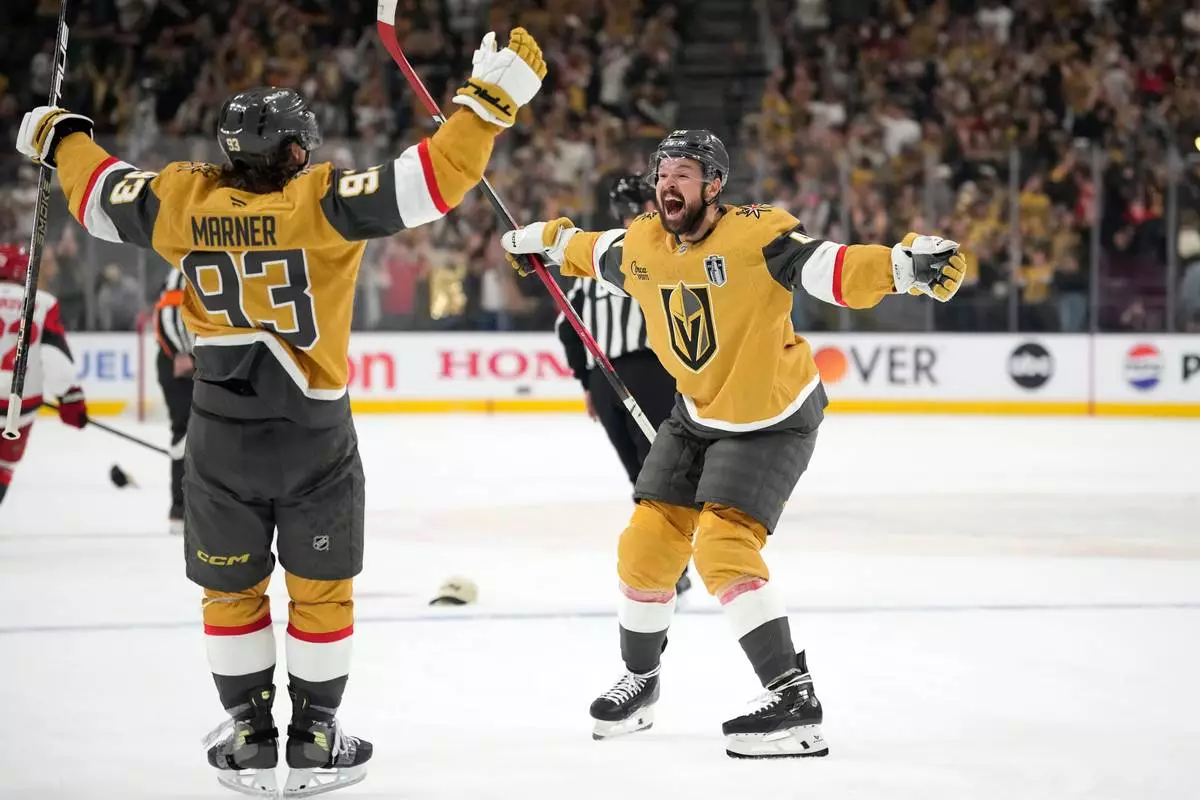
Vegas Golden Knights right wing Mitch Marner, left, celebrates his goal with center Tomas Hertl during the second period in Game 3 of the NHL hockey Stanley Cup Final series against the Carolina Hurricanes, Saturday, June 6, 2026, in Las Vegas. (AP Photo/John Locher)

Vegas Golden Knights right wing Mitch Marner, left, celebrates his third goal for a hat trick with center Tomas Hertl during the second period in Game 3 of the NHL hockey Stanley Cup Final series against the Carolina Hurricanes, Saturday, June 6, 2026, in Las Vegas. (AP Photo/John Locher)

Carolina Hurricanes goaltender Frederik Andersen, right, stops a shot by Vegas Golden Knights right wing Mitch Marner during the second period in Game 3 of the NHL hockey Stanley Cup Final series Saturday, June 6, 2026, in Las Vegas. (AP Photo/John Locher)

Vegas Golden Knights right wing Mitch Marner, left, celebrates his goal as Carolina Hurricanes defenseman Sean Walker, right, skates behind during the second period in Game 3 of the NHL hockey Stanley Cup Final series, Saturday, June 6, 2026, in Las Vegas. (AP Photo/John Locher)

Vegas Golden Knights defenseman Brayden McNabb is seen with a cage on his helmet during the first period in Game 3 of the NHL hockey Stanley Cup Final series against the Carolina Hurricanes, Saturday, June 6, 2026, in Las Vegas. (AP Photo/Candice Ward)

Carolina Hurricanes right wing Seth Jarvis shoots the puck during the first period in Game 3 of the NHL hockey Stanley Cup Final series against the Vegas Golden Knights, Saturday, June 6, 2026, in Las Vegas. (AP Photo/John Locher)
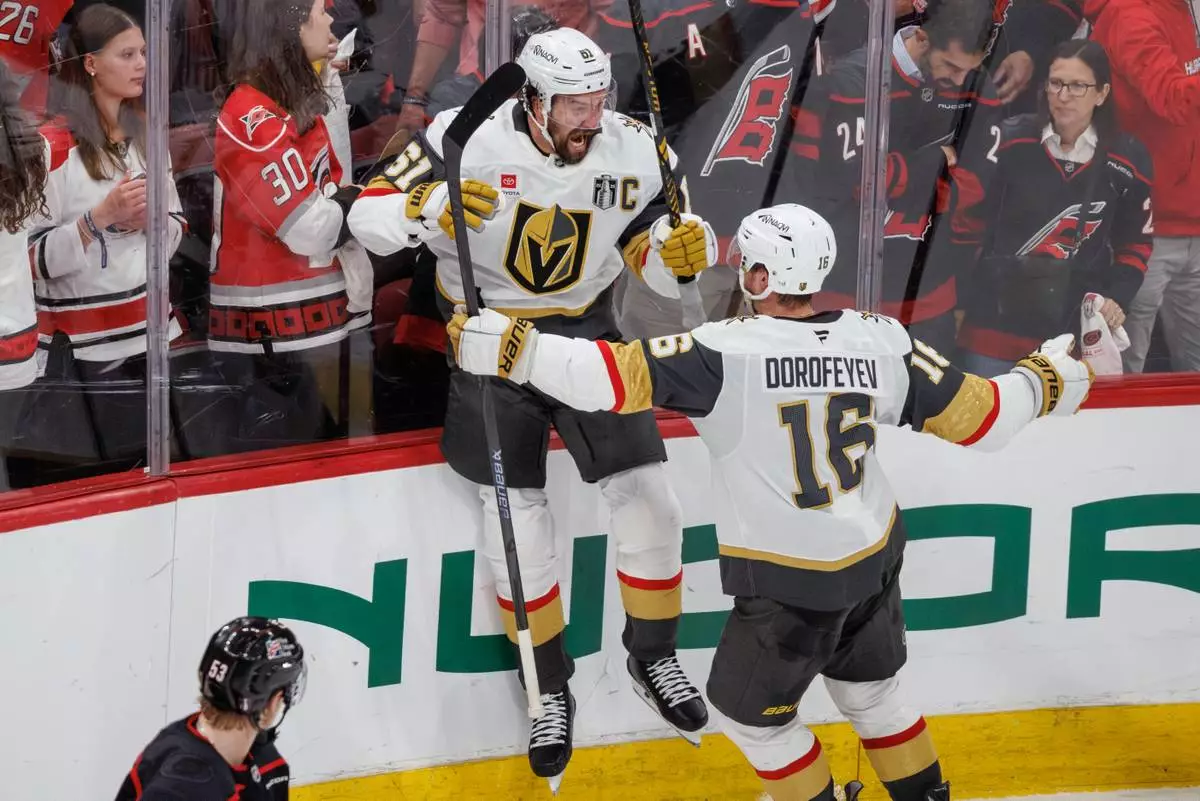
Vegas Golden Knights' Mark Stone (61) celebrates with Pavel Dorofeyev (16) after scoring against the Carolina Hurricanes to tie in the third period of Game 2 of the NHL hockey Stanley Cup Final series in Raleigh, N.C., Thursday, June 4, 2026. (AP Photo/Ben McKeown)
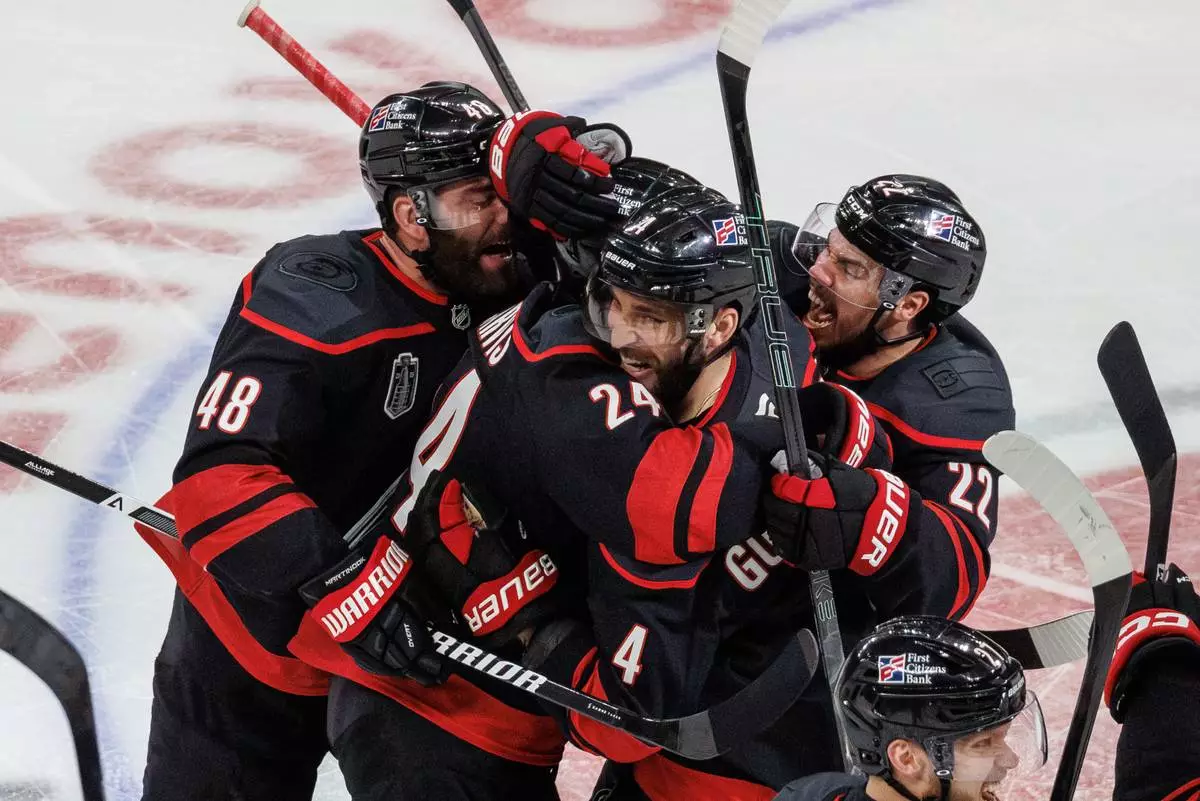
Carolina Hurricanes' Jordan Martinook (48), Seth Jarvis (24), Shayne Gostisbehere (4), and Logan Stankoven (22) ceelbrate after Jarvis scored the game-winning goal against against the Vegas Golden Knights in overtime of Game 2 of the NHL hockey Stanley Cup Final series in Raleigh, N.C., Thursday, June 4, 2026. (AP Photo/Ben McKeown)